53.8 F
Davis

Davis, California

Friday, December 26, 2025
Home Blog Page 931

Sutter Davis Hospital Farmers Market to open Thursday

The Sutter Davis Hospital Farmers Market will be reopening this Thursday. The market will continue to be at the hospital entrance every Thursday from 10 a.m. to 1 p.m. until August 29.

Opening day will feature cooking demos and tastings, a visit by Dinger and Sacramento River Cats players and giveaways.

This will be the third year the Farmers Market will be at the hospital. Randii MacNear, Davis Farmers Market’s executive director and manager of the Sutter Davis Hospital Farmers Market, said in a press release that nine sellers have been confirmed for opening day.

— Claire Tan



Two city council members to run for State Assembly

Mayor Joe Krovoza and Mayor Pro Tem Dan Wolk announced on May 10 that they will both be running for State Assembly in June 2014, as current Assemblymember Mariko Yamada will term out next year.

Yamada, D-Davis, represents the Fourth District, which includes Colusa, Napa, Lake, Yolo and parts of Solano and Sonoma Counties. Lake County supervisor Anthony Farrington and Napa County planning commissioner Matt Pope will also be competing for Yamada’s seat.

Councilmember Rochelle Swanson also announced that she plans to run for one of the two seats on city council that will become vacant.

According to The Davis Enterprise, if Krovoza wins the State Assembly candidacy, Wolk would remain on city council and two slots would be open for the June 2014 city council election. However, if Wolk were to win, two city council seats would still be open in addition to Wolk’s seat, as Krovoza will not be participating in next year’s council election.

— Claire Tan

Dining Outside Davis

If you have access to a car, are sick of going to the same restaurants in Davis over and over again and don’t want to deal with the hustle of Sacramento, keep reading.

Davis can seem a little isolated sometimes, and people might forget that there are some other, smaller towns surrounding us. For those who want to branch out a little from their ritual Davis eateries, Dixon, Woodland and Winters offer some notable food choices that should not be overlooked.

Mr. Taco’s is a taquería in a strip mall in Dixon. They provide the full range of typical Mexican cuisine, including burritos, tortas and various combination plates. The namesake grilled chicken tacos ($2.28), though, are one of the items that makes this place worthy of attention. Kept simple, the tacos are just a corn tortilla that encases excellently-seasoned grilled chicken, onions, cilantro and salsa verde.
pupusas
It’s hard to say exactly what sets them apart from Dos Coyotes or Guad’s, but they are definitely worth the extra ten-minute drive down I-80. They also serve small chicken and pork tacos for $0.99 on Mondays and Tuesdays.

Up in Woodland, Pupuseria La Chicana is a unique place that specializes in pupusas ($2.50 each) – a Salvadoran dish consisting of a homemade corn tortilla stuffed with various ingredients. The chicharron (pork) variety is a bit salty, but the frijol y queso (bean and cheese) and queso y calabaza (cheese and squash) pupusas are incredible. While waiting for food, make sure to ask for complimentary chips – they come smothered in pinto beans and are irresistible.

beef skewers
Lastly, located about a half-hour drive from Davis in Winters, Ficelle is a tapas restaurant and a true gem. Its website advertises it as “a delightfully random place to eat” — and that’s exactly what it is. The menu, which varies by the week, features fusion items that derail from normal Spanish tapas; the Teriyaki Beef Skewers ($8) and Canelone Del Mar – pasta stuffed with crab and shrimp and covered in a cream sauce – ($9), if on the menu, are two items not to be missed.

Ficelle’s cozy atmosphere and welcoming service make it a great place to go with a group of friends – in fact, the owners encourage table-sharing and the community experience. If everyone picks out one tapa and shares, it’s possible to keep the bill relatively affordable – tapas range from $5 to $11 each. That being said, the best part about the Ficelle experience is the pitcher of sangria, a concoction of red wine, fruit and other alcohol ($35). Word of advice: make sure you have enough people in your group to make the pitcher, and the price, go around.

For your GPS:
Mr. Taco’s
2600 Plaza Ct.
Dixon, CA 95620

Pupuseria La Chicana
9 Main St. #123  
Woodland, CA 95695

Ficelle
5C East Main St.
Winters, CA 95694

Students, organizations to be honored today at Community Service Awards

A number of students, faculty and organizations will be honored today for their contributions to community service, today at the Community Service Resource Center’s Community Service Awards.

The awards, scheduled today at 4 p.m. in Gunrock Pub, will include students who have had a hand in organization such as Bottles for Poverty, The Pantry and the Women’s Resources and Research Center.

Members of University administration will be present to distribute awards.

More information on the awards and past recipients can be found at iccweb.ucdavis.edu/cs/CSA.


— Muna Sadek

Unitrans fleet strives to be green

With UC Davis’ eco-friendly biking community, some cringe at the thought of climbing aboard a diesel-guzzling city bus. But with Unitrans now operating 44 of its 49 vehicles on alternative fuels, students can hitch a ride without worrying too much about excessive emissions.

For the past 20 years, Unitrans has been slowly building a sustainable fleet of classic buses, London double-deckers and Tipsy Taxis through a methodical process of replacing outdated diesel engines with ones that burn compressed natural gas (CNG).

“There have been many people pushing [for CNG use] in the transit world,” said Unitrans Maintenance Manager Andrew Wyly.

Natural gas is the cleanest burning fossil fuel. It is composed mainly of methane, and products of natural gas combustion are carbon dioxide and water vapor. Coal and oil energy sources are composed of more complex molecules, making more harmful products such as sulfur dioxide, in addition to ash and other particulate matter. Compressed natural gas produces 70 percent of the CO2 compared to gasoline. In the United States, over 100,000 vehicles run on natural gas, and 62 percent of those vehicles are transit buses.

“[Compressed natural gas] utilizes the same kind of gas that you would get from your stove at home, except we compress it at 3200 psi and deliver it to our vehicles,” Wyly said. “The majority of our fleet runs on natural gas — about 44 out of 49 [vehicles] — including one of the retrofitted antique double deckers.”

Upon realizing that there was a high supply and relatively low environmental impact associated with natural gas, federal and state entities began to set aside incentive dollars to help with Unitrans’ and others’ initial startup costs.

While substituting natural gas for gasoline inherently results in the release of fewer environmentally detrimental emissions, monetary cost is severely reduced as well.

“The great advantage is the price. When compared to the price of gasoline, we’re paying less than $1.50 per unit of natural gas [compared to $4.00 per unit of gasoline],” Wyly said.

Performance and efficiency are not lost in the changeover, and when considering the environmental and monetary benefits, it’s no wonder that Unitrans saw natural gas as an attractive fuel source.

Despite speculation over fracking, an environmentally-unfriendly method of obtaining natural gas, workers at Unitrans feel that the benefits are too great in the long term to pass up.

“The environmental benefits of using natural gas outweighs [the impact of fracking],” said Beccah Warmack, a fourth-year biotechnology major.

Warmack went on to say that while fracking is an unfortunate practice, when comparing years’ worth of diesel emissions with natural gas emissions, CNG is the cleaner way to go.

As Unitrans approaches a full fleet of sustainably-fueled vehicles, the group has tackled the toughest project of all: refurbishing the iconic London-style double decker buses.

“It’s sustainability to the extreme: We’re reusing a product that’s been on the road since 1950, and we’re keeping it on the road using modern technology,” Wyly said.

The older-style buses proved tougher to work on than modern vehicles, and with a different engine and battery location innovations were needed to keep the buses up to standard. Students and engineers decided to move the CNG tanks from the roof of the buses to underneath the chassis, a move that came with its own set of problems, according to Marissa Reis, UC Davis alumna and contracted Unitrans shop worker.

Thanks to creativity and problem solving, the team was able to devise a solution by moving the location of the batteries to ensure proper ventilation.

“These buses, because they are so old, need to be remodeled every 10 years anyway,” Reis said. “When it was time for this guy, we thought, it’s time that we switch the engine over to CNG. The bus itself will run longer with natural gas, and it will burn so much cleaner.”

When considering whether to continue burning diesel every day for 10 years, or take the time to replace the engine with something that would burn cleaner, Reis said that it was a no-brainer to do the right thing for the environment.

In the coming years, Wyly expects the lighting in Unitrans facility will eventually be LEDs (light emitting diodes), cutting operation costs and energy usage. Rather than buying new materials for retrofitting, the Unitrans facility reuses parts of older vehicles. Wyly also discussed the possibility of converting the newer double decker buses to run on natural gas in the future. However, there are structural complications involved that could take time to sort out.

According to the UC Davis Transportation and Parking Services (TAPS), around 46 percent of the campus population uses bicycles as their primary form of transportation, while 24 percent drive alone, 18 percent take the bus, 6 percent carpool, 6 percent walk or skate, and 1 percent use the train.

“Our goal is for more people [to] ride their bikes or walk to campus,” said Scott Weintraub, Unitrans operations manager. “But overall, public transportation is much more environmentally friendly than one individual driving their car to campus every day.”

HANNAH KRAMER can be reached at features@theaggie.org. NICOLE NOGA can be reached at science@theaggie.org.

Divestment resolution fails in ASUCD commissions, will not move forward

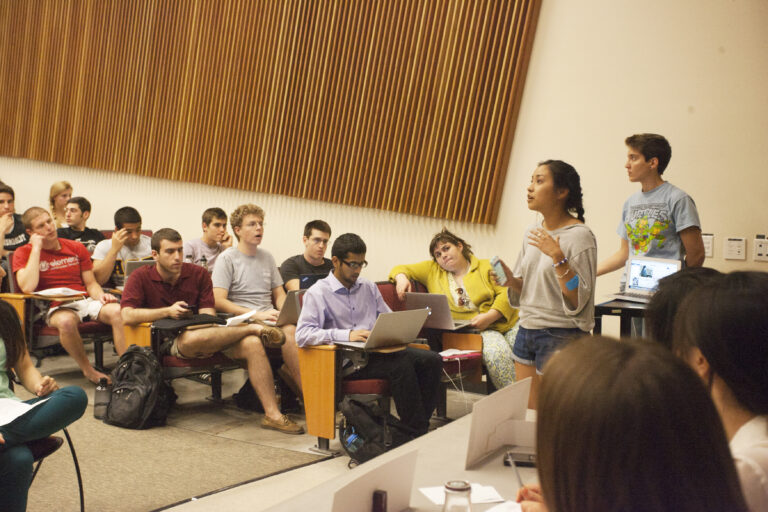
On May 7, the ASUCD Business and Finance Commission voted against passing Senate Resolution 30, which supported the University divesting funds from corporations that profit from the occupation of Palestine.

Many people on both sides of the issue have expressed the belief that this will not be the end of the issue on the UC Davis campus.

“I don’t see any suspension of dialogue happening. I see this as just a start of things to come,” said Matt Hamou, a Business and Finance commissioner.

Members of the Business and Finance Commission rejected the resolution with a vote of two in favor, five against and two abstentions.

“Going in, my personal goal was to make sure that both sides left feeling that they had been treated respectfully and equally, independent of the vote count,” said Rylan Schaeffer, Business and Finance Commission chair. “Abstentions are rare. While the reasons two commissioners had for abstaining were complex, a key aspect definitely had to do with the controversial nature of the resolution, as well as the magnitude of the issues it sought to discuss. Israel-Palestine is one of the most complex issues in the international arena today and is not something one votes lightly on without feeling absolutely certain about their decision.”

The meeting started at 7 p.m. and lasted for hours, with a significant amount of public discussion from both sides of the issue.

Some felt the resolution would create a divisive campus and were opposed to the resolution.

“This resolution completely turns a blind eye to the other violators of human rights in the world and singles out Israel,” said a speaker from the public.

However, proponents of the resolution said they needed to stand in solidarity with Palestinians.

“How can you value money over human rights?” asked a supporter of the resolution.

ASUCD President Carly Sandstrom and Vice President Bradley Bottoms publically announced their opposition to the resolution in a press release.

“The ASUCD Executive feels that passing this resolution will not be fully representative of the student body at large. The issues this resolution addresses are grave and personal for many students. If passed, it runs the risk of furthering the divisiveness of these issues and further separating members of our community,” the press release states.

On May 6, the resolution passed through the Ethnic and Cultural Affairs Commission. The Business and Finance Commission was the fourth commission to vote on the resolution and the third to reject it, along with the External Affairs Commission and the Internal Affairs Commission. The resolution will therefore not move forward to Senate, but supporters of the resolution suggested that they were looking to bring the issue back next fall in a Facebook post by the UC Davis Divest group.

“The commitment to divestment is now even stronger. As a community we can now give each other the energy and motivation to bring this back in the Fall,” the status read.

LAUREN MASCARENHAS can be reached at campus@theaggie.org.

Campus to celebrate Whole Earth

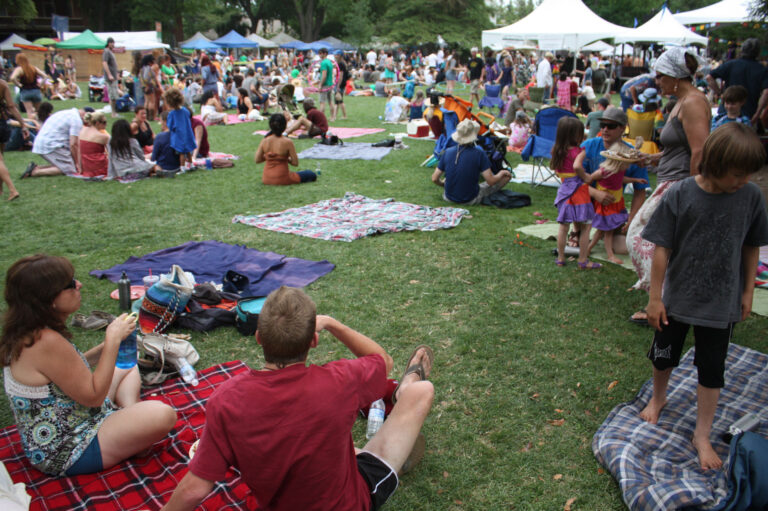
Since 1969, UC Davis has celebrated the annual Whole Earth Festival from Friday to Sunday the second week of May, promoting wellness, art and the environment.

The UC Davis Quad will be filled with arts and crafts tents, live music, food vendors and educational spaces from May 10 to 12. The free, zero-waste, student-run festival is a self-sustaining ASUCD unit and made possible by a large team of volunteers, who have been working since January.

“We have entertainment from throughout the county, including educational speakers, yoga masters, artists and crafts vendors,” said Chris Hong, a UC Davis alumnus and Whole Earth publicity spokesman. “Our event invites a diversity of visitors from children to the elders, mixed races and ethnicities, and people with various religions and traditions. We love the diversity that the festival brings, and how we all share a common viewpoint or ideology and love for this Festival.”

Though the weekend is alcohol-free and advertised as drug-free, some festival goers are known to partake in illegal drugs.

“We are aware drug use happens at these festivals. We will arrest or cite those who abuse the law,” said Lt. Glenn Glasgow of the Davis Police.

Though Whole Earth is a significant event for Davis, it does not have the same regulations and complications as Picnic Day has. There is no safety enhancement zone and there are no increased penalties for breaking the law.

“We don’t experience an increase of calls for service in the city, so it is not needed,” Glasgow said.

Members of the Davis community say the festival doesn’t have the dramatic impact on downtown that Picnic Day does. Those involved in the Davis Farmers Market, for example, observed Whole Earth as a friendly and undisruptive event over the past few years.

“There are no people getting out of hand on Whole Earth; they are all peace and love,” said Randii MacNear, the market manager of the Davis and UC Davis Farmers Markets.

MELISSA GAHERTY can be reached at city@theaggie.org.

Drug initiative in Davis targets unused prescription pills

To curb prescription drug abuse, the Davis Police Department (DPD) and Drug Enforcement Administration (DEA) have collaboratively held pill collection events to encourage the public to dispose their unused, unwanted and expired prescription medication.

A collection event, also know as the Take Back Initiative, took place on April 27. This is the sixth year the DPD has participated.

“During the span of those four hours that we did the event, we collected 315 pounds of unused, unwanted or expired medication,” said Lt. Glenn Glasgow.

Unused prescription medications are a public safety issue because they can lead to poisonings, accidental overdoses and in some cases, abuse of the narcotics, Glasgow said.

Additionally, a survey done in 2011 by the Substance Abuse and Mental Health Services Administration found that more than 70 percent of prescription medication abusers got the medication from friends or relatives.

“This is a way of removing the opportunity for people who may have an addiction to these pills, [it is a way] to get [the pills] out of the house and to hopefully start the treatment process,” Glasgow said.

Participation in the Take Back Initiative is done on a voluntary basis by individual police departments all over the country. According to Glasgow, there were 211 collection sites in Northern California and the Central Valley this year. The DPD holds two collections a year — one in the spring and one in the fall. The disposal of the pills is done through incineration, in accordance with federal and state environmental guidelines.

“We view it not only as a community service to assist people in discarding their unused, unwanted and expired medication properly because it could pose a threat to the environment if they are discarded improperly. We also view it as a way of hoping to avoid people being able to access prescription medication that was not prescribed to them,” Glasgow said.

Glasgow said that preventing abuse is particularly important because taking prescription medication without the prescription from a doctor can be potentially lethal.

“The biggest risk for harm with regard to expired medications or medications around the house that aren’t being used is that they will be accidentally ingested by children,” said Dr. Tom Ferguson, medical director and physician at UC Davis Student Health and Counseling Services. “Medications that control blood pressure in adults can kill a child from heart blocks.”

According to Ferguson, the abuse of prescription narcotics and ADHD medicine is quickly becoming a leading cause of death in young adults in the United States.

“People ingest opiates recreationally or become addicted to opiates, and there is a fine line between abusing for recreation and stopping your heart or stopping breathing,” Ferguson said.

Second-year economics and communication double major Michelle Wolff said that whenever her family has prescription drugs left over, they remain in the house. Wolff said that she would use the service of prescription pill collection for medication that she knew she would never need again.

Wolff does not agree with selling or allowing others to use unused prescription drugs.

“I would never go to do [prescription drugs] to get high or to try it. I think people that use [prescription drugs] like Adderall to study when you don’t need it — in a way, I think it’s cheating,” Wolff said.

According to a DEA public information officer, Special Agent Casey Rettig, twice as many Americans regularly abused prescription drugs in 2011 than the number of those who regularly used cocaine, hallucinogens, heroin and inhalants combined.

“We encourage all of our law enforcement partners to participate in this outstanding community event by hosting a collection site,” Rettig said in an email interview. “The goal of the program is to allow citizens of Northern California to deliver all of their unused, unwanted or expired medications to law enforcement officials who can, in turn, dispose of these controlled substances in a safe, secure and non-hazardous manner, potentially saving lives and protecting the ecosystem.”

SYDNEY COHEN can be reached at city@theaggie.org.

Women’s lacrosse team finishes the season strong

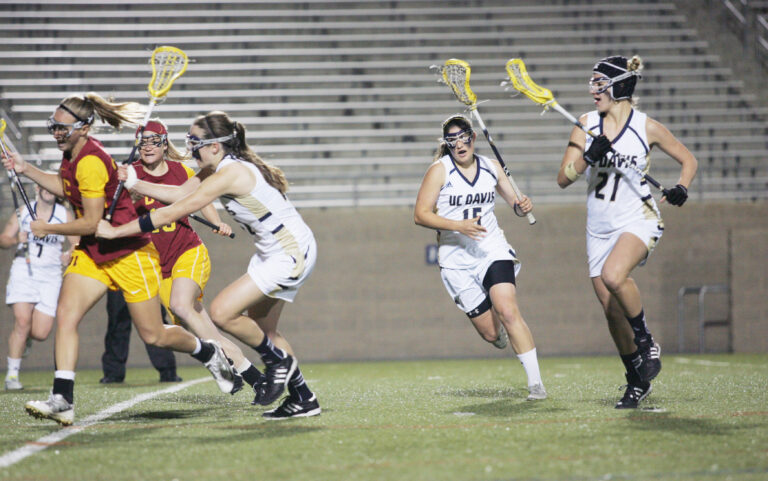
There’s an age-old saying in sports: it is not how you start, but how you finish. The UC Davis women’s lacrosse team, although finishing with a 6-9 record overall and going 3-5 in conference play, was able to finish the season out strong.

Replacing former head coach Elaine Jones, first-year head coach Kate Henwood understood the expectations heading into the 2012 season.

“This was a transition year for us with a new coaching staff. It was our job to try and find a way to harness the talent of our five seniors and use the energetic underclassmen into a system that could work for us,” Henwood said. “Elaine did a phenomenal job, turning lacrosse from a club program to a Division II program and then to a Division I program. I’m not here to be mediocre, but for us to be the best in the West.”

Although the Aggies lost their season debut to the third-ranked team in the nation, Florida, they claimed their first win of the 2012-13 campaign with an 18-4 shellacking against Stetson University. In the victory, Aggie seniors Stephanie Guercio, Elizabeth Datino and captain Hannah Mirza each scored three goals.

The Aggies kicked off their Mountain Pacific Sports Federation (MPSF) conference play against St. Mary’s. In a close contest that saw four lead changes and Datino scoring five goals, St. Mary’s scored the fateful 16th goal in an overtime thriller. Although defeated, Henwood and the team learned a valuable lesson.

A near upset against the 20th-ranked Denver Pioneers may have been the turning point for the team. With three unanswered Denver goals, the Pioneers held a 9-8 lead. The Aggies fought hard, eventually equalizing at 11-11, but key defensive steals from Denver ensured their 13-11 victory.

“In the big picture, it shows a lot of growth. The team is getting better every single outing. But we’re not satisfied with the outcome either,” Henwood said. “We’re disappointed that we had them for the entire game and let it slip out of our fingers. All of those little things, which come down to staying focused and sticking to our game plan, came back to bite us.”

The Aggies would go on to win their last three out of four conference games with victories over Fresno State and San Diego State. However, the 15-14 overtime stunner against Stanford was one of the most memorable games of the year.

“We had nothing to lose,” Mirza said. “Not making the MPSF playoffs, we viewed it as our championship game. We wanted to fight until the end.”

Tied 13-13 going into overtime, the Cardinals drew first blood with an early goal, but a late goal by Aggie sophomore Meghan Jordan leveled the score 14-14. With five seconds remaining in overtime, Mirza fired a shot out wide in what appeared to have sent the game into sudden death. But Aggie senior Anna Geissbuhler won the ground ball and flipped it to Datino, who ran around the side of the net to pop the game-winner. UC Davis’ victory over Stanford ended a streak of 19 straight losses in the series and also represented the first time the Aggies have ever defeated a team ranked in the top 20 of Division I.

“We played to the level we could have played all year. It was a moment of extreme pride for me to see them finally be able to play at that level,” Henwood said. “The best part about it was that Stanford didn’t play a bad game. We led the whole game. We showed the conference that UC Davis is here to stay.”

Although the Aggie lacrosse team will be losing five seniors, which include Datino and Mirza, who were both respectively named 2013 All-MPSF, Henwood has recruited six incoming freshman for the fall as well as now seasoned veterans such as Mary Doyle, a first-year undeclared major who garnered second team honors MPSF, as well as another dedicated group of seniors. The future is indeed promising.

SHAUN MONCADA can be reached at sports@theaggie.org.

Restaurant chains branch out to Davis

A number of restaurant chains are opening new locations in Davis. These include Huong Lan Sandwiches, Jack’s Urban Eats, The Melt, Wingstop and Yogurtland.

Huong Lan Sandwiches opened in early 2013 in the space previously occupied by International Bistro at 213 E St. in downtown Davis. The restaurant serves fresh Vietnamese bánh mì sandwiches, bubble tea, assorted fried food and customizable pho. The Davis location is the sixth Huong Lan store, with the others located in San Jose, Newark, Sacramento and Milpitas.

Jack’s Urban Eats opened on May 2. Jack’s Urban Eats is a Sacramento-based chain with about seven locations in Sacramento and the greater Sacramento area. The Davis location will be located in The Marketplace in North Davis.

The restaurant serves American food such as sandwiches, salads and specialty sides including sweet potato fries, mashed potatoes and macaroni and cheese. Owner of Dos Coyotes and Jack’s Urban Eats Bobby Coyote said they are famous for their urban fries.

Coyote said he saw an open space and that gave him the opportunity to expand in Davis.

Manager of Jack’s Jeremy Goebel said that the first Jack’s restaurant opened in 1998 and they have been expanding in the Sacramento area since then.

“We have seen a wide range of customers so far — students, families, professionals,” Coyote said. “It’s a similar demographic to Dos Coyotes and we are happy to open and are having fun serving good food.”

The Marketplace will also be home to Yogurtland, which is taking over the old Cold Stone Creamery location. The location has been vacant since December 2010. Yogurtland is an Irvine-based frozen yogurt chain that was founded in 2006.

It is unclear exactly when Yogurtland will open, but construction is underway and there is a “Coming Soon” sign hanging above the entrance.

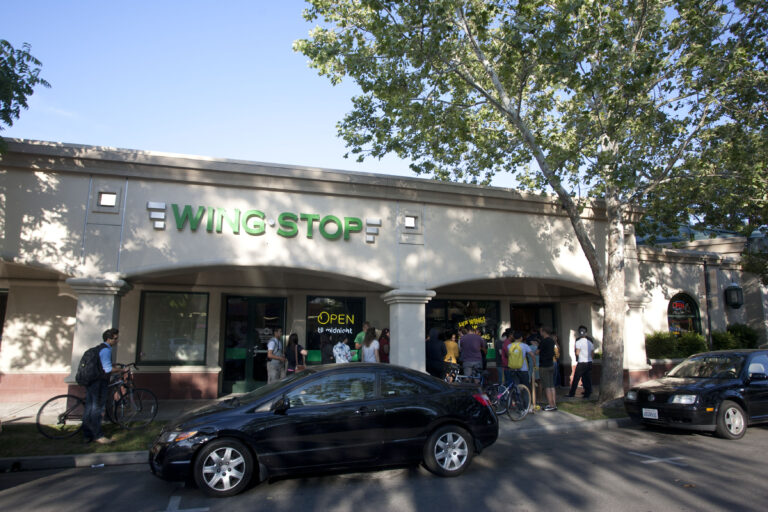
Wingstop was the next restaurant to open in Davis on May 8, and it is located at 408 G St., right next to El Mariachi in downtown Davis.

“We are really excited to bring Wingstop to the students,” said Bal Randhawa, co-owner of Wingstop.

Bal said she and her husband Sukh Randhawa decided to bring Wingstop to Davis because they felt college students would flock toward a place that serves beer and wings.

“I’m excited [for Wingstop to open] because if I craved wings, before I would have to drive to Vacaville for Buffalo Wild Wings or go some place in Davis where wings are just a side dish,” said Shan Hansra, a third-year neurobiology, physiology and behavior major.

Bal said that currently their hours will be 11 a.m. to midnight but they are still deciding on the possibility of remaning open until 3 a.m. on Thursdays, Fridays and Saturdays.

The owners are also planning a grand opening sometime in the near future, but a date has not yet been decided. On May 11, the Budweiser girls will be at Wingstop to promote the new location.

The next chain location to open in Davis is a Bay Area-based restaurant called The Melt. The restaurant serves what they call “grilled cheese happiness.” Paul Coletta, chief marketing officer and general manager of The Melt, said they are planning to open in late August, before school is back in session.

“We feel Davis is a good location because [it] is a community that loves good food and is willing to pay a little more for it,” Coletta said. “We are targeting college university centers like Davis, and we already have locations near two universities — UC Berkeley and the University of Southern California.”

The franchise has been in business since September 2011 and they have 15 locations across California. Some are restaurants and some are buses. The chain has a fleet of buses that serve the full menu and are permanently located at bus stops.

Coletta said they value the quality of ingredients and use no artificial ingredients or flavors.

With the rise of chain locations in Davis, it seems that small businesses are suffering. Common Grounds Coffee, located at Oakshade Town Center, lost its lease at the end of March when their landlord did not want to renew it. After a few months of uncertainty, owners Son Chong and Michelle Kim were able to get a new lease.

Chong said the new location will open in August. They will be serving beer, wine and appetizer-type food in addition to their current coffee menu. Another change is that they will be open until 10 p.m. every day except Sundays.

“We were able to get a new lease next door to the old location because of pressure from the community,” Chong said. “The new location will be a cool place for people to study and we will have more seating and a patio.”

PAAYAL ZAVERI can be reached at city@theaggie.org.

The Pretty Good Gatsby

Like Van Gogh’s paintings or the female anatomy, I don’t fully understand The Great Gatsby — they’re all pretty, confusing and taught in my 10th grade curriculum. Unlike the first two, however, I had the chance to see Baz Luhrmann’s newest adaptation of F. Scott Fitzgerald’s classic novel in person at an advanced screening this week.

Well, they say the first time is always painful.

When Fitzgerald completed his literary masterpiece in 1925, he probably didn’t envision a cinematic rendition featuring Jay-Z with a giant BeDazzler. But such is Luhrmann’s style, boldly blending lavish modernity into vintage material, often to beautiful cinematic and financial success. Like polishing old silver, Luhrmann demonstrated a flair for buffing out beloved classics with shiny lights and popular songs with hits like Moulin Rouge! and Romeo and Juliet.

This time around, however, the brilliance of the source material is coated by too thick a layer of polish, murking the story’s power and message with a beautiful, gloopy veneer.

Every student should know the plot of Gatsby from high school English. The film pulls most of its dialogue straight from the text, and follows the plot almost true to form, with only a few liberties taken for cinematic purposes.

Fitzgerald’s motley crew of soulless characters are impeccably cast. Leonardo DiCaprio pulls off a perfect Jay Gatsby, hungry for vindication and success. You can feel his drive, frustration and deflated ego with every determined smile — but then again, DiCaprio has yet to win an Oscar. He is Jay Gatsby.

Tobey Maguire fits the narrator and lonely protagonist Nick Carraway with ease, with the ability to both frolic in the lavishness of Luhrmann’s ridiculousness and distance himself from the debauchery of his peers. But then again, he’s the crying Spider-Man meme. He is Nick Carraway.

Carey Mulligan is absolutely hateable as the illustrious and ethereal Daisy Buchanan, which is a testament to her acting ability. She actually makes you loathe her angelic, somber face as she ruins the lives of everyone around her with grace and reserve.

Joel Edgerton delivers a standout performance as scumbag husband Tom Buchanan, staring down our lovable Leo with mannish swagger and a pure confidence that only money or muscle can instill. Buchanan came from money. Edgerton was totally ripped in Warrior. It works.

Other notable performances include Jason Clarke (who is used to playing the crazy rage card) as the tragic murderer George Wilson, Elizabeth Debicki as gossip-girl Jordan Baker and a delightful surprise with Bollywood superstar Amitabh Bachchan as grizzled gangster Meyer Wolfsheim.

Despite a form-fitting cast and solid acting, the actors lose themselves in the grandeur of Luhrmann’s visual imagination and the film’s jumpy pacing. The plot, tense and natural in the book, seems inorganic and sloppily pieced together in between “Fergalicious” party scenes filled with glitter and champagne. It seems Luhrmann only had fun filming the grandiose aspect of the book without bothering to capture the sadness behind it.

Another terrible misfire was letting superstar Jay-Z pick the soundtrack for the film, which includes pieces from Florence + the Machine, Lana del Rey, Jack White, Fergie, Beyoncé, Emeli Sandé and the numerous tracks from the trigger-man himself.

Yes, many of the artists featured on the soundtrack are wonderful. But their songs are crudely thrown into the film without any attempt to blend into the actual era, or into the film itself. Florence’s brilliant track gets about 20 seconds of playtime and is too quiet to hear for the majority of its short-lived appearance. Sandé joins the lavish party only to sing a Beyoncé tune. Beyoncé sings Amy Winehouse. Fergie peed on stage in 2005. Why does nobody remember this?

Overall, the majority of modern tracks featured are from HOVA, whose random appearances are so jarring they actually make you laugh. It feels as if Jay walked into the sound studio, pointed at the screen and said, “Movie looks good. But uh, I’d like my songs here, here, here and here. I’d like my wife here, here and here. Also, throw in some Lana for the ladies.”

People will either flock to this film to see Leonardo DiCaprio smile at the camera or because they absolutely love the book. For everyone in between, there’s not much enjoyment to be had.

In the end, The Great Gatsby remains a novel fully appreciated by aged readers and youthful fringe fanatics. Thus, while Luhrmann’s film takes the work in fantastical new directions cinematically, it accomplishes little for the story.

The Great Gatsby stars Toby Maguire, Leonardo DiCaprio, Carey Mulligan, Joel Edgerton and Isla Fisher, is rated PG-13 and opens May 10.

ADAM KHAN will now call people “old sport” on the regular. Chastise him for his jazzy soul at features@theaggie.org.

This Week in Science

Security:
For those who believe in government conspiracies, here’s a good one for you. There has long been talk in the internet security community to create what is known as the “quantum internet,” otherwise known as an internet with perfect security. Apparently, researchers at the Los Alamos National Labs have had a quantum internet up and running for over two years. A quantum internet would function on the principle that observing a quantum particle would change its properties such that any individual who is authorized to view the data would immediately be able to know if it had been viewed before. This kind of security would completely eradicate hacking attempts on banks and other government and financial institutions.

Human Brain:
Until recently, scientists have thought that fungi were the only organisms that could naturally produce antibiotic agents, or chemicals that can kill bacteria. A recent brain study from the Luxembourg Centre for Systems Biomedicine has found that the immune cells in the human brain produce a substance known as itaconic acid, which effectively inhibits bacterial growth. It is the first ever “endogenous” antibiotic discovered in a mammal.

Disease:
Well, scientists have gone and done it again, flaunting knowledge perhaps a little too indiscriminately. In past years, the human populace has been terrorized by the infamous H1N1, and more recently, the H7N9 and H5N1 flu viruses. By mixing genes from the H1N1 and H5N1 viruses, geneticists at the Harbin Veterinary Research Institute of the Chinese Academy of Sciences have created a hybrid flu that can be transmitted effectively through the air. Since these viruses are particularly effective against mammalian DNA, another pandemic could be in the works if the hybrid is not properly contained.

Medical Breakthrough:
If you’ve ever watched the movie Sphere, you may remember the super futuristic scuba suits they wore, the ones where the divers had to breathe liquid oxygen. They did that because the liquid oxygen was less susceptible to compression at great depths than its vapor counterpart. Recently, scientists at Boston Children’s Hospital have created “injectable oxygen” that can open up many pathways for deepwater exploration. The discovery came as a side product of the development of a nanoparticle that stores about three to four times as much oxygen as a normal red blood cell. It is meant to be injected into patients who are suffering respiratory failure, and can keep those patients alive, preventing them from getting brain damage or a heart attack from lack of oxygen.

Addiction:
Researchers at the Scripps Institute in San Diego have just created a “vaccine” for heroin that completely removes a patient’s desire to seek out the drug. Although not yet tested on humans, the vaccine is ready for human trials after extensive testing on rats. Heroin-addicted rats were put through withdrawal, given the vaccine, and then put into close proximity to heroin again. The rats that were given the vaccine made no effort to seek out the heroin. The vaccine is meant to help patients who are trying to quit and to prevent relapses, not to immediately remove an addiction.

Life Expectancy:
UCLA researchers have discovered that by boosting the efficacy of a single gene in fruit flies, they were able to increase the average lifespan by 28 percent. The gene, known as Parkin, has been shown to be closely related to the onset of Parkinson’s disease when defective. The gene’s normal function is to recycle old proteins and mitochondria inside of cells. When mitochondria deteriorate throughout our lives, we begin to see the signs of “aging,” and boosting this gene can prevent that deterioration from occurring as quickly.

Double-edged sword:
One of the most commonly used substances in building construction and product manufacturing is flame retardant. These substances save countless lives by preventing fire from consuming things as quickly. However, researchers from the University of Cincinnati have linked this same substance to lower IQs and extreme hyperactivity in young children. For every two-fold increase in a mother’s exposure to these materials, their infants experience a one-point drop in IQ. Flame retardants have also been shown to damage mammalian thyroid systems and brain development in newborns.

HUDSON LOFCHIE can be reached at science@theaggie.org.

League of American Bicyclists honors UC Davis

The League of American Bicyclists awarded UC Davis a platinum bicycle friendly business award April 22. UC Davis is the first university to be awarded a bicycle friendly business award. The award reinforces the university’s status as No. 1 “Cool School,” as judged by the Sierra Club.

The League awards business awards based on employer efforts to create a more bicycle friendly atmosphere for employees, staff and students. They announced the awards on Earth Day and gave 63 businesses Bicycle Friendly Business status.

“More and more business leaders are realizing that bicycling is a simple and cost-effective way to move toward a more productive company,” said Andy Clarke, the President for the League of American Bicyclists, in a press release.

UC Davis first applied for Bicycle Friendly University status in 2010-11, said David Takemoto-Weerts, Transportation and Parking Services bicycle coordinator. The League awarded UC Davis a gold award for being a Bicycle Friendly University in March 2011. Takemoto-Weerts said they were shocked to receive the gold award rather than the platinum award, which is the highest.

“We decided to apply again for the Bicycle Friendly Business award after the League visited UC Davis for other reasons and told me we should consider applying,” Takemoto-Weerts said.

Takemoto-Weerts described the application process and said there were no specific qualifications, but applicants had to fill out a form with 100 questions which the League uses to evaluate them.

UC Davis cited bicycle accommodations such as restricting vehicle traffic in central parts of campus and the Bicycle Education and Enforcement Program (BEEP). The ASUCD Bike Barn and TAPS do-it-yourself repair stations around campus were also considered valuable resources.

“The university also has facilities that encourage faculty and staff to ride bicycles,” Weerts said. “We offer faculty and staff access to shower facilities in the ARC if they feel the need for it after bicycling to campus.”

These facilities are part of the TAPS goClub incentive program, and also offer emergency rides and complimentary-use parking permits to use when the weather keeps people from bicycling.

As a result of the award, the University will be granted access to a variety of new tools and assistance to remain bicycle friendly. Weerts said the first step of this will be the League providing feedback on their application and suggesting areas where they can improve.

UC Davis is always seeking to improve its bicycle facilities on campus. The 2008-09 Bicycle and Transit Network Study was an effort to improve bicycle transportation and meet demands for future growth.

“Our main effort with the study was to find areas on campus that would need improvement for current and long-term conditions,” said Matt Dulcich, assistant director for environmental planning at the UC Davis Office of Environmental Stewardship and Sustainability.

Dulcich said they found three main areas that needed improvement: the Hutchison Corridor that connects with A Street, the North Quad Corridor that connects downtown and West Village, and the Hutchison and Bioletti Way intersection.

The Hutchison Corridor project is under construction and the Hutchison and Bioletti way intersection has already been completed. The North Quad Corridor project is currently in the planning stages.

There were many recommendations according to Takemoto-Weerts, but some didn’t take into account the cost of the projects.

One project that was completed in April 2013 was the conversion of Old Davis Road to a bike-and-pedestrian path only, said Kurt Wengler, project manager.

“The road will now connect to A Street and close off the Arboretum to vehicle traffic,” Wengler said. “It is now a much safer path for bikes and pedestrians. We also made improvements to paths in the Arboretum itself.”

As of May 2013 the project is mostly completed with the exception of a gate at the Arboretum center. The project cost about $2.9 million.

Wengler said the next project they would be working on is the conversion of Putah Creek Lodge Road to a bike-and-pedestrian path only. Another aim of this project is to improve connectivity to the Health Sciences district.

The estimated cost for that project is $3.4 million, an amount that includes costs for parking lot improvements in addition to the bike path projects. The bike path project, which includes narrowing of the path, landscaping work and a turnaround for cars, is estimated to cost about $200,000.

“We really want to improve connectivity from central campus to the Health Sciences District,” Wengler said.

Dulcich said there are no other roads planned for conversion to bike-and-pedestrian paths only, but improving existing bike paths and allowing for safer pedestrian traffic is an important goal.

One example was Kleiber Hall Drive, which was expanded to make room for a separate pedestrian walkway.

“UC Davis provides a safe, efficient and welcoming environment to encourage campus employees to choose cycling as their preferred commute method,” Takemoto-Weerts said.

PAAYAL ZAVERI can be reached at campus@theaggie.org

Davis City Council proposes next fiscal year’s budget

0

At the Davis City Council meeting on April 30, the council presented the city budget for 2013-14, which begins July 1 and runs through June 30, 2014.

The city is met with many challenges, the most critical being the $2 million structural imbalance in the General Fund (GF). However, they foresee much improvement in the next few years with their proposed plan.

After lengthy consideration, the council has proposed that the GF — encompassed by property taxes, sales taxes, fines and interest — is the most viable source of revenue.

The GF expenditures are projected to increase by around $1,265,143 due to employee benefit costs and compensation, street maintenance needs, water cost increase and water conservation efforts.

In the budget, the city believes that the GF will decrease by $949,000 from sales tax, municipal services tax, property tax, state pass-thru revenue/subventions, developer project revenue and developer reimbursements.

“We have a council that is willing to take on these hard issues. I know we can get our arms against these things. In the long run, with these revenues versus expenditures, we’ll have to get more creative every year,” said City Manager Steve Pinkerton, at a community budget meeting at The Avid Reader on May 6.

Currently, the greatest expenditure challenges in the current and long-term are the CalPERS projects — a 50 percent increase over the next five years, the Pavement Condition Index being at danger level for city streets — the city plans to slowly fund the repairing of roads — and city water costs that are projected to increase by $2.1 million in the next five years.

Potential solutions are being implemented and continue to be brainstormed. For 2013-14, the GF will be providing funding for water and sewage, which will result in a net increase in utility costs of $700,000 and $2.3 million that will go toward street maintenance.

The Davis Fire Department will have a staffing level of 11 instead of 12 firefighters per shift — a change that would result in an additional $443,663 and $500,000 to be budgeted for water conservation measures and updating infrastructure.

The proposed budget was met with support and some speculation by the Davis community.

“The budget they proposed is pretty fairly balanced, and I think we’ll see savings down the line,” said Davis Progressive Business Exchange President Bob Bockwinkel.

Other ideas are being considered for the future.

“Let’s consider getting donor-directed funds set up here. I want to stress how profoundly interested the council is in long-term revenue work,” said Mayor Joe Krovoza at the community budget meeting.

Additionally, the city established a public-private partnership in March with techDAVIS, a nonprofit business association meant to further the connections between the city and the technology industry. The city and techDAVIS have equally shared funding a new municipal Chief Innovation Officer (CIO) in the hopes of improving the current budget, fostering technology-based economic development and, ultimately, generating more revenue for the city.

“As Davis strives to expand its technology sector, the newly created CIO position will significantly enhance the city’s economic development capabilities. Utilizing my strong ties to the San Francisco East Bay and the federal research labs, I am hopeful that the partnership between the city and techDAVIS will result in an opportunity to accelerate research, entrepreneurial activity and growth in technology businesses across Davis,” said Interim Managing Director of techDAVIS David Morris in a March 6 press release.

With the new proposals, along with speculation for new creative approaches to revenue accumulation, the City of Davis has yet to determine what budget path to take.

“With the latest changes we have had to function in, I feel confident that this community will survive and thrive,” Pinkerton said. “Change is always painful, but this budget in particular signals that we can manage and overcome.”

GABRIELLA HAMLETT can be reached at city@theaggie.org.

A new green paradigm

UC Davis continuously pushes toward sustainability in many aspects both on campus and off, including energy conservation, waste reduction, efficient transportation and others. UC Davis’ policies have made us the No. 1 “Cool School,” according to Sierra Magazine. UC Davis prides itself on being an environmentally friendly campus and constructs and utilizes these policies to ensure we have the smallest environmental footprint possible.

All across campus, people are striving to be more sustainable. This includes the dormitory buildings and dining commons, who ship off all the leftover food to become compost.

Project Compost takes this food away from the Silo and several other locations on campus, including the three resident dining commons and Gunrock Pub, and turns it into nutrient-rich compost at the UC Davis Student Farm and the Zamora Composting Facility, north of Woodland. The compost is used by farmers and vintners to fertilize their soil.

UC Davis’ policy extends far beyond waste reduction, however. UC Davis’ construction policy aims to construct new buildings that conform to the highest environmental standards. Even older structures have been improved over time to improve their efficiency.

Sid England, the assistant vice chancellor of Environmental Stewardship & Sustainability, elaborated on how UC Davis continues to move toward sustainability, even in older structures.

“We give them [a] tune-up, just like how you take care of your car. We go through to make improvements to keep old buildings up to date,” he said.

Another part of UC Davis’ sustainable campus life is the campus and city transportation, Unitrans. As a major part of student life, Unitrans has also taken great strides to be a convenient and environmentally sustainable mode of transport.

“Almost all our buses have been converted to run on clean-burning compressed natural gas (CNG) … Out of our fleet, only a few run on biodiesel,” said Teri Sheets, Unitrans assistant general manager.

Since 1972, Davis Waste Removal has been responsible for dealing with off-campus waste. By 1976, DWR had taken over the Davis recycling program and now allows 24/7 drop-offs for recycling.

“In 2012, we diverted 21,025 tons from the landfill. This total includes green waste, food waste — a pilot project — and the usual recycled materials [such as] paper, glass, cans, plastic and cardboard,” said John Geisler, an operations manager from Davis Waste Removal. “I’d like residents and students to know that they can recycle all the same materials whether they live in a single-family home or an apartment complex.”

Both UC Davis and the City of Davis continue to improve their sustainability through research.

Another piece of technology to come out of UC Davis’ green research programs is a biodigester created by Ruihong Zhang, a UC Davis professor of biological and agricultural engineering. The biodigestor is capable of taking our waste and converting it into usable energy for our campus. Using anaerobic respiration, bacteria in the biodigestor break down our food waste and create methane gas that we then burn for energy.

“Starting very soon, most likely in the next few weeks, we will begin construction on a biodigester for [the] Davis campus,” England said. “It will create energy for [the] campus from waste.”

The new biodigestor will divert thousands of tons of biodegradable waste away from landfills and compost heaps, and turn it into usable energy for the city and campus.

UC Davis has set a goal to drastically reduce its carbon footprint by the year 2020. The goals include reducing greenhouse emissions to the levels they were at in 1990, to achieve zero waste sent to landfills, to have 20 percent of campus food come from sustainable sources and to reduce potable water use by 20 percent.

UC Davis has reached and surpassed the carbon footprint goal years ahead of schedule. If UC Davis continues these sustainable policies with the same fervor, the university can hope to become one of the greenest campuses in the country, and set a strong example for sustainable institutions worldwide.

KELLY MITCHELL can be reached at science@theaggie.org.