59.5 F
Davis

Davis, California

Sunday, December 21, 2025
Home Blog Page 500

Breaking: students victim of armed robbery outside Tercero dining commons

CAITLYN SAMPLEY / AGGIE

One student was punched in the face multiple times

At 4:10 a.m. on Sunday morning, UC Davis students gathered outside a car in Lot 47, a parking lot near the dining commons in the Tercero dorm area, were the victims of an armed robbery. This incident is the latest in a string of robberies that have plagued the Davis community in recent weeks, though university officials say it is unclear whether the crimes are related.

According to a police report sent to UC Davis students and staff, the suspects approached the victims, “stated they had a gun, and ordered them to ‘drop’ their property.”

“Victims saw the outline of a gun in suspect #2’s waistband,” the report stated. “Victims complied and put their property down. Suspect #1 punched one female victim in the face several times. Suspect #1 collected the victim’s property and both fled the area in a vehicle.”

Police have not yet identified the suspects and the investigation is ongoing. A description of the two suspects describes both as African American males in their mid-20s wearing black hoodies. The suspects’ vehicle is described as a Black Dodge Charger or Challenger.

Andy Fell, a news and media relations specialist for the university, said that “people should be aware” of the string of crimes that have taken place recently and take proper precautions, such as locking their doors and windows and taking care of their property.

“We think of Davis of being a pretty safe community,” Fell said. “But we have crime just like anywhere else.”

In early September, residential burglary occurred while residents slept inside at 408 Atrium Way Davis. Two laptops were stolen and the suspects entered through an unlocked door.

Two other residential burglaries occurred, at 414 Russell Park and 400 Parkway Circle, around the same time. While residents slept, suspects entered the victims’ apartment through an unlocked door or window and stole laptops and other personal items.

Most recently, there have been at least five instances of laptop robberies at coffee shops throughout Davis in which suspects quickly grab laptops from customers before running outside.

The incidents have occurred at two Peet’s Coffee locations, at 231 E Street and 1411 West Covell Blvd. and at two Starbucks locations, at 403 Mace Blvd. and a location in Dixon. Temple Coffee Roasters, at 239 G Street, was also hit.

In the case of an armed robbery, Fell says to comply with the instructions given, hand over the requested property and “don’t get yourself hurt.”

Anyone with information about this most recent robbery or any of the other recent robberies should call the UC Davis Police Department at 530-754-COPS (2677). The UCDPD will post updates about the incident, when possible, on its website.


Written by: Hannah Holzer — campus@theaggie.org

Aggies fall short, end undefeated reign

UC Davis men’s soccer loses to Saint Mary’s College, 1-0

It was the battle of undefeated teams on freshman move in weekend in Davis, CA as the UC Davis Aggies took on Saint Mary’s College of California in their second to last non-conference game of the 2018-19 school year.

Saint Mary’s came into the game sporting an impressive 8-0 record, ranked No.17 by United Soccer Coaches and No. 27 by College Soccer News. The Aggies came into the game with a undefeated 6-0 record and are currently ranked the No. 13 team in the nation according to the United Soccer Coaches regional poll and No. 24 by College Soccer News. This is the first time UC Davis has been ranked by United Soccer Coaches in 10 years.

“I feel like we have been able to develop players in our program that are coming into the team,” Head Coach Dwayne Shaffer said regarding the team’s success. “I was able to redshirt a great group of men in the last couple years so we are more experienced and I think that has been a big part of it.”

The start of the game was a battle of possession with each team pinging the ball around the field whenever they had the chance. It wasn’t until the 16th minute in the first half that the Aggies capitalized on a missed play from Saint Mary’s when junior left midfielder Adam Mickelson received on open pass down the line, shaking the defender and taking a curved shot to the post saved by Saint Mary’s diving goalkeeper. Soon after, in the 20th minute, the Aggie’s junior goalkeeper Wallis Lapsley scooped a save on a low shot near the post. UC Davis was able to deliver two more shots in the remaining half, with Saint Mary’s taking seven more. Neither team was able to convert the opportunities however, and the first half ended in a 0-0 draw.

In the second half, Saint Marys brought speed and aggression to the game not seen in the first half, seeming to throw a tired UC Davis off of its game. The Aggies had two shots taken on them in the first 30 seconds of play and six more in the first 15 minutes. In the 55th minute of the second half, a free kick by Saint Marys curved back post, and a header proved dangerous for the Aggies, giving Saint Marys the 1-0 lead. Soon after, in the 60th minute, a through ball from Saint Marys down the center of the field looked to be the end of the game for UC Davis, luckily hitting the left post before bouncing back to Lapsley. The Aggies fought relentlessly throughout the remainder of the second half looking to tie the game but couldn’t find the net, ending the game with a 1-0 loss.

“I don’t think anything went wrong,” Shaffer said. “I think we just ran into a really good team. They are a really good team and they deserve to win the game today at our place. It’s hard for me to say that but we don’t lose often here [at home]. Unfortunately, it happened but in soccer to continue to win all the time is really difficult so I’m happy with my team and we move on.”

On the defensive side of the ball, Lapsley showed why he is the starting goalkeeper for the Aggies with nine saves on the day. Lapsley was previously named Big West defensive player of the week back in August, and Shaffer explains that it is hard work that helps him shine in the net.

“Wallis is a great goalkeeper,” Shaffer said. “He works his tail off and is one of those kids that we almost have to tell him to stop working and he’s put in all the hard work to become such a great goalkeeper.”

UC Davis continues their season play with one more preseason game against Sacramento State on Sept. 29 at 4 p.m. With six of the teams first nine games of the new season on the road, Shaffer is glad his team gets to rest before their next matchup.

“The first thing I will take out of it [the game] is that we need to rest,” Shaffer said. “The guys need a couple days off. [Some of] those guys have basically played every minute of nine straight games, six of them on the road. I feel like today sort of caught us a little bit so that tells me that my guys are just a little fatigued and that’s my responsibility now to get them ready to go because that’s a big part of moving forward.”

Written by: Ryan Bugsch — sports@theaggie.org

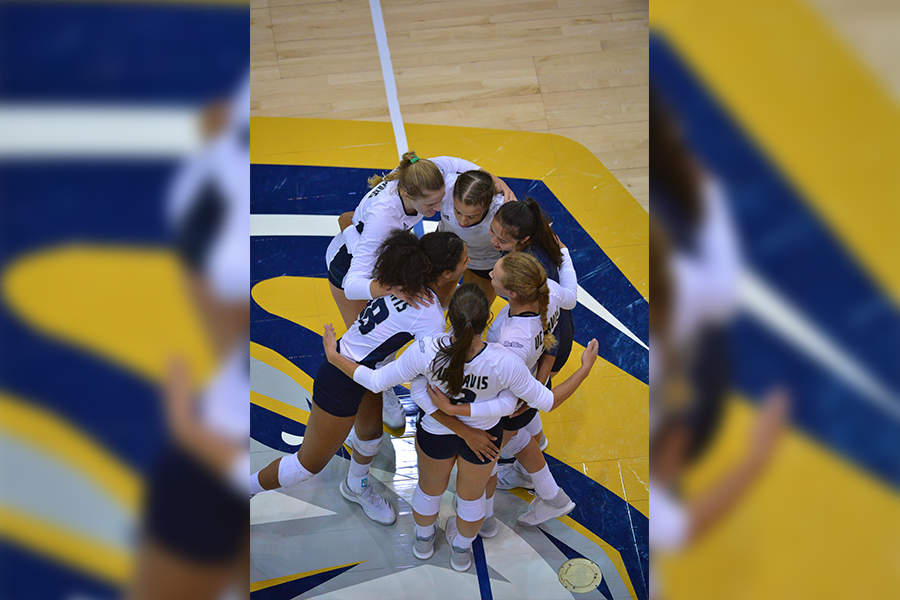
UC Davis volleyball season recap and preview

WAYNE TILCOCK / COURTESY

Volleyball starts solid, shaky in conference play losing two straight

In his fifth year as head coach of the UC Davis volleyball program, Dan Conners is optimistic about a season which features a solid and experienced roster. At the same time, he is cautious of going into matchup with low or high expectations. That’s not to say Conners doesn’t run a tight ship; for him and the team, competition is serious, but it’s also fun.

“I don’t know that I’m going into any weekend with any expectations,” Conners said of the women’s performance in the Aggie Invitational that ran from August 24 to 26. “Just trying to get us to play the best we can in each moment.”

Utah Valley University, Northern Arizona University, Holy Cross and the University of Nevada, Reno all competed in the Aggie Invitational.

“One strength of this team is our senior leadership,” Conners said. “They have a strong sense of purpose, direction and what they want to get accomplished this season.”

Conners’s principles shine through when you talk to his team.

“We have a saying: Fun with a serious purpose,” senior outside hitter, Emily Allen said after the team’s final Aggie Invitational matchup against NAU –– which the Aggies lost 3-1. “We don’t want to put too much pressure on it, but at the same time, we want to get after it.”

Before the NAU match, UC Davis hadn’t dropped a set to UVU, Holy Cross and UNR.

Allen gathered 61 kills through the Aggie Invitational. And through the 14 matches the Aggies have played, Allen now leads the team in kills with 203.

“We want to really enjoy it, and enjoying it comes with winning and playing well as a team,” Allen said.

For senior setter Maddie Merlino, her final season is about helping set the team in the right direction after she leaves UC Davis.

“For me, it’s about making connections with the girls,” Merlino said. “We want to be leaders creating leaders, so as team captains we want to make the next generation better leaders than we were.”

Throughout her volleyball career at UC Davis, Merlino feels the team has become closer  and developed chemistry with one another. This chemistry translates into smooth play on the court.

“We’ve slowly gotten closer and closer as we’ve been playing together,” Merlino said. “We just know what each other will do, we know each other’s tendencies, it’s really nice to just get into our flow. “I know exactly what [Emily] is going to do, she knows exactly what I’m going to do. Being seniors and having this big class is nice because we all play.”

“We have really good on-court connection,” Allen said.

“As well as a good off-court connection,” Merlino added.

Because the team will be graduating a good chunk of key players this coming spring, Merlino feels responsible for imparting the leadership skills and tools to the younger part of the team so that they can eventually take over that role.

“We’re trying to be really good leaders this year, and a lot of that focus is going into allowing that space for other people to step up too,” Merlino said. “We’re trying to bring the team together so even after we leave, they have a really good foundation, so some of the juniors and sophomores can really step into that leadership role for next year.”

Junior outside hitter Lauren Matias moved from her usual position on the left side of the court to the right side over the off-season, and is starting to get more comfortable in her new role.

“It’s definitely hard to gain confidence, but Maddie and I have gotten our tempo really good, and it’s been challenging in the beginning,” Matias said. “We finally got a connection today, so it was good to see and I feel like onward it’s going to be great.”

Matias has racked up 139 kills so far, and holds the team’s second spot in kills.   

Freshman middle blocker Josie Ough, who is now the tallest player in the program’s history at 6 feet 6 inches, made her debut against UVU, as did freshman setter Jane Seslar. Other freshmen who made their debuts were libero Rose Holscher, redshirt freshman opposite Leonie Strehl and redshirt freshman outside hitter Chelsea Maeglin.

After the Aggie Invitational, women’s volleyball had nine consecutive road matches. The Rose City Classic in Oregon, then a quick trip over the Causeway to beat Sacramento State. After that, the Aggies competed in the Santa Clara Invitation, which brought them to the Wildcat Classic in Arizona. All in all, the Aggies finished 8-4 in non-conference play. .

UC Davis started Big West Conference play with a tough opponent in No. 15 Cal Poly at Cal Poly. The Mustangs swept the Aggies in straight sets, putting them at 8-5.

UC Davis played at home on Friday for the first time since the Aggie Invitational, hosting the University of Hawai’i. The Rainbow Wahine, now 5-5, won without dropping a set to the Aggies, who now fall to 8-6 with a second straight conference loss. Hawai’i outhit UC Davis, .289 to .202 and collected 51 kills to UC Davis’ 39 kills.

Before the match started, sophomore outside hitter Mahalia White was honored as she continues her battle with cancer. Members of Keatons Child Cancer Alliance and UC Davis physicians who  are helping White recover were also in attendance. White is currently recovering and will not play the 2018-19 season. White led the team in kills as a freshman last year.

Matias lead UC Davis with 11 kills and hit an average of .321. Natasha Burns lead Hawai’i with 13 kills and hit an average of .455.

The Aggie defense was overwhelmed by the Rainbow Wahine attack while the Aggie attack didn’t do enough to win at the key moments.

“The reason it hurts is because we left points out there,” Conners said. “We were undisciplined on defense.”

Going into the match, Conners thought the team was prepared and noted the situations they prepped for in practice.

“A lot of balls fell in the middle of the court that we talked about, that we planned for,” Conners said. “The offspeed shots, the tips, the rolls – we knew they were coming and we still didn’t get them.”

Apart from the lead the Aggies took at the end of the third set, the very first point of the match and the first point of the third set, the Rainbow Wahine held the lead throughout the match.

UC Davis was able to gain some momentum when they caught up late in the third set, 19-19, after a Strehl kill put the Aggies up 22-20.

This set up a close battle for the set, and Matias gave UC Davis its closest opportunity to win a set with a kill, 24-23.

Hawai’i proceeded to win three straight points and close out the match, 26-24.

“I think the difference is that we got tight in those moments and they played loose,” Conners said. “We have to stay loose and play loose in those moments.”

For Conners, defense was the biggest factor in the loss.

“We let them hit at a percentage we should never let them hit,” Conners said.

As for the freshman class, Conners sees some bright spots in Strehl and Ough, but believes there is room for improvement.

Conners maintains that playing good defense is key for the team to be successful for their upcoming matches.

UC Davis will soon start a four game road trip, facing UC Irvine, UC Santa Barbara, Cal State Northridge and Long Beach State.

The next UC Davis home game will be Oct. 11 against UC Irvine.


Written by: Bobby John — friend@theaggie.org


Not reporting doesn’t mean not true

CAITLYN SAMPLEY / AGGIE

Kavanaugh accusations spark #WhyIDidntReport, survivors share stories

Over the past few weeks, two women have come forward with stories accusing Brett Kavanaugh, the Supreme Court nominee, of sexual assault. In an account published by The Washington Post, Dr. Christine Blasey Ford detailed an incident from high school, when a drunk, then-17-year-old Kavanaugh allegedly pinned her to a bed, attempted to tear off her clothes and stifled her screams with his hand. Soon after this accusation went public, Deborah Ramirez alleged that the judge once exposed himself to her 35 years ago during a drinking game in their college dorms at Yale University. Kavanaugh has denied the allegations, calling them “smears” and vowing that he would not be withdrawing his nomination.

Republican lawmakers quickly jumped to Kavanaugh’s defense, chalking the allegations up to partisan character assassination. And at the forefront of these dismissals is the same tired counterargument that often plagues victims of sexual assault who share their stories long after the fact: Why didn’t they say something sooner?

This sentiment was unfortunately yet unsurprisingly echoed by President Donald Trump on Twitter: “I have no doubt that, if the attack on Dr. Ford was as bad as she says, charges would have been immediately filed with local Law Enforcement Authorities by either her or her loving parents” — the implication being, of course, that decades-old sexual assault allegations are not to be believed because victims would’ve simply gone to the authorities then and there.

This is infuriatingly untrue, and such logic completely ignores the multitude of reasons why a survivor might not come forward right away, if ever. To counter the president’s baseless claim, the hashtag #WhyIDidntReport went viral, as hundreds of thousands of people came forward with their own stories to demonstrate the wide-ranging reasons victims might feel unable to immediately report their accounts of sexual misconduct.

As experts on sexual abuse and trauma have pointed out, many victims, conflicted with feelings of confusion and shame, wrestle for years with whether what happened to them was actually assault. And some, due to widespread victim blaming borne out of rape culture, believe the violation was simply their own fault. Ramirez recounted feeling guilty and “embarrassed” about her experience because she had been intoxicated that night.

Fears of disastrous repercussions for the victims and minimal punishment for the perpetrators also frequently prevent victims from speaking up. Some of the survivors participating in #WhyIDidntReport explained what happened when they did report their sexual assault. Some walked away, emotionally drained and traumatized, with ruined careers and tarnished reputations, while their abusers walked free. Ford recalled harboring the same concern when she considered going public with her allegation: “Why suffer through the annihilation if it’s not going to matter?”

Regardless of the veracity of either woman’s claims, the Editorial Board stands with sexual assault survivors who wish to remain silent as well as those who decide to speak out. We recognize that this pattern of questioning survivors for not immediately coming forward is sustained by a patriarchal system that attempts to explain away victims’ accounts, perpetuates the cycle of victim shaming and serves to exonerate abusers’ behavior.


Written by: The Editorial Board

Feeding wildlife comes with a cost

MELINDA CHEN / AGGIE

New fines imposed on those feeding creatures in Davis

Though locals have grown accustomed to the vast amount of wildlife Davis has to offer, many outsiders are unaware of how prevalent turkeys, squirrels and other populous wildlife are to the area. Yet locals and outsiders alike are too willing to share their meals with them and a lot do not know of the negative repercussions for feeding these animals.

The issue was first recognized at a city council meeting in 2016, as an official means of controlling the number of growing wild turkeys. Through this decision, the council decided to minimize the amount of turkeys in the region.

“The management plan identified a four-pronged management approach, including community outreach and deuce action, on problems associated with feeding turkeys, mass capture and relocation, promotion of natural predators and selective lethal removal of overly aggressive individuals,” said John McNerney, the wildlife resource specialist for the City of Davis.

This was the beginning of the many steps taken at the most recent city council meeting, in August, toward a “no feeding” ordinance for the rest of the creatures that started to cause issues for commercial and residential property. The ordinance can therefore aid safety and the education of those who may be uniformed with the impact that wild turkeys, among other animals, are now having.

“Living in off-campus housing for two years has helped me realize how important it is to not feed wildlife, considering the one time we fed birds they came back more aggressive and with many more of its kind,” said Claire Dodd, a third-year sociology-organizational studies major.

McNerney and the rest of the council agreed that there won’t be harsh fines given to patrons who feed wildlife. If given out, fines will range from $100 to $500, depending on if multiple offenses were committed. This law is intended to be a learning opportunity for residents and a last resort to gain compliance if other methods do not allow the person to comprehend the challenges that come with feeding wildlife.

“The supplemental feeding of wildlife is well known to cause certain wildlife to habituate to humans — loose natural wariness— localizes their daily activity and artificially support population growth,” McNerney said. “All of these, in turn, increase the frequency and magnitude of human v. wildlife conflict within the community.”

As these new standards are set in place and seriously considered, McNerney hopes to make a difference in safety, as feeding animals aggravates them and tends to result in dangerous situations. He is targeting bird feeders as a supplier of food for other wildlife that can reach it if suspended too low, providing sustenance for creatures besides birds. More specifically, these proposed plans are directed toward coyotes, wild turkeys, foxes, skunks, raccoons, possums, squirrels, ducks, geese, crows and gulls.

“Feeding squirrels, or any species of wild animal, does way more harm and desensitization to their surroundings than it does any good,” said Colleen McVay, a second-year animal biology major. “Many human foods can cause severe health and wellness problems for these animals, as their digestive tracts are not meant to break down man-made cuisine. Additionally, they can create a bad sense of dependency towards humans, instead of their natural surroundings.”


Written by: Lauren Tropio — city@theaggie.org


Sacramento Regional Transit to drop fees

0
CAITLYN SAMPLEY / AGGIE

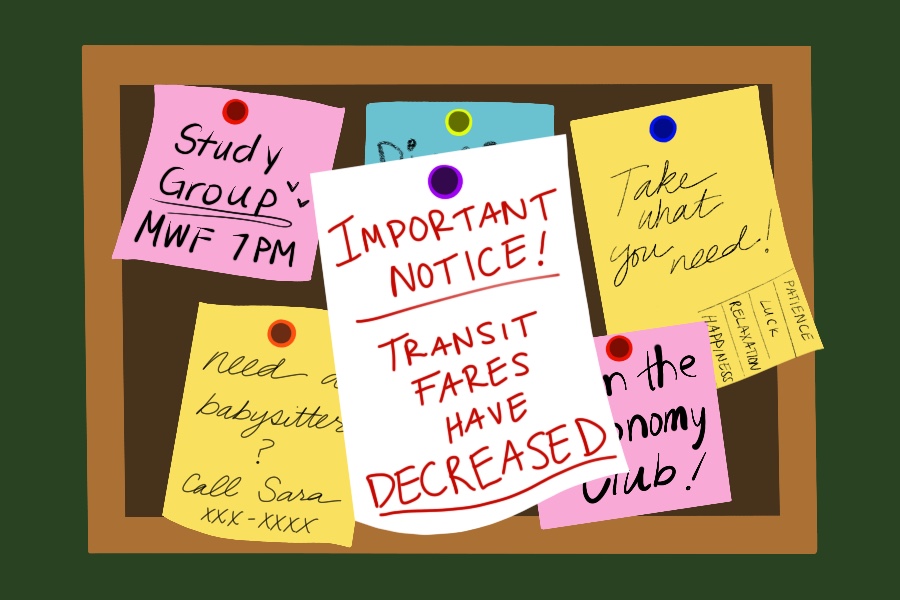
Bus, light rail fares decrease after 47 years

It has been about 47 years since Sacramento Regional Transit historically took a step to lower bus and light rail fares. Now, the agency will drop base fares from $2.75 per ride to $2.50 while reducing monthly passes from $110 to $100. In addition, as part of a package, senior monthly passes will be reduced as well as single ride discount tickets.

While rates were once raised, the new prices will bring the fares back to their original pricing. Henry Li, the SacRT general manager, stated that the agency was able to do this because of optimization and efficiencies.

“Over the last couple of years, SacRT has greatly improved our financial outlook through business optimization and operational efficiencies,” Li said in an email. “It is now important to reinvest some of the savings in our community through reduced fares and increased service. It is truly about providing the best transit service possible for the Sacramento region.”

Steve Hansen, the SacRT vice chair, believes that by reducing the fares, RT can attract new riders.

“SacRT can do this because of the improvements made to the agency’s fiscal outlook over the last couple of years,” Hansen said in an email. “Coupled with the return of transfer tickets and increased weekend light rail service, RT is working to attract new riders who have never used the system.”

The discussions about lowering fares started due to the beginning of a new fiscal year for the agency according to Devra Selenis, the vice president of communications and partnerships for SacRT.

“With the start of the new fiscal year, we realized there were savings achieved through operational efficiencies,” Selenis said. “We discussed how we could reinvest some of the savings in the community to give back to our riders.”

Christopher Flores, the assistant to SacRT’s general manager, explained that the fares are fleeting.

“We approved it as a temporary six month price drop because there are requirements on fare changes,” Flores said. “This means that what you’re doing isn’t going to be adversarially affecting certain demographics more than the other. That’s why it’s a six month pilot, but we will try to keep making it permanent.”

While the fares are short term, Li envisions long term goals for the agency.

“In the long-term, I believe, to grow ridership we need to prioritize our customers’ demands and provide them the service they want,” Li said in an email. “Additional headways, transfers and lower fares taken together should make it that much more convenient to ride our system. We have been hearing from customers asking for these changes and we are listening and taking action.”

As a UC Davis alumni, Flores stressed the importance of student transportation and how the agency is still looking to consistently improve.

“SacRT will be launching frequent electric vehicle shuttle service between UC Davis and the UC Davis Medical Center, with a stop downtown,” Flores said. “This will directly benefit the university and foster economic growth.”

Hansen further noted that SacRT has more plans to come that would expand its transit services.

“The SacRT board believes that if we see lower ridership on our traditional transit service, let’s innovate,” Hansen said in an email. “SacRT recently implemented a new on-demand ride-hailing service called SmaRT Ride. It’s like Lyft, but cheaper.”

There are numerous factors as to why ridership has declined.

“The problem is not just here; nationwide, traditional public transit use has declined from its peak just a few years back,” Hansen said. “Ridership reflects many factors: gas prices, development patterns and a community’s employment profile.”

In addition, one of the factors affected by such declines would be the environment, which has taken its toll.

“Everything suffers as fewer people take transit, but our environment can take the hardest hit,” Hansen said. “The Sacramento region is ranked the 5th in the nation for the worst ozone pollution. Public transportation helps improve the air quality by reducing vehicle miles travelled. Our transportation sector is the biggest contributor to greenhouse gas emissions and toxic air pollutants. By reducing the number of conventional engines on the road — through

transit use — our air and water fares a lot better.”

Li suggested that there is an importance in investing at the local level.

“The key message is that if we want to grow our system and get more single occupancy vehicles off the road, we need to invest in transit at the local level,” Li said in an email.


Written by: Stella Tran — city@theaggie.org


Cartoon: Too Early

0
GENEVIEVE RYAN / AGGIE


By GENEVIEVE RYAN — geryan@ucdavis.edu


Food waste good enough to eat

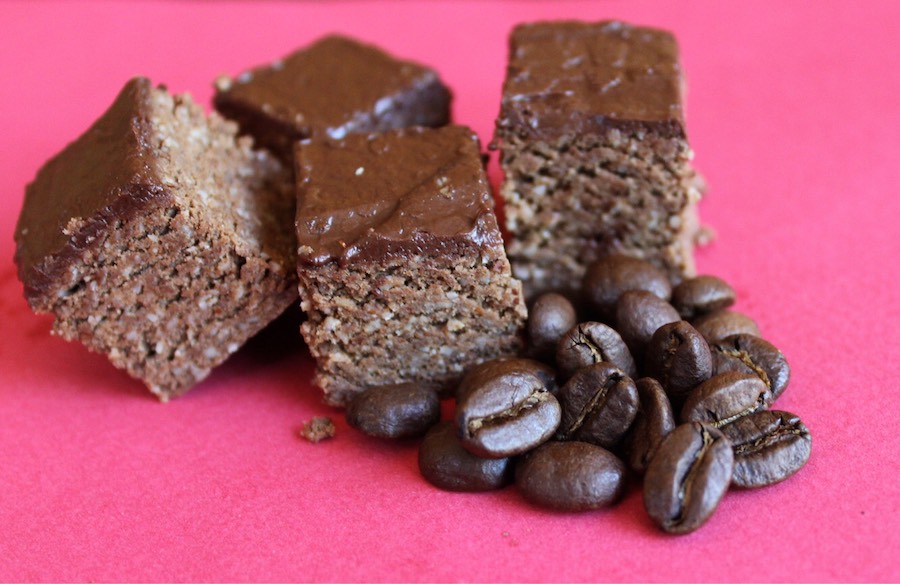
MADDISON GURROLA / COURTESY

A UC Davis project is turning food that would normally be thrown away into more edible and appealing products

Mocha bites, bite-sized snacks made of almond pulp and chocolate, are vegan and gluten-free. The product is not available in stores, but has showed up at San Francisco’s Fancy Food Show and was in UC Davis’ Big Bang! Business competition. There’s one little caveat though; this tasty snack is actually made from food waste.

A lot of it is consumers really understanding about food and really changing the idea, because it is termed ‘waste’ even though it’s not waste, there’s nothing wrong with the product,” said Maddison Gurrola, the creator of mocha bites.

When making food products, there is often a lot of waste. For example, when almond milk is made, almonds are squeezed and the liquid is collected. However the leftover mash, termed almond pulp, is still good to eat, but it isn’t utilized. Products like this often end up in animal feed or can be thrown away. Edward Spang created an internship program in the food science department to challenge undergraduate students to think about how to utilize this ‘food waste’.

This project [internship program] came out of a conversation with the chief executive officer of Urban Remedy, which is a juice company in Richmond, California…in the juicing process, there’s quite a bit of high quality food residue left after, you know, you juice fruit and vegetables,” Spang said. “So everyday he was looking out the loading dock and looking at all of this carrot pulp, and beet pulp and kale pulp that was heading off towards mostly animal farms as waste from their food processing system.”

In fall 2016, Spang helped put together a team of five interns, and they started brainstorming. The team met with mentors, such as Lauren Shimek and Charlotte Biltekoff, who helped them figure out how to approach the challenge.

“They [Shimek and Biltekoff] taught us design thinking, which is this way to approach a process with a human centered focus,” Gurrola said. “So we really wanted to make sure that the products we were making fulfilled some form of value for our target customer.”

After thinking about what type of customer would be most interested in this sort of product, each team member formulated a food item and helped each other improve their ideas.

“We were all giving ideas,” said Lucas Baker, a former team member. “We have this pulp, let’s do something about it. Once we formulated on our own, we picked three different products that were the best ones, and then with those three different products, we went into doing sensory.”

Baker had to step away from the team due to scheduling issues, but he appreciates the time he spent as an intern.

In food science, sensory lab is a general term used to test different aspects of a food product, such as overall taste appeal. Other variables to consider are the ability to create large quantities of product and food safety.

The top three items the team created were an earth bar, a carrot cake bar and the mocha bites. Baker created the earth bar from beet roots, carrot pulp and almond pulp and it was similar to granola bars. The carrot cake bar was made from carrot pulp and was created as a sweet refrigerated snack.

In spring of 2017, the team entered the Big Bang! Contest after a special challenge award was announced, with prize money going towards the project that “did more with less”. Since the mocha bites had the fewest food safety issues and seemed the most viable product, the team worked on building a business model around the bites. They tied for first place in the contest and received funding from the Kaiser Family Foundation.

In this most recent school year, Gurrola and Spang have been investigating questions they had about mocha bites. Experimenting with different flavors, getting more public feedback and showcasing the item has been at the forefront of their to-do list.

According to Spang, food waste is growing in importance, and just a handful of companies right now are focused on it. Gurrola believes that transforming food waste into edible products is at the cutting edge of food trends.

Recycling or repurposing waste in this way is very beneficial. It reduces energy and needs to supply food to people, and helps the environment by reducing the amount of food that is thrown away. Presently, food waste does make it into animal feed. Spang says that it would take major advancements in food upcycling to greatly affect the amount of feed farm animals get. Additionally, the Environmental Protection Agency has addressed this concern with a hierarchy of what takes priority when food loss and waste is involved.

“The top priority is to prevent food loss and food waste in the first place,” Spang said. “If you’re not going to prevent it, so you’re making something like juice and people want juice, there’s going to be food loss and food waste. The next important thing is to feed humans. And so directing it back into the food chain would be more important. And then the next step would be to feed animals.”

There is value in making sure farm animals get fed, but it is more advantageous to use this food to feed humans. Both Spang and Gurrola hope more companies will use food waste in their products.

“So if we can get people excited, it’s environmentally great, nutritionally it’s great, it’s kind of closing one of the circles in the food system,” Gurrola said. “Hopefully we will see more of it on the market.”


Written by: Rachel Paul— science@theaggie.org


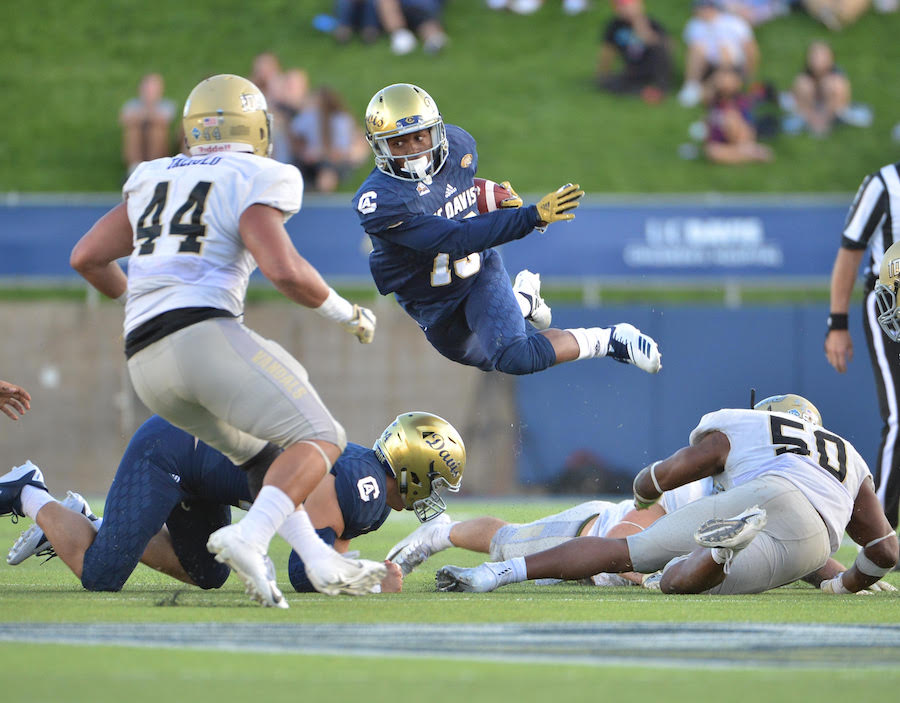
Aggies streak into bye week with blowout win

UC DAVIS ATHLETICS / COURTESY

UC Davis football firing on all cylinders in Big West opener

The UC Davis football team cruised to its third win of the season on Saturday evening at Aggie Stadium, pounding visiting Idaho by a final score of 44-21.

Even after a 20-point loss to Pac-12 power Stanford last weekend, the Aggies felt they battled hard and carried a lot of positive momentum into this week’s affair. They believed it was vital to begin Big Sky play with a win and protect their home field.

“We just try to keep getting better and improve,” said UC Davis Head Coach Dan Hawkins. “Our guys are in a really good place where they’re happy to compete and win, but always thinking they can play better. That’s a really blissful place to be as a football player and a coach.”

UC Davis built up a 44-7 lead after three quarters and thoroughly outplayed their competition in all three facets of the game.

The offense led the way with 512 total yards, including a season-high 256 yards on the ground. The team’s ability to establish the run proved critical in opening up passes and lanes and allowing other teammates on the offense to prosper.

“We can be pretty unstoppable,” said sophomore running back Tehran Thomas. “There’s just too many things to worry about and guys that can make plays. When we’re able to run the ball like this, it opens up so many opportunities for others.”

The running back tandem of Thomas and redshirt freshman Ulonzo Gilliam combined to rush for 203 yards while averaging over 6.5 yards per carry. Both backs present slightly different running styles to the attack which complemented each other nicely on the night.

“I think that since I’m a bigger back, I bring more of a downhill force,” Thomas said. “Ulonzo is really shifty and he makes a lot of guys miss in one-on-one opportunities. I think we all have unique skill sets that we’re able to bring to the table, that make us so diverse and hard to stop.”

Through the air, junior quarterback Jake Maier was extremely efficient overall and very precise on long throws down the field, completing seven passes of 15 yards or more. Sophomore wide receiver Jared Harrell led the receiving corps with four receptions for 66 yards.

The special teams unit also made a huge impact in Saturday’s victory, scoring a touchdown on a blocked punt and converting on all three field goal attempts. Early in the second quarter, sophomore linebacker Connor Airey reached his arm out and blocked an Idaho punt at the goal line, which was scooped up by senior Namane Modise to give the Aggies a 21-0 advantage at the time.

Defensively, UC Davis completely dictated the flow of the Idaho offense, which was held scoreless up until the final two minutes of the first half. They came up with two turnovers inside their own five-yard line to deny the Vandals of points, including a forced fumble by sophomore linebacker Khanii Lesane at the three-yard line and an interception by senior linebacker Mason Moe at the one-yard line. Overall, the defense forced five three-and-outs and hardly seemed to be on the field in the middle of the game.

“I think it’s a credit to the coaches getting us in the right spot and to us for being here all summer gelling and meshing with the guys,” said senior cornerback Isaiah Olave, who led the team with nine tackles. “I think we’re a lot deeper and faster on the field this year.

“We have about 25 guys that could start on defense,” Olave said. “Having that mindset out on the field helps a lot and the confidence that you can play with anyone out there.”

In addition to the usual playmakers on offense, sophomore wide receiver Darius Livingston recorded his first career touchdown catch on a 16-yard grab late in the third quarter. This was a huge moment for Livingston, a player who has fought through a lot of adversity and overcome many obstacles to get where he is today. After making the roster two years ago as a walk-on and sitting out a season as a redshirt, he tore his ACL and was forced to miss all of last season. His performance on Saturday evening was a big milestone for how far he’s come in a difficult journey.

“This spring, I showed what I can do and now all this hard work is paying off,” Livingston said. “No matter what you go through, you’ve got to keep your head up.”

The Aggies received the opening kickoff and promptly marched 75 yards down the field in just over three minutes to take an early 7-0 lead. Harrell and fellow sophomore wide receiver Khris Vaughn both made long receptions to keep the chains moving, before senior wide receiver Keelan Doss streaked open down the seam for an easy 20-yard touchdown catch, his first of the season.

The UC Davis offense started to assert its dominance up front and establish the run on its third possession of the game. The team leaned on Thomas, who carried the ball six times for 30 yards on the drive and capped things off with a four-yard score in the final minute of the opening quarter.

After the blocked punt, the Aggies managed to tack on six more points before halftime on a pair of field goals by junior kicker Max O’Rourke.

UC Davis slammed the door shut in the third quarter with 17 unanswered points, paving the way for a stress-free fourth quarter that allowed some younger backup players to see the field.

“It’s fun when you can play a lot of guys,” Hawkins said. “We want to get a lot of people in the game, let them contribute, and reward them for working hard.”

Idaho came out of the locker room and looked to get back into the game with a commanding 10-play drive, but the UC Davis defense came through with another big play to turn away the visitors deep in the red zone. Sophomore defensive back Isaiah Thomas tipped a pass over the middle and Moe picked it off at the one-yard line, before returning it 24 yards the other way.

Soon after, UC Davis settled for another field goal from 35 yards out to push their lead to 30-7 midway through the third quarter.

After another three-and-out on defense, the Aggies found the end zone on the very next play as Gilliam showed off his versatility in the backfield and took a quick dump-off 34 yards for a touchdown.  

A pair of late touchdowns by Idaho in the fourth quarter weren’t enough to ruin the spirits in the Aggie locker room. The team will enter its by-week after four solid performances to start the year and feels that it has a lot to look forward to as its slate of conference games progresses.

“I feel like the sky’s the limit and we haven’t played up to our potential yet,” Gilliam said. “We can be number one in the conference soon and we have a lot of good things going for us right now.”

The team will return to action on Oct. 6 with a road game at Northern Colorado.


Written by: Brendan Ogburn — sports@theaggie.org


Humor: For preventing guns from being a burden to their owners or country, and for making our love of them beneficial to the public

0

FIBONNACI BLUE [CC BY 2.0] / FLICKR
A novel approach for reducing gun violence

Every mass shooting in America reignites the gun control debate, but even the noble efforts of the Parkland students have yet to produce the moderate gun control measures that the vast majority of Americans want.

Whether this deadlock is because guns have been a beloved and iconic fixture in American culture for decades, or simply because the NRA has Congress by the balls, is anyone’s guess. However, this remains certain: The United States has failed miserably in its gun control efforts, and it seems futile to hope that anything will ever change in the current political and cultural environment.

Thus, we obviously need to develop a new method of “gun control,” a novel approach that is consistent with America’s fetishistic love of guns, yet is also safer.

The proposal is this: Forget trying to limit our gun rights. Instead, expand the rights of the guns themselves, granting them the legal status of human beings. Not gun rights — guns’ rights!

This is perfectly reasonable since we have already established that corporations are people, and especially since our years of collective inaction have, by implication, shown that we value guns more than actual human life.

Of course, guns being human beings would produce many new legal issues, but this actually simplifies the gun debate. For example, the entire argument over the ethics of buying, selling and owning firearms could easily be resolved if guns are people, as any transactions of guns whatsoever would technically be human trafficking.

While this could disappoint gun owners, they must remember that this is not gun control. This is an effort to empower guns by affording them greater dignity and respect. If one really does love their guns, they will realize that letting them go is best for their guns. We need to have strong, independent firearms.

However, if we rule that gun transactions are indeed legitimate, then America’s gun lovers will need to legally prove that they are in consensual relationships with their guns. Since proud gun nuts frequently hunt, hit the shooting range and shamelessly stroll through public places armed to the teeth, they would need to prove that the guns are not being exploited, harassed or coerced against their will just for the pleasure of those who grasp, wield, stroke and fire them.

Additionally, many gun lovers drool over gun enthusiast magazines with sinful desire. Elevating guns to humans would certainly require us to reclassify these magazines as pornographic. This could help to reduce the objectification of guns and restrict child access to sexually explicit “gun material” via toy guns, gun video games and The Expendables movies.

This “new philosophy of guns” could utterly transform our understanding of guns and revolutionize gun rhetoric. Perhaps most significantly, it provides an airtight counter argument that soundly defeats the frequent talking-point, “Guns don’t kill people, people kill people.” This reasoning is now invalid because, if guns are people and people kill people, then guns do in fact kill people. Checkmate.

Written by: Benjamin Porter — bbporter@ucdavis.edu

(This article is humor and/or satire, and its content is purely fictional. The story and the names of “sources” are fictionalized.)

Fall Quarter preview: exciting events to look forward to

ALEXA FONTANILLA / AGGIE FILE

Events include Sunset Festival, Involvement Fair, Internship and Career Fair

A number of exciting events are scheduled for Fall Quarter. Here are a few to make note of:

Sept. 28

The quarter will kick off with ASUCD’s Sunset Festival on Sept. 28. This event will be held on the Quad to welcome new and returning students with live music and dance performances.

According to the Sunset Fest website, the event will feature BAAUER, a DJ known for his EDM/Trap beats, and most famous for the viral internet sensation “Harlem Shake.” Students will also have the chance learn about ASUCD and other student organizations which will be present to answer questions.

“ASUCD has been working hard to ensure that this music festival is not only successful but it enriches the college experience for all Aggies in attendance,” said ASUCD Vice President Shaniah Branson.

Sept. 23

The Confucius Institute (CI) will host several engaging events throughout the quarter, including its annual Mid-Autumn Festival on Sept. 23.

“The Mid-Autumn Festival is the second greatest festival in China after the Chinese New Year,” said CI instructor Kate Zhang. “The day is also known as the Moon Festival … [since] blooming flowers and full moons is a good wish often expressed by Chinese people.”

According to Zhang, the event will feature music, dance, drinks and food, including the festival’s famous Moon Cakes.

Sept. 27

The Manetti Shrem Museum is hosting its Fall Season Celebration with live music by Munechild, self-portrait making and two new exhibits from the artists Bruce Nauman and Irving Marcus.

The event is free for all, and snacks and refreshments will be provided.

Oct. 4

For students interested in art and performance, the Mondavi Center is hosting a lineup of performances for the quarter, from string quartets to jazz, to digital and laser holographic technology.

The annual Barbara K. Jackson Rising Stars of Opera event will be held on Oct. 4. Jackson, a supporter of the arts, died recently at the age of 99. Seven young singers, sponsored by Jackson, will take the stage at the October event to honor Jackson’s life.

Oct. 10

The annual Involvement Fair, organized by the Center for Student Involvement, will be held on the Quad. Over 240 organizations will be tabling and providing information on how to get involved in their groups and programs.

“This year it’s bigger than ever because we’re using both sides of the Quad and have double the number of tables,” said Joseph Martinez, the Student Expression & Activities coordinator for the CSI. “We’ve also never included departments before and now we get to include departments too.”

Martinez was also excited to announce that the event will offer over 3,000 giveaways, including a chance for one UC Davis student to win a bike from Pepsi.

Oct. 17-18

For students thinking about life after college, Grad and Law School Information day will be held on Oct. 17. Additionally, the Fall 2018 Career Fair will be held from Oct. 17-18, allowing students to discover graduate programs and job opportunities offered by a variety of schools and companies.


Written by: Clara Zhao — campus@theaggie.org

Regents vote to decrease tuition

BRIAN LANDRY / AGGIE FILE

Budget plans approved for 2018-19 school year

On July 19, 2018, the UC Board of Regents voted to approve the 2018-19 budget plan which saw an increase in state funding. The approved plan reduced UC tuition by $60 while the student service fee, at $1,128 a year, remains unchanged.

The tuition reduction is a result of the termination of a “temporary surcharge” which began in the fall of 2007, “to recoup damages from two earlier class-action lawsuits, Kashmiri v. Regents and Luquetta v. Regents. By fall 2018, nearly all of those costs will be fully recovered,” according to a press release by the UCOP.
“The class-action lawsuits, one filed in 2003 and the other in 2007, stemmed from claims made by students at UC’s professional schools that the university raised their tuition without sufficient notice,” the press release stated. “The university disagreed, but lost both cases on appeal. In total, the litigation process cost the university nearly $100 million.”

The UC Student Association lobbied to secure additional funding from the California legislature. According to a press release sent by the UCSA, the association said it is glad to see the funds approved by Governor Brown for the UC system.

The press release also highlighted a number of issues the association believes the state budget failed to address, including “support services, counselors, and tenure track faculty integral for student success.”

Written by: Sabrina Habchi  — campus@theaggie.org

Humor: First-year to be knighted into adulthood with Bob Marley poster

0

Ah, the sweet smell of “adulthood”

In the wake of move-in day, several first-years are jazzed to get a new lease on life with a brand new sense of independence. As we all know, the most accurate way to express this independence comes in three options. For one, you can go get your once-long, “Little House on the Prairie” hair cut into a shaggy bob and post a picture captioned “Oops,” as if you ran with scissors. Secondly, you could get a small tattoo in a spot that literally no one will ever see just so you can feel a little tough. Lastly, you can get a Bob Marley poster.

Bob Marley was one of the greatest musicians of all time, as he inspired peace and love in his listeners. What better way to commemorate that message than with a $2 poster from the end of an aisle at Target? There is no better way.

New first-year Toby Pepper learned this beautiful lesson when he moved into his dorm just this morning. When he walked into his new room, there was a tall figure clad in armor made of Hot Cheetos bags and Amazon boxes. He declared himself to be a Knight of the Dining Commons Tables. He unsheathed a sword, which — hey… is that just a rolled-up Bob Marley poster?

He rolled the little plastic wrapper off of this high-quality product, revealing the ULTIMATE Bob Marley poster. It was one of a billion lil’ Bob Marleys that melded together in red, yellow and green creating an ombre effect. It was beauty. It was grace. It was Bob Marley’s damn face.

Toby Pepper took the poster in his hands.

“Why are you giving this to me?” Pepper asked. “I don’t know anything about Bob Marley.”

“You don’t need to,” the knight said. “All you need to know is that this guy probably smoked a lot of weed, and that’s probably a part of college culture based on what you’ve seen in ‘21 Jump Street.’

In a cloud of Axe body spray, the knight disappeared, leaving Toby Pepper with more questions than answers.

“Father, what’s a weed?” Toby asked, turning to face his father. It was no use. With the Bob Marley poster came one consequence: He was now too cool for his parents. Parents cannot come within 500 feet of a Bob Marley poster. That’s science.

Toby laid in bed that night looking up at the angelic face of Mr. Marley. He wondered what he’d do if he was stuck in a lil’ bedroom with a stranger and no dad and probably no weed to the best of his knowledge.

“Won’t you help to sing these songs of freedom?” Bob Marley sang softly from the poster.

“Sing? It’s 2 a.m. and this guy next to me is a major snorer, but I don’t have the heart to tell him,” Pepper said. “Besides, what freedom? College blows so far. All I got was a poster and a shirt that says ‘Aggie Pack’ when they clearly should have called it the ‘Aggie Alliance.’”

“All these facts are true,” Marley sang softly once more to no particular rhythm. “However, did you know that in college you can eat pizza every day and see minimal consequences?”

Pepper sat up straight in his bed.

“I think I might like it here,” he sang back to Marley.

Written by: Olivia Luchini — ocluchini@ucdavis.edu

(This article is humor and/or satire, and its content is purely fictional. The story and the names of “sources” are fictionalized.)

UC Davis football puts up tough effort against #9 Stanford

0
UC DAVIS ATHLETICS

Aggies fail to take advantage of early opportunities, battle to the end against Pac-12 power

The UC Davis football team suffered its first defeat of the 2018 season on Saturday afternoon, falling to host Stanford by a final score of 30-10.

The game got off to a very promising start for UC Davis, as the Aggies grabbed two interceptions in the opening seven minutes of play. On the flip side, the team ended up with only three points to show for it and essentially let Stanford off the hook.

“I thought we hung in there, but when you play a team like this you’ve got to get a lot of things going your way and you’ve got to maximize every opportunity,” said UC Davis head coach Dan Hawkins. “When you don’t do that, you minimize your opportunities to win and it really comes down to those things.”

The UC Davis offense struggled to find a rhythm in the first half with a pass-heavy attack, picking up just five first downs and going 0-for-7 on third downs. They failed to capitalize on the turnovers in the first quarter, despite being given excellent field position deep in enemy territory. As a result, the Aggie defense was on the field for the majority of the first and second quarters, with Stanford maintaining the advantage in time of possession by almost 11 minutes over UC Davis.

Overall, the UC Davis defense played quite well throughout the game and made key stops when backed up in their own territory.

“I thought they battled the whole day, I really did,” Hawkins said. “They did a nice job getting stops in the red zone against some short fields.

The unit was effective in getting to the quarterback at times and limited Stanford to just three third down conversions on 14 attempts.

“I think the defense did a phenomenal job overall and caused havoc,” said senior linebacker Mason Moe. “We created turnovers and got the ball back for our offense.”

On the second Stanford drive of the game, Aggie junior linebacker Nas Anesi jumped in front of a crossing route over the middle for his first career interception and returned the ball to the 12-yard line. UC Davis was unable to advance the football and settled for a 26-yard field goal from junior kicker Max O’Rourke, following a pair of unsuccessful option pass plays. This would end up being the team’s  only lead of the afternoon.

On the next Stanford drive, Moe forced a fumble on Cardinal quarterback K.J. Costello, which was scooped up by redshirt freshman cornerback Devon King and returned 19 yards for a touchdown. After a replay review, the call on the field was reversed to an incomplete pass, taking six points off the board for UC Davis. On the very next play, sophomore defensive back Isaiah Thomas intercepted an overthrown ball at the 47-yard line, but the Aggies couldn’t capitalize and ended up turning the ball over on downs four plays later.

Stanford eventually settled down on offense as the first half went on and rattled off the next 17 points, which included two touchdown catches by senior wide receiver J.J. Arcega-Whiteside.

The Aggies had a chance to put points on the board just before halftime, when they started to gain some momentum with quick completions and an up-tempo attack. Senior wide receiver Keelan Doss made a leaping, acrobatic catch with two defenders draped around him to move the chains on a fourth-and-17 play. UC Davis eventually came away empty and turned the ball over on downs at the 24-yard line with under a minute remaining in the half.

Doss’ performance was one of the lone bright spots for the Aggie offense, as he tallied 10 catches for 90 yards in the first half. With a few more catches in the third quarter, Doss finished with over 100 yards in a game for the 13th time in his career, garnering some praise from Stanford head coach David Shaw.

“This guy is really good,” Shaw said. “He’s fast, he’s long, tracks the deep ball really well. That was potentially a 200-yard receiving game if our guys don’t make the plays that they did make on him. He’s a good football player, and he’s going to play well at the next level.”

Hawkins was also impressed by what he saw from Doss, who was targeted 25 times, and his ability to adjust to defenses in the middle of a game.

“He’s so versatile and he’s really smart,” Hawkins said. “He knows what the defense is trying to do to him and to us and you can move him around. So that’s a big benefit for us, because he’s not locked into one spot, so you can kind of roll him around a little bit. But then we’ve got to have other guys make plays as well.”

The Aggies had multiple opportunities to score in the second half, but continued to come up empty. On their second possession of the third quarter, the UC Davis offense was sparked by pass plays of 25 and 20 yards to junior tight end Wesley Preece and redshirt freshman running back Ulonzo Gilliam. The drive ended with a 43-yard field goal attempt that was blocked.

A long 33-yard run by junior running back Namane Modise got the offense going again as the fourth quarter began, but the Aggies committed their first turnover of the day when a pass from junior quarterback Jake Maier was tipped at the line of scrimmage and intercepted at the seven-yard line.

UC Davis managed to find the end zone with a quick three-play scoring drive in the final 15 seconds of regulation. On the last play of the game, senior quarterback C.J. Spencer got loose for a 26-yard touchdown reception.  

Stanford added a pair of field goals and a short touchdown run in the second half, but were generally held in check by the Aggie defense.

Despite the loss, UC Davis players were proud of their effort on Saturday against the ninth ranked team in the country and definitely felt that there were some positive takeaways from the game.

“Our defense had a hell of a day,” Doss said. “They were causing turnovers, playing pretty good, and we’re going to go back and watch film and carry this momentum over through the next couple of weeks.”

UC Davis will begin Big Sky conference play next Saturday afternoon with a 4 p.m. kickoff against Idaho at Aggie Stadium.


Written by: Brendan Ogburn — sports@theaggie.org

Guest: A reflection on the efforts to crush student voices and Palestinian activism’s future

0
Photo from March 5, 2018 when students from Students for Justice in Palestine and Students for a Democratic Society protested against the wall between Israel and Palestine. (RAUL MORALES / AGGIE FILE)

The watchlist Canary Mission recently targeted UC Davis student activists

Near the end of Spring Quarter, students across diverse communities gathered in efforts to make ASUCD the first student government in the country condemning the infamous Canary Mission watchlist. Student Resolution 19, spearheaded by the Muslim student community, denounced forces that threatened student activism — whether that was ICE, plainclothes officers or student watchlists.

As a large, swirling crowd of burgundy-clad activists streamed into the hallways of the Memorial Union, preparing to testify for the Resolution, we took a moment outside the meeting room to pause for reflections. One particular moment from that Thursday night stands out in my mind and it was when a student reminded us of the possible consequences of our public support — that, in our very effort to make activism safer for future students, we might be targeted.

It was a concern never quite far from our minds. Leading up to the Resolution, students who promised to co-sponsor the bill had backed out, anxious that their names might be added to the very lists we were fighting against. In fact, just hours before the vote, rumors about the Resolution caused some student representatives to ask us not to present it at all, fearful of being targeted themselves by voting.

Of course, the Resolution was presented and did succeed. Students heard testimony after testimony from activists packing the room and flipped through pages after pages of reports, laying bare the ugly nature of these watchlists. And so, despite all the whispering campaigns and fear-mongering that had swirled around the Resolution for weeks, it passed unanimously.

Less than a month later, Canary Mission inevitably responded. They placed 16 students, including myself and other Resolution organizers, on their watchlist — accusing us of “supporting terrorism” and portraying long-standing Davis organizations, such as the Muslim Student Association, Students for Justice in Palestine and Jewish Voice for Peace, as fundamentally anti-Semitic. With a newfound sense of vitriol (and perhaps some panic at the thought of more campus condemnations), the site blasted our profiles across social media, inviting hateful trolls. As a special gift, the site even published a McCarthyist report on “anti-Israeli,” “anti-Semitic” activity they claimed was flooding the Davis campus.

“Evidence” included footage of students partaking in the global Salt Water Challenge and screenshots of joining public Facebook student groups. In an amusingly ironic twist, even a recent article I had penned for The Aggie, in which I spoke out against the chilling effects of Canary Mission, was cited.

This is not some reactionary, pity piece decrying the injustice of external organizations deliberately targeting our students. Palestinian activists, after all, are well-acquainted with the difficulty of their activism. After the Palestinian Boycott, Divestment and Sanctions movement, much like its South African BDS model, began to gain real momentum across campuses, Canary Mission was founded with the implicit aim of targeting pro-Palestinian community leaders.

Despite the many organizations hunting down pro-Palestinian student voices — such as Canary Mission with its unabashedly explicit intention of utilizing its watchlist to hurt their career opportunities, or even, increasingly, incite FBI investigation — activists know it’s still overshadowed by the consequences for Palestinians themselves. Presence on these watchlists can ban Palestinian students from visiting their own homeland ever again, harassed and indefinitely barred by Israeli security. And, of course, all these consequences for American college students pale in comparison to the relentless cycle of state-sponsored oppression the Palestinian people themselves face day after day after day.

Instead, this article intends to quietly articulate a certainty at the heart of our work. Despite the desperate efforts of shadowy plutocrats pouring money into watchlists to drag students, or even fellow students hoping to defame Palestinian activists by recording every event in the hope of some slipup they can leverage, the pro-Palestinian movement will only continue to grow stronger.

Don’t be mistaken: Like any other young campaign, the pro-Palestinian movement will not be perfect. It will inevitably make strategic missteps, have internal dissension and even misdirect some of its passion. But in the end, it will win. Not because of some logistical superiority, but rather because of the simple, undeniable truth of its message — that Palestinians too deserve a right to their ancestral land; that they too deserve to be safe from a violent, ethnocentric, neo-colonial state; that they too deserve to once again live in peace with their Muslim, Jewish and Christian neighbors.

The dedication to justice driving Palestinian activism today is, after all, fueled from the same brilliant flame that inspired so many great movements in history — whether that was the Civil Rights Movement, or students advocating for BDS against an apartheid South Africa, or the civilians who resisted the evil Nazi regime.

And it burns from the same torch that continues to light the path for so many movements today — rallying around Black Lives Matter; battling against a cruel administration separating immigrant families; fighting the anti-Semitic and anti-Islamic poison brewing in the alt-right; speaking out against the blood-soaked, tyrannical regimes killing innocents in Syria, Yemen, Burma and so many other lands.

At its heart, the pro-Palestinian movement is but a continuation of one of our proudest traditions: the fight against oppression committed by anyone, anywhere. It is a cause that appeals to a higher, nobler calling, rooted deeply and inextricably within the human soul. It is this sincere truth that will ensure the movement’s resiliency — that, despite the multitude of powerful organizations seeking to stamp it out, it will thrive; that, for every person who backs out out of fear, a dozen more will step in to take their place; that, for every injustice committed against the Palestinian people, the cause will only burn brighter in the hearts of millions around the world.  

As activists we believe that the oft-heard mantra — “Free, Free Palestine” — chanted in every rally will someday be spoken from every tongue across the world. If that means students and faculty who speak up now are subsequently labeled “canaries” — simply for speaking out against naked injustice — then more canaries will gather.

Until then, the movement continues.


Adnan Perwez is a fourth-year student studying political science, history and religious studies at UC Davis. He is the author of Senate Resolution 19 and has been involved in activism through a variety of organizations, including the Ethnic and Cultural Affairs Committee, SJP and the Council on American-Islamic Relations. He served as the president of the Muslim Student Association at UC Davis during the 2017-2018 academic year and currently serves as the president of the Board of Directors for the statewide umbrella nonprofit Muslim Student Association West.


Written by: Adnan Perwez