61.7 F
Davis

Davis, California

Sunday, December 21, 2025
Home Blog Page 499

Please enjoy responsibly

CAITLYN SAMPLEY / AGGIE

This school year don’t glorify, encourage blackout culture

As UC Davis begins another school year, new and returning students will be thrown into the typical college social scene, one that is inextricably linked to frequent partying and blackout drinking. This is common for nearly every institution of higher learning across the country. The American college experience is practically defined by its riotous fraternity parties, drunken shenanigans and drug-laden escapades, which have been perpetuated and glorified by prominent American films and popular social media pages like Total Frat Move and 5thyear.

This, of course, shouldn’t be news to anyone –– the exaltation of college blackout culture has been relevant for decades, long before any current UC Davis undergraduates were born. There’s nothing inherently wrong with a good time, especially as students on college campuses reach legal drinking age and need a release from the pressures of pursuing an education. But what often gets lost in the romanticization of partying is the unsettling fact that heavy drinking and drug use have severe negative consequences that extend beyond a bad hangover.

A 2015 report published by the National Institute of Alcohol Abuse and Alcoholism found a correlation between frequent and excessive alcohol use and 97,000 incidents of sexual assault and found that approximately one in every five college students suffer from an alcohol use disorder. Further studies indicate that 50 percent of college students who drink have experienced a blackout.

This pattern of risk doesn’t stop at alcohol either. The abuse of prescription opioids on college campuses increased 343 percent between 1993 and 2005. The U.S. as a whole faces a severe opioid overdose epidemic and the stakes could not be higher.

Despite the clear dangers that uncontrolled drinking and drug use present, college students continue to engage in this behavior. For some, blacking out and popping pills are viewed as a way to boost one’s social status, while those same activities are used by others to cope with the stress of being a college student. The “functioning” addict or alcoholic is celebrated as students find that they are able to drink heavily and take drugs more often without it visibly affecting their academic performance.

This Editorial Board does not intend to preach the virtues of abstaining from alcohol or discourage UC Davis students from going forth and partying. Celebrate birthdays and hard-fought achievements. Enjoy college. A good night out with a few drinks can be incredibly fun for any college student.

At the same time, students must do their part to avoid participating in and perpetuating the insidious blackout facet of college culture. Alcohol poisoning and drug overdose are real risks that are destructive to both those who use and to the people around them. As Aggies, we have a responsibility to look out for one another and to party responsibly. Don’t be afraid to check in with your friends –– it shouldn’t be controversial to support the welfare of those you care about. Take advantage of Aggies Act, a recently-adopted campus protocol that allows students to contact emergency services in order to save the lives of others without facing legal trouble for first-time offenders of underage drinking or drug possession. We as a community can do better. There’s no excuse not to.


Written by: The Editorial Board

Introduction to October Baseball

Race to pennants in full swing as regular season approaches final games

As Major League Baseball’s regular season faces its last few games, the races for titles, awards and the fight to play in October have officially begun. With the release of the postseason schedule and the final 2018 World Series game set for October 31, teams and individual players are making their last attempts to earn themselves a spot in MLB history.

As of Sept. 20th, the Cleveland Indians clinched the American League Central, ensuring that they will live to play in the AL division series. They have since clinched their division. The reigning World Champions, the Houston Astros, currently lead the AL West, with the Oakland Athletics 3.5 games behind. The current AL wild card series would be played between the New York Yankees with a 94-59 win-loss record, and the Oakland Athletics with a 92-61 win-loss record.

The race for the National League division titles have been much more close, with no postseason berths or divisions clinched yet. The Atlanta Braves are leading the East, with the Philadelphia Phillies 5.5 games back. The Chicago Cubs are in first place in the Central, but have the Milwaukee Brewers close behind at 2.5 games back. The battle for the West is currently topped by the Los Angeles Dodgers, but the leader has been constantly fluctuating between the Dodgers, the Colorado Rockies and the Arizona Diamondbacks. With the current standings, the Milwaukee Brewers, with a win-loss record of 87-66, and the St. Louis Cardinals, with a 85-69 win-loss record would compete for the NL wild card spot.

Like the teams’ standings, the predictions for the title of Most Valuable Players for the two respective leagues are in a state of constant change throughout the season, but three players from each league have appeared to emerge from the pack of contestants. The Red Sox’s Mookie Betts, the Los Angeles Angels’ Mike Trout and the Red Sox’s J.D. Martinez have all proved themselves to be worthy of the title. Betts is currently favored to win the award, leading the league in both batting average and wins above replacement. Former AL MVP Mike Trout leads the league in on-base and slugging percentage, and it has been questioned whether or not a brief injury in the middle of the season will knock down his chances of winning the award. J.D. Martinez is close behind his teammate, Betts, in a number of categories and leads the majors in runs batted in.

The Chicago Cubs’ Javier Baez is currently in the lead for National League MVP title; he leads the NL in runs batted in. The Milwaukee Brewers’ Christian Yelich is close behind with high rankings in both batting average and on-base and slugging percentages, but his lower number of home runs and runs batted in currently set him at second place in the MVP odds. Nolan Arenado of the Colorado Rockies sits right behind, with high rankings in on-base and slugging percentage, home runs and runs batted in, but does not lead the league in any category.

The 2018 season also introduced brand-new talent, making the award for Rookie of the Year a close race as well. The National League’s battle has solo-ed out two players, Ronald Acuna Jr. and Juan Soto, as its frontrunners. The Atlanta Braves’ outfielder, Acuna Jr., has been making a name for himself since his debut in late April. Though his batting average of .293 and total of 26 home runs alone have set him apart from the pack, Acuna Jr.’s speed and agility in his position have rounded him out to be a key player in the Braves’ success this year – all of which helped him earn the in-season titles of National League Rookie of the Month for the month of August and National League Player of the Week for the week of August 19th.

Acuna Jr.’s main competition, the Washington Nationals’ outfielder Juan Soto, has been making waves in the same division . At 19 years old, Soto completely bypassed Triple-A to join the Nationals’ roster in mid-May, and, though he came into the season a few weeks late, his overall performance so far has not appeared to be lagging behind. He beats Acuna Jr. in batting average, with his at .298, but has fewer home runs. His on-base plus slugging percentage, which is a statistic that calculates in both a player’s ability to get on base and his ability to hit for power, is set at .933, and he has performed well in his outfield position. He was named the National League Rookie of the Month two months in a row, in June and July.

In the American League, three key rookies have been at the height of the Rookie of the Year conversation. The New York Yankees’ third baseman Miguel Andujar leads all MLB rookies in a number of categories, including hits and runs batted in. His statistics also have put him among some of New York’s all-time greatest; he began the month of September with 38 doubles under his belt, the most for a Yankee since Robinson Cano’s 41 in 2013, and he is the first Yankee to have minimum 65 extra-base hits in his first 131 games as a pro since Joe DiMaggio.

The Yankees brought another Rookie of the Year candidate to the table with infielder Gleyber Torres. With a .300 batting average at the end of May, 18 home runs, and a .482 slugging percentage, Torres appeared to be tied neck and neck with teammate Andujar up until the All-Star Break. Though the second half of his first pro season did not match up to the quality of the first half, with his batting average sloping to under .200 in the month of August, Gleyber was able to bring his percentage back up to .478 and is still in the running for American League Rookie of the Year.

The Los Angeles Angels’ Shohei Ohtani represented a unique talent in being both a power hitter and a starting pitcher . Known as the ‘Japanese Babe Ruth’ back in his home country, Ohtani took the American League by storm by executing a .305 batting average in his first two months while enjoying a 3.19 pitching earned runs average. His combination of rare batting and pitching abilities make him comparable to some of the legends in baseball, and, though he missed a month of playing time due to an elbow injury, his start to his career still ranks him among the top newcomers of the 2018 season.

The last game of the regular season is set on Oct. 1st, with the teams competing for the wild card beginning their battles the day after, and the fight to become world champions will soon take over the month of October.


Written by: Kennedy Walker — sports@theaggie.org


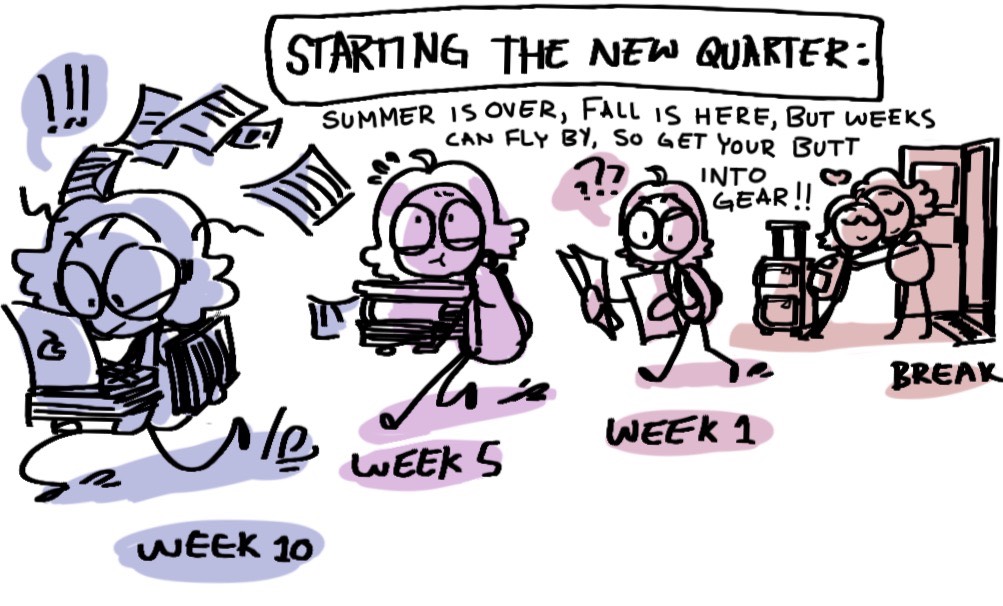
Cartoon: Starting the New Quarter

DIANA OLIVARES / AGGIE


Written by: Diana Olivares deolivares@ucdavis.edu

Davis nonprofit creating language opportunities for kids

TALK. program offering Spanish, French, ASL classes

The Teach Another Language to Kids (TALK) program, a parent-founded nonprofit, has been creating language learning opportunities for children in Davis for 25 years. According to Christine Oyakawa, the TALK program board president, this program is “filling a void that is still in Davis schools,” as it offers lessons for languages that may not be taught at them.

Second language programs are not unheard of in Davis. Cesar Chavez and Montgomery elementary schools both offer Spanish immersion programs. TALK has formed partnerships with these schools but also offers a larger variety of language opportunities, French, Spanish and American Sign Language (ASL), to all kids, regardless of the school they attend.

“We are at seven different locations for ASL, French and Spanish,” Oyakawa said. “The ASL classes are why I joined the board.”

Oyakawa and Rachelle Newcomb, the ASL site representative at St. James Elementary, are both parents to children hard of hearing. One day they requested, to the board, that ASL classes be implemented at St. James Elementary School and were successful. The classes were introduced in 2014.

“We didn’t want to compete with the French or Spanish that was already at the junior highs, but there was no competition for ASL,” Newcomb said. “ I hope this will encourage class offerings of ASL at the high school level through the district.”

ASL classes allow for a wider range of communication and understanding for the community as a whole. ASL is different because it provides kids the power to communicate outside of an audible or written language.

“We have so much technology now, but deaf kids or hard-of-hearing kids can’t hear everything,” Oyakawa said. “It’s not like eye glasses where you can put them on and it’s corrected.”

This year, the TALK program is offering ASL courses at St. James as a trial site for kids in transitional kindergarten.

“We decided to try this because ASL, more so than Spanish and French, allows young children who cannot read the ability to learn because they can look at a picture and know the meaning — they don’t have to know the word,” Newcomb said.

TALK not only provides opportunities for children in Davis, but for future teachers, many of which are UC Davis students, as well. This is because their teaching experience becomes more diverse and in turn valuable. The advantages this program offers is also of strong interest to parents. Luis Reyes, the father of a seven-year-old boy, found the program interesting and wanted to learn more.

“The biggest upside is that it provides opportunities, such as allowing my son the chance to help others that come from another culture or background,” Reyes said. “To have a new exposure that can give one a better world view would be incredible. I know I would have liked that and I would love that for my son.”

TALK offers classes during their fall and winter semesters. Registration can be done either through the TALK Program’s main website or through the Art Center. All classes are open to any elementary school-aged child and meet daily from 7:40 a.m. to 8:10 a.m. before school starts. Depending on the location, many of the teachers can conveniently walk their students from the classes to school. Scholarships are also offered for children whose families need financial assistance.


Written by: Cassidy Kays – city@theaggie.org


Third ASUCD senator elected last fall resigns

BRIAN LANDRY / AGGIE FILE

Jake Sedgley will take new position with OASR

ASUCD Senate President Pro Tempore Jake Sedgley has officially resigned from his position as of Sept. 20. A Davis local, Sedgley is a fourth-year transfer student and an environmental policy analysis and planning and economics double major. He was elected during the uncontested 2017 Fall Election.

Sedgley has accepted a position as the legislative director at ASUCD’s Office of Advocacy and Student Representation (OASR), which advocates for students on various levels including the campus, state and federal level. According to its website, OASR provides opportunities “for students to learn how to lobby, campaign and talk about their needs of affordability, accessibility, safety and resources on campus.”

His resignation is the third of the six senators elected last fall —Andreas Godderis and Danny Halawi also resigned before their terms ended. Both Godderis and Sedgley were endorsed by The California Aggie.

Sedgley was elected pro tempore in April of 2018. During his time in Senate, he worked with numerous units, including looking into “funding issues” with the Campus Center for the Environment and Whole Earth Festival.

“I initially ran for Senate because I grew up here and I saw a lot of things changing that I didn’t necessarily like,” he said. “There have been consistent efforts to silence the student voice and to stomp out student protests. It’s an issue that, in my opinion, bloomed from the Katehi protests and has begun to get worse as we move through the years.”

Sedgley authored Senate Resolution #16, which condemned the disciplinary action taken against the students who took over Mrak Hall while protesting tuition hikes.

At times an outspoken member of the Senate table, Sedgley chastised his colleagues on at least one occasion for failing to attend meetings, uphold the Bylaws and write legislation. He also brought forward complaints from unit directors about the limited preparation time given for budget hearings.

During his time in Senate, Sedgley said he engaged in a significant amount of local lobbying, efforts he will continue to pursue in his new position.

“I went to almost every single planning and city council meeting that a housing project was going through and I had a few meetings with the Nishi developers to discuss their project,” he explained.

Sedgley also said he hopes his new position with OASR will allow him to focus on an area of policy related to his studies and future plans.

“The job aligns with my major, and I feel that this position will make me more useful to the students,” he said. “State and federal policies will have significant, real impacts on the students of UC Davis and I hope to make sure that those impacts are for the betterment of the student body. Additionally, we have not had much of a presence with regard to lobbying efforts in the capitol over the last few years which is something I look forward to changing.”

With a bright outlook on his new position, Sedgley said he is excited to work in a “healthier work environment” with “a more consistent schedule, more applicable goals and a great opportunity to make big changes to the campus.”


Written by: Priyanka Shreedar — campus@theaggie.org


Two recently-approved projects tackle Davis’ housing crisis

VENOOS MOSHAYEDI / AGGIE FILE

West Village expansion, Davis Live project aim to improve .2 percent vacancy rate

Two new housing projects, an expansion of West Village Student Housing by the university and the Davis Live housing project by the city, have both been approved. The projects are a collaborative effort between UC Davis and the City of Davis as part of the university’s Long Range Development Plan (LRDP).

The vacancy rate in the city of Davis was at .2 percent for two-bedroom housing and .1 percent for single and three-bedroom housing, according to the 2017 student housing vacancy report. Rental prices have increased 6.2 percent since 2016 and the average rental rate per apartment rose to $1,673 per month.

Davis Live will be a 71 unit, 440-bed student housing project at 525 Oxford Circle located adjacent to Russell Boulevard and across from campus. It is designated as a Residential High Density project from four to eight beds per unit and ranging from 1,222 to 2,052 square feet.

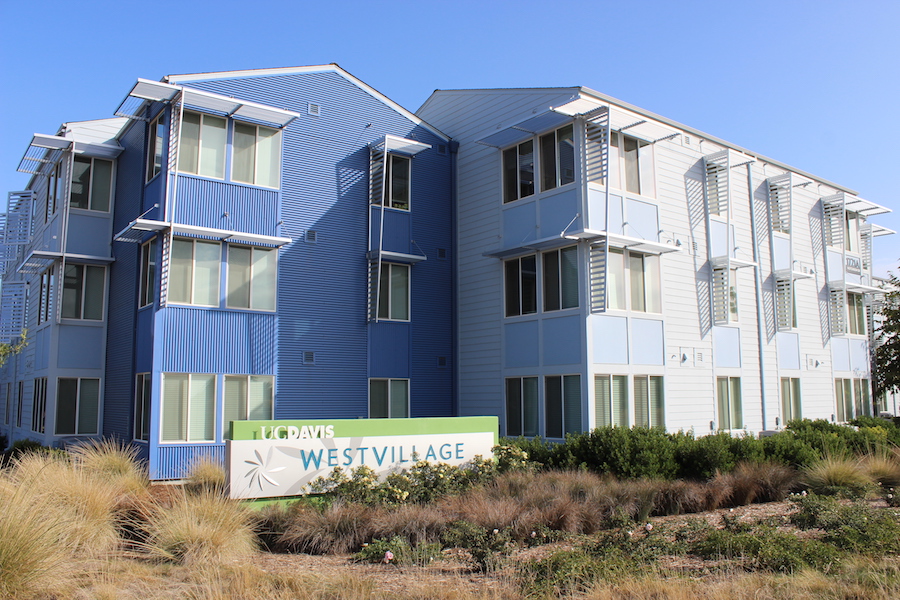
The West Village project is an extension of the existing student housing complex. The project will add 1,122 units and an additional 3,265 beds. The West Village LRDP and the final environmental impact report was reviewed by the UC Board of Regents in mid-July and subsequently approved on July 19.

“[The project] is actually one in a series of housing projects that are student-oriented housing … approved in the City of Davis,” said Dan Carson, a Davis city council member. “The others are referred to as the Sterling Project, Lincoln Forty and the Nishi Apartment, and now this one is Davis Live.”

Dan Weinstein, Managing Partner of College Town International and a partner on Davis Live with the Latigo Group, the lead developer on the project, elaborated on the Davis Live timeline.

We are optimistic of breaking ground sometime early in 2019, and targeting an opening in Fall of 2020,” Weinstein said.

Davis Live is planned to be mixed demographic housing. Carson said the project will provide low-income families a chance to live in housing for “much lower than typical rental rates.”

With 66 beds, or 15 percent of the total, reserved as affordable housing, 22 beds, or 5 percent, targeted to low-income students, 22 beds for very low-income students and 22 beds for extremely low-income students, Weinstein explained.

“As a city, we take very seriously the need to provide additional student housing in a time where there is extremely low rental unit vacancy rate within our city limits,” Carson said. “We are hoping that will inspire the campus to follow through on the plan they have offered in additional student housing.”

Carson said that the serious vacancy problem has forced students to take extraordinary measures.

“I have personally observed, as a resident of Davis, a student who, [at] one point last year, was living out of his car on the street a couple of blocks from my house,” Carson said. “I have also personally experienced ‘mini-dorms,’ where a single-family house gets turned into an apartment in effect for six, eight or even more students. It does not usually work well when you have that many folks in a single house. They have noise and parking problems and conflict in the neighborhood.”

Carson also spoke about the ongoing work between the city of Davis and UC Davis on the LRDP to ease the housing issue.

“What we have been asking for some time is that the campus take its plans for additional housing on campus and turn them into concrete and enforceable promises that they will actually follow through [on] and build housing and sync with the growth in enrollment on campus,” Carson said. “If you don’t do that, at least in some extent, it takes that .2 percent vacancy rate we have in our town and potentially makes it worse, if that’s possible.”

The LRDP is designed to grow as UC Davis expands. Michael Sheehan, the interim executive director in UC Davis Student Housing and Dining Services, said in an email that student housing will increase from the reported 9,818 students in 2016-2017 to an eventual 18,686 students on campus.

“The new LRDP was developed over three years with extensive community input including open house events, town hall meetings and presentations to the Davis City Council and other groups,” Sheehan said. “Planners received extensive community feedback on the plan and made changes to it as a result.”

“The Long Range Development Plan sets ambitious goals for housing and sustainability,” said Matt Dulcich, the director of environmental planning at UC Davis, in an email. “As we go forward we’ll be exploring innovative, imaginative proposals to increase density and maintain livability.”

There is also continuing work on the West Village project.

“We are currently working on finalizing designs for the complex and securing project financing,” said Grant Rockwell, executive director of Real Estate Services at UC Davis, in an email. “We expect to break ground later this year. Beds for approximately 1,000  students should be available in Fall 2020 and the complex should be fully complete in Fall 2021.”


Written by: George Liao — campus@theaggie.org

Art, culture for the rest of us

ALLYSON KO / AGGIE

A helpful guide to immersing oneself at UC Davis

Many of us don’t have the luxury of studying the arts as a UC Davis student. If one’s respective field of study doesn’t have anything to do with arts and culture, then it can be difficult to find a suitable outlet to fill one’s creative void. However, there are several outlets at the disposal of every student on campus, and several of which are paid for by students.

Here’s a list of organizations that can provide some artistic and cultural involvement.


Entertainment Council (EC)

Established in 1979, EC is entrusted with providing the university with live concert entertainment. Several high-profile artists have performed on campus over the years. Recently, big names such as Khalid, Chance the Rapper, BØRNS and Alt-J have taken the pavillion stage for thousands of students. Our Lower Freeborn neighbor is also student-run with a staff of nineteen students. A full list of past performers is available on their website, as well as the opportunity to vote for the next performer to visit UC Davis.


KDVS

This student radio station is located in Lower Freeborn and broadcasts on 90.3 FM for people in Davis to the greater Sacramento area to hear. The UC Davis radio station was officially established in 1966 when ASUCD and KCD (the original radio name) applied and received an FM radio license; however, humble campus broadcasting began as early as 1963 in student dormitories. The alternative station has since become the most popular radio station for students at UC Davis to tune in to.


California Aggie Marching Band (CAMB)

The Band-Uh! embodies the quintessential image of school spirit. The CAMB is another volunteer and student-run organization that allows students to showcase their musical talents and develop their skills. Established in 1929, the organization has strong roots embedded in marching at UC Davis sporting events and leading the parade on Picnic Day.


Craft Center

The UC Davis Craft Center provides several hands-on creative outlets for students, and from experience, it is quite cathartic. It offers classes pertaining to glass work, ceramics, jewelry, photography, textiles and several other craft activities. Classes are small and offered every quarter. Registration for fall began on Sept 6 and instructions on how to register are available on the craft center website.  


Manetti Shrem Museum

The $30 million Manetti Shrem Museum, which held its grand opening in November 2016, is a great place to see a variety of art. The museum houses several collections, including those from faculty and staff. For current exhibitions, programs and events, visit the museum website. The organic and modern architecture of the building itself is an amazing aspect of the museum. Also, visiting is free for all.


The Mondavi Center

The Mondavi Center is the hub for all performances that come to UC Davis. Music groups, speakers, comedians, theater troupes, films, dance companies, etc. all perform at this state-of-the-art venue. Ticket and event information is available on their website, and the opportunity to subscribe to their newsletter is also available. Students get their first ticket to an event at the Mondavi Center for free.  


A full list of clubs and organizations can be found on the UC Davis website.


Written by: Josh Madrid – arts@theaggie.org


My Summer Abroad…

0
AGGIE / HANNAH LEE

UC Davis students share their summer study abroad experiences

Summer: a glorious time made for relaxing on the beach, soaking up radiance from  the warm sun and for many UC Davis students, traveling across the world and engaging in a once-in-a-lifetime study experience. Hundreds of students partake in summer study abroad trips every year, traveling anywhere from Asia to Europe to Africa. Here are the unique stories of three of those students.

This summer, Megan Mekelburg, third-year sociology major, embarked on the an incredible journey as her studies brought her halfway across the world. Mekelburg traveled through the “Celtic Connections” program of UC Davis Study Abroad.

“My program was during the […] entire month of July,” Mekelburg said. “The program started in Ireland, right in Dublin in the center of the city. Then, we took a plane to Santiago, Spain, and we [were there] for a little less than a week. And then we took a plane to Rennes, France, which is on the Northwest coast of France.”

Mekelburg recalled all of the unforgettable memories she made while abroad, saying that the trip not only changed her perception of the world and everything around her, but it also revealed facets of herself that she was not previously aware of. For Mekelburg, her study abroad experience was a highly introspective one.

“I think I learned a lot about myself and how independent I could be and how well I knew the languages, which I hadn’t realized,” Mekelburg said. “I think [you should] go at it with an open mind. If you don’t fully immerse yourself, you’re not going to have the authentic experience that you want to have. I think that’s what I learned from the group of people that I was with.”

Victoria Casas, a fourth-year theatre and dance and English double major, decided to study abroad in Spain this summer in what she feels was one of the best summers of her life.

“I spent six weeks in Madrid in Spain through UCEAP, and it was a lot of fun,” Casas said. “The program itself hosted field trips for us, so they took us to the Royal Palace, they took us to Congress, they took us to Northern Spain to this area called Galicia and we did a weekend trip there, and there was a day-trip to Toledo, which is is another main city in Spain.”

Throughout her six weeks there, one of Casas’s fondest memories of her trip to Spain was traveling to Galicia with her study abroad group.

“One of my favorite moments was going to Galicia,” Casas said. “They put us in a really nice hotel that was right across the street from the beach, and that was really cool. They took us to this little private island on a Saturday and we spent the day on the island. We went hiking and we went swimming and it was a lot of fun.”

A huge part of why Casas decided to study in Spain had to do with her love for Spanish and her desire to have a better understanding of the language. Casas felt that her study-abroad trip undoubtedly solidified and transcended her love for the Spanish language, as well as the people of Spain.

“I kind of grew up with the Spanish language, but when you don’t speak it everyday you kind of lose it,” Casas said. “I wanted to go to Spain and continue my Spanish. I got to take Spanish over there, and it helped me […] improve my Spanish skills. It actually wasn’t that difficult. I feel like a lot of times people have this misconception that when you go to a foreign country [everyone] is going to be really rude to you. But pretty much everyone that we were talking to knew that we were students, and they tried to help us.”

A strong desire to immerse herself in Latin-American culture was also what prompted Paulina Belloso, fourth-year international relations and history double-major, to study abroad this summer in Santiago, Chile.

I wanted to learn about the relationship between the US and Chile,” Belloso said. “I’ve always been interested in other countries and cultures, especially those in Latin America. Being the daughter of Mexican parents and with most of my family back in Mexico, I’ve visited Mexico a lot. I wanted to experience a different Latin American country from the one I know, and learn how they are similar and different.”

Belloso started her summer in Chile with an intensive language-immersion course and will continue her studies abroad until December.

“The program started on June 27 with a three week Spanish language course that refreshed my Spanish and taught me chilean slang,” Belloso said. “Chilean spanish is full of slang and words that aren’t used anywhere else, so this course was useful to understand that. I’ll be in Santiago until December 7, when the semester ends.”

Belloso urged anyone with the willingness and the means and capacity to study abroad to do so, because it will give them a nuanced understanding of their surroundings.

“If you can, study abroad,” Belloso said. “It’s nice to get out of Davis […] and see how much more is out there. You get to meet new people from around the world. You really gain a lot of perspective on your daily life – I think you appreciate what’s around you more.”


For more information about studying abroad, visit the UC Davis Study Abroad website or visit the International Center located on campus.

Written by: Emily Nguyen — features@theaggie.org

Hide your laptops, hide your cell phones

OLIVIA KOTLAREK / AGGIE

String of burglaries in Davis

A string of burglaries close to the UC Davis campus have occurred over the last few weeks. Students are now advised to make sure they lock their windows and doors due to these recent crimes of opportunity.

“There were three burglaries on September 7 and there was a crime alert on September 15 in the morning,” said Andy Fell, the public information representative for the UC Davis Police Department. “On September 7, there had also been similar break-ins and reports. All these times involved unlocked doors or windows. Stolen items included laptops or cell phones.”

Joseph Farrow, the UC Davis police chief, noted the areas where the burglaries happened.

“There’s 400 Parkway Circle — where the frat houses are — there’s Russell Park [and] there’s West Village,” Farrow said. “West Village is spread out a little bit, so they’re not in the same general area.”

The crimes didn’t just happen where people lived, there was also a reported incidence in a parking structure.

“Saturday (Sept. 8), someone smashed a window in a car to steal a laptop in the South Entry Parking Structure, between 8 a.m. and 4 p.m.,” police said, according to UC Davis News Briefs.

Currently, there are no suspects, but there has been increased patrol in the Russell Park area. Property managers will also distribute information to residents.

“The only identification that we have was a possible male wearing all dark clothing, wearing a hoodie,” Farrow said. “One common thing was that they didn’t had to pry anything open — they didn’t need a key [and] they didn’t do anything. All they did was check the door and it opened. They took what they could see in the common area, and then they were gone very quickly.”

As a precaution, Fell reminded students to keep all access closed to burglars.

“We remind people to keep doors and windows locked even when they are asleep to reduce access to burglars,” Fell said.

The theme with these burglaries was that tenants left their homes opened for perpetrators to enter without force.

“They’re all burglaries and they’re late at night,” Farrow said. “All these are unsecured doors, like Russell Park and West village — the laptops were left in the common area. They merely walk into open doors into the common area, and they take what they can. The laptops are the most expensive item and that’s what they go for.”

Farrow also indicated that the residents were at home when the crimes happened.

“They’re in the private area and the theft occurs in the common area,” Farrow said.

As another general precaution, Fell wants to inform others to be more aware of entrapments.  

“There has been a spate of emails claiming to have obtained their contact information from the Internship and Career Center and offering to recruit students for jobs,” Fell said. “This is not true and students should not respond. These jobs are not listed with the Internship and Career Center, and UC Davis does not give out email addresses of students to third parties.”


Written by: Stella Tran — city@theaggie.org

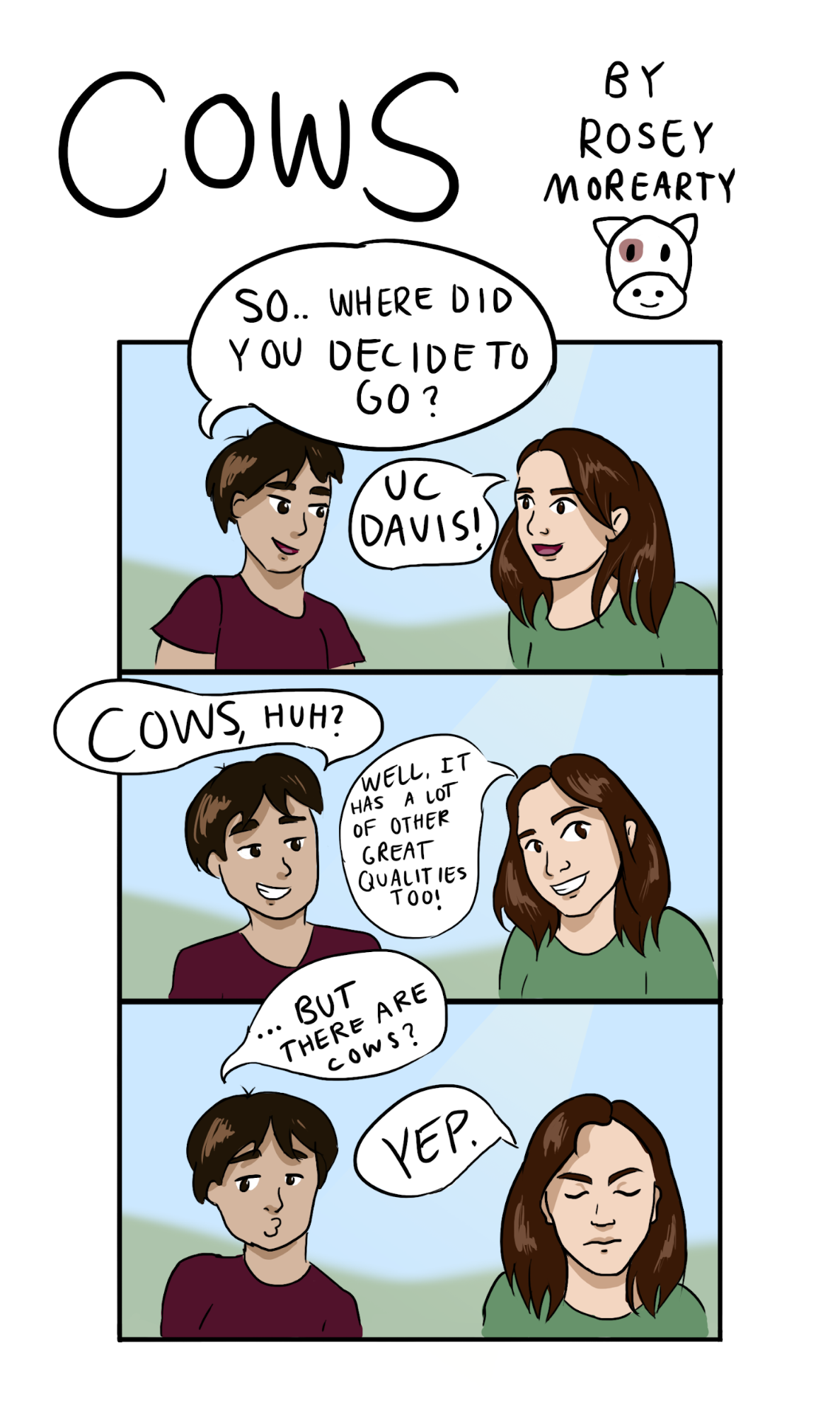
Cartoon: Cows

0
ROSEY MOREARTY / AGGIE


By: ROSEY MOREARTY — rosey@morearty.org


Suppressing activism through censorship

1
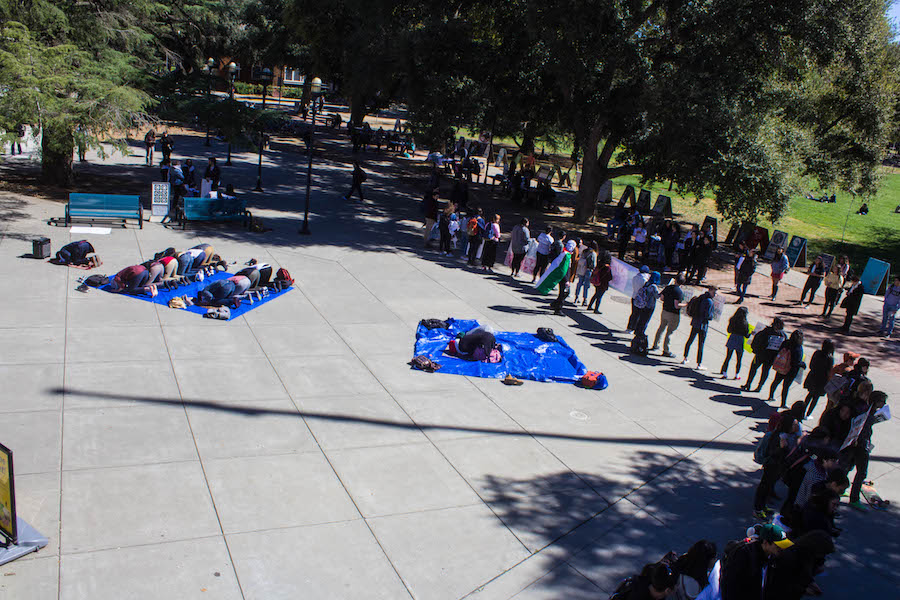
Photo from March 5, 2018 when students from Students for Justice in Palestine and Students for a Democratic Society protested against the wall between Israel and Palestine. (RAUL MORALES / AGGIE FILE)


University administrators must not allow campus-wide surveillance of student activists

On May 24, 2018, a coalition group of activists fervently gathered in the George L. Mee Room on the third floor of the Memorial Union. Activists of all backgrounds, religions and organizations huddled together before entering, with one of the student leaders leading the group into a prayer (or dua) for strength, wisdom and the right intention. The large group then entered the Senate meeting. 

Unbeknownst to many of the Senators, committee chairs and other members of ASUCD, this group was organized by student activists who spent nearly a month researching and accumulating information for their strategic plan to come to fruition. This plan was Senate Resolution 19, which called for the condemnation of ICE, plainclothes officers and watchlists like Canary Mission from operating on campus and to safeguard the work of student activists at UC Davis. This activist group built relations, organized and researched before implementing action — and this, in substantial terms, is what activism is. It’s not simply protesting or attending rallies or loudly making your presence heard; it’s also underground work that no one notices, but that still extensively contributes to the end results of a goal rooted in advocacy.

Although the resolution passed unanimously, a new wave caused distress among the cohort a month later. Most of the student activists who organized the resolution and engaged in activism were “coincidentally” put on a heinous watchlist, Canary Mission, which aims to blacklist students involved in Palestine solidarity activism. The purpose of the watchlist is to intimidate students by tarnishing their reputations and inhibiting their career opportunities and is deeply rooted in Islamophobic and racist dogmas. Canary Mission is a nefarious weapon and tool that the Israel Lobby utilizes to ensure that “the public is better informed.” Yet the site –– which consists of 2,000 students and over 500 college professors –– deters students from marginalized communities from engaging in activism out of fear of humiliation and harassment.

The pernicious website functions as an alt-right Zionist media forum that aims to suppress Palestinian free speech through the spread of fraudulent information and contentious stratagems. In fact, the Israel on Campus Coalition reported that Canary Mission was a “strong deterrent against anti-Semitism and [Boycott, Divestment and Sanctions] activism” in its 2016-2017 report. The ICC specifically targets activists involved in the BDS campaign and “anti-Israel students” who aim to expose the modus operandi of the abhorrent site.

Although SR 19 was a means of ending this harassment on campus, it did not prevent student activists in Davis from having their faces plastered onto a revolting database. It may have actually caused this — and that should scream volumes about the lack of security that student activists have when they’re advocating for their causes.

Davis isn’t the only school fighting for their students’ voices to be heard. Activists at American University formed a coalition diaspora group consisting of Students for Justice in Palestine, the National Association for the Advancement of Colored People, the Black Student Alliance, the Asian Student Organization and other groups promoting BDS, calling for their campus administrators to “divest from fossil fuels, the Israeli apartheid state and private prisons.” Holding our university administrators accountable, asking them to protect our rights and ensuring that Canary Mission cannot continue campus-wide surveillance is the least we deserve for fighting for the truth to prevail.


Written by: Kauser Adenwala — ksadenwala@ucdavis.edu

Disclaimer: The views and opinions expressed by individual columnists belong to the columnists alone and do not necessarily indicate the views and opinions held by The California Aggie.


Humor: UC Davis administrators battle gladiator-style for the twisted amusement of Gary May

0
DANIELLE MOFFAT / AGGIE

Let the games begin

Flames danced in his eyes. It is time for the great ceremony, the Purging of the Faculty.

Tonight, blood will be spilt.

They gather on the football field across from the defunct Rec Pool. It is a full moon. The only light is white rays from above and the bonfires in each end zone.

Here, on this field, is where the administrative faculty will fight to see who will get paid this fiscal year, since only one person will be alive to claim their salary.

Gary May, clad head-to-toe in golden armor, walks slowly to the stands, wearing a cowboy-styled Aggies hat that he won at a football game for having the best social media caption.

The staff face each other while eager alumni sit in the stands, wapping together those inflatable things that make a ton of noise, and tenured professors blow through vuvuzelas. It’s like Fight Club, kinda.

May was asked to help reduce administrative bloat and create ways to free up money for financial aid. Unconventional, but effective. Yet what May concealed from even those closest to him was that he took an odd amount of satisfaction in watching the staff fight to the death. And sometimes, he was able to choose whether a person would live or die. Gary hadn’t felt a rush like that since he was professor and got to hand out failing grades to students.

The Davis Police of course don’t really mind the whole arrangement since, if they don’t have to deal with it, they can just stick to herding turkeys and following around minority folks at Picnic Day.

Yes, thinks Gary. It is time to spill some blood.


Written by: Aaron Levins — adlevins@ucdavis.edu

(This article is humor and/or satire, and its content is purely fictional. The story and the names of “sources” are fictionalized.)


“Think Outside the Box” aims to decorate utility boxes with local artwork

0
ZOË REINHARDT / AGGIE

Nontraditional mediums to be showcased across city

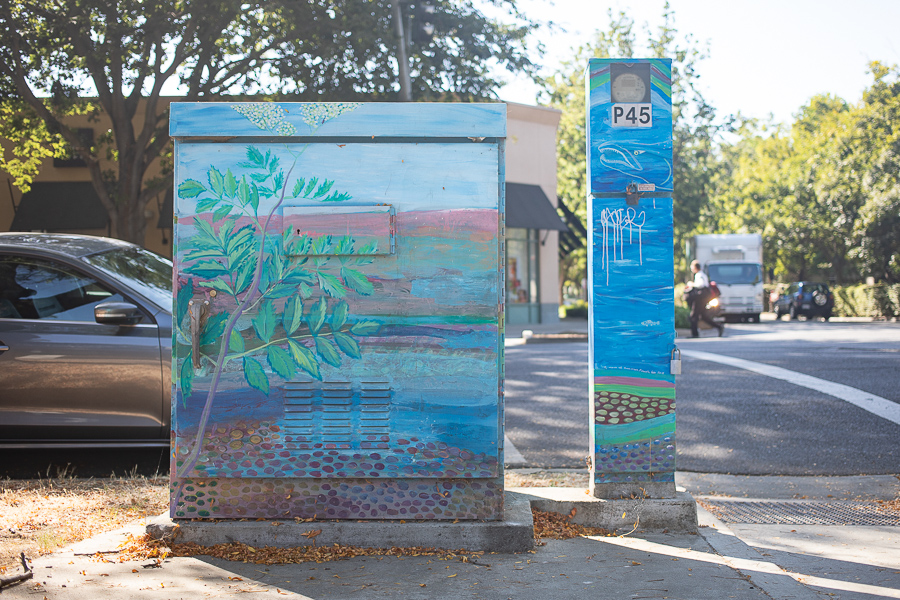
The City of Davis Civic Arts Commision is aiming to enhance the city’s landscape through its newest enterprise — the “Think Outside the Box” project. These gray metal boxes, often bleeding into the background, will be transformed into pieces of art. The works of local artists will be printed on vinyl and wrapped around these boxes. In addition, each artist will receive a $500 honorarium.

The utility boxes selected are scattered throughout Davis. The commission will initially select eight to 10 artists based on their past work and an optional design plan. If successful, the project will later expand to feature more artwork. These vinyls will be printed in Spring of 2019, but artists must send in their submission by Oct. 18 this year.

According to Rachel Hartsough, the civic arts staff liaison, the project was inspired by similar projects in other cities — namely, the Capitol Box Art Project done in Sacramento in 2014. The commission plans on using Prowraps, the same local vinyl company that helped out with the Capitol Box Art Project.

Yet this isn’t the first time in Davis that the utility boxes have been painted. In the past, the civic arts commission has conducted a similar project in which they painted the utility boxes. However, paint being the only medium restricted other artists who specialize in different forms of art from applying. With the vinyl wraps, artists of any visual medium will be have a chance to feature their artwork.

It’s printed on an inkjet printer, and it’s applied with a squeegee,” said Chris Burgess, a ProWraps employee. “It’s a five-year product.”

Anything that can be photographed or scanned is a viable medium. This includes hand illustration, photography, collages and mixed media. According to Hartsough, the artwork does not have to feature any themes in particular. While the subject matter for the project is unspecified, Hartsough explains that the artwork should enhance the environment and be appropriate.

“We may take certain images and put them in certain locations because they feel relevant to those locations [and] activities that may be taking place there,” Hartsough said. “We’re hoping to put images out that celebrate imagery or feelings that people get when looking at the art that connect with celebrating our community.”

The designers are encouraged to use a single image that wraps around the box, rather than individual designs on each side. In addition, the civic arts commission is especially encouraging those who have never had their art featured in public.

“It’s one of the rare instances where we can create a piece of public art using something from somebody who may not have had the experience,” Hartsough said. “So you might have somebody who is a really amazing graphic designer or photographer but [whose] work doesn’t normally lend itself to creating public art. [This project] gives us an opportunity to share artwork from a lot broader community than just people who are traditional public artists.”

To go about designing a utility box, Serena Tieu, a second-year design major, explained that she would look at the guidelines and form a design based around her constraints.

“The way I would approach this would be based off the community — who’s asking this of me,” Tieu said. “So I would base it off what [the civic arts commission is] looking for, take their constraints and also incorporate what [Davis] is about, like saving the environment.”

However, Tieu acknowledged that she does not speak for all artists, and how other artists may approach designing the utility boxes differently.

The judging will be conducted by a panel, including the civic arts commissioners, artists and city staff members. The panel will then take their recommendations and present them to the city council in November for a final selection. The artists will be notified by the end of the year as to whether their art has been selected.

“We really hope that they become things that beautify different parts of the city and that people sort of come upon and are not expecting to see something and [that the boxes] add some element of surprise and beauty to an area,” Hartsough said.

More information can be found on the city’s website.


Written by: Hannan Waliullah  city@theaggie.org

Department of Education considers new Title IX sexual misconduct rules

0

GAGE SKIDMORE [(CC BY-SA 2.0)] / FLICKR
Potential changes could alter how colleges respond to cases of sexual assault, harassment

The United States Department of Education is considering changes to sexual misconduct rules under Title IX of the Education Amendments Act of 1972, according to a report released by The New York Times.

The act, which protects students from gender-based discrimination, is also interpreted to protect students from cases of sexual misconduct such as harassment, assault and rape. The changes could reduce the number of misconduct cases that undergo university proceedings, saving colleges money over time, according to an additional report by The New York Times.

Certain guidelines issued under President Barack Obama have been removed from the Department of Education website, and the new rules drafted under Secretary of Education Betsy DeVos are still not public.

Wendi Delmendo, the chief compliance officer and Title IX officer for UC Davis and UC Davis Health, has not yet seen the proposed regulations.

According to The New York Times, which has received copies of the proposed changes but has not made any public, schools would not be held accountable for investigating certain instances of sexual misconduct. For example, under the new guidelines, schools would not be required to investigate cases of sexual misconduct that occur off of school property or outside of school-sanctioned events.

Although the rules would not explicitly require schools to investigate such cases, schools may still be able to do so, Delmendo said. The UC system could potentially set its own guidelines, which might be stricter than the federal requirements.

“The way it’s been reported, it sounds like […] it’s saying, ‘This is what we are going to hold you responsible for, universities,’” Delmendo explained. “It’s not saying, ‘You can’t respond to conduct that happens elsewhere.’ Based on what I’ve read, the UC system would be able to set a higher standard.”

Delmendo later countered the claim that the number of cases reaching adjudication could decrease under the new rules, as was reported in The Times.

“I don’t think those numbers are very reliable [in our campus context],” Delmendo said. “It’s hard to see how the numbers will be reduced given what I think the University of California would do in response to the regulations. I think if we could keep our current policy and regulations in place we would do so.”

Sarah Meredith, the director of the Center for Advocacy, Resources & Education (CARE), described her view of the commitment that UC Davis has toward survivors of sexual assault. She said she doesn’t think the university would prioritize saving money “over creating a safer campus community.”

“I honestly don’t believe […] that there is anybody on our campus that is willing to say, ‘You know, this could save us some money if we implement these measures,’ and prioritize that over making the campus community safer,” she said.

CARE is one of a number of confidential resources on campus for individuals who have been victims of sexual misconduct or violence. Confidential resources are exempt from reporting requirements under Title IX, so a student can seek these resources without filing an official report.

Other confidential resources on campus include the Women’s Resources and Research Center, the Lesbian, Gay, Bisexual, Transgender, Queer, Intersex and Asexual + Resource Center and university-run counseling services.

“As a confidential resource for sexual and dating violence, the Women’s Resources and Research Center is available to help students explore their reporting options and what the process may look like,” said Cecily Nelson-Alford, the director of the WRRC, in an email.

As a response to the proposed changes, Nelson-Alford pointed to one way that the UC system can support survivors of sexual misconduct and violence.

“Bolstering the resources for CARE offices across UC campuses is a sign that the UC system is moving toward survivor-informed practices, even during a time when our Presidential administration is not supportive of survivors,” Nelson-Alford said in an email.

Other proposed changes to Title IX rules include redefining the designation of those on-campus officials responsible for reporting incidences of sexual misconduct to a higher authority, such as the Title IX office, and using mediation as a potential tool for resolving cases.

Delmendo explained that nearly all university employees are considered responsible persons under the current guidance, and that mediation would be another tool toward the resolution of a case, but could be unsuccessful in dangerous harassment cases.

“Our current policy […] makes all university employees who aren’t confidential resources responsible for forwarding information that they receive about sexual harassment and sexual violence to me as Title IX coordinator,” Delmendo said. “I certainly wouldn’t think that mediation would be successful in resolving an egregious allegation of sexual harassment or sexual violence, particularly where the person who is accused could represent a potential danger to the campus community.”

The largest concern for Meredith regarding these proposed changes is the current state of ambiguity surrounding the rules.

“I imagine survivors on this campus reading that New York Times article and feeling like, ‘Then, why bother? I’m not going to report it, I’m not even going to talk to anybody about it,” Meredith said. “What I do really hope is that regardless of what is happening in our ever-changing federal landscape, people will at least continue to access CARE or any of the other confidential resources because that is a place where they can find [out] what is exactly happening on our campus.”

Written by: Kenton Goldsby — campus@theaggie.org

Letter Opposing Brett Kavanuagh’s Confirmation to Supreme Court

0
VENOOS MOSHAYEDI / AGGIE

Two UC Davis Law School Professors Sign Letter

After Supreme Court Justice Anthony Kennedy announced his retirement in June of this year, President Donald Trump nominated Brett Kavanaugh, a judge on the US Court of Appeals for the District of Columbia, to fill the position. Kavanaugh’s nomination has met with significant backlash, especially in light of recent sexual assault allegations.

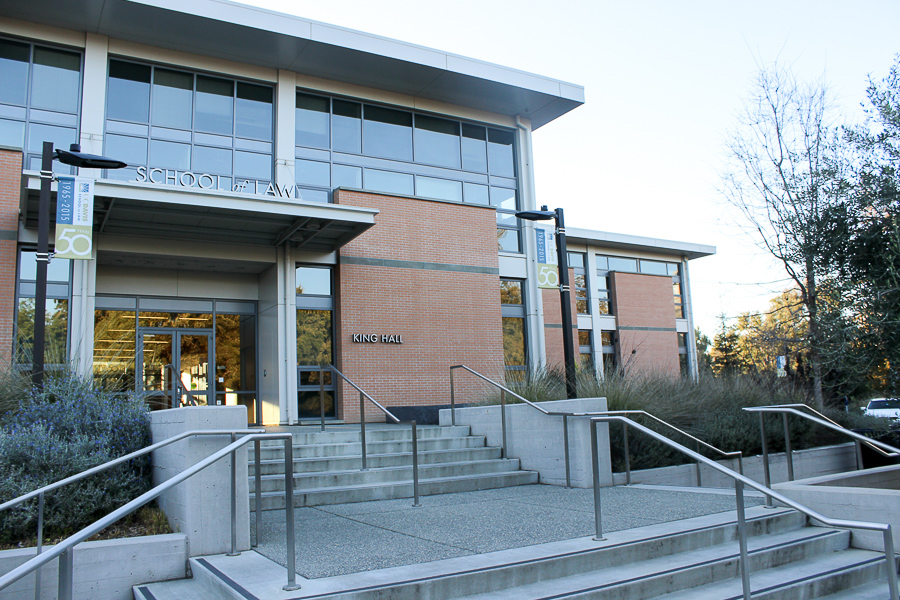
Around 500 law professors at universities across the country have drafted and signed a letter opposing the confirmation of Justice Kavanaugh to the Supreme Court. Among those who signed the letter are two professors from the UC Davis School of Law: Professor Carter White and Professor Leticia Saucedo.

I believe that the interpretation of the constitution and of statutes requires a more broad-based understanding and application than the textual approach that Judge Kavanaugh seems to take in deciding cases,” Saucedo said via email. “The letter is important because of the volume and number of law professors voicing opposition to this nomination.”

The letter was also signed by eight professors from the UC Berkeley School of Law, three from the UC Hastings College of Law, one from UC Irvine, four from the UC Irvine School of Law and 19 from the UCLA School of Law.

The letter takes into consideration the ways in which Kavanaugh’s confirmation would alter the political leanings of the Supreme Court.

“Confirming Judge Kavanaugh could cement a bloc of five justices who will be able to consistently tilt the Court toward the ultraconservative side of the constitutional spectrum for at least the next quarter century and probably more,” the letter stated.

According to The New York Times, Justice Kennedy was a “critical swing vote on the sharply polarized court,” often agreeing with socially liberal decisions, while leaning conservatively on issues such as gun control and campaign spending. Justice Kennedy’s replacement, a lifetime appointment, will shape the court for years if not decades.

The selection of Kavanaugh as Kennedy’s replacement has drawn strong criticism from Democratic Party leaders and elected officials alike. Last October, Kavanaugh issued a dissenting opinion in a ruling which would have allowed an undocumented teen held in detention access to an abortion.

“I believe a Supreme Court Justice must understand and apply context to any decision, must understand historical context in legislative decision-making and must be wary of acting in ways that are outcome-determinative,” Saucedo said. “Judge Kavanaugh’s record on the bench and through the memoranda that has been shared demonstrate that he may be more activist in a politically conservative direction that I expect the Supreme Court should be.”

Recent sexual assault allegations have also raised concern over Kavanaugh’s confirmation. According to a New York Times article, Dr. Christine Blasey Ford, a psychologist and professor of statistics at Palo Alto University, said that Kavanaugh “pinned her on a bed, groped her and covered her mouth to keep her from screaming” at a high school party in the 1980s.

Amid increased awareness and national dialogue on sexual assault against the backdrop of the #MeToo movement, the vote to confirm Kavanaugh has been delayed by the Senate Judiciary Committee.

Professor White could not be reached for comment at the time of publication.


Written by: Sabrina Habchi  — campus@theaggie.org