57 F
Davis

Davis, California

Monday, December 22, 2025
Home Blog Page 498

Humor: To avoid bias, we at The Aggie vow to no longer report on topics we know anything about

SHEREEN LEE / AGGIE FILE


Announcing our new journalistic ethics policy

At The California Aggie, we have a long-standing tradition of quality reporting on issues that matter to the student community, as well as a well-earned reputation for thoughtful opinion pieces that present many sides to important local, state and national issues. The last thing we would want is to be accused of bias or mistaken as “fake news.”

This is why we at The Aggie are announcing a new journalistic ethics policy. From now on, all of our employees will no longer report on any topics that they know anything about in order to avoid, and with any luck, forever eliminate any form of bias from our wonderful newspaper.

At the start of each quarter, all writers will be forced to sign documents pledging to remove themselves from the production of any story about which they have even rudimentary levels of knowledge or understanding. Disciplinary, and potentially legal actions, will be taken against any reporters who fail to internally disclose their knowledge on given subject areas. In every week’s issue, we will publicly disclose all times that serious incidents like these happen, but of course we hope that this won’t be a regular occurence.

It’s a well-known fact that when you learn more about any given topic, you develop a better ability to relay information about it to others. Since basically any and all forms of communication are bound to be biased in some way, we wouldn’t want our reporters to develop and exercise the expertise that allows them to pass any of this information on to you, our loyal readers. That would reflect the bias of wanting you to be more informed about the issues on which we are reporting. This would just be impossible to defend if and when we get accused of being fake news, because any time we are reporting on one story, that means we could be biased against the stories that we are not investigating further. By ensuring that none of our reporters pursue stories on which they could bring background knowledge, “relevant” sources, an angle or any direction whatsoever, we can hopefully prevent our own ideas and areas of curiosity from rubbing off on you.

Fake news is dangerous, and the scariest thing is that all news could be fake news. Any piece of reporting can spontaneously become fake depending on whether or not the reader likes or dislikes the story.

This has been proven time and time again when outlets like the CNN (Clinton News Network), the failing New York Times or the Amazon Washington Post publish major scoops on corruption and abuses within the Trump Administration, only for President Trump to brilliantly declare the stories to be fake or label the writers as “enemies of the people.”

If you feel like any of our articles are informing you or making you think about a topic in a new way, don’t hesitate to reach out and we will take immediate, decisive action to correct the error.


Written by: Benjamin Porter— bbporter@ucdavis.edu

(This article is humor and/or satire, and its content is purely fictional. The story and the names of “sources” are fictionalized.)
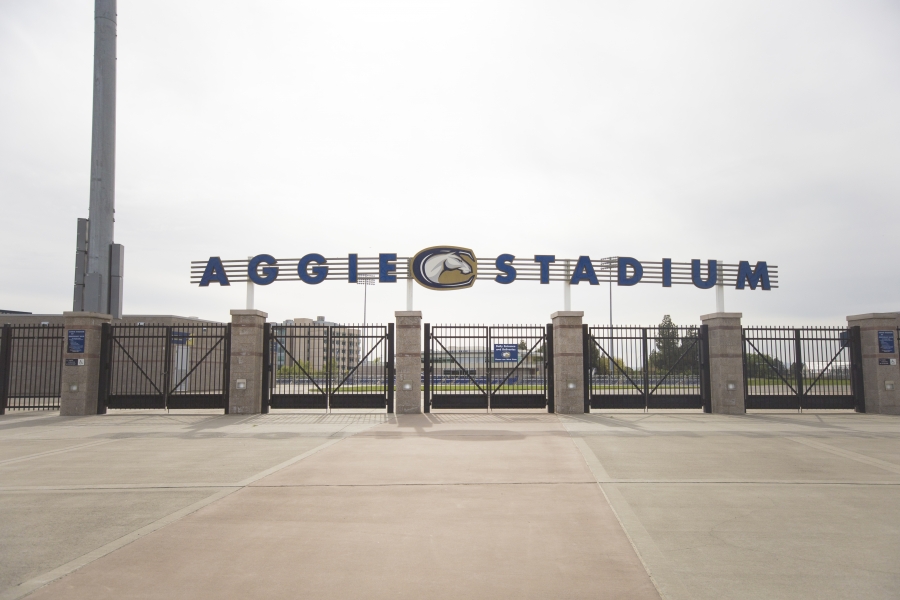
Bye week comes at perfect time for No.19 Aggies

DIANA LI / AGGIE FILE

UC Davis football receives historic ranking as Fall Quarter begins

The UC Davis football team woke up to a nice surprise last Monday morning following the team’s 44-21 dismantling of visiting Idaho over the weekend, and a week off from game action wasn’t the only thing to celebrate. In the latest top-25 rankings released by Stats FCS, the Aggies came in at No. 19, their highest position on the poll since the team moved up to the Division I level in 2004. UC Davis trails only two teams from the Big Sky conference, Eastern Washington and Weber State.

The Aggies have enjoyed a 3-1 start to the season, with convincing victories over FBS opponent San Jose State, San Diego and Idaho, a team that just moved down from the FBS level this year. The only blemish was a hard-fought, 20-point loss to national powerhouse Stanford, a top-10 team in the nation and legitimate College Football Playoff contender.

This season, the team’s bye week perfectly coincides with the commencement of Fall Quarter, giving Aggie football players the opportunity to get accustomed to their class schedules and the daily grind of keeping up with schoolwork and athletics.

“The good thing about right now is that school’s starting and they have a chance to focus on school and get off on a really great start,” said UC Davis head coach Dan Hawkins. “I think that’s a real positive for us.”

In addition to the benefits felt in the classroom, the absence of a game at the end of the week gives players a chance to go home for a few days, visit with friends and family and simply relax.

“It’ll give them time to go home and get some of mom’s home cooking,” Hawkins said.

The players won’t have another window to leave campus for an extended period of time until the season concludes.

“We’ll get three days of work in, but they’ll get a weekend off to be a normal person,” Hawkins said. “We always talk about that quality balance of life and I think that’s important.”

Most players planned to return to their respective hometowns for a few days and many hoped to even catch their siblings in some football action.

Senior defensive back Isiah Olave, who comes from a talented family of football players, planned on traveling to watch his younger brother Josh, a sophomore defensive back, play at Azusa Pacific University. Olave was also excited to catch another game on TV featuring his youngest brother Chris, a former four-star wide receiver in high school and current true freshman at Ohio State.

Redshirt freshman Ulonzo Gilliam, who leads UC Davis with 268 rushing yards and five touchdowns, had similar plans to cheer on his younger brother Elijah at Bishop Gorman High School in Las Vegas, Nevada. Gilliam couldn’t wait to check out Bishop Gorman’s top-notch facilities, including a massive stadium and state-of-the-art 41,000 square-foot training facility, both of which are comparable to many big-time universities.

No matter how the players chose to spend their time off, it was a much-needed  break for the team given its success on the gridiron thus far.

“This is perfect timing coming off a tough game,” Olave said. “It’s been a lot of ground-and-pound so far, so this gives us a chance to make sure our bodies are healthy and sound. It lets us keep our momentum going into Northern Colorado.”

The Aggies have a tough journey ahead, with three of their next four games on the road. They also have a brutal stretch to end the season by hosting Northern Arizona, traveling to Eastern Washington and hosting Sacramento State in the Causeway Classic. The team will need all the rest it can get in hopes of advancing to the FCS playoffs at the end of November.


Written by: Brendan Ogburn — sports@theaggie.org


Aggies squash Sac State in overtime, improve to 7-1 season record

BRIAN LANDRY / AGGIE

Men’s Soccer defeats Sacramento State Hornets 2-1 in golden goal overtime

Sept. 29 was the last game of the non-conference play for UC Davis men’s soccer, and the team defeated the Sacramento State Hornets 2-1. The Hornets were sporting a 2-5 overall record compared to the Aggies 6-1 record on the new season. UC Davis also began the game ranked as the No. 17 team in the nation according to the United Coaches Poll and No. 25 by College Soccer News.

The game began with the Hornet’s possession, but after the first few minutes, the ball belonged to UC Davis. After having a week to recover from a busy first nine season games, six on the road, the rested Aggies were able to simplify and just play soccer how it was meant to be played: fast and on the ground. Whenever the Aggies had possession, it seemed as if the Hornet’s could not catch up UC Davis’ constantly moving ball. However, the ball continued to move for the entire half and neither team could put it in the back of the net, bringing the score to 0-0 after the first. In the half, the Aggies outshot the Hornet’s five to four, and head coach Dwayne Shaffer felt that the last week of rest helped the team move the ball well.

“I thought having a week off definitely got their mind and their body and spirit refreshed and ready to go,” Shaffer said.

In the start of the second half, the Aggies’ game looked to be in trouble early in the 48th minute when the Hornet’s midfielder ripped an open shot from the top of the 18-yard box that just missed the post wide. Trouble continued for UC Davis in the 54th minute when the Hornet’s surpassed UC Davis junior goalkeeper, Wallis Lapsley, and hit the top corner post. After the ball bounced back, Sac State drove a bullet into the open net saved by a diving Lapsley from post to post to keep the score even. In the 58th minute, however, a through ball through the center of the field from the Hornets proved too much for the Aggies to stop, drilling into the bottom corner of the net to give Sac State the 1-0 lead. But UC Davis did not let the deficit damage its confidence, and in the 70th minute, senior defender Justin Wright made his way through the Hornet’s back line and slid one in the bottom corner of the net to tie the game 1-1 to the roar of the crowd.

“I think it is very easy to fall apart when you go down, especially with 30 minutes left,” Wright said on coming back from the deficit. “I think we had each other’s backs and just pushed forward as a team, which helped us a lot so I think being there for each other and having a positive mentally was good for us.”

The remainder of the game was nothing but back-and-forth aggression between teams as both tried to put a final seal on the game and get the win. Neither team was able to put anything together down the stretch, sending the game to two 10-minute golden goal overtime halves.

Sac State began the first half of overtime with blazing speed, earning two early shots in the first three minutes, the second just saved by Lapsley at the last moment. With two minutes left in the first overtime period, a throw in from the Aggies made its way to Wright sprinting down the right side of the field, placing the ball in the net, giving him his second goal of the game, and UC Davis the 2-1 win.

“ [I feel] absolutely ecstatic,” Wright said of the win. “I have never scored two goals in a college game before so that was incredible, especially in front of a home crowd. I couldn’t have done it without the teammates and the coaches so I am very grateful to be in that position and help lead the team to a victory.”

The Aggies finished the game with 11 shots compared to the Hornet’s 18, and Lapsley finished with four saves on the day.

UC Davis is now 7-1-2 entering conference play on Oct. 3, opening against the Cal Poly Mustangs at home. Kickoff is set for 4 p.m.

“I told my team last year I knew we were the best team,” Shaffer said. “It took us a little bit to kind of get our mojo going and once we did I knew we were the best team last year. This year I got a great team that can be the best team in the Big West when we are all healthy and playing well.”

Written by: Ryan Bugsch — sports@theaggie.org

Affordable college decorating

ALLYSON KO / AGGIE

A practical list of stores essential for nesting

September marks the start of a new lease for many students, and they are tasked with turning a new space into their domain — home sweet home. Nesting plays a large role in ensuring a new environment is comfortable, but many students are also on a tight budget. However, aesthetics shouldn’t have to suffer, especially when there are several stores that are both stylish and affordable.


Amazon


The company that will solely be responsible for humans never leaving their homes again in a few years is also great for decor. A good way to fill in empty wall space while adding personality is through wall art. On Amazon, it is available in a wide variety of options, such as canvas paintings, tapestries and 3D designs. Let’s ditch the act of haphazardly tacking up posters.


Ikea


Visit Ikea on a day when there is nothing to do because going to Ikea is more exciting than going to Disneyland. Their decor revolves around clean lines, minimalism and neutrality. Unfortunately, most Ikea items require assembling, but that’s what makes them so affordable. Remember to breathe when tackling assembly. Also, don’t forget to grab some cinnamon rolls on the way out.

Target


Target’s Room Essentials collection provides an affordable selection of items that may not necessarily be decor, but can accentuate the style of the room nonetheless. Functional items such as coat racks, bookshelves, towels and laundry baskets can possess a coherent  decorative style. Also, Project 62, a mid-century modern collection of pieces inspired by the era in which Target was founded, is an affordable style that suits Davis well.


World Market


Hear me out. While World Market may be the most expensive selection on this list, they frequently have sales on small accent pieces that can upgrade a room to the next level of sophistication with items such as accent rugs, throw pillows and nightstands. World Market presents a rustic, eclectic style that is concise and modern at the same time.

Zinus


Zinus bed frames are the quintessential actualization of the ideal college bed frame. They’re simple, sturdy and easy to both assemble and disassemble, which means they can be transported by car to new apartments. Their SmartBase line starts at $67 for a full-sized bed frame not including a headboard and baseboard. Frames with a headboard and baseboard included start at $100 and retain the same benefit of easy assembly and disassembly.   

SPCA/Facebook Marketplace


Thrifting for clothes is an obsession still going strong, especially among young people. Why not thrift for furniture? The local SPCA store on 3rd St. in Downtown Davis can be a treasure trove for patient and persistent shoppers. It also may require some vision and a little dusting, but that’s part of the fun. Craigslist is more suspenseful rather than fun, so I wouldn’t recommend that route. Instead, check out Free & For Sale or Marketplace on Facebook for finds in Davis and the surrounding area.


Written by: Josh Madrid – arts@theaggie.org


Concrete slabs at risk on I-5

CAITLYN SAMPLEY / AGGIE

Overnight emergency closures planned on freeway

Concrete slabs on the Interstate 5 freeway are at risk of failure and have posed problems for vehicles. Nighttime emergency closures are currently planned so that these risks can be addressed.

Dennis Keaton, the public information officer for Caltrans District 3, elaborated on why the concrete is at risk.

“Just over age, wear and tear and a lot of traffic use over the years made it come apart,” Keaton said.

The concrete slabs are found on the surface where commuters drive, which could directly affects vehicles.

“This is on mainland surface, not on the bridges,” Keaton said.

The concrete slabs are not a small feat, as they measure to up to 18 feet in length.

“Lengthwise, they’re 10 to 18 feet — widthwise, they’re about 12 feet,” Keaton said. “Thickness is somewhere in the neighborhood between 9 to 11 inches.”

“The 70 [concrete slabs] were discovered on the Southbound direction between just south of the highway 50 and 5 interchange to Pocket Road in South Sacramento,” Keaton said. “They vary in size and location, so they are not in one area. But because of this incident we wanted to make sure that this wouldn’t occur somewhere else. Our inspectors then located 70 areas.”

These risky slabs must be replaced, seeing as they can no longer be simply repaired. Deanna Shoopman, the chief public information officer for Caltrans, indicated that the problem must be completely fixed.

“They keep Band-Aiding it over and over until you can’t Band-Aid it any longer,” Shoopman said in the Sacramento Bee. “It needs to be rehabilitated.”

Caltrans has now started the repair process on areas in need of rehabilitation.

“We are a part of a contract where the damage has been repaired in some of the areas,” Keaton said. “The actual concrete slabs were dug out and replaced with new concrete slabs. That’s basically the way we are going to handle it from here on, until the larger project gets started at the beginning of next year. This is a project that is supposed to start in the spring [to] early summer, where it’s going to rehabilitate sections of the I-5 from the Sacramento River to just south of Pocket Road in South Sacramento and take care of most of the damage like concrete or any kinds of cracks.”

The I-5 freeway encompasses a majority of California, and according to a document presented by the Transportation Concept Report, “I-5 extends 796 miles in California, from the International Border Crossing at San Ysidro to the California/Oregon Border. Within District 3, I-5 extends 127 miles through Sacramento, Yolo, Colusa and Glenn Counties on relatively flat terrain.”

According to the report, “I-5 serves as the transportation backbone of not only California, but also the Pacific Northwest, and is the only Interstate that reaches to both Mexico and Canada. Within District 3, I-5 is an Interregional Road System (IRRS) route. This major north-south facility plays a critical role in California’s economy by accessing a multitude of interstate, state and local facilities, providing throughout to accommodate high volumes of commute and interregional traffic, along with rapid growth in interstate/IRRS freight movements.”

Because of the vast impact the freeway has on California, the overnight work is essential in order to replace the concrete slabs.

“For now, the most serious cracks that we’ve located will be replaced through the slab replacement project,” Keaton said.


Written by: Stella Tran – city@theaggie.org


Devo Leichter appointed as new interim senator

FARAH FARJOOD / AGGIE

Former Judicial Council member aims to restructure, improve ‘problematic’ bylaws

The Sept. 27 ASUCD Senate meeting saw the confirmation of Devo Leichter as the newest member of the Senate table. The fourth-year political science major will fulfill the remainder of Danny Halawi’s term, who announced his resignation from his Senate position in early May.

Halawi was one of three senators elected during the Fall Election last year to resign early. Daniella Aloni was confirmed as an interim senator in April to fulfill the remainder of Andreas Godderis’ term, and a third interim position, yet to be filled, has now opened after Jake Sedgley’s recent resignation.

Leichter believes ASUCD is undergoing a kind of “identity crisis,” which is hindering its ability to operate as effectively as possible.

“A lot of ASUCD is these different limbs that come off Senate that don’t necessarily always tie back to Senate very well, [and] there’s always this degree of separation within the association itself between the different moving parts,” he said. “We need to regroup and figure out ways to stay interconnected more and figure out what our purpose [is] here on campus. We don’t really have a whole lot of people coming to us and … we’re not coming to them very well.”

Leichter served as a member of the Judicial Council and was part of a select group of appointed students tasked with re-establishing ASUCD’s third branch of government after students voted to abolish the judiciary body two years ago.

Leichter did not fulfill the entirety of his term on the Judicial Council — a council member position is a two-year term, and Leichter served in his position for about one year.

During his time serving on the council, Leichter studied the ASUCD Bylaws closely and found a number of flaws and areas of concern. He is approaching his position as an interim senator with a running start, with serious plans to improve ASUCD’s governing codes.

“I’ve already written a constitutional clean-up amendment — it’s basically our constitution, but edited to get rid of inconsistencies, being more clear with the terminology and structured in a way that makes sense,” Leichter said. “I’ve already written a bill to rewrite the elections code. Senate hasn’t addressed that yet which is a problem because last election was problematic.”

Last year’s Winter Election was characterized by a large number of candidates, disqualifications, a number of allegations, a lawsuit and a recall attempt. Leichter said witnessing the election from his position on the Judicial Council was a unique experience. The large number of cases filed with the council concerning the election was “not a good sign,” he said.

A case filed by a former Senator which alleged voter fraud was dismissed by the council because of a bylaw requirement that all complaints concerning an election be filed before the announcement of election results. Required to uphold the bylaws in his position as a council member, Leichter said he felt the requirement was unfair and he has chosen to remove it in the amendment he recently drafted.

“In the cases where information might come out after an elections closing, there should be ways to remedy that,” he said. “Whether that results in automatic disqualification of a member or impeachment of a member, it should be on the table and it should be dealt with in an appropriate manner, which I don’t believe it was. Once again we see the bylaws proving problematic for its own cause.”

Leichter said the cases brought forward during the election revealed larger cracks in the association — “from a pure legal standpoint,” he said, “it was interesting to see how the bylaws were sabotaging themselves.”

He also discussed last year’s attempt to recall ASUCD’s executive team from their positions. The attempt to file a recall petition ultimately exposed a convoluted process resulting from “years of legislative tinkering.”

“There’s so many overly-complicated aspects to the bylaws that either people aren’t following or don’t fully understand — or both,” he said. “It’s important that we go back and make a core set of laws that are clear and structured. People who are not within the ASUCD government can look at those and get a clear picture of how things are run, [but] it’s not in a place where it’s easily accessible for everyone.”

Leichter hopes to adopt the Housing Advising for Undergraduate Students unit and Unitrans and work with the Aggie Public Arts Committee and Mental Health Initiative.

“I want to be someone who is friendly and accessible to anybody, inclusive to everybody and able to listen,” he said.


Written by: Hannah Holzer — campus@theaggie.org


Cartoon: Can’t Sleep

0
GENEVIEVE RYAN / AGGIE


By GENEVIEVE RYAN — geryan@ucdavis.edu

CBS 13 camera stolen by robbers on campus, getaway car strikes victim

SHEREEN LEE / AGGIE FILE

Robbery latest in string of recent crimes

Yesterday, at approximately 5:10 a.m. at Tennis Court Lane, a man stole a CBS 13 news camera and fled the area in a getaway vehicle which then struck a CBS 13 cameraman, university police said.

The news crew had set up their equipment to film a segment about Domestic Violence Awareness Month, The Sacramento Bee reported.

“Suspect #1, approached the camera that had been set up and grabbed the camera along with the tripod,” a crime alert sent to UC Davis faculty and staff reported. “As the suspect was returning to the vehicle, the victim grabbed the camera from the suspect but the suspect was able to pull the camera away from the victim’s grasp.”

The suspect entered the vehicle and fled the scene toward Russell Blvd.

“Their vehicle struck the victim,” the crime alert said. “The victim sustained minor injuries.”

CBS 13 news reporter Dina Kupfer and a photographer were the victims involved in the incident. The Bee reported CBS 13 cameraman Scott Zentner attempted to prevent the robber from stealing the equipment, estimated at around $16,000, but was unable to do so.

Zentner was struck by the getaway vehicle at a low speed and sustained only minor injuries.

In a post on Facebook, Kupfer described the situation as “traumatizing.”

“I was not injured, but I am very shaken up,” Kupfer’s post read. “My photographer did sustain minor injuries after the suspect’s vehicle struck him. I am so thankful things didn’t escalate and my photographer and I were fortunate to walk away.”

The suspects who stole the camera is described as an African American male, aged 20-30 years old, wearing a black hoodie and blue surgical gloves. The getaway vehicle was a black compact SUV.

“I truly hope these suspects are caught so no one else has to experience such a brazen attack,” Kupfer wrote on Facebook. “‪Please be safe, everyone. Stay vigilant and be aware of your surroundings.”‬

The UC Davis Police Department said the crime is unsolved and the investigation is ongoing. Anyone with information about this robbery or one of the recent robberies that have occured should call UCDPD at 530-754-COPS (2677).


By Hannah Holzer — campus@theaggie.org

New, free subscriptions for UC Davis students

CAITLYN SAMPLEY / AGGIE

Students eligible for New York Times, Kanopy online content

Starting this academic year, UC Davis students are eligible for complimentary subscriptions to the New York Times and Kanopy, an on-demand video streaming service. These subscriptions were purchased by the UC Davis Library and are available on its website.

Like other databases and services provided by the University, this perk only requires a UC Davis email and UCD LoginID and Kerberos password.

The subscription to the New York Times includes limitless access to most of New York Times website’s content, as well as the New York Times in Education. Not included is the NYT Crossword Puzzle, the NYT Cooking app, and only a limited amount of articles from 1923-1980. UC Davis is now the second UC campus to purchase and provide the subscription to students and faculty, after UC Irvine.

The New York Times was previously available for UC Davis students through an aggregator and it was a text-only format with no images or graphs.

Robert Heyer-Gray, the Interim Head of the Collection Strategies Department, was motivated to purchase the full New York Times for students and faculty.

“Current events being what they are, with newspapers under attack, the press being under attack and the New York Times more broadly representing ‘America’s newspaper,’ I think, I thought it was the time to pull the trigger on this and I think was really important to do for everyone on campus,” Heyer-Gray said.

Access to the New York Times became available over the summer and students have already started creating accounts.

Lauren Hom, a third-year human development major, recently became aware of the Library’s new purchase and is excited to register online.

“[I think] it’s really cool,” Hom said. “I always see my [articles remaining] go down.”  

It is important to note that if readers are already paying for a subscription, they have the option to switch to the paid-for option without losing any saved articles.

To sign up, visit AccessNYT.com while connected to the UC Davis network. If off-campus, students and faculty can still complete the process while connected to the Library’s VPN. Search for and click the listing for “University of California, Davis – Davis, CA.”

Click “Create Account” and complete the registration fields.

The other new service available to UC Davis students and faculty is Kanopy, which is a on-demand streaming video service that offers a range of documentaries, films and theatrical releases. As of right now, only documentaries are available through the UC Davis Library.

Like the New York Times, students and faculty have already begun utilizing the service, although this subscription is more geared toward professors and faculty for instructional purposes. The purchase of Kanopy will allow professors to move away from DVDs used for lectures and lessons, which is a more sustainable option and use of campus resources. The videos can be easily embedded into websites or lecture slides.

“The main reason we did it [is] we’ve always supported film in class and we’ve always bought DVDs,” Heyer-Grey explains. “Of course [now] computers don’t come with DVD drives and DVD is not a very stable media, so we’re constantly replacing [them]. Most of the [content] that was being asked for by faculty for course instruction were documentaries, so that’s why we [purchased] the documentary segment of Kanopy. They really had the right slice of what we were trying to offer.”

To access Kanopy’s collection, visit ucdavis.kanopy.com while connected to either the UC Davis network or Library’s VPN or search “Kanopy” in the Library’s Databases search option.

Both resources allow students to access content for academics and leisure.

Alexander Garber, a second-year undeclared life sciences major, said that he will use these resources for more than just one purpose.

“[I will use it for] class mostly, but maybe like one or two articles or videos that I hear about, that people are talking about and I want to learn more about it,” he said.


Written by: Liz Jacobson — arts@theaggie.org


Opening Thoughts

KATHLEEN TYLER CONKLIN [CC BY 2.0] / FLICKR
Parsing some of the top stories this summer

When I don’t know what to write, I like to read the news. It’s probably what everyone –– journalists and the general public alike –– should be doing anyway, but summer is just ending and the cobwebs have to be sheared off at some point. News should be read and parsed over. Here’s an attempt with a couple of the biggest stories so far.


Brett Kavanaugh

Brett Kavanaugh’s confirmation cycle is chock-full of baggage to unpack. The Supreme Court nominee was recently accused by Christine Blasey Ford of sexual assault when they were both teenagers in the early 80’s. It’s probably wise to wait for the official testimony from both parties –– tentatively set for Thursday, Sept. 27 –– before passing judgement, but I’m having a hard time not believing Ford’s accusations. For one, she’s on record confessing Kavanaugh’s name to both her therapist and husband in 2012, well before his arrival to the foot of the Supreme Court. If Ford had a partisan axe to grind –– as some have suggested –– she wouldn’t have name-dropped Kavanaugh six years ago. It just doesn’t compute.

Christine Blasey Ford’s willingness to testify and bare all in front of a national audience is also very telling. Senate hearings can be bloodbaths that expose and tire even the most hardened politicians. They aren’t easy, and when the ideological balance of the Supreme Court is at stake, tensions run high. By agreeing to an official testimony, Ford has acknowledged her own certainty about what happened with Kavanaugh three decades ago. She’s willing to recount her experience to a group of senators who don’t have a great history of supporting women in the first place.

Ford’s bravery in coming forward, as both a credible victim and a successor to the Anita Hill case of 1991, should not to be undermined –– especially within a culture that’s stacked against victims of sexual violence. Unfortunately, this has flowed up to the highest echelons of executive decision making. It’s not hard to live a life free of sexual misconduct allegations –– just don’t commit them in the first place. Clarence Thomas is one Supreme Court justice with a history of sexual harassment hanging over his head. Adding another, at a time when even the president of the United States has faced similar controversies, would sully our moral core to the bone.  


Serena Williams

It was hard to miss Serena Williams over the summer. In the U.S. Open women’s tennis final against Naomi Osaka, Williams was issued a code violation by chair umpire Carlos Ramos for coaching –– apparently a rarity in the sport. She was later given a second violation for smashing her racket into the ground, docking her a point. Williams demanded an apology and assured Ramos that he would “never ever, ever be on another court of mine as long as you live.” She labeled him a “liar” and a “thief” before Ramos called a third strike against Williams for verbal abuse of an official, which carried a stiffer game penalty. Williams contended that “men do things that are much worse” and wouldn’t have been penalized in such a manner. She then lost the match.

Bringing up sexism was a poor excuse for Williams’ own immature actions. It’s a dubious claim because Carlos Ramos has a history of strict rules interpretations that have affected male superstars as well. And pointing to male behavior as a reason to bully an arbiter of sport is silly. Is the worst male behavior worth emulating?

Dig deeper and we find that Serena Williams has a history of verbal abuse and conflict with tennis officials of both sexes. In the 2009 U.S. Open, she threatened to “take this ball and shove it down” the line judge’s “f–king throat” after a relatively minor foot fault. Williams told another chair umpire that she was “very unattractive inside” in 2011. That’s not behavior sons and daughters should be internalizing.

After the most recent U.S. Open, we saw opinions that defended Williams’ verbal abuse as “liberat[ing] herself of constraint” or completely absolving her, instead pinning the blame on an umpire who “couldn’t take a woman speaking sharply to him.” Offering solutions based on identity politics is usually a tricky business, and it didn’t work here. Serena Williams’ history of outbursts and fines transcends these narratives and helps show her true character. She’s the best tennis player of all time, but an entitled one at that.


Tiger Woods

To end on a dorkier note, Tiger Woods –– the only golfer anyone’s ever heard of –– is back. Tiger mania was muted after his adultery scandal and multiple spinal surgeries. That he’s soared into the headlines again after a summer of good performances at big tournaments –– culminating with his first PGA Tour victory in more than five years this past Sunday –– is great for golf’s image. Tiger brings excitement and passion where polite clapping and dress pants are fodder for haters (and they may have a point). No other golfer induces obnoxious shouts of “Get in the hole!” on every shot from drunk men. Golf actually feels like a sport now! Sundays used to be the NFL’s sole domain; with Tiger Woods, there may be some competition at last.


Written by: Nick Irvin –– ntirvin@ucdavis.edu  

Disclaimer: The views and opinions expressed by individual columnists belong to the columnists alone and do not necessarily indicate the views and opinions held by The California Aggie.

Police Logs

SHEREEN LEE / AGGIE

9-1-1, a dog is barking

September 12

“Reporting party attempted to sell textbooks — unknown buyer used fake PayPal to pay reporting party — loss $500.”

“Reporting party saw five juveniles use dumped furniture to climb over the fence surrounding facility. They also appeared to be lifting their bikes over the fence into abandoned complex.”

“On the greenbelt; reporting party’s children were walking when approached by an elderly female with walker carrying a sign that said ‘please follow me and show me your passport’ grabbed one of the children but the child was able to get away […]”


September 13

“Reporting party hears something that sounds sharp on her window.”

“Vehicle driving slowly, on a cell phone, and yelling at other vehicles.”


September 14

“Vehicle was cutting in and out of traffic on the freeway, exited at Richards when saw reporting party take a pic of plate.”


September 15

“Dead bird in front of business. Reporting party will wrap in plastic bag and place in garbage.”


September 16

“Dog barking periodically all day.”


Kaepernick’s Historic Shoe Deal Examined

0

Debate lingers over what it means for Kaepernick, Nike

On Monday, Sept. 3 free agent NFL quarterback Colin Kaepernick caused a fresh round of controversy when he tweeted out an image of his face with one short message attached: “Believe in something, even if it means sacrificing everything. #JustDoIt.”

The tweet, which was later joined by a television commercial, not only announced Kaepernick’s new multi-million dollar deal with Nike, but another round of debates about the marriage of sports and politics. While other athletes such as tennis superstar Serena Williams and NFL star Odell Beckham Jr. also appeared in the multimedia ad campaign, it was Kaepernick who grabbed a bulk of the praise and dissent, despite the fact that he is currently entrenched in a legal battle with the NFL after alleging that owners colluded to keep him out of the league following his silent protests.

Damien Barling hears all sides of the Kaepernick argument as not only the co-host of his afternoon sports show, “The Lo-Down” on KHTK Sports 1140, as well as his more politically-based sports podcast, “Be Conscious with Damien Barling.” According to Barling, the controversy surrounding the ad campaign is not surprising, citing the attention that Kaepernick has garnered since first protesting violence against people of color in 2016.

“[Kaepernick] is polarizing,” Barling said. “Everyone has an opinion on him. When you see him on social media you have to comment. You can’t scroll past a tweet or an article or a picture without commenting. It’s unlike anything I’ve ever seen.”

The reactions to the campaign went far beyond sports and business media and found the national political sphere almost immediately. For some, it was a brave political message from a company, while to others it was a betrayal of their beliefs. Some, such as former ESPN writer Jemele Hill, praised the move as business savvy and bigger than sports or shoe sales. Others, including President Donald Trump, used the opportunity to decry the move as anti-military, anti-police and anti-American, and gloat the following day as Nike stocks took a slight plunge (Nike has since had an uptick in sales that is expected to continue in the weeks since the ad’s rollout).

Barling doesn’t think the pushback from the President, as well as people across social media pledging to boycott Nike and cutting the tags off of their personal belongings will mean much in the long run.

“The pushback is irrelevant,” Barling said. “The crowd that’s jumping up and down and screaming ‘he hates [the] troops’ isn’t the crowd that Nike targets in their ads, anyways. Something so commonly forgotten, or just ignored, is the fact that Kap has a lot of support. I’d be more than willing to bet he has more supporters than detractors and those supporters are going to rock Nike as a political statement.”

While Kaepernick isn’t the first athlete to be embroiled in political turmoil, social media and an already divisive political landscape have made Kaepernick an unprecedented character at the crossroads of sports and politics. Barling points out that while athletes such as Muhammad Ali, Tommie Smith, John Carlos and Jackie Robinson faced political backlash for various reasons, it was of a different kind.

“[Those guys] never saw anything like this,” Barling said. “Ali’s likeness wasn’t marketed until he was a beloved figure and the hatred he experienced in the 60’s was erased from history.”

Barling sees a similar path for Kaepernick. While many look back at the Ali’s and the Jackie Robinson’s through their celebrated images, many contemporaries of theirs did not share that same enthusiasm that we do now through decades of historical revision and a shift in public perception.

“Colin Kaepernick is one of a kind,” Barling said. “A couple years ago, Kap was going to wind up just another quarterback. Now, he’ll be remembered in history as something so much more. It’s impossible to see this now, but his name will be mentioned in the category of Muhammad Ali as people who were so much bigger than their sport.”

In the end, like so many others, Barling feels like the Nike deal, the commercials, and the financial gains will not matter. Rather, it will be the lingering impact of the sentiment behind what made the ad possible.

“Nike will always be Nike, with or without Kaepernick,” Barling said. “Kaepernick, with or without Nike, will remain one of the most polarizing figures in the history of modern sports. I think it was a conscious effort on Nike’s part to be bigger than athletics.”

The controversy shows no signs of letting up, and Kaepernick’s name still bears a different meaning to everybody who hears it. Only time will tell what the long-term results of this historic deal will be.


Written by: Bradley Geiser — sports@theaggie.org


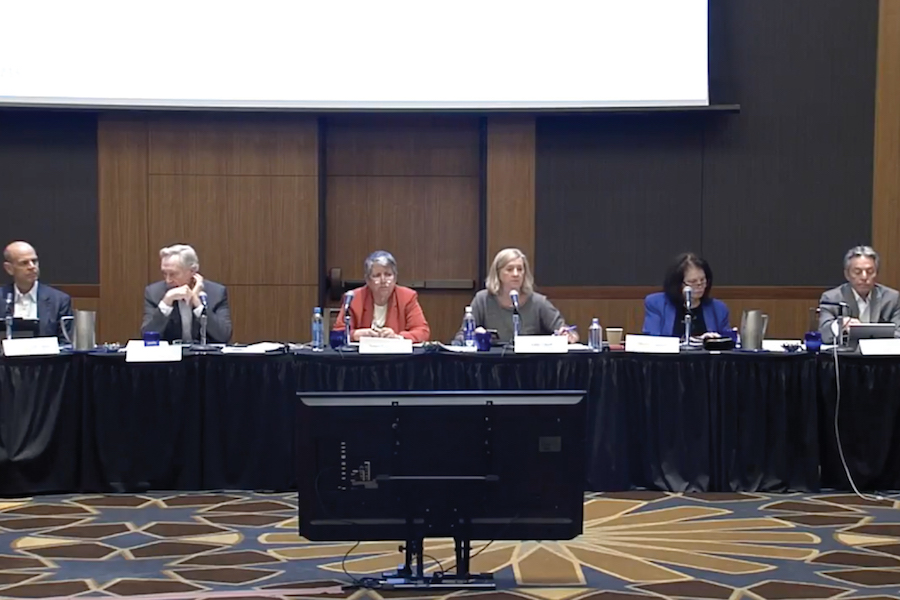
Governor appoints four new UC Regents

SCREENSHOT FROM REGENTS MEETING LIVE STREAM

Four new regents include state finance director, union president

In a press release on August 6, Governor Jerry Brown announced the appointment of four individuals to the UC Board of Regents. The new regents are Laphonza Butler, Michael Cohen, Cecilia V. Estolano and Richard H. Leib.

The California Senate must first confirm the new appointees, though they are permitted to begin serving immediately after Brown’s announcement. Regents serve 12-year terms.

The four new appointees come from private, state and public sectors. Estolano and Leib are both chief executive officers, Butler is the president of a California health care employee union and Cohen serves as California’s Department of Finance director.

On June 2, UC President Janet Napolitano commented on the new appointees.

“Serving on the UC Board of Regents offers a powerful opportunity to shape California higher education for years to come and ensure that future students receive the same excellent UC education as did previous generations of Californians,” she said.

Kathryn Lyberger, president of AFSCME Local 299, spoke about the need for union representation in the Board of Regents and the importance of Butler’s selection in a press release.

“Butler has seen the struggle of working people like those that AFSCME Local 3299 represents,” Lyberger said in the release. “For years, she’s fought for justice on the side of labor and her long-standing history of sticking up for low-income women of color tells us that she understands what must be done to restore UC’s reputation for equality and justice. We know that Laphonza will be the champion of labor that UC workers sorely needed.”

Laphonza Butler is the president of Service Employees International Union Local 2015, a caretaker and health care worker union which includes 325,000 California nursing homes and home-care workers. Butler’s union helped to pass the first $15 statewide minimum wage. SEIU represents one employee group at only one university in the system, UC Irvine.

Butler served as president of SEIU United Long Term Care Workers for seven years. Now, she serves as a board member for the National Children’s Defense Fund and the Bay Area Economic Council Institute and chairs the University of California African American Advisory Council.

Sacramento’s Michael Cohen has been Brown’s Department of Finance director since 2013.

San Diegan Richard Leib worked as a consultant for the waste management company Liquid Environmental Solutions prior to last year. He now serves as chief executive officer for Dunleer Strategies, another waste management firm.

And Pasadena resident Cecilia Estolano, who has a law degree and master’s degree in urban planning, is a co-founder and executive with the public policy and urban planning firm Estolano LeSar Advisors. Estolano is also president of the California Community Colleges Board of Governors.

Estolano is the third democrat on the board, with Cohen registering no party preference.

There are now 26 regents, 18 of whom have been appointed by the governor. All are ex-officio members who are grandfathered in by their previous office, besides the student officer regent.

According to the San Francisco Chronicle, “of the 13 regents currently serving, eight are white, three are Latino, one is black and one is Asian American.”


Written by: Aaron Liss — campus@theaggie.org


Discrepancies in handling of sexual misconduct cases at UC Davis, Berkeley, UCLA, state auditor says

MORGAN TIEU / AGGIE

UC Davis among campuses that took longer to discipline certain faculty members

A California State Audit published in June recommended steps to address problems in the handling of faculty sexual misconduct within the UC system, with specific focus on UCLA, Berkeley and Davis.

The audit, prepared by State Auditor Elaine Howle, identified three key issues: a discrepancy between how investigations and discipline are handled among faculty and staff, the length of time to complete an investigation and adjudication of faculty sexual misconduct cases.

Additionally, the audit requested the statewide Title IX office standardize practices for handling sexual misconduct cases. The audit set a July 2019 deadline for the implementation of changes.

A response letter issued by UC President Janet Napolitano stated that the UC accepts all the recommendations issued by the state auditor’s office.

“The three campuses we reviewed — Berkeley, Davis and Los Angeles — took much longer to discipline Senate faculty than staff and non-Senate faculty,” the report stated.

In its review of 23 cases, the audit reported that, on average, “staff received discipline in 43 days, non-Senate faculty in 74 days and Senate faculty in 220 days.”

The audit mentions one 223-day case at UC Davis in which a respondent was placed on

“involuntary leave with pay shortly after the campus office received the complaint. This
involuntary leave lasted until the respondent’s separation from the campus.”

UCLA, Davis and Berkeley also did not “retain adequate case files to demonstrate how they resolved cases through the informal process, with Davis and Los Angeles performing especially poorly.” According to the audit, Davis “does not retain
all communications with individuals or notes from discussions because its campus coordinator believes that university policy does not require the office to do so.”


Because of existing Academic Senate processes, the handling of faculty misconduct takes “longer to determine discipline as it involves many steps and does not always specify time frames for completion,” according to the audit. The report also mentioned inconsistencies in the implementation of disciplinary measures.

For UC Berkeley and UCLA, cases often exceeded the 60-day time frame established by the universities and, in some cases, did not obtain the necessary approvals for extensions. The audit also said UCLA “inappropriately closed some cases.”

Wendi Delmendo, UC Davis’ chief compliance officer, spoke about the cases at UC Davis where extensions had taken place.

“We did pretty well at meeting the 60 day deadline, and in the two cases where we did not, we issued extensions,” Delmendo said. “We monitor the timelines very carefully at Davis. We try not to issue extensions if we do not have to. Of course, things happen. Sometimes the parties need more time. Sometimes investigator workload is such that we need to give them a little bit more time to finish the report.”

The audit also reported a systemwide lack of “a clear mission that would enable it to ensure that the university’s response to sexual harassment is coordinated and consistent. At a minimum, the systemwide office should play a central role in setting university policy, analyzing complaint data and overseeing the campus offices.”

At this time, the UC campuses do not communicate about approaches to handling cases of sexual misconduct, Delmendo said.

“We are very much focused on what is happening at our campuses,” she said. “We have not had a requirement or a means to look at what the other campuses are doing. So that might be some work the system will take up.”

Robert May, the systemwide chairperson of the Academic Senate and a professor of philosophy and linguistics, spoke about the Academic Senate’s role in the handling of faculty sexual misconduct cases. “The process for managing cases can be time consuming and complex,” May said, adding what he says is an issue with the state’s findings.

“The cases that were being investigated by the California State Auditor were done before our current guidelines were put into place,” May said. “Those contain a number of time-based milestones that needs to be met [in] various parts of the procedure which are rather more complicated than are represented in the audit.”

A Title IX officer must establish probable cause before disciplinary action can be taken, May said. The Title IX officer presents the investigation to the privilege and tenure committee within the Academic Senate, who then makes their findings known to the Chancellor.

“We, the [Academic] Senate, are absolutely firmly committed to ensuring that these processes will [happen] as quickly as possible while respecting due process,” May said, adding the audit recommendation that no more than 60 days pass before a hearing is scheduled and no more than 30 days pass before findings are reported to the chancellor.

“We are currently working on implementing that and will do so as quickly as possible,” he said. “If there was an infraction, then discipline should be […] settled upon as quickly as possible. We want to make sure that process is done fairly and with appropriate due process. No one wants this process to drag on longer than it should.”

In a transcript addressing the state audit taken from a teleconference call on June 21,  Suzanne Taylor, the UC interim systemwide Title IX coordinator, offered the UC Office of President Title IX office’s responses to questions from an audience.

One speaker asked about the inconsistent discipline imposed in similar cases at UCLA, Berkeley and Davis and whether the disciplining process should be standardized at the systemwide or the campus level.  

“The frameworks do require that every campus have peer review committee that advises the chancellor on faculty discipline,” Taylor said. “We also have a systemwide peer review committee that advises on cases against senior university leaders. My office, the systemwide Title IX office, was created in part so that the person in this position would have broad perspective and, that should contribute to consistency. We do have a number of measures in place at the systemwide level to actually improve consistency across the campuses throughout the system.”

The speaker also asked about discrepancies in the length of time it took to investigate and discipline.

“What is prompt and equitable really depends on particular circumstances of the case,” Taylor said. “For example, in our investigation, in our … policy we have a guideline that says we expect cases would typically be resolved within 60 days, but it is always dependent on the particular circumstances. If you have, for example, a large number of witnesses, that could extend the time taken to resolve the case.”

The cases involving senate faculty take longer because it is a much more complex process, UC Davis’ Delmendo explained.

“In the staff world, we finish our investigation report [and] it is sent to Human Resources and the manager of the accused,” she said. “Then HR and the manager will talk about discipline, and a discipline is imposed. It is a much more streamlined process in the staff realm.”

Although the UC has accepted the recommendations, Delmendo said she is not sure, at this time, what the changes will look like — “the system is still in the process of figuring it out next steps.”

Delmendo spoke about the increase in the number of cases reported alleging sexual misconduct by faculty and staff.

“I would speculate that increase is due to the increased outreach that the university has done,” Delmendo said. “We had a lot of changes in the Title IX arena in the past decade. We have a task force on sexual violence and sexual harassment […] and we have done a lot of communicating with our students staff and faculty.”


Written by: George Liao — campus@theaggie.org


Ground and Theatre Festival returns

RILEY SMITH / COURTESY

Second annual festival culminates in weeks of intense preparation

In the Della Davidson dance studio, two young sisters argue in a room scattered with pens, nail polish, a checker board and a third new sister who was created out of rage in a cauldron. Assistant director Charlie Lavaroni, a third-year English and human development double major, calls a break.

“More voice,” Lavaroni directs Anne Homer, a second-year English and human development double major. “Make that ‘I hate you’ more genuine.”

Right across the road, five actors rehearse in a living room set in the not too distant future. Full of energy, panic unfolds as the family fears for their future, an emotion that many audience members might resonate with. “It’s amazing how quickly it happens,” says one of the family members regarding a health care crisis after the U.S. Congress outlaws medicine and medical practitioners in this dystopian work.

For the past month, a dedicated group of 33 UC Davis students and faculty have been workshopping, rehearsing and growing as artists in a conservatory-like setting. After a successful debut last fall, the Ground and Theatre Festival returns this year to perform Mark Rigney’s “Summertime,” directed by Tom Burmester, and Sam Collier’s “Daisy Violet the Bitch Beast King,” directed by UC Davis alumna Lisa Quoresimo, for the UC Davis community.

The Ground and Theatre Festival was founded in 2017 by Broadway veteran and theatre and dance professor Mindy Cooper, performance studies student Tom Burmester, assistant professor of musical theatre at Southern Utah University Lisa Quoresimo and Danika Sudik.

“It is a festival that is dedicated and designed to bring new voices to the stage, new works to the stage, to cultivate new ideas,” Cooper said. “I knew that I had to make a place where works could develop. I also knew that I had a whole bevy of fantastic theatre artists [who have] very split focuses because they’re in school […] so I knew I wanted to do a festival where we could percolate new theatre ideas and the student ensemble could really concentrate.”

Over 300 submissions in all stages of development came across Cooper’s desk and seven were chosen to both workshop and perform.

Ian August, a New Jersey based playwright and lyricist, had the opportunity to workshop his small and intimate play, “Brisé.” “Brisé” is a one-man piece about a 29-year-old male dancer who is dying of a rare brain disorder. Cooper chose “Brisé” because of its power to resonate with the audience.

August collaborated with Lavaroni to workshop the play and dissect it. Everyone involved had the opportunity to grow together as artists.

“What I needed to do was just work with people who really cared about this script and wanted to dive deep,” August said.  

While seven works of theatre were chosen, only two will be performed for the Davis community, “Daisy Violet the Bitch Beast King” and “Summertime.” Also being performed are devised works by students not in the productions that are being performed.  

Sophie Brubaker, a second-year human development and theatre and dance double major, plays Josephine, the eldest sister in “Daisy Violet.” Oppressed by social expectations and limitations, Josephine and her polar opposite of a younger sister, Henrietta, create another sister in a cauldron to serve as their scapegoat. This new sister named Daisy Violet ends up being everything they’re not and fights against society in ways they can’t, which the actors hope will empower the audience.

“I think I’ve learned how to not just act on the surface, but to really feel and embody [the character],” Brubaker said of her experience in the festival.

Anne Homer, a second-year English and theatre and dance double major, plays Henrietta.

”I feel like Henrietta is what I want to be,” Homer said. “She is very outgoing, she says what she feels. Later, she’s kind of like the epitome of the struggling artist. She is very expressive and I admire that a lot [about] her.”

Lavaroni, who is both the assistant director to Lisa Quoresimo and workshopped “Brisé,” empathizes with the struggle faced by the two sisters — that is, the struggle of growing up, oscillating between adulthood and childhood and reconciling with your past.

“It’s a strange piece of theatre unlike anything I’ve ever encountered,” Lavaroni said. “I think it was a really cool challenge that I wanted to dive into.”

“Summertime,” with its subtle sci-fi feel, is just out of touch enough with reality to captivate the audience. The play engages the idea of a global catastrophe and the consequences it has on a regular family. This fast-paced unusual family dramedy is sure to take the audience on a journey as some members of the family rise to the challenge of dealing with the crisis.

“In a way, I identify with all of them, but I also don’t identify with any of them,” Director Tom Burmester said of the characters. “They are a middle class American family, but they are each so deeply neurotic in their own way.”

The festival itself, both on stage and in practice, has an overarching theme of sustainability. Throughout the festival, all of the artists have focused on using less paper and more technology, only recycled paper when it’s needed, and implementing other environmentally friendly practices. The theme of sustainability is only enhanced by the back and forth of history and future in the plays.

To see “Daisy Violet the Bitch Beast King,” “Summertime” and the devised works, visit www.groundandfield.com. All shows are free of charge, but reservations are encouraged. The shows will run Oct. 4 to 6 at the Della Davidson Dance Studio and Wyatt Theatre.

Written by: Liz Jacobson — arts@theaggie.org