53.7 F
Davis

Davis, California

Saturday, December 20, 2025
Home Blog Page 521

Downtown Davis ready for a makeover

DAVIS WHALEN / AGGIE

Future of downtown Davis in the works under Downtown Plan Advisory Committee

The future of downtown Davis rests in the hands of the public as the Downtown Plan Advisory Committee collects input from the community about architectural plans and design to shape the city in the years to come. The KDRT radio program “Davisville” seeks input from the committee about its work so far.

Bob Buchanan, the radio host for “Davisville,” elaborated on how the radio show’s goal is to help give the community a voice where they probably wouldn’t be heard through conventional media. Buchanan noted his stance on the presumed changes that will be made to downtown Davis.

“It’ll depend on what happens,” Buchanan said via email. “And, whatever the committee comes up with will only be one factor in shaping downtown’s future. I’d like downtown to remain a lively center of the community, attractive to students and to people who make their homes here. I don’t know exactly what that means, in terms of details. I’ll be curious to see what the committee recommends.”

Michelle Byars, the vice chair for DPAC, also went on the “Davisville” radio show. Byars explained how the public can get involved in the project to transform the future of downtown.

“Bob Buchanan was excellent — [he] asked us important questions about how people can get involved and what it’s all about,” Byars said. “The best way to be involved is the charrette, however. We will follow up the charrette with online surveys that will be happening, which are online forums for discussions and taking comments. They’ll have important pieces of the presentation posted so others can understand what is happening.”

Meg Arnold, the committee chair for DPAC, made it clear that DPAC is solely advisory in nature. The community can contribute its input on what it foresees in Davis’ future.

“The purpose of that discussion was to raise awareness among Davis residents of the Downtown Plan process and to encourage broad participation by residents in the public process — especially in advance of the multi-day ‘participatory design workshop’ that took place last week, April 24-28,” Arnold said via email. “Input from as many residents as possible is important in these types of design workshops, so the consultants hired by the City, as well as DPAC members themselves, invested a fair amount of energy in conducting outreach and raising awareness. For example, one DPAC member took it upon himself to provide information about the design workshops to all of the public schools in Davis, so the information would be sent home to parents of all the school kids in town.”

Arnold mentioned that no one can be sure about the changes in downtown Davis in the following years, but people will certainly need to adapt.

“I’ve lived in Davis for 16 years and recall that, for most of that time, downtown storefronts were full,” Arnold said. “Now, we have significant vacant storefronts, because some buildings have been sold, new landlords have raised rents, and local merchants have had to depart. A Downtown Specific Plan cannot, on its own, solve this problem, but it can contribute to its resolution, and can provide a foundation for private property owners and developers (as well as business owners and downtown residents) to have much greater confidence that all parties understand what types of building proposals are likely to be approved by the City.”

Bob Wolcott, the principal planner for Davis’ Community Development and Sustainability Program, explained the committee’s upcoming plans.

“The current plans for the downtown are reflected in the current Core Area Specific Plan adopted in the 1990s, downtown zoning districts, and the Davis Downtown and Traditional Residential Neighborhood Design Guidelines,” Wolcott said via email. “These are the policies and codes that are being studied for consolidation and clarification, in addition to implementing a new community-based vision to be developed through the plan process.”

Arnold added that new infrastructure could be in the works in this downtown plan.

“The City is looking to create guidelines for the future development of downtown Davis that will help to shape how these future impacts are reflected in the physical layout and design of downtown,” Arnold said. “This might include taller buildings, changes in how our streets and roads are allocated to different types of transportation (cars, bike, peds), standards for energy sustainability, and much more. The intent is also to simplify the current complex set of design, zoning, and other requirements that makes any development activity in downtown complex and uncertain — for both developers and neighbors.”

Changes will not happen right away but will come over time.

“Plans for cities take many years to implement and involve both the public and private sectors,” Wolcott said. “A good plan guides both public and private investments.”

The next charrette to gage public opinions will be from July 10 to 14.


Written by: Stella Tran — city@theaggie.org

2018 Whole Earth Festival

NICHOLAS CHAN / AGGIE FILE

49th annual UC Davis celebration seeks to “bloom” awareness

May 11 to 13 (Mother’s Day weekend — don’t forget, kids) marks the 49th Whole Earth Festival on the UC Davis Quad. The celebration will include several art spaces and food vendors as well as a fantastic lineup of local and student bands. Of course, it’s a zero-waste event, so put your trash, recycling and compost in the right bin.

With rising awareness of universal environmental issues, student enthusiasm for the festival is at an all-time high. Will Rogers, a fourth-year psychology major, reflected on the importance of this student awareness.

“The festival made me think more about my consumption and what I can do to give back to the Earth,” Rogers said. “Buying biodegradable products was easy way to integrate environmental awareness without having to change my routine while having an impact.”

Tinka Peterka, a second-year design major, is this year’s chaos control and publicity coordinator for the festival.

“We just announced our Friday night headliner, called Sure Sure,” Peterka said. “They’re an experimental pop band.”

Choosing the lineup required the help of many volunteers, who are integral to the festival’s operation.

“The volunteers are the heart of the festival, and we need hundreds of them to keep the festival going,” Peterka said. “At the end of the day, it’s worked for 50 years, so I think it’ll be fine.”

In light of recent controversies concerning relations between the police and civilians, Whole Earth Festival will be implementing a non-violent conflict resolution tactic.

“The whole point is not to escalate things and that can be easy to do,” Peterka said. “You try to show how the person’s actions are affecting you and potentially the community around you. We want the other person to have just as much fun, while maintaining mutual respect. It’s security without intimidation.”

According to Peterka, there will be security at the festival; however, they have agreed to act as a last-resort method.

Meral Basit, a fourth-year biochemistry and molecular biology major, is taking on the part of experiential space coordinator.

“I design and curate what I want the space to be like,” Basit said. “This year, I chose to design the Experiential Dome around engaging the senses. We’re going to have a coffee bean smelling table, a (non-marine) touch tank and a lot of workshops dedicated around exploring your senses.”

“Bloom” is this year’s Whole Earth Festival theme, the perfect thing for a college student to do during their time in school.

“To me, ‘Bloom’ means getting outside of your comfort zone and allowing yourself to grow despite maybe having doubts and fears,” Basit said. “Blooming is about thriving under duress, which I think a lot of people can relate to in the world today.”

Information regarding the festival and events happening during are available on the Whole Earth Festival Facebook page as well as its website.


Written by: Josh Madrid — arts@theaggie.org

Proposed Unitrans fare hike is first in 14 years

JORDAN CHOW / AGGIE

Unitrans currently running $450,000 deficit, projected $750,000 next fiscal year if no changes made

On March 29, 2018, the ASUCD Unitrans bus system proposed its first increase in fare rates in 14 years in addition to various service adjustments to promote a more efficient bussing system.

In a press release sent to The California Aggie, the timeline of the fare increase was described as follows: “Davis’ two local public transit systems, Unitrans and Davis Community Transit, are proposing to raise fares July 1 — the first increases in 14 years for Unitrans and nine years for DCT.”

Unitrans general manager Jeff Flynn explained the budgetary necessity behind the adjustment and cancellation of bus lines.

“Unitrans is currently operating in an annual budget deficit,” Flynn said. “Operating costs are rising significantly due to the annual $1 increase in the California minimum wage. Unitrans currently employs a mostly part-time UCD undergraduate workforce with wages at or near minimum wage. With every annual dollar increase, our costs increase.”

Flynn projects major deficits if no changes are made.

“Unitrans is currently running a $450,000 deficit for fiscal year 2018 and is projected to have a $750,000 deficit next year if no action is taken,” Flynn said. “Unitrans has approximately $1.5 million in reserves; however, this reserve will not last long with costs increasing. The annual projected deficit is expected to increase to $1.6 million per year within four years if no changes are made. The service and fare changes are necessary to reduce our deficit and ensure we are more sustainable next year. Without significant new revenues though, major Unitrans service reductions will be necessary within the next two to four years.”

An article published by UC Davis University News briefly described the two transit systems impacted by the budgetary and service changes occurring.

“Unitrans, which recently celebrated its 50th anniversary, carries more than 4 million passengers annually around the campus and city — operating 49 buses (including vintage double-deckers from London) on 18 routes,” the article stated. “The Associated Students of the University of California, Davis, runs Unitrans in partnership with the city.”

The article also stated that DCT, a “city-run service for qualifying disabled residents, is pursuing its own fare increase.”

The proposed fare changes, according to the press release, will increase costs for single rides, 10-ride tickets, monthly passes, quarterly passes and annual passes.

“Under the Unitrans proposal, the fare for a single ride would go up 25 cents to $1.25,” the release stated. “Unitrans’ other fare proposals: 10-ride ticket — $7.50, (from $6), Monthly pass— $30 (from $25), Quarterly pass — $77 (from $64), Annual pass — Two-stage increase, first to $198 (from $180) on July 1, 2018 and to $216 in July 2019.”

Flynn attributed the transit system’s steady prices to the sound fiscal planning done by Unitrans. Flynn went on to describe the transit system’s reasoning behind the increase in fare and how it compares to other local public transportation.

“Unfortunately, with rising labor costs, Unitrans is looking at both cost reductions and revenue increases,” Flynn said via email interview. “Unitrans will still have lower fare and pass prices than any transit agency serving Davis. Yolobus currently charges $2.25 per ride, the Solano Express charges $2.75 per ride, and the UCD-UCDMC Shuttle charges $1.50 per ride.”

Undergraduate students will not be impacted by the fare changes due to the quarterly fees paid by students, which bypass the regular bus pass or cash fee.

“It should be noted that while the cash fare and pass prices haven’t been increased since 2004, UCD undergraduates voted in 2004 and in 2007 to increase the quarterly fee every UCD undergraduate pays for Unitrans service,” Flynn said. “The Unitrans undergraduate fee has not been changed since 2007.”

Unitrans is also adjusting its bus routes and various other service changes including adjustments to the B and K Lines while discontinuing the C Line.

“[Unitrans will] reroute the B Line to serve Wake Forest Drive and UC Davis’ Cuarto Residence Area,” the press release stated. “Service would continue on a 30-minute frequency. Because the C Line operates later than the B Line and the K Line, which operates on Russell Boulevard, Unitrans would extend service to 9:30 p.m. on the B Line and 9 p.m. on the K Line.”

The adjustments extend further to the D, G, J, W and V lines, which will be reducing midday service to 30 minute intervals between 10 a.m. and 3 p.m. The T Line will also be adjusted to serve the Wildhorse and Slide Hill Park neighborhoods as well as Holmes Junior High School. A new line will be established in order to provide direct access between West Davis and Davis High School and Holmes Junior High School. Additionally, the Amtrak Sunday evening shuttle will be discontinued.

Flynn described how Unitrans will be communicating these changes with university students and community members in Davis.

“With the changes, we will be posting notices at impacted bus stops, placing information inside our buses and at the terminals, placing ads in the Aggie and Enterprise, and displaying changes on Nextbus and on the bus electronic headsigns,” Flynn said. “Route changes are expected to begin on Monday, August 6 when Summer Session II begins. We will need to retrain drivers and other employees however we do not foresee any difficulties in doing this.”


Written by: Priyanka Shreedar — campus@theaggie.org


ASUCD Coffee House Celebrates 50th Anniversary

BRIAN LANDRY / AGGIE

Celebration will feature special deals and speaker events

The ASUCD Coho is celebrating its 50th anniversary with a series of special events and deals throughout Spring Quarter.

“I am extremely thrilled to be celebrating the Coho’s 50th anniversary,” said Darin Schluep, the food service director of AS Dining Services. “As someone who’s been a part of the Coffee House family for the last 20 years, I am so proud of the impact this operation has had on so many members of the UC Davis community.”

As part of its celebration, the Coho is holding #TBT pricing every Thursday through May 17, when prices on select items are reverted to what they were decades ago.

The first TBT special was held on April 5 and rolled the price of a small coffee back to 68 cents.

Other events will include Decade Days (May 14 to 17) where staff members will dress up and play music from the ‘60s to ‘90s and Alumni Speaker panels (May 14 to 16) where Coho alumni will speak about the impact the Coho had on their college experience and careers after college.

Among the speakers are Joe Sasto, the winner of Food Network’s “Chopped” and a third-place finisher on Bravo’s “Top Chef”;  TJ Adams-Falconer, the former White House media affairs manager under Obama; and Karina Harris, the founder and CEO of Waffles & Honey Jewelry.

The Coho was started in 1968 as a student-run foodservice operation with a simple menu of coffee, pastries and sandwiches.  

Today, the Coho employs over 350 students, serves over 7,500 customers a day and provides real-world job skill training to employees, student supervisors and student managers.

“It is a good place to work and an integral part of the community,” said third-year design major and an outfront supervisor at the CoHo Malena Hansen. “They’re planning a lot of great discounts that are awesome for students.”

The celebration will also include a reception on May 17 featuring Coho employees both past and present to celebrate its historical impact on the UC Davis community. Speakers at the reception will include Bob Black, the ASUCD president in 1968 and Sharon Coulson, the Coho director of 27 years.

“The 50th anniversary is a great time for us to not only celebrate our place on campus, but to also reflect back on the thousands of student employees who have dedicated themselves to the success of the Coffee House over the years, and in the process helped shape the Coho into the student-focused campus institution it is today,” Schluep said.

Many students who frequent the Coho expressed excitement over the celebration.

“I love the Coho,” said second-year cognitive science and sociology double major Shreya Deshpande. “And the discounts sound great!”


Written by: Clara Zhao — campus@theaggie.org

Happy Mother’s Day

CAITLYN SAMPLEY / AGGIE

The Editorial Board loves their moms

Bryan Sykes, Editor-in-Chief:

My mom always tells me, when I’m worried or stressed, to “think good thoughts and good things will happen.” If there is any phrase that best portrays my mom, it’s that one. She’s the most positive and supportive person I know and never fails to be there if you need her. Her optimism is the best remedy for whatever life throws at you.

When my mom isn’t flying around the country, she is at home telling me about absurd stories that happen 35,000 feet in the air. She’s the person who doesn’t get sick (she totally does) because you’re always the priority. She’s the one who has the home remedies and the wisdom to fix just about anything you can think of. She’ll put something away for safekeeping, promptly lose it and triumphantly brandish it once she finds it again (“See, I told you I put it in a safe place!”).

But more than anything, my mom gets it. I need space? It’s okay, she gets it. I’m anxious? She gets it and is on-hand to help out. Hungry? She gets it, and oh boy, she’s en route to fix that problem. The pampering I receive from my mom is paralleled only by her love for my sister and our blind dog.

This beautiful, wonderful woman, who does so much for the people she loves and asks nothing in return, is simply the best.

Love you, mom.


Emily Stack, Managing Editor:

One of my favorite pictures of my mother is of her in the backyard of my childhood home — she is extremely pregnant with me, probably eight months along, in beat-up cutoffs and an old tank top, busting up concrete with a long-handled sledgehammer. I was raised by a woman unafraid of dirt and sweat, and it wasn’t until I got older that it occured to me that there was anything strange about a woman being physically tough, with strong biceps and a good working knowledge of construction and internal combustion engines. By the time society got to me, with messages of women’s frailty and helplessness, I was a lost cause to retrograde notions of proper womanhood.

Lest anyone get the idea that my mother is all brawn and no brains, she’s also a teacher, and my memories of mother-daughter trips to The Home Depot are interspersed with trips to the library and nightly bedtime stories. First, she read to us and then, when we learned, my sister and I read to her. Every Mother’s Day, I return to the last lines of Strickland Gillilan’s delightful poem “The Reading Mother”: “You may have tangible wealth untold;/ Caskets of jewels and coffers of gold./ Richer than I you can never be —/ I had a mother who read to me.”

My mother is the toast of the town and adored by everyone who knows her, for her quick wit and humor and rock-solid, no-nonsense advice; my friends and hers flock to her for tenderly delivered but pragmatic life guidance, help when a car is making a funny noise and her truly excellent homemade granola recipe. (And you thought I was kind of a hippie.) She’s an extraordinary woman, and I’m honored to be her daughter.


Hannah Holzer, Campus News Editor:

When my sister and I were younger, my mom served as an art docent for our classes. In sixth grade, she helped my class make 1,000 paper cranes for my teacher, who had cancer. In my sister’s class, she had each student create their own gate as a miniature replica of Jeanne-Claude and Christo’s 2005 artwork installation “The Gates.” I had forgotten about this when, several years later, in my high school art history class, one of our final assignments was to reimagine works of art we had learned about. While most students painted on canvas or created sculptures, I bought 200 feet of red paper and wrapped about a dozen 7-foot cement columns on campus in red in the style of Jeanne-Claude and Christo. Although not a single person understood the reference, my mom snuck onto campus before school started just so she could see and take photos of my temporary “installation.”

My mom is pretty darn cool — she has more Twitter followers than I do, she spends her free time door-knocking for local political candidates and her license plate is dedicated to her favorite Van Gogh painting, “The Starry Night.” I get my passion for the arts from her, which has led to some exciting adventures, including but not limited to: possibly trespassing to see a giant mural and getting up at 5 a.m. and then waiting in Downtown LA for five hours to see a Yayoi Kusama exhibit (worth it).

She’s a protestor extraordinaire, my feminist role model and genuinely beloved by her family, coworkers and friends (and my friends, too). She’s brilliant and caring and kind and she knows every word to every song on the Hamilton mixtape. She also reads every article I write the second they’re published and sends me at least one photo of a flower or a cute dog every day. I know that as long as I try my best, she will always be my #1 fan. Love you, Mom — 20 million.


Kaelyn Tuermer-Lee, City News Editor:

Growing up in Maryland, I had to deal with the hot, humid summers, of which I was not a fan. But what my 6-year-old self didn’t know was that in the nine years I lived in Maryland, I would be fortunate enough to encounter cicadas. For those of you who don’t know what cicadas are, lucky you. I was utterly terrified of the red-eyed, nugget-shaped creepy insects that covered the ground and trees by the thousands. In short, they were anyone’s worst nightmare. I begged my mom not to go to school, too afraid to step outside and become the cicadas’ next victim. My mom, however, said they were harmless, not allowing me to skip school. I remember her walking me to to the entrance of the school, covering me with her jacket. I reluctantly made it to my first-grade classroom, with the help of my mom. And that’s one of the things I love most about my mom — she always supports me but never allows me to quit.


Taryn DeOilers, Opinion Editor:

In kindergarten, I was obsessed with butterfly hair clips and had a propensity for cutting my own bangs. One day, when I decided to put literally over 20 butterfly clips in my hair and debut a particularly uneven set of bangs, a teacher scolded my mom: “I can’t believe you’d let her leave the house like that.” My mom, the kindest, least confrontational person in the world, promptly told that teacher where she could stick it. “My daughter is expressing herself, and you don’t have any say in that.”

That’s my mom: Always kind, always unassuming, always forgiving — but fiercely protective of my brothers and me being our authentic, very weird selves. She has never put pressure on me to look, speak or dress a certain way. She has never asked me to stop singing opera to my cats or tap-dancing for my cats or writing jingles that incorporate my cats’ names. (And trust me, I do this often, and good lord, is it extremely annoying.) She has never shamed me for getting a bad grade and has taught me to prioritize friendship, family and helping others over material success.

My mom has put up with a lot in her life, but she has always faced trials with strength, grace and a sense of humor. And if I’m being deadly, ruthlessly honest, she’s quite the silly goose. Her hobbies include a combined triple-mommy-whammy of quilting, knitting and attending book club, rocketing her to the status of “MOM LEVEL: GOLD.” She uses way too many ellipses and awkward smiley faces over text, so let me channel her special language and say: I’ll…always…be proud…to be…called…her “girly-goo.” 🙂


Gillian Allen, Features Editor:

It was summer 2017 and my mom, my best friend and I were embarking on our week-long Paris escapade of museum-hopping and eating too much bread. On our first day out on the town, we decided to walk to the top of the Eiffel Tower and enjoy the beautiful views the city had to offer. After climbing up and back down the old steps and taking way too many photos, we finally reached ground level again. My mom had decided that day was the day she would wear her new, heeled Steve Madden sandals — perfect for climbing hundreds of steps. By the time we reached the ground floor, she physically could not walk and had to actually sit down, remove her shoes and trade hers with mine. She then had me fetch one of those light-up tourist rickshaws that people bike you around on, so that it could take us on a 20-second ride right around the block to where we were being picked up. I will never forget my mom’s prima donna attitude on that day, and I love her so much more for it because it was so funny to me. My mom taught me on that day that it’s okay to be a diva sometimes — especially when you’ve raised three kids and are taking one of them on a European vacation.


Ally Overbay, Arts & Culture Editor:

My mom has beautiful hands. Her fingers are long and slender and her nails are naturally manicured, never polished or chewed on. When she read stories to me as a kid, it was the only thing I could focus on. Peter Pan could be making out with Wendy for all I knew, but I could tell you with certainty that her pinky finger nail was slightly longer than her pointer’s.

But it was more than her hands that I loved — it was the way they held a book. I wouldn’t be surprised if the only reason I became an avid reader was my childlike attempt to hold a book the way my mom did (but when I tried, my little fingers couldn’t span the width of the book and a paperback often landed on my face). Years later, I’ve had much more success (ask around, I’ve started a book club), and every time I pick up a book I think of my mom — which, fortunately, is quite frequent. And yes, we bend the bindings.


Veronica Vargo, Sports Editor:

My mother and I have a very peculiar relationship. She is not the kind of mom who says “Everything is going to be alright” or “Honey, you tried your best.” She is more of the “Where’s your drink?” and “That’s life” kind of mom. When I would fall, she wouldn’t help me up. Instead as I ran to her with tears, she’d say, “Oh well, that’s what you get.”

As most of my peers have shared touching stories, I can honestly say I was never the subject of loving, maternal tenderness. Instead, my mother’s never-ending philosophy of “tough love” has not yet broken character, so much so that I can count the amount of times she has said “I love you” on my fingers.

So for that reason, I don’t need to go on and list the reasons she’s great or what makes her irreplaceable in my eyes. I’m sure she already knows that I know she did it all with my best interest in mind. She knows I know she sacrificed a lot of her life, especially being a single parent, to make mine immaculate. She knows I know that even when she didn’t lead by example, she wanted to me to learn from her mistakes.

She knows all this and more, and even though she doesn’t say it, she doesn’t have to. I know.


Harnoor Gill, Science Editor:

Sometimes, my brain does a very unfair thing. It takes the image of my mom and prunes all of the aspects of her personality and character, her flowers and her thorns, and reduces her to simply my parent and caretaker. But when I take a few seconds to reflect and imagine that woman in her entirety, I am left a little breathless and off-balance.

This is a woman who left everything she knew and loved in her mother country to venture into an unknown land so that she could raise her children in a country with more opportunity and less pollution. This is the woman who, after having two kids, went back to school, despite the stigma and hardship of being a middle-aged student mom, to finish her credits so that she could apply for pharmacy school. This is the woman who got in and is now a full-fledged pharmacist. This is the woman who has struggled with a disability and health issues every day of her life. She is the woman who still calls her parents for a little solace and reassurance every night. This is the woman who knows everything there is to possibly know about Princess Diana and completely fangirls over her. This is the same woman who asked me if I had any food in my fridge this morning.

So yes, brain, that’s my mom. But there’s a bit more to it than that. She is a true manifestation of Beyonce’s song “Run The World (Girls).” If I read her autobiography and never knew this wonderful woman, my heart would still fill to the brim and overflow with respect and admiration.

Veganism isn’t entirely unproblematic

DANIELLE MOFFAT / AGGIE

The vegan lifestyle is both inaccessible and not as green as you’re led to believe

In the wake of increased public awareness about the consequences of climate change, spring — rather than winter — appears to be the first casualty.

Here we reside, in the middle of May in Davis, California, with temperatures swinging erratically between mid-80s one day to mid-60s the next. And while the general population appears somewhat concerned, we all continue on with our day without batting an eye.

Well, almost everybody.

Unfortunately, this strange spring seems to have increased the strength of That One Vegan. You know the type: Newly converted and outspoken, these recent recruits behave with a sense of single-minded purpose that resembles the proselytizing fanatics of one religion or another. This isn’t to act as an invalidation of the premise of veganism — I understand that some adopt the lifestyle for dietary or moral purposes, which is entirely acceptable.

But this article is addressed to those who overstep themselves; those who go out of their way to shame others who choose a more meat-based diet, for no other reason than their apparent disregard for the “animals killed in the production of their meal.”

There’s no doubt about the environmental impact of meat. Amid all the reports studying the degree to which agriculture contributes to global warming, it seems that scientists can agree that the livestock industry has had the largest toll on both local ecosystems and the concentration of atmospheric greenhouse gases.

Veganism, however, cannot be treated like a religion if it wishes to fix the problems its supporters declare to anyone in hearing distance.

Repeated demonstrations against the mistreatment of animals raised for human consumption not only desensitize the general populace; they also ignore many of the problems surrounding the vegan lifestyle.

First, language referring to veganism as a semi-religious experience is extremely off-putting: perceiving diets in such black-and-white terminology immediately excludes entire groups, such as vegetarians and meat-eaters, solely on the basis of disagreement.

As a result of the exclusivity of veganism, the original — and individualistic — intentions for adopting the diet are largely ignored. That is to say, while declaring that someone should feel guilty for what they eat, the message of animal mistreatment and environmental concerns rarely reaches as wide of an audience as it potentially could.

At the same time, because productive conversation rarely exists between vegans and non-vegans, few people discuss the inaccessibility of the vegan diet.

Veganism is expensive. Although vegans don’t spend money on animal products, they are ultimately more likely to spend more on pricey organic and specialty “health” foods than the average meat-eating consumer. Moreover, the knowledge of how to stay healthy without some of the essential nutrients solely found in meat comes at the cost of both time and access to informative resources. One could even compare this to a luxury only affordable to upper-middle class residents.

The availability of nutritional supplements and fresh produce becomes problematic especially in food deserts, where lower-income residents have difficulty procuring food that’s not highly processed and cheap like the Dollar Menu from McDonalds. Yelling at someone for not adhering to your personal standards fails to recognize institutional problems — such as poverty, gentrification and food insecurity — that limit a person’s ability to follow a lifestyle they just can’t afford.

Again, I’m not against veganism by any means — if you follow that kind of lifestyle, I wholeheartedly support it.

But veganism doesn’t work when all you do is accost people on the street, berate your friends or guilt-trip them into becoming vegan. All that does is make it easier for people to tune you out.

We need to be more open about the issues currently manifesting through our treatment of food. What good does it do to shame someone for eating meat when that’s their only possible meal?

On the other hand, if you find yourself worried about the effect that livestock has on global climate change, acknowledge that some crops — like quinoa — do harm ecosystems as well.

So as Davis weather continues to fluctuate from spring to summer to spring and the sun calls you to study on the Quad, if That One Vegan approaches you, don’t feel too bad about yourself.

Nothing is entirely unproblematic — even veganism.


Written by: Erin Hamilton — elhamilton@ucdavis.edu

Disclaimer: The views and opinions expressed by individual columnists belong to the columnists alone and do not necessarily indicate the views and opinions held by The California Aggie.

State of Ignorance: How Bing and Scott Pruitt go hand-in-hand

WILLIAM JOHNS [CC BY 2.0] / FLICKR
The removal of “climate change” from the EPA website mirrors the struggle between Google and Bing

Americans love withholding information in lieu of explicit opposition to a problem. Take the Civil War as an example: Some in the South refer to the Civil War as the “War of Northern Aggression” — lending fault to the Northern states without even acknowledging the purpose of the war in the first place — as a method of diverting attention away from the reality of the situation.

In the midst of Donald Trump’s presidency, a similar phenomena appears to be ravaging the Environmental Protection Agency. While Scott Pruitt, head of the EPA, painstakingly unravels decades’ worth of environmental protection regulations, a few controversial terms have seemingly vanished from the EPA website: “fossil fuels,” “greenhouse gases” and — arguably the most alarming — “global warming.”

Now, behavior like this cannot remove entirely the existence of human-driven climate change. Consider, however, a similar, if slightly ludicrous, scenario:

Imagine a student, like any other you’d encounter at any campus in any city or town within the United States. When the pressures of midterms and finals fall upon the shoulders of this young student, they find themselves fleeing to the much-beloved internet to provide them with answers. They open their laptop, log onto the internet and type a four-lettered word to get to the common search engine:

Bing.

Yep, in this world, students, parents, teachers and children alike flock to the popular Microsoft platform Bing to solve all of their questionable worries. That’s not to imply that Google doesn’t exist, however — only that the scope of Bing’s renown is so great that it overshadows any chance for Google to compete.

So, in this world, instead of just “Googling” something, you “Bing” it.

Sounds bizarre, right?

In reality, Mr. Pruitt’s behavior doesn’t bode well for the future of U.S. environmental policy when we have a president who hails the return of “clean coal,” biomass burning and other fossil fuels that heavily pollute our air, land and water systems.

Let’s return to the fictitious student: In his world, people choose Bing over of Google. The problem lies not in the fact that in our world the roles have reversed, but rather that through such a large-scale suppression of intent (i.e. one search engine’s basic monopoly on the existent market) affects widespread public awareness.

The same could be applied to the future of global climate change: In the EPA’s sudden erasure of topics concerning global climate change, public knowledge on the subject becomes stunted. This move occurred without the pomp and circumstance that direct opposition would have bought; instead, Mr. Pruitt and Mr. Trump slyly reinvented the EPA’s website without having to outwardly admit their intentions.

Moreover, when the EPA removed references to global warming, it didn’t completely erase the multitude of the studies that prove its existence. In this case, the internet acts as an untouchable archive free from the regulation of a singular government.

What Mr. Pruitt has ultimately achieved is the elimination of a formerly reliable source at a time when the world needs as many unbiased outlets as possible. There’s a reason why authors consistently return to the phrase “there’s strength in numbers” — the only way to convince even the most stubborn of skeptics is by flooding their daily lives with enough facts to get the point across.

Therefore, Pruitt’s transformation of the EPA website is much more devastating than you’d initially be led to believe, as it further encourages the climate of ignorance currently sweeping the nation in the wake of the 2016 presidential election.

If there’s an issue deserving of ignorance, climate change is not it — not when global temperatures are expected to soar past the two degree Celsius mark, delineated by the Paris Climate Agreement, in 2050.

By erasing terms related to human involvement in climate change, not only does Mr. Pruitt remove any gravity from the global issue but his actions also announce to the American populace that our warming planet is not a big enough issue for them to worry about. As a result, Mr. Pruitt continues the American tradition of implicit opposition: the head of the EPA will never announce that his intentions stand contrary to environment.

Instead, Mr. Pruitt simply makes his opponents disappear.


Written by: Erin Hamilton — elhamilton@ucdavis.edu

Disclaimer: The views and opinions expressed by individual columnists belong to the columnists alone and do not necessarily indicate the views and opinions held by The California Aggie.

Cartoon: Square

By: Ariel Hilomen  — abhilomen@ucdavis.edu

Disclaimer: The views and opinions expressed by individual cartoonists belong to the cartoonists alone and do not necessarily indicate the views and opinions held by The California Aggie.

Three-day strike held UC-wide

TAYLOR LAPOINT / AGGIE

AFSCME workers joined in solidarity by other unions, students, faculty

Three days of striking began on the morning of May 7 as UC Davis service workers and union representatives set up tents on Hutchison Field.

Employees represented by the American Federation of State, County and Municipal Employees Chapter 3299, the UC’s largest employee union, were on strike from May 7-9 at UC campuses and some hospitals. AFSCME workers were joined in solidarity by members of the University Professional and Technical Employees union and the California Nurses Association as well as groups of students and other faculty and staff members.

After a year of bargaining negotiations between AFSCME and the UC, an AFSCME press release states the “UC still has yet to offer real wage increases, benefit protections, job security, safe staffing and ending discrimination in the workplace.” The union also called for the UC to acknowledge and fix racial and gender disparity in pay, especially among Latinas and black women.

Workers say they are also concerned about the outsourcing of jobs to contracted agencies, which takes away work from previously trained UC employees and contributes to high turnover.

“A lot of new people coming in can lead to accidents,” said Shamus Sullivan, who works as a cook at the Cuarto Dining Commons and took part in Monday’s strike. “There’s not enough time to properly train people.”

A sea of strikers, students and UC Davis community members carrying signs and dressed in green shirts saying “We Run UC” marched through campus on Monday, Tuesday and Wednesday. On the first day, around 100 students and 250 workers marched on the Quad, calling for students to join them and recognize the injustices faced by the workers. A rally was held among the tents set up along Hutchison Field that featured speakers from UPTE and the group United Students Against Sweatshops.

On Tuesday, strikers marched to the university’s Human Resources Department, the medical district, facilities management and Mrak Hall. A rally featured representatives from Yolo County Progressives, the graduate student workers union, and the National Alliance for Filipino Concerns. The strikers then returned to the Quad.

“We will march on management wherever they are,” said one of the organizers.

Across campus, teachers, teaching assistants and technical workers joined the strikers in solidarity.

Simon Sadler, a professor of design, was one of many faculty members who came out to show solidarity with the strikers.

“I do think that it is actually within everybody’s interest to support one another to make UC work,” Sadler said. “I can’t really see how I would be able to separate one type of colleague at UC for another type.”

Participants commented on the size of the turnout.

“This is incredible,” said Joaquin Chavez, the statewide vice president of UPTE-CWA 9119, one of the unions striking in solidarity with AFSCME. “It’s amazing to see the workers come out and fight for dignity on the job and fight for each other and stand together for a common cause. We are out here supporting AFSCME in their contract fight and we really feel solidarity with AFSCME service workers because we experience the same kind of conditions that they do.”

During downtime between marches, strikers said they felt confident and relaxed as they joined as a community and enjoyed catered meals, provided by the union’s strike fund that comes from a small portion of the union dues. Strikers are optimistic that they will receive a good solution.

“I believe that strikes are really where you see people at their best,” said Chris Flint, the communications specialist for the Service Employees International Union. “Strikes are harder than working.”

Flint also noted that while striking, workers are not being paid.

“It’s a big sacrifice,” said AFSCME organizer Scott Hill.

On Monday morning, a car struck three strikers in UCLA as a city marshall directed them across the street. The individuals were treated for “minor injuries,” according to the Daily Bruin.

California Senator Kamala Harris has cancelled her commencement speech at UC Berkeley due to the strike after pressure from AFSCME.


Written by: Taylor LaPoint and George Liao — campus@theaggie.org

Human amygdala growth different in cases of autism

CHRISTIE NEO / AGGIE

Critical region for emotion and social cues shows decline in cell numbers in autism, increase in cell numbers in neurotypical brains

Researchers at the UC Davis Mind Institute have discovered a key difference in the way the amygdala develops in people diagnosed with autism spectrum disorder. While typical brains steadily gain neurons in the amygdala during childhood, children with ASD begin with a larger number of neurons and experience neuron loss over time.

“We started this current study to try to explain these volumetric changes at the cellular level,” said Cynthia Schumann, an associate professor in the UC Davis Department of Psychiatry and Behavioral Sciences, in an email interview. “The most unexpected finding was that the number of neurons increased [in the amygdala] in typical development; this phenomenon doesn’t happen anywhere else in the brain that we know of.”

The amygdala (Greek for “almond”) is a round structure situated deep in each side of the brain. The small nodules serve important roles in memory formation and emotional responses. Previous studies have shown autism severity correlates with amygdala size.

“The amygdala is associated with regulating anxiety, which is a common feature of ASD,” Schumann said. “However, it is a common feature of many neurodevelopmental and psychiatric disorders. What we do know is that there are substantial changes in the amygdala happening in typical development, especially through adolescence. The amygdala could be altered in many disorders, yet take different developmental time courses and lead to different symptoms.”

52 human brains were collected by Autism BrainNet, a program created to help connect researchers with quality tissue for analysis — 24 brains from neurotypical humans and 28 brains from humans diagnosed with autism were sectioned and examined for size and cell count.

“What we have learned is that the changes in the amygdala are not only happening at a specific age in ASD,” said Thomas Avino, a postdoctoral scholar at the UC Davis MIND Institute, in an email interview. “Instead, it is that the amygdala is taking a different developmental path from childhood to adulthood. The story is complicated by the fact that the amygdala is growing and changing in typical development, and appears to be growing and changing differently in ASD.”

The brains ranged from two to 48 years of age, representing a broad spread of the phases of brain growth.

“In our study, the youngest individuals with autism spectrum disorder (ASD) were 4 years old,” said Nicole Barger, a postdoctoral scholar at the UC Davis MIND Institute, in an email interview. “Thus, we cannot directly address differences prior to this age. It is possible that individuals with ASD have increased neuron numbers earlier in development, but our analysis can only speak to differences occurring from childhood to adulthood.”

Different regions of the amygdala show varying rates of neural cell change. The report indicates that, by adulthood, the number of mature neurons in brains with ASD is 17 percent lower than that of neurotypical brains.

“We have demonstrated that the number of neurons increases in the neurotypical amygdala which is likely due to the persistence (or adult generation) of immature neurons that are present even into adulthood,” Avino said. “Our study is the first to quantitatively examine this developmental trajectory of the amygdala at the cellular level.”

The changes found in this study may be because of cell signals instructing amygdala tissue to develop improperly or a degenerative condition which causes neural cells to die off in childhood and adolescence. The development of the amygdala in neurotypical humans is also not well understood.

“I am currently investigating the positive trend we observed in our non-autistic sample to better understand the broader significance of developmental increases in amygdala neurons and the mechanisms that might contribute to this trend,” Barger said.

The human amygdala will serve as a key target for neuroscientists hoping to better understand how autism develops and what possible treatments can be created to help with symptoms.

“Autism is extremely complex and I think it is very important to consider trajectories and time points when discussing disorders of neurodevelopment,” Avino said. “For example, the tendency for individuals with autism to show more amygdala neurons at childhood ages may be more related to prenatal/early postnatal developmental events such as the production of neurons or the improper culling of excessive neurons. At the other end, I think the idea of a ‘hyperactive’ amygdala in individuals with autism leading to neuron loss is intriguing, is supported by other studies, and may explain the neuron loss we see in adulthood. However, there are many factors at play here and it is likely they interact to produce this complex disorder.”


Written by: George Ugartemendia — science@theaggie.org

California Chronicles

CHRISTIE NEO / AGGIE

We were roommates for the night…

Honestly, helping someone plan the perfect date makes you want to have one of your own. No one describes the taste of cake and then puts the uneaten cake wedge back in the fridge; you have to take a bite and experience it for yourself.

This problem was presented to me very quickly: there was no cake available to begin with, at least not for me. Not even the deep, dark crevices of Grindr could reach a cowtown. There was one person that I knew of.

I knew he was gay because his Grindr notification went off when he was lying on his bed during our summer orientation (we were roommates for the night). I decided to reach out to him because, you know, new school, new town and newfound confidence. Well, newfound might be an overstatement.

I tried to be more civil and instead sent him a message on Instagram. It read, “Hey, wanna get coffee sometime?” Yet again, the movies lied. College was starting to just look like a slightly less awkward high school experience. Coffee is always a good choice for a first date because it’s the middle ground. It says, “I want to get to know you, but this will be over soon so it’s okay if this goes south.” He responded to my message and I slid the notification open to read what it said.

Next week: The spill


Written by: Terry Hudson — arts@theaggie.org

Disclaimer: The views and opinions expressed by Terry Hudson are completely fictional and do not necessarily indicate the views and opinions held by The California Aggie. The story is fictionalized, as is Terry Hudson.

Davis waste removal company sold to Recology

JEREMY DANG / AGGIE

Recology began city operations April 20

On April 20, Recology, an employee-owned company based in San Francisco, took over waste collection operations from Davis Waste Removal Company after purchasing all of the company’s assets. DWRC was previously the only waste and recycling company to operate in Davis, exclusively operating within and around the city since 1972. Now, Recology will take the place of DWRC, managing day-to-day operations.

“The Davis community has always been a recycling leader and in 1974 was one of the first cities in California to implement curbside recycling, and that recycling leadership has been well served for decades by the Giesler family and locally owned Davis Waste Removal,” said Mark Murray, the executive director of the environmental group Californians Against Waste.

Murray explained that Recology was originally from San Francisco and has come to Davis to ensure their zero waste policy.

“A decade ago, Recology brought curbside collection and composting of food and green waste to San Francisco,” Murray said. “From that successful demonstration, policy makers in Sacramento and across the country have taken notice. Policy makers in Davis have committed our community to a ‘zero waste path’ for residents and businesses alike. I can think of no better partner in that effort than Recology.”

Recology and Davis Waste Removal are both employee-owned companies, which was one of the reasons Recology was attracted to the acquisition. Although Californians Against Waste were excited by the prospect of Recology taking over operations within the city, other environmental groups — like the Sierra Club’s Yolano Group — opposed parts of the sale.

“The City has to make a finding that it’s in the best interest of the city to allow the transfer of that contract to a new entity, in this case Recology,” said Alan Pryor, the chairman of the Sierra Club Yolano Group.

Pryor went on to describe that the Utility Rate Advisory Commission had several questions regarding the transferring of operations that went unanswered.

“The Utility Rate Advisory Commission came up with 21 questions that they thought needed to be answered before the city could make that determination,” Pryor said. “None of those questions were ever answered by the city, or Recology. The city conducted all their deliberations for this transfer in closed session without any public participation […] Things may have been on the up and up, but no one knows because none of those questions were answered.”

Though the Sierra Club objected to parts of the transition, Recology has already begun taking over operations within Davis. Residents will not need to cancel, register or renew any current subscriptions. According to the company’s press release, collection service days will remain the same and the company is currently working to transfer all subscriber data safely from DWRC’s system to their own.

“All processes will remain the same as they were with DWR,” said Scott Pardini, the general manager of Recology Davis. “The only changes the public will see is that Recology-branded trucks, carts and advertising will replace the DWR branded items over time. Davis is a very nice community with a lot of citizens engaged in waste and recycling efforts.  This fits well with our philosophy of Waste Zero. Our principles of waste diversion and recycling by putting our resources to their highest and best use fit well with the community here in Davis.”


Written by: Ahash Francis — city@theaggie.org

Women’s lacrosse falls short in championship thriller

KAILA MATTERA / AGGIE

Aggies cap successful first season under Isidor with overtime defeat to San Diego State

The UC Davis women’s lacrosse team suffered a heartbreaking, season-ending 11-10 loss to host San Diego State on Sunday afternoon in the MPSF title game.

The Aggies fought back from a three-goal halftime deficit and forced sudden-death overtime when sophomore attacker Amanda Outcalt fired a game-tying goal, her 30th of the year, with just over a minute left in regulation to make it 10-10. UC Davis barely had time to catch its breath, though, as the Aztecs scored the championship-winning goal a mere 23 seconds into the overtime period.

The Aggies’ final record of 8-6 in head coach Suzanne Isidor’s inaugural season marks the program’s best finish since 2014. Prior to the title game, Isidor was named the league’s Coach of the Year for her efforts all season long.

“It’s been great,” Isidor said. “We’ve come along way since we started off 1-3. The growth of this team has been so much fun to watch.”

Isidor is just one of the several Aggies who were recognized for their contributions on the field this season.

Junior midfielder Taylor Cuenin, with her team-leading 38 goals, captured the program’s first ever Player of the Year honors. Over the course of the season, she averaged nearly three points per game and finished second in the league in both goals and turnovers forced.

In addition, Outcalt, senior attacker Kate Fellner, junior defender Natalie Garces, junior goalkeeper Grace Richards and sophomore attacker Sorana Larson were all named to the All-MPSF squad. Larson came in clutch in the title game with a team-leading three goals.

“I got lucky that I inherited such a great group that’s really fun to work with and will keep getting better,” Isidor said.

Overall, Isidor credited the relentless nature of this year’s team and its drive to continue improving as reasons for its success.

“Each day, they work on what they need to work on,” Isidor said. “And that sort of created this mentality that we’re just going to keep getting better.”

The Aggies showed incredible resiliency at times this season and battled back from deficits on numerous occasions, including Sunday’s championship bout.

“If the first half of a game doesn’t go well, they were so good at making adjustments and coming out in the second half ready to go,” Isidor said.

This attitude and mindset paid dividends for the Aggies, a team that either trailed or was tied at the halftime intermission in three of its eight victories.

This program has a bright future ahead, due to its experiences this season and the fact that most of the team’s top players will be returning again next year.

“This team is really in a good place mentally,” Isidor said. “They have some great leadership and great young players. They work hard and they have each other’s back.”


Written by: Brendan Ogburn — sports@theaggie.org

Athletes compete against mental health stigma

KATE SNOWDON / AGGIE FILE

Student-athlete run group works to combat mental health stigmas in athletics, provide safe space for athletes

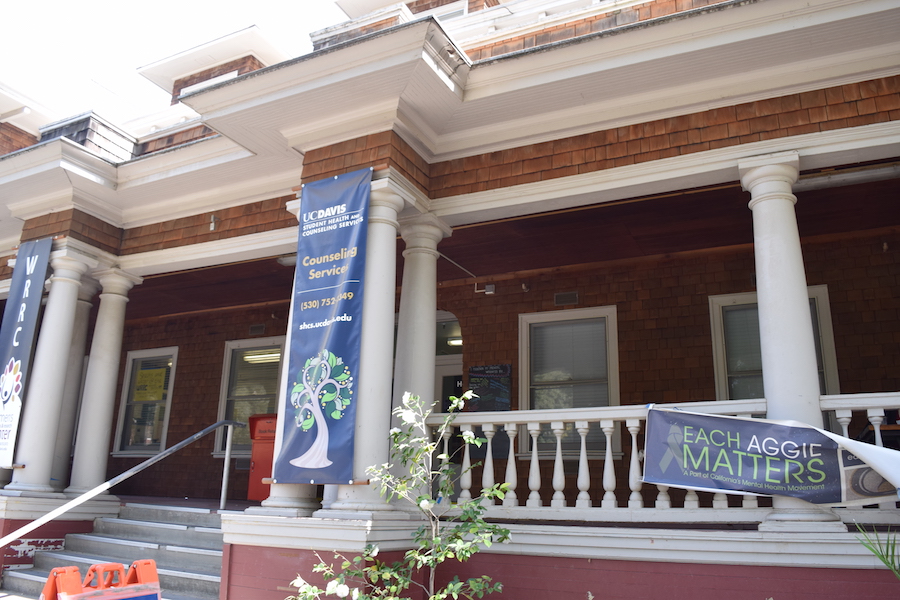
May is Mental Health Awareness Month, and many organizations on campus have made their voices heard about the issue of the stigmas surrounding mental health –– including the athletics department. Student-athletes have come together to provide a safe place for the players of UC Davis sports teams to come to where they can experience the highs and lows of an athlete’s life with a supportive, like-minded community.

On top of keeping players in physically good shape, playing sports has an array of benefits –– especially for the mental and emotional health of athletes. Psychologically speaking, any form of exercise releases chemicals called endorphins into the brain. These endorphins are known for being the substances related to feelings of happiness and relaxation.

The continued, constant release of endorphins has also been tied to aiding athletes in sleeping better, reducing stress and helping to prevent the development of depression. Continually keeping the body active also keeps many mental skills sharp, such as concentration abilities and critical thinking, which can help athletes battle different disorders such as Alzheimer’s disease.

In addition to all of these medical pros, sports is also a means of socialization for many athletes and allows them to meet regularly with other people to form a team bond and long-lasting friendships. Participating and contributing to this team effort has also been shown to be beneficial in boosting players’ confidences and self esteems.

Solie Laughlin, a third-year psychology major on the swim and dive team, shared some of the biggest mental benefits she sees in playing sports.

“Being able to get a workout in and forget about the normal day stressors or pressure from school really helps relieve stress and get yourself calmed and ready to tackle the assignments assigned,” Laughlin said. “Also, working out releases dopamine, leaving you with a happier feeling overall. The adrenaline from performing in practice and workouts gets your blood pumping and gets energy flowing throughout your body.”

While there is a whole laundry list of benefits to playing sports, being an athlete can come with its fair share of drawbacks as well. For student-athletes especially, there can be immense pressure to perform successfully during sporting events while balancing a full class schedule and other activities. This pressure can lead to feelings of depression and can take a toll on an athlete’s overall well-being and self esteem.

As with any physical activity, there’s also always a chance for injury, which can be extremely difficult for student-athletes to mentally cope with. On top of being in physical pain and having to adjust life around an injury, those that are injured can experience emotional trauma from not being able to compete with their teammates and contribute to the team’s efforts. Because of the general age range of student-athletes, this group is more at risk for these hard times to lead them to turn to substance-related disorders and various eating disorders.

Laughlin’s teammate, third-year history major Nina Gonzalez, commented on one of the main mental drawbacks she struggles with as a female athlete.

“Being a Division I athlete requires 20 hours a week of in-season work, which can be very stressful when also balancing a full course load,” Gonzalez said. “For me personally, a drawback to being a female athlete — and especially one who wears a swimsuit every day — is unrealistic body standards propagated by the media as to what a female athlete should look like. I know many female athletes struggle with body image issues.”

With these struggles that student-athletes go through in mind, four UC Davis student-athletes decided it was time to take matters into their own hands this year. The students formed Athlete Guidance and Support, an organization run solely by student-athletes to promote mental health awareness and support in the athletic community. The group’s Instagram page describes its own mission statement: “Our goal is to guide UC Davis athletes towards healthy strategies to deal with stress, anxiety, or other negative feelings that are caused by the pressures of being student-athletes.”  

The football team’s senior running back, Ethan Hicks, was one of the founders of the group, alongside three other student-athletes. He shared how the four of them got the idea to form AGS on UC Davis’ campus.

“We were sent down to a conference in San Diego, where schools from all over the country came together to create an action plan to fight the stigma against mental health amongst student-athletes for their respective schools,” Hicks said. “We heard from several schools […] about how they created a program recently to help support student-athletes and mental wellness. Our goal was to learn from this conference, and take a plan back to UC Davis, which is how Athlete Guidance and Support came to be.”

Hicks also mentioned the group’s aspiration to be a safe space for athletes.

“Typically with Division I student-athletes, there is a belief that you always have to have your ‘game face’ on, and that struggling mentally leads to vulnerability and failure,” Hicks said. “Our goal with AGS is to let athletes know that it is okay to be vulnerable, and hopefully this improves the overall environment regarding mental health in athletics.”

Third-year track and field athlete Sydney Holmes, another one of AGS’s co-founders, also commented on some of the drawbacks student-athletes face and how AGS works to combat that.  

“Most athletes dedicate countless hours to practicing, travelling and competing, which can sometimes lead to minimal time studying and involvement in the rest of campus,” Holmes said. “While we love our sport […], it can also add a tremendous amount of stress as well. One of AGS’s goals is to pinpoint some common stressors among athletes and work together to reduce or alleviate them.”

Gonzalez, an ambassador for AGS, mentioned how she felt the positive impact of AGS during the group’s very first event.

“I got to speak along with another student-athletes, we had lots of food and sweets, and then we all watched ‘Inside Out’ on the football field,” Gonzalez said. “We received so much positive feedback afterword that I was drawn to tears. I’m a transfer student, and we had nothing like this at my previous university. If we did, it probably would have been very helpful to me. But I’m happy to be able to make a difference here and now.”

Student-athletes and all students interested in mental health issues are encouraged by AGS to attend events and get involved as they strive to support athletes and eliminate the stigma surrounding mental health in athletic departments.


Written by: Kennedy Walker — sports@theaggie.org

Yeast Originated in China

KYRIA BOUNDY-MILLS / COURTESY

Large-scale genomic survey of S. cerevisiae genome provides new information on evolution, origin of yeast

For thousands of years we have relied on yeast to make bread and alcohol, and, more recently, for industrial products like enzymes, chemicals and pharmaceuticals. In biology, yeast is a popular medium for genetic experiments; it’s easy to grow and easy to manipulate. Experiments using yeast have led to Nobel prize-winning work such as Elizabeth Blackburn’s research on telomeres and co-discovery of telomerase, or Roger Kornberg’s studies on how DNA is translated into RNA. Saccharomyces cerevisiae is a particular species of yeast essential to baking, brewing and winemaking, and its usability makes it a model organism for science.

“It grows quickly to high numbers, and 26% of human genes have a comparable gene in yeast,” said Kyria Boundy-Mills, the curator of the Phaff Yeast Collection in the Department of Food Science and Technology at UC Davis, in an email interview. “We can do experiments with large numbers of yeast cells that would be impossible to do with large numbers of humans.”

While about 1,500 species of yeast have been named, there are thousands more that haven’t been identified yet. There is relatively little genetic information in the database compared to the data on humans and model organisms, such as Arabidopsis thaliana, a small, common flowering plant. But thanks to a new comprehensive study of the S. cerevisiae genome, its evolutionary history and mechanisms are better understood than before. Jackson Peter and Matteo De Chiara of the University of Strasbourg and their colleagues sequenced and phenotyped 1,011 S. cerevisiae isolates to determine their genetic relatedness and similarity with respect to their relative location. Their analysis found that yeast probably originated in China, and spread to the rest of the world in a single “out-of-China” event, followed by several independent domestications.

“Interestingly, these various domestication events impacted genome evolution differently,” said Joseph Schacherer, a professor of genetics at the University of Strasbourg, in an email interview. “Whereas the sake and wine populations are characterized by a low genetic diversity, beer populations present a higher genetic as well as more complex genomic diversity.
Furthermore, human-related environments foster expansion and loss of genes, resulting in rampant variation in genome content. By contrast, wild isolates share a similar genome content and genetic diversity is mainly generated via the accumulation of mutations.”

This diversity of wild yeast helped determine that all non-Chinese yeast strains were equally related to Chinese lineages, key evidence for an out-of-China event. This study has provided a foundation for genome-wide association studies in yeast, and further in-depth genetic research in this organism. It’s also given a new direction to look to for diversity: China. In genetics, generally the older the population is, the more diverse. This diversity also means there are more interesting traits to be studied. Yeast-related industries as well as science could look to China for new ideas.

“Our native strains may be much more similar to Asian strains than they are to European strains,” said Lucy Joseph, the curator of the Department of Viticulture and Enology Culture Collection at UC Davis. “All of our wine strains tend to come from Europe. We might actually want to start looking at the diversity in the Chinese strains, to get new and different products and characteristics for products that we want to make.”


Written by: Kira Burnett — science@theaggie.org