57 F
Davis

Davis, California

Monday, December 22, 2025
Home Blog Page 583

Governor Jerry Brown signs AB 562 into law, criminalizing audit interference

NEON TOMMY [(CC BY-SA 2.0)] / FLICKR
Bill follows investigations into UCOP’s role in campus-wide audits

On Oct. 2, California Governor Jerry Brown signed AB 562 into law. The bill adds wording to an existing section of California Code as well as adds a new section meant to prohibit the interference of state audits by any individual, making the act punishable by fine. A new section, 8545.6, was written into law.

Any officer or person who fails or refuses to permit access and examination and reproduction, as required by this section, is guilty of a misdemeanor,” states Section 8545.2 of the Government Code.

Section 8545.2 also states that “any officer, employee, or person who, with intent to deceive or defraud, commits obstruction of the California State Auditor in the performance of his or her official duties relating to an audit” will be “subject to a fine” up to $5,000.

The bill was originally written by California Assemblymen Al Muratsuchi, Kevin McCarty and Phil Ting shortly after the investigation of the UC Office of the President in connection to its involvement in State Auditor Elaine Howle’s audit. The investigations revealed interference by UCOP in audits done on individual campuses and $175 million saved that UCOP had failed to report.

Audit teams conducting inspections across UC campuses gave out surveys to be filled out with reviews of UCOP’s services and performance. The responses were supposed to be confidential but were discovered to have come into contact with UCOP before being returned to state auditors. In the California State Audit Report from April 2017, conducted by Howle, reviews of UCOP were said to be altered to reflect positively on the office before they were submitted.

“We learned in February 2017 that the Office of the President had requested campuses to send their survey responses to it and that the deputy chief of staff of the Office of the President […] organized a conference call with all campuses to discuss the survey and screened the surveys before the campuses submitted them to us,” the April 2017 report stated. “Specifically, because the Office of the President interfered with the survey process, we believe that the survey responses carry an unacceptably high risk of leading us and users of the survey results to reach incorrect or improper conclusions about the efficacy of the Office of the President’s operations.”

Claire Doan, a UCOP spokesperson, said via email that “The University of California did not take a position on AB 562.”


Written by: Elizabeth Mercado — campus@theaggie.org

House tax bill a threat to higher education

HANNAH LEE / AGGIE

Tax on tuition waivers, assistance would make graduate school unaffordable to many

After a year of attempting various controversial legislation — immigration, the travel ban, the health care debacle — the House Republican party has wheeled out its latest project on the docket: a tax bill that would be disastrous for education at all levels.

Its effects would include taxing the endowments of private colleges, allowing parents to use 529 plans for K-12 private schools and scrapping the $250 deduction that teachers can use to offset out-of-pocket cost of classroom supplies. The Editorial Board takes particular issue with the bill’s proposal to count tuition waivers and assistance as taxable income.

Under section 117(d) of the current Internal Revenue Code, graduate students can potentially receive untaxed tuition waivers. Over 172,000 students currently benefit from this provision, which makes graduate education slightly more affordable and partially compensates graduate students for the teaching and research work they do for the university, often for meager stipends. The tax bill in the House would remove this provision and tax the value of tuition waivers as earned income.

There is a world of difference between tuition waivers and income. Taxing tuition waivers in the same way as general income is an astoundingly bad-faith interpretation of what income means. It’s particularly malicious coming from a party that’s seemingly hell-bent on slashing taxes for corporations and the wealthiest people in the nation.

This tax could push students out of graduate school. Speaking to Inside Higher Ed, one student said that her taxable income would more than double. Another said, “That would push us to the poverty line.” No part of squeezing every last penny out of graduate students is fiscally responsible. Nor is it a break for the middle class, a popular selling point for any and all tax proposals.

Any person, organization or political party that paints affordable higher education as a problem is one that does not have the best interests of the American public at heart.

Students and scholars flock to the U.S. from across the globe to learn and teach in our institutions, which are some of the crown jewels of American achievement. A college education has been one of the hallmarks of the American Dream since the term was coined.

If the House bill passes, it would strip students of the assistance that allows them to continue their studies, making graduate education more unaffordable than it already is. Taxing tuition waivers as income would blow a hole in the side of graduate education. It would also, by extension, wreak havoc on undergraduate education, as undergraduates would be robbed of teaching assistants and graduate instructors. It could devastate American research and innovation. It would undo decades of work that have gone into making graduate education affordable and expanding access to the halls of academia. In short, The Editorial Board believes the proposed legislation is a disgrace.


Written By: The Editorial Board

Senate candidates hold debate at CoHo

Fall Quarter ASUCD Senate Candidates (BRIAN LANDRY, MEENA RUGH, NICHOLAS CHAN, DIANA LI / AGGIE)

Debate held to encourage voter turnout for uncontested election

Five of the six UC Davis students hoping to fill the six open ASUCD Senate seats held a debate at the CoHo from 11:30 a.m. to 1:30 p.m. on Monday, Nov. 13. Jin Zhang, the ASUCD controller, facilitated the event, asked the candidates questions and selected questions from audience members.

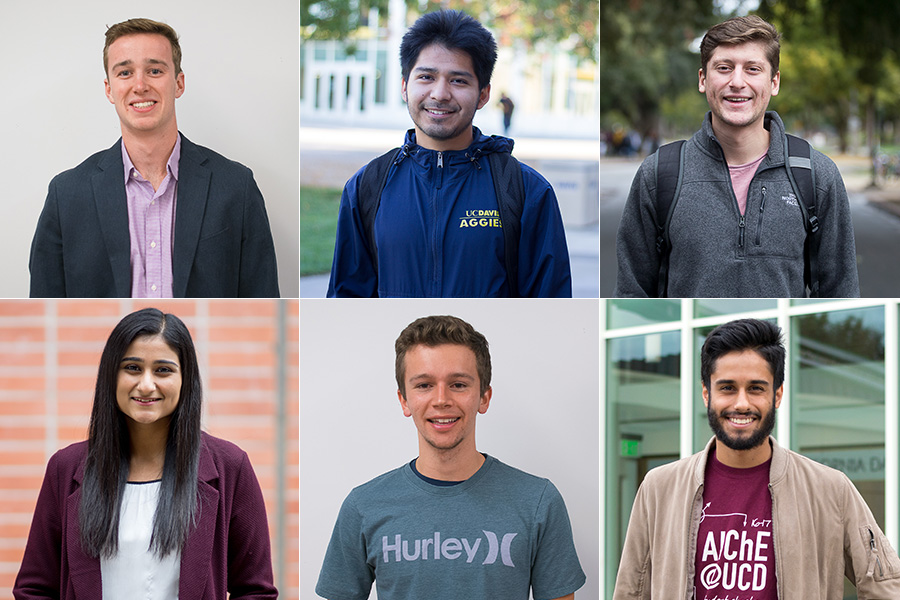
The five students present were second-year computer science major Danny Halawi, second-year economics and environmental policy analysis double major Jake Sedgley, second-year managerial economics and political science double major Bryan Perez, second-year chemical engineering major Jesse Kullar and second-year economics major Andreas Godderis. Gaven Kaur, a second-year communication and psychology double major, was unable to attend the event due to a class conflict.

The debate began with Zhang questioning the candidates herself. Candidates also interacted with and answered questions from the student audience of about 50 or more.

“The logistics ran smoothly as [expected],” Zhang said. “But I think ASUCD always wants to see more students involved.”

Candidates were asked about their understanding of the current workings of ASUCD. All five candidates struggled to answer this question.

“What I found really not necessary was the questions [and] how broad they were […] about our knowledge of ASUCD,” Perez said after the debate. “I wish they’d asked us more about our platforms and what we’ll add on.”

Godderis agreed with Perez in this regard.

“They were asking very specific questions which I get, we need to be held accountable,” Godderis said. “But I think it took away from the messages of our campaigns.”

Godderis admitted in his platform that, prior to deciding to run for Senate this year, he hadn’t voted in any ASUCD elections.

“I’m running a campaign that’s focused much more on the culture of ASUCD and trying to change that and getting students engaged again rather than the 8 percent that currently is,” Godderis said regarding the percentage of students who usually vote in the ASUCD elections.

Godderis’ platform revolves around bridging the divide between ASUCD and the student body. Increasing voter turnout, promoting senator office hours and redefining student employee requirements are other issues Godderis hopes to address if elected to the Senate.

Sedgley’s platform revolves around creating a more inclusive space for transfer students.

“From all the transfer students that I did speak to, many of them did not get an ASUCD presentation,” Sedgley said.

Furthermore, Sedgley addressed his goal of improving ASUCD participation and voter turnout.

“I want to make a one-day event […] with all [of] ASUCD outside, commissions, units, senators are out there and there’s a huge board that discusses the structure of ASUCD,” Sedgley said.

Jesse Kullar had to leave early but was able to articulate important aspects of his platform during the debate.

“First and foremost, I am here to represent engineering and STEM,” Kullar said. “I want to build a better sense of transparency and resource allocation so our students can readily get access to any budgets and bills within ASUCD.”

Like other candidates, Kullar was especially aware that certain questions were targeting candidates’ naiveté regarding ASUCD.

“I found that often the personal questions that my colleagues and I were asked served no basis but to put us on the spot and show our lack of understanding with ASUCD,” Kullar said.

Kullar, among other students, was asked to back up his answers with evidence of individual senators’ past actions with different units and areas at ASUCD. All candidates struggled with these more specific questions.

“Questions like these are the reason I feel like ASUCD has a sense of a hierarchy system,” said Kullar. “ASUCD is a steep learning curve and I intend to continue learning about inner and outer mechanisms so I am more prepared in the future.”

Near the end of the debate, at 1 p.m., only three candidates remained: Perez, Sedgley and Godderis. Halawi and Kullar had to leave for classes.

Although the debate was originally supposed to last until 1:30 p.m., the lack of students in the audience forced Zhang and the remaining candidates to wrap up early. A few candidates stayed after the debate to hear individual questions and comments from students in the audience.

Because there are six open positions in the Senate and only six candidates running, this election is uncontested. For most candidates, their terms as senators will be their first exposure to ASUCD.


Written by: Ally Russell — campus@theaggie.org

 

Yolo Crisis Nursery looks to expand services

0
JANE EADIE / YOLO CRISIS NURSERY

Local crisis nursery provides care to families, children

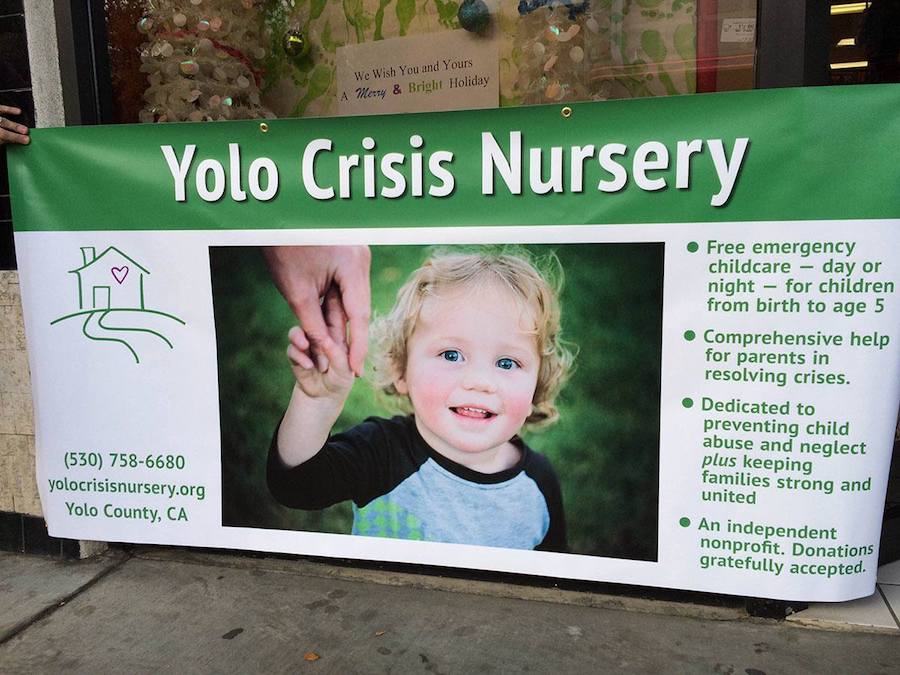
The Yolo Crisis Nursery has been operating in Davis for 17 years, working day and night to provide temporary care it can to children and families who need it while also helping parents manage emergencies.

“The core of our work is dedicated to positively change the lives of at-risk children and their families every day,” said Heather Sleuter, the executive director of the nursery. “Our mission is to provide early intervention services to nurture healthy and resilient children, and we strengthen parents to preserve families. Sometimes families aren’t in a position to do so, so our mission is to make sure every child in Yolo County grows up in a safe and loving home.”

According to its 2016-17 yearly impact report, the Yolo Crisis Nursery has given direct care to 139 children — 45 percent more than the previous year — and 285 different families have used its services to create stable, healthy lives for their children. Of the families who requested help from the Yolo Crisis Nursery, 98 percent were able to remain together, avoiding separating children from their parents and sending them to Child Protective Services.

“We used to be under Families First, and they held all of our licensing,” said Jane Eadie, the president of the board of directors. “They had a crisis and lost their ability to be in Davis. They told us they were going to close our doors […] So we did some massive fundraising in 2014, and the community responded. We’ve been up and running ever since […] We hope that in the long term what we’ve done in Yolo County can be used as a blueprint in how to run a crisis nursery throughout the state.”

The Yolo Crisis Nursery has been running as an independent nonprofit and growing since 2014, helping more families and children each year. According to Eadie, the nursery operates on a budget of $650,000 each year, 89 percent of which has gone directly into child and family services and facility operations.

“There’s also support group called the Friends of the Yolo Crisis Nursery,” said Becky Heard, the former president of Friends of the Yolo Crisis Nursery. “Our job was to help educate the community about what the nursery does and raise funds for the nursery. I’ve seen it change lives, and I’ve seen countless families go through our programs and be able to stay intact and healthy. People can raise their families––I believe it’s a program that truly helps.”

Those looking to volunteer at the nursery will need to undergo an extensive background check. The Friends group has no such requirements, and potential volunteers are free to join and help out.

“The crisis nursery is 100 percent funded off of grants, corporations’ and foundations’ funding,” Sleuter said. “So we’re always needing to fundraise for the crisis nursery to keep our doors open to help children and families […] The [Friends of the Yolo County Nursery] is a group of dedicated volunteers […] Every year they help fundraise for the nursery.”

In order to better serve the community, the nursery has launched a long-range strategic planning process in order to gain more resources to better serve local families. The plan involves opening up five new board member positions in the next few months and expanding Friends of the Yolo County Nursery, its volunteer program. The nursery will be holding its annual charity crab feed dinner on Mar. 17. Although the location isn’t publicly disclosed, the nursery services can be reached at (530) 758-6680. Those looking to volunteer can learn more about how to get involved on the nursery’s website.


Written by: Ahash Francis — city@theaggie.org

Humor: Trump finds out his head is up his ass, still lacks hindsight

GAGE SKIDMORE [(CC BY-SA 2.0)] / FLICKR
It’s like a videogame: each civilian counts as one of his lives

President Trump has taken the week off to spend time in the White House arcade after finding out that his head was up his ass. He tried brown-nosing the media only to learn that he still has no hindsight. Embarrassed and red in the face, Trump flew back to the White House on a pink-eye flight to clean himself up in the golden showers, telling everyone in his way to leave, shouting, “Scat! Scat!”

“Sometimes I think he’s full of crap, but mostly he means well,” said Vice President Mike Pence apologetically. “Trump thought that if he watched the solar eclipse he too would have the power to block out the sun. I told him to put the tinted glasses on, but he just kept saying ‘No filter!’ over and over again.”

“I stared into the eclipse and the eclipse stared into me,” Trump said. “Niche said that, if you fight with monsters, you should be careful not to become a monster yourself. You know what I think? That’s what this big red button is for. They won’t even get close enough to turn me into a monster,” Trump continued before returning to a vintage version of “Space Invaders” with the title scratched out and revised to “Interplanetary Border Control.”

“This is where we do most of our thinking,” Pence said, standing in the neon glow of the enormous White House arcade. “It’s the War Room and the Situation Room. Trump removed the Treaty Room because ‘We don’t make treaties. We dig holes deeper than we can escape and climb out on the corpses of our enemies, or the middle class.’ I would have said ‘the uneducated, ignorant and hateful,’ but that would clearly be biased toward our fan base and supporters.”

“I must say that Trump has done way more than Obama,” said Richard Hicks, a second-year gender, sexuality and women’s studies major. “He taught me that the best way to success is through failure, even if your entire life is one big failure. So I’m on the right track.”

“When I gamble, I like to go all in every time. I won’t back down to North Korea, and I’m going all in with 323.1 million chips,” Trump said as he played an arcade version of Super Mario Bros. “You know why I love Super Mario Bros.? One, it shows that you can be an immigrant and still become successful through your own efforts. Two, and more importantly, the best way to get money is to stomp people to death.”

Trump kicked our reporters out of the White House arcade so that he could start preparing a new social welfare program for patriotic kids called “Summer Kampf.” Rumors of impeachment have caused concern for the Trump administration, with some people suggesting that Trump might rather kill himself than face the death of his ego.

“If he did, it would be autoerotic,” Former Deputy Assistant to the President Sebastian Gorka said as he lit a cross on fire on the White House lawn. “Or do I mean despotic?”


Written by: Drew Hanson — andhanson@ucdavis.edu

(This article is humor and/or satire, and its content is purely fictional. The story and the names of “sources” are fictionalized.)

Thanksgiving commute home: a playlist for your travels

JEREMY DANG / AGGIE

Fall is underway; keep up with all the feels through this playlist


November signals the true beginning of fall here in Davis. As the weather has finally cooled, heavy coats and scarves have started to find their way back into our closets. Leaves that once held spring and summer in their veins now scatter the pavement in shades of brown and yellow, adding a crunch to our steps. Petrichor and crammed buses remind us that rainy days are fully back in action. Instagrams of muddy boots, trendy lattes and pumpkins flood our feeds. We can practically smell Thanksgiving meals as we yearn for home, but even more, we anticipate the much-needed break from school.

Whether you’re invigorated with a new sense of life or entirely depleted by the dreariness of fall, here is a cozy playlist to entertain all moods — including your trek back home. Snuggling up underneath a soft blanket (or three); trudging through rain puddles; mourning the absence of sweaty armpits and fun in the sun — this musical lineup will help you dive right into whatever atmosphere fall unleashes.


“Nights” — Frank Ocean

Frank Ocean is truly golden year-round, but during fall and winter his tracks seem to break hearts with more force than usual. It seems only right to pay homage to his greatness by starting this playlist off with one of his songs. The line “no sleep in my body” resonates with us all.


“Wildflower” — Beach House

If you find yourself upset over the departure of summer or happen to enjoy immersing yourself in moody songs (I hope it’s not just me), then this one goes out to you.


“Normal Girl” — SZA

If you wish you were a “normal girl” who could navigate bike paths on a rainy day or slippery hallways without accidentally falling, rest assured that you’re not alone.


“White” — Odd Future, Frank Ocean

You might find yourself singing, “Could this be Earth? Could this be light? Does this mean everything is going to be alright?” as you exit your final class of the week on the Wednesday before break.


“Wax” — Kilo Kish

In this track, Kish ruminates on feeling trapped like wax in her relationship, threatening to “light a match” on it. When you feel inclined to do the same on all your school work and just “let it go,” remember that the taste of freedom is close.


“IFHY” — Tyler, The Creator

Don’t let this title inspire animosity; Tyler, the Creator actually takes his own spin on a love ballad. There’s probably no need to hate anyone aside from the driver going 60 mph in the far left lane when you’re just trying to make it home.


“The Road to You” — Stefano Guzzetti

Whether the “you” in your road trip home is a family member, significant other, pet or a Thanksgiving plate of food, just know that you’re close. This beautiful piano melody is the universal track for reminding you of the “you” that you miss.


“Flume” — Bon Iver

Bon Iver is the one-stop shop for all your melancholic needs, and his songs have even more effect in somber environments like fall. Get your tissues ready.


“White Ferrari” — Frank Ocean

You most likely aren’t pulling up to your family home in a white Ferrari, but it’s okay because this song needs a good listen — one that shouldn’t be sped through at the rate of a sports car.


“Summer Clouds” — Iron & Wine

Characteristic of Iron and Wine, his soothing voice and soft melodies will remind you of the sentimentality of your second home, making you eager to “wander back” to Davis — just in time for finals. But that’s another playlist in the making.


“Such Great Heights” — Iron & Wine

“I hope this song will guide you home” safely as you travel.


“Everything Now”  — Arcade Fire

In a society with an overconsumption problem that demands “everything now,” this last song by Arcade Fire ends on a positive note to remind you to be thankful for what you already have. But this is timely not just for the holiday weekend; it’s applicable year-round.


Written by: Cecilia Morales — arts@theaggie.org

UC Davis students make Chrome extension to help students build schedules

Extension finds conflicts in student schedules, integrates professor ratings into Schedule Builder

Just in time for Winter Quarter pass times, second-year UC Davis computer science students Sergei Chestakov and Miguel Acevedo released a Google Chrome extension called Schedule Helper, which helps students choose classes and build their schedules more efficiently.

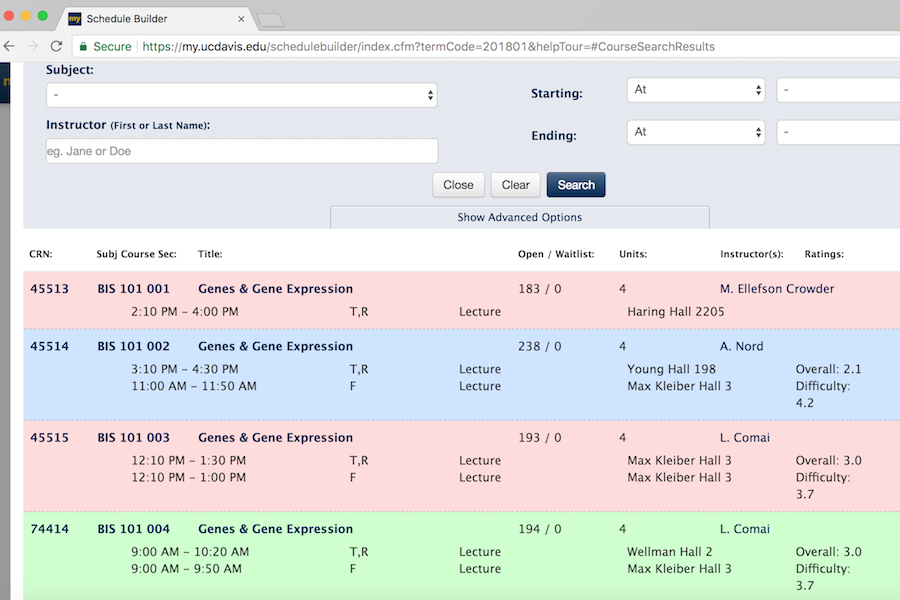
With the extension, when a student searches for courses on Schedule Builder, different colors will indicate whether a course conflicts with other classes in the student’s schedule, whether a class is full and whether the student has already selected that course. Additionally, the extension takes data from the website Rate My Professors and integrates it directly into Schedule Builder.

When asked how they got the idea to create the extension, Acevedo said that he was in his dorm room one day last spring when Chestakov came in saying, “Wouldn’t it be cool if there was this Chrome extension that would automatically tell you if [a] class is conflicting?”

According to Chestakov, he found the process of building a schedule tedious, specifically because he had to first save the course into his schedule and then see if it conflicted with other classes.

From there, Acevedo took the idea and spent a weekend attempting to make the extension by himself. The first version of the extension only indicated conflicts in the schedule. Over this past summer, Acevedo worked with Chestakov and they produced the second version of the extension, which includes the ratings from Rate My Professors.

According to Chestakov, the hardest part of the process was learning new skills and technology as they went along.

“I think the extension is really helpful for making a schedule without having to go back and forth between the search and the current classes as well as going between Schedule Builder and Rate My Professors,” said second-year statistics major Jacob Fraysher.

According to Acevedo, the pair actually completed the project before Fall Quarter started, but they didn’t release the extension until just a few weeks ago because they wanted to release it near pass time. The whole project took them between two and three weeks.

Currently, Schedule Helper has reached almost 1,000 downloads. Students can download the extension for free at https://getschedulehelper.com

“I just wanted to create a tool that will save students time and make the process of picking classes a lot easier,” Chestakov said. “If it saves all the students that downloaded it one hour, I’ll be happy.”


Written by: Clara Zhao –– campus@theaggie.org

Police Logs

0
NICKI PADAR / AGGIE

Who left the cars out?

Oct. 25

“Signs posted two days ago regarding no parking, three vehicles in violation.”

“Vehicle taken within last two hours — spare key left in the vehicle.”

“Male dressed in clown costume knocking on doors stating he was coming to get people.”


Oct. 26

“Vehicle partially blocking rear exit at dumpster area.”


Oct. 27

“Approximately three subjects talking in the backyard and vomiting.”

“Child yelling ‘911,’ then got on line and said he didn’t want 911 and not to come out.”


Oct. 29

“Vehicle windows smashed, nothing taken.”

“Upstairs neighbor, loud banging and screaming.”


Oct. 30

“Stoplights malfunctioning. Reporting party advised the lights would be red and green at the same time.”

“Possible theft from unlocked vehicle in which an unopened case of Dove soap was left behind — requested pickup of property.”

What it means to be an intramural sports official

MACLEAN HARTFORD / AGGIE

Keeping IM games clean

At UC Davis, there are more than 27 intramural sports and activities offered by Campus Recreation and Unions’ (CRU) Intramural program. Included are traditional sports such as basketball and soccer as well as non-traditional sports such as ultimate frisbee and dodgeball. And while hundreds or possibly thousands of UC Davis students play intramural sports every school year, there are also other students on the field to regulate these games and events, making sure games are played in a safe and fair manner: the student IM referees and officials.

Any UC Davis student can become an IM official. The California Aggie had the chance to sit down with CRU student managers Clara Hancock and Frederick Williams to discuss IM officials and their duties.


For someone who may not know, what are student IM referees/officials?

We have officiated intramural sports every quarter and we have students who officiate those sports,” Hancock said. “They go through a clinic [about a week long] hiring process where there are different clinics like rules clinics and field clinics. Their job is to show up to games on time, set up the fields, and have good rule knowledge and officiate the game depending on what sport they are officiating.”


Why have students be the referees for IM games opposed to non-student referees?

I think that student officials really help set the atmosphere,” Williams said. “Student officials can also play IM sports so a lot of the time they are students that have a passion for the game, so it is really nice and makes for a good environment. It’s also a good employment opportunity.”


What is the training process that IM referees/officials must go through before they start doing actual games?

“The training process and the interview process are kind of intertwined,” Williams said. “As you [possible officials] come to the clinics, we do an official rules training with a rules test at the end and then they go through the field clinics where the supervisors and managers will go to the field and demonstrate the positioning and mechanics. It is about a three- to four-day process and those who perform well in those will end up getting hired.”


Do you think there are any advantages to being an IM referee for a student? If so, what are they?

“It’s good because it isn’t too long of a commitment,” Williams said. “You can just commit for one quarter, and it is a quick job to get if you need one, and it is fun to be out on the field so to get paid for that as well I think it is a great advantage.” Hancock commented on how a student can also develop other skills as a student official: “I feel like you learn a lot of useful life skills. You deal with a lot of irate participants and you learn how to problem-solve as well as learning leadership skills and being able to grow in the department.”

Do IM officials have to possess sports knowledge in order to apply?

“We do full training, and go through the rules and mechanics, and it is good to have a base knowledge of sports but we have a variety of sports to choose from and we do train, so no experience is necessary,” Williams said. Hancock added that there is no experience needed to become an official. “We also have sports like Quidditch which a lot of people don’t know the rules of, but you can still be an IM official. It is also good to have other mechanics that makes a good official and not just knowing the sport.”


So you’re a student and you don’t know if you should be an IM referee, why should a student take that step to apply?

“I would say come to the clinics,” Hancock said. “For each quarter we have a week of clinics before actual season starts to come in and check it out before you decide.”


Any additional comments?

“If people do want to officiate for Winter Quarter we have indoor soccer and basketball, and the clinics are the first week of school back from Winter Quarter,” Hancock said.


If you are still on edge, or thinking about becoming an IM official, take it from Dylan Shadduck, a second-year electrical engineering major, who has been officiating IM sports since Winter Quarter of 2016.

“It feels good to give back and help other people, especially people who don’t play a lot and help them learn,” Shadduck said. “I have a lot of friends that come out and do IM sports so it is fun to see them while working, and it is one of the easiest jobs you can have on campus, so anything I can do to have fun and get paid for is nice.”

Shadduck had some words of wisdom for possible future IM officials: “Definitely come do it. If you want to be an IM official please come check it out.”

For more information, visit the UC Davis Campus and Recreation website.


Written by: Ryan Bugsch — sports@theaggie.org

Monogamy in Titi monkeys

KATHY WEST / CNPRC

UC Davis Professor Karen Bales, team study pair bonds in Titi monkeys

Titi monkeys are some of the few monogamous mammals that form a lifelong bond with their partners. Similar to humans, these monkeys get distressed when they are separated and buffer stress when they are together.

Karen Bales, a professor of psychology at UC Davis, has been studying these monkeys at the California National Primate Center for 13 years.

“The goal was to develop a new model for the neurobiology of social bonds and to look at the different aspects of the pair bonds,” Bales said. “The jealousy study was taken from the viewpoint of looking at another challenge to the pair bond.”

Bales and her team conducted the study with two conditions. The first condition was  putting the monkeys with a stranger monkey. The alternative condition involved separating a pair-bonded female and putting her with a stranger male while the pair-bonded male had to watch.

“What we saw in the jealousy condition is very strong activation in the singular cortex and in the lateral septum,” Bales said. “So we saw this in previous studies where it was activated during formation, separation and now in jealousy.”

These male Titi monkeys have shown elevated levels of the hormones testosterone and cortisol when put in the jealousy condition. The longer the male watched the interaction between the female and the stranger male, the higher the levels of the hormones, which triggered an interesting social behavior in the males.

“What was cute was one of the behaviors was lip smacking which looks like a kiss trying to attract their mates attention,” Bales said.

So what is the next step for the Titi monkeys?

“There are a number of different avenues for exploration,” said Sally Mendoza, a UC Davis professor of psychology and the co-author of the research. “First is that we will now focus on females. They also experience jealousy but not to the same extent.”

Mapping the hormone levels of the Titi monkeys’ social behavior can offer insight into how social behavior can affect biology.

“Moving forward it is really helpful to know what brain regions are involved and how monkeys are similar to humans for basic biology about how attachment relationships work,” said Nicole Maninger, a postdoctoral researcher on the team.

The findings from this research can help uncover clues to connecting social behavior to human health problems.         

“It’s possible for this research to be extended to helping with autism and domestic violence. This is just the beginning but hopefully one day it can help save lives,” Maninger said.

Written by: David Soltero — science@theaggie.org

Last week in Senate

HANNAH LEE / AGGIE

Third interim senator sworn in on Oct. 26

The ASUCD Senate was called to order by Vice President Adilla Jamaludin at 6:09 p.m. on Oct. 26 in the Mee Room of the Memorial Union. Senators Julie Jung and Matthew Yamaguchi were absent. All commission chairs were present.

The Senate received a presentation on future student housing projects from Emily Galindo, the associate vice chancellor for Divisional and Auxiliary Services. Two four-story buildings and one five-story building will be added to the Cuarto housing area, featuring new floor plans in an effort to expand the university’s second-year housing. Tercero Dining Commons 2, which will be built on Hutchison Drive in response to crowded food venues, will provide 500 additional dining seats as well as a retail store.

Additionally, the Orchard Park and West Village expansion development projects are being looked into, with affordability being the primary goal. The Orchard Park development would feature family and single rent units at 90 percent of the market value. In the West Village development, there would be single- and double-occupancy housing available to transfer students.

The final open interim senator position was then filled by Shaniah Branson, a third-year transfer student and communication major. Branson said she was interested in representing the transfer student population at UC Davis. She was confirmed with no objections.

Next, the Senate unanimously voted to confirm Ryan Gartner, a second-year political science public service major, as the Judicial chair.

Abigail Edwards, a third-year sustainable agriculture major, was re-confirmed as the Academic Affairs Commission chair.

Then, Gender and Sexuality Commission members Eori Tokunaga, a third-year human development major; Alexander Nguyen, a first-year political science major; Alex Lopez-Ambriz, a fifth-year psychology major; Kristy Tran, a fourth-year sociology major; Justin Choi, a fourth-year plant breeding and genetics major; and Ray Rubens, a first-year gender studies major, were confirmed unanimously by the Senate.

Dream Committee members Angeles Cruz Arango, a second-year Chicano studies major; Claudia Gutierrez, a second-year political science public service major; Rocio Perez, a third-year political science major; Mireya Santiago Paz, a second-year art history major; and Bianca Montes, a second-year political science major, were all confirmed with no objections.

The Senate took a 10-minute break at 7:46 p.m.

Following the break, the senators unanimously passed a bill which would dissolve the International Undergraduate Student Committee due to the effectiveness of Services for International Students and Scholars, which receives more funding.

The confirmation for a bill that would allocate $379.98 to the UC Davis Mental Health Initiative to supplement the Active Minds National Conference registry was passed as amended. Additionally, a bill appropriating $20 to purchase an ASUCD Senate meeting procedure infographic was passed.

There was no proposed legislation.

Naeema Kaleem, the Elections Committee chair, provided more information about the new write-in system, in which a candidate can win as a write-in candidate, but can potentially be disqualified if they do not abide by other campaigning guidelines.

Vice President Adilla Jamaludin then provided a presentation for the newly sworn-in interim senators.

Following ex-officio and elected officer reports, minutes from the Oct. 19 meeting were approved without objection. The meeting adjourned at 9:21 p.m.


Written by: Rodney Tompkins — campus@theaggie.org

Leftover Davis Halloween decorations

ELLIOT WHITE / AGGIE


By: Elliot White — opinion@theaggie.org

Disclaimer: The views and opinions expressed by individual cartoonists belong to the cartoonists alone and do not necessarily indicate the views and opinions held by The California Aggie.

Humor: How to build back your trust in the city of Davis after it willingly let Whole Foods go

ZACK ZOLMER / AGGIE

Yet another luxury grocery store bites the dust

Building trust back up in a relationship can be a very challenging thing, especially if the trust was built on the assumption of a certain luxury grocery store always being around.

This probably sounds like a problem almost any person can relate to, but what I’m referring to specifically is how to build your trust back up in the city of Davis after it allowed a fine establishment like Whole Foods to slip through its careless fingers.

Stay Open and Honest

You’re probably thinking right now, “My city is a monster and I’ll never be able to forgive it.” This is understandable, considering that Davis allowed a place that served gourmet hot food and baked goods in the same place to just disappear after you’d created what seemed like a lifetime of memories there. Remember when you got the kombucha on tap there? Or had your very first La Croix? Those were the days. Well, now you need to put your feelings aside and stay honest with the city. A strongly worded letter to the mayor should do. You could also just go big from the start and stand in the parking lot and shout your feelings near the empty store.

Appreciate Consistency

Celebrate the consistency of your city to continuously make decisions that end up devastating you and your oddly luxurious taste in mundane food items. For example, you could reminiscence on the time Pachamama closed. You’d only gotten coffee there like, once, but it still hurt. Of course, it wasn’t the same pain you feel now that you can’t get WiFi and vegan, soy-free ice cream at the same place. Also, remember when The Melt closed? You were heartbroken. They literally put mac ‘n’ cheese into a grilled cheese sandwich. Like, who else does that? Anyway, just really take time to soak in the fact that your city doesn’t care about you or your exotic cravings that pretty much none of your other friends understand.

With these inspiring tips, it’s almost guaranteed that you’ll begin to forgive the city of Davis for ripping the only thing that really mattered to you from your grasp. After all, why ruminate on the memories of the only thing in Davis that brought you true joy and happiness? It’s time for you to move on and get back out there! Maybe try the CoHo or something.


Written by: Lara Loptman — lrloptman@ucdavis.edu

(This article is humor and/or satire, and its content is purely fictional. The story and the names of “sources” are fictionalized.)

Eyes on that Friday night prize

0
SHEREEN LEE / AGGIE

Davis offers variety of activities, hot spots for students seeking entertainment

Davis’ location between Sacramento, San Francisco, Lake Tahoe and Point Reyes offers students many opportunities for an exciting adventure without having to travel too far. However, the city offers many opportunities for a fun Friday night that can be found right in students’ backyards.

“I am constantly stumbling upon stuff that’s really cool,” said Kathleen Brandl, the Dock Store manager and events marketing coordinator for Sudwerk Brewing Co. “I was out last night and I was eating at the Hot Dogger, and then Sophia’s was having their Latin night. I didn’t even know that was a thing. And it was so much fun. You have to look for these things and then you find them.”

Friday nights aren’t so sleepy for this cow town. Fun activities and cool atmospheres can be found taking a stroll down G Street, but Brandl highlighted a Davis classic that’s a little more out of the way: Sudwerk’s Dock Store, located at 2001 Second Street.

“The Dock Store started out as being this interface where customers can try different beers and get to talk to people that actually work at the brewery,” Brandl said. “The dock’s about five years old at this point. It started off really small, like ‘hey we’re experimenting with new beers, let’s try to sell them and see what people say’ and it’s just grown to what it is now.”

Sudwerk Brewing Company has been around since 1989 and is one of the oldest craft breweries in the region. Although the restaurant isn’t open anymore, the Dock Store, tucked back in an alley next to the parking lot, offers a cozy atmosphere on a Friday evening for those looking for a relaxing time.

“It feels like yeah you’re in a beer garden,” Brandl said. “It feels like you’re in your friend’s backyard, […] very neighborly. One of the founding mottos of the dock store was to ‘savor the session’ and to be able to enjoy being with other people and having a beer and being able to talk.”

Patrons can enjoy live music, grab a bite to eat from the food trucks and play corn hole under the glow of the string lights. Large picnic tables offer a chance to meet new people and dog bowls can be seen scattered around, the dogs themselves lounging under their owners’ chairs.  

“It’s good beer and it’s good people,” Brandl said. “We have a really friendly staff and we work hard to have a friendly staff, and the people that come here are good people. We have the nicest regulars.”

There are other Friday night options that don’t involve alcohol, too. The best example is right here on campus in the Memorial Union Games Area.

“It’s definitely a place that’s targeted towards the student community,” said Ferguson Mitchell, the Games Area coordinator. “We have discounted prices for students, but it’s also […] an alcohol-free environment. It’s somewhere that is aimed at providing entertainment and stress relief to anybody who’s willing to come on down.”

The MU Games Area was originally opened in the 1960’s as a space for students to have some fun on Friday nights. It used to house old-school arcade games as well, but two and a half years ago the area went under renovation and today’s Games Area is home to more modern video games in the form of consoles.

“When [it was] re-launched, [UC Davis] wanted to reshape the focus in a new direction,” Mitchell said. “The arcade wasn’t as appealing and attractive to the student community […and] when we reopened we really wanted to focus on providing a [welcoming] environment for students with the console gaming area. According to the statistics, [the MU Games Area has] more than doubled the percentage share of students coming down here, compared to before it closed [in 2015].”

Part of the Game Area’s mission is to focus on wellness, fitness and mental health. Just last week, in order to promote social health and provide a sense of community, Mitchell launched the Special Events Program.

“Any student-focused campus group, which includes registered student organizations, sports groups and others, can host an event at the Games Area,” Mitchell said. “It’s absolutely free and they can choose the music, pick what’s on the TVs, set up their own programming. [It’s about] finding ways to promote their own club and their interests, but bringing it to a fun environment.”

Mitchell hopes that it will eventually solidify itself into the campus culture in a way that transcends what a traditional bowling alley or games area is. His hope is that it will become the kind of place that appeals to all students.

“There’s actually this really interesting research study they did a few years ago that directly correlated people in a community’s ‘feeling of community’ with the presence of a bowling alley in that community,” Mitchell said. “It’s like a one to one, that if a bowling alley exists in this place, people will feel more tied to it as a function as a community.”

When it comes to evoking a sense of community, UC Davis’ own comedy improv team strives for just that. This team is known as Birdstrike, and its performances every other Friday night are another great outlet for anyone looking to kick off the weekend.

“Birdstrike aims to make our shows […]  feel good show[s],” said Jeton Gutierrez-Bujari, a third-year biochemistry major and team member of Birdstrike. “We want you to feel like you came to our show as part of the Davis community, and you left as part of the Davis community. That you were entertained and you laughed a lot, and maybe you’ve got some new perspective on something.”

The origin of the group’s title remains an urban legend, but Birdstrike has become somewhat of a household name in the Davis community since its conception in 2006. The team is made up of 10 or so members and performs year-round in Kleiber Hall on campus.

“During our shows, you can expect to hopefully laugh a little,” Gutierrez-Bujari said. “[Our] improv shows […] basically mean that everything we do on stage is completely unscripted and unplanned. We don’t rehearse lines, we don’t rehearse plots, we don’t practice characters or anything like that, we simply take suggestions from the audience and we try to transform those into scenes that are hopefully enjoyable for everyone. We definitely have a lot of fun, and we hope that the audience does too.”

Birdstrike takes pride in the small size of its performance space, where there are often not enough seats for the students who attend. The closeness of the audience to the performing members allows for a positive experience for both parties.

“It’s a dream of ours [to expand beyond Kleiber], but the other really cool thing about improv is it’s so intimate,” Gutierrez-Bujari said. “Hopefully you get to see a little bit of who we are as individuals and how we are as a team. We really bond closely as a team, and we want to have that same relationship with the audience.”

Whether it’s sitting in a beer garden, bowling or enjoying the humor of comedy improv with friends, the variety of activities available to students and community members is truly impressive. There’s something perfect hidden just around the corner for every student to have a rockin’ Friday night here in Davis.

Written by: Marlys Jeane — features@theaggie.org

What can we do about the plastic problem?

Despite litter statistics, our everyday choices still matter

A flyer posted in the Davis bathrooms last year asked students to reconsider using red solo cups. It argued that plastic produces negative environmental impacts and suggested that students ban single-use cups.

For the umpteenth time, I asked myself: “If we all know plastic is bad, why are we still making it, buying it and dumping it in the trash?” But do we really have a choice?

Plastic is in water bottles, disposable razors, toys, food packaging, movie cases, video game consoles, kitchen utensils, beauty supplies and more. As consumers, our nonplastic product choices seem few. Without embracing an “alternative lifestyle,” how can the average person make a difference in a world inundated with plastic?

I first learned about the Great Pacific Garbage Patch, an island of plastic in the Pacific Ocean, six years ago. At the time, I couldn’t believe that we had let plastic build up into floating trash vortexes that trapped and killed marine life. Charles Moore, the captain who discovered the patch in 1997, couldn’t believe it either.

“I was confronted, as far as the eye could see, with the sight of plastic,” Moore said. “It seemed unbelievable, but I never found a clear spot. In the week it took to cross the subtropical high, no matter what time of day I looked, plastic debris was floating everywhere: bottles, bottle caps, wrappers, fragments.”

We’ve produced plastic at an unimaginable rate, and most of it has ended up in the ocean. Humans have produced 9 billion tons of plastic, and of the 7 billion tons that people have trashed, 79 percent went to landfills or littered the environment.

“We all knew there was a rapid and extreme increase in plastic production from 1950 until now, but actually quantifying the cumulative number for all plastic ever made was quite shocking,” said Jenna Jambeck, an environmental engineer at the University of Georgia.

Most people have heard the statistics: Scientists predict there will be more plastic than fish in the oceans by 2050. Half of all sea turtles and most marine birds have plastic in their stomachs. But the statistics only attempt to quantify the plastic problem that overwhelms the planet.

After decades of disintegration, plastics have turned into “microplastics” in our oceans. Scientists have even discovered plastic-fused rocks washed up on Hawaiian beaches. The plastic problem appears to be irreversibly embedded in our world.

But as Susan Freinkel, a scientific journalist, pointed out in 2011, plastic has its benefits, too. People just need to be smarter about using it, she argued.

“We have the technology to make better, safer plastics — forged from renewable sources rather than finite fossil fuels, using chemicals that inflict minimal or no harm on the planet and our health,” Freinkel said. “We have the public policy tools to build better recycling systems and to hold businesses accountable for the products they put into the market. And we can also take a cue from the plastic purgers about how to cut wasteful plastic out of our daily lives.”

While there’s truth to Freinkel’s argument, she glossed over the role of personal accountability. Individual choices are still at the root of the plastic problem. Do we have a choice? We do: recycle or don’t recycle.

Of all the plastic we use, 91 percent isn’t recycled. If we choose to put our plastics in the garbage and sort them in the right bins, we might make a difference. If we increase plastic recycling, maybe we can start thinking of ways to reduce the plastic in our oceans.

Because regular people require things like alarm clocks and toothbrushes, the plastic problem can seem distant and the resolution unrealistic. But it’s much easier to manage one piece of trash at a time. Thankfully, UC Davis makes it easy for students to recycle on campus. It’s what we do at home that really matters.

Start saying “no” to plastic waste — and watch out for flyers in the bathroom.


Written by: Jessica Driver — jmdriver@ucdavis.edu

Disclaimer: The views and opinions expressed by individual columnists belong to the columnists alone and do not necessarily indicate the views and opinions held by The California Aggie.