57 F
Davis

Davis, California

Monday, December 22, 2025
Home Blog Page 584

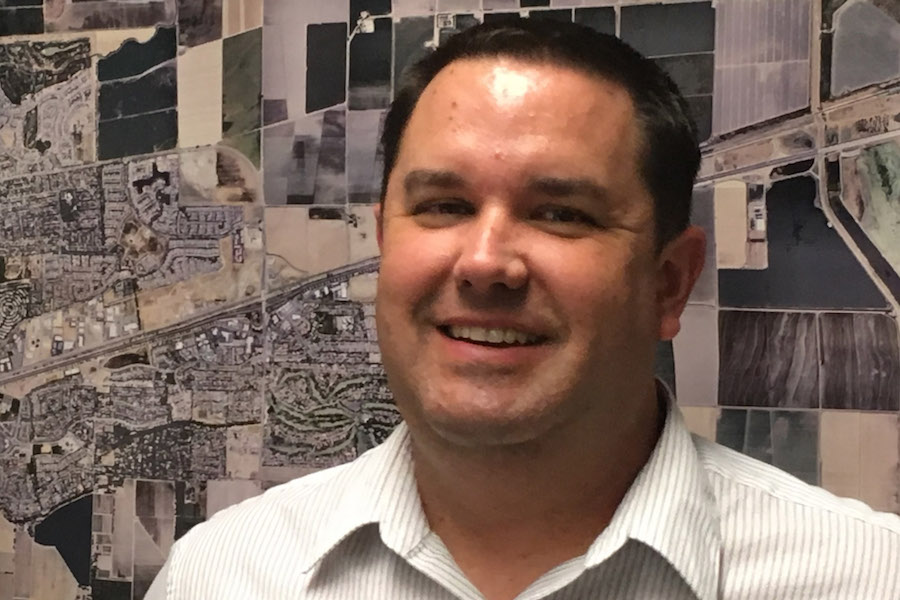
Mike Webb named City Manager

0
CITY OF DAVIS / COURTESY

Dirk Brazil steps down, City of Davis appoints new city manager

Davis City Manager Dirk Brazil has decided to retire after a three-year tenure. In a closed session a few weeks ago, the City Council voted 5-0 in favor of replacing Brazil with Mike Webb, who was previously the assistant city manager and has been the director of community development and sustainability for the past four years.

“Mike has a long history with the city,” said Davis Mayor Robb Davis. “He knows the city very well and has spearheaded a lot of ongoing projects. He was a very strong internal candidate, and the council was unanimous to bring him in and create a sense of continuity in all the various initiatives that we have underway. Had we gone on a search, we would have been hard-pressed to find anybody as qualified as him.”

To move forward, the City Council has its established council goals, which are constantly being worked on. The City is facing a fiscal deficit of about $450 million, along with housing and police oversight issues at a more public level.

“There are several elements that are currently at the forefront, including the city’s fiscal position,” Webb said. “Keeping a balanced budget while being mindful of cost and revenue strains is a key area — the other is housing. We have a number of other projects that are being reviewed in one way, shape or form or even under construction right now that are not necessarily student housing. The entire Cannery project, which is under construction and partially occupied, has a wide variety of unit types, like more affordable apartment units, units more suitable to professionals and families, attached and detached single family homes as well as condominiums that are just now starting to be constructed.”

The City Council works to find a balance between how much housing the university provides, what housing the City is considering and how those two aspects correlate. According to Webb, a multitude of other projects are under construction or review. A mix of family-, senior- and student-oriented residential units are all in the works.

“In terms of security and police oversight, that is a conversation that is still to be had with the general public,” Webb said. “There are more stringent security requirements in place. This helps ensure that currently operating businesses continue to operate responsibly as well as for those who may not have been [operating responsibly] or for new businesses coming to the community, it provides clear expectations and standards according to which they need to operate,” Webb said.

Webb will begin his term on Dec. 4. The city is currently working on numerous housing and development projects — Webb’s area of expertise, as he was originally the head of the city’s planning department.

“He’d been our assistant city manager for a few years and had been doing very good work,” said Davis Vice Mayor Brett Lee. “When our current city manager decided to retire, it seemed like an obvious choice. We were pretty familiar with the candidates out in the market, and we thought that Mike held his own against any of the potential candidates that we might have found. There was also the benefit of a fast transition. We thought we’d go ahead and make the offer to Mike, and we’re glad he accepted […] The city deals with a wide variety of issues, but over the next few years, there’s going to be a lot of focus on these development proposals, and it’ll be good to have him advising us.”


Written by: Prachita Chawla — city@theaggie.org

Dr. Garen Wintemute looks for ways to prevent firearm violence

JEREMY DANG / AGGIE

Emergency room doctor continues research at UC Firearm Violence Prevention Research Center

Dr. Garen Wintemute has joined together with a staff of UC Davis, UCLA, UC Berkeley and UC Irvine faculty members to lead the most extensive gun violence research ever conducted. Over the next five years, with a budget of $5 million, researchers at the University of California Firearm Violence Prevention Research Center (UCFC) hope to learn more about how to prevent firearm violence and to study those who are at risk.

“We’re doing fundamental research on the nature, distribution and consequences of firearm violence, and on firearm ownership and commerce,” Wintemute said. “We’re collecting data that will support prevention activities and assess the effectiveness of current policies and programs.”

For the last three decades, Wintemute has researched firearm violence. For the past 20 years, federal funding that was supposed to be funneled to gun violence research has been blocked in Congress. For this reason, Wintemute donated $1.1 million of his own money to continue his research.

“Congressman Jay Dickey, whose work in the 1990s led to the nearly total disappearance of federal support for firearm violence research, wrote a strong letter of support for the creation of UCFC,” Wintemute said. “He realized he’d made a mistake. As for cancer, heart disease and other health problems, we need to understand firearm violence in order to prevent it.”

The UCFC provides a platform for Wintemute to expand his research efforts. As a former emergency room doctor, Wintemute has extensive experience seeing and treating victims of gunshot wounds both in the U.S. and overseas.

“Because most people who die from gunshot wounds do so where they are shot, we clinicians need to help prevent the shootings in order to prevent the deaths,” Wintemute said.

Organizations on campus such as the Davis College Democrats have taken note of Wintemute’s work. Perrin Swanlund, a second-year political science and English double major, is the president of Davis College Democrats. After the most recent mass shooting in Las Vegas, Swanlund said he was looking more closely at the research people like Wintemute are doing to try and stop these events from occurring.

Since the Las Vegas shooting, Wintemute has had an overwhelming number of donations and interview requests. In an interview with the L.A. Times, Wintemute said that there are few commonalities linking mass shootings, except for similarities in weapon choice.

Wintemute also pointed out that mass shooters don’t follow a set profile, although research has yet to be tested on whether mass shooters tend to buy more weapons than regular firearm buyers. Another factor which links mass shootings, he said, is the purchasing of high-capacity magazines. In California, selling high-capacity magazines has been banned and in the last year even the possession of them has been banned.

“Substantially more research needs to be done to determine the best options to put a stop to these tragedies in the United States and the work that UC Davis researchers are doing on firearm violence prevention is incredibly important,” Swanlund said.

The Davis College Republicans said they did not have a statement on the current state of gun violence in America at this time.

Third-year communication and sociology major Bryce Sheehan-Gaston, a Las Vegas native, said the shooting at the Route 91 festival hit him hard.

“The solution to these issues may not be cut and dry,” Sheehan-Gaston said. “But it’s important to attempt to find them, and for the entire community to work together.”


Written by: Ally Russell — campus@theaggie.org

PvP Biologics Creates First Therapeutic Enzyme for Celiac Disease

KYLA ROUNDS / AGGIE

New treatment may lessen effects of gluten consumption

Around 1 percent of the American population is affected by celiac disease. For the approximately three million people in this country affected, the constant vigilance of their diet can be difficult and frustrating. Whether they’re at home, at a friend’s place or travelling abroad, all it takes is one small molecule of gluten to wreak havoc to their digestive system.

“When someone has celiac disease, they need to break down every single molecule of gluten,” said Sydney Gordon, a scientist at Ab Initio Biotherapeutics who was involved in making the prototype of the enzyme. “Otherwise, they could have a reaction.”

So far, there aren’t any therapeutics on the market to treat celiac disease. While there are other over-the-counter treatments on the market, none are very effective. Most are slow or don’t target all of the gluten molecules. However, PvP Biologics has managed to create a treatment, KumaMax, that decreases the immune response to gluten.

“There are no other enzymes on the market for celiac disease,” said Justin Siegel, the co-founder of PvP Biologics and an assistant professor of chemistry, biochemistry and molecular medicine at UC Davis. “There is nothing that is approved by the FDA for celiac disease. Nothing has made it through clinical trials. There are pills on the market that cause degradation of gluten but there is no clinical evidence that they are effective.”

PvP Biologics targets the specific triggering molecule, the immunogenic epitope, before it reaches the intestines where it would trigger the reaction. This would reduce intestinal damage caused by the reaction.

“We wanted to design an enzyme […] a protein that would act as a therapeutic for celiac disease,” said Ingrid Pultz, a co-founder of PvP Biologics.  We came up with a design using a protein modelling tool called FoldIt,”

PvP Biologics uses kumamolisin, a naturally occurring enzyme that, unlike some other enzymes, can survive the acidity of the stomach. By modifying the amino acid sequence in the original kumamolisin enzyme, researchers were able to specifically target the epitope causing the reaction.

A gluten-free diet is difficult to keep up with and accidental ingestion of gluten can sometimes occur. KumaMax may be able to lessen the severity of a reaction.


Editor’s note: An earlier version of this story suggested that KumaMax could eliminate the need for a gluten-free diet in people with celiac. This is incorrect. The enzyme could lessen the effects of accidental consumption of small amounts of gluten. The story has been updated to reflect this clarification.


Written by: Kriti Varghese — science@theaggie.org

Humor: Outrage over removal of Pepper Spray Policeman statue

ALLYSON KO / AGGIE

“It was a part of our history.”

Given the events of the past year, UC Davis students have been clamoring for the removal of the Pepper Spray Policeman statue, a beautiful and elegant statue with a classical design. It commemorates the historic event of “The Pepper Spray,” an event that proclaims the power and sovereignty of our Great Leader. The statue is 20 feet tall, made of bronze and silver and features a power-tripping cop whose legal and moral obligations are blissfully nonexistent. All praise to the Great Leader.

Now these students, like the snowflakes they are, claim that this statue is “offensive” and “representative of the larger systemic abuses of power made by police officers in America.” And what do we have to say to these students? You aren’t allowed to just make up words like “systemic.” That is very clearly a made-up word. Stop making up those words.

Now to address their other claims: I’m not really sure what they are talking about, honestly. They claim that I’m a “fascist” (another made-up word), but just because I like a strong one-party state with a charismatic leader and a strong police presence does not mean I’m a fascist. Or whatever that word means, because these students keep making up words.

Most importantly, though, the statue is a part of our history. If something happened in the past, you have to commemorate it always, otherwise those people with latent multigenerational trauma won’t be able to remember the ways in which they have been and continue to be hurt.

So because of that, there has been a general outrage among people on Facebook who’ve had the same profile picture for two years of their favorite fast car or automatic rifle. Personally, my profile photo is a picture of me in front of Mount Rushmore using a clever camera angle to make it look like I’m kissing Abraham Lincoln. We few, we happy few, we band of keyboard warriors; we have a right to our voices. we will make sure to post all over everyone’s walls and let them know through a mixture of ad hominem and baseless assertions that they are wrong and we are right. It’s what God would want.

Signed,

American Aaron

Written by: Aaron Levins — adlevins@ucdavis.edu

(This article is humor and/or satire, and its content is purely fictional. The story and the names of “sources” are fictionalized.)

Yolo County Library offers new collection of e-books

0
JEREMY DANG / AGGIE

60,000 e-books added to Yolo County Library

Yolo County Library has introduced 60,000 new e-books to its collection in partnership with Enki, an e-book platform created by California libraries. This new addition will add even more resources to the library’s collection.

All genres are included in the collection in hopes that everyone in the Davis community will be satisfied. Crista Cannariato, the library’s regional supervisor, explained that Enki offers many unique resources that would be difficult for people to come by any other way.

“I think that it’s great to have additional e-books available to the public,” Cannariato said. “I think it’s going to help to increase the variety of what we’re able to offer and it also increases the amount of materials we’re able to offer […] There are a lot of titles […] by independent publishers [and] some self-published items as well. There’s study aids and test preparation books, which will also be available to the community.”

Cannariato also noted that the e-books will improve people’s experiences with the library overall. As more resources become available, the usage of the library by community members will hopefully increase .

“We are able to let people check out 20 titles at a time on that platform, which is nice if they want to read that much,” Cannariato said. “So hopefully people will be able to find something without having to wait for it.”

While there are certainly many advantages to offering more e-books, Roberto Delgadillo, a librarian at Shields Library who specializes in research support services, explained that there can also be drawbacks, since many people still prefer using physical copies of books.

“Despite having these e-book collections, you still have people who want the physical book,” Delgadillo said. “It’s available electronically […] And we increasingly find that people want the physical copy because they like the feel of the book and they want a break from looking at screens.”

Delgadillo explained that the preference for an e-book or for a physical copy is a personal preference that has little to do with age or generation. Therefore, the doubt of which version people will want can make librarians’ jobs  much more difficult.

“There’s a necessity for it, and at the same time paradoxically there’s a desire for some books to get them physically,” Delgadillo said. “It really does depend on the individual user. It’s not a matter of generation. There’s this view that the millennials just love everything electronically. But not necessarily. It’s a matter of comfort, really.”

Students at UC Davis can be seen across campus using both forms of books, but as Sophia Flores, a fourth-year Chicano studies and sociology double major, explained, the choice is often based on comfort and accessibility.

“Growing up, I spent a lot of time in the library because my mom was a librarian, so I’ve learned to appreciate having a book in my hands and learning how to interact with the words on the page,” Flores said. “And I’ve found that experience to be very crucial for someone who reads. But I think it’s something I enjoy when it’s a personal read, rather than a read for school. For school, I usually have all my readings online, and I read them in PDFs because my laptop is my everything and it is really easily accessible.”

Although there is certainly a demand for both versions of books, the Yolo County Library looks forward to being able to provide a variety of resources to the community, fulfilling people’s different preferences and interests.

“There was a lot of concern that e-books would cause print books to go away, but we’re seeing that that’s not true,” Cannariato said. “I think they’re two formats that can coexist happily together and meet people’s varying needs.”


Written By: Hadya Amin — city@theaggie.org

Falling in love with The Wardrobe

JORDAN CHOW / AGGIE

Local boutique holds trunk show featuring the Joseph Ribkoff collection

Established in 1988, The Wardrobe has been consistently bringing high-quality fashions to its devoted customers for nearly 30 years. Throughout the boutique’s Joseph Ribkoff Trunk Show on Nov. 5, owner Heather Caswell mingled with the show’s attendees and assisted them in picking out some of her favorite pieces from the collection.

“People grow up with The Wardrobe,” Caswell said to longtime Wardrobe shopper Jesikah Maria Ross, as the two reminisced over the boutique’s history.  

“It’s exquisite,” Caswell said of the Joseph Ribkoff designs. “It’s the most stylish, sophisticated look that I’ve been able to bring to the boutique in 30 years of doing this.”

The Wardrobe, located near the corner of 2nd and E streets, provides a shopping experience unlike any other. The boutique holds approximately seven trunk shows each year, featuring various designers selected by Caswell herself. The Wardrobe also often incorporates local clothing and jewelry designers into its collections.

Before bringing a new major design house into her shop, Caswell stated that she is always one step ahead. While she has admired the stylings of Joseph Ribkoff for almost seven years, the boutique owner waited until the time was right to finally bring the collection to The Wardrobe. From the Joseph Ribkoff collection, one is sure to find stylish and sophisticated pieces for many occasions, from office wear to evening styles.

“It’s way more than just clothing here at The Wardrobe,” said employee Raina Carr McKee. “It’s a community-oriented, loving and welcoming environment.”

Carr McKee started out working at The Wardrobe as Caswell’s personal assistant and has since worked her way up to further responsibilities in the boutique’s marketing and sales department.

In addition to the unique designers featured at The Wardrobe, the boutique fosters a close-knit relationship with its customers in order to provide shoppers with the best pieces to satisfy their own personal styles. Avid customer Jesikah Maria Ross spoke highly of The Wardrobe’s dedication to its loyal customers by bringing the best quality fashion to the store.

“When you walk into The Wardrobe, you’re greeted and welcomed,” Ross said. “They try and figure out who you are and what it is that you want in terms of your clothes. Then they do everything to make that possible, whether it’s taking you outside of your box or keeping you with what you want.”

Currently, The Wardrobe features collections from brands such as Sympli, Cut Loose and Salaam. The boutique also plans to hold its next designer event on Dec. 8.

“I feel like I’m doing what I’m supposed to be doing,” Caswell said. “It’s very rewarding to be styling women and making a great impact on the planet. That’s actually what rocks me.”

The Wardrobe is located downtown at 206 E Street. For more information and store hours, visit The Wardrobe website.


Written By: Sydney Odman — arts@theaggie.org

Can you Foldit? Unique answers to scientific questions in crowdsourced game

FOLDIT / COURTESY

Recently updated puzzle game helps researchers battle aflatoxins

Foldit is a human computation or “citizen science” game, which relies on input from the public to gather information for a certain problem posed by scientists. The game provides an interface for players to fold proteins by moving sections closer or further apart.

Justin Siegel, an assistant professor in biochemistry and molecular medicine in the UC Davis Department of Chemistry and the Genome Center, will be testing the player-designed proteins in his lab in collaboration with Mars Inc. and Thermo Fisher.

“We take the best designs or those that showed activity, then post them back online so the player community can re-refine those structures,” Siegel said.

Seth Cooper, an assistant professor in the College of Computer and Information Science at Northeastern University, stated that crowdsourcing video games is an exciting venture. The problems posed are difficult enough to stump a computer, allowing humans to apply creative solutions.

“A lot of what I work on is related to human computation games,” Cooper said. “They’re video games where we’re trying to channel what players do in the game toward solving real-world problems.”

Siegel, Cooper and their colleagues began working on Foldit in 2007 at the University of Washington, based off the Rosetta@Home screensaver project, which uses spare computing power from volunteers for protein calculation.

“That’s where the motivation from Foldit came in,” Cooper said. “It wasn’t just distributing computing power, but distributed thinking power or problem-solving power of people to try to look at the protein shapes and think about how they might fold and how they might fit together because it’s kind of a 3D jigsaw puzzle in a way.”

The current Foldit project focuses on decreasing the toxicity of aflatoxins, the largest category of fungi that produce toxins, which affects crops like corn and peanuts. Aflatoxin has been found to cause liver cancer and is particularly dangerous in developing countries. The Foldit scientists have hypothesized an enzyme that can battle a part of the aflatoxin structure and need the community’s help to optimize it.

“Aflatoxin is a class 1 carcinogen,” Siegel said. “When you go into the food supply chains in India and Africa — there’s not many studies that have been published, but those that have show pretty consistently that between 90 and 100 percent of the food in those countries is contaminated with aflatoxin, ranging from a few fold above the legal limit in the United States to thousands of folds above the legal limit, approaching acutely toxic levels. It’s not surprising that liver cancer is the number one cause of cancer in those countries because everyone’s eating these toxins all the time.”

Foldit’s unique genre attracts many types of players, like retirees, tech industry workers, gamers, administrative assistants and stay-at-home parents, from their early 20s to 80 years old.

“Theoretically, someone could start not knowing about proteins or not knowing how to play the game and work their way along to where they could compete in the scientific puzzles,” Cooper said. “We tried to make the game as approachable as we could. For example, we tried to make the game not look like a biochemistry textbook, so the protein in the game doesn’t necessarily look like you might see a protein in a textbook.”

The Foldit community has a forum on the website, as well as a live chat system in-game, which connects people from all over the world. Patrick Camarador, a fourth-year pharmaceutical chemistry major, has been a regular Foldit player since May and streams his folding on Twitch weekly. Though he regularly appears on the leaderboards, Camarador didn’t know that Siegel was a Davis professor, and Siegel didn’t know that Camarador was a Davis student.

“I did meet [Dr. Siegel] for the first time for the Foldit aflatoxin launch event in San Francisco on Oct. 16,” Camarador said. “That’s when I met Dr. Siegel and some of the veteran folders who were tuning into my livestream.”

Players can compete solo for a spot on the leaderboards or work together with a group. The collaborative feature of the game is one of its most unique features, as it allows many different voices to help contribute to important scientific questions.

“I think citizen science gives an opportunity for people to explore science that they wouldn’t ordinarily think of,” Camarador said. “They may think, ‘I’m not a scientist, I can’t do anything significant’. But it could be simple to understand if it’s framed a different way. Citizen science is a really cool way of framing science so that more people can get involved and get engaged with it.”


Written By: Jack Carrillo Concordia — science@theaggie.org

A guide to redshirting

0
GENESIA TING / AGGIE

Year off field doesn’t mean year off work

If you’ve gone to a collegiate sporting event and looked at the team rosters, you may have seen some players designated as RS, meaning they are or have been a redshirt player. But what exactly is a redshirt player?

“The classic redshirt is the player who is on the roster but does not play in any games, but participates in all of the other team activities that exist: training, weights, meetings. You just don’t play in any games,” said Dan Leyson, the Child And Meisel Families director of men’s water polo and men’s water polo head coach. “For young players coming out of high school, joining a team that has a fair amount of experience, the experience [for the redshirting athlete] is invaluable, because you get to experience what it is like to be on the team without the pressure in playing in games. By the time you start playing in your second year, you have a year of experience under your belt.”

While a player may choose to redshirt because they have a serious injury that requires extended time off for healing purposes, known as a “medical redshirt,” the majority of redshirting players do so as freshmen, hoping to gain the mentality and experience to play at the collegiate level. Redshirts are not able to play in any collegiate games, and if they do happen to play a game during this time, they “burn” their year for eligibility.

Many players who choose to redshirt consider it an amazing experience that helps them achieve their collegiate goals. Senior attacker for men’s water polo Spencer Galli said that redshirting was worthwhile.

“Just taking the first year to sit out, learn all the plays, watch and learn what my teammate tendencies are before I go out there [and play] is huge and allowed me to be stronger and better overall,” Galli said.

Current UC Davis redshirting athletes also see the benefits of being redshirts in their freshman year and are excited to see what the future holds.

“I think there are a lot of advantages to redshirting,” said Christian Skeptaris, a current redshirt freshman and men’s football tight end. “Your body gets to mature, you get a whole year to go up against starters and learn the speed of the game and how big everyone actually is.”

Even though redshirting sounds like a great option, there is one hardship that players who are redshirting have to deal with.

“I think the hardest part is just the mental side of understanding that even though you really want to be on the field and you really love the sport, you just have to wait your turn and be patient,” said Isiah Thomas, a redshirting freshman and men’s football defensive back.

Sometimes, there are rare cases where someone straight out of high school is thrown onto a collegiate team, and expected to keep up with a new system, team, coaching staff and style of play, without redshirting their freshman year.

“I came in and was pretty much going to be starting to get playing time so I really had to get mentally focused and really work hard in practice to get stronger,” said Jonah Addington, a freshman goalkeeper for the men’s water polo team.

Addington came to UC Davis as a goalkeeper for men’s water polo, but, after a shortage of starting players in the goalkeeper position, was put into the scenario where he would have to quickly adjust to an enhanced level of play.

“I have been playing water polo all my life so I have been working for it, but [the challenge is] reacting to the quickness of the game,” Addington said. “Everything is so much faster, so I really had to focus on getting stronger and getting quicker movements to be more explosive.”

While some may think that redshirting and getting a year off from playing in collegiate games seems like a vacation for players, Galli assures that it is not the case.

“You have to be fully committed, and you can’t be off in your own world, because you are a valuable part of the team,” Galli said. “You have to want to get better and want to learn everything.”

Skeptaris emphasized the takeaways of the redshirting experience.

“Don’t look at is a negative thing,” Skeptaris said. “Only positives come from it. It is what you make it, and if you get excited and make the most of it it’ll help you when you are [out there] playing.”


Written by: Ryan Bugsch — sports@theaggie.org

Men’s basketball hopes to build on historic success

0
NATALIE SKLOVSKAYA / AGGIE FILE (left), CAT TAYLOR / AGGIE FILE (right)

Team has high hopes going into season

For members of the basketball team, November is a special month. For some, like first-year guard TJ Shorts and his fellow newcomers, it is the beginning of a new journey as competitive basketball players. For returning players like senior forward Chima Moneke, it is a chance for the team to build off of the most successful season of basketball in UC Davis history. For head coach Jim Les, it’s a culmination of an offseason that is filled with hard work, practice and building together the foundation of a new team.


“When you love basketball you love the fall because basketball season’s right around the corner,” Les said. “We’re excited to compete, and I think as a staff our challenge each year is to, you know, get this group of guys cohesive, get them playing hard and playing well together so they can have some fun.”


The offseason is not a vacation for the players and the coaches; it is simply preparation for the following season. Les and his staff immediately take this time to recruit and keep returning players — like Moneke, who spent part of the offseason rehabbing from a minor injury — ready for the upcoming year. Even new players such as Shorts have to start working toward the season months before they reach the court in Davis.

“As a new player, that probably starts right as you commit and start getting your mind ready to start coming out to a Division I program,” Shorts said. “Once you get here, [you’re] getting your body right and getting your mind right for all the adversity you’re going to face, and then from there just being able to persevere through it.”


With eight new players, the changes can be jarring, but Les, turning to returning leaders like Moneke, junior forward Garrison Goode and junior guard Siler Schneider, is working to maintain the team’s success. With new players, there come new opportunities to improve and build off of the foundation which was set not only by those who are returning, but also by their former teammates who have since moved on. With every new year there are people leaving and people coming, and it is up to the coaches and the veterans to help make this transition go as smoothly as it can.
As a senior, Moneke is taking his leadership role very seriously, taking the younger players under his wing and making sure that they understand that the path to success can be a process.

“We’re not going to win the season in October, November, or even December,” Moneke said. “We’ve just got to build habits that will help us come March, because being in a one-bid league, you have to win those three games to go back dancing, regardless of what you do during the season, so it’s a marathon, and we’ve just got to get better every day. No steps back.”


Basketball is a yearlong commitment for these players, and if they want to compete at a higher level than last year’s team, the Aggies will need to learn to play with a target on their backs which they may not yet be used to. According to Les, how this team reacts to that new pressure will prove its worth come season’s end.

“People aren’t looking past us,” Les said. “They’re going to give us their best effort and their best game. And that’s new for us. To be the hunted rather than the hunter and that’s a whole level of response that we need to work on and make sure we have as we start the season.”


With the ultimate goal being another appearance in the NCAA tournament, Moneke and Les think that the team acquired some valuable talent to build off of. Les and Moneke praised the possibilities of the newfound Aggie depth.


“I think we’re deeper than last year,” Moneke said. “I think we can go 9-10 deep when we’re playing during the season and when conference comes. It’s a younger team overall, but I think we have just as much talent, if not more.”


All in all, as the offseason comes to an end and the new season is set to start, everyone wants to get out there on the court and begin their next chapter. Les sees the season’s start as a culmination of all the hard work that his staff and his players have put in over the last few months, and he’s beginning to see his the benefits of all the off season’s work.

“Probably on paper this team we have this year is more talented,” Les said. “But, last year’s team — they were just very connected and they were very bought in, especially on the defensive end of the floor. So if we can take this talented group and get them to really get connected with each other and buy into their impact that they can have on the defensive end of the floor and have that mindset, that they have a chance to be in the hunt for another Big West title.”


The players are ready to take the court. The scrimmages have been valuable, but Moneke and Shorts both stated that nothing beats the lights of competition. For Moneke, it is that moment, face-to-face with another team, when all of their hard work pays off and they know that the season’s upon them.


“I’m ready to go,” Moneke said. “We’ve been playing against each other for a while, so it’s at this point you get anxious to play against someone else. I’m ready to see how we’re going to look against other teams. So I can’t wait.”


Shorts has it marked on his calendar, ready to begin his first official competition with his Aggie teammates.


“I can’t wait. Nov. 7 is coming around quick, and from there I believe Nov. 13, so I’m just ready to go. Ready to start playing. It should be fun.”


The Nov. 7 game against Bethesda will be at 7 p.m. at the ARC pavilion before the team travels to Northern Colorado for its first away game.


Written by: Bradley Geiser — sports@theaggie.org

The NBA’s new era of youth

0

KEITH ALLISON [(CC BY-SA 2.0)] / FLICKR (top left), BRENT BURFORD PHOTOGRAPHY [(CC BY 2.0)] / FLICKR (top right), DENNIS ADAIR [(CC BY-SA 2.0)] / FLICKR (bottom left), TONYTHETIGER [(CC BY-SA 4.0)] / COMMONS (bottom right)
Rookies, young stars appeal to college demographic

After an offseason full of tumult, drama and blockbuster moves, the NBA’s 2017-2018 regular season is underway and has already formed its share of intriguing storylines. With plenty of rosters experiencing a fair amount of turnover from last season, this year is sure to be an entertaining one, as more unproven teams are looking to compete for the postseason. Alongside the league’s consistent veterans and perennial all-stars, there is a cohort of exciting young ballers on the rise who are seeking to climb into the upper echelons of the association.

The old rules of draft eligibility that allowed players like Kobe Bryant and LeBron James to enter the draft right out of high school –– often at the young age of 18 –– have long since been phased out. But even with new regulations requiring players to be at least one year removed from high school, the NBA still finds a way to stay young.

It has become more than commonplace for the best in the college game to enter into the NBA draft after completing only one or two seasons of NCAA competition. There are currently 92 players on an active NBA roster between the ages of 19 and 22 years old –– just under half (43) of whom are rookies. That means that one in every five NBA players lies within this “college age.” This crop of young athletes is significant both in terms of how many there are and in the level of talent that they bring to the league.

The player who comes to the forefront of this examination of NBA young talent is Milwaukee Bucks forward Giannis Antetokounmpo. With his December birthday fast approaching, Antetokounmpo is entering his fifth NBA season on the plus side of 22. Due to his status as a Greek national, Antetokounmpo was able to enter the league in 2013 while still 18. Since his debut, “The Greek Freak” has only seen dramatic improvements to his game.

In the 2016-2017 season, Antetokounmpo became just the fifth player in NBA history to lead his team in points, rebounds, assists, steals and blocks in a single season. Antetokounmpo’s long frame and raw athleticism has helped him to accomplish such an outrageous feat, and he is only building upon last year’s effort. Through eight games this season, Antetokounmpo has averaged a league-leading 31.3 points per game. This early success has made Antetokounmpo one of the league’s most recognizable players and an MVP contender.

Antetokounmpo is by no means the only young star making waves in the eastern conference. In his third season, New York Knicks forward Kristaps Porzingis currently ranks fourth in points per game, with 27.9. The 22-year-old Latvian seven-footer played the previous two seasons under the shadow of veteran star Carmelo Anthony, who has consistently led the Knicks in scoring over his seven seasons with New York. With Anthony’s offseason departure to Oklahoma City, Porzingis has the opportunity to take control of this Knicks team, and he is showing signs of doing just that thus far this season.

The other New York-based franchise is also hoping to benefit from a productive young talent. Brooklyn Nets guard D’Angelo Russell, who moved to the team this offseason after spending his first two seasons in Los Angeles, is averaging a team-high 21.7 points and five assists per game. The 21-year-old is hoping that the move to the East Coast will help boost an already productive professional career.

In smaller-market Orlando, forward Aaron Gordon is also poised for a breakout year. The 22-year-old California native is averaging just over 20 points in the six games he has played this season, including a career-high 41 points against Russell’s Nets on Oct. 24. After playing just one collegiate season at the University of Arizona, Gordon has had a lackluster start to his professional career. Now in his fourth season, Gordon has been coming into his own as a leader on a retooled Magic squad.

The eastern team with arguably the most talented committee of young players, however, is Philadelphia. Recent losing seasons have allowed the 76ers to secure top-three picks in each of the last four drafts. This season, the team hopes that the “process” will finally pay off. Philly’s young forwards, Joel Embiid and Ben Simmons, have been the team’s most productive scorers this season, averaging 20.9 and 18.5 points per game, respectively. While Embiid lies just outside this article’s “college range,” at 23 he is only playing in his second NBA season after being plagued by injuries over the past few years. At seven feet tall, a healthy Embiid’s combination of skilled post offense and menacing interior defense will cause problems for any team he matches up against. Combine him with the raw ability and basketball intelligence of the six-foot, ten-inch Simmons and the Sixers frontcourt is a handful. If that’s not enough, Philadelphia’s number one overall pick in the 2017 draft, guard Markelle Fultz, has the potential to add more to the mix, as he has only played in four games this season due to injury.

Young players are forming formidable wrecking crews in the Western Conference as well. The Minnesota Timberwolves, for example, are witnessing a resurgence thanks to 21-year-old center Karl-Anthony Towns and 22-year-old forward Andrew Wiggins. Towns, a former NBA rookie of the year, is in his third professional season and currently leads the T-Wolves in points, rebounds, and blocks per game. His teammate, Wiggins, finished 16th in the league in points per game last season and so far this season ranks just behind Towns among Minnesota’s scoring leaders.

Out further west, you’ll find explosive young guards, like Phoenix Suns’ Devin Booker. Last season, Booker became the youngest player in NBA history to score 70 points in a game. The 21-year-old’s natural scoring ability extends beyond just these monster outings, as his 22.1 points per game average landed him in the top 25 in scoring. Through eight games this season, Booker sports the same impressive scoring average.

Of course, you can’t complete a discussion about new NBA talent this season without including Los Angeles Lakers rookie point guard Lonzo Ball. Among rookies, Ball is second to Simmons in both average minutes played and assists per game, while leading all rookie guards in rebounds per game. Ball’s outspoken father, Lavar, is a polarizing figure, but Lonzo possesses a much more soft-spoken demeanor and a genuine talent for basketball to backup the hype surrounding his name –– despite his awkward-looking shooting release.

Ball and other notable rookies, like Sacramento’s De’Aaron Fox, Boston’s Jayson Tatum, Chicago’s Lauri Markkanen and Dallas’ Dennis Smith Jr., will be sure to entertain as their first year in the NBA progresses. In fact, Charlotte Hornets rookie Malik Monk scored 18 points in the fourth quarter –– including 14 in just four minutes –– to lift his team to a late-game victory over the Bucks in Charlotte’s eighth game. With young talent abundant, fans this season should be paying close attention to the up-and-coming faces across the NBA.


Editor’s Note: The statistics reported in the article are as of Nov. 6 and are subject to change. Up-to-date statistics may be found on the NBA website.

Written by: Dominic Faria — sports@theaggie.org

Student Sounds (Alumni Edition): Kaz Mirblouk

KAZ MIRBLOUK / COURTESY

UC Davis graduate draws from early beginnings, collegiate experiences in developing sound

Kasra Mirblouk, better known as “Kaz,” is a 2016 UC Davis graduate. Mirblouk, whose bachelor’s degree is in computer science and engineering, has rejected the common engineering postgrad jobs of his peers to pursue his true passion: music.

“I didn’t fit into that cookie-cutter stereotype of a computer science student,” Mirblouk said. “For the most part, even throughout college, people who knew me never guessed that I was a computer science major.”

Born and raised in West Los Angeles, Mirblouk has always excelled at math, ultimately pushing him toward an engineering degree. But Mirblouk’s love for music also began at an early age when he got his first guitar.

“I must have been around 9 or 10. I remember it was this cheap little Fender acoustic,” Mirblouk said. “The 10th grade is when I started considering going to school for music — up until my senior year [of high school] I had applied and gotten into a bunch of music schools on the East Coast, but I ended up choosing to go to Davis.”

This decision did little to detract from Mirblouk’s musical endeavors, however. The moment he stepped onto campus, Mirblouk began searching the Davis community for musicians to collaborate with.

“[Freshman year] my roommate and I were both musicians, so we were very okay with [each] other playing,” Mirblouk said. “My sophomore year, [I met] some people in the jazz department at UC Davis. My friend Greta was a drummer, and I was like, ‘Hey I have a bunch of these songs I wrote last year, we should try playing together now that we are not in the dorms.’”

This relationship, along with many others, led Mirblouk to discover the UC Davis music scene. Prior to coming to Davis, Mirblouk had little experience with bands playing in small house shows. Soon enough, Mirblouk became a fixture of the scene, going from an excited audience member to a captivating performer.

“January 2014 was when I first started playing shows, and it was really cool because the first show I ever played in Davis was actually the same house that my freshman year I had just wandered and happened to find a house show going on,” Mirblouk said. “Just a year later, to be playing in a band in these houses with people watching — it was a cool moment.”

Mirblouk has gone on to play with myriad musicians, rarely sticking with the same group for longer than a year. While this may scream instability, for Mirblouk it seems to suggest a sense of independence. He is his own musician and easily adapts to a new supporting cast whenever he plays.

However, even the most independent individuals need others’ help with recognition — especially in the music industry. Given Mirblouk’s L.A. background, one could assume his “in” might have come from his hometown. Surprisingly, Mirblouk has launched his career from the UC Davis radio community.

“KDVS had thrown this festival every year, [and] it was my sophomore year that I got invited to play,” Mirblouk said. “One of the bands that was playing [at the festival] were all members of this label in LA: Lollipop Records. They had seen me play, and they liked the style, and they told me whenever I had recordings [to] send it to them and they might put it out.”

Mirblouk’s newfound radio relationship led to the release of his debut album in September 2016. “Imitate, Intimidate,” a nine-song record under the Lollipop Records label, is described by Impose, an independent music magazine as “drenched in a sunny Golden State vibe while retaining a great deal of urban grit and grime.

Following up on his post-graduation success, Mirblouk recently released a two-song album titled “Sidestep 7.” Mirblouk’s latest record slightly departs from his previous work, with a greater emphasis on a clean rock sound in comparison to his past dazed, psychedelic vibes.

Today, Mirblouk is back home in L.A. continuing to work on music. He is mum on the status of his next project, but make no mistake: Mirblouk has his sights set on much greater musical heights.

Keep an eye out for Mirblouk’s next release, but in the meantime, stay up to date with his work via Facebook. Mirblouk’s latest projects can also be found on on Bandcamp and his YouTube channel.


Written by: Rowan O’Connell-Gates — arts@theaggie.org

Zippin’ through West Davis

0
ALEXA FONTANILLA / AGGIE

City of Davis expands Zipcar program to Portage Bay West

The City of Davis recently added two new vehicles to its fleet of Zipcar vehicles. The new cars, a Subaru Crosstrek and a Mazda 3, will be at a new Zipcar location at Portage Bay West.

Currently, Davis hosts seven Zipcar locations and 15 vehicles, representing the expansion of the Davis Zipcar program since its establishment in 2010. To accommodate students’ need for affordable transportation, the partnership also maintains 17 vehicles on the UC Davis campus.

“Car sharing is another successful effort to provide mobility options for Davis residents,” said Davis Mayor Robb Davis in a recent statement. “Between our bicycling infrastructure, Unitrans bus system, and Zipcar, the option to live in Davis without the financial burden of car ownership is becoming more convenient every year.”

In comparison to car owners, Zipcar drivers can save hundreds of dollars. Rental rates include gas and insurance and can be booked hourly, monthly or yearly, both on demand and in advance. At an even greater convenience to Davis residents, it is estimated that “each Zipcar removes approximately up to 13 personally owned vehicles from the road,” translating to more available parking space in congested areas like downtown Davis.

Zipcar members are predicted to reduce carbon dioxide emissions by 1.5 billion pounds and save approximately 15 million gallons of gas per year.

With the Zipcar mobile app and Zipcard access, becoming a Zipcar member is relatively simple. An online application grants drivers usership, and a reservation gets drivers the car and availability they desire. Cars can be driven wherever as long as they are returned to the reserved parking spot on time. However, booked time slots can be extended via a quick text.


Written by: Eliana Sisneros — city@theaggie.org

International Film Series continues longstanding tradition

JERO REAL / AGGIE

Films feature cultures from around the world

The International House in Davis seeks to foster cultures from across the world through their International Film Series. This longstanding tradition of showing a film on the first and third Fridays now through May not only spreads awareness about diverse cultures but also unites a diverse university community. While this 20-year-old event now has a reliable following, it started from small beginnings.

Husband and wife Ray and Verena Borton, the founders of the event, explained the inspiration for its origination.

“We often went to movies at The Tower in Sacramento,” Ray Borton said. “We ran into someone from Davis there, and so we got to talking with some of them. The idea of trying to get something going in Davis with [International Films] in it.”

That inspiration carried along into the event’s creation.

“We were all associated with [the] I-house,” Ray Borton said. “We talked to the director here, at that point in time, and he was kind of a film aficionado […] It all came together when he got use of a great, big, old TV set […] He put it downstairs, and we started gathering films.”

The International Film Series never expected to last as long as it has.

“We never thought about how long we wanted to do it,” Verena Borton said. “But every time we mentioned stopping, people told us to keep going and how much they liked the movies.”

Simply put, people find joy in this event, and it is the driving reason Ray and Verena are stalwart on the series.

“It’s nice to see people come together and enjoy a film,” Verena Borton said.

While most people come for the entertainment, Verena mentioned the value of spreading cultures — another aspect that can be found in the series.

“It’s important to show what other cultures are like,” Verena said. “Not everyone grows up the same way.”

Verena also highlighted the importance of the event’s name: “International Film Series.”

“We chose the name quite deliberately,” Ray said. “It’s the International Film Series, not the Foreign Film Series. We show movies from all countries, the United States included.”

The countries featured on film aren’t taken from a list; the Bortons strategically select films that showcase a variety of cultures.

“We aim to spread across the world,” Verena said. “We try not to choose countries near each other back to back […] We are approaching our 420th movie.”

Koen Van Rompay, a frequent attendee of the event, commented on the event’s importance to Davis residents.

“It’s a social gathering,” Rompay said. “Yet, past the snacks and friends I have made, there are good movies showing cultures that many of us don’t experience on an everyday basis.”

On Nov. 17, The Bortons will feature “The Salesman,” a French and Iranian film, at The International House. Those looking for a quality film, some company or even some homemade snacks are welcome to attend. Entry is free, but donations are encouraged.


Written by: Nic Rago — arts@theaggie.org

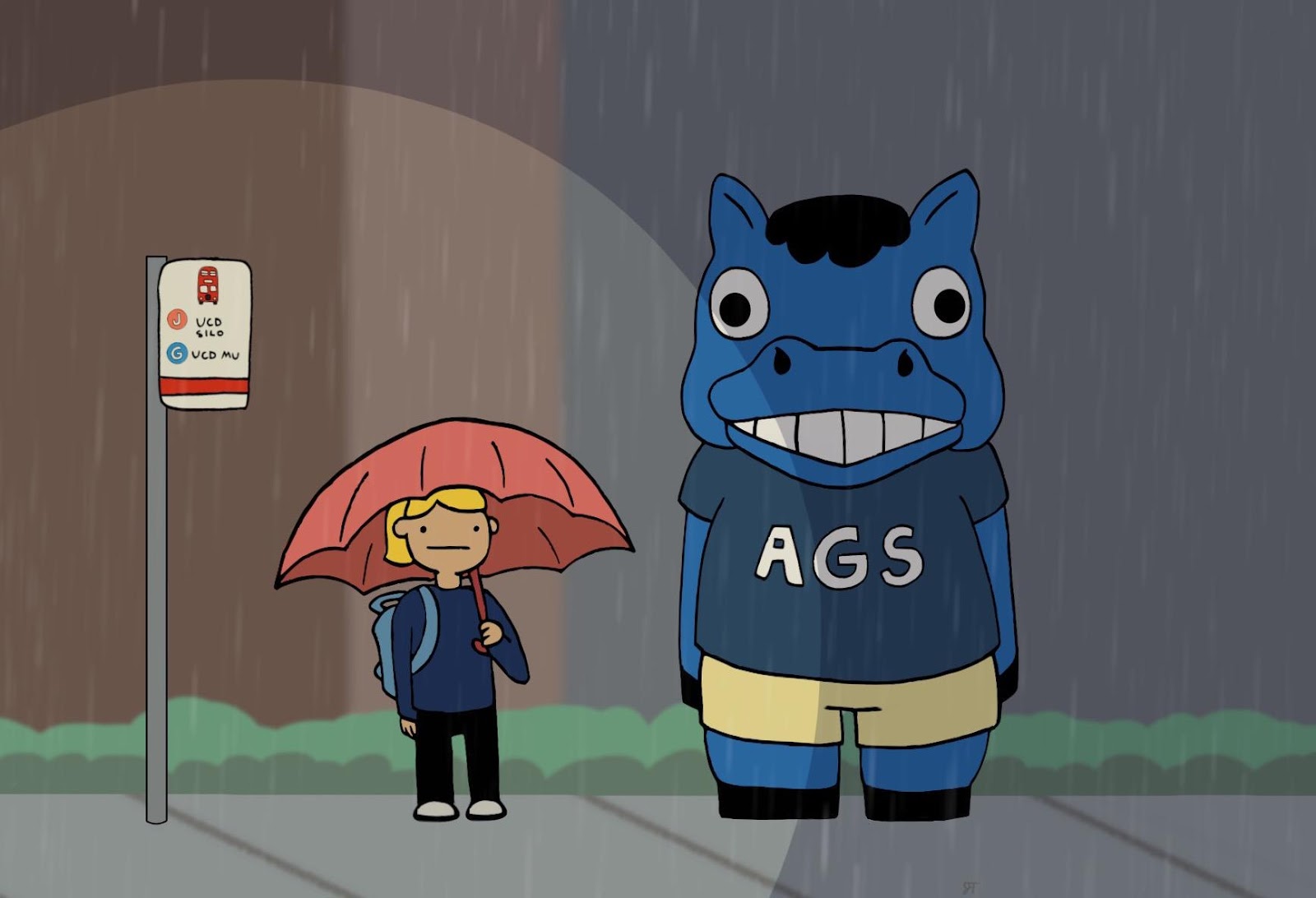
Just another rainy night in Davis

JULIE TORRES / AGGIE


By: Julie Torres — opinion@theaggie.org

Disclaimer: The views and opinions expressed by individual cartoonists belong to the cartoonists alone and do not necessarily indicate the views and opinions held by The California Aggie.


Domestic Violence Awareness: Love Shouldn’t Hurt

0
DIANA LI / AGGIE

Resources on campus, October as awareness month, warning signs, healthy love

“America’s largest prison break” is how the Allstate Foundation describes domestic violence in this nation, where the current statistics show that one in four women will experience domestic violence in her lifetime. Allstate created a powerful ad focusing on the financial abuse aspect of domestic violence, depicting a woman in a jail cell secretly counting her savings, and when she eventually opens the cell door, we see that she is actually in a normal bedroom with her abuser lying asleep on the bed.

“Trust your instincts, love yourself before you love someone else,” said Claire Chevallier, a third-year psychology major and the chair of ASUCD’s Sexual Assault Advocacy and Awareness Committee (SAAAC). “Love shouldn’t hurt, and if a partner is being verbally or physically malicious, you should seek help.”

October is Domestic Violence Awareness month, and various campus organizations have been working to promote awareness and provide resources relating to this issue, while also doing what they can to support survivors year-round.

I think it’s important to define domestic violence and dating violence first,” Chevallier said.

According to the UC Davis Sexual Violence Prevention and Response page, domestic Violence is “abuse committed against an adult or a minor who is a spouse or former spouse, cohabitant or former cohabitant, or someone with whom the abuser has a child, and has an existing dating or engagement relationship, or has had a former dating or engagement relationship. Dating Violence is defined as abuse committed by a person who is or has been in a social relationship of a romantic or intimate nature with the victim.”

Chevallier reiterated that abuse can be emotional, verbal, sexual or physical, and that people of all genders can be the victims or perpetrators in an abusive relationship. The UC Davis sexual violence page also provides details on the cycle of violence in a relationship.

Expanding on what Chevallier shared, Talia Peterson, a fourth-year evolution, ecology and biodiversity major and vice president of philanthropy for Alpha Chi Omega sorority, shared a much broader view on what classifies as domestic violence. Alpha Chi Omega is dedicated to supporting domestic violence awareness through its national philanthropy, and Peterson is in charge of planning events on campus to do just this.

“When you think of a traditional abusive relationship, we have a tendency to [picture] a married couple,” Peterson said. “But casual dating violence is still prevalent and abuse can happen in friendships [as well as] in parent to child relationships. It’s really [about] looking a little bit more broadly at what relationship violence looks like. [Domestic violence] can’t really be shoved into one little box.”

Not everyone will recognize abuse when they see it, even survivors. Chevallier listed some potential signs of abuse and violence.

You may be experiencing domestic violence if your partner is insisting you only spend time with them, making you dependent on them, making you feel guilty or responsible for their aggressive behavior, insulting you and brainwashing you, threatening to hurt or kill you, telling you how to dress, stalking you or going through your personal belongings,” Chevallier said.

UC Davis has several organizations which serve as important resources for anyone who has experienced domestic violence. The Women’s Resources and Research Center (WRRC) is one of Davis’s confidential resources, which means that survivors of violence and trauma can seek support and information there with the assurance of confidentiality.

“In terms of building awareness around domestic violence and sexual violence, as a confidential resource we are constantly doing that work,” said Sara Blair-Medeiros, the assistant director of outreach at the WRRC. “This work is constant, and needs to be constant […] the resources that are available are really important, and they’re available and open to everybody.”

The WRRC does not work alone. Other confidential resources include the LGBTQIA Resource Center and the Center for Advocacy, Resources and Education (CARE). These groups and others often collaborate to provide education and awareness. Blair-Medeiros emphasized the importance of collaboration in the work of the WRRC, particularly as a way to create intersectionality in their programming.

“A large portion of the prevention education that CARE facilitates is done through collaborative partnerships,” Meredith said. “We often find opportunities to partner with other campus and community stakeholders such as the [WRRC], the LGBTQIA Resource Center and Empower Yolo. We partnered with the WRRC last month on a program called Postcard Power, which provided students with the opportunity to write to the Secretary of Education regarding recent changes in the administration’s guidelines on Title IX.”

The Title IX changes, which were made official in late September, loosened guidelines for how colleges and K-12 schools respond to sexual violence, raising the baseline standard of proof in disciplinary cases.

“The Title IX repeal hasn’t affected us in the sense of fundamentally changing our work and how we operate, but it has impacted the way we think about our work,” Blair-Medeiros said. “We are definitely thinking about the impact it could have on students that we serve, and thinking about our sibling institutions across the country.”

Recently, abuse and gender-based violence have been topics of repeated discussion in the news and other media. For Blair-Medeiros, conversations about domestic and gender-based violence are necessary, even in the media and other public spaces.

“It’s something that we really do need to be talking about on a regular basis, and not be afraid of talking about in a trauma-informed, survivor-informed way so that we’re not retraumatizing folks,” Blair-Medeiros said. “It’s important for the nation to be having this conversation, and conversations about all forms of violence. I think it’s great for people to be thinking about it, and I think if the media’s talking about it, chances are people are talking about it around the dinner table.”


Written by: Sahiti Vemula and Gabriel Mulcaire — features@theaggie.org