57 F
Davis

Davis, California

Monday, December 22, 2025
Home Blog Page 647

Going baroque

NICHOLAS CHAN / AGGIE

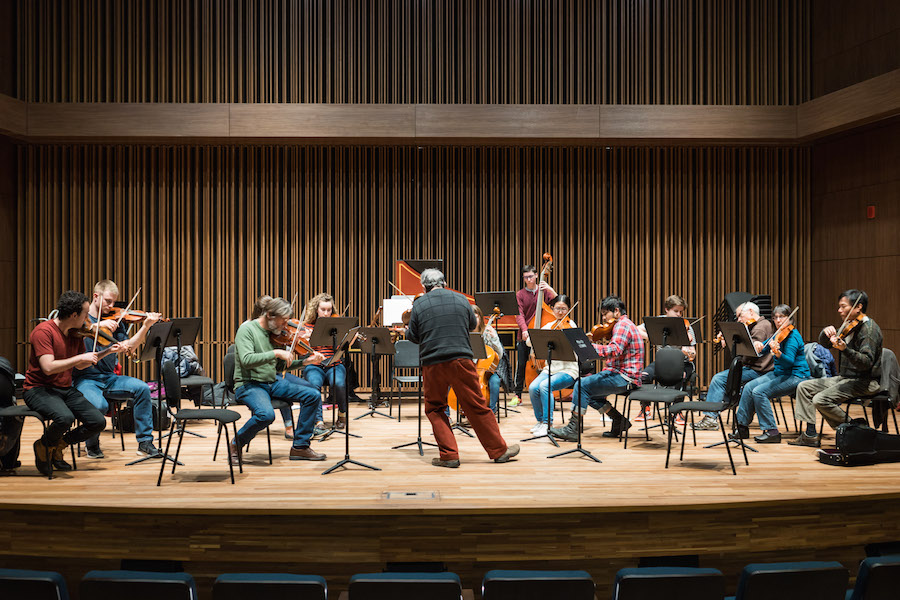
Students in baroque ensemble play instruments quintessential to seventeenth, eighteenth century

At first glance, the UC Davis Baroque Ensemble might look like a smaller version of a symphony orchestra. The Baroque Ensemble recreates music dating back to the seventeenth and eighteenth centuries using string instruments like the cello, viola and violin.

To play in this ensemble, one needs prior experience with string instruments. But unlike modern string instruments, baroque instruments lack certain modifications that are commonly used today, meaning that the musician will need to learn how to adjust to play using old techniques.

Phebe Craig, the co-director of the ensemble, said that one of the biggest challenges students may face upon joining the ensemble is learning how to adapt to these instruments and alter the way that they are used to playing.
NICHOLAS CHAN / AGGIE

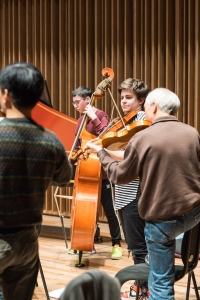
“People usually need to have a number of years of experience just so they can get around on the instrument, but once they’re a part of our group, we hand them an instrument that isn’t exactly like the ones they’re used to,” Craig said. “We hand them baroque instruments with different strings and the bows are very different. They harken back to the instruments that were being used in the seventeenth and eighteenth century, making everything a little more authentic when we’re discovering how people played back then.”

The materials of baroque instruments also create entirely different sounds from their modern counterparts, particularly the strings and the bow.

“Violins nowadays have these fine tuners on them so you can get close to the right pitch with your pegs,” Craig said. “Baroque instruments don’t have that. These strings are made of very organic material and the humidity or heat might change it a little bit and it can go out of tune, so students have to figure out how to keep the instruments tuned.”

Michael Sands, another co-director of the Baroque Ensemble, agreed that playing an instrument much different from ones a musician is used to can be difficult, but not impossible.

“The players really have to put themselves out,” Sands said. “To get the sound right, a lot of people have to adjust the way they’re used to playing.”

According to Craig, this group is much different from the symphony orchestra since it is much more personal and participation-based.

“Usually Baroque orchestras are a little smaller,” Craig said. “A lot of the music-making is kind of creating conversations. Baroque music is more comfortable and you can have a little more of yourself in the music. Since we’re smaller and don’t make that loud of a sound, it’s the participation that’s so nice.”
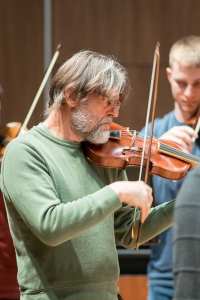
NICHOLAS CHAN / AGGIE

Sands also emphasized the importance of playing as a group and being part of the ensemble as co-director of the Baroque Ensemble.

“We have a very relaxed atmosphere,” Sands said. “Phebe plays the harpsichord and I play the violin. We’re playing with the students, not staying back directing, which makes us very different.”

The UC Davis Baroque Ensemble also serves as a great way for music majors to receive their required hours of performance. Victor Karadi, a third-year music major, has been a part of this ensemble for two quarters and believes it helps him expand his perception on music.

“It’s a really different vibe than being in a forty or sixty-person ensemble,” Karadi said. “You’re also a lot closer to the people around you. The music also feels fresh because you’re getting this other perspective on something you’ve done before.”

For more information about the Baroque Ensemble and for upcoming performance dates, please visit http://arts.ucdavis.edu/baroque-ensemble.
Written by: Becky Lee arts@theaggie.org

UC Davis then and now

JAY GELVEZON / AGGIE

Second generation student compares, contrasts parents’ college experiences to her own

While most UC Davis alumni have a sense of Aggie pride, some students have a deeper connection to campus as a second generation member of their family to attend the university.

The CoHo, cows and bicycles are all aspects of campus that have followed members of the Tristant family through their time at UC Davis. Dominique Tristant, a fourth-year psychology major, followed in her parents’ footsteps by attending UC Davis. Her mother, Joanie Tristant, was an art studio major and her father, Steve Tristant, was a physiology major in the class of 1982.

Many of the extracurricular activities students enjoy today have been popular for generations. According to the UC Davis General Catalog from 1980-1981, there were more than 50 intramural sports available for students to participate in during the time when Steve and Joanie attended UC Davis.

“[I participated in] ultimate frisbee as a club team [called] “the Davis Dogs,” [and] all kinds of different IM teams,” Steve said.

According to Dominique, intramural sports continue to play a large role in many students’ involvement on campus.

“My first year, I did a lot of IM sports with my dorm,” Dominique said. “My second year, I joined Greek life, and ever since then that has kind of been my main thing other than school.”

According to the Tristants, many other extracurriculars that students were involved in back in the day are the same activities and clubs that are popular today.

I had to work to pay for myself, and I worked at The Aggie at the time,” Joanie said. “I worked about 20 hours a week, sometimes until 2 a.m. […] Since I was a transfer and working, I was not too involved in other campus activities.”

Joanie recalled the campus as being “not as diverse as it is now.”

I’d characterize the vibe [on campus] as preppy,” Joanie said. “Pretty much middle and upper-middle-class [demographics].”

The current student body makeup at UC Davis has changed quite a bit from when Steve and Joanie attended.

“[I] remember quite the contrast, [between the] birks-granola crowd and the prissy Greek crowd,” Steve said. “[Then there were the] hardcore studious [students] and hardcore partiers.”

Regardless of her parents’ input, Dominique reported that UC Davis has continued to be an academically-driven environment that also values time for socializing.

“Right now, it’s kind of intense because of midterms season,” Dominique said. “I’ve seen a lot of people studying [but] I still see a lot of socializing going on as well. People meet up to get food or to study and talk, but […] it’s kind of intensive right now.”

According to Steve, UC Davis was not known for its party scene when he attended school here.

“Nightlife was kind of weak,” Steve said. “There was The Grad, and some bar downtown that I can’t remember name of. The night scene was mainly frat and house parties with kegs and local bands.”

According to Dominique, downtown Davis is now a popular place for students to socialize.

“[Davis] is really low-key […] compared to other bars [in] other places,” Dominique said. “Everyone knows each other. That’s the thing, […] I feel like I can go there and run into a lot of people I haven’t seen for a while, and so it’s a really friendly vibe.”

In this way, according to Dominique, Davis nightlife has grown significantly since the time her parents attended.

“Everyone [at the bars] is having a really good time, and there’s dancing and drinking, obviously,” Dominique said. “It depends where you go. If you go to G Street [Wunderbar], you can play pool. Blondie’s [has] more dancing. Honestly at any bar you go to you can talk and get to know someone, or if you want to just have fun with your friends, it works.”

The restaurant scene has also grown in Davis as the city has expanded over the years.

“[There were] not very many restaurants then — but I didn’t have money to go out anyway,” Joanie said. “I recall Togo’s [sandwiches] being a thing then, and there was a great frozen yogurt place not far from campus.”  

Currently, Davis is full of places to grab a bite to eat, even late at night. According to Dominique, there is a lot more variety in what type of food you can find in Davis. She enjoys 3rd and U, various sushi places around Davis as well as Taco Tuesday at El Toro Bravo.

Dominique’s parents’ experience at Davis was not dominated by sports games and Aggie Pack T-shirts. According to Steve, students were not highly involved with athletics in the early 1980s.

“NCAA sports were pretty weakly supported at Davis, except football, maybe,” Steve said. “It was Division II, and they won a lot.”

In 2003, the UC Davis Athletic Department began the transition from competing in Division II to Division I. Even though sports teams’ records have improved over the years, Dominique believes that students could still be more involved with student athletics on campus.

“I don’t think there’s enough involvement,” Dominique said. “I’m not really one to talk, because I could probably be more involved, too, but I think that a lot of people hate on Davis athletics.”

The Tristants agreed that, no matter what decade, the UC Davis campus and its surrounding areas has always provided areas to unwind from class and studying.

“I loved Friday afternoons at the campus pub and music at the Coffee House in the evenings,” Joanie said. “I ran and I biked a lot and I used the rec pool for my swimming workouts. The ARC was new and went there sometimes too.

From the time when Joanie attended to now, Davis has remained a place where students like her daughter are encouraged to stay active and spend time outdoors.

“Last Spring Quarter, [my friends and I] went on a picnic on the weekend,” Dominique said. “[We want to] just go find a park and have lunch, go downtown and eat during the day or go on runs.”

Davis’ location has always given students easy access to the mountains or one of the larger neighboring cities.

“Sometimes [my friends and I] go to Sacramento, Berkeley, Napa or surrounding areas,” Dominique said. “There’s not a whole lot to do in Davis, and it’s nice to get out.”

Just like Dominique, Steve also enjoyed getting out of town for an occasional weekend trip during his time at UC Davis.  

“[We went on] weekend road trips for ultimate [frisbee], [and] weekday powder skiing in Tahoe,” Steve said. “The main reason I was at Davis was easy access to Tahoe for skiing.”
Written by: Elizabeth Marin — features@theaggie.org

Humor: Student suspended after making cadaver in Haring Hall “dab”

NATALIE SKLOVSKAYA / AGGIE

An elaborate attempt to be trendy does not end well for Eleni Daniels
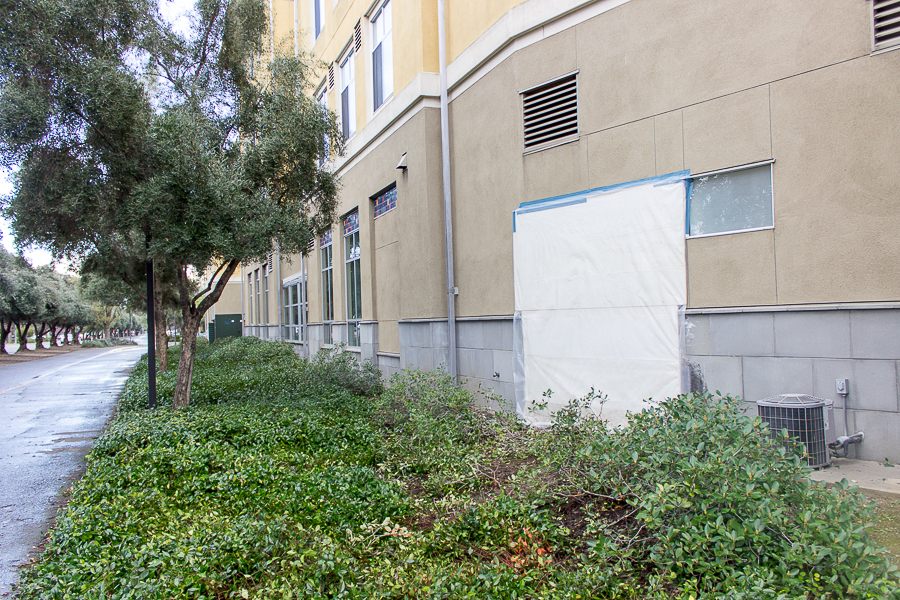
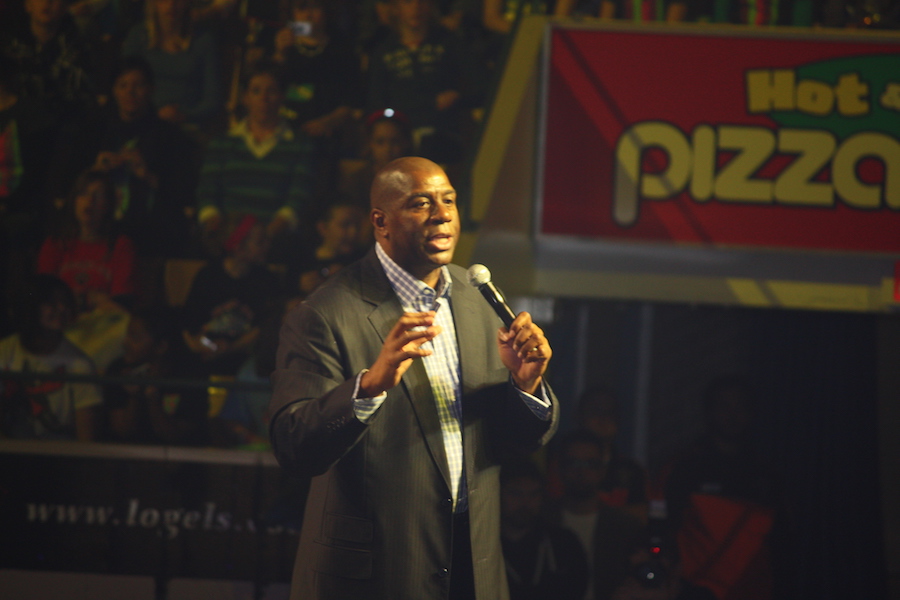
It’s a moderately-known fact that UC Davis has a cadaver lab, but it’s widely known that you don’t use dead bodies to be trendy on Twitter. Third-year Eleni Daniels was not around the day that important lesson was taught, and, as a result, wound up in some deep trouble. Some might say six-foot deep trouble (that’s a joke about graves because dead bodies and — nevermind).

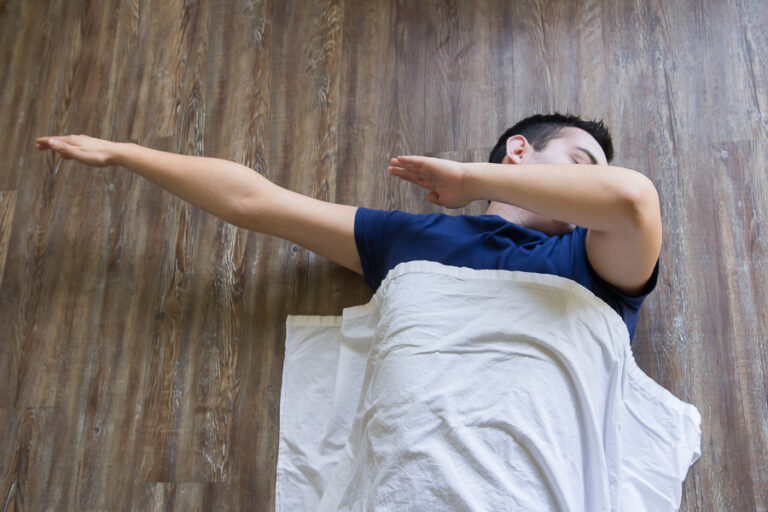
Daniels was in class one day working with cadavers under the watchful eye of her professor. However, when the professor turned to help another student, Daniels got busy. She promptly shifted the cadaver’s arms into a pose resembling the popular “dab” dance move. She snapped a picture and posted it on Twitter, but was eventually turned in by “some snitch,” according to Daniels.

“Honestly, I think they’re just jealous they didn’t think of it first,” she said. “I really don’t see the problem.”

There are several problems. The professor of this course, Dr. Bunch, elaborated on Daniels’ indiscretion.

“First of all, it’s a dead body,” Bunch said. “I really don’t know how to clarify why that’s bad without having to use caveman terms, because it’s that simple. Second, students aren’t supposed to touch the bodies without my permission. And, finally and most importantly, the dab is sooooo 2016.”

The cadaver has refused to speak out on this subject, probably in protest. However, we asked other students around campus if they thought that the stunt was worth the cost of suspension.

Heck no,” said Jen Peters, second-year student. “First of all, she could have easily just done a ‘Mannequin Challenge’ — it’s not like he’s going to move anyways. She wouldn’t have even had to touch the cadaver. Her vision was flawed.”

Another student believes that the whole thing was hilarious, and it seems like he was the only one. Fifth-year Matt Hunt was still giggling about the picture.

“Ha! Yeah, I don’t know why people are, like, freakin’ out or anything,” Hunt said. “It’s not like these are real or anything; they’re just movie magic. Wait, what? They’re real? Holy sh—”

In the end, it appears we can all agree that Daniels’ sense of humor might be a little flawed (and dated) in the given situation. However, she still stands by her choice.

“You guys don’t get it,” she said. “I made a caDABer.”
Written by: Olivia Luchini — ocluchini@ucdavis.edu

Pickup truck crashes into Thompson Hall

VENOOS MOSHAYEDI / AGGIE

Building repairs necessary, no injuries

A pickup truck crashed into the Thompson Hall at around 2:30 a.m. on March 6. While the collision damaged the wall of the residence hall, no injuries were reported. The truck first hit a light pole and a curb before crashing into the exterior wall of a bathroom on Thompson’s first floor. No one was in the bathroom at the time and there are no bedrooms on the first floor of Thompson.

“Student Housing staff along with campus Facilities Services, a campus building inspector, a private engineer and private contractor were on-site later in the morning to evaluate the damage and to begin scoping the repairs,” said Mike Sheehan, director of Facilities Services for Student Housing and Dining Services, via email. “The engineer found no structural concerns so we were free to move forward with temporary mitigations.  By 11 a.m. the site had been cleaned up and by end of day the damaged wall was reinforced and covered. Additionally, a lock was added to the bathroom door for safety and security. Over the next few days the campus will be working with a contractor and engineer to draw up the permanent repair and schedule for that repair.”

Acting Lieutenant Bill Beermann of the UC Davis Police Department stated via email that alcohol was not a factor in the accident and that the incident is still under investigation.

In a statement to the UC Davis Dateline website, Sheehan said that this was the first time a vehicle had hit any of the Segundo North residence halls.


Written by: Alyssa Vandenberg  — campus@theaggie.org

Magic’s Back

TECHSTUD [CC BY-NC-ND 2.0] / FLICKR
Cautiously (very cautiously) optimistic about hiring of Magic Johnson to President of Basketball Operations

Growing up as a diehard Los Angeles Lakers fan, I’ve been accustomed to a certain standard of success that not many other basketball fans have had the luxury of grasping. My very first memories as a fan of the purple and gold began during the absolute peak of a twenty-seven year old Shaquille O’Neal.

The 7’1”, 325-pound freight train ate the Indiana Pacers for breakfast during the 2000 NBA Finals in which he averaged 38 points, 16.7 rebounds and 2.7 blocks in six games to bring the Larry O’Brien trophy back to Los Angeles for the first time in twelve years. That would be the beginning of a three-peat for the Lakeshow, and, seven years after the trifecta, they repeated again. I had the luxury of watching five championships by the time I was fifteen years old.

For this generation of Lakers fans, this is a form of affluenza of sorts. Championships have become the expectation, and anything less is unacceptable. We whine and complain when the Lakers falter, and in the last six or seven years, they have pretty much only faltered. It has been the worst rough pitch in the history of our franchise. David Stern nixing the Chris Paul trade “for basketball reasons” in 2011 still makes the fanbase livid. The acquisitions of Steve Nash and Dwight Howard during the summer of 2012 turned out to be an utter disaster. The death of longtime owner Jerry Buss broke our hearts. The erosion of Kobe Bryant following his ruptured achilles was not only hard to watch, but definitely set our progress back a few years. The Lakers’ brass has had made a slew of horrible decisions during this window, and when they haven’t been downright wrong, misfortune has instead lent a hand.

Jim Buss, the son of the late and legendary Jerry Buss, has long had his fingerprints all over the team despite a low profile, but when his father passed away, all eyes were directly on him.

“[I]f this doesn’t work in three to four years, if we’re not back on the top — and the definition of top means contending for the Western Conference, contending for a championship — then I will step down because that means I have failed,” Buss told the Los Angeles Times in April 2014.

The last thing you want to do when you’re being scapegoated by a notoriously impatient fan base is give yourself a self-imposed deadline. Not a single member of Laker nation ever forgot about this declaration.

On Tuesday, Feb. 21, the clock expired, and Jeanie Buss, the President, ousted her brother, Jim, and let longtime GM Mitch Kupchak go as well. In their place, Jeanie has decided to give the reigns to Magic Johnson as President of Basketball Operations; he has now hired Kobe Bryant’s former agent, Rob Pelinka, to be his general manager. Many Laker fans have rejoiced and feel rejuvenated by the regime change: “Magic is going to bring showtime back!” “I’m glad that idiot Jim is gone!” “Bring Kobe into management too!”

To call myself cautiously optimistic about the return of Magic would be an overstatement. The fan base is viewing his return like he is going to be a savior of the franchise, but I find myself skeptical. I love Magic, just as any other Laker fan loves him and appreciates him for all that he accomplished during his time as a player, but a gigantic factor in the Lakers’ failures has been the lack of forward thinking. They have yet to catch up to the modern-day NBA characterized by analytics, and Magic will not solve this. I worry that with Magic on board, the front office will eagerly try to expedite the development of the core of the team while mortgaging the Lakers’ future in the process, though they avoided this at the trade deadline.

I only hope that Magic surrounds himself with the right people that have a better understanding of the modern NBA than both he and his predecessors have, and take the right steps to build a sustainable foundation for the future.  
Written by: Michael Wexler — sports@theaggie.org

How the Constitution can check Trump

PUBLIC DOMAIN

Checks and balances help ensure one branch of government not too powerful

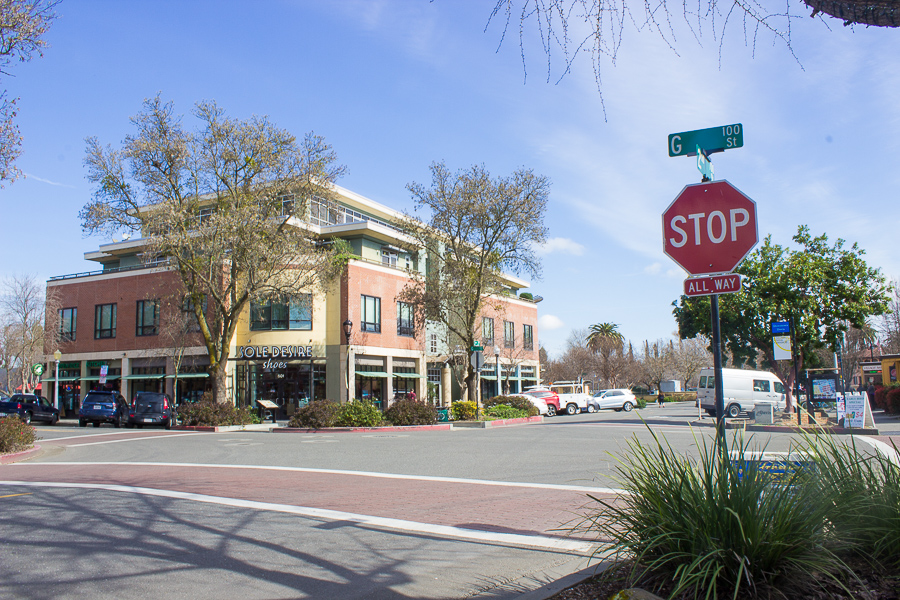
Since it was ratified in 1788, the United States Constitution has served as the bedrock of our nation’s democracy. As the supreme law of the land, it’s what our country turns to in times of turbulence when the way ahead seems unclear. As we move into a new era of politics, and our existence as a democracy is questioned, the power of the people reminds us exactly why democracy is so vitally important.

It’s been just over a month since President Trump was elected, and he’s kept himself busy. Going in, there was a lot of speculation that his large business empire, now helmed by his children, might provide a strong conflict of interest with his duties as president and his oath to the Constitution. He’s only proved us right.

Kellyanne Conway, a counselor to the president, recently misused the powers of her public office by promoting Ivanka Trump’s fashion line on-air. In her libel lawsuit against a tabloid, Melania Trump charges that she lost the opportunity to use her status as First Lady to promote her products in the fashion industry. The Trump family is obviously more interested in using Trump’s presidency for their own profits, rather than for the good of the nation.

In a break from tradition, Trump has been the only president to not release his tax returns despite being repeatedly asked to do so. Reports suggest that he may not have paid his taxes for the last 18 years. Coupled with his delay in releasing ownership and resigning from his organization, his actions raise questions about his real motives. A lawsuit filed against him alleged that he violated the Constitution by allowing his business operations to receive payments from foreign governments.

The most alarming news may be when the FBI and CIA confirmed what many had suspected all along — that Russian hackers may have tampered with the 2016 elections, and Trump may have received their aid when running for president. If the reports are true, the implications would be disastrous for both the United States and the world. The fact that our own president could be allied with one of our biggest enemies is a grave concern.

If we needed further proof that our current president has no regard for the Constitution, we need only look at the most controversial law he has passed in office so far — the immigration ban. With one hasty stroke, Trump immediately banned all travelers from seven Muslim-majority countries from coming into the United States, but excluded the countries where his organization maintains business ties, such as Saudi Arabia. He has also temporarily banned all refugees from Syria, leading to mass protests and panic at airports across the country. Although it doesn’t state so clearly, the law is intended to target Muslims — a clear violation of the Constitution.

Perhaps Trump didn’t think this through — the same Constitution that he has ignored has also made sure that America continues to uphold the values that it was built on. A few weeks after Trump issued the ban, a panel of judges for the Ninth Circuit Court of Appeals in San Francisco found the ban unconstitutional and struck down most of its key elements.

The president can also face opposition from not just Democrats, but also his own party. John McCain’s outspokenness against many of Trump’s policies may have cost him some standing among Republicans, but he has gotten his underlying message across — Trump is unfit to be president.

The Constitution grants us rights and liberties that cannot be taken away, and protects us from those in positions of power. The fundamental principle of a democracy is that the people make decisions about who makes their laws and how they are implemented. This also means that the people’s responsibility doesn’t end after voting. Citizens are equally responsible for the actions of the people they elected. To keep a democracy alive, the people of a country need to play an active part in all aspects of decision making.

Our founding fathers had many checks and balances put into place so the power to rule the country would ultimately be in the hands of the people. The governmental power would be distributed among many branches — executive, legislative and judicial — rather than concentrated in just one place. But these branches are nothing without the people, and the Constitution is just a piece of paper unless the common man rises to enforce it.
Written by: Shohini Maitra — samaitra@ucdavis.edu

Disclaimer: The views and opinions expressed by individual columnists belong to the columnists alone and do not necessarily indicate the views and opinions held by The California Aggie.

Writer’s pick: podcasts I’ve been listening to

NICKI PADAR / AGGIE

Self-proclaimed podcast geek dorks out about crime, Supreme Court, Pepe the Frog

Podcasts are not a new concept by any means, but their rise to popularity has ushered in the emergence of high-quality and stellar programs. And I, a lover of various media, have quickly jumped on the bandwagon of podcast-listening; I have found an appreciation for the intimate connection between listener and host. It is uncommon to hear a person’s tone of voice firsthand — a hint of their excitement or confusion — when covering a subject. The best podcast hosts today capitalize on the connection they make with their viewers, find new angles in everyday topics and mundane ideas and present them in a relatable and humble way.

It’s a little ironic, then, that I’m conveying my sentiments about the masterful connection with the audience via print. Maybe there’s another podcast in the making; I’ll put a pin in that idea for now. For the meantime, here are the podcasts I’ve been listening to.


  1. “More Perfect” from WNYC

A spin-off of the popular podcast “Radiolab,” “More Perfect” analyzes the Supreme Court: hot topics, specific cases and the complicated authority of the nine justices. With a debut episode about the death penalty, it’s clear from the get-go that the show doesn’t hold back.

I remember listening to that episode while I was on an airplane coming back to Davis during winter break, and how uncomfortable I felt hearing multiple interviews about the best way to kill a prisoner. While morbid, deciding how to to kill someone emerged as a controversial topic. Ultimately, the show discussed the ironic nature of a firing squad: is the death penalty any less humane than the actions of a firing squad?

The ability to discuss controversial topics — to examine them in a different scope — is what makes this podcast important. With the current political climate, this podcast sheds light on the omnipotent entity that is the Supreme Court.


  1. “Criminal” — hosted by Phoebe Judge

I was an avid fan of “Serial” season one when the wildly popular podcast aired in 2014. The opening song is still one of my favorite scores, and I stand by my claim that it is some of the best investigative journalism I have witnessed in awhile. But “Serial” is outdated and has not produced new episodes since 2015. Nonetheless, it sparked my interest in true crime podcasts.

“Criminal” is now a favorite alongside “Serial” because it shares the same mastery of investigation, as well as a creativeness of topics. It doesn’t only share information about specific crimes, but also concepts about crime. The last episode I listened to was about the process of faking your own death. Another was about a family of coroners which, as you can imagine, has quite interesting dinner table conversations. This podcast acknowledges the bizarre nature of crime with a rational perspective, but also in a haunting way that draws in listeners.


1.“Reply All” — hosted by PJ Vogt and Alex Goldman

I’ll start with this: the three-episode story “On the Inside” was beyond incredible. I don’t even want to discuss the plot — I want you to experience the totality of it by yourself — but the last fifteen minutes have stayed with me since I heard it last summer. “Reply All” masters the dynamic I mentioned previously: finding interesting concepts and creating an intimacy between the viewer, story and hosts.

Vogt and Goldman, specifically, are able to execute this connection well. There is a dorky relatability that coexists with their eloquence and their ability to ask thoughtful questions. On the surface this show is about technology; as a cognitive science major, I find that interesting in itself. What I didn’t expect was the show’s unforeseen turns. Yes, the show can be random, and I will disclose that one episode was about the popular meme Pepe the Frog. However, the hosts always seem to turn the conversation around to something bigger. It starts with an idea about technology, something random and strange that happened, and then the story turns human.

A prime example is the episode “Quit Already!” which started with the idea of “that guy on Facebook” who annoyingly involves him or herself in political debates. The same episode quickly turned into the story of a women who got the corrupt Vice President of Honduras to step down, while discussing what it means to be patriotic to one’s country.

Whether discussing grotesque meme frogs or political revolutions, “Reply All” is utter genius. It’s not just about technology; it serves the greater scope of our daily lives on a silver platter — the humanistic side of technology and its integral part in our contemporary culture.
Written By: Caroline Rutten — arts@theaggie.org

100 years of Davis

VENOOS MOSHAYEDI / AGGIE

G Street makeover, centennial celebration take over Downtown Davis

The area in Northern California previously referred to as “Davisville” officially became the City of Davis on March 28, 1917. Within the subsequent few years, the City Council, commissions, roads and infrastructures were established. Since UC Davis opened to students in 1908, the city’s population has grown from around 900 to over 66,000 residents.

For its centennial, the City of Davis is designating the southeast corner of 2nd and G Streets as “Centennial Plaza.” New landscaping will be installed, along with hardscape, artwork, interpretive historical signage, a time capsule and a public plaza.

Other annual community events and gatherings will be held with the centennial in mind, including a Fourth of July county fair, taking place in Community Park, Davis Neighbors’ Night Out and Picnic Day. On Apr. 4, current City Council members will recreate some of first ordinances introduced in 1917, which included keeping wildlife off streets.

“The city was created in 1917 to create a pressurized water system, purchase firefighting equipment and start providing services for the 977 residents for the Davisville at that point,” said Bob Bowen, the public relations manager for the city of Davis.

After the city had incorporated its infrastructure and laid the groundwork for building the community, the next step was expanding its population. The UC System then incorporated Davis.

“Certainly the coming of the university –– that’s probably the single biggest thing that has happened,” said Mayor Robb Davis. “It was a commitment on the university and the city to make a bike-friendly city –– to create a campus that’s walkable and bikeable with a unique transit. One of the things that makes Davis unique is really strong commitments to aggressively conserving farmland and open spaces in our community.”

100 years later, Davis is still continuing to expand. The number of Davis residents has rapidly increased since the college brings in both students and community members. As a college and town, Davis is renowned for its bike culture.

“Today, [Davis] is most well known for UC Davis and bicycling,” Bowen said. “Around the world, our so-called brand is as a college town and the most bicycle friendly town in the U.S.”

Bowen, who is the longest employed City of Davis worker with 40 years of service, is presenting a historical slideshow on the city’s birthday, March 28. This will consist of images from Special Collections at the UC Davis Shields Library, including some photos from Harry Hazen, a student who studied at the University Farm, now known as UC Davis, from 1916-18. Hazen’s photos also show the aftermath of the November 1916 fire in Davis. The slideshow will be shown on March 28, the 100 year mark of Davis, at noon in the Davis Varsity Theater.

“[The City of Davis is most well-known for] the university, bicycles, and community atmosphere,” said Stacey Winton, a media and communications officer for the City of Davis.

The community atmosphere has been positive and full of energy, one of the many traits that the people of Davis admire.

“Davisites care, and that really speaks to a lot of things,” Bowen said. “They care about the environment, programs for kids for education, coordinating with the university and helping those who can’t help themselves.”

Written by: Kaelyn Tuermer-Lee — city@theaggie.org

What an awards show can say about our country

IVAN BANDURA [CC BY 2.0] / FLICKR
The Academy Awards reflected this year’s culture in a typical political fashion
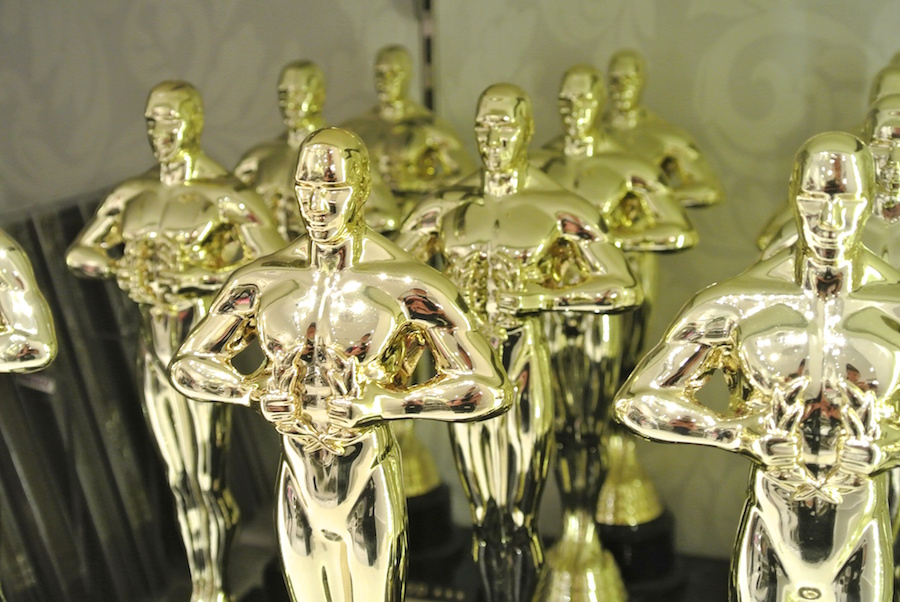
Following the results of the presidential election, this year’s awards season saw many celebrities taking advantage of the spotlight to speak out against America’s divided political climate and its leader, President Trump. In early January, Meryl Streep made headlines when she used her Golden Globes acceptance speech to call out the then-president-elect’s misuse of power to subjugate others. In addition to condemning his ridicule of a disabled reporter, she urged the Hollywood Foreign Press to protect journalists.

At the Screen Actors Guild Awards, actor David Harbour (Stranger Things) delivered an impassioned acceptance speech in which he called out Trump’s prejudice against marginalized communities.

The Grammy Awards followed suit in February. In his opening monologue, host James Corden invoked the beast by name. He rapped: “Live it all up because this is the best and with President Trump we don’t know what comes next.” The ceremony saw politically-charged performances from A Tribe Called Quest and Katy Perry, and spirited similar commentary from Beyoncé and Jennifer Lopez.

These events’ appeal to politics created momentum going into the most watched awards shows, the Academy Awards — which, historically, is the most political. Tensions and pointed commentary were expected, to say the least.

2016’s #OscarsSoWhite controversy seemed to have been noted by the Academy, as this year’s nominees posed some historic possibilities for diverse narratives and storytellers. This year, all four acting categories had non-white nominees for the first time in ten years and three of the nine films nominated for Best Picture grappled with Black history and identity. Despite this, many still felt the need to defend the value of diverse narratives and storytellers during this year’s ceremony. As was the case with the previous awards shows, this commentary was directed at a certain political force who also had his start in Hollywood.

Not even a minute into his monologue, host Jimmy Kimmel quipped, “This broadcast is being watched live by millions of Americans and around the world in more than 225 countries that now hate us.” He continued, “I don’t have to tell anybody [that] the country is divided right now.” He eventually rounded out the political seriousness with a joke: “Some of you will get to come up here on this stage tonight and give a speech that the president of the United States will tweet about in all caps during his 5 a.m. bowel movement tomorrow.”

The political commentary didn’t stop there. During a performance by Sting, the screen behind him displayed a timely quote by James Foley: “If I don’t have the moral courage to challenge authority… we don’t have journalism.” When actor Gael García Bernal went on stage to present an award, he spoke against the president’s proposed border wall. And when Iranian director Asghar Farhadi’s The Salesman won the Best Foreign Language Film category, it was revealed that he decided to skip the ceremony to protest the president’s travel ban of seven Muslim-majority countries — which included his own.

It would be naïve to say that this form of political protest is unprecedented. But in any case, it’s fair to say that the rise of Trumpist politics inspired the near-unanimous dissent we see in Hollywood. And while it’s easy to reduce the industry to an abstraction of glamour and wealth, it’s important to remember that it is one of the most influential, society-shaping platforms in the country — for better or worse. Regardless of what the word “Hollywood” connotes, the industry is, most fundamentally, a generator of art. And the Oscars is a celebration of art.

In the most basic sense, art is created to tell a story, and the films in the Best Picture category represent the most compellingly structured and performed narratives. In one way or another, this year’s contenders nuance what it means to be human, our unifying identity. It’s an identity we invoke when we protest against legislative measures and incendiary rhetoric that attempt to divide us.

When Moonlight beat out La La Land in that shocking twist, it was difficult not to applaud the moment with anything less than delighted surprise. If La La Land producer Jordan Horowitz’s graceful handing off of the Oscar shows us anything, it’s that when it comes to recognizing diverse narratives, a greater win sometimes comes at the expense of a loss — or in this case, a nationally televised snafu.
Written by: Jazmin Garcia — msjgarcia@ucdavis.edu

Disclaimer: The views and opinions expressed by individual columnists belong to the columnists alone and do not necessarily indicate the views and opinions held by The California Aggie.

Campus transportation, minus the bike

CHELBERT DAI / AGGIE

Students chose unique forms of transportation to navigate campus

The UC Davis campus has 8.3 square miles of extended campus. With only 10 minutes between classes, walking — or running — is not always the best option. Many UC Davis students and faculty members have taken to biking as their main mode of transportation, but there is a population of students who choose to use alternative vehicles that work better for their lifestyles.

“I got the idea [to scooter] from one of my professors,” said Kristoffer Landes, a fourth-year linguistics major. “[Professor] Patrick Farrell always rides his scooter to and from class.”

For Landes, a scooter is more convenient than having a bike.

“Compared to a bike, you can fold [a scooter] up and carry it with you wherever you go,” Landes said. “Because I commute back and forth to campus everyday, having a bike really wasn’t a great option — I didn’t want to leave something chained up overnight. [I] don’t really ever have to worry about it ever being stolen, […and it] is obviously faster than walking.”

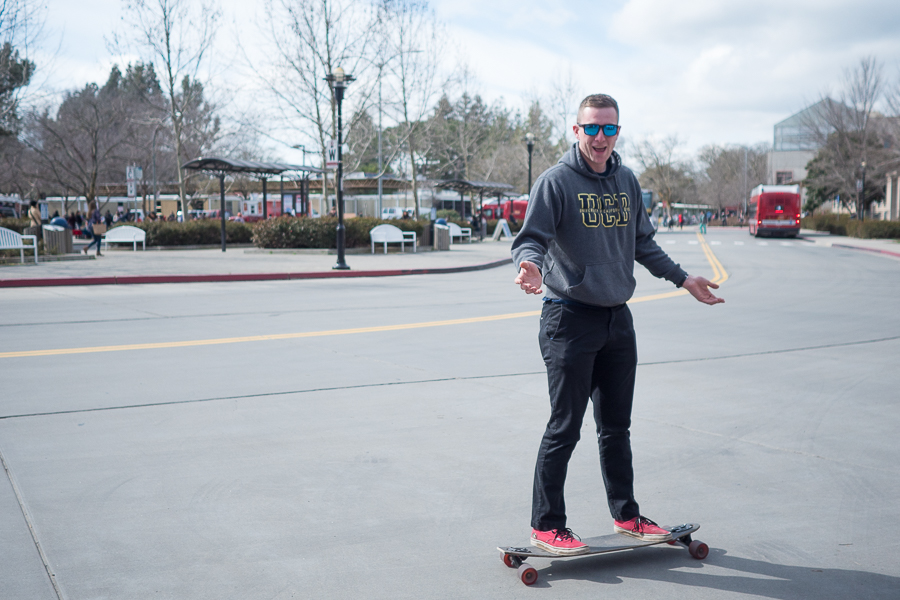
Even when not commuting to campus, students find that an alternative form of transportation is less hassle than a bike. Elliot Odisho, a third-year economics major, uses a longboard to get around.

“I don’t like the whole process [where] you have to register [your bike],” Odisho said. “I just don’t want to do that, and […] I don’t like the fact that I have to lock it up and […] find bike parking. I know there is a lot [of bike parking] but […] with [a longboard] I can just bring it inside whatever class I go to and just put it up against the wall and not worry about it.”

According to Crane Sun, a fourth-year food science major, choosing an alternative form of transportation can save students some time during the day. Like Odisho, Sun likes to ride his longboard to class.

“I did bike for a period of time,” Sun said. “I just felt like a longboard was more convenient in terms of just finding bike parking, buying locks and maintenance. That’s pretty much why I longboard.”

Sun explained that these students who have chosen a form of transportation other than a bike still try to abide by the same rules of the road.

“I tend to be more […in] the middle of one lane [when I longboard],” Sun said. “Bikes could just simply go around me if they need to make a left or right turn. Normally I just do typical hand signals for bikes […] so people know where I’m going. I haven’t had any issues with bikers before just because I’m […] too slow to be an issue but, like, if I was speeding on my longboard — which is relatively hard to do or very rare — that’s another thing.”

Similar to Sun, Odisho finds that the downside to longboarding is its speed in comparison to that of a bicycle.

“Honestly, the cons [are] you don’t go as fast [as a bike],” Odisho said. “The amount of energy exuded over time [when biking], I feel like it’s more efficient to bike places. You can take [a longboard] in your car [or] on the bus […] so it’s always with you [and] you don’t have to worry about it getting stolen.”

While the pavement is not as big of a problem for bikers, it poses a threat to the safety of students who use other modes of transportation, especially for students who choose to longboard. Odisho and Sun both reported a safety issue with uneven pavement near the Silo.

“I only had one accident, and it was at night,” Sun said. “By the Silo […] there used to be this giant pothole. I didn’t really see it clearly, and I kind of just […] hit the pothole and flew forward a bit and hit the pavement.”

Rough as the surface may have been, Sun popped back up with only minor injuries.

“I was like ‘ow,’” Sun said. “I mean, it hurt a little bit. It wasn’t too bad.”

According to Odisho, uneven pavement is more dangerous to those who scooter or longboard than those who bike.

“There was one time [I crashed] over by the Silo,” Odisho said. “The thing with longboard wheels is they are solid, and there is no air in them. Unlike bike tires, there’s […] no [air] cushion, so it’s really easy to get caught up in cracks. One of the wheels got caught up in the crack and I just kind of ate it. It’s just bad luck there.”

With no major injuries to report, Sun and Odisho continue to longboard to and from their classes.

Students like Sun, Odisho and Landes find that these alternative forms of transportation are more convenient for their needs. According to Landes, sharing the bike-filled roads at UC Davis has not been a problem for him and shouldn’t for other students who are interested in leaving the bike at home.

“You can get on the roads with the other bikes,” Landes said. “People just seem to realize you’re another person using a different mode of transportation and they kind of give you your space.”
Written by: Elizabeth Marin  — features@theaggie.org

Freeborn Hall to be renovated soon

ASHLEY LUGO / AGGIE

Freeborn to become conference, event venue

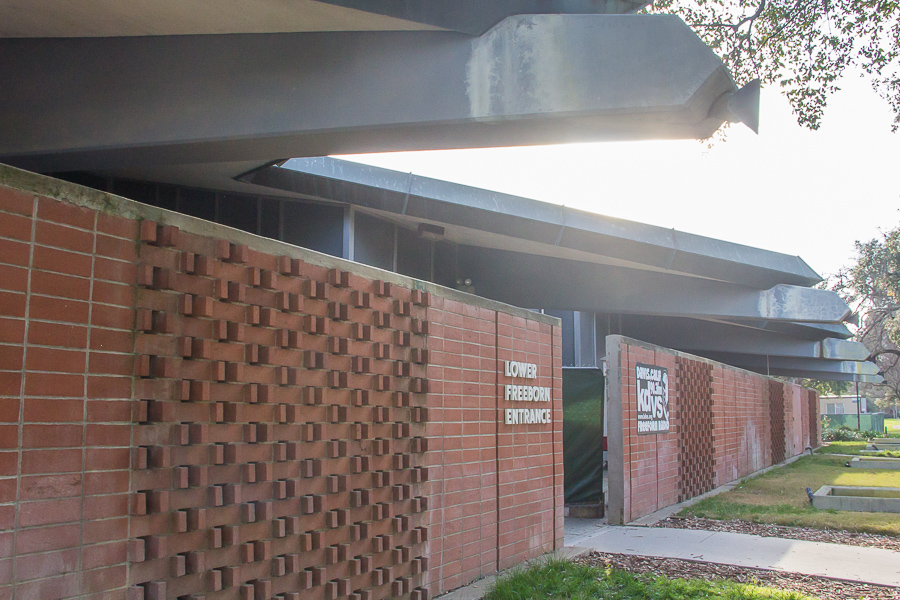
Freeborn Hall, which was closed in fall 2014 due to its need for an extensive seismic retrofit, will soon be renovated and used as a conference and event venue. The project also includes seismic fixes, accessibility improvements, renovations and a slight increase in space.

The new hall’s main room will seat 1,000 people for speaking events, and 500 people with chairs and tables, setting the record in Yolo County as the largest capacity of any indoor space. Smaller conference rooms and a prep kitchen will be added as well, and all bleacher seating will be removed.

Greg Secor, the project manager for the Freeborn renovation, said the project is beginning its programming phase.

We are about to begin programming, which is the first step in the design process, where we will work with representatives of students, faculty and staff to determine the needs of the building,” Secor said via email.

Martin Marquez, a third-year statistics major, questions the validity Freeborn’s renovation into a conference hall and venue, especially considering the lack of lecture room space available on campus.

“I feel like we already have a shortage of lecture hall space, so I don’t understand why we need another huge conference room,” Marquez said. “Especially since we are taking more and more students because of the 2020 Initiative. We need to be able to accommodate [everyone].”

All classes previously held in Freeborn were moved to Activities and Recreation Center 138. However, Secor and his team are examining the possibility of making Freeborn both a conference venue and lecture hall.

The building has always been an assembly and event space,” Secor said via email. “In the last few years before it closed it also shared use as classroom because lecture hall space was in such high demand. During programming, we will examine the feasibility of continuing share use between events and class.”

There are also plans to renovate Lower Freeborn, which is currently being used by student organizations such as KDVS, The California Aggie, Entertainment Council and The Pantry.

“Some renovation will occur in the basement too,” Secor said via email. “No plans have been made yet on whether ASUCD units like the Pantry and KDVS will have to be temporarily relocated. The needs for the maintaining a radio station are complex and we will have to study carefully what is in the best interests of the station during construction.”

Although never having entered Freeborn Hall while it was open, Christina Chu, a first-year biotechnology major, thinks that the the hall’s evolution into a conference venue is a good idea for the campus.

“I think it’d be cool because then we’d have a lot more speakers come and have TedTalk-esque conferences,” Chu said. “Also I think it’s pretty convenient because there is a parking lot around the area.”


Written by: Yvonne Leong — campus@theaggie.org

Insulin increases cardiovascular risk in diabetics

GENESIA TING / AGGIE

UC Davis researchers reveal that insulin is associated with heart failure

At least 1 out of 3 people in the United States will develop type 2 diabetes in their lifetime. Though a significant portion of the population is diabetic and uses supplementary insulin, new findings show that this medication may come with potentially fatal side effects.

Research conducted by Yang Kevin Xiang, UC Davis biochemist and cell biologist, and Dave E. Abel, professor at University of Iowa, have recently unearthed the startling discovery that insulin is associated with cardiovascular problems, such as heart failure.

Insulin, a hormone that controls the level of glucose (sugar) in the blood, is not used properly in those with type 2 diabetes who use the drug to manage their condition. In individuals with type 2 diabetes, the pancreas eventually stops creating insulin, initiating the need for additional dosages.

Once insulin is injected into the body from an external source, it enters the bloodstream and sends a signal to the brain that tells the body to use the sugar in food as an energy source, thereby controlling glucose levels.

Xiang and Abel found that the insulin receptor activates a different receptor called the beta-2 adrenergic receptor that sends a signal to the brain to inhibit the heart’s pumping of blood.

“When insulin levels are high, the interaction between the insulin receptor and the beta-2 receptor is increased, which then leads to the activation of the particular function of the beta receptor that then impairs the ability of the heart to pump,” Abel said.  

The beta-1 receptor is the main receptor traditionally linked to heart disease. However, a previous experiment conducted by Xiang shed light on the possibility that the beta-2 receptor, which is relatively minor, needed to be targeted. In this experiment, Xiang noticed that if he pre-treated cardiac muscle cells with insulin and gave them isoproterenol, a drug that increases cardiac contractility, there was a regression in heart function compared to heart cells that had had no insulin.

“Even if [Xiang] blocked the beta-1 receptor, he could still see the reduction in heart function. This really suggested that there was an interaction with the beta-2 receptor,” Abel said.

    The researchers found that using the beta-blocker carvedilol or the antidepressant paroxetine could manage the treatment of the mice’s heart damage caused by the beta-2 receptor. In the animal model, these drugs were able to block the inhibition of the blood-pumping function and reverse the heart damage.

The experiments’ successes are a matter of great solace and encouragement in the scientific community, for it proposes the idea that these drugs could potentially prevent or treat heart failure associated with type 2 diabetes.

Because insulin manages to spread to other areas of the body, the drug could potentially affect a multitude of other diabetic complications.

“The insulin receptor and the beta-2 adrenergic receptor are attached to each other in several different tissues,” said Toni West, a Ph.D. student who is currently studying in Xiang’s lab. “So it is a possibility that insulin could have effects on other diseases, such as chronic obstructive pulmonary disease in diabetics.”

Still, there remains much research to be done to firmly conclude the link between heart disease and insulin, as well as treatment options that can be made available to the general public.

“We need to learn how to control glucose without damaging cardiac conditions,” Xiang said. “It may be better to use substitutes for insulin, such as GLT [glutamate transporter] drugs, which work in a different way to improve glucose conditions. This requires a lot more experimentation, and, also, changes observed in animals do not always translate very well to humans, so there needs to be human models as well.”
Written by: Harnoor Gill — science@theaggie.org

Humor: UC Davis Bookstore set to replace Whole Foods

CAT TAYLOR / AGGIE

hoPop-up shop finds new location

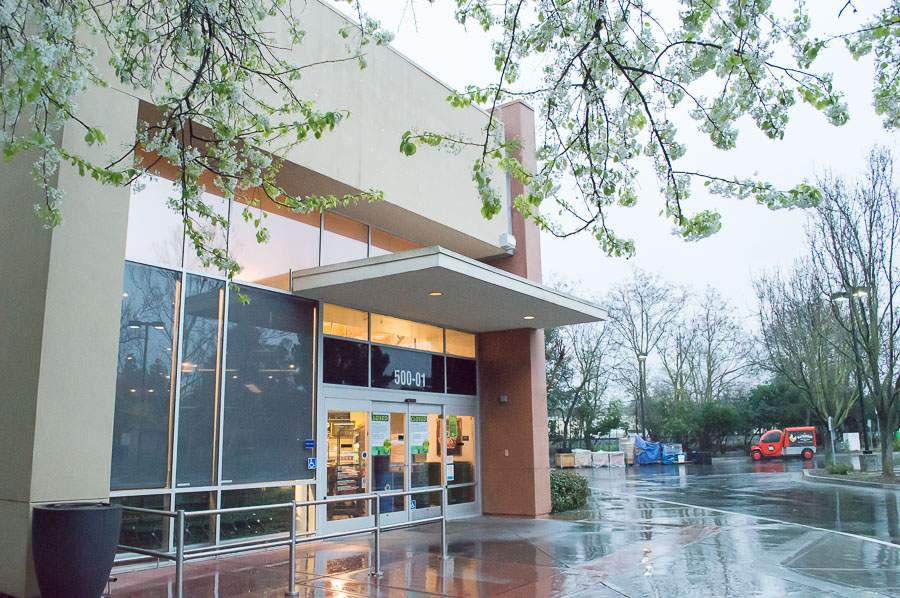
Whole Foods, the popular health food store in Davis, closed its doors on Feb. 12. The store, which opened in October 2012, became a staple of the Davis community by promoting local business and alternative food options. Stocked to the ceiling with copious gluten-free and vegan options, Whole Foods became a popular spot for those with dietary restrictions.

Despite receiving three dollar signs on various platforms all over the internet, indicating the store’s expensive products, Whole Foods was popular for both students and lifetime residents of the city. The departure has left a gaping hole at Davis Commons.

Various businesses looked to pick up the spot. Located in the southernmost part of downtown, the plot of land is seen as a top location for a store on campus. The UC Davis bookstore, however, was the first to lay its claim.

“Honestly, I’m pretty surprised. The bookstore has been in two different places the past six months,” said Art Wall, fourth-year English major. “I figured a Target City would go there.”

After renovations moved the bookstore to the Pavilion for a year, its home was restored to its original location at Memorial Union. However, new construction has left the campus feeling stale, so the school has decided to shift locations once again.

“We hope to have new students going downtown to see what the city has to offer,” said Michael Patterson. “There’s a Habit nearby. And a Gap. Davis has so much. This forces students to get acclimated with local business.”

The bookstore’s constant change of location has left much of the campus frustrated, but it has provided a new option for the Memorial Union to put in a store of its liking that isn’t too helpful to students. A calculated move like that means more revenue for the school while also making the lives of students more difficult.

The change in location also means that the school is taking a spot in downtown where a local business could potentially move in. So while the change means more revenue for the school’s pocketbooks, the happiness of students, who now have to shlep to an inconvenient new location, is greatly at stake.


Written by: Ethan Victor — ejvictor@ucdavis.edu

Interim Chancellor Hexter hosts student town hall meeting, opens up debate surrounding Yiannopoulos’ visit

BRIAN LANDRY / AGGIE

Hexter accommodates questions, concerns from students

The student town hall hosted on Feb. 14 from 12 to 1 p.m. in the Student Community Center provided a public forum and an open dialogue with Interim Chancellor Ralph J. Hexter to discuss student concerns and questions. Hexter was joined by vice chancellors, faculty, administration members — to whom he deferred some of the more specific questions — and students.

“This event is an opportunity for the students to hear from the chancellor, hear our vision, our goal as the institution and how we’re moving forward with support services for our students but also to talk about campus climate concerns and opportunities to hear back from the students about campus climate,” said Rahim Reed, the associate executive vice chancellor of Campus for Community Relations. ”We want to engage in a dialogue, a sharing of information, and continue moving forward together.”

During the town hall, students brought up concerns including student housing, increased advocacy for students with disabilities and sexual assault prevention.

Many questions from students were also focused on the recent Milo Yiannopoulos event cancellation and protest. Hexter said that he was ashamed by the community and student’s protest of Yiannopoulos’ talk.

“I was very disappointed he wasn’t able to speak,” Hexter said. “We don’t have to agree with things, but in preventing a speech from taking place, I personally think what happened was a dark mark on our campus, and I’ve heard that from a lot of people.”

Hexter opened up to the audience about his personal life and his own relationship to the current debate with regard to free speech and sexuality.

“Just so everyone knows, I am a gay man,” Hexter said. ”It has never occurred to me to stop the Westboro Baptist Church from speaking on our campus, even though they are quite homophobic and aggressive. I would never inhibit their ability to come onto campus, but it gives me great pride that we have students who would protest them.”

Hexter repeatedly defended Yiannopoulos’ right to speak on campus and explained how this fit into his educational philosophy.

“It is not the role of the University to prohibit speech, but rather to explain and study why it’s contrary to what we believe,” Hexter said. “The season of Milo’s tour has stressed us all, but I made it very clear that the group who invited Milo had the right to do so. We do not restrain speech in advance, and we accommodate the constitutional right of free speech, even if Milo has said elsewhere and in his published writing things that we find obnoxious and even quite hateful.”

Multiple questions centered around the boundary between free speech and discrimination, President Donald Trump’s administration and the recent executive order restricting immigration. Many students wanted to know what types of speech would be protected by the University, with one student questioning if neo-Nazis would be allowed on campus if they were nonviolent. Students cited how Yiannopoulos had publically outed transgender students, undocumented immigrants and others.

In the packed room, various students were emotionally charged, mentioning how they were hurt by Hexter’s disappointment in the Yiannopoulos protests and allowing Yiannopoulos to come onto campus in the first place.

Hexter continued his educationally-contexted philosophy on free speech and democracy.

“Our university’s Principles of Community aren’t enforced, they’re aspirational — I know that some people will take that as a very weak stance,” Hexter said. “When people say to prevent, I’m going to take the position that we are not here to prevent. I am here to educate through Principles of Community. I would be certainly willing to meet with students.”

Connor Gorman, a physics graduate student and a UC Student Workers union organizer, said that Hexter has, in the past, proved an inability to discuss prevalent student issues on students’ terms, rather than just his own.

“Hexter claimed at this town hall that he’s open to discussing things with students, but when students emailed him multiple times to try to get a meeting about Milo, he didn’t respond,” Gorman said. “However, he was tweeting throughout that whole time, so it’s not like he was disengaged from things, he just didn’t respond to the emails to meet with him. [The administration] are at the front of the room here, in a tower, with a speaking ability and can leave whenever they want. We tried the official channels and [they] unsurprisingly, didn’t work, so here we are.”

In a response to a statement saying that people have been shot, bullied and outed over Yiannopoulos’ words and that self-defense is needed to prevent these incidents, Hexter replied firmly that he was committed to allowing all nonviolent guests on campus under free speech.

“I think the fair thing to say is that we have very different views,” Hexter said, “I only condemned the point at which various protesters acted physically. I think we’ll have to agree to disagree on a fundamental issue.”

During the student’s response to Hexter’s stance, Hexter replied, “We disagree. Thank you,” wrapping up the hourlong town hall.
Written by: Aaron Liss  — campus@theaggie.org

Salsa dancing classes offered in Davis

MORGAN TIEU / AGGIE

Davis United Methodist Church launches series of salsa classes

Salsa dancing, a popular style of dance known around the world for its lively rhythms and complex moves, has a large following in Davis. The Davis Graduate on Russell Boulevard, commonly referred to as ‘The Grad,’ hosts salsa dancing three nights a week.  

For Davis students and residents curious about salsa dancing but not quite ready to dance at The Grad, the Davis United Methodist Church is offering an introduction to the world of salsa dancing. Beginning Sunday, Feb. 26, the church will offer a progressive series of salsa dance classes called “Club Ready Salsa.” The classes meet every Sunday afternoon from 3:30 to 5 p.m. and will run through Apr. 9. The church encourages anyone to attend, and no partner is necessary.

Those who make each of the 7 classes can expect to enter any area salsa dance club comfortably and with a joy for dancing salsa,” a statement on the church website said.

The classes will be led by Pastor Brandon Austin, a salsero (male salsa dancer) with 15 years of experience.

“I’ve been a salsa dancer for 15 years, and salsa teacher for about 12 — largely in the Sacramento area,” Austin said. “I like [salsa dancing] because of the friendships it creates; it is a great way to meet people.”

Austin explained that through teaching salsa classes, he hopes to build an inclusive and affirming community of dance.

“In these challenging political times, I’m hoping we can use events like this to keep us joyful,” Austin said.

Danny Mejach, a third-year communication major and member of the ‘Baile de Fuego’ club at UC Davis, loves social dancing.

“Any type of dancing is a stress reliever and a good workout,” Mejach said. “You meet a lot of people and it’s a really healthy way to distract yourself from school or anything that you are stressed about […] It’s this really cool energy between the people once you get into it.”

Mejach believes that dance lessons are supportive environments for beginning dancers.

“Nobody is going to be judging you, we all started somewhere,” Mejach said. “Just try, give it a chance, hang out with people who will help you improve, and don’t give up if you like it.  Once you get into it you’re going to love it, you’re going to feel free like you’re flying.”

Juan Carrero, a third-year environmental design major, enjoys the cultural aspect of salsa dancing.

“I think it’s the embodiment of Latino culture and dancing.” Carrero said. “It’s probably the most reflective form of dancing. The classes sound interesting.”

The church asks for $5 donations from attendees. Proceeds will be divided evenly between two or three causes which have yet to be determined, but so far include the American Civil Liberties Union and the Southern Poverty Law Center.


Written by: Raul Castellanos Jr — city@theaggie.org