57 F
Davis

Davis, California

Monday, December 22, 2025
Home Blog Page 502

To Boldly Go, Aggie Square updates: draft for strategic plan released, state funding secured for satellite campus

TAYLOR LAPOINT / AGGIE FILE

State allocates $2.8 million for chancellor’s Aggie Square project

The Chancellor’s Office, in conjunction with the Strategic Plan Steering Committee, recently released the draft version of the university’s strategic planning effort for the next decade titled “To Boldly Go.”

The plan consists of five major goals: providing students with an education that addresses “the needs and challenges of a diverse and changing world;” enabling and supporting diverse research; embracing diversity “by supporting a culture that values the contributions and aspirations of all our students, staff and faculty;” supporting the local community and state through “mutually beneficial and impactful partnerships that reflect a firm commitment to our mission while also increasing the visibility and reputation of the university” and creating an environment that “supports the development of an innovative and entrepreneurial culture that extends the benefits of UC Davis’ research activities beyond the boundaries of the university.”

UC Davis students shared their reactions to release of the draft.

“I feel like these goals are already in the hearts of every, or at least most, Aggies, but it’s great that we are taking the time to reassert and reiterate our core values,” said second-year managerial economics major Sarah Wong.

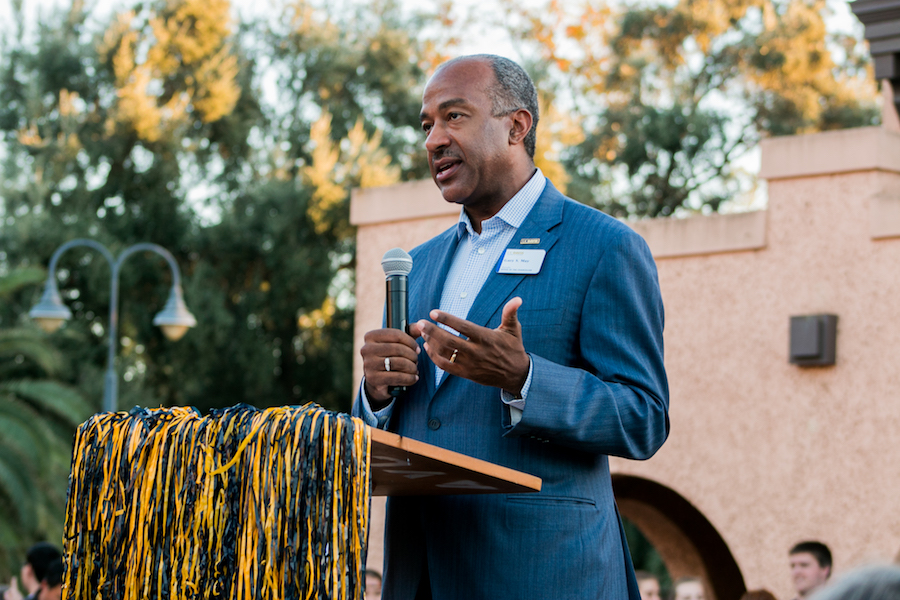
Chancellor Gary May called on students to submit their feedback on the draft to help the university fulfill their mission “in the most creative and bold ways.” Student feedback was gathered through July 9.

According to Dana Topousis, UC Davis’ chief marketing and communications officer, the committee will review all comments and determine what revisions will be made to the strategic plan. The final draft will be completed by the end of July.

In addition to the strategic plan, UC Davis recently secured around $2.8 million in funding for the Aggie Square satellite campus project from Governor Jerry Brown and the state legislature.

The funds will be used for “community engagement and outreach, internal planning staff, external consultants/technical experts and legal experts,” according to an article published by UC Davis University News.

According to Assemblymember Kevin McCarty, the project is a “quadruple win for the State of California, UC Davis, the City of Sacramento and the Stockton Boulevard Corridor.”

The partnership will allow the university to accommodate more students, support small businesses and foster economic development throughout the Sacramento region.

“I am grateful for this commitment of support from our government leaders, especially Gov. Brown, Assemblymember McCarty, and Sen. Pan,” May said in a statement published by the university. “This initial investment will help us take significant steps forward as we refine our vision for Aggie Square in partnership with industry, faculty and the community.”

Written by: Clara Zhao — campus@theaggie.org

Shoot your shot while you’ve still got it

College is short — don’t always prioritize school over once-in-a-lifetime opportunities

The reality of commencement didn’t hit me until mid-Winter Quarter of my final year.

It was around week six, graduation was almost three months away and I, a senior, didn’t have much time left in my undergraduate career — which, to be quite honest, freaked me out.

In that moment, I could almost begin to understand the stance that many parents adopt as they grow older — the whole, “I’m young at heart!” thing they say to their kid when they’ve had one too many glasses of wine or one too many bottles of beer. And, while I’m not old by any means — I’m definitely not my parents’ age — I soon discovered that there are a few singular experiences that I, as a college student, and only I, a college student, could possibly pass off as appropriate.

Like bleaching my hair blonde, which I did a week after this realization struck me — much to the delight of my mom.

Or skipping classes to wait in a line all day for a concert in Sacramento after deciding to attend on a whim only five days before.

Or going out the night of your best friend’s birthday until the wee hours of the morning, despite having classes later that day.

I brought this whole “shoot your shot” thing up to a close friend of mine the other day, while we hung out at a pre-graduation reunion of sorts — he’s also a graduating senior, so I figured he’d understand where I was coming from. And he did, while laughing at the products of my collegiate version of an “existential crisis,” before telling me a story from our freshman year that I found quite poignant:

He and some peers had been running around the Death Star the first week of their first year at Davis, playing a kind of bastardization of “cops and robbers” and “hide-and-seek” — he couldn’t remember which — when suddenly the group of freshman were stopped by an upperclassman. My friend remembers the stranger nostalgically waving vaguely in the direction of campus, as he said wistfully, “Man, savor this while you can… time goes by fast.”

And only now, standing here at the precipice of graduation, can my friend and I truly begin to understand the implication behind those words.

So here’s my advice as an outgoing senior to all incoming freshmen — one piece of advice that I waited too long to learn: take any opportunities that fall into your lap that you want to take. Don’t worry about classes, don’t worry about grades — if it would make you happy, if it’s a once-in-a-lifetime chance, if it requires you to skip classes for a day or two, go for it. Grades are important and necessary — they’re the reason we’re all here — but your GPA makes up only half of all college experiences.

The rest lie in those times when you prioritize your own experiences above grades, whether that’s as drastic as travelling elsewhere, or merely taking the day off to sit in bed and binge-watch a new Netflix show.

Go out on a limb; join clubs (even if for one meeting), or put yourself out there in all things possible — even the non-academic. And if your professors, who are too far removed from the youth, discourage you, please remember this: They were college students once, too. They’ve probably made some questionable decisions themselves.

So when you find yourself at a crossroads, ask yourself, “Which will I remember later?”

Don’t be like me and wait until the final few months to cram every college experience into three months. You have four years — go out there and use them wisely!


Written by: Erin Hamilton — elhamilton@ucdavis.edu

Welcome to The California Aggie

JAMIE CHEN / AGGIE

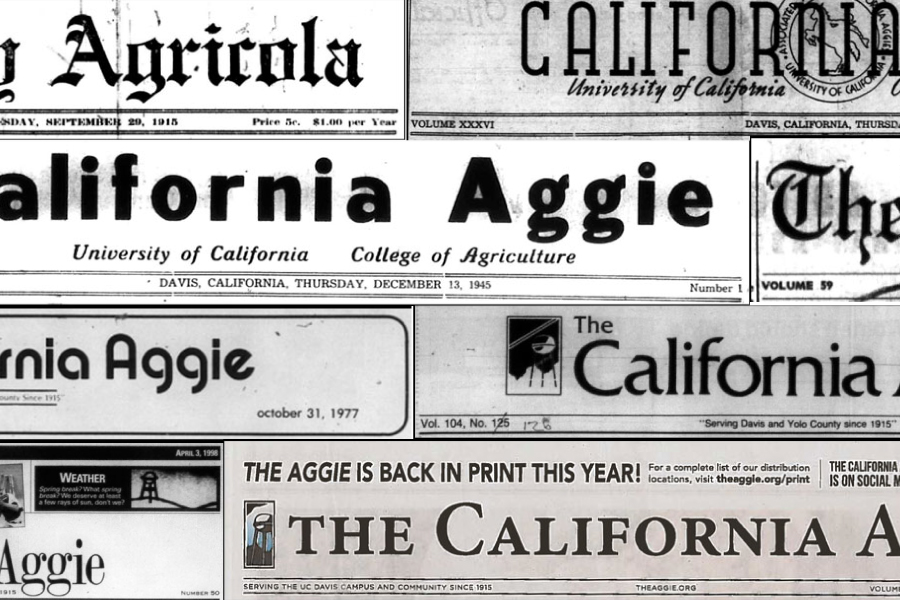
Over the past 103 years, The California Aggie has grown from a small publication run by a handful of students to a weekly broadsheet paper 

When The California Aggie first started printing, the President of the United States was feuding with Germany, tens of thousands of women were marching in protest across the country and the Giants had an awful season after their pitching staff fell apart, finishing dead last in the National League. In other words, it was a time not unlike our own. Of course, the devil’s in the details: in 1915, the President feuding with Germany was Woodrow Wilson, and he engaged with other world leaders via letters; the women were marching for the right to vote and the Giants were in New York, though their rivalry with the Dodgers (then the Brooklyn Robins) was as strong as ever.

Looking through the old pages of The Aggie reveals that while much has changed about the world since the early days of the paper, college students, for better or for worse, have remained about the same. After World War II, as enrollment surged, The Aggie complained about lack of classroom spaces and insufficient facilities to accommodate the growing student population. A 1946 editorial bemoaning the new fashion of women wearing Levi’s and their father’s shirts and stating that “Men like their women feminine and dainty” prompted a feisty letter to the editor in response, proclaiming that “the girls are here at school not to captivate a man, but to get a college education and have a little fun too.” The front page of the Nov. 20, 1979 issue featured an article titled “UCD Prepares for Lengthy Housing Shortage,” prompting current campus editor Hannah Holzer to ask, “Do you think the 1979 Campus Editor knew the ‘lengthy housing shortage’ in Davis was going to be ‘lengthy’ as in four decades or…?”

UC Davis was established as the farm school of UC Berkeley, then the only campus of the University of California, in 1905 and accepted its first class of 40 students in 1909. It’s a testament to the importance of journalism, particularly student journalism, that a campus newspaper was established less than a decade after the first students set foot on campus. UC Davis had a student newspaper before it even had a four-year degree-granting undergraduate program.

Over the past 103 years, The Aggie has grown from a small publication run by a handful of students to a weekly broadsheet paper staffed by nearly 150 writers, editors, photographers, graphic designers, layout artists and business staffers. With no journalism major at UC Davis, The Aggie is the best place for aspiring journalists to hone their craft, but they’re not the only ones who work here. Science majors who want to improve their ability to communicate findings to a general audience, English majors looking to take a crack at a writing style different than the academic essay and UC Davis athletics superfans eager to share their passion with a diverse readership all write for The Aggie. And that’s not to mention the openings for photographers and graphic designers to practice and publish their art or grammar geeks and fastidious fact-checkers to flex their skills with the AP Stylebook.

The Aggie hires new staffers every academic quarter — no experience necessary — and is one of the most impactful (and most fun, since all work and no play makes the office a dull basement) ways to spend your time in college. Keep an eye out for hiring notices posted in the fall, and pick up a copy of The Aggie every Thursday or read online at theaggie.org.

State of the MLB: All-Star Break 2018

Red Sox, Yankees, Astros dominate, NL stays competitive at season’s halfway point

The doldrums of summer are upon us once again; that period of the sporting calendar where the days are long, the temperature is high and baseball reigns supreme. The Stanley Cup and the Larry O’Brien trophy have both found their homes for the offseason. Football players across the country are still gearing up for Fall. Wimbledon is over. No more World Cup (but I guess the MLS is still going?). Whatever your fancy, this is the part of the year that every sports fan either loves or despises.

Now that the MLB has de facto taken center stage of the sports landscape, your Aggie sports desk has been hard at work to give you all you need to know about the first half of what has been a rather intriguing regular season in the MLB. While the league’s best are busy battling it out at the all-star game in the nation’s capital, let’s break it down division-by-division to get you caught up on the story so far.

American League East

This division has been dominated by the big markets of Boston and New York. The Red Sox and the Yankees lead the east by double digit games and feature two of the most explosive offenses in baseball. At the break, Boston leads the majors in hits, runs scored, and team batting average. It’s also worth mentioning that the club is second in home run hitting, too. The only team that has hit more? The Yankees, with 160. This ability to hit homers probably explains why New York is third in runs scored, despite ranking thirteenth in total hits.

The long ball has kept the Yankees firing on offense. Coming off a sensational rookie campaign, right fielder Aaron Judge has hit 25 home runs through the 93 games he’s played this season, which is tied for third most in the majors. Close behind Judge is teammate and fellow outfielder Giancarlo Stanton, who, after struggling mightily early in the year, has gone yard 23 times.

For the Red Sox, outfielders J.D. Martinez and Mookie Betts pull most of the weight at the plate. Martinez has terrorized opposing pitchers this year. Usually batting in as a designated hitter, the veteran has collected a major league best 80 RBIs, is tied for first in home runs with 29 and has the third-highest batting average in the MLB. Not to be outdone, Betts leads the majors with an astounding .359 batting average and has hit 23 bombs of his own.

Both teams have been solid on the defensive side as well. The Yankees and the Red Sox each sport a team ERA that ranks among the top ten in the majors. Likewise, each team features a genuine ace in its starting rotation. Through 20 starts, New York’s Luis Severino has dazzled in his fourth season, picking up 14 wins alongside a 2.31 ERA. In Boston, lefty Chris Sale has been the pitcher to watch. Sale ranks third among qualified pitchers with a 2.23 ERA and has racked up a major league-leading 188 strikeouts.

The Yankees are currently 4.5 games behind their rivals from Boston, but have won five of the nine meetings between the teams this season. With the two set to play each other 10 more times over the final two months of the season, these late matchups will likely have an enormous impact on the AL playoff picture.

Outside of the two juggernauts, the east has been rather unimpressive. Tampa Bay has had a decent campaign so far and will possibly be fighting for wild card spot as the season rolls on. Catcher Wilson Ramos and starting pitcher Blake Snell have each put together all-star worthy first halfs to help lead the Rays to a 49-47 record –– still a whole 18 games out of first place.

A lackluster Blue Jays squad has the team nine games under .500, while the Orioles appear broken beyond repair. Camden Yards has been looking like a ghost town and it will likely look even emptier once the Orioles ship all-star Manny Machado out of town before the trade deadline. Even moving the gold glover to shortstop can’t cover up the fact that the Orioles have been flat-out awful.

American League Central

The AL Central is likely the weakest division in baseball right now. At nine over, the Indians have managed to build a comfortable lead without playing consistently good ball. Even with pitching standouts Trevor Bauer and Corey Kluber in the rotation, Cleveland’s defensive numbers are rather pedestrian. For example: Bauer has the league’s fourth best ERA, yet has an 8-6 record through 20 starts. The Cleveland bullpen and late game pitching have been shaky, causing the Indians to struggle in close ball games.

Offensively, the Indians have been above-average –– thanks to all-star infielders Jose Ramirez and Francisco Lindor. Ramirez is having a huge year: he’s tied with Boston’s Martinez with 29 home runs, while maintaining an above .300 batting average. Lindor can also rake, as he’s tied for third in the majors with 25 homers this year. Not a surprise, then, that Cleveland is third in home runs and fourth in runs scored. The Tribe will need this success at the plate to continue if it wants to lock in its spot at the top of the division come fall.

Each of the remaining four teams in the central are well below .500. At 41-57, Detroit has sputtered without superstar hitter Miguel Cabrera, who has recently been transferred to the 60-day disabled list. As for the White Sox and the Royals, this season has been tough from the start. Both teams have been a nightmare defensively, so it’s no wonder that Chicago and Kansas City have the MLB’s two worst team ERAs. Couple that with an inability to score runs –– the White Sox rank 25th and the Royals rank dead last  –– and you’re in for a nightmare season. 

Winning nine of its last 11 games before the break, however, Minnesota could prove to be an intriguing team to watch in the second half. It will be extremely difficult for the Twins to grab a wild card spot in the AL, but if they can take care of business in a lousy division, it might prove enough to get them into the postseason.

American League West

The AL West is surprisingly one of the strongest divisions in baseball. At 64-35, the defending world champion Houston Astros are unsurprisingly leading the division behind a daunting pitching staff. With a MLB-leading 2.94 team ERA and over 1,000 strikeouts through 99 games, the Astros have shut down virtually every opponent so far. Three of the team’s five starters possess a sub-.300 ERA, with veteran right-hander Justin Verlander leading the pack. Even when fellow Cy Young winner and teammate Dallas Kuechel has struggled, other starters like Gerrit Cole and Charlie Morton have picked up the slack.

Of course, Houston’s pitching has benefitted from more than enough run support as well. The Astros have scored the second-most runs and have the third-highest batting average in the majors –– and it is no secret that this offense runs through its diminutive second baseman, José Altuve. While his home run and RBI numbers are down, the reigning AL MVP leads the majors in hits and is second in batting average, meaning that Altuve gets on base often and is the spark-plug for Houston’s already impressive lineup.

The Seattle Mariners sit just five games behind Houston, and have continued to impress despite a lineup that has faced its share of injuries and suspensions. All-stars Edwin Diaz and Jean Segura have had an unexpectedly solid first half, while pitcher James Paxton has anchored Seattle’s rotation as former Cy Young winner Felix Hernandez’s numbers have declined. But the team has lost eight of its last 11 games entering the break and has allowed teams the close the gap in the wild card race.

The team trailing just three games behind Seattle is the Oakland Athletics. At 13 over .500, the A’s success this season has been unanticipated my most analysts. On June 15th of this year, Oakland was 34-36. Since then, the A’s have gone 21-6. A team that finished with just 75 wins last year is now suddenly one of the hottest teams in baseball.

The A’s are doing all this with a starting rotation that has changed more than that of any other team, and a lineup that features no hitters batting over .300. What the A’s do well? Hit a ton of timely home runs and score in late innings. All-star second baseman Jed Lowrie leads the A’s offense, while all-star closer Blake Treinen holds down the late-game defense with a 0.94 ERA and 24 saves. But while the A’s are playing quality baseball right now, it will be interesting to see if the young team can keep up in the second half, especially in such a strong division –– where Oakland is just 15-26 against AL west opponents.

A final AL West team worth mentioning is Los Angeles Angels, who at the break are just one over .500. The Angels, despite featuring a lineup with superstar hitters Mike Trout and Albert Pujols, have not impressed offensively. But a lot of these struggles can be credited to the fact that Los Angeles currently has one of the longest disabled lists in baseball. Perhaps if a healthy Angels squad can return in the second half, this team could make a significant run.

National League East

The NL East is very much a division turned on its head, as the Atlanta Braves and the Philadelphia Phillies are virtually tied for first place. Both teams finished last season well under .500, but have been catapulted to the top of the East via some outstanding first half performances.

Fourth year pitcher Aaron Nola has been the ace that Philadelphia has been searching for. Nola’s 2.30 ERA and 0.98 WHIP are both sixth best in the majors. And if we want to get really into the weeds: Nola’s 5.9 wins above replacement rating is the second highest among all active pitchers, meaning that the value he brings to his ballclub is incredibly high. The breakout star at the plate for Philadelphia has been 25-year old, Sacramento native Rhys Hoskins, who leads the Phillies in RBI’s and OPS through the first half.

For Atlanta, success has been powered by the bats of all-stars Freddie Freeman and Nick Markakis –– who have each collected 61 RBIs thus far. And with a pitching staff led by fifth-year righty Mike Foltynewicz, the Braves have found a nice balance in their game –– a balance that gives Atlanta a genuine shot at a playoff berth.

Lurking in third is the Nationals, who have stumbled their way to a .500 record at the break after going 11-22 since June 9. Former NL MVP Bryce Harper leads his team in home runs and RBIs, but is hitting a disappointing .214 at the plate. But while Harper and the offense have been in somewhat of a slump, reigning Cy Young winner Max Scherzer has delivered at his starting pitcher role. In 20 starts, Scherzer has collected 12 wins, struck out 182 batters and posted a 2.41 ERA. The talent is definitely there for the Nationals, but it will take a much improved second half performance to sniff the postseason.

The two teams at the bottom of the division –– the Marlins and the Mets –– have been playing awful baseball, but remain interesting as the July 31 trade deadline looms. A prime example of a player many teams could be interested in acquiring: New York’s Jacob DeGrom. Through 19 starts, the dominant right-hander has posted a major league best 1.68 ERA. If the Mets fail to lock him up with a long-term deal, he may be on the market by the end of the month.

National League Central

On paper it would seem as if the Cubs should be in control of this division, as they clearly have the most talented roster. For starters, southpaw pitcher Jon Lester has lived up to expectations on the mound, collecting 12 wins in 19 starts while sporting a 2.58 ERA. All-star second baseman Javier Baez has had a nice season at the plate, too. His 72 RBIs are the second most in the majors.

But as it stands, Chicago is just 2.5 games up on the second place Brewers. The club has the potential to play much better in the second half, but so far injuries and inconsistent play have plagued the Cubs this season. For example, star third baseman Kris Bryant and pitching ace Yu Darvish have both had a case of the injury bug, possibly explaining why the Cubs have not prevailed in more games.

Unless the Cubs get hot after the break, expect this division to be extremely competitive. Milwaukee has played some quality baseball this season, but has entered the all-star break on a six-game losing streak. Brewers first baseman Jesus Aguilar has been a revelation so far, as he leads his team in batting average, home runs and RBIs. But the question remains whether or not the inexperienced Brewers will be able to sustain their winning ways as the season wears on.

With 48 wins apiece, Saint Louis and Pittsburgh remain close behind. The Cardinals have an experienced roster –– with the likes of catcher Yadier Molina and third baseman Matt Carpenter to lead the way –– but will be challenged in the second half after long-time manager Mike Matheny was fired just before the break. As for the Pirates, the team certainly has had some bad stretches. But Pittsburgh enters the break riding a six-game win streak that it hopes to continue as the season picks up again. This division will be one to keep an eye on.

National League West

As of now, this is the most competitive division in baseball. Each of the division’s top four teams are within four games of each other, with the Los Angeles Dodgers leading by a half game over the second place Diamondbacks.

The defending National League champs have done just enough to overcome several injuries everywhere on its roster. Despite a plethora of pitching adjustments, the Dodgers have the best team ERA in the NL. And with young star Corey Seager out with a long term injury, Los Angeles has also enjoyed some surprise performances on offense. Veteran outfielder Matt Kemp leads the team in RBIs and first baseman Max Muncy has hit a team-leading 22 home runs. But if the Dodgers really want to repeat last season’s success, they will need to rely on the continued brilliance of closer Kenley Jansen and ace Clayton Kershaw.

For Arizona, quality pitching has allowed this team to hover around first place all season. Starters Zack Greinke and Patrick Corbin have impressed, while closer Brad Boxberger has held it down in late innings with his 24 saves. Outside of all-star first baseman Paul Goldschmidt, the D-Back offense has been relatively quiet. Arizona will need to produce more consistently if it wants to close in on a second consecutive postseason berth.

Winning eight of its last ten games before the break, Colorado has been slowly improving throughout the season and now threatens to upstage the Dodgers and the D-Backs hopes of winning the division. All-star third baseman Nolan Arenado has provided the fireworks offensively for this ballclub, batting .312 with 23 homers and 68 RBIs.

The top three are finally flanked by San Francisco, a team that is by no means an offensive juggernaut (the Giants are 23rd in runs scored), but has stayed afloat thanks to a solid defense headlined by pitcher Madison Bumgarner and all-star shortstop Brandon Crawford. The Giants have done well to get to their 50-48 record, but this club could be in a much better position. San Francisco’s 19 blown saves are tied with Minnesota for most in the majors. If the Giants can figure out how to finish games, they could make a real push to playoff contention.


Written by: Dominic Faria — sports@theaggie.org

2018 World Cup Final: France vs. Croatia

REUTERS

France are World Cup champions for second time

By BOBBY JOHN — friend@theaggie.org

After 169 goals were scored in the 2018 World Cup, France was crowned as world champions for the second time in 20 years on Sunday after beating Croatia 4-2 in the World Cup Final in Moscow. With low scoring matches being the norm in World Cup finals, this finale fit in well with a tournament that took unexpected twists and turns.

“It is a dream since I was a young boy,” France midfielder Paul Pogba told reporters after the victory.

Croatia started the game strong, controlling the midfield and the majority of possession. With the highest number of attacks in the tournament at 352, it is no wonder Croatia, underdogs of the tournament led by tactical and skilled midfielder Luka Modrić, were able to slide past tough opponents.

Croatia forward Ivan Perišić created multiple scoring opportunities on the left wing, but the team was unable to convert.

The first French goal came as a mistake from an own goal in the 18th minute of play, as Croatian striker Mario Mandžukić attempted to clear French forward Antoine Griezmann’s free kick — the first time any player has ever scored an own goal in a World Cup final.

Perišić struck from the top of the box to equalize in the 28th minute 1-1.


With this goal, Perišić set the expectation for a tight match. Until he handballed while defending a France corner kick. There was no call after the ball went out of bounds, but multiple French players slapped their palms with the back of their hands – making their case for a handball. Néstor Pitana, the referee, decided to use the Video Assistant Referee system.

France was awarded a penalty kick and Griezmann easily converted, giving France the lead 2-1 at the 88 minute mark.

This was the first World Cup in which VAR was used, and it proved controversial, especially in this final matchup. The decision to award France a PK irked some commentators, who believed it was the wrong decision.

After play continued in the second half, a group of four women rushed the field near the 52 minute mark, interrupting play. The Russian band Pussy Riot claimed responsibility on social media.

The four women were dressed as Russian police officers and news outlets later reported they received 15 days of administrative arrest and a three year sporting event ban.

When French midfielder Paul Pogba struck an uncontested ball from just outside the box past Croatia goalkeeper Danijel Subašić in the 59th minute, France essentially sealed the deal, making it 3-1. This swung what was a relatively even tempered exchange into a clear advantage for Les Bleus.

Then the 19-year-old French forward Kylian Mbappé proved why Les Blues are such a dangerous team — their attack is too quick for opponents. Mbappé struck from outside the box to extend the lead 4-1, the youngest player to score in a World Cup final since Pelé in 1958.


Croatia were not able to recover after this.

Croatia only found the back of the net after France goalkeeper Hugo Lloris carelessly cleared the ball while Mandžukić rushed Lloris. Mandžukić was able to anticipate the direction of the ball and deflected it to score, helping close the gap at 4-2 in the 69th minute.


 Overall, the Juventus striker can at least claim he corrected his mistake – and after all, it was a Mandžukić goal in extra time against England that lifted Croatia to the final. But the question looms, if Croatia took the lead 1-0, would the momentum have been with Modrić and Croatia?

After that, it was smooth sailing for Les Bleus – Luka Modrić wasn’t able to mount a successful attack for Croatia. The team was running out of steam, in every knockout stage Croatia went to extra time. They were obviously deflated by the two goal lead France had.

Hugo Lloris maintained four clean sheets for France throughout the tournament, conceding goals in only three matches against Australia, Argentina and the two goals Croatia scored in the final.  

Some consolation came for Croatia as Luka Modrić was awarded the adidas Golden Ball award. His stellar and consistent performance throughout the tournament showed the world that he truly deserved this award.

This victory for the French national team follows some recent bittersweet international success.

Les Bleus reached the final in the 2016 UEFA Championships, but suffered a stinging loss to a Portugal goal in extra time 1-0. This helped serve as a reminder for Paul Pogba, who believed they were complacent going into the match.

“We thought the match was already won and I think that was our mistake,” Pogba told reporters of the 2016 finals loss on July 12 .

Pogba and France were confident going into the World Cup final, and prepared with a different mentality going against Croatia.

“We are conscious of the situation, we do not want to make the same mistakes like two years ago. We want to work for it, to give everything we have to take this Cup home,” Pogba told reporters.

They did exactly that. Pogba was a huge part of their success – nine tackles and 21 recovered balls helped the midfield mount a fast and aggressive French attack throughout this World Cup.

The defensive midfielder N’golo Kanté also played a big role in fortifying the French midfield. All told, Kanté had 61 ball recoveries in the tournament.

Both squads rosters’ were stacked with experienced and talented player, included nine players coming from three powerhouse Primera División teams: Barcelona, Real Madrid and Atlético Madrid. Although not all played in the final, it speaks to how competitive international soccer truly is.

The midfield featured Croatia’s Luka Modrić and Mateo Kovacic, France’s Raphael Varane, all three play for Real Madrid.

Also in the midfield was Croatia’s Ivan Rakitić, France’s Samuel Umititi and Ousmane Dembélé, all three play for Barcelona.

Croatian defender Sime Vrasljko, French forward Antoine Griezmann and French defender Lucas Hernández, all hail from Atlético Madrid.

Fans of the Men’s U.S. national team will unfortunately have to wait until 2022 for the World Cup in Qatar.  

The Women’s U.S. national team, however, is on a roll. Since 1991, they have come out as World Cup champions three times.

With the USMNT’s disappointing performances in the past, including failing to qualify for this World Cup, the USWNT may be the only hope for the foreseeable future.


Written by: Bobby John — friend@theaggie.org

Fresh meat

CAITLYN SAMPLEY / AGGIE

The Editorial Board shares most embarrassing freshman mistakes

Emily Stack, Editor-in-Chief

The Aggie’s office in Lower Freeborn is a maximum-security facility; the big doors are always locked from the inside, and the main entrance has a code to open the door and a second alarm code, both of which only the managers know. No one gets into the office who shouldn’t — no one, that is, except hapless freshmen who forget things in the office and need to get them after everyone else has locked up and left for the day. I trotted up to Student Services and asked if they could please get facilities or maintenance to open the office, whereupon they helpfully gave me the door key that bypasses the code. What they didn’t give me was the code to disable the alarm, or a warning that there even was one. I opened the office and promptly set off the alarm — which notifies the UC Davis Police Department — and had to call the editor-in-chief in a panic, remind him who I was, have him call off the cops, and shamefacedly apologize for my rookie mistake. (Luckily, we weren’t charged the $100 fee for false alarm calls.) It’s been three years and I’m now in charge of monitoring the alarm, but I’m still a little skittish around it.


Olivia Rockeman, Managing Editor

As a San Diego native, my experience with “weather” before moving to Davis was a low of 65 and a high of 80. I arrived to my freshman dorm with the classic Southern California wardrobe: 10 bikinis, flip flops, workout clothes and one sweatshirt for those frigid 62-degree winter days.

That November, I came down with the freshman plague and experienced Davis’ torrential downpour for the first time all in one week. I was so sick with the flu that I shivered in my bed, even under a pile of blankets. My neighbor, Alessandra, noticed that my lips were turning a dangerous shade of blue. She came into my room and used the “hot” setting on my hair-dryer to blow warm air into the room to keep me from getting too cold. Later that week when I was feeling better, my roommate and I took a Unitrans bus to Target and purchased a space heater. I still use it to this day.

Moral of the story — come prepared. Davis’ weather will surprise you.


Hannah Holzer, Campus Editor

I often forget that I live in the city of Davis. Both years I’ve been at UC Davis, I’ve either lived on campus or very close to campus, so I tend to ignore the actual residential parts of the city. But one weekend, I was hired to dog sit for close family friends. I ventured onto Unitrans thinking (incorrectly) that I could figure out public transportation (I was wrong) and got off a few stops too early. Trapped in the suburbs of Davis, I got lost in an apartment complex and ended up walking over a mile to what I thought was the correct neighborhood (wrong again). I attempted to unlock the door to what appeared to be the right house (it wasn’t) until I realized a decorative stone placed next to the front door engraved with the last name of the family who lived there. This was not the right family, nor was it the right house nor was it even the right street. Then I backed away slowly, rerouted Google maps, walked another quarter of a mile and found the right house. Just when I thought I’d successfully made it, the right key to the right house failed to work. A neighbor had to come and help me and we struggled for about 15 minutes to open the door. As a last-ditch effort, I tried the key for the dozenth time and the door magically opened. My advice: maybe just don’t venture away from your dorm area.


Kaelyn Tuermer-Lee, City Editor

My most embarrassing freshman moment was actually from high school. Being a nerdy 14-year-old, I not only had a large backpack half the size of me, I also had even more binders that somehow wouldn’t fit. Plus a lunch box — that’s right, my mom packed me lunch every day of high school. In addition, I carried a travel mug filled with hot chocolate, of course, as those were my pre-caffeinated days. As I rushed to take the stairs to my next class during the five minute passing period, one of the binders I was carrying slipped and hit my foot, causing a domino effect. Naturally, I tripped over said binder, and all of the sudden I was that embarrassing freshman who somehow managed to fall up the stairs. Why I thought I needed 1.5-inch binders in the first place for high school classes still puzzles me, and I still cringe when I think back to that day.


Taryn DeOilers, Opinion Editor

I initially came to Davis as an environmental policy analysis and planning major. Before coming to my senses and realizing that I am not a scientist by any stretch of the imagination, I promptly switched into comparative literature — but not before I slogged my way through such STEM classics as chemistry, calculus and biology.

It was Winter Quarter, and I wasn’t doing too hot in biology. I consistently scored below average on all my tests and labs, and I absolutely hated the material. Yes, meiosis is fascinating, but to actually know the minute details? No, I’m okay. Let’s keep the mystery alive. But I knew my GPA was on the line, so I decided I was going to absolutely crush the final. I studied almost non-stop for a week in advance, walked into that classroom the day of the final feeling like a superstar and walked out feeling — well, not quite like a superstar, but maybe an above-average-star. Take that, science! Not so hard after all, huh? Maybe I could even be the next Elon Musk or whatever.

Yeah, no. I got a low D even with the curve. Somehow I still passed the class, but that was my wake-up call that perhaps science wasn’t in my future — and that’s okay. So, freshmen out there: There are a lot of weird, pointless “competitions” between the majors. Material engineers think they’re better than math majors, math majors think they’re better than English majors and everyone thinks they’re better than comparative literature majors. Don’t listen to any of that nonsense. Find what you’re truly interested in and go wild —  because there’s nothing better than actually wanting to be in a classroom.


Liz Jacobson, Arts and Culture Editor

Unlike my colleagues, I unfortunately don’t have a wild, crazy story to share. However, I will offer my most sage piece of advice: do not wear your Aggie card around your neck on a lanyard. Don’t do it. I know it’s so tempting. You think, it’s just so convenient! But DO NOT DO IT. I am only so passionate about this cringe-worthy freshman faux-pas because I too, wore my Aggie card around my neck for all of my first year. I understand why we do it. Freshman use their Aggie cards for everything: to get into their dorms, to procrastinate-workout during their first round of midterms, to eat at the Dining Commons, or use up all of their Aggie cash at the Segundo Market within the first three weeks of the quarter.

So if it’s so convenient, why do I advise against the lanyard? It’s a dead giveaway that you’re a freshman and that only increases your chances of being the victim of a group of upperclassmen yelling “FRESHMEN” out of their car window on Russell Boulevard, which is just downright annoying. So, my advice is to just keep it in the small pocket of your backpack.


Olivia Luchini, Features Editor

I believe that my most embarrassing freshman moment probably stemmed from the fact that I became lactose intolerant when I turned 18 because my body decided that I should have an impossible time eating at the dining commons. Basically, I started getting dairy sensitive late in high school, but I’m nearly certain that I now have a dairy allergy. Predictably, a lot of the cuisine offered at dining commons is very dairy-centric. You’ve got that pizza, that cheesy pasta, some frosting on pastries in the morning, and so on. For someone who was used to eating dairy for her entire life, I was like, “What’s the worst that can happen?” Munch. Munch. Munch.

The worst that can happen is communal bathrooms. So, a cute little detail that I should probably include is that dairy makes me yack, and while other saucy teens might be yacking due to some cool shenanigans, I was doing it because I just LOVE garlic bread. I had two ideas about what my floormates thought. First of all, they might have thought that I was gravely ill. This would add up because every time I threw up, one of them would come running into the bathroom offering to help. This was embarrassing because I quite literally did this all to myself. The second thing that they might have thought was that I was a raging alcoholic because this would always happen at night after I swiped in for some late night pizza. This would also make sense because sometimes I’d hear little feet walk in and then leave in a hurry, with no help offered and sort of “judgy” sounding footsteps.

Basically, listen to your body and give it nutrients that it actually wants. Don’t eat cheese if you’re lactose intolerant, no matter how Italian you are. Oh, and eat a veggie when you get the chance.


Harnoor Gill, Science Editor

I like to repress all memories of freshman year of college when I can get away with it. When I am forced to reflect upon that year, as I am at the moment, my face assumes a very indecent, sour expression. Through the powerful psychological forces of repression, I have succeeded in burying the cringe-worthy memories so deep within my mind that it is almost impossible to recall. Still, one memory manages to penetrate my cranial surfaces.

One day, I was playing table tennis with a friend at Cuarto at a late hour at night. Nobody seemed to be around, so we retreated into the goofiest of states and became very “loopy,” as my friend would say. I started singing and doing the god-awful “stanky leg” dance that was so popular a few years ago. Without warning, a few guys walk in and catch me with my back turned to them, doing the dance with vigor and passion. They were quite amused and my friend nearly peed herself laughing. As for me, I was considering electrically shocking my brain to erase the humiliating memory. Anyway, I can now laugh at the memory and just remind myself not to take myself too seriously.


Dominic Faria, Sports Editor

My first year here in Davis got off to a hot start when I forgot to attend one of my classes on the very first day of instruction. Yes, despite setting my class schedule months in advance and moving into the dorms several days before the academic term actually began, I still somehow managed to forget entirely that I had TWO classes on my first ever day of being a college student. I only realized that I had failed to show up to the class later that evening while reviewing my schedule, ironically to make sure I was prepared for my classes taking place the following day.

A panic attack ensued, while images of me being kicked out of the university flashed before my eyes. As I fought off the thought of packing up everything I had just moved into my dorm room, I ultimately gathered enough courage to email the professor of whose class I had missed. Should I say I was sick? Beg for forgiveness? Just tell the truth? Eventually I decided to be somewhat candid. I explained the reason for my absence; I had mistakenly read the incorrect time on Schedule Builder. After apologizing profusely, I sent the message and waited in agony for over an hour until the professor replied. She told me that it was no problem, and just come prepared for the next class. Crisis averted. I continued the quarter as if nothing happened.

And that’s how I missed my freshman seminar on my first day of college. If I was able to bounce back from that, I think all of our newest Aggies can bounce back from anything.


Written by: The Editorial Board

New hires at UC Davis

TREVOR GOODMAN / AGGIE

Key appointments ready to serve UC Davis in Aggie Square, law, student affairs

UC Davis has recently hired individuals to fill key leadership roles with the Aggie Square initiative, the Office of Campus Counsel and in the Student Affairs office.

UC Davis Chancellor Gary May appointed Robert Segar as the Aggie Square planning director, effective June 7. In addition to his new role, Segar will continue to serve as associate vice chancellor of campus stewardship. The Aggie Square project will be a technology innovation hub to showcase and implement the scientific and engineering work at UC Davis into market initiatives in Sacramento and the surrounding cities.

According to a UC Davis News article, Segar’s role will primarily consist of guiding the people, programs and activities at Aggie Square as it develops. In the article, May offered his support and reasoning behind the selection.

“Bob has played a central role in the growth and transformation of the UC Davis campus over the last 25 years, and I can’t think of anyone more qualified to live and breathe what Aggie Square should become,” May said. “He understands the complexities involved in such a major project, and he has a demonstrated ability to work with a variety of communities to identify and achieve shared goals.”
Segar’s past achievements have included planning the construction projects known as the Interstate 80 “front door” — comprised of the Buehler Alumni Center, the Mondavi Center for the Performing Arts, the Manetti Shrem Museum and other surrounding buildings. Segar has also worked on public landscape projects.

In an interview with UC Davis News, Segar spoke of his commitment to the Aggie Square project

“I have always viewed campus planning as an opportunity to connect people to their place and to each other, and I am thrilled the chancellor asked me to dive into this major initiative,” Segar said.

Michael Sweeney, who was promoted on April 1 to the role of chief campus counsel from the position of senior campus counsel, has worked at the UC Davis Office of Campus Counsel for 11 years. Sweeney spoke about his legal work and why he originally came to UC Davis.

“I had been a civil rights attorney for about 10 plus years,” Sweeney said. “I loved it. […But] I wanted to work at the forefront of public policy, taking my skills as civil right litigator and working for an entity where I feel like I can make that impact. I was working for the California Attorney General’s office at the time, which I loved, and I thought there was only one public entity that was better than the California Attorney General’s office and that is the University of California. […] I have been here for 11 years and it has been great.”

Sweeney spoke proudly of two major accomplishment form this year. His work with the Center for Advocacy, Resources and Education on “privacy issues around domestic violence” resulted in the implementation of a statewide law to further the protection of victims of domestic violence at the UC, California State Universities and community colleges.

For the second project, Sweeney worked with the AB540 and Undocumented Student Center to help high school students who dropped out because they needed to care for their families. Under the previous law, the student would not be eligible for AB540 benefits if they dropped out of high school. Sweeney worked to enact a state law that allowed a way for students to become eligible for AB540 at the CSU and UC university systems.

“I wanted to make sure that there was a pathway for our undocumented students so that they can return to community college, succeed and become AB540 eligible for CSU and UC system,” Sweeney said. “Working with the director of the AB540 center and our [government] relations folks, we came up with a legislative proposal to expand AB540 to support California students who return to college, succeed and make them eligible at CSU and UC.”

The AB540 associated law passed the California legislature and became effective on January 1.

Sweeney, a graduate of UC Berkeley and the University of San Francisco School of Law, said what makes UC Davis students special is its kindness.

“I’ve seen on numerous occasions where I am entering a building, everybody is holding the door open,” Sweeney said. “No one wants to go first. Everyone wants to ensure that the other person goes in first. I think there are a lot of kindness and courtesy and caring about everybody else. I think that is the Aggie way.”

Emily Galindo was appointed as the interim vice chancellor for Student Affairs on May 1. Galindo’s started her 34-year career at UC Davis as a temporary clerical employee in 1984, when she then moved to an assignment at what was previously known as the storehouse, where office supplies were stored. In 1992, Galindo became the Student Housing assistant director, where she worked in human resources.

While working full-time at UC Davis, Galindo earned her undergraduate degree in organizational behavior at the University of San Francisco and her Masters in Business Administration from Golden Gate University.

In 2007, Galindo assumed the role of housing director after the previous director retired. After a selection process was complete, Galindo was named executive direct of housing in May of 2008.

“What started as just a job that I needed to take care of myself and my one-year old has turned into a quite a career,” Galindo said.

Galindo discussed what she would like to bring to her new position.

“I think that I have an unique perspective of how the university works,” Galindo said. “My career journey has just spanned over more than three decades. I have also had different roles within the campus and interacted in different ways […] under four different chancellors. Those are the kind of things that give you some perspective that I think is helpful as we provide leadership. I think that I feel strongly that student affairs professionals care about students and their success. That is at the heart of what we do.”

Galindo also discussed her priorities for the coming year with the Division of Student Affairs.

“I want for the division to continue to do the things that we know have served us well,” Galindo said. “I think that we need to look for ways to enhance our services. We will always look to our students for input, because they are the ones that are living the college experience. And I think that input is so important.”


Written by: George Liao — campus@theaggie.org

In Photos: Favorite Davis Spots

Aggie photographers share their favorite places in and around Davis

Rock Climbing along Putah Creek has to be one of my favorite parts of going to UC Davis. (TREVOR GOODMAN)

The arboretum is a great place to escape from the school setting while still being at school. (ALEXA FONTANILLA)

Head to the greenhouses behind Kleiber and, if you’re lucky, Ernesto will tell you one of his classic plant puns. (ANH-TRAM BUI)

Just a five-minute bike ride away from the dorms is the Student Farm, where student interns and volunteers gain in-field experience working with sustainable agriculture and food systems. (DIANA LI)

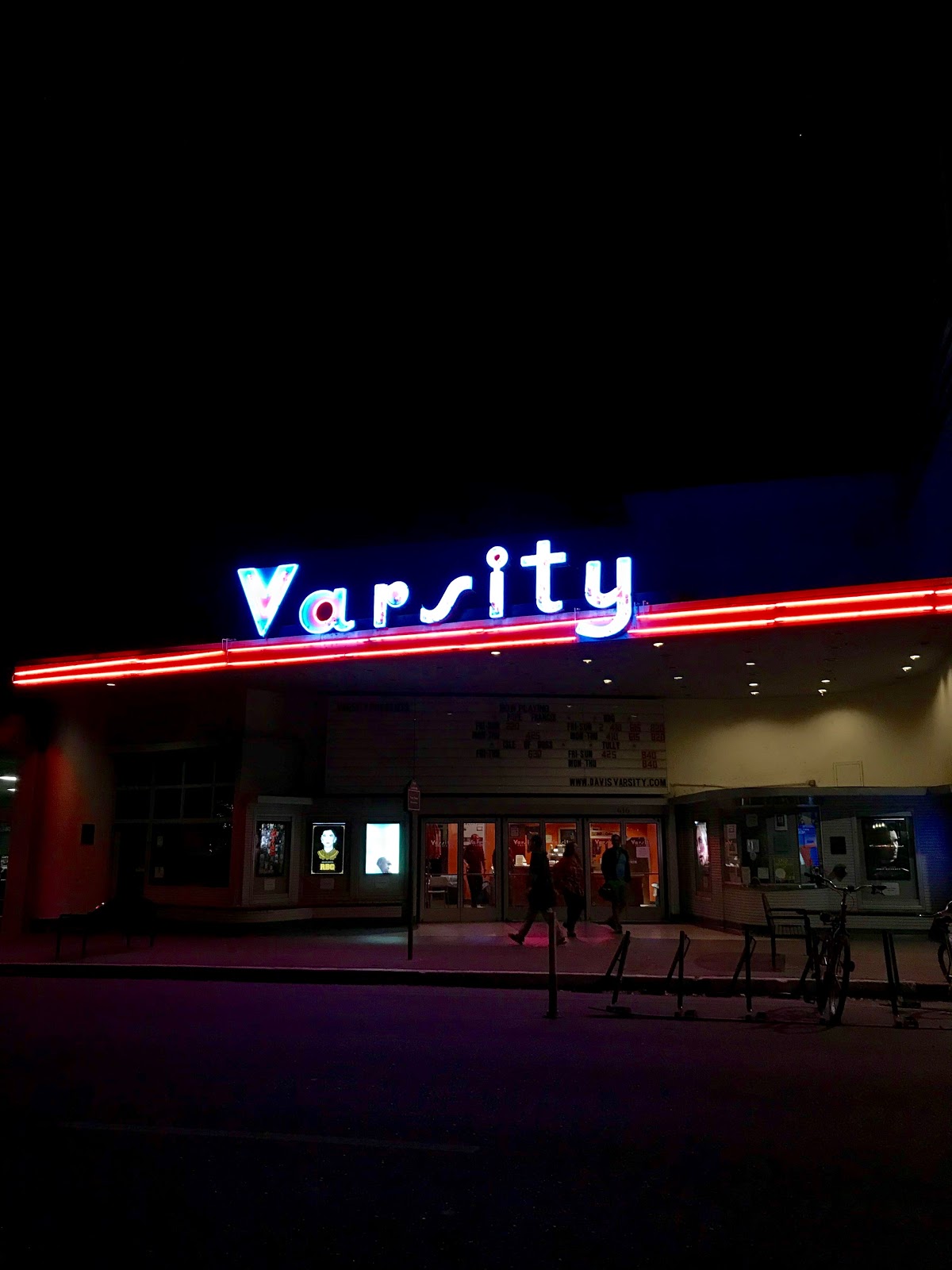
Watching movies is a great way for me to take a break from school and relax. (JONATHAN HSU)

The Ann E. Pitzer Center has to be my favorite place to go to when I want to recharge myself with music. (JORDAN CHOW)

You truly know what it means to go to an ag school once you live across from the cows at the dorms. (JULI PEREZ)

The radiant colors of the Arboretum in fall will always be my favorite Davis find. (KAILA MATTERA)

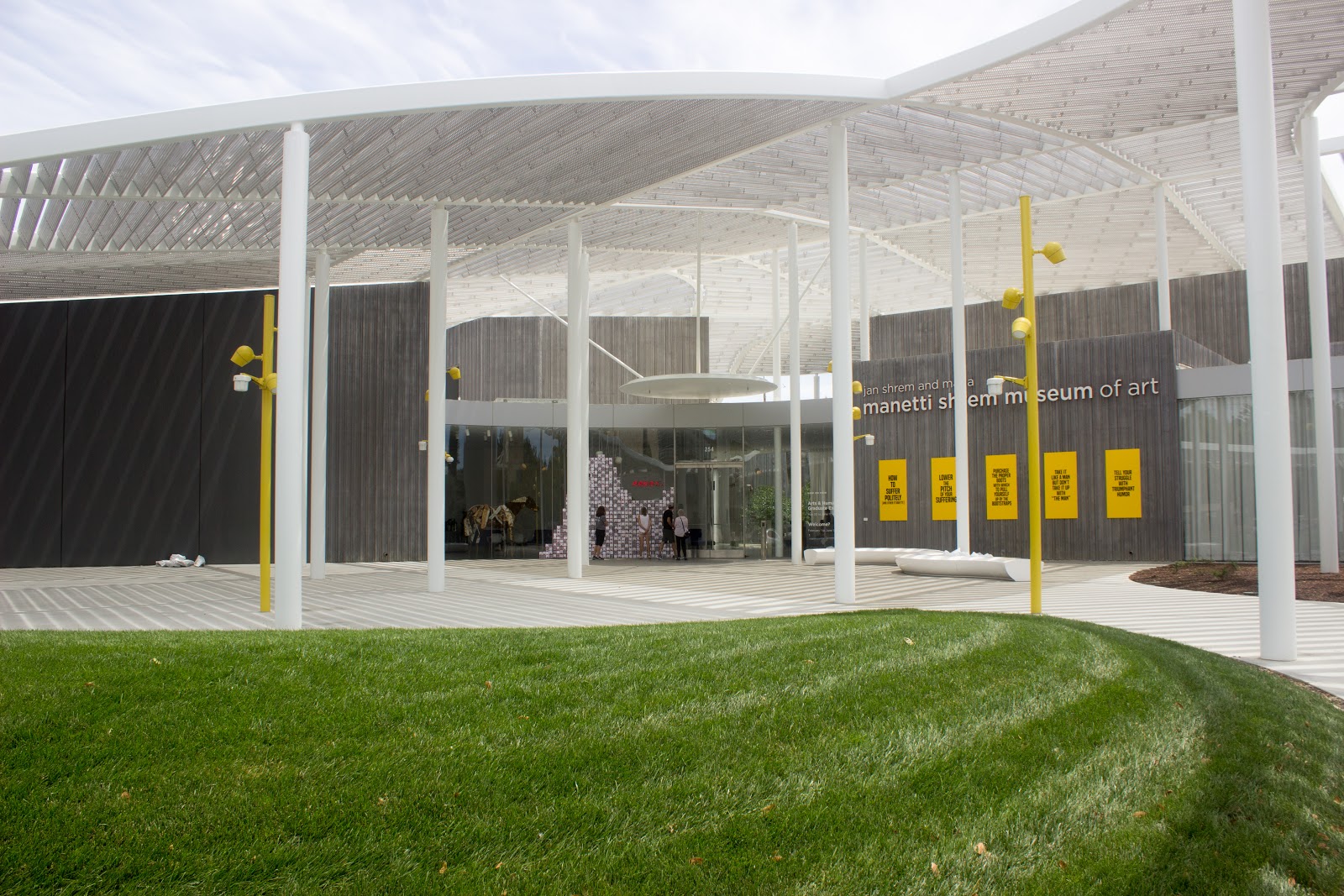
I’ve been amazed by how much I’ve learned from the Manetti Shrem museum over the past two years. Between the museum’s various art exhibitions and series of lectures, the museum has offered a space for knowledge, beauty and progress. (MACLEAN HARTFORD)

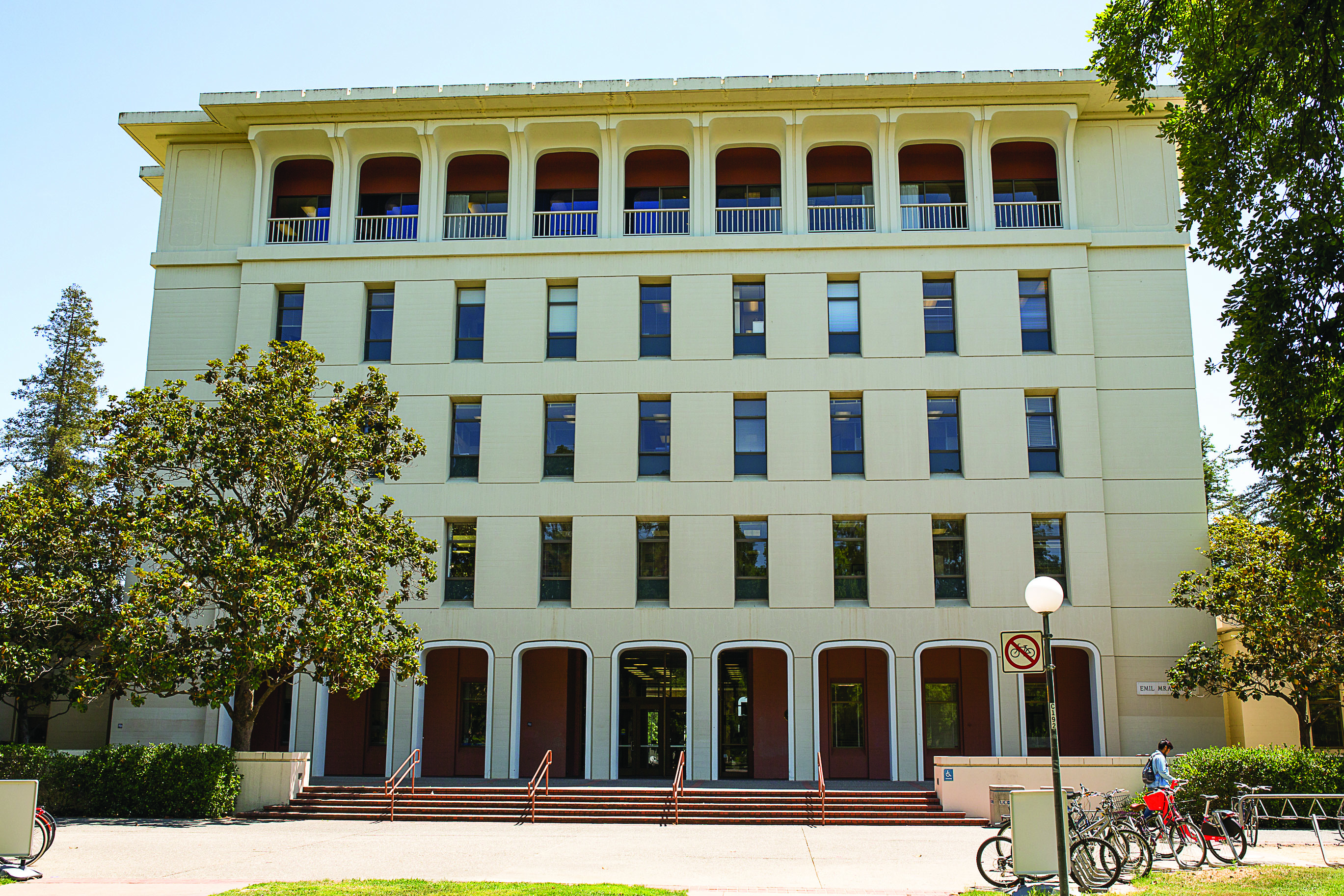
The design building Cruess Hall is one of my favorite places to explore because it features amazing student art. (MEENA RUGH)

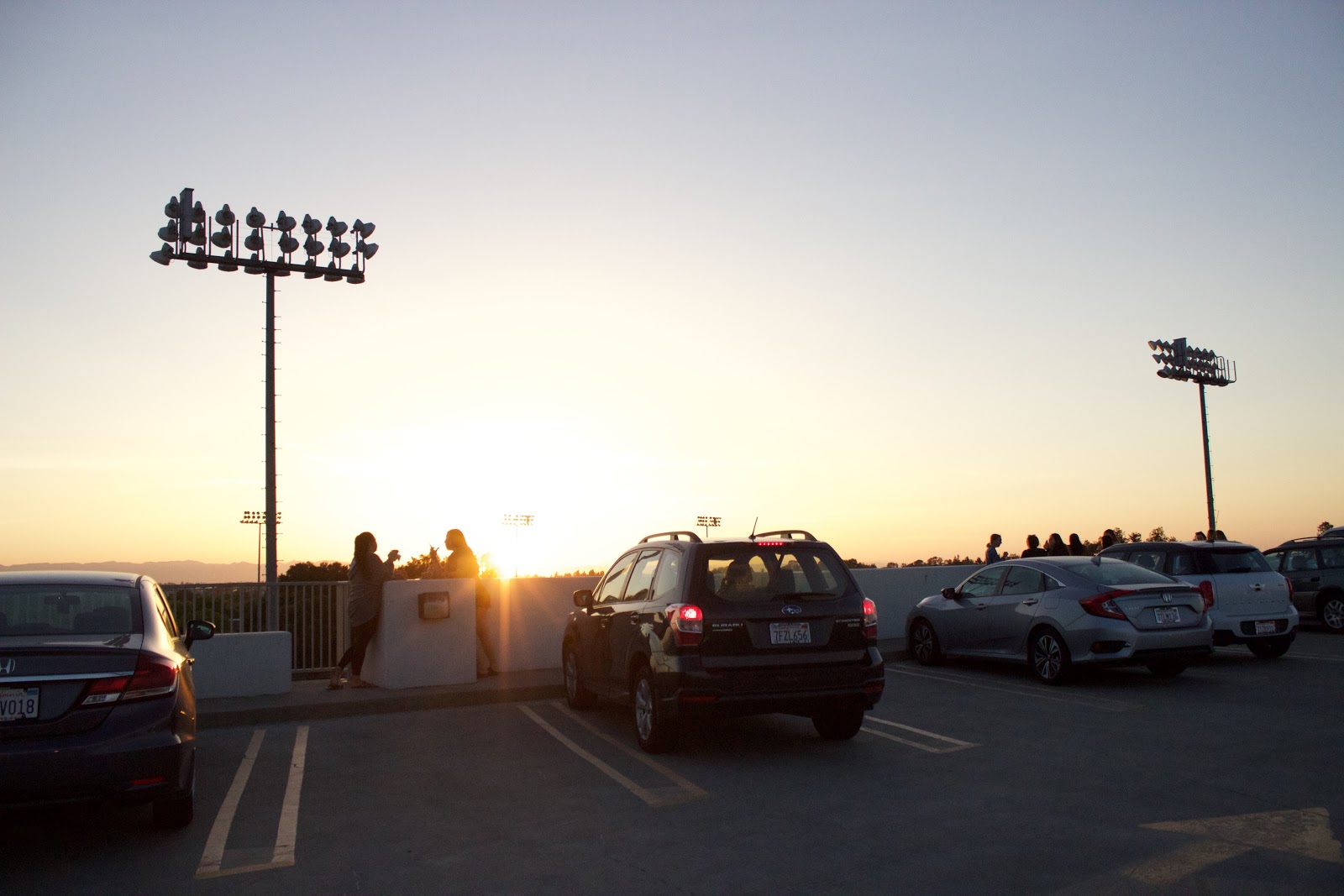
Whenever I feel homesick, I enjoy going to the top of the Hutchison parking lot to watch the sunset. (VENOOS MOSHAYEDI)

The Arboretum is my favorite place because I enjoy doing my scenic runs in Davis through the Arboretum. It is photogenic and provides a great deal of shade and, if you’re lucky, you’ll see the otters alongside the ducks. (THOMAS MA)


Compiled by The California Aggie Photo Desk—photo@theaggie.org

Guest: Why do Anti-Semitism and Anti-Zionism never get the proper attention?

Anti-Semitic remarks ignored by UC Davis administration

Anti-Semitism is not a new concept; it has been around for centuries, but in the past years, it has taken a turn for the worst. Anti-Semitism at UC Davis is reaching new heights with each passing academic year. Students are saying discriminatory and horrifying comments to students who are Zionists, Jewish or pro-Israel, and these comments are going unrecognized by the university’s administration.

This year alone, there have been at least ten different acts of anti-Semitism and anti-Zionism. Almost every anti-Semitic or anti-Zionist event has been followed by a meeting with the administration to express the lack of safety that Zionists feel at Davis. Of the ten, six of them were personal attacks on people, and four of them were specifically targeting Zionist students. Of the ten, only one was addressed. One. Students felt unsafe on campus, yet the school did not bother to help abate those feelings. Students were personally attacked, and nothing was done to those who spewed the hateful and racist comments.

May 14, Israel’s historic independence day, has been perpetuated as a tragedy by the Palestinian leadership. Known as al-Nakba (translated as: the catastrophe), this day is one of mourning, in which Palestinians were displaced when Israel was established in 1948. This year, Students for Justice in Palestine (SJP) held an event on the Quad sharing stories and poetry and showcasing Palestinian art, literature and clothing. Board members of Aggies for Israel (AFI) attended the event as bystanders and as students of the UC Davis community. Members of SJP decided to use the platform of the event to spew hate at those who showed up. Their “invite[s]” for board members of Aggies of Israel to speak about how “they are able to defend a country of genocide and killing,” were followed up by the yelling of “shame,” (alluding to what was yelled at Jews during the Holocaust). As one may expect, our hearts started racing uncontrollably.

The hate speech did not end there. A few minutes later, one of the speakers specifically singled me out, “invited” me up again to speak and stated how AFI “is complicit” and that we “lie and are hypocritical.” This speaker continued by saying, “[We] are alone on this campus because [we] stand for racism, genocide and massacre,” and that, “The UC Davis community stands for Palestinian people.” He then turned the direction of the audience to my fellow board members with the intention of intimidating them and silencing their beliefs. In that moment we felt so alone, so scared, so unprotected and subjugated — as if no one cared for us or our protection on campus.

And let us not ignore the active campaign to remove ASUCD President and Vice President Michael Gofman and Shaniah Branson. Gofman is an openly Zionist and pro-Israel student at Davis. He has been involved in the pro-Israel community before beginning college. Since his election, Gofman, along with a few senators on the Unite! slate, have been attacked due to alleged “cheating” during the Winter 2018 elections. They took these claims and accusations to the next step and petitioned for his recall. Interestingly, Gofman is the first president to ever have a recall against him, and he is also the school’s first public Zionist president. The staining of his name and reputation on campus is disgusting; calling him a white supremacist and a racist is far from the truth and disgraceful. The group of people accusing him and staining his name do not realize the effects of their words on his life.

Members of the AFI board and I had multiple follow-up meetings with the administration to discuss the hurtful words and phrases that were thrown at us. Once again, however, we were faced with the “freedom of speech” issue. An important question arose: If this happened to a different community, such as the African American or Muslim community, would we have seen a response or some sort of action? The united answer from the pro-Israel community is “Yes.”

So why are actions like hate speech, anti-Zionism and anti-Semitism going unnoticed? Why are Jews and our safety not cared about by the administration? I, along with other members of the Jewish community, demand answers from the administration. We will no longer stay silent on these matters, especially when we do not feel safe on our own campus. I am calling on the university to respond to these actions and to ensure the safety of all students at Davis.


Written by: Charline Delkhah

Disclaimer: The views and opinions expressed by individual columnists belong to the columnists alone and do not necessarily indicate the views and opinions held by The California Aggie.

The writer graduated from UC Davis in 2018 with a degree in managerial economics and computer science. She served as the president of Aggies for Israel from 2017-2018.

Guest: Students for Justice in Palestine — kill and expect love?

SJP responds to recent guest opinion by Aggies for Israel

While we do not normally care to respond to statements released by Aggies for Israel or any of its members, its latest statement published by The California Aggie contains some serious accusations that we felt had to be cleared up. The premise of the argument was that they want nothing but peace and love, and we just want hate. This is no different than the argument employed by the Israeli government (that they defend) and stems from the stereotype that Palestinians are irrational and savage primitives, while Israelis are peaceful promoters of democracy. It oversimplifies our struggle and delegitimizes our cause. It also attempts to replace the moral issue at hand with a legal justification for Zionist practices embodied by the state of Israel. When we choose to take over the Memorial Union patio, Quad or any other space on campus to protest, we do so because Palestinian houses are simultaneously being demolished, and Palestinians are being imprisoned, slaughtered and tortured. We demand to have our voices heard because the voices of Palestinians are being killed off one by one. We will continue with these efforts because we will not allow the victims of Israeli colonization to be forgotten on this campus.

First, in this guest opinion piece, Aggies for Israel claimed that a protester referenced the Holocaust during our March 5 mock-apartheid wall action, stating: “The referencing of the Holocaust as an experience we ‘should have learned from’ must be considered unacceptable in any academic institution.” This is simply not true. It seems they are referring to a speech we gave discussing the parallels between the Berlin Wall in Germany and the apartheid wall built by Israeli occupation forces in Palestinian territories. This is an excerpt from that speech: “Walls do not lead to peace. They create physical and psychological separations that only perpetuate even more hatred. Restricting movement and cutting off Palestinians from basic resources like land, health care and education is just one aspect of Israel’s policies towards Palestinians. We stand here today against the wall, against apartheid and against Israel. Israel should learn a lesson from Germany. Walls that separate people, cut up lands and deny freedom of movement WILL BE TORN DOWN.”

While it is no surprise that Aggies for Israel would misconstrue our words and make false accusations, we are disappointed with The Aggie for publishing such a piece with false information.

Furthermore, there are inherent structural, political and ethical contradictions when Aggies for Israel claim to support a variety of issues such as Black Lives Matter, DACA and environmental justice, while simultaneously supporting the settler colonial state of Israel. When you support Black Lives Matter, you stand against police brutality and state aggression in every form. You understand that the oppressive state apparatuses at work here are connected to those abroad. Black-Palestinian solidarity has a long and rich history because it is clear that the oppressive institutions in America that disproportionately kill and imprison Black Americans are very similar to those in Israel against Palestinians — so much so that the Israeli Offensive Forces have been training U.S. police officers to increase militarization. Moreover, Israel treats its own African “citizens” with brutal racism. For example, the Israeli state systematically sterilizes its African population in order to support a white-supremacist bio-political project. When you support DACA, you stand against the deportation of immigrants from the country. It doesn’t seem at all possible to support this either considering Israel’s existence relies on the expulsion of native Palestinians from their land, who are then denied the right to return. In both cases, there is an administration forcibly uprooting people from their homes and denying their right to freedom.

Environmental justice is also a huge problem in Palestine. Israel controls and regulates water flow into Palestine. Subsequently, Palestinians suffer from extreme water shortages and contamination, affecting their health and well-being. Thus, the so-called progressive members of AFI who are attaching themselves to these causes are logically contradicting themselves.

Lastly, it is an ideological fantasy to really believe that progress is possible so long as the state of Israel exists. Underlying this naive fantasy is the belief that a state that engages in racist laws, systematic killings and home demolitions can also function as a beacon of peace. The goal of Palestinian resistance is not to establish “love” with those who are responsible for the suffering of the Palestinian people; it is to completely dismantle those forces at play. So continue to watch in “horror,” because we are here to stay.


Written by: Students for Justice in Palestine

Disclaimer: The views and opinions expressed by individual columnists belong to the columnists alone and do not necessarily indicate the views and opinions held by The California Aggie.

Tunnel of Resistance event highlights cultural struggles

GEORGE LIAO / AGGIE

Organizers show intersectionality between resistance movements

On June 1, the ASUCD Ethnic and Cultural Affairs Commission organized the event “The Tunnel of Resistance” at the MU Patio. The Sikh Cultural Association, Students for Justice in Palestine and Mental Health Initiative worked in collaboration with the ECAC to put on the event which, according to the event’s Facebook page, served as a means for “communities of color to share their stories and hxstories.”

Three rooms containing displays and student representative from these communities and the MHI were made available for the event.

Gurmun Singh, a second-year biological sciences major, spoke about the meaning behind the Sikh room.

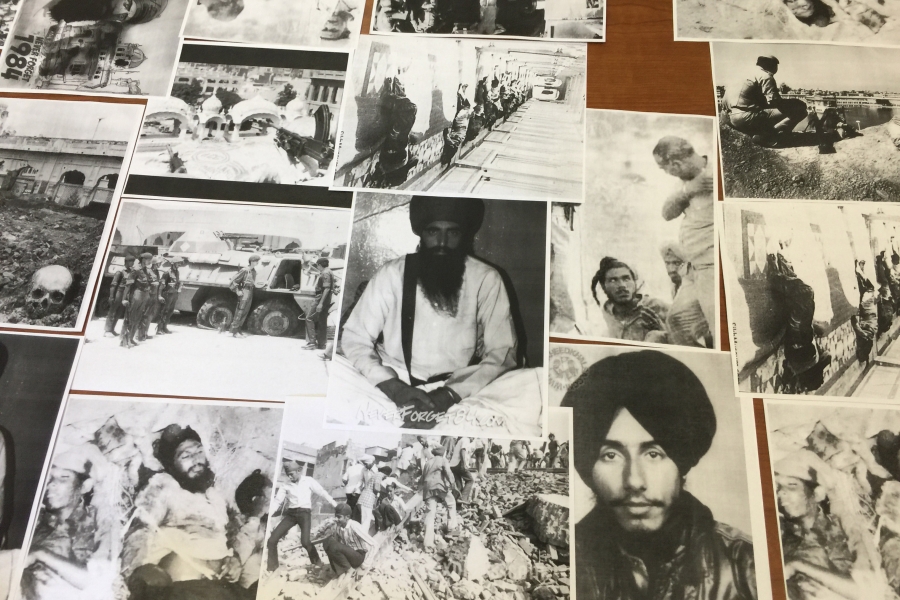
“In this room, we are representing the Sikh Cultural Association,” Singh said. “Today marks the 34th remembrance of the Operation Blue Star. These 10 days from June 1 to June 10 [are] called the ‘10 Days of Terror.’ Before [Operation Blue Star] had occurred, Sikhs were collectively getting themselves together spiritually, and economically and trying to get back their own equal rights that the government was not giving them.”

Operation Blue Star was an Indian military operation that occurred in 1984 and resulted in a conflict that lasted 10 days in what was called the “10 Days of Terror.”

“The [Indian] government [saw] the rise in the Sikh population, Sikh numbers and their want for equality,” Singh said. “It was not just like a [protest]; they were actively getting themselves together, […] trying to have conversations with the people in government and try[ing] to create new changes so that Sikhs can get what should be given to them. In the constitution, [the Sikhs] were referred to as a religion […] were still under the sect of being called Hindus. And they wanted to be called what they are.”

Mohanvir Singh Gill, a fourth-year computer science major spoke about how the unique character of the Sikh population in India.

“We always make this into a Sikh issue,” Gill said. “But the other thing to think about is that we are talking about everybody that is not labeled in the [Indian] constitution to be given equal rights. We say that we are the majority of the people in the constitution that do not have equal rights, but there is plenty of other castes and other religions that are living in India that do not have equal rights. Our demand was simple, ‘Whatever rights you give the rest of the citizens, we want those rights.’ There is nothing else we want.”

In the room containing the Palestinian cultural displays and student representatives, Khadeja Ibrahim, a fourth-year Middle Eastern South Eastern Studies student involved with SJP, gave a depiction of Palestinian history and art.

“The theme we had for the room that we were given was to showcase our history and our culture,” Ibrahim said. “Those two are closely intermingled because our history is cultural. Around this room, we have embroidery and it is significant — for example, the embroidery on those pillows, the stitching and the styles gets passed on from generations to generations between families. So there is a historical significance. The pottery we have and the ceramics are also the same story. They are hand made in villages, they are painted. They depict images of the villages they were made in.”

Ibrahim spoke about the significance of discussing Palestinian culture during the event.

“What is really important to us is preserving our culture and our history,” Ibrahim said. “Students who are not aware; who do not know what Palestine is, can come in and see that it is a country that it is an area that has a rich and a very long history that goes back thousands and thousands of years. And while you can appreciate that history and culture, […] also just recognizing what is happening today and the atrocities that are happening today.”

Ibrahim also said SJP wanted the display to provoke questions and ask about the significance of the items on display.

Rina Singh, a third-year international relations and economics double major, the commission chair of ECAC and an organizer for the Tunnel of Resistance, discussed the purpose of the event.

“The Tunnel of Resistance is a new event that our commission put together,” Singh said. “Our mission statement is to uplift the voices of marginalized and underrepresented communities on campus. Even though we do a series of events throughout the year, we felt like this particular event is important because it literally brings student organizations into one unique event.”

Singh highlighted plans for next year’s event.

“This is the first year,” Singh said. “Next year, we are going to have many more organizations, so this is going to become a large event for students to attend, and literally learn about the different communities. It’s not only important to know about different cultures, but it is important to be able to stand in solidarity with the different communities.”

Singh said that other universities have put on their own Tunnel of Resistance events which they call “Tunnel of Oppression.”

“We did not want ourselves to be associated with oppression, because we believe in resisting,” Singh said. “We believe in being resilient. The students who walk into these rooms should understand and learn there are similarities between different groups, not just in social justice. For example, there are underlying themes that are very similar between communities. [It] is important for different communities to recognize that and for students of color to stand  together and unify and stand in solidarity for each other.”


Written by: George Liao — campus@theaggie.org

Mayim Bialik, Kamala Harris, John Lewis cancel UC speeches following AFSCME pressure

JAM ONG / FLICKR

After three-day strike in May, noteworthy public figures decline speeches at UC commencements

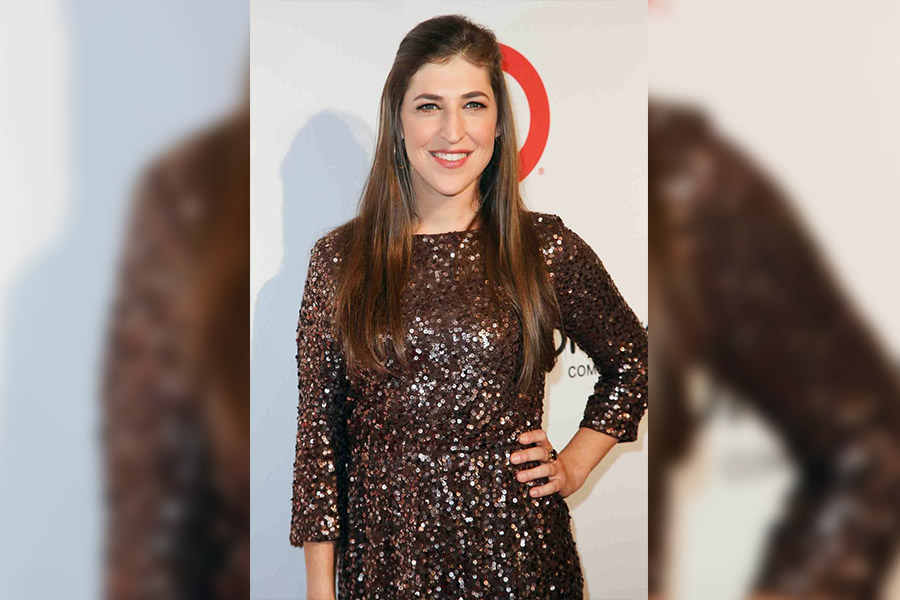
Actress, neuroscientist and UCLA alumna Mayim Bialik declined to speak at UCLA’s College of Letters and Sciences’ commencement ceremony due to ongoing bargaining negotiations between the UC and the American Federation of State, County and Municipal Employees Local 3299 — the UC’s largest employee union. On May 31, Bialik posted a statement on Twitter announcing her decision to decline.

“With a heavy Bruin heart, I have to decline speaking at the upcoming commencement ceremonies due to lack of agreement between ASFCME Local 3299 and our beloved University,” the statement read. “My grandparents were sweatshop workers and my parents were civil rights activists. These issues are near and dear to my heart, especially since the LAUSD teacher’s union helped support my family for my entire young life.”

In May, AFSCME Local 3299 organized a UC-wide, three-day strike; both the University Professional and Technical Employees union and the California Nurses Association participated in the strike in solidarity. After a year of negotiations, AFSCME Local 3299, which represents over 24,000 UC employees, voted to strike citing frustration with the wages being offered by the UC in addition to a recent study which shows growing racial and gender disparity in pay.

Bialik, who is best known for her role on “The Big Bang Theory” as well as playing the titular role on the 90s sitcom “Blossom,” also cited her Jewish identity in her statement over her decision to decline speaking.

“My Jewish tradition is clear that it is of the utmost imperative to treat workers fairly and to protect employees from injustice; the Talmud states that these make for a just and Godly society,” the statement reads. “I send deepest regrets to the UCLA community and I hope to be able to join you soon to celebrate your accomplishments.”

Later, Bialik also tweeted her support of Congressman John Lewis for his decision to decline speaking at UC San Diego’s all-campus commencement.

“Another union ally! John Lewis, civil rights leader and revolutionary, pulls out of UCSD commencement. #UnionStrong,” Bialik tweeted.

Following pressure from AFSCME Local 3299 to pull out of UC commencement speeches, Congressman Ted Lieu decided not to follow through on plans to speak at UCLA School of Law’s commencement in May and Senator Kamala Harris also withdrew from a commencement speech at UC Berkeley.


By Hannah Holzer campus@theaggie.org


First ever ASUCD executive recall ends in failure

JESSE STESHENKO / AGGIE

Petition fails to receive necessary amount of signatures

ASUCD President Michael Gofman and Vice President Shaniah Branson will remain in office as the effort that sought to recall them failed to receive the 2,364 signatures necessary to enable a special election.

In an email sent by Mahssa Rezaei obtained by The California Aggie, the total number of signatures obtained was 85.

“There were about 85 signatures turned in for the recall of Michael Gofman and about 85 signatures turned in for the recall of Shaniah Branson and the required number of signatures for a Special Election is 2,364,” Rezaei said in the email. “Because the number of turned in signatures is far below the required signatures needed for a Special Election, the Elections Committee did not feel it was necessary to verify the student signatures. Therefore, because the required number of signatures required as per the Bylaws for a recall was not reached, there will not be a Special Election.”
Branson also shared her thoughts on the failed recall attempt.

“This truly marked the end of a quarter that I never thought would end,” Branson said. “These past 10 weeks held some of the hardest battles that I had faced in a very long time.”

According to Branson, she and Gofman were accused of being “racist, homophobic, sexist, trans-antagonistic, Zionist, conservative, etc.” Additionally, the Unite! slate which both Gofman and Branson ran on was accused of committing voter fraud.

Branson maintained that Unite! had not committed fraud and that while Gofman is a “confirmed zionist,” those were “his beliefs” and “a great portion of UCD students’ beliefs as well.” Gofman also stated that he believed his Zionist views were the true reason for the organization of the recall.

“The organizers, through their facebook page and website, claimed that this was about broken bylaws and alleged incompetence,” Gofman said via email. “However, what they have privately confirmed to many on this campus was that it was purely for political and personal reasons, stemming from the fact that as a proud Jew I’m also Pro-Israel and a proud Zionist. I’m very happy this hateful and anti-semitic recall is finally over.”

Supporters of the recall attempt expressed their disappointment over the results.

“I think the recall showed how flawed the bylaws and ASUCD are,” said former ASUCD Gender and Sexuality Commision Chair Becca Nelson, one of the main organizers of the recall effort. “The elections committee and senate basically did everything they could or sat back as far as they could to make this recall as difficult as possible.”

Nelson cited several factors that made the recall effort especially difficult, including students being at “low capacities this quarter,” the Election’s committee’s “ableism” that made it “logistically almost impossible to collect as many signatures on paper as students who vote in the elections” online and the recall effort carried out during the last few weeks of Spring Quarter.

The Elections Committee ultimately decided not to make online petitions available and restrict the collection of signatures to paper format only. Nelson said an “electronic petition would’ve made” the recall petition “much more accessible and tangible.”

ASUCD Senator Ko Ser Lu Htoo, a supporter of the recall effort, also felt that the restriction of the petition to paper form was problematic.

“By collecting signatures on paper, the possibility of an opponent of the recall putting down a fake signature to invalidate the entire petition is there,” Htoo said in a press release sent to The California Aggie. “If we want to create an elections system that is truly free and fair, then we should protect students’ right to free speech on political issues by creating a petition system that is a) accessible, b) easy to use and c) secure.”

Htoo said they supported the recall “because of the numerous reports of election fraud, collusion, and corruption that the Unite! slate was involved in during the Winter Quarter 2018 ASUCD Election.”

“Of course I wanted the recall to be successful,” Htoo’s statement read. “But unfortunately the outcome was different. Because of all the collusion and corruption that I see as a senator on the table, I question myself: “What kind of president do I want that represents all community members? Has President Gofman been transparent, as he said he will be, to the Association? Will I feel safe in this Association? Can he truly deliver the promises that he made when he was campaigning for President?”

In light of the recall failure, Gofman expressed his determination to keep working toward his goals.

“The recall was concerning,” Gofman said. “While we were never worried that it would succeed, we are glad that this process is over, and we can all continue to dedicate 100% of our mental and emotional energy, as well as time, towards the students of UC Davis, without this recall hanging in the back of our minds.”

By Clara Zhao — campus@theaggie.org

Guest: Aggies for Israel — choosing love over hate

AFI addresses the hateful rhetoric surrounding their organization and members

On March 5, we stood and watched in horror as the place we call home was defamed. That day we had a tabling campaign called “Choose Love,” where we distributed shirts with “love” written in Arabic, Hebrew and English. We spent hours the night before preparing for it, only to find various organizations had set up for a demonstration the next day. The rhetoric quickly became personal as so-called “facts” about Israel were displayed. They held posters saying “Justice is our demand, Palestine is our Land,” “Resistance is justified when people are occupied” and one of the most personal ones, “Gofman has got to go”.

We suddenly became voiceless. As people shouted “f**k Israel,” “f**k Michael Gofman” and “you should have learned from Germany,” in our faces, a question emerged: How could we have a “Choose Love” campaign while people were choosing hate? These blatant anti-Semitic phrases go beyond any acceptable criticism of Israeli policies. They are meant to discriminate and silence our belief that Jews have a historical and lawful claim to the land of Israel. The referencing of the Holocaust as an experience we “should have learned from” must be considered unacceptable in any academic institution. For many students, this was their first time experiencing a demonstration like this, leaving them speechless.

“I had friends calling me asking what the protesters were screaming at everyone about,” said Aggies for Israel co-inreach chair Sascha Recht. “It felt like a personal attack and I didn’t know how to respond nor comfort my friends.”

Sascha was not alone. No one that day knew what to say. The protestors had the floor and they used it to spread hate.

While the protesters defined what we stood for with their crude signs and hateful rhetoric, we never had the opportunity to speak for ourselves. So who are we? We are a diverse group of students made up of many faiths working to promote peace and understanding for the state of Israel. Since we support Israel, there’s a misconception on campus that we are “oppressors” in favor of “white supremacy” and therefore mistakenly labeled as radicals. On the contrary, we support the #MeToo movement, DACA, Black Lives Matter, environmental justice, equality for all and free speech. The list doesn’t end there, and many of those protestors would be surprised by how much we have in common. Yet, while we agree with 99 percent of the main issues surrounding us today and disagree with only 1 percent, our voices are ignored.  

To our members, AFI is more than just a club or a line on a resume. There is a unique narrative behind every voice in Aggies for Israel.

President Charline Delkhah recalls why she joined AFI after visiting Israel during Operation Protective Edge in 2014: “My mom went to go pick up my grandmother down the street. Suddenly, the siren rang and I had to run into the bomb shelter in my aunt’s house. I trembled in fear as the explosion shook the ground and prayed that my mother and grandmother were still alive. The next day, headlines read, ‘Hospital in Gaza destroyed by Israel,’ the same hospital Hamas used to launch the rocket that nearly killed my mother.”

Our struggle continues with the relentless attacks on ASUCD President Michael Gofman. Gofman is an active member of Aggies for Israel as well as the Jewish community. These organizations slandered Gofman not for his political stance but because he believes his family and loved ones have the right to self-determination in the land of Israel. Instead of attempting to have a discussion about a conflict that is painted in many shades of grey, the protesters seem to only see in black and white.

One of our board members who has known Michael for over seven years expressed her thoughts on the backlash he has received.

“We’ve grown up together: seen each other through middle school, high school and now college,” she said. “To see my friend slandered for his beliefs brought tears to my eyes.”

The hate voiced at the protest, written on their posters and directed at our close friends didn’t end on March 5. It persisted and will continue as long as people keep seeing in black and white.

We urge everyone to develop their own opinions about this complex issue. As college students, we should be intrigued by issues that do not have a simple solution. We encourage you to show up to events held by both AFI and Students for Justice in Palestine, ask the hard questions and visit Israel and the Palestinian territories. Only through nuanced discourse can we truly understand the conflict. Without acknowledging the complexity of the Israeli-Palestinian conflict, we can never hope for progress, peace and, most importantly, love. It’s up to you to be informed and hopefully be the bridge between our narratives.


Written by: Aggies for Israel

Disclaimer: The views and opinions expressed by individual columnists belong to the columnists alone and do not necessarily indicate the views and opinions held by The California Aggie.

Guest: Health Coverage — Protecting your personal investment: a note to graduates

The importance of health insurance coverage for new graduates

The two of us are among dozens of commencement speakers at California’s colleges and universities this year who are raising awareness, in our remarks to new graduates and their families, on the importance of having health insurance coverage.

We congratulate you on what you have accomplished and offer our good wishes for what lies ahead. Like us, many of you are the first in your family to get a college or advanced degree. You have worked hard and made many sacrifices. Indeed, you have made a big investment in yourself, and we want to be sure that you protect that investment. Having health insurance coverage is one of the most important things you can do to protect investment in yourself.

Fortunately, you have options today. Some of you will be able to stay on your parents’ health insurance — an option that can continue until you turn 26 — while others may get coverage through your spouse or through your new job or graduate school.

Regardless of how you get covered, ensuring that you have health insurance coverage is what’s most important — and it should be your top priority. No one can reliably predict when injury or illness will strike, but when it does, you will need health insurance.

If you will be losing your insurance through your campus health program and you are

not sure what is next for you, we encourage you to visit Covered California’s website or even search it up on social media. You may be eligible for free coverage or insurance that costs as little as $1 a month.

Covered California is just one of the many health insurance options available to students and new graduates. In California, we have dramatically expanded insurance coverage and made health care coverage more affordable. Going without coverage is gambling on the likelihood that you will not experience an unforeseen illness or injury, the cost of which could quickly exceed the cost of your student loans. Rolling those dice has often proved to be a losing bet. Getting covered is the winning strategy.

Once again, congratulations, good luck and don’t forget to get covered!


Written by: Dr. Kenneth W. Kizer and Cástulo de la Rocha

Disclaimer: The views and opinions expressed by individual columnists belong to the columnists alone and do not necessarily indicate the views and opinions held by The California Aggie.

Dr. Kenneth W. Kizer is the director of the Institute for Population Health Improvement at the University of California, Davis, and the former director of health services for California. He gave a commencement address at the University of California, Irvine, School of Medicine.

Cástulo de la Rocha is President and CEO of AltaMed Health Services Corporation and has given commencement addresses at the College of Business and Economics at California State University, Los Angeles.