41.5 F
Davis

Davis, California

Saturday, December 27, 2025
Home Blog Page 531

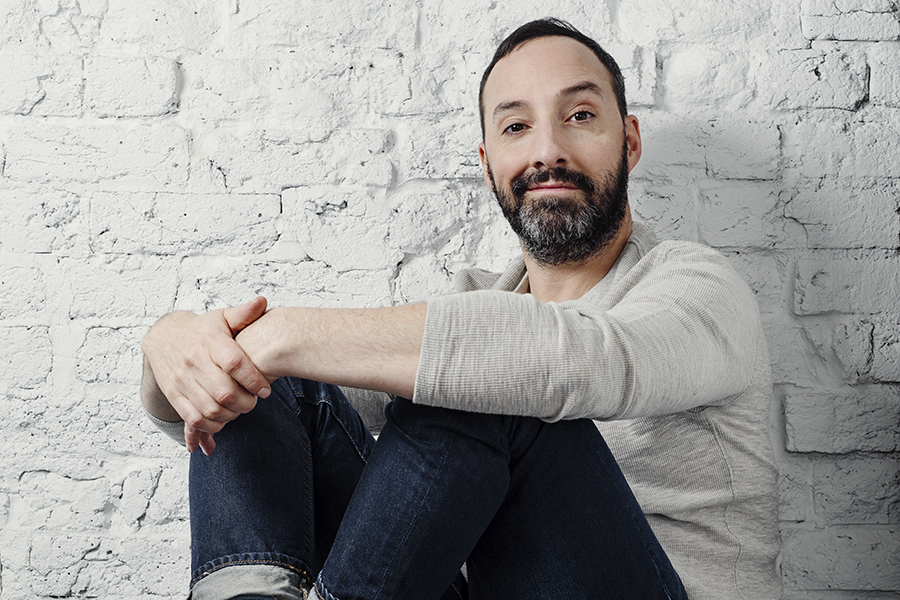
Online interview with Tony Hale

“Love, Simon” actor shares impact of LGBTQ high school love story

“Love, Simon” was released on Mar. 16 and has since sparked discussion about acceptance toward LGBTQ youth. It’s the high school love story that many of my peers and I needed to see on the big screen when we were going through that hormonally turbulent time when we discovered this complicated thing called “love.” Tony Hale, who plays Mr. Worth, agreed to answer a few questions for The California Aggie via email.

It is profound the impact that teachers — or, in this case, principals — can have on youth. A role model like Mr. Worth shows just how valuable such a position can be.

“Greg [Berlanti], the director, worked with Denise Chamian, a fantastic casting director, and they were both kind enough to offer [the role] to me,” Hale said. “In terms of preparation, I just had fun with the fact that my character, Mr. Worth, was kind of awkward and boundary-less but had this incredible passion for both the school and his students.”

Greg Berlanti, also known for producing sci-fi hits such as “The Flash” and “The Green Lantern,” was at the forefront of the project and took an approach that allowed the actors to give heartfelt and vulnerable performances.

“I love Greg Berlanti,” Hale said. “The director is the captain of this ship. And the director has the power to create either a fear-based, eggshell-like environment or what Greg created […] a creative, free community that are together to make the best film possible.”

Hale was given the opportunity to basically play himself in the film, which made his performance feel genuine.

“I’m pretty awkward myself so it was a win-win,” Hale said.

He also revealed what he loved most about his character throughout the film.  

“Mr. Worth had no judgement and saw beyond labels […] Most of my scenes were with Nick, and not only did he give a truthful performance, but he’s genuinely a really fantastic guy,” Hale said.

Hale wanted to showcase in his performance that people are more alike than we think. Supporting one another and accepting our differences was the message that Simon, played by Nick Robinson, wanted to give the audience.

“Honestly, it’s a story that can relate to anyone who feels alone and doesn’t feel they can speak up […] whether it’s regarding sexuality or something else,” Hale said. “We all need those honest places and support around us. We’re not made to be isolated.”

Film has a way of helping people empathize with people’s stories and the struggles they face. Hale discussed the significance of having an LGBTQ movie with such a huge audience.

There are so many kids out there who feel isolated and don’t feel they can be honest about their feelings… whatever their situation happens to be,” Hale said. “My hope is this would give some of them both the permission to be honest and hopefully the support around them they need.”

“Love, Simon” is showing at the Regal 6 in downtown Davis. Have some tissues handy, because you will need them — several times.


Written by: Josh Madrid — arts@theaggie.org
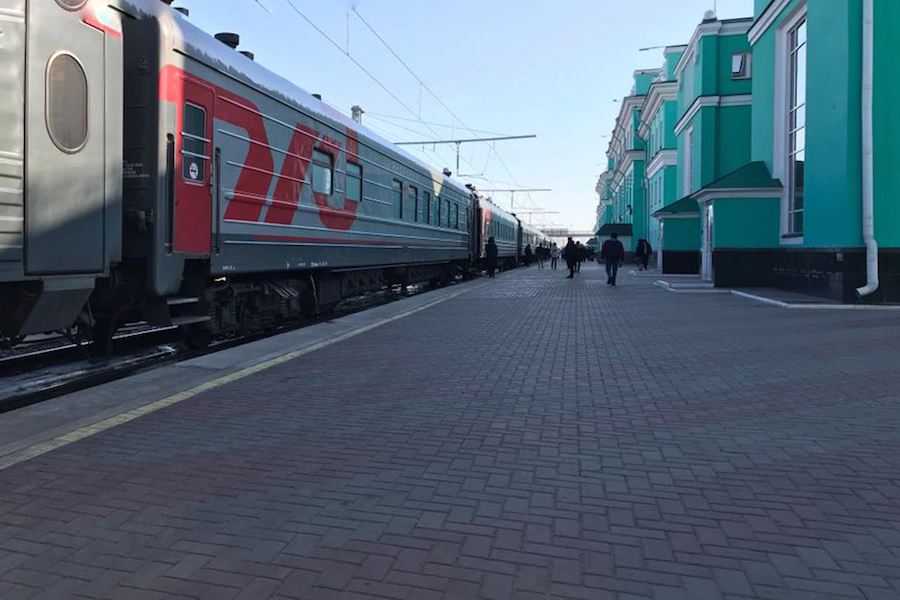
A picture worth a thousand miles

NICK IRVIN / AGGIE

Riding the Trans-Siberian Railway

On a dark Sunday night, with hints of moisture floating down on indifferent passersby, I stood in front of a trio of train stations in Moscow, mentally preparing to ride the Trans-Siberian railway. The streets were gloomy — it’s a noticeable attribute that doesn’t steal from the city’s splendor and prestigious might.


In Moscow, towering cathedrals intermingle with stoic Soviet-style apartment blocks and government buildings. The stark red walls of the Kremlin lie within a stone’s throw of modern retailers and the bridge where an opposition politician was murdered. Moscow is at once terrifying and captivating, and my short visit to the capital was a fitting prelude for a trip to Siberia to round out spring break.

I stood at the confluence of Leningradsky, Kazansky and Yaroslavsky stations, mentally preparing for a journey covering thousands of miles. I would be disembarking in Irkutsk — a city in Eastern Siberia — four days later, before flying back to St. Petersburg a few days later. There were no overnight stoppages, or showers, on the way. For the next half-week I would be consigned to a metal tube on wheels, which was incredibly exciting.  

I entered Yaroslavsky station, into a well-lit hall that countered the shadowy streets outside. There was the normal hodgepodge of passengers with backpacks, beat-up suitcases, grocery bags overflowing with instant noodles and salami and the odd wooden post that induced mild irritation when it was time to pass through the X-ray machines. We walked through metal detectors that invariably beeped and whistled, but the police officers paid no mind.

After an hour of waiting, a combination of sitting on the floor and thumb-twiddling, the platform number flashed on the video board. I gathered my backpacks — one for books and one for clothes — and boarded the silver-colored train, the final step to a journey that had sparked my enthusiasm for Russia in the first place. Have you ever dreamed of something so far away it never seems possible? This was my impossible dream, now emerging in reality.

I had booked a second-class compartment, known as a kupe in Russian, and it was on the whole a rather nice setup. There were four sleeping berths. The lower berths could transform into plush blue seats. The upper berths, where I was, had enough cushion to make sleeping a relatively easy affair. There was a TV hooked to the wall above the door, personal channel controls, a large window, a table, an outlet that didn’t always work and nicely pressed sheets and blankets that were included with the ticket.

The kupe was located in the second-class train car, with other compartments spanning its entire length. Outside the compartments was a narrow, carpet-lined corridor, just wide enough to fit a person and a half. There was a handrail and windows for our viewing pleasure. The bathrooms were set at the end of the car. Despite the horrifying cliches about train toilets, I experienced no real issues besides almost falling in one time.

Life on the train resembled a neighborhood, with dozens of people living and passing the time in their own little “homes” next to one another. I was one of the few passengers taking the train mainly for the journey itself and not so much for the destination. The train was usually only a means to an end. This was made clear by my first “roommates,” an older woman and her young son returning to Yekaterinburg after a holiday in Moscow. They weren’t especially talkative, even with each other, and I gathered enough to sense they were focused more on life outside the train than within.

They disembarked in the middle of the night, part of a rather large passenger turnover at every major station. In Omsk — the city where Dostoyevsky was exiled for allegedly circulating socialist literature — I was joined by another family, this time a husband, a wife and their 4-year-old son. The man introduced himself with a firm handshake, and following a tradition I’ve found remarkably persistent in Russia, proceeded to step outside for a quick smoke before the train departed. His wife, a pleasant woman named Dasha, spent most of her time wrangling with the 4-year-old, which proved rather amusing.

I chatted a bit with Dasha and discovered they were going to Khabarovsk, a city in the Russian Far East, to see their relatives. She waxed poetic about the blood-freezing temperatures of Omsk, her hometown, and laughed when I expressed how uncomfortable I was after transplanting myself from the Arizona desert to St. Petersburg at the start of the year. (This conversation just confirmed what I learned soon after landing in Russia for the first time — people here talk about the weather as much as anything else.) Invariably, her son would chime in, wanting to play games on her phone or demanding to receive a car for his birthday. Children have the same designs everywhere, it seems.

If my compartment was the place for sleeping and small talk, the dining car was the place for just about everything else. Upon entering it, a quick hop from my own car, I was struck by the colors. The curtains and tablecloths were a deep maroon, and the flowers placed on every table bloomed every shade imaginable, from orange-yellow to a stoic dark green. For the next half-week, I came to appreciate this vibrancy as the perfect setting for drinking coffee (and some vodka, of course) and looking out the window — all while strange Michael Jackson covers played in the background.

The Trans-Siberian railway, at least from Moscow to Irkutsk in early April, is not particularly scenic. Much of what I saw was… nothing. Birch trees and shrubbery poke through the snow against the background of vast nothingness. Beyond these enclaves of snow and forest is more snow and forest, playing the role of lead actor against a stage filled by the deep horizon and overhanging sky. Pockets of evergreens did grow more prominent as the train inched closer to Irkutsk, providing a nice splash of natural beauty even as the bare hills and relative sparsity remained constant throughout.

While great photo shoots were lacking, the opportunities for reflection weren’t. The best journeys don’t need to be scenic to be worth remembering. Social media has taught us to seek the perfect and the fame-worthy. Instant gratification is its corollary. The benefits of patience, and of boredom, aren’t always appreciated. Travelling the Trans-Siberian railway is a surefire cure, because there’s only so much reading, talking, drinking and sleeping you can do before feeling the urge to find a window and relax your mind. I spent countless hours watching the Siberian landscape pass by. It was nature — unspoiled, raw and sometimes ugly. But Siberia doesn’t need a perfectly sculpted landscape to instill an otherworldly awe. The emptiness is power enough.

Time passes more slowly on a train, and the days bleed together. After crossing the Ural Mountains — the official divide between Europe and Asia — sometime during the second night, the signs of civilization dropped precipitously. Still, we passed through working areas. There were men in parkas and orange vests fixing railroad ties and people driving truckloads of supplies through isolated, muddy streets, indifferent to us because they see trains every single day. We passed near Kemerovo, the city where dozens of people died in a shopping mall fire that made international headlines. The train carried us near the border of Kazakhstan and then Mongolia. We crossed the longitudinal centers of Afghanistan and Pakistan, of India and a fair bit of Southeast Asia.

We traveled through a land of records — Russia is the largest country in the world, enveloping almost 11 percent of the world’s land mass. It holds the world’s deepest and oldest lake. We saw terrain renowned for its frostbitten winters. The train covered a distance of over 3,000 miles in four nights, a few hundred miles greater than the entire width of the United States. Irkutsk, where I disembarked, is still 2,000 miles from the route’s terminus in Vladivostok, a Pacific port. Flying back to St. Petersburg takes almost the same amount of in-air time as a transatlantic flight from Chicago to London. It’s easy to read about Russia’s size, but I only fully grasped the weight of that claim after four nights on a well-oiled train and a flight back. Russian distances belong on a cosmological scale.

There’s nothing quite like cross-country train travel. Planes favor expediency over intimacy; cars value freedom to the extreme. In a train, boundaries between the people and the country are blurred. Control is relinquished to the railroad tracks. By the time Thursday rolled around and it was time to leave, I decided I would miss the small quarters and the singular landscapes beyond. It had started to feel like home.

One of the premier books on Siberia is Ian Frazier’s “Travels in Siberia.” Frazier — a staff writer for The New Yorker — and his guide spend weeks at time in a rickety van, traveling back roads and highways to discover the soul of Siberia and the people who live there. His willingness to sacrifice his pride for a good lesson and a better story was a guidepost to live by as I crossed the same terrain by train.

Unlike Frazier, I’m not a professional writer for a magazine traveling with the help of a $20,000 advance. But like him, my quest was to understand Russia percolated with the reputation of Siberia, known to most outsiders only as a permanently frigid place with a bloody history of exile and misfortune. It was never a question of if, but rather when, I would see this infamous region for myself.

There’s a saying in Russia: It’s better to see once than to hear a hundred times. I’ve seen only a tiny sliver of Siberia — through the train windows, within the frontier-like city of Irkutsk once I left the train, and across to its fabled neighbor, Lake Baikal. Such sights don’t come easily, and discomfort is a required part of the journey — lack of showering included. But it’s better to see it once, as the Russians say. Siberia deserves that at the very least.


Written by: Nick Irvin — ntirvin@ucdavis.edu

Disclaimer: The views and opinions expressed by individual columnists belong to the columnists alone and do not necessarily indicate the views and opinions held by The California Aggie.

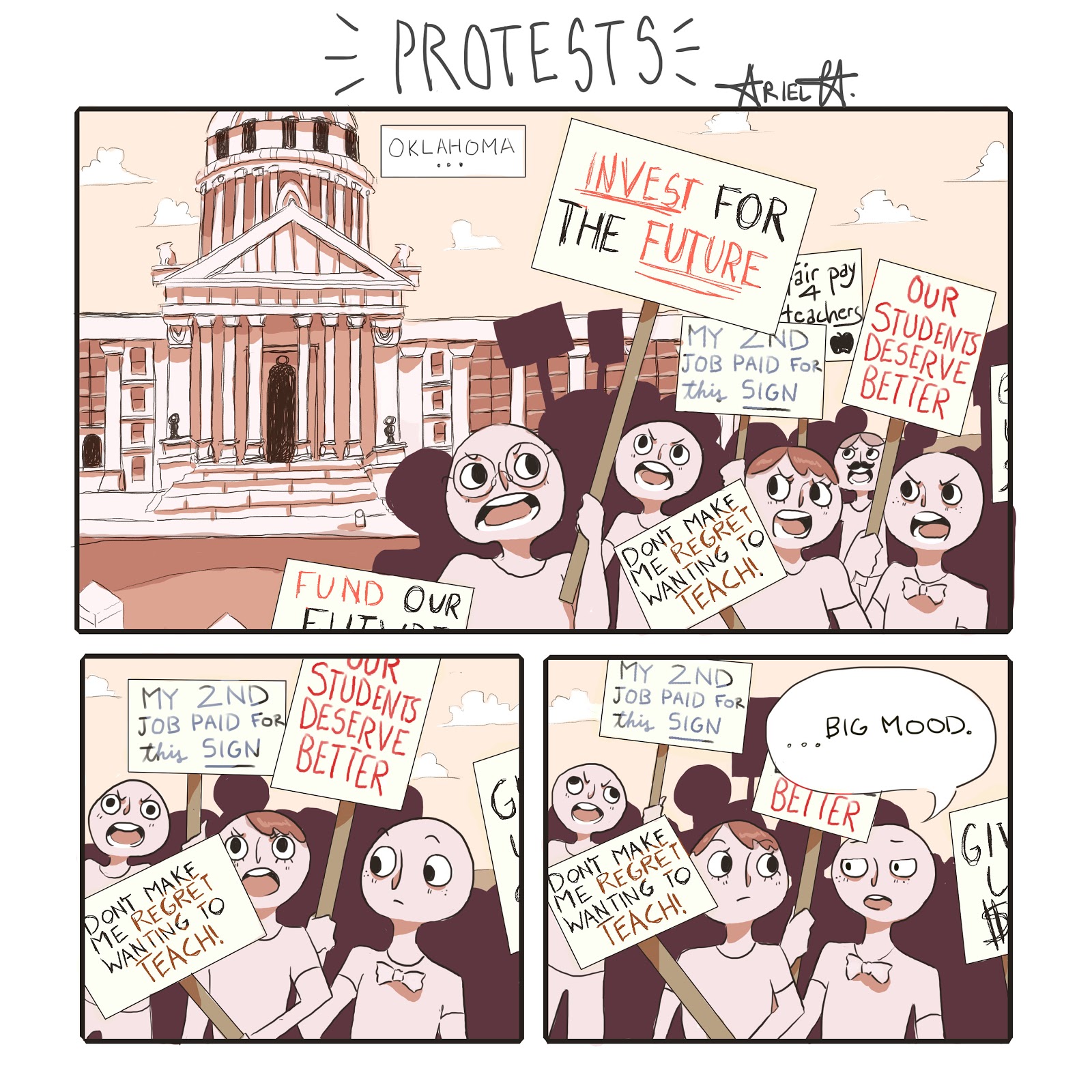
Cartoon: Protests

Written by: Ariel Hilomen — abhilomen@ucdavis.edu

Disclaimer: The views and opinions expressed by individual cartoonists belong to the cartoonists alone and do not necessarily indicate the views and opinions held by The California Aggie.

Our language about climate change isn’t helping anyone

JEREMY DANG / AGGIE

Headlines about “record-breaking” temperatures dissuade readers from addressing the issue properly

Once, my father and I took a walk around the edge of Lake Tahoe. It was early April — the start of spring — but the weather was fair for that time of the year. Even the surrounding peaks were stark, devoid of the snow caps that would typically be present throughout April and into May. Waves lapped invitingly at the shore, pushing against small puddles of melting ice scattered sporadically along the beach.

“Did you know,” my father said as we kicked around the remaining slush that was tinged dirt-brown by the sand, “that this year was the hottest on record?”

We continued on in resigned silence, the words falling flatly in the dead air as I tried to wrap my head around the implication of my father’s statement.

Now, three years later, I still can’t fathom what exactly that phrase means to me. Understanding “record-high” is difficult when I’ve only experienced 20 other winters.

News’ greatest nemesis has always been science — littered with emotionless facts, nothing fails to grasp the attention of the public more than a bland scientific report. As such, news outlets have always struggled to put a human face to science. In some cases, though usually rare, attempts have been fruitful — look at Rachel Carson’s “A Silent Spring,” which eventually led to a nationwide ban on specific agricultural pesticides.

Now, however, we have found media’s true Achilles heel: climate change coverage.

It’s not my father’s fault for regurgitating some headline or another that he’d read earlier in the day, not when most articles contain flashy headlines along the lines of “Arctic Sea Ice Missed a Record Low. Barely.” or “More of the Bay Area Could Be Underwater in 2100 Than Previously Expected.” In fact, this problem spans across all outlets, from the New York Times (re: the first two articles mentioned) to The Washington Post (“Unusual, record-breaking April cold to crash into eastern U.S. Friday through the weekend”) to USA Today (“Global warming is causing an Alaskan glacier to melt at the fastest pace in 400 years”).

Such headlines are not attention-grabbing — but rather the opposite. Extraordinarily vague and containing at least one massive guilt-trip, articles that fall into this category leave their readers less inclined to discuss global warming because nobody wants to invest their time in reading about grim issues. Instead of encouraging the necessary conversation that would inspire further introspection, these headlines leave little dent on the day-to-day lives of individual readers. How many people care about what happens to an Alaskan glacier in 400 years when they have their own pressing personal troubles now?

What do I do when I hear that California’s annual fire season was two months longer despite record rainfall the previous winter? Like my father, I turn my back on the topic and refuse to listen to the damning information.

A worse consequence of writing about global warming in this manner, however, is the total public desensitization toward the subject.

Announcing 2016 as the hottest year on record — when the same was said for 2015 and 2014 — gradually loses impact on readers when we only expect the upward trend to continue the following year. Yes, this information is newsworthy at the time of its publication; yes, it’s also necessary that the public should have access to this information. But, as with the topic of climate change as a whole, the media’s addiction to hyperbole and sensationalism distances the audience from the issue and only further strengthens our desire to remove ourselves from the problem.

While we are constantly discovering more about the rate and effects of global warming, our treatment of it in the news needs to evolve as well.

I cannot speak to how to incentivize public action. Instead, let me offer a solution that would capture my attention if I were perusing the subject:

Global warming is at our doorstep, knocking. If we continue to treat it as a fearful thing, people will be inclined to hide and ignore the problem until it goes away. On the other hand, if we include personal success stories about individual or community attempts to slow climate change, readers might be more inclined to listen.

So, journalists take note: Records mean nothing if they exist only to be broken.


Written by: Erin Hamilton — elhamilton@ucdavis.edu

Disclaimer: The views and opinions expressed by individual columnists belong to the columnists alone and do not necessarily indicate the views and opinions held by The California Aggie.

UC Davis sports to catch on Picnic Day

CHRISTIE NEO / AGGIE

With crowds of people expected to attend Picnic Day, UC Davis sports rev up for the weekend

With the 104th Picnic Day celebration at UC Davis this year on April 21, and over 200 events taking place throughout campus, Aggie sports teams are getting ready to play and showcase their skills to the many people who plan to show up.

Here is the list of sports taking place on Picnic Day:


  • 10 a.m., Women’s tennis vs Sacramento State at the Marya Welch Tennis Center
  • 12 p.m., Women’s water polo vs Cal Berkeley at Schaal Aquatics Center
  • 1 p.m., Softball vs UC Riverside at La Rue Field
  • 1:30 p.m., Men’s tennis vs UC Riverside at Marya Welch Tennis Center
  • 2 p.m., Baseball vs UC Santa Barbara at Dobbins Baseball Complex
  • 3 p.m., Softball vs UC Riverside at La Rue Field
  • 5 p.m., Women’s lacrosse vs Fresno State at Aggie Stadium


Written by: Ryan Bugsch — sports@theaggie.org

Opportunities to get involved in intramural sports

MACLEAN HARTFORD / AGGIE FILE

IM community offers team, individual sports, jobs

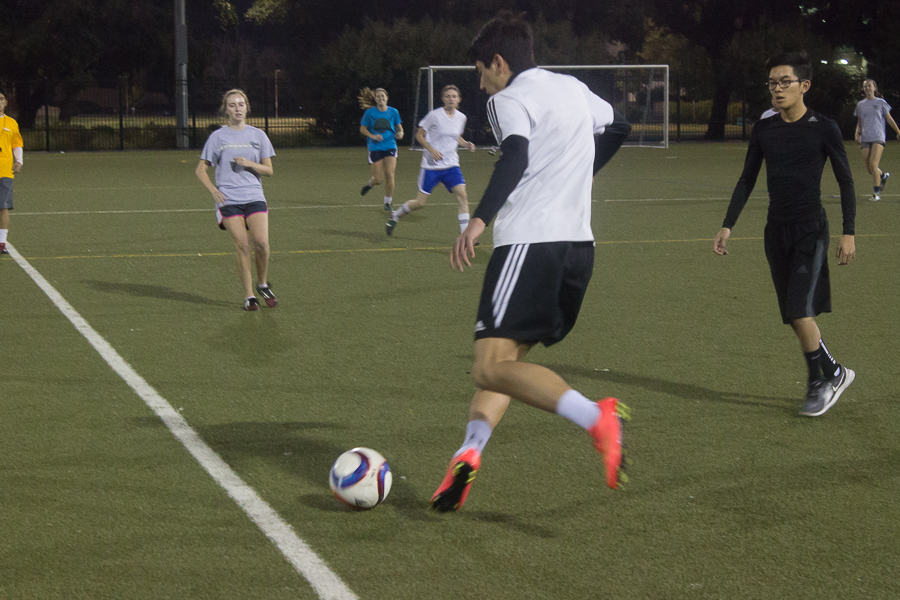
In the athletics community, the beginning of a new quarter means the beginning of new intramural sports teams and leagues. With warmer temperatures and longer days leading up to summer, spring IM sports offer opportunities for students to take breaks from studying, meet new people and stay active as the academic year closes out.

This Spring Quarter there are seven different sports for IM athletes to play, more than any other quarter: flag football, grass volleyball, soccer, softball, tennis, inner tube water polo and ultimate frisbee. These teams offer a wide range of practice and game day times, as well as give students the chance to play on a team or individually.

Officiated sports teams have an entrance fee of $50 a team, with non-officiated teams capping at $30 and individual or partner teams rounding off at $10. First-years participating in the sports within the resident hall leagues have their fees completely covered by Student Housing.

Teams play one game every week for five weeks. They are then divided into ranks based on their individual records, rating scores and FairPlay. After the regular season is over, the top teams compete in one- to two-week long playoffs, and finally in a one-league championship to determine who will hold the crown for that IM sport.

The teams that earn the first-place prize are awarded a team T-shirt and also get their team pictures featured on the Activities and Recreation Center’s Wall of Fame, which has displayed over 3,500 champion groups since its birth in the late 1960s.

For students who are already familiar with the spring sports offered and are looking for something new to try, UC Davis extends the IM sports organization with tournaments and paloozas with six other one-game sports, including cornhole, outdoor basketball, kickball, KanJam, soccer tennis, and spikeball. The registration dates for these sports are either currently open or will be opening up within the next few weeks.

Second-year human development major Addy Newman, who played flag football in the fall, gave her advice on why students should participate in IM sports.

“It’s something so different because we don’t really have the time in our day to do things like this,” Newman said. “We are full-time students and members of clubs and other things and extracurriculars, and we have jobs. Soon enough, we won’t have the opportunity to just sign up for an easy sport. So I’d say do it. It’s a good way to be active, and it’s a good way to meet friends. Even if you don’t know anyone else, sign up.”

Second-year biological sciences major Connor Heinzman, who has experience playing IM soccer, ultimate frisbee, volleyball, and softball, works as a resident advisor in the Tercero Residence Halls and added to Newman’s sentiments by giving his thoughts on why IM sports are particularly beneficial for first year students.

“It’s just something you can go do with your friends and it’s kinda competitive, which is nice,” Heinzman said. “It’s a great way to make friends in the community and get involved. If you play with your floor as a freshman, it’s a great way to meet people on your floor you might not have met yet. It’s just a nice, fun way to take a break from all the studying.”

On top of allowing students to compete in the diverse IM sports, UC Davis also provides opportunities for students to work within the organization and gain even more experience in the world of sports.

There are three different levels of jobs within IM sports alone: officials, supervisors and managers. The sports officials, or referees, are in charge of keeping the sports games fun and safe for participants as well as striving to administer the rules for each sport and ensure that each game is played and scored with complete fairness. They are also responsible for the setup and breakdown of each field and court before and after the games, and these students may have the opportunity to work up in the IM career ladder based on their performances as officials.

The competitive sports supervisors are one step above officials, and they attend each intramural games, as well as club sport tournaments, practices, games and any other home events. Supervisors act as first responders in case of any injuries during games and manage the officials to make sure that each game runs smoothly.

The top title belongs to the competitive sports managers, who work together with the other positions and sports teams to work out schedules and practices. These students also assist club teams in any way that they can and are responsible for the hiring, training, and ultimate scheduling of officials for IM sports.

Fourth-year psychology major Praveen Karunatileka made the transition from an IM athlete to an official and described how he got involved in the program.

“I had always played IM sports,” Karunatileka said. “Freshman and sophomore year, I had a couple friends that were in the department, and I thought it would be a cool thing to do, so I became an official last year. I reffed soccer for two quarters, […] and I really enjoyed officiating and wanted to get more involved, so I applied for supervisor and, from there, it just kinda took off. Officiating is a unique way to look at sports, especially since I had never really done serious officiating at any level, so I guess I have more appreciation for officials now.”

Karunatileka also shared some of his favorite elements about being involved in the IM sport world.

“Honestly, it’s a really good way for me to get a workout, always moving around and you get to meet […] so many like-minded people — everyone likes sports,” Karunatileka said. “It doesn’t even feel like work when you’re out there. You’re just really hanging out with your friends and everyone is cool […] The whole atmosphere around the IM sports program is really cool, and once you’re involved with it, it’s something you never really want to leave.”

Students are encouraged to both participate in IM sports and cheer on their peers during matches. For more information about the leagues offered and how to get involved in IM sports, visit the UC Davis Campus Recreation and Unions website.


Written by: Kennedy Walker — sports@theaggie.org

UC Davis hosts community processing event following shooting of Stephon Clark

CAITLYN SAMPLEY / AGGIE

Student Housing hosts communal event for residents, student staff

On April 4, Student Housing staff members and other administrative officials held a community processing event in Wall Hall in the Tercero dormitory area to acknowledge and provide a safe space for students and community members to process the recent shooting of Stephon Clark.

Clark, a 22-year-old African American man, was shot and killed on March 18 in Sacramento by two Sacramento police officers. Clark was approached by the officers who were responding to a vandalism complaint in his South Sacramento neighborhood; within 10 minutes, the officers fired 20 shots at Clark, who was unarmed, killing him in his grandmother’s backyard. According to an autopsy performed by Dr. Bennet Omalu, Clark was struck, primarily in his back, eight times.

Clark’s case has received national attention and outrage.

In response to the traumatic and sudden nature of Clark’s death, Student Housing officials coordinated a processing event to create a safe space for students, including those within the residential halls and living off campus. The event allowed attendees to express their emotions and receive and give support.

UC Davis’ Director of Diversity Inclusion, Rich Shintaku, began the program by expressing how strongly his colleagues were affected by this traumatic event and their concern over the current condition of the nation. He briefly discussed the relationship the university had with Stephon Clark — a member of the community in Sacramento as well as in Davis.

“[There is a] higher sense of emotion, of feeling,” Shintaku said. “Stephon Clark. I will say his name. [Clark] is a real human being, we have interacted with him here as part of UC Davis. [The shooting of] Stephon Clark is really personal to us here.”

Shintaku referenced Chancellor Gary May’s recent email regarding the impact of Clark’s death, sent out to students and staff, as well as the work being done by the UC Davis Police Department. Joseph Farrow, the UC Davis Chief of Police, is currently prioritizing situational de-escalation. Shintaku also highlighted the current studies of the Firearm Violence Research Center within the Violence Prevention Research Program at UC Davis.

Residential Education Coordinator Vincent Cardenas and Conduct Coordinator Adam Dowrie began the next portion of the program by outlining the sequence of events and establishing some basic expectations for the space during the evening.

“The purpose of today’s event is to give people an opportunity to process the shooting of Stephon Clark and be able to share with one another, support one another and grieve with one another,” Dowrie said.

“[It’s important] just that here at UC Davis there is a place for people to feel comfortable and experience the pain of what’s been going on,” Cardenas said. “This is a space to process, to talk, to listen, share and express feelings [and] emotions. There is no censoring in this space tonight.”

Both Dowrie and Cardenas acknowledged their reasoning for organizing the event.

“As a person of color, I felt like I really wanted to make sure that other people of color felt that they could have a conversation,” Cardenas said. “I think really pushing to make sure that could happen was sort of a personal goal.”

“As a white person, I thought it important to do something, and I thought this would be a great opportunity to show allyship to our students and also staff of color,” Dowrie said. “Vince and I decided that we wanted to take this on, and we were supported by our department in doing so.”

Cardenas went on to detail his emotional connection to the shooting of Stephon Clark. With regard to the location of Clark’s shooting — in his own grandmother’s backyard — Cardenas acknowledged that spaces perceived as safe might not necessarily be so.

“I can’t guarantee that this is a safe space,” Cardenas said. “So let’s say it’s a brave space.”

Members of staff and faculty sat side-by-side, in couches and chairs in Wall Main and the conversations that ensued for the next two hours ranged from quiet whispers to freely flowing tears, to louder statements filled with political criticism, discussion of the media and the role of police in shootings of unarmed individuals.

One attendee asked what can be done to stop such shootings. During a discussion on the perceived role of police by the media and the general public, one student said “wearing a badge” makes someone “the judge, the jury and the executioner.”

“Everybody wants to be black, but they don’t really want to be black,” said another student, during a heated discussion on the appropriation of black American culture by mass media.

“It’s not a black issue, it’s a human rights issue,” said second-year political science major Yash Patel, receiving a chorus of snapping fingers from his group members.

During a group discussion, Branden Petitt, the director of the Office of Student Development, explained his take on the importance of such processing events.

“I think it’s important for students to have that voice,” Petitt said. “To share with each other and make sure that the UC Davis community is one where they can feel safe and have that dialogue with each other.”

As the evening came to a close, staff and faculty expressed their overall takeaways from the event.

“There’s been some super good conversation in all of the groups,” Dowrie said. “It started off with one processing question, and I think each group has taken it in a different direction and been able to process however it is that they needed to, which is ultimately the goal of the program: for people to be able to engage in a way that is beneficial and meaningful to them.”


Written by: Priyanka Shreedar — campus@theaggie.org

America’s drained educational budget

CAITLYN SAMPLEY / AGGIE

Reinvest in public education, students’ futures

Each year, teachers have watched, petrified, as money is diverted from the education budget and students become desensitized to dwindling classroom supplies and textbooks that have been used 10 times too many. One art teacher in Tennessee recounted her experience using old markers to make watercolors. Another teacher from Oklahoma, making a meager $44,000 despite 20 years of experience and three degrees, detailed the damaged furniture and wasp-infested, cracked ceiling in her classroom. There are countless others in similar situations across the nation. Needless to say, they have all felt compelled to be “resourceful” and dip into their own bank accounts to keep classrooms functioning,

According to the Center on Budget and Policy Priorities, data collected from 2015 shows that California has experienced a 5.8 percent decrease in combined state and local education funding since 2008. In fact, education funding for most states is below what it was a decade ago.

Enough is enough. Teachers are taking a break from the classroom to chant an all-too-familiar refrain: Put more state money back into education. Walkouts and strikes have recently erupted in West Virginia, Oklahoma and other states as teachers resist heinous education budget cuts, demand higher wages and fight for increased funding. In January, rallies in Davis were held by the Davis Teachers Association. Parents and students joined educators to protest the below-state-average funding in the Davis Joint Unified School District.

Funding education also means taking care of hardworking teachers so that they can provide a quality education. The average salary of public school teachers  for California was $77,179 in 2015-16. This amount is on average $10,000-15,000 higher than their counterparts in Arizona, which ranks last in state average teacher salaries. With many teachers living paycheck to paycheck and teacher shortages mounting, pursuing a career in teaching just doesn’t seem practical. The resulting higher teacher-to-student ratio means larger class sizes, less personal attention given to individual students and a mediocre learning experience at best.

Of course, not everyone in the education food chain is small prey. Christopher Hoffman, the superintendent of the Elk Grove Unified School District, is just one example of administrative bloat. He earned $330,951 for the 2017-18 school year, not to mention generous perks and benefits. The Editorial Board demands to know why teachers aren’t getting the compensation that they deserve for their dedication to laying the foundation for learning in the classroom.

Legislators are compromising the integrity of American public education. We urge the public to vote for representatives in the November 2018 midterm elections who, instead of giving large corporations tax breaks, will reallocate funds into education. We need legislature that will realize the importance of investing in the future of our children, and it doesn’t take a K-12 education to see that.


Written by: The Editorial Board 

Police Logs

SHEREEN LEE / AGGIE

Leave the turkeys alone

March 29

“Female keeps banging on shared wall stating that reporting party is making too much noise — states this is an ongoing issue with neighbor and apartment management is aware.”

“Unattended white box with Zappos label and oil soaked rag — near entrance of plot right after crossing the first set of tracks.”

“Male standing in the right-hand turn lane near Starbucks at this location waving arms and talking to himself.”


March 30

“Subject used a bat to break a vehicle window, then fled in another vehicle.”


March 31

“Reporting party’s girlfriend at home and heard door open, not sure who it may be. Reporting party says no one is supposed to be home.”

“Unknown subject dumping logs in street in front of his residence — reporting party advised he’s received letter from city trying to fine him, and they told him he needed to file police report in order to avoid the fines.”


April 1

“Dog in backyard. Barking for last few hours.”

“On the bike path behind location, three adults and four juveniles shooting at turkeys with a BB gun.”


April 2

“Reporting party got into minor road rage incident and other driver followed reporting party home, suspect then approached reporting party and punched him through his window. Subject has since left area.”

“Complaint of neighbor taking out garbage cans late at night. Reporting party requested officer speak with neighbor.”

Shia and Sunni: What these labels mean for the Middle East

VOB08 [CC BY 2.0] / COMMONS
Long-standing religious divisions could keep Syria and Iraq from democratizing

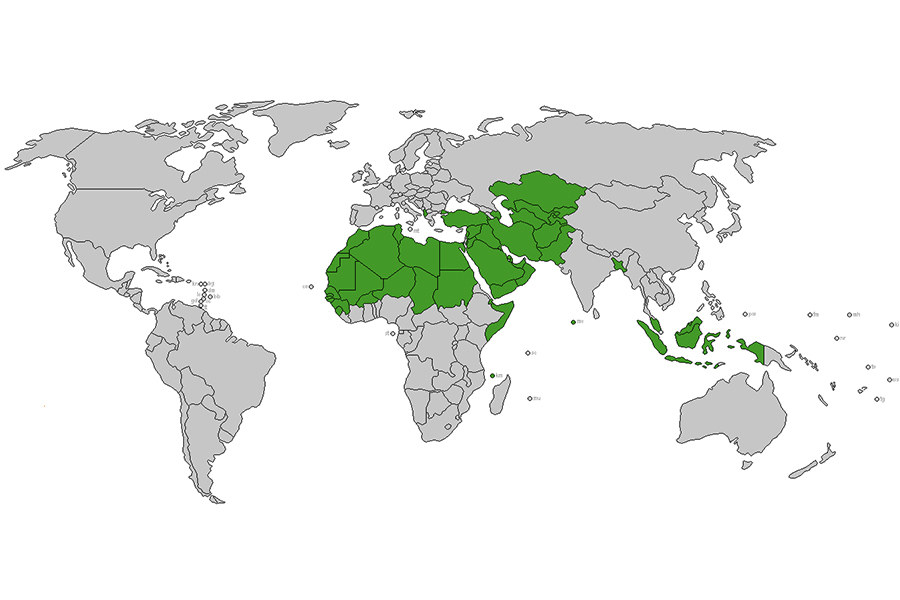
As easy as it may be to reduce the conflicts in the Middle East to “red team versus blue team,” it’s not that simple. The Middle East is a region tangled within its own cold war: the Iran-Saudi Arabia proxy conflict. There are many players in this conflict, all of whom are engaged in this power struggle between Iran and Saudi, whose origins of conflict date back to the Iranian Revolution of 1979.

After the revolution, Iran assumed a theocratic system of government that was poorly received by both conservative Sunni monarchies (i.e., Saudi Arabia) and the United States due to their new government’s anti-American rhetoric and Shia Islamic government. Given that the U.S. and Saudi Arabia have been long-standing allies with a mutually dependent relationship, they both emerge as formidable opponents to the Iranian government. The tension is further complicated presently, after the rise of ISIS in recent years in addition to the Syrian civil war.

After the Arab Spring, a series of protests ensued throughout Syria, to which the Syrian president, Bashar al-Assad, responded with extreme violence, killing hundreds of demonstrators and imprisoning others. In response, Sunni rebel groups formed with the intent of overthrowing the government. The violence brought international attention, with Iran backing Assad’s regime (as both are Shia) and Saudi Arabia backing the rebels (as both are Sunni).

In Iraq, the Shia-led government faced the dangerous threat of ISIS, a Sunni extremist group. In response to this threat, Iran backed the Iraqi Shiite Militia to fight ISIS. Iraq is one of the few countries that’s allied with both Iran and the United States. And despite the assistance provided by Iran, the U.S. and Saudi Arabia want to turn Iraq away from Iran, but this is difficult since Iran has powerful allies in Iraqi politics. If not already complicated enough, the complexity of the conflict is only furthered with Lebanon.

Hezbollah is a Shia militia and political group in Lebanon with a significant amount of power. They have backed Assad’s regime (Shia) in Syria by fighting against the rebels (Sunni), much to the displeasure of Saudi Arabia (Sunni). This is not the only aspect of Hezbollah that has angered Saudi Arabia, however, as they are involved intimately with Iran, receiving millions in monetary and weaponry funds. They have assisted in recruiting, training and arming a range of new militant groups with the intent of advancing Iran’s agenda.

To word it in the most facile of ways, one could consider the conflict as Iran, Hezbollah and Assad’s regime versus Saudi Arabia and the United States. However, there are still two key players wedged in the middle in the fight for a stable, democratic government: Iraq and the Syrian Democratic Forces.

After the expulsion and near-eradication of much of ISIS, Iraq now stands at a crucial point after years of war and violence. Will Iraq be able to rise as a stable, functioning democracy united with its Shiite, Sunni and Kurdish populations? The prime minister of Iraq is intent on achieving this, but the odds seem unlikely. As a state allied with both the U.S. and Iran, each side will try to sway them in a particular direction, including Saudi Arabia, due to its very tense relationship with Iran. Iran has assisted Iraq in pushing back ISIS, and now that ISIS is near the brink of total eradication, Iran’s extensive reach of power poses an issue for Iraq. Both Iranian and Saudi influences in Iraq could inhibit this democratic movement, as both have strong affiliations to two different sects of Islam that have a history deeply rooted in conflict with one another. If Iraq fails to democratize or continues with its current system of government, one could expect to see them embroiled in the proxy war for years to come.

The Syrian Democratic Forces face a similar battle. The SDF is a rebel group primarily composed of Sunni Kurds who have been instrumental in expelling ISIS from the region. Not only are they in the fight against ISIS, but they are also in the fight for democracy. The rebel group, which opposes Assad, advocates for secular democracy in Syria. If successful, this could radically change the course of Syria and the lives of many Syrians who have been suffering for years in what has been labeled the worst refugee crisis since World War II. If Iran and Hezbollah continue to extend their support to Assad’s regime, it would make the fight to democratize onerous, as they would be up against two very powerful groups. Despite much resentment for Assad, there is still a vested interest from Iran to ensure that a Shiite government formulates, as this would allow Iran to further extend its power in the region.

It’s easy to connect the lines between political alliances and Sunni and Shia labels, and as much as these labels dictate these alliances, it’s not about religion; this is about political control. The issue lies in the fact that, historically, these two labels have proven to be a source of much division. Labeling “Sunni” and “Shia,” much like “Red Team” and “Blue Team,” is a swift way to create opposition. Saudi Arabia and Iran, both as major players in the region, are fighting for political supremacy, and the easiest way to do so is to take an already divisive label and draw lines between the various countries’ religious affiliations. This is a power struggle, and these labels presently appear to be the most efficient means to ensure that struggle persists for years to come.


Written by: Hanadi Jordan — hajordan@ucdavis.edu

Disclaimer: The views and opinions expressed by individual columnists belong to the columnists alone and do not necessarily indicate the views and opinions held by The California Aggie.

Guest: What Israel means to me

DENNIS JARVIS [(CC BY-SA 2.0)] / FLICKR
President of Aggies for Israel celebrates 70th anniversary of Israel’s establishment

This year marks the 70th anniversary of the establishment of Israel. On April 18, Aggies of different cultures, religions and sexual orientations will come together to celebrate this historic occasion as part of a campaign on more than 160 campuses across the U.S. and Canada. By showcasing the positive energy and pride emanating from the Jewish state and its supporters, we hope to inspire students who have little to no knowledge of Israel — a country that’s deeply important to me as a proud Jew.

In anticipation of this event, I interviewed Aggies about their personal connections to Israel and why they’re excited to celebrate its 70th birthday with Celebrate 70.

Daniel Vainish, a fourth-year political science and philosophy double major and an LGBTQIA student, feels an irreplaceably strong bond with Israel. Since 2008, same-sex families have been allowed to jointly adopt, compared to the limited “co-guardianship” rights that were instilled before. In the Israeli Defense Force, openly gay, lesbian, bisexual and transgender soldiers serve without hindrance in all branches of the military. Transgender soldiers’ transitions, injections and surgeries are also covered by the military’s health insurance — something the U.S. has never done.

“In most places I need to stand up for my identity and beliefs as a gay Israeli Jew,” Vainish said. “Israel is a place where my identity is protected by its legal system, a place where I’m not relegated to a minority status because of who I am. I know there is a place that will welcome me for who I am. I am so excited to celebrate this monumental time in Israel’s history with Celebrate 70.”

The beauty about Israel is that you can feel this connection that binds you to the land without ever visiting. First-year neurobiology, physiology and behavior major Sascha Recht has never been but still feels this sense of connection to Israel.

“Israel is important to me because it’s a connection to my people, my culture — a way to constantly remind me of those who came before me and the traditions they embraced,” Recht said. “As a Jew, there is an immense comfort knowing I can go to Israel and feel at home at any time because our people’s connection to that land is unprecedented. I’ve been so fortunate to be welcomed by the Jewish community at Davis and found a community that shares this love for Israel. Israel’s 70th birthday is important to me because it signifies the permanence of Israel.”

Jews around the world feel this connection to Israel, to their homeland. Most people think that Israel is only important to Jews, but that’s far from reality. Jerusalem, the capital of Israel, is home to three major religions — Judaism, Christianity and Islam.

On a recent trip to Israel, fourth-year political science major Nicholas Francois came back feeling more connected than ever.

“Being a non-denominational Christian with no cultural ties to Israel and understanding the instability of that part of the world, I never expected the overwhelming feelings of joy and fulfillment I found in Israel,” Francois said. “Calling it magical sounds cheesy, but that is the word I’d use to describe standing in 1,000-year-old churches, floating in the Dead Sea, visiting the West Bank and camping in a Bedouin village. Challenge your beliefs and experience Israel for yourself. Israel’s 70th birthday event on campus will be a wonderful way to celebrate a country that embraces different religions and cultures.”

Dana Benavi, the vice president of Aggies for Israel, is an Israeli-born student who feels a deeper connection and love for her country.

“Israel is my home,” Benavi said. “It’s where my parents got married, where I was born, where my family lives, where I laugh, where I cry, but most importantly it’s where I can proudly be Jewish. Celebrating Israel’s 70th birthday is important to me because it’s a chance for me to proudly celebrate my family and my country.”

There is this sense of connection for Jews who move from Israel that comes from all the history that the land of Israel holds: from feeling secure in a country where Jews are the majority to knowing that you always have a home to go to.

As an Iranian Jew, Israel is a place I can call my home. It’s a country where 33 of my relatives live. It’s the home for Arabs, Muslims, Christians, Baha’is, Druze and many other religions. It’s a place where people invite strangers to their homes for weekly Shabbat dinners. It’s the country that opened her arms to my parents when they had fled Iran from religious persecution. Israel is about having a place that anyone can go to and be granted sanctuary. Israel is much more than a sliver of tiny land in the Middle East; she is living proof that the Jewish people have, against all odds, survived and returned to their home where they will continue to live and thrive.


Written by: Charline Delkhah

Charline Delkhah is a fourth-year student studying managerial economics and computer science at UC Davis. She is currently a CAMERA Fellow and the president of Aggies for Israel, which can be reached at afi.ucd@gmail.com.


Disclaimer: The views and opinions expressed by individual columnists belong to the columnists alone and do not necessarily indicate the views and opinions held by The California Aggie.

US Department of Education opened two Title IX cases at UC Davis in 2015, records request reveals

JULI PEREZ / AGGIE

Cases allege discrimination, failure to respond to complaints of sexual violence

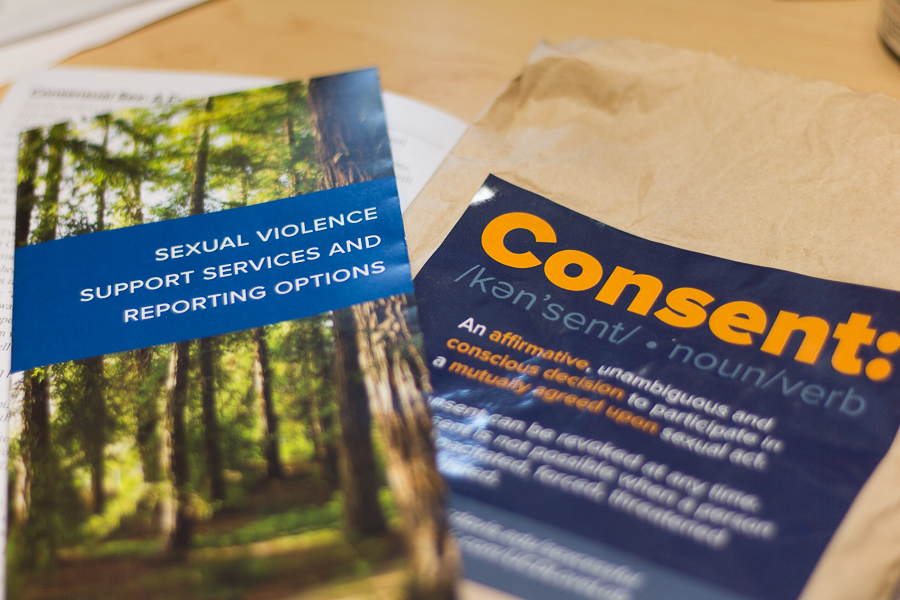
On Dec. 5, 2017, The California Aggie received files from the U.S. Department of Education, Office of Civil Rights concerning two Title IX cases opened against UC Davis in the spring of 2015 after having filed a Freedom of Information Act request for the documents.

The first letter, written to former Chancellor Linda Katehi and dated March 24, 2015, describes three claims that the complainant, whose identity was withheld in compliance with the office’s case processing procedures, leveled against the university. The claims allege that UC Davis “failed to provide student with a prompt and equitable resolution of her complaint of sexual assault” and that it “fails to promptly and equitably respond to sexual violence complaints, reports and/or other incidents of which it has notice.” The complainant also alleges that the university’s failure to respond to this incident of sexual violence “allows students to be subjected to a hostile environment on the basis of sex.”

A second letter, dated Oct. 17, 2017, was sent to current Chancellor Gary May to notify UC Davis of a change in scope in the investigation. It included information about a second case opened on May 20, 2015, which claimed the university discriminated on the basis of sex and again failed to provide a prompt and equitable resolution to a second student’s complaint of sexual assault.

The second student’s complaint was originally added to the first investigation, but after a change in scope for the first claim, the second student’s accusation is being looked at as a separate issue.

During an investigation, the OCR acts as a neutral fact-finding body. Its responsibility is not to assess the case of sexual assault itself, but to investigate whether the complainant’s rights were violated by the educational institution. The OCR investigates issues of discrimination for educational bodies that receive federal funding from the U.S. Department of Education. Title IX cases specifically deal with discrimination on the basis of sex.

Because these are ongoing cases, all information about the case has been withheld. The first letter from 2015 includes five and a half pages of blacked-out information due to a possibility that release of the information could impede the investigation or “constitute an unwarranted invasion of privacy.”

Wendi Delmendo, UC Davis’s Title IX officer, said that changes in the University of California’s sexual harassment policy over the past few years have attempted to combat issues like those described in the Title IX cases. As detailed in a letter to students in June 2017, Delmendo noted that there has been an increase in full-time investigative staff at the Title IX office in response to efforts by the UC to better handle sexual assault claims.

These investigators interview both the victim, the complainant, the accused and the respondent, and then gather evidence and witness testimony from both sides. After this process is complete, an evidence packet is given to both parties, at which time they may provide additional information and suggest questions for the investigator to ask. At the end of this process, the report is completed and the investigator makes a suggestion as to resolution. This entire process is supposed to be completed in under 50 days in compliance with UC policy.

“We have to complete the investigation in that time frame unless there is a good reason,” Delmendo said.

Due to confidentiality, Delmendo could not speak to the 2015 cases. Investigators at OCR did not respond to requests for comment.

When asked for comment, Chancellor May linked to a statement given on Dec. 13 of last year titled “Abusive Behavior is Unacceptable,” which is a response to the growing #MeToo movement.

“Our protocols and processes [for investigating abuse] have improved greatly over the years,” May’s statement read. “We’ve made solid strides in how we provide education and training.”


Written by: Taylor LaPoint — campus@theaggie.org

What’s sprouting at the Student Farm this spring?

BRIAN LANDRY / AGGIE

Innovative agriculture projects run by Davis students

For three consecutive years, UC Davis has remained number one in agriculture studies worldwide. Over the years Davis has earned its place as number one through award-winning research publications and rich teaching and research programs. Davis offers numerous opportunities for agriculture students to get involved with student-run farms, agribusiness training centers and entrepreneurial programs. In recent years, university students have innovated and implemented unique programs to highlight the importance of urban agriculture and apply these practices.  

Urban agriculture is the practice of cultivating and distributing produce to urban areas. The practice has become increasingly popular due to the increase of worldwide urbanization. UC Davis offers students the opportunity to gain a hands-on learning experience in urban agriculture. A prime example of this is the Student Farm. The student farm consists of an ecological garden, a market garden, a vineyard, a greenhouse and more.

Only a 10-minute walk from the Memorial Union, the Student Farm is located on Extension Center Drive and stretches across a 20-acre parcel. The farm began in the late 1970s and was run by a group of UC Davis students. The goal of the farm was to allow students to learn and experience farming and gardening techniques through problem-solving and experimentation. Each quarter, student employees and student volunteers initiate projects to promote long-term stability.

Raoul Adamchak is the manager of the market garden and oversees the nine acres of certified organic produce. Adamchak details what the market garden contributes to the Davis community through education programs and student projects.

“We grow nine acres of organic vegetables through the CSA, which stands for community supported agriculture,” Adamchak said. “It’s basically a subscription produce service so every week we provide a full basket to 108 members of the Davis community, including students, faculty and administrators.”

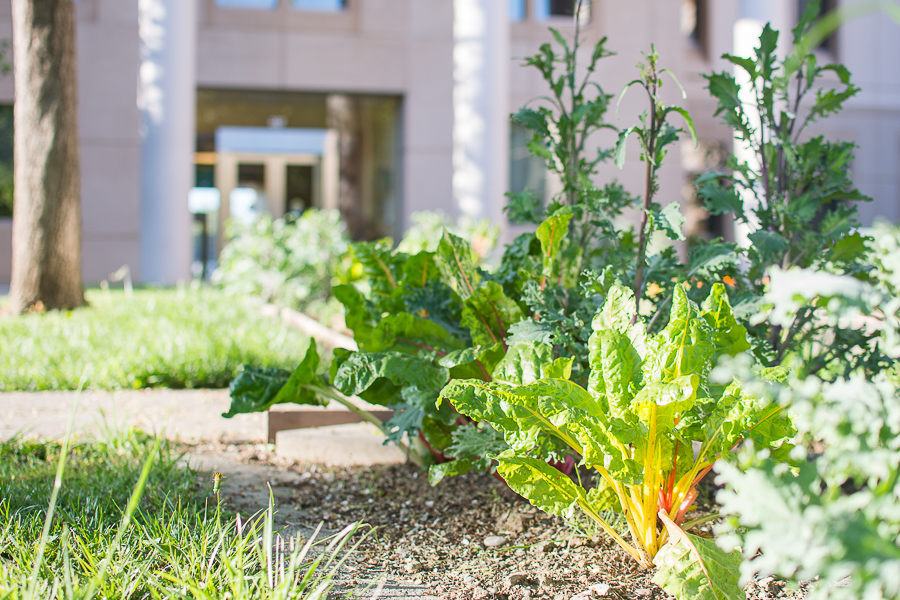
The vast nine-acre garden is certified organic farmland, meaning that the produce is not cultivated with the use of synthetic pesticides or fertilizers. Instead, the market farm is run by relying on practices that support ecosystem services such as pollination and natural pest control from the animals and organisms from the surrounding landscape. The garden hosts owl houses and trees in attempt to attract birds to prevent rodent infestation and vibrantly-colored flowers to attract pollinators.

In addition, some of the produce that is locally grown at the Student Farm is sold to the dining services, the ASUCD Coffee House and the Farmers Market here on campus.

Moreover, the Student Farm also engages in other distinct programs that allow students to “dig” into more hands-on experiences by addressing food insecurity and educating young children.

“At times we have a surplus of produce and the student farm provides fresh local produce for the UC Davis students free of cost,” Adamchak said. “The Fresh Focus project provides more and more food every year for students who may not be able to afford fresh vegetables, to make that available to them is just great!”

The students who started the initiative navigated the “red tape” of donating food on campus and since then, the donation of food has grown exponentially in the past two years.

Margaret Cooper, a third-year environmental science and management major and lead student farmer at the Ecological Garden, expanded on another intriguing initiative, the Flower Project. Starting in fall of 2017, the project has provided the Davis community with local weekly flower arrangements for campus events, dining hall decor and the CSA.

“The Flower Project grows flowers in both the ecological and market garden and provides beautiful flowers that grow seasonally to our campus and around Davis,” Cooper said. “The Flower Project has allowed me to find my passion in gardening. Before coming I didn’t realize how much I enjoyed spending my mornings in the garden harvesting flowers that I wouldn’t find down the street at Trader Joe’s, and since then I have learned the importance of supporting local farms and local flower production.”

Cooper detailed how many grocery stores import flowers from different countries such as Columbia and other parts of Latin America. The transport of these flowers emits a significant amount of carbon dioxide into the atmosphere, which is detrimental to the environment.

Contrary to popular belief, volunteers and student employees don’t require any previous experience to get involved on the Student Farm. Internships, volunteer programs and UC Davis classes offer numerous ways for students to participate.

“I came to the Student Farm with little to no knowledge of gardening except for some weeding and basic transplanting I did with my parents as a child,” Cooper said. “The Student Farm has allowed my learning about running a small scale flower CSA, how to repair drip irrigation, and create new beds as well as crop plants for the seasons [which] was helpful because as our food crisis grows due to climate change, it will be necessary for us to gain access to food.”

Additionally, the Student Farm welcomes even volunteers and student employees who are not agriculture or plant science majors.

“The farm allows other majors to broaden their scope and learn about agriculture,” Cooper said. “The community at the Student Farm is extremely welcoming to all, I feel very blessed to have met all the interns, volunteers, and other student farmers.”

The Student Farm is directed by Katharina Ullmann. Ullmann helps staff and student employees to ensure that the Student Farm is a space where students can gain valuable insight or take a break from the fast-paced school day.

“You might spend most of your time in your dorm room, in class, at the MU or the library, but this sort of lets you take some time away from all that and allows you to slow down and observe things, which I think can be a good break from the rush of classes,” Ullman said. “There is all the regular stuff that goes on around here in terms of growing food and students coming out here to learn, but there are [also] a lot of exciting projects that happen especially during the spring.”

One project currently in progress this quarter is the Kids in the Garden internship program. UC Davis students can receive credit by leading tours for elementary school children.

“On certain days you might see a bunch of little kids running around the garden and that’s the Kids in the Garden program,” Ullmann said. “This quarter the students are giving tours to younger children to help them learn about where their food comes from and explore the different kinds of plants and animals that they might find out here. The students also come up with different activities to essentially help these kids connect themselves with nature.”

Furthemore, those interested in plant science might find the Student Cooperative Organic Plant Breeding Education project an interesting initiative. During the spring, a group of students — both undergraduates and graduates — attempt to breed new varieties of produce such as peppers, tomatoes and lima beans for organic systems.

“Right now they have started growing in the greenhouse and they are then going to put the plants into the ground and track the plants and save seeds from the ones that they think look promising,” Ullmann said.

By taking part in the Student Farm projects, students are given the opportunity to seize leadership roles. Most, if not all of the projects were started by students and continue to be student-run, which are supported by UC Davis staff.

“I think it fits nicely with the history of this space,” Ullmann said. “This farm was started by a bunch of students back in the 1970s because they wanted to learn about the things they weren’t learning in class.”

The Student Farm provides students with an understanding of where their food comes from and what it takes for one to grow healthy and sustainable produce, regardless of major or career goals.

“I think there is a lot of opportunity for non-science or ag majors to learn where their food comes from which could be from a cultural, nutritional, art or sociological perspective,” Ullmann said. “This space can be a really good area to get some hands-on learning and a sense of community that is very different from other places on campus.”

Students can also get involved in the Student Farm projects by attending community events, signing up for the listserv found on the website or simply just wandering around the beautiful gardens.

“It’s a really beautiful space and it feels a little bit like an on-campus oasis,” Ullmann said. “You don’t need to have any farming or gardening experience to come out and get involved, we’re all here to learn.”


Written by: Sneha Ramachandran — features@theaggie.org

Davis Arts Center hosts Association of Clay and Glass Artists of California exhibition

VENOOS MOSHAYEDI / AGGIE

The best ceramics California has to offer

Starting on April 13, the Davis Arts Center will be holding its first reception for the exhibition “ACGA: Ceramics in Focus 2018” from 5 to 7 p.m. This reception will be held as a part of “2nd Friday ArtAbout,” a monthly event hosted by Davis Downtown in an effort to connect the public with both Davis and regional art. On April 27, the second reception for this exhibit will be held at the same location and time but in association with the California Conference for the Advancement of Ceramic Art.ACGA: Ceramics in Focus 2018” will be available for viewing between both reception dates and up until the end of the conference on April 29.

According to Jan Schachter, a member of the board of directors for the Association of Clay and Glass Artists of California and an exhibition curator, the DAC show arose to “display a body of work” and out of “an interest in having a significant visual presence during the CCACA Conference.”

“The first ACGA exhibit at Davis Arts Center was in 2006,” Schachter said. “The pleasure of the Davis Arts Center show is that opportunity, as an artist, to select a group of pieces yourself to be show together, rather then just one piece, which is most common in juried shows. The artists also assist in the installation, which is a great opportunity, too.”

Michael Azevedo, the deputy director of DAC, commented on what makes this exhibition special compared to other shows held at the venue in the past.

“Each year, a different judge selects artists based on the ACGA members that enter the annual competition,” Azevedo said. “The juror brings their own vision and aesthetic in selecting the winning group of artists.”

This year, seven artists — Bill Abright, Joseph Kowalczyk, Françoise LeClerc, Eusebio Ramirez Lozano, Daniel John Stingle and Claudia Tarantino — were chosen to participate by Michelle Gregor, a Bay Area artist and the judge of this year’s exhibit.

Bill Abright, an artist who has worked with ceramics for 50 years, explains what drew him into being involved with the exhibit and the Davis Arts Center.

“I have participated in the CCACA conference for about 30 years,” Abright said. “I have always attended an opening at the Davis Art Center of interesting ceramics during the conference. Now it’s my turn.”
On the evolution of his ceramic style and inspiration over time, he shared a list of varying interests “[f]rom thrown pottery to sculptural thrown vessels to constructed figures to drawings to hand-built fish to drawings to big masks to crows to ducks to owls to constructed figures to watercolors back to figures.”

A “self-taught potter” who has been working with ceramics for over 40 years, Claudia Tarantino has had less of a sporadic and wide-ranging evolution in terms of her ceramic style and inspiration compared to Abright.

“I started as a production potter,” Tarantino said. “After several years, I transitioned into sculptural work in porcelain. Over time my work became narrative trompe l’oeil still life constructions grounded in memories.”

For students interested in ceramics, she has some advice.

“Take a class,” Tarantino said. “Participate in workshops. Look at art — all kinds of art. Follow artists whose work you respond to.”

On why she thinks students should attend this event, Tarantino noted the opportunity to be exposed to talented ceramic artists from California as well as an opportunity to appreciate their passion.

“This exhibit and the CCACA conference put on by the John Natsoulas Gallery [on April 27 to 29] bring together some of the most accomplished ceramic artists in California,” Tarantino said. “It is an opportunity to be exposed to artists who have pursued ceramics as a career and have dedicated themselves to making, showing and teaching ceramic art.”

For more information on “ACGA: Ceramics in Focus 2018” and the Davis Arts Center, visit its website. Aside from the Davis Arts Center, you can also catch all six artists’ work at Regency Square during the conference on April 27 from 10 a.m. to 9 p.m., April 28 from 10 a.m. to 5 p.m. and April 29 from 10 a.m. to 3 p.m.


Written by: Cecilia Morales — arts@theaggie.org

Santa Clarita Diet: Spoiler Alert

CAITLYN SAMPLEY / AGGIE

A fresh new season brings undead drama to Netflix

This article contains major spoilers for the Netflix show “Santa Clarita Diet.”


The second season of the Netflix original series “Santa Clarita Diet,” was released on March 23. Last season, the less-than-normal suburban realtors had several juicy conflicts resolved, but this season, some new ones arise — not from the grave. We don’t do cliches here.

The season starts by concluding the cliffhanger that left Joel trapped in an asylum after he was frantically searching for low demand but high-value Serbian vomit. Thanks to Dr. Cora Wolf, Sheila won’t deteriorate any more than she already has — if only they could sell that cure over the counter.

Gary West (played by Nathan Fillion) returns as an unexpected counselor. He does this well because he can’t walk away or show any nonverbal cues. And this, of course, is because he’s literally a severed head. He was unknowingly “undead” all of last season, and therefore in this season, he became what he always wanted to be: a nice guy.

The acting quality of the show took a different turn this season. Sheila’s ability to fetishize death never fails to perplex me, but it somehow works. The cheesy one-liners throughout the show have become more seasoned and the punchlines hit harder.

The kids finally kiss. That sounds odd, but Abby (played by Liv Hewson) and Eric (played by Skyler Gisondo) take odd to a whole new level. This was a love interest that was brewing from the start; Eric’s self-deprecating attitude wasn’t strong enough to keep them apart.  

The source of the virus is revealed this season: red clams, which look nothing like typical clams, are the source of Sheila’s desire for human flesh. The source doesn’t really make sense, but the show doesn’t make sense in most aspects, and that’s what I love about it.

The fate of humanity is essentially on their shoulders, but no pressure — at least for Sheila, because she feels no pain.

Anne (played by Natalie Morales) follows the trail of assorted body parts that leads back to Sheila (played by the amazing Drew Barrymore) and Joel (played by Timothy Olyphant, not to be confused with his doppleganger, Josh Duhamel). Luckily, Anne is a devout Christian who mistakenly interprets an explosion as a sign from God (which is actually an explosion courtesy of Eric). This is where we are left to wonder what happens next.

Netflix’s binge-worthy “Santa Clarita Diet” is ready to stream at your leisure.


Written by: Josh Madrid — arts@theaggie.org