55.7 F
Davis

Davis, California

Monday, December 22, 2025
Home Blog Page 745

Zika virus case confirmed in Yolo County

0
CONIFERCONIFER / FLICKR

Experts report that virus does not cause immediate threat to local residents

On Feb. 10, a Yolo County resident was confirmed to have contracted a mild case of the Zika virus after travelling out of the country. The Centers for Disease Control (CDC) and Yolo County will not be releasing information about the patient, like the individual’s gender, but can confirm that the individual is not pregnant.

  “The individual is home and doing fine. The testing for Zika has to be done in both a public health lab then confirmed by the CDC, as certain diseases have reporting requirements, including the Zika virus. That is how Yolo County found out about this case,” said Beth Gabor, public information officer for Yolo County.

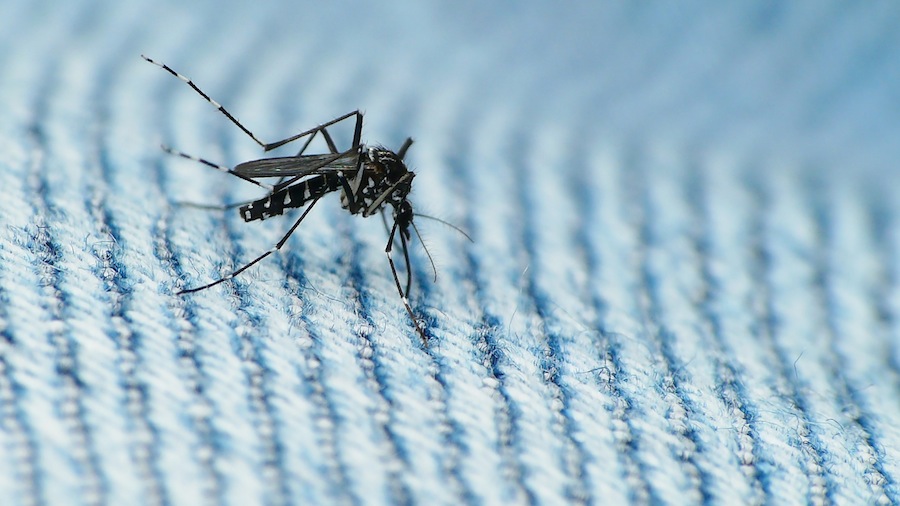
The Zika virus is carried by Aedes mosquitoes and transmitted to humans through biting. Symptoms include muscle aches, headaches and joint pains, but not everyone with the virus shows symptoms. Pregnant women require extra protection against the Zika virus because it is known to threaten fetal development; Guillain-Barré syndrome, an autoimmune disorder and microcephaly, which causes incomplete brain development and other birth defects, are risks to infants exposed to the Zika virus.

The most recent Zika outbreak in South America has caused the CDC to issue its highest level of emergency response. In early February, President Obama asked for $1.8 billion in emergency funding from Congress to fight the Zika outbreak.

Dr. Koen Van Rompay is a research virologist at the California National Primate Research Center, which is located on the UC Davis campus. Dr. Van Rompay has spent most of his career studying treatment and prevention against HIV and AIDS. However, after the Zika outbreak began, he started working with his colleagues to use primates as a model to learn more about the Zika virus with the eventual goal of developing a vaccine.

“The mosquitoes that transmit Zika virus have not been found in Yolo County, so there is no risk of transmission from mosquitoes. The good thing about Zika virus is that the infection is very short. The chances of mosquito transmission [in Yolo County] are basically zero, but it is still possible to transmit to a partner via sexual transmission,” said Dr. Van Rompay.

Dr. Van Rompay noted that there is a possibility that the mosquitoes carrying Zika virus could travel further North, but California winters are generally too cold and dry for them to survive.

The Sacramento-Yolo Mosquito & Vector Control District (SYMVCD) actively monitors mosquito populations in the area and has a Mosquito and Mosquito-borne Disease Management Plan that includes spraying areas to protect public health.

Marcia Reed, program coordinator for SYMVCD, explained tracking methods used to determine which species of mosquitoes are present in the area.

“We have an invasive species program where we set up traps, and some traps are more attractive to certain species. We have those out and monitor them actively. In the areas in Southern California where they have found invasive species, it was from service requests from residents complaining about day-biting mosquitoes,” Reed said.

Reed advises residents to contact the SYMVCD if they experience day-biting mosquitoes in order to continue monitoring the populations. Service requests can be made on the district’s website.

The district also recommends draining standing water, maintaining screen doors and using repellent in order to control all mosquito populations.

Dr. Van Rompay informs residents that the confirmed case of Zika virus is not a cause of alarm for Yolo County residents.

“The main message is not to overreact,” said Dr. Van Rompay. “You are much, much more likely to catch a cold at a common place like the movie theatre than you are to catch the Zika virus.”  

Written By: CAROLINE STAUDENRAUS – city@theaggie.org  
Muslim Student Association fasts with Davis community

0
JAY GELVEZON / AGGIE

UC Davis students invited to fast for a day with Muslim community and share their experiences

The Muslim Student Association (MSA) invited the UC Davis community to participate in a day of fasting last Tuesday, Feb. 16 at the ARC Ballroom in an effort to initiate interfaith dialogue and build bridges between different Davis communities.

Fast For a Day is an annual event that MSA usually holds during the month of Ramadan, when Muslims are required to fast for 30 days. However, Omar Awad, third-year psychobiology major and president of MSA, explained that since Ramadan will be during the summer this year, MSA wanted to open up the event to the Davis community this quarter. Starting the event before the long, hot summer days arrive would make it less difficult for students to try fasting for the first time.

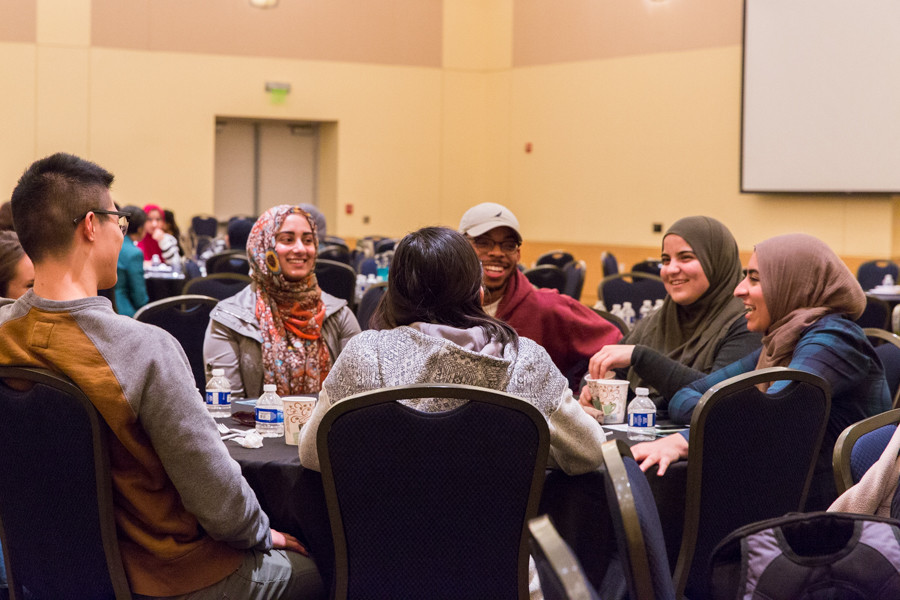
The Fast For a Day event, which was attended by approximately 100 guests, including several ASUCD candidates and former democratic assemblywoman Mariko Yamada, began with an introductory presentation where attendees learned what fasting means and symbolizes in the Islamic faith. Afterwards, attendees ended their fast in the traditional way of eating a date and drinking water. Once the fast was ended, attendees were invited to help themselves to a buffet dinner and share their fasting experience with one another.

According to Awad, one of the goals of Fast For a Day was to promote interfaith dialogue among the Davis community, because MSA believes that

JAY GELVEZON / AGGIE

there are a lot more similarities than differences between the Islamic faith and other religions. In addition, Awad said that the media has portrayed certain religions in ways that may not be true; to address this, MSA hopes to reach out to local organizations and invite them to their events to build dialogue and understanding.

“It’s been tough for Muslim students on campus, especially with the recent spike in Islamophobia, and presidential candidates saying things about us,” Awad said. “We’re your classmates, we’re your fellow friends, we’re your co-workers, we’re your doctors. We’re as integrated into American society as any other religion and any other faith, so just come talk to one of us if you have any questions. Just come speak to one of us, we’ll be more than happy to answer it.”

One attendee, Vishal Chakraborty, a third-year computer science and engineering and philosophy double major, shared his thoughts on the similarities he saw between his own faith, Hinduism, and Islam.

“I think one thing that I realized is every religion prescribes fast in some way, and this is a wonderful way of showing that we all belong to the same religion in the whole which is humanity,” Chakraborty said. “It’s just showing that we’re all the same and probably shouldn’t be fighting or investing a lot energy in saying ‘you are this, and you are that’ and ‘we are better than you’ and just be ourselves.”

Fasting is one of the five pillars of the Islamic faith, and this spiritual act requires that devotees abstain from food, drink and other desires from dawn until sunset. While fasting was voluntary for this event, according to Ammar Shahin, Imam at the Islamic Center of Davis, the reason for fasting is to follow a command they believe came from their lord.

“When we really fast, it’s creating that self-conscious,” Shahin said. “We’re trying to gain what we call piety it’s to fear God. What he ordered, we must obey whether people see us or they don’t. This is the main point of fasting.”

In addition, Shahin explained to attendees during the event that fasting is not just giving up food and water; it also involves abstaining from evil sins.

“The Prophet says if a person fasts all day long but back-bites someone, or curses someone, or insults someone, then God does not need his fasting,” Shahin said. “If you’re going to be able to stop your desire meaning you want to eat, you want to drink if you’re able to stop that, then you are able to stop other things too. This is the practice of fasting […] So if somebody is fasting and they’re talking bad about someone, or they’re making fun of someone, or they’re back-biting someone, or they’re saying a word they shouldn’t be saying, or they’re insulting someone, we tell them, ‘What are you doing? This is not the point of fasting.’”

Although the Fast For a Day event is over, MSA will continue to work with the community to build understanding, communication and support.

“We want to have a mutual understanding so that when there is some sort of crisis, or when there are hard times or fun times, we’re there for each other,” Awad said. “We hope to be able to be there for other organizations and other faiths as well.”

Written by: Jennifer Puza – campus@theaggie.org

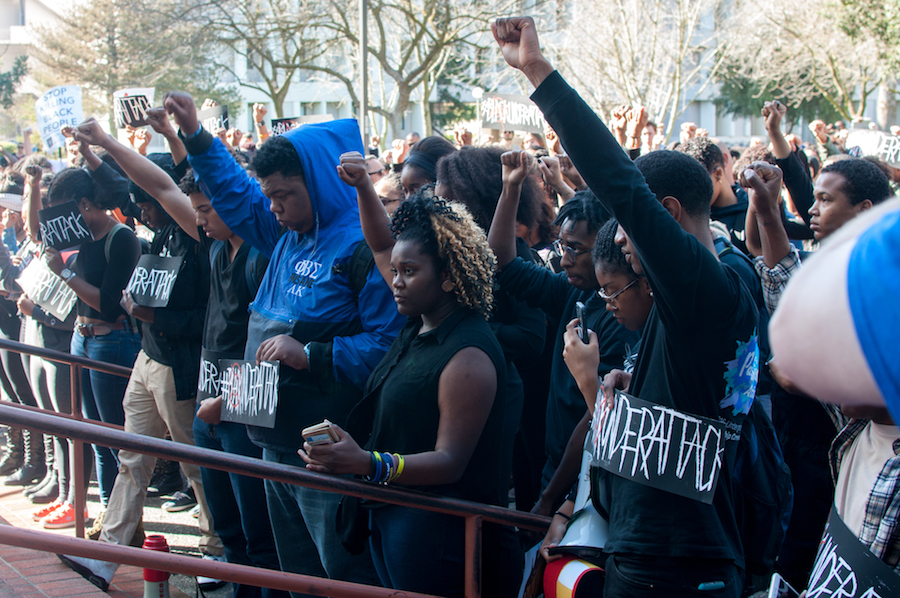
UC Davis African diaspora members hold #BlackUnderAttack press conference, march

JAY GELVEZON / AGGIE

Event follows recent hate crime against female African American student at West Village

On Feb. 22, members of the UC Davis African diaspora held the #BlackUnderAttack press conference and march to make demands for a safer and better campus after a female African American student was the victim of a hate crime at the West Village apartments earlier this month.

The conference, which included speeches from the UC Davis Black Student Union, ASUCD Senator Kamaal Thomas and President Mariah Kala Watson, was preceded by a march from the Memorial Union (MU) flag pole to Mrak Hall, with people from various communities joining in support.

The event included a list of demands by the community, which the demonstrators demanded be addressed by Feb. 29. Better lighting around the university and the city of Davis and allocation of funds for safety services such as Tipsy Taxi and Saferide were among demands on the list.

Chancellor Linda P.B. Katehi, who spoke at the event, insisted that UC Davis would do its best to focus on working with the African American community and the issues its students face.

Written by: Ivan Valenzuela – campus@theaggie.org

UC Davis veterinarians perform reconstructive surgery on dog with crushed skull

0
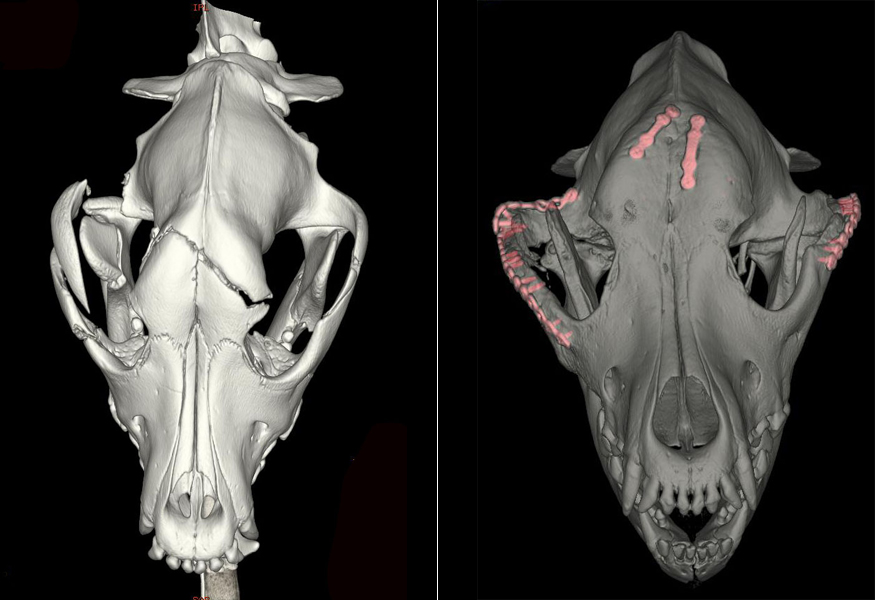
Veterinarians at UC Davis reconstruct skull and jaws by closing the fractures with titanium mini-plates and screws/ (SCHOOL OF VETERINARY MEDICINE / COURTESY)
Veterinarians at UC Davis reconstruct skull and jaws by closing the fractures with titanium mini-plates and screws. (SCHOOL OF VETERINARY MEDICINE / COURTESY)

Eight-month-old dog recovers post-intensive surgery

Eight-month old Rottweiler Ziba was brought to the UC Davis Veterinary Hospital after being hit in a car accident four months ago. She suffered extensive injuries, including several fractures to her skull, brain swelling, leak of brain fluid to her nose, lack of oxygen to her brain and blindness in her right eye.

Because of Ziba’s young age, veterinarians at the UC Davis Veterinary Hospital were able to perform a five-hour reconstructive surgery on her skull and jaws.

Boaz Arzi, assistant professor at the veterinary hospital’s Surgical and Radiological Science Department, said that he and the other surgeons at the hospital had never witnessed so much animal trauma at the hospital.

“We knew she was in bad shape,” Arzi said. “She sustained maximum head trauma.”

All faculty, staff and residents at the hospital were involved in this extensive surgery.

“The surgery was not simple,” Arzi said. “It was complex. It took many hours, took many faculty and staff [and] it was a multidisciplinary effort. Many departments helped out.”

DANIEL TAK / AGGIE
DANIEL TAK / AGGIE

The team reconstructed Ziba’s skull and jaws by closing the fractures with titanium mini-plates and screws, which were positioned to re-establish the normal anatomy of the bones and joints. After about two weeks, her sutures were removed and she showed overall improvement aside from her blindness. A month later, wiring from the surgery and two broken teeth were removed and Ziba was able to eat for the first time since the injury. She remained on “crate rest,” but was allowed short walks.

On Feb. 5, the veterinarians examined Ziba again, reporting that the fractures were healing properly and that there was no evidence of infection. Ziba is still blind in her right eye.

Dr. Peter Stroem, a resident at the School of Medicine who worked on Ziba, hopes that she will continue to improve over time.

“I think that Ziba will have a good quality of life,” Stroem said. “Unfortunately, due to the injuries on her brain, Ziba is always as risk of developing seizures, but her general mentation will likely be as it is now […] As of now she seem to be very comfortable with the current physiotherapy implemented in her post-operative treatment plan.”

Second-year animal science major Lora Kileki believes only a veterinary hospital as great as the one at UC Davis could successfully perform a surgery this difficult.

“UC Davis is known for being a great vet school, one of the best in the world actually,” Kileki said. “So I’m not surprised that UC Davis was capable of doing something as extensive [as] this. That’s why I am so happy being here.”

Written by: DEMI CACERES – campus@theaggie.org

UC student regents visit UC Davis

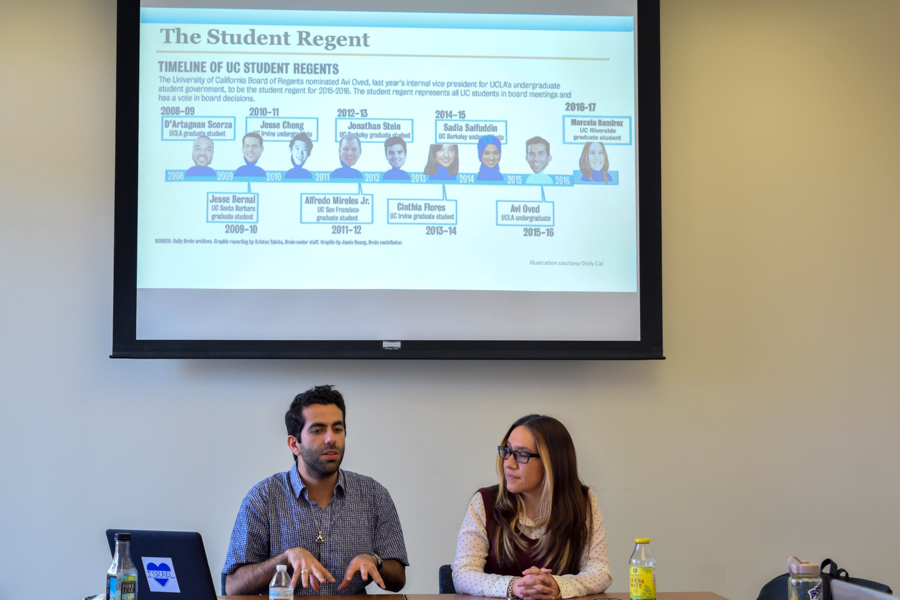
Abraham "Avi" Oved (left) and Marcela Ramirez (right) discuss the position of UC Student Regent in the Student Community Center. (DEBPARNA PRATIHER / AGGIE)
Abraham “Avi” Oved (left) and Marcela Ramirez (right) discuss the position of UC Student Regent in the Student Community Center. (DEBPARNA PRATIHER / AGGIE)

Regents Avi Oved and Marcela Ramirez discuss recruitment process for new student regent

On Feb 11, current University of California (UC) Student Regent Abraham “Avi” Oved and current UC Student-Regent Designate Marcela Ramirez held an informational session at UC Davis’ Student Community Center.

The visit is part of a 10-campus UC tour to discuss the recruitment process for becoming student regent. By the end of 2016, Oved will be terming out of his position as student regent and will be replaced by Ramirez for 2016-2017.

The meeting opened with a brief overview and history behind the position. In 1975, the UC student regent position was added in as a clause to UC policy during a time of heightened activism and an increased need for better representation.

Within that position, the student regent is granted a one-year voting position in all UC Board of Regents meetings. These meetings are held six times a year, with a two-day meeting happening every other month.

During the Student Regents term, he or she is also encouraged to pursue and represent other issues relevant to the UC system, including food security, homelessness and mental health training. In the past, student regents have been able to leverage campus-wide policies on tobacco use and pitched discussions on critical legislature.

Oved mentioned his own platforms as an example. Just recently, Oved’s Student Advisor Proposal was unanimously passed through the regents. With this proposal, Oved has added another non-voting student position to board meetings to help better represent students during the Regents meetings.

Ramirez and Oved also went over the application process behind the student regent position. The process starts with a three-part online application which asks for general information, a resume and a personal statement.

From there, the applications are narrowed down first by student groups and then by the Regents. In the beginning, the applications are reviewed and sorted out by each UC’s student government before moving on to the University of California Student Association (UCSA) for further review. Lastly, the remaining applications are sent to the Board of Regents for final decision.

According to Oved and Ramirez, each level of the process is in place to find certain aspects and strengths about an applicant. For instance, the UC student governments are judging a candidate’s local knowledge of the problems they wish to pursue during their term while UCSA is judging how effective the candidate can advocate for system-wide issues.

Sam Alavi, director of ASUCD’s Office of Advocacy and Student Representation (OASR), commented on the nature of the process and what UCSA is finding.

“The biggest thing UCSA looks for is whether the applicant has the best idea about what UC students, both undergraduate and graduate, have and need,” Alavi said.

During the meeting, Ramirez stressed a similar message to Alavi concerning the broad spectrum of representation that a student regent must hold.

“You are not just the student regent, like it’s a central part of who we are and why we’re at the table, but you also got to build alliances with staff and you also got to build alliances with faculty,” Ramirez said.

The concern for student voices is becoming increasingly more visible in light of recent decisions that were passed by the board. During the meeting, several students were able to voice their concerns over these decisions, such as increased admittance of California residents. There were several questions pitched over the lack of faculty and staff support alongside the rise in students. In response, Ramirez discussed the current and absent efforts of the university.

“There’s been a lot of faculty hiring across the system,” Ramirez said. “The staff conversation and the pressure, I think, that staff are under in terms of their workload with all these new people coming in […] there’s sort of advocacy and movement on that but the staff also needs our [Regent’s] help.”

All these comments further emphasize the weight and challenge behind the position of the student regent.

“It’s a balancing act, it’s a very, very thin line that you walk because you’re obviously there to champion student interests at the forefront,” Oved said. “But at the same time, when you cast your vote and you have conversations, they need to be reflective of the different stakeholders, they need to be reflective more comprehensive of UC as a whole.”

Written by: KATRINA MANRIQUE – campus@theaggie.org

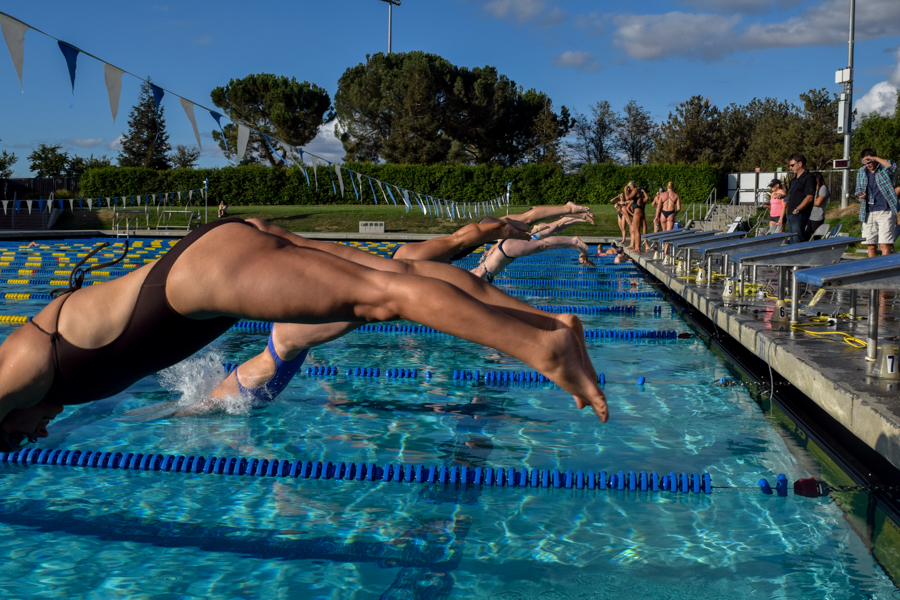
Aggies cannonball into another MPSF Championship win

0
DEBPARNA PRATIHER / AGGIE

UC Davis swimming and diving team places first in conference championship, following victories in 2011, 2013, 2014

The UC Davis swimming and diving team took first place at the Mountain Pacific Sports Federation (MPSF) Championships over a four-day long competition. This is the fourth championship win in six years for the Aggies, continuing an impressive trend for the team.

On the first day of the MPSF Championships, the Aggies placed third, finishing third in the first two relays of the week. With a season best in the 200-yard Medley relay, sophomore Aislinn Dresel, senior Hailey Ferko, junior Hilvy Cheung and sophomore Courtney Schult finished at 1:41.76. In the 800-yard Freestyle relay, Cheung, freshmen Mia Facey and Iris Brand and junior Kirsten Brand finished with a time of 7.19.64.

On the second day of the Championships, the Aggies earned a total of 253 points and established a big margin over Hawai’i and various other competitors. In the 50-yard Freestyle, Kirsten Brand hit the preliminary heat with a time of 22.97 seconds and finished the day in third place, with a personal best of 22.92. This makes her the third UC Davis swimmer ever to break the 23 second mark in the sprint.

Kirsten Brand also helped set a school-record time of 1:31.68 in the 200-yard Freestyle relay along with Cheung, senior Brittany Rojo and Iris Brand, putting UC Davis at a 253-236 advantage over second place Hawai’i. Rojo earned a career best time of 23.53 for eighth place in the final 50-yard Free and now ranks 10th in that event in UC Davis history.

As for the diving competition, senior Lucy Lafranchise won fourth place with a score of 285.75, falling just short of her own school record. Earning 66 points, senior Audrey DeNeffe (243.45), junior Serena Yee (239.55) and freshman Jessica Fernandez (227.60) placed sixth through eighth. Sophomore Angelina Proshak (244.25) and freshman Shaifali Goyal (241.90) took the top two spots in the consolation finals.

Winning another 37 points from the 200-yard Individual Medley, Facey finished sixth overall (2:02.75), and juniors Elise Roberts (2:03.07) and Cheung (2:03.07) got seventh and eighth place respectively. Coming in at fourth place and contributing 15 points, senior Lexy Troup got a time of 4:53.51 in the 500-yard Freestyle, her season best.

The third day of the MPSF was a victory for UC Davis, especially for freshman Solie Laughlin, who won two MPSF titles in the 400-yard Individual Medley and 100-yard Backstroke. Laughlin had a career best time of 4:14.80 in the 400-yard Individual Medley and a time of 54.50 in the 100-yard Backstroke.The Aggies finished first with 512 points, and Hawai’i and UC Santa Barbara trailed far behind them.

The 400-yard Medley relay of Laughlin, Ferko, Cheung and Kirsten Brand ended with 3:40.34. Freshman Eva Chung came in eighth place with a time of 4:27.06 in the 400-yard Individual Medley. Cheung got second place in the 100-yard Butterfly (52.73), with Facey (54.43) in fifth and Rojo (55.29) in eighth place, together contributing 42 points.

Ferko, junior Elise Roberts and Iris Brand were sent to the 100-yard Breaststroke final, for a combined total of 44 points, with Ferko finishing in fourth place (1:03.08), Roberts in sixth (1:03.28) and Brand in seventh (1:05.06). Diver Lucy Lafranchise earned fourth place with a 283.35 on the three-meter board, with Yee in seventh place (262.95). With a total of 54 points, Goyal, Fernandez, Proshak and DeNeffe took the top four places in the consolations. At 1:50.34, junior Kristen Brand placed fifth in the 200-yard Freestyle.

The fourth and final day of the championships brought definitive victory to the Aggies, with Cheung and Laughlin earning individual conference titles. The Aggies brought home a victory with 735 points, surpassing second place Hawai’i’s total of 673 points. Laughlin won the 200-yard Backstroke, setting a personal best time of 1:56.64. Chung placed eighth in the 200-yard Butterfly at 2:04.77, and Rojo (2:05.22) and Ramos (2:06.13) contributed a total of 39 points for the win.

Goyal created a school record in platform diving (216.35), and Proshak came in eighth (193.70); their diving provided a total of 43 points. In the 100-yard Freestyle, Facey finished in third place (50.45), and Kirsten Brand set a personal best in the preliminary round (50.48). Ferko set a career-best of 2:18.05 in the 200-yard Breaststroke consolations.

The NCAA Zone E Diving Championships will begin in Colorado Springs on March 7, and the NCAA Championships will commence on March 17 in Atlanta, GA.

Written by: Iman Farahani – sports@theaggie.org

How to cleanse yourself of social media

0
ELLIE DIERKING / AGGIE

Six tips to get out of the social media vortex and make time for yourself

As the end of the quarter quickly approaches, students will be putting their noses to the grindstone (or textbook) to get into crunch mode before time runs out. The thing that seems to suck most of the time out of our schedules is one that Millennials have developed a love-hate relationship with: social media.

Several “five minute” Facebook breaks or pauses to document study sessions on Snapchat add up and prevent students from studying the way they want to. The only solution is a social media cleanse. While it may not be easy, here are six helpful tips so you can hopefully find a little more time to study and make time for yourself.

  1. Unfollow celebrity pages

This means unliking Facebook pages like Buzzfeed, Spoon University and even Harry Potter or Ryan Reynolds. It’s hard to resist celebrity gossip, and watching Tastemade’s next big avocado recipe is irresistible — that’s why it’s best to simply unlike them. This way, you’re only receiving updates from real people that you know and care about. You’ll likely find yourself on social media for a lot less time than before.

  1. Stop using your phone before bed and first thing in the morning

Invest a little money in a real alarm clock (portable ones are available on Amazon for as low as $11). Using your phone as an alarm clock means that it’s probably the last thing you see before you close your eyes and the first thing you check when you wake up — and more often than not, turning off your alarm is simply a precursor to checking social media. Setting an alarm on a real clock means you’re less likely to depend on your phone every day. You’ll have more time to study, write papers and be productive.

  1. Give your passwords to a friend, log out and delete apps

This tip is for the individuals that are 100 percent committed to the cleanse. Instead of simply logging out, give a trusted friend your current passwords. Then, ask them to change your passwords so that you can’t get into your accounts. Once they’ve done so, log out from social media sites and delete the apps from your phone.

  1. Give your friends a heads-up, and set aside time to meet

Let your closest circle of friends know that you plan to be off your social media platforms until the end of finals week, but plan to stay connected by spending time together in real life instead. A quick 30-minute date to grab coffee or an hourlong workout with a buddy can be way more refreshing than a Snapchat conversation (as funny as they are, with all the filters.)

  1. Spend time online somewhere else

Instead of typing in “Facebook” every time you want a quick break online, set your homepage to a website like freerice.com. Choose to answer questions in a variety of subjects: English vocabulary, foreign language, anatomy, geography and more. For every correct answer, 10 grains of rice are donated through the United Nations’ World Food Programme to people living in hunger. Free Rice has helped serve over 10 billion meals, which makes this a win-win-win situation: spend time off of social media, test your brain with trivia questions and donate food to those in need. It’ll leave you with a good feeling.

  1.  Get into journaling

Pics or it didn’t happen — social media is considered documentation. Journaling is the exact same thing in a different medium. Use a real journal, a Word document, Google Doc or even the notes app on your phone to reflect on your day. The best thing about journaling is that it forces you to both live in the moment and look back on it. It’ll make you savor a good moment and give you more to write about later.

Written by: Anjali Bhat — features@theaggie.org

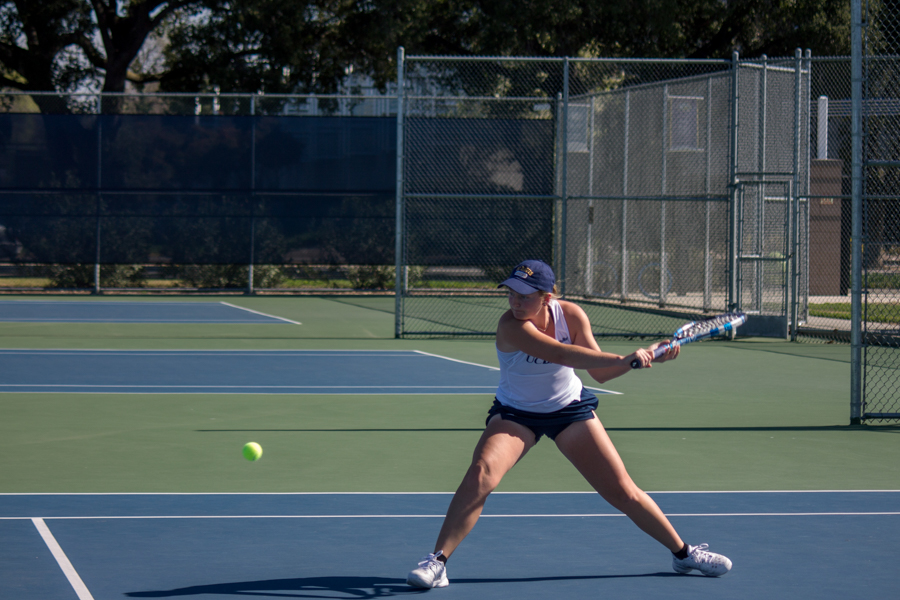
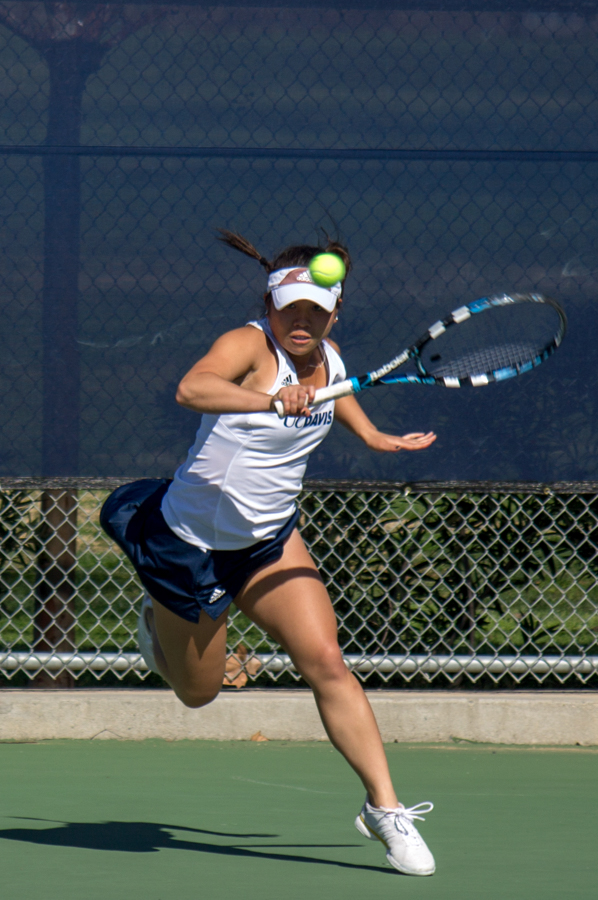
Women’s tennis weekend matchups

LUCY KNOWLES / AGGIE

Aggies take on Cal State Fullerton and Sacramento State

LUCY KNOWLES / AGGIE

After weeks of being on the road, the women’s tennis team was back on familiar ground for Saturday and Sunday’s matches.

On Saturday, Feb. 20, the Aggies played Cal State Fullerton, hoping to extend their eight-match win streak against the rival Titans. Last year, they narrowly missed a loss to the Titans, to whom they had never fallen, but staged a comeback when four singles players won their matches. This year, the the two teams faced off again on the Aggies’ home turf.

Cal State Fullerton overpowered UC Davis in all three doubles matches, winning them the doubles point, but the Aggies surged back with two singles wins. Playing in the number one position, sophomore Lani-Rae Green defeated her opponent in straight sets, 6-3, 6-3. Number two singles player sophomore Jessie Lee also defeated her opponent in straight sets, with a score of 6-3, 6-0.

The Titans gained two more points in the singles matchups, but freshman Isabella von Ebbe won in a three-set match, 3-6, 6-3, 6-4, to earn another point for the Aggies. With both teams at three team points apiece, the deciding factor was UC Davis junior Frederique Sleiffer’s match against Karla Portalatin. A close tiebreaker in the second set, the Titans acquired their first win against the Aggies in Division I history. The Aggies’ record became 4-5 overall.

Sacramento State came to UC Davis on Sunday, Feb. 21, to challenge the Aggies in a Causeway Cup dual. Last year UC Davis

LUCY KNOWLES / AGGIE

narrowly beat the Hornets 4-3, and hoped to replicate the results.

The team won one of the three doubles matches, thus losing the doubles point to Sac State. Lee, the number three singles player, got the first point for the Aggies when she won her singles match 2-6, 6-3, 6-2. Senior Tiffany Pham followed suit with a close straight set win of 6-3, 7-6 (7-5). Von Ebbe also won her match in straight sets, 6-4, 7-6 (7-2), and increased her number of wins in the season to 5-0.

However, the Hornets beat the Aggies in three singles competitions. The matchup concluded with an overall score of 4-3, a tight

loss for the Aggies.

Starting Saturday, Feb. 27, the Aggies go on the road again for three matches and will return to UC Davis to finish off their season with the remaining eight.

Written by: Julia Wu – sports@theaggie.org

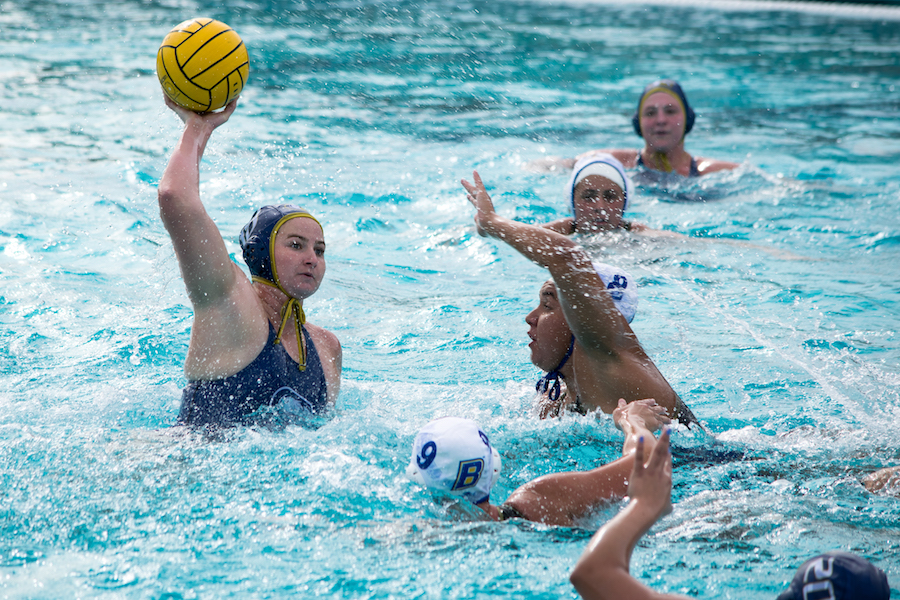
Aggies shoot out the Davis Shootout

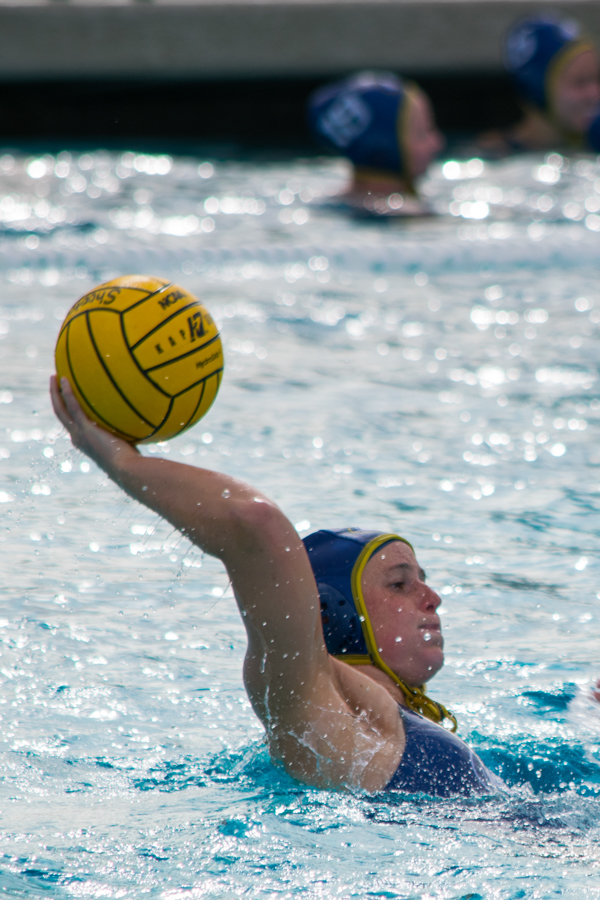
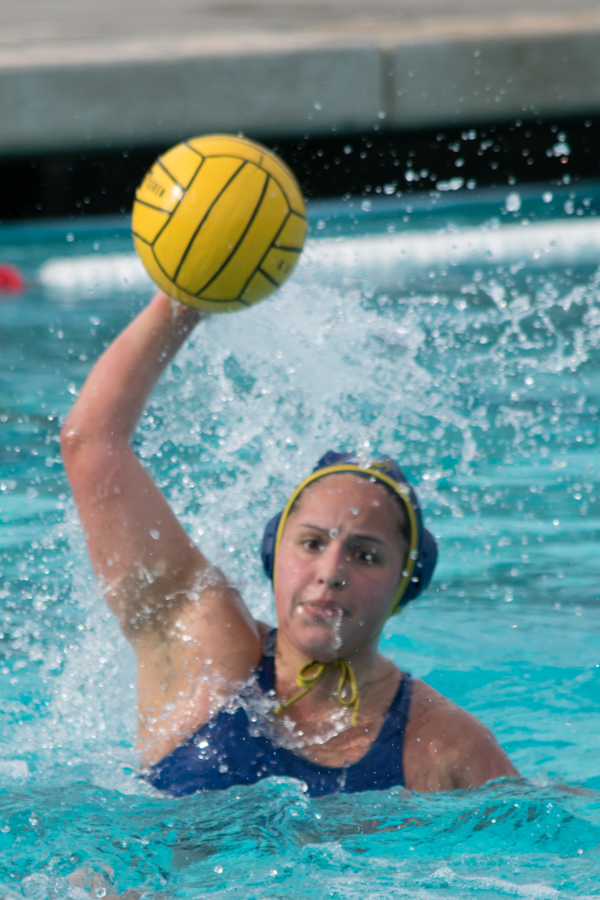
Senior center Courtney Weddle puts one into the cage as the Aggies cruise past Brown. (BRIAN LANDRY / AGGIE)

Aggies Sweep Saturday open of the Davis Shootout, winning over CSUB and Brown.

BRIAN LANDRY / AGGIE

UC Davis hosted five teams over the weekend for the 36th annual Davis Shootout in women’s water polo. This was the first time the Aggies did not have to travel this season, and home court advantage paid off. Coming off a win on Super Bowl Sunday, the Aggies were ready for this weekend.

“For this week it was all about keeping that same momentum going that we created last weekend, keep playing a good defense, funnel the shots into the lowest angle,” said head coach Jamey Wright. “That’s kind of our thing.”

The Aggies certainly were firing from low angles as they opened Saturday’s competition, putting away six goals to CSU Bakersfield’s one and showing the crowd exactly how they wanted to play the game. Junior utility Bryn Lutz led the Aggies from the front with four goals. Junior center Carla Tocchini and senior center Allyson Hansen trailed just behind Lutz with two goals apiece.

A major aspect of the Aggie offense has been their counter-attack and how well they do in transition.

“We’re in our fast-break mode [which] makes it very easy for us to score off of that fast-break, or to get into our front court,” Wright said. “It makes their offense always tentative because if they make a mistake or turn-over, we’re gone.”

A press defense was also key to this victory, as it limited CSU Bakersfield’s opportunities on the offensive. Some substitutions by UC Davis allowed many players a chance at rest, and the Roadrunners were never within five goals of catching the Aggies.

UC Davis defeated CSU Bakersfield 13-7.

History was destined to repeat itself when the Aggies faced off against Brown that same evening.

UC Davis scored five straight goals before Brown could get on the board, even managing to shut out Brown into the third quarter.

Junior utility Hannah Harvey and Tocchini spearheaded the Aggie offense together, each earning themselves a hat trick. The

BRIAN LANDRY / AGGIE

Aggies managed to hold a 10-1 lead three minutes into the fourth quarter, before ending the game 13-2 in favor of the Aggies.

“There is no better way to judge [progression] than by against the top five teams, and if you continue to improve upon those things, you too can become a top five team,” Wright said. “That’s where we are now.”

The Aggies advance to 10-4 for the year and are ranked at No. 5 in NCAA for Division I women’s water polo, the highest regular-season ranking in UC Davis program history.

The Aggies continued the Davis Shootout with a game against No. 4 Stanford on Sunday, Feb 21.

Written by: Aaron Sellers – sports@theaggie.org

Birthday freebies

0
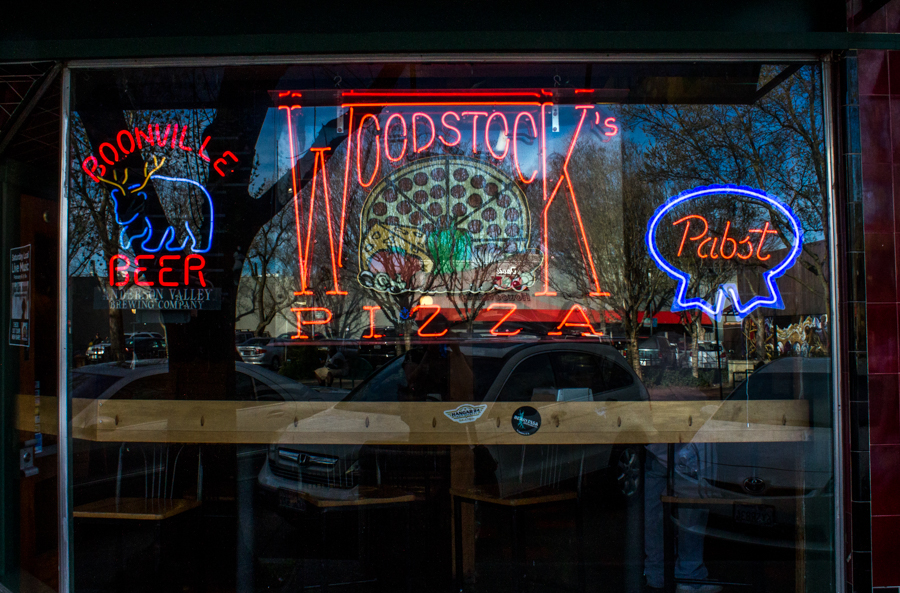
Woodstock's Pizza is one of many Downtown Davis locations that offer birthday giveaways. (LUCY KNOWLES / AGGIE)
Woodstock’s Pizza is one of many Downtown Davis locations that offer birthday giveaways. (LUCY KNOWLES / AGGIE)

Five Davis locations that offer free birthday items

Celebrating a birthday often means bringing out balloons, baking a cake or buying gifts for loved ones. For college students, birthdays often mean frantically pinching pennies to buy the perfect present, or scrambling to treat a friend to dinner. This year, skip the financial anxiety and celebrate all your friends’ birthdays with these five free birthday treats.

Black Bear Diner

225 2nd St.

Start the day off with a free birthday breakfast from Black Bear Diner. Those looking to get this deal should sign up for the “Bear Lovers E-Club” to receive an online coupon during their birthday month. Guests can choose from a wide range of breakfast selections, including 2-Egg Combos, Hungry Bear Breakfast or The GRIZZ.

Dutch Bros Coffee

960 Olive Drive

What better gift is there for college students on a budget than free coffee? Dutch Bros. offers birthday-goers a free drink on their birthday. Open 24 hours a day, this drive-through option means the festivities are nonstop. So, feel free to roll through blasting those birthday jams and leave with a satisfied coffee craving.

Woodstock’s Pizza

219 G St.

Skip the cake and celebrate with a free CinnaBread from Woodstock’s Pizza. CinnaBread is a warm dessert pie topped with icing, brown sugar and cinnamon. Typically $4.50, this is a deal birthday celebrators don’t want to miss. With six slices, there’s enough for the whole table — depending on how generous the birthday guest is, of course. To top it all off, order some pizza or salad with dessert and the entire birthday order is 15 percent off!

YoloBerry Yogurt

316 C St.

Froyo lovers rejoice! Yoloberry offers six flavors of frozen yogurt and over 100 toppings. The possibilities are endless — especially on a guest’s birthday! With no weight limit to the order, YoloBerry allows each birthday guest to fill up their froyo cup to the brim. YoloBerry’s variety of toppings includes sour candy, gummy worms, Oreos, fruit and more.

University of Beer

613 3rd St.

Those celebrating their 21st birthday can swing by U.O.B. for a free birthday shot (of beer). Combine this deal with some of their weekly specials for added discounts. “Moonie Monday,” “Taster-Tuesday” and “Why-Not-Bottle-Wednesday” are a few additional deals.

Interested in taking advantage of one of these sweet freebies? Remember to bring a valid ID with your birthday listed, and go celebrate!

Written by: Lindsay Billings — features@theaggie.org

Tree Davis expands the urban forest

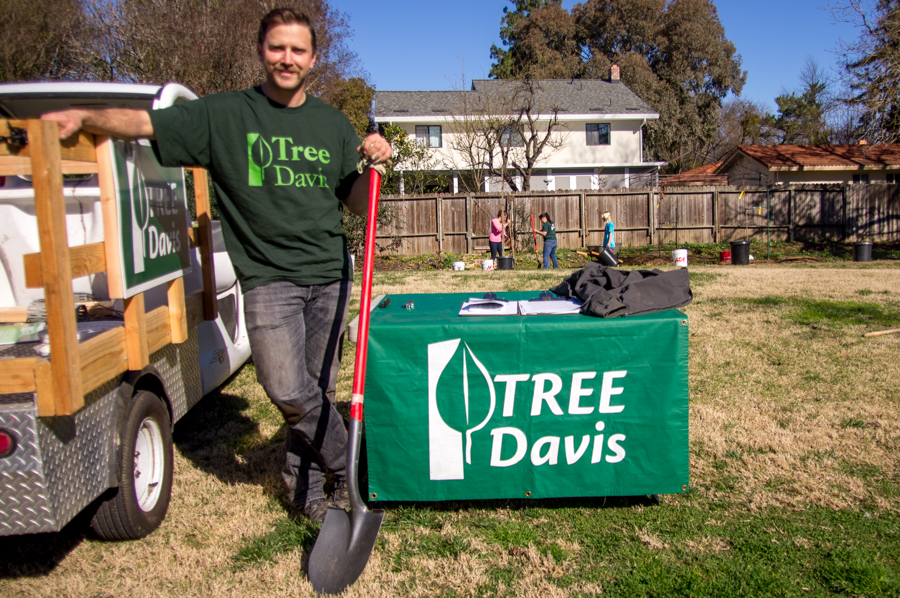
Petra Court community raised funds to plant trees with Tree Davis for Valentine's Day volunteer event. (BRIANA NGO / AGGIE)
Petra Court community raised funds to plant trees with Tree Davis for Valentine’s Day volunteer event. (BRIANA NGO / AGGIE)

Non-profit offers tree planting as easy solution with big impact

On Feb. 13, Tree Davis, a nonprofit organization, coordinated a tree planting event in the the Petra Court community.

With the sudden heat in Davis coupled with El Niño’s heavy rains, flooding is a possible risk. Tree Davis offers a simple and easy solution — planting more trees.

The company, created in 1992 by members of the Davis community, aims to solve environmental issues and to better the public. Tree Davis is an organization dedicated to creating a larger urban forest in and around Davis, and their tree planting is funded almost solely by the local neighborhood.  

“Tree Davis is the only nonprofit organization in Davis which serves the community in the area of tree education, tree planting and maintenance. It’s a more complicated procedure than it sounds,” said Board President David Robinson.

BRIANA NGO / AGGIE
BRIANA NGO / AGGIE

Besides planting trees, Tree Davis monitors and cares for trees in Davis and surrounding areas. The organization also offers events on a near-weekly basis for staff and volunteers to plant trees in various areas of need. After these events, such as the one last Saturday, Tree Davis plans routine check-ups on the trees, especially in the first three to five years to make sure they are maturing properly.

“Anytime we plant trees we make sure there is continued maintenance built into that planting location,” said Tree Davis Executive Director Kelly Conroy.

Whether it is advising the City of Davis or owners of the land on which trees are planted, Tree Davis makes sure that the trees receive proper care. The need for trees is not just specific to Davis, but nationwide, as climate change has become an increasingly dangerous problem.

“The drought has definitely shifted our focus into really understanding how important trees are to urban environment,” Conroy said. “We see specifically how the urban forests combat climate change by sequestering carbon and reducing greenhouse gas emissions.”

The trees that are selected are low maintenance and drought resistant. While the need for trees becomes a larger problem nationally, Tree Davis strives to make the city a leader in tree planting and care.

“The long term goal for Tree Davis is to keep building our infrastructure to have a more labyrinth urban forest in Davis,” said board member Keith McAleer.

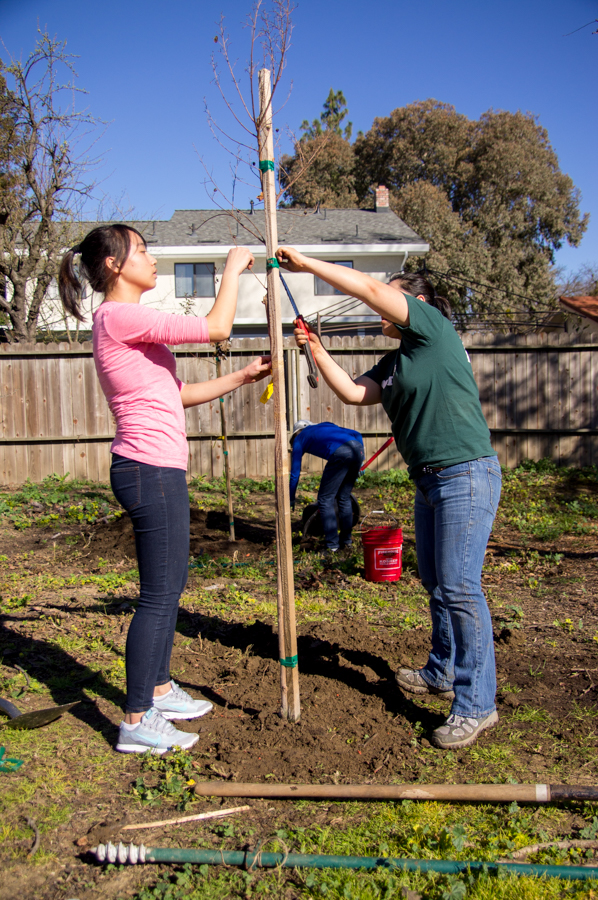
At the event on Saturday, the organization planted trees in Petra Court because the city arborist located the need for trees in the area. According to Robinson, Tree Davis coordinated the event, though this is unusual for the organization. Tree Davis representatives taught the community how to properly free the tree from the pot, improve the roots and situate the tree in an effort to prepare for long term care. The estimated cost of $1,300 for the trees and supplies used for the project was raised entirely by the Petra Court community. One of the family’s sons passed away recently, and a tree was dedicated in his honor with a plaque.

This event, along with other Tree Davis events, further their mission to support healthy tree growth in and around Davis.

Written By: Samantha Solomon – city@theaggie.org

Vets look to lead young team after successful 2015 season

0
DEVIN McHUGH / AGGIE

The grass is freshly cut, the infield is well groomed and the weather feels like spring. While we’re still in the month of February, the nice breeze and clear, sunny skies remind us that baseball season is here.

For the Aggies, the future is just as bright as the recent days because the team is full of youth. But even with a lot to look forward to in the next couple years, the team expects everyone, young teammates included, to be prepared for the 2016 season.

“We expect a lot of them because there’s a lot of talent,” said senior pitcher and first baseman Spencer Henderson. “I think they all know right now that we expect them not to play as freshmen.”

As one of the team’s leaders, Henderson tries to lead by example and show the incoming players what the UC Davis baseball program is all about. After a 30-win season last year for only the second time in the school’s Division I history, Henderson knows it’s necessary to use what he’s learned from his time as a ballplayer at UC Davis.

The former reliever will now take the mound as a starter this year, most likely as the second man in the rotation. And for the Aggies, this season is full of transformation for just about everyone.

“We’re going to be finding our way a little bit,” said head coach Matt Vaughn. “I think you’re going to see some changes.”

The Aggies return 18 letterwinners, but the biggest concern for this team is whether or not players will be able to flourish in their new, more prominent roles. As a reliever, Henderson was a Big West Honoree, but there are a lot of changes to be made in becoming a starter, both mentally and physically.

Vaughn understands his team’s youth, but like Henderson he has the same expectations for everyone on his team regardless of age. Vaughn reminds his players every day that they are here for a reason, that the game of baseball is the same as it was when they were five or six years old.

Returning senior outfielder Tanner Bily is also expected to play an important role in the Aggies’ year. After having a solid season at the plate, Bily also understands his influence on the team and knows his role as a leader and what it takes to be successful.

“If the young guys see you putting in the work, they see you doing your job,” Bily said. “Hopefully they follow [your] lead and do what you do.”

Henderson and Bily have witnessed a culture change within the program over the past few years. Teammates began to hold each other more accountable, as opposed to the coaches always harping at their players. The seniors have no quit in them, and they are both ready to compete against some of the best teams in the nation.

The Aggies have an incredibly tough schedule this season, as they will take on Michigan at home, who is ranked 25 in the nation in NCAA Division I baseball. Not to mention, the Aggies play in a tough conference in the Big West. Cal State Fullerton is ranked 16 in the nation and the team will have to face them on the road. But it is important that the team does not psych themselves out.

“I think we just kind of prepare like you face any other opponent,” Bily said. “You focus on yourself, that’s all you can really control.”

The Aggies are confident in themselves and that’s all that matters. There are doubters, naysayers, but these players know just how much off-season work they put in. They remember the countless hours in the weight room, on the practice field, in the cages and know how mentally tough they are, which is important in a three month, 56 game season.

“We’re predicted to finish last as always,” Henderson said. “We always have something to prove as always.”

The team will begin their season at home against Portland on Friday, Feb. 19, which is especially important in the comfort level for the younger players.

“When you can be at home, I would hope that’s an advantage for us,” Vaughn said.

Written by: Michael Martinez – sports@theaggie.org

UC Davis professor lectures about sex lives of birds at LASER event

JEANNIE STAFFORD / USFS

UC Davis researchers explore reasons, uses for sexual selection of birds using robotics

On Feb. 11,  Leonardo Art Science Evening Rendezvous (LASER) hosted an art, science and technology speaker series in the Plant and Environmental Sciences Building at UC Davis. At this event, UC Davis professor of evolution and ecology Gail Patricelli held a lecture discussing her findings about the sex lives of birds.

“Darwin’s theory of natural selection is of course very powerful in explaining the evolution of traits like camouflage, coloration and lots of [other] different traits,” Patricelli said.

Patricelli discovered that certain species of birds develop features that hinder their chances of survival, but increase male birds’ chances of reproducing.

“Darwin’s theory of natural selection alone has a more difficult time explaining animals like the peacock, for these elaborate traits and behaviors seem to make the males in particular easy targets for predators,” Patricelli said. “His theory of sexual selection proposes that these elaborate traits like the peacock’s aid in reproduction.”

Patricelli travels with her team of researchers each spring to Wyoming to study male sage-grouse, which attract females through various movements and behaviors.

“You have to be able to experimentally manipulate this interaction between males and females,” Patricelli said. “That’s where the robots come in.”

To more closely observe the displays of courtship, the team used various renditions of robots that were disguised as female sage-grouse.

“The males puff up and strut around, and moving around amongst them there are females,” Patricelli said. “They will visit multiple males to watch their displays and keep moving until they decide who they want to mate with.”

This research allowed Patricelli to decide what makes certain males successful over others who also seek to mate.

“Show up and work hard is the number one rule to be successful as a [male] sage-grouse,” Patricelli said. “If a male is too intense too soon, then the male will freak the females out.”

The footage that was captured by these robots provided close-up evidence of sage-grouse mating behavior. During the presentation, various clips of the courtship rituals between the female robot and the male sage-grouse were shown to the audience.

“I think it’s interesting how animals present themselves to show they are the ideal mate,” said Richard Tu, a third-year economics major. “If I did something similar, people would think I’m mentally unstable.”

Anna Davidson, organizer and chair of LASER, chose Patricelli as a lecturer for this event due to an earlier rendition she had heard of the same speech at a previous event.

“I always think that sustainability and environmentalism is really important,” Davidson said. “Professor Patricelli does it in a really entertaining and fun manner. I feel like the audience can really connect with her.”

The next LASER event will be held on April 14 and is open to the community.

Written by: Nick Griffen – campus@theaggie.org

Fast cars and police officers

NICKI PADAR / AGGIE
NICKI PADAR / AGGIE

UCDPD unveil distracted driving campaign

Students might not have expected to ride next to a police officer in a three-wheeled sports vehicle in the near future, but in the coming weeks, the opportunity might just present itself. The UC Davis Police Department (UCDPD) unveiled their distracted driving campaign at the basketball game Feb. 13 alongside free pizza and games of water pong.

The campaign seeks to emulate the message of the California Office of Traffic Safety campaign, which carries the motto, “Cell Phones, Texting. It’s Not Worth It. It’s Just That Simple.” However, UCDPD hope to gear their campaign toward young and first time drivers, a title that applies to many college students.

In addition, the campaign hopes to capture student attention through interactive virtual reality simulations, drunk goggles and the sleek slingshot sports vehicle, which will appear throughout campus in the coming weeks. The campaign gives the police an updated look that is at odds with the negative image college students often hold against them.

The effort is organized by Outreach Coordinator Ray Holguin who also runs the cadet program on campus. Erika Benguard, fourth-year psychology major and police cadet, said that both programs seek to find common ground between students, officers and the greater community.

“It will help our law enforcers and students engage in communication, which is one of the things they teach us in the program — to foster a connection with our students and our community,” Benguard said.

Distracted driving is not limited to cell phone use but also includes eating, drinking and putting on makeup, all of which can lead to a distracted driving ticket of about $200.

Many still engage in distracted driving, and often don’t know that their actions could actually afford them a ticket. And according to Holguin, distracted driving has been a major cause of deaths in the United States.

“In 2013, 3,154 people were killed and an estimated additional 424,000 were injured in motor vehicle crashes involving distracted drivers,” Holguin said.

Given the fact that the campaign seeks to reduce distracted driving, the use of an admittedly distracting car is an interesting choice. Fatima Ramos, a fourth-year sociology major and student cadet, said that is part of the point.

“As you can see, the car is really distracting and we haven’t even turned the lights on yet,” Ramos said. “It distracts you from what you’re doing, demonstrating what might grab your attention while driving.”

The flashy car adds to the college-friendly campaign approach, which Holguin hopes will allow another path to conversation between students and police officers. Students will be able to ride alongside police officers in the vehicle and discuss what constitutes distracted driving and the issues associated with it, a conversation which may not have occurred without the vehicle.

Though the car might seem like an unnecessary expense, it is not funded through any state money. Instead, the vehicle and much of the other outreach expenses, like the SafeRide application and bike lights, are funded through fines that are given for campus offenses.

“Apart from the distracted driving campaign, it also makes [police officers] a little more approachable,” Benguard said. “Whenever a student sees a [police officer], they think, ‘Oh I need to do everything right now.’ The car is a way to have a good laugh and make police officers and law enforcement in general seem a little bit more approachable and friendly with people here on campus.”

Hope Nikolaychuk, a fourth-year chemistry major and Transportation and Parking Services employee, is used to friendly interactions with the campus police since her office is in such close proximity to UCDPD, but is excited that the campaign might reach others who do not have this access.

“They are showing that police officers can be friends and not foes,” Nikolaychuk said. “It’s a good way to draw people in.”

Written by: Anna Nestel — features@theaggie.org

UC President launches California DREAM Loan

ASHLEY LUGO / AGGIE
ASHLEY LUGO / AGGIE

New program to financially assist AB 540 students at UC schools

On Jan. 28, the UC Office of the President announced a plan to launch a new loan program at the University of California (UC). The program, titled the California DREAM Loan, is intended to help undocumented students pay for college.

According to UC President Janet Napolitano, the program will accommodate over 3,000 undocumented students attending UC schools in an effort to ease their financial burden. The loan will be available starting next quarter for all AB 540 students.

Currently, undocumented students who graduate from a California high school and meet the California DREAM Act requirements are eligible for state and university aid. However, they do not qualify to receive federal aid, which, according to Napolitano, puts them at a severe disadvantage. This loan aims to close that gap.

By reducing barriers and expanding access to higher education for undocumented students, the UC is investing not only in the future of these students, but also in the future of our state and nation,” Napolitano said in a press release.

The loan program began with California State Senator Ricardo Lara, who authored SB 1210 in 2014. The UC sponsored the bill because Napolitano recognized that access to student loans was a gap in what they were able to offer undocumented AB 540 students.

According to Claire Doan, a media relations specialist for the UC, in order to qualify for the loan, undocumented students will need to prove that they have financial need for the loan which the UC will ascertain through the California DREAM Act application. Students whose families are low- or middle-income have “financial need” if their ability to pay for tuition is less than the cost of college.

However, this loan is only for students who are undocumented and therefore fall under the AB 540 category. Students who are citizens of the United States have access to federal loans, but there are very limited loan programs for international students who are in the U.S. on an F1 or student visa.

The DREAM Loan program is said to cost $5 million for the first year. The California Legislature provided $2.5 million for the UC’s budget and the UC will be matching it with another $2.5 million from their own funds. After the first year, the UC and state government will decide on an annual basis how much they will need to spend to keep the program sustainable.

The UC has started informing California high school counselors about the loan program through electronic bulletins and in-person UC counselor conferences. The UC has also incorporated the California DREAM Loan into their financial aid materials used to advise undocumented students.  

So far, according to Doan, the feedback to this new loan program has been very optimistic.

“We’ve received very positive feedback regarding the California DREAM Loans program and its ability to provide much-needed financial aid to undocumented students who have relatively few options,” Doan said.

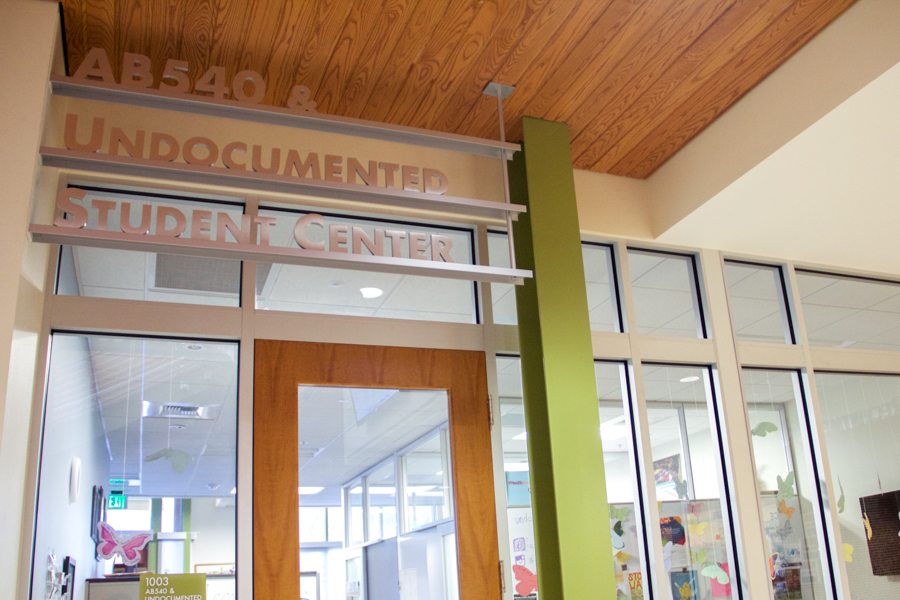
According to Andrea Gaytan, director of the AB 540 & Undocumented Student Center at UC Davis, several students who will qualify for this program are excited to have this loan as a backup in case they are unable to pay for tuition, though many are not planning to use it unless necessary. This loan program will make it easier for undocumented students to have a more normal college experience and may possibly open up opportunities for them, according to Gaytan.

However, Gaytan also expressed some concern about the possible lack of funds for the program, arguing that $5 million is not going to be enough for all 3,000 undocumented students at UC’s across the state.

“One of the challenges in implementation is coming up with a total amount,” Gaytan said. “If you multiply $4,000, the maximum amount the legislation has outlined to AB 540 students in one year, by the number of current AB 540 undocumented students on our campus, the number is over $1 million just at UC Davis for one year. That’s a lot of money.”

Although the funding is a concern for Gaytan, she said she is looking forward to the implementation of the program because it helps close the gap in financial aid between undocumented students and citizens.

“I think it’s very promising that undocumented students will have options to help fill that gap in funding, although it is still not equitable to what U.S. students have at their disposal,” Gaytan said. “But it’s something and something is better than nothing.”

Written by: Sangeetha Ramamurthy – campus@theaggie.org