59.3 F
Davis

Davis, California

Sunday, December 21, 2025
Home Blog Page 496

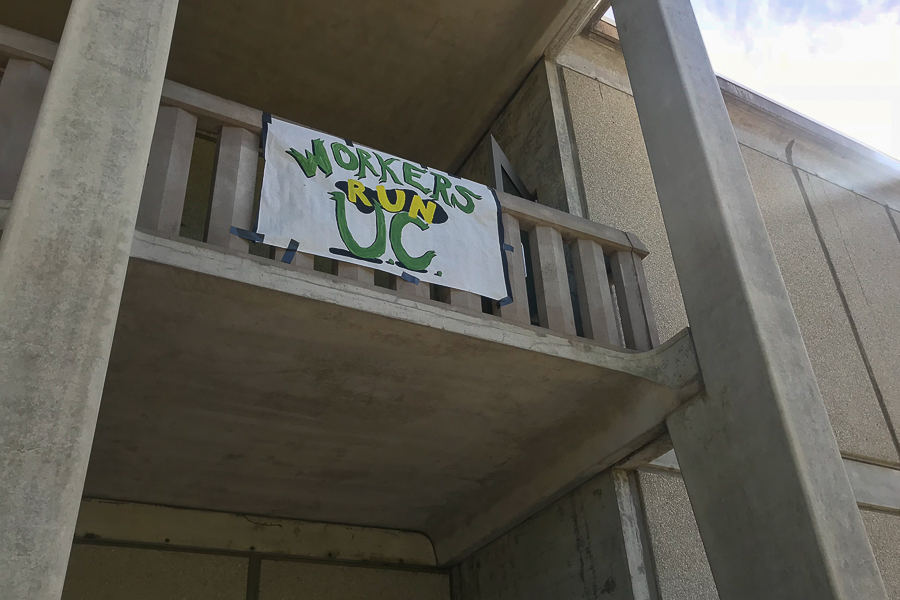
AFSCME votes to authorize second strike

ALEXA FONTAINLLA / AGGIE

UC leaders upset with vote, call actions “predictable theatrics”

Amid stalled bargaining negotiations with the UC, the American Federation of State, County and Municipal Employees (AFSCME), which represents over 25,000 UC employees, has voted to authorize a second strike.

“Earlier this month, university officials announced imposed employment terms for more than 15,000 of UC’s Patient Care Technical workers,” said a statement from AFSCME. “The terms will raise healthcare premiums by as much as 61%, lift the retirement age by 5 years, flatten employee wages for the next several years, and allow for more outsourcing of thousands of patient care jobs.”
AFSCME staged a three-day strike in May with 53,000 UC workers participating. Workers from the California Nurses Association and University Professional and Technical Employees-CWA went on strike in solidarity. Under their new contract, CNA employees will be unable to strike in solidarity.

The May strike was staged “over growing income, racial, and gender disparities within the university’s workforce.” A 97 percent majority authorized the May strike, and a 96 percent majority authorized a second strike, which has yet to be scheduled.

A statement from the UC Office of the President criticized the approval of a second strike, calling AFSCME leaders’ actions “predictable theatrics.”

“For the second time in five months, AFSCME leaders are putting their agenda above the needs of patients, students, employees and the public by calling for yet another strike,” UCOP’s statement said. “Union leaders refuse to allow their own members to vote on UC’s competitive contract offer, instead spending months threatening and now conducting a strike vote.”
UC officials alleged AFSCME leaders are “using the threat of a strike as a scare tactic” rather than attempt to “engage in constructive talks at the negotiating table.”
“For over a year, we’ve raised concerns over the University’s growing efforts to outsource jobs to contracting companies that pay workers less with little to no benefits,” stated Monica De Leon, vice president of AFSCME Local 3299’s Patient Care Technical Unit, in AFSCME’s press release. “We believe it’s a major driver of inequality here at UC and instead of working with us to address the problem, University administrators are forcing proposals on workers that will only make things worse.”
UC officials said they will limit, to the best of their abilities, “the negative impact of a strike.”


By Hannah Holzer — campus@theaggie.org
Canary Mission releases personal information of UC Davis students, faculty who criticize Israel

RAUL MORALES / AGGIE FILE

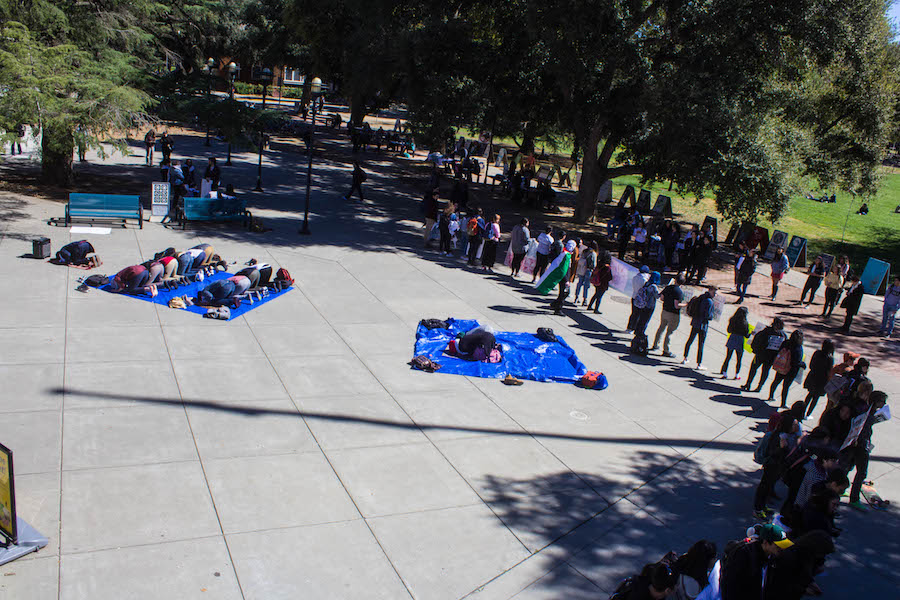
UC Davis community members denounce website, which has doxed thousands of individuals

Canary Mission, a website and social media initiative, recently posted the pictures and personal and professional information of a number of UC Davis professors and students, including English Professor Margaret Ferguson and Jewish studies Professor David Biale.

Canary Mission, which has been the subject of widespread backlash and condemnation from a number of groups, has effectively doxed over 2,000 students and 500 professors for any critique of Israel. The group equates any form of what is perceived as anti-Zionism, including support of the Boycott, Divestment and Sanctions movement, with anti-Semitism and racism.

In 2016, the national group Jewish Voice for Peace posted a letter signed by over 1,000 university faculty members condemning the website “as an effort to intimidate and blacklist students and faculty who stand for justice for Palestinians.”

Biale, a Jewish studies professor and the author of over 10 books on Jewish history, explained his perception of Canary Mission.

“It’s essentially a spying operation they run on college campuses, to police faculty if they don’t agree with their views and to post them on their website,” Biale said. “As far as that goes, they have as much right to the first amendment to anyone else.”

At the end of last school year, ASUCD passed a resolution condemning Canary Mission, with joint support from the Muslim Student Association, which authored the resolution, and Aggies for Israel. Dozens of students filled the Mee Room where Senate meetings are held, and so many students showed up to denounce the group that dozens more crowded the halls.

The resolution cites the operation of watchlists like Canary Mission as a threat to “the security of student activists” which creates “a toxic atmosphere of fear and paranoia among fellow students, thus infringing upon students’ ability to freely express their opinions.”

Dana Topousis, UC Davis’ chief marketing and communications officer, responded to the posting of personal information of university faculty members and students.

“We recognize and empathize with the concerns being expressed by all members of our campus community about the postings,” Topousis said. “The campus has various resources available to support members of our community who wish to discuss their concerns and perspectives related to the postings.”

A recent op-ed published in The Aggie and penned by Adnan Perwez, the former president of the Muslim Student Association, spoke to the importance of university-led action.

“Holding our university administrators accountable, asking them to protect our rights and ensuring that Canary Mission cannot continue campus-wide surveillance is the least we deserve for fighting for the truth to prevail,” Perwez said in the piece.

Canary Mission has uploaded political and personal information for individuals from hundreds of universities nationwide — including six UC campuses. The website’s header, and the top of every individual’s profile, reads “IF YOU’RE RACIST, THE WORLD SHOULD KNOW.”

Individual profiles include a person’s picture, full name and the actions they have committed — including any protest of Israel’s policies or challenges to Israel’s authority.

In communication with The California Aggie, Canary Mission reiterated that any boycott of Israel is racist against Jews.

“Canary Mission is solely concerned with anti-Semitism,” an official from the organization said in an email. “Boycotting Israel is anti-Semitic. BDS is anti-Semitic.”

At press time, Canary Mission did not provide the name of the official drafting the group’s statements.

Furthermore, the group said it is “motivated by a desire to combat the rise in anti-Semitism” on college campuses.

The website has been condemned as an Islamophobic blacklist, meant to stifle job opportunities or prevent travel access. While some on the website have been revealed to have used Jewish slurs, many have simply engaged in varying levels of critique.

Biale found fault in Canary Mission’s tactics of casting a wide net — grouping together those who criticize Israel with those who call for complete dissolvement of Israel as a state and those who use anti-Semitic slurs.

Biale and others said it is inaccurate to associate the most extreme positions of anti-Semitism with more moderate advocacy for Palestinian freedom.

“These Canary Mission people are not interested in nuance,” he said. “If you look at the people listed, there’s a lot of people who are very hostile to the state of Israel. People like me don’t fall in that category. I am a Zionist, [however] I disagree with certain policies of the government of Israel and I’m not embarrassed.”

A Canary Mission official claimed that Biale’s support of the BDS movement is anti-Semitic — “Fighting anti-Semitism is a universal value that must be supported by the left and right.”

Biale said that he did not have an inherent problem with listing his public views on the website. However, some of the information regarding his support and actions on Canary Mission is inaccurate, he said.

“The problem is, there’s pretty persuasive evidence that Israel is using this website to block people from entering the state of Israel,” Biale said. “The ministry of strategic affairs, they evidently have very close ties to Canary Mission.”

Russell Thomas, a fourth-year gender and sexualities major, and Madison Deluca, a UC Davis alumna, have had their information posted on the website. The two said the most dangerous aspect of Canary Mission is its production of an online database which could be used by Israel’s government to restrict travel access.

The profiles of Thomas and Deluca list information about their respective associations with UC Davis’ chapter of the group Students for Justice in Palestine — including a detailed list of all events organized by SJP the two participated in — and support of the BDS movement.

Both Thomas and Deluca’s pages includes screenshots of their personal social media accounts, places of employment, majors at UC Davis and personal images.

“We did not lose anything from being doxxed,” Deluca and Thomas wrote in a joint statement. “It was a gross invasion of privacy, being blasted on a social media platform like that, but fundamentally we didn’t lose anything. We are more worried about the folks who have family in Occupied territories.”

UC Davis English Professor Margaret Ferguson had also been profiled by Canary Mission. In February of this year, she co-wrote an article arguing that “educators need to denounce the smear tactics of Canary Mission.”

“Canary Mission is a scurrilous organization,” Ferguson said. “The very fact that they keep their funding hidden should alert us to be skeptical about their claims. They are eager to hurt undergraduates seeking jobs and they have no respect whatsoever for academic freedom.”

When the group was asked about funding — and Israeli departments such as the Ministry of Strategic Defense using Canary Mission to deny entry — a response sent by the group to The Aggie stated they have “no connection to the Israeli government.”

The group claims that any funds come through “supporters of our mission to fight anti-Semitism [who] donate through our website.”

Canary Mission did not deny that the personal information posted on its website had been used by the Israeli government or military.

“Individuals, journalists or organizations are free to use our material as they wish,” the group wrote.

Danielle Smith, a media correspondent for the UC Office of the President, did not respond to questions of how campuses should respond to the website, or whether the UC has a position on Canary Mission.

“UC has not received any requests for information from this organization,” Smith said. “All of the information on their website appears to come from social media accounts and other public websites.”


Written by: Aaron Liss — campus@theaggie.org

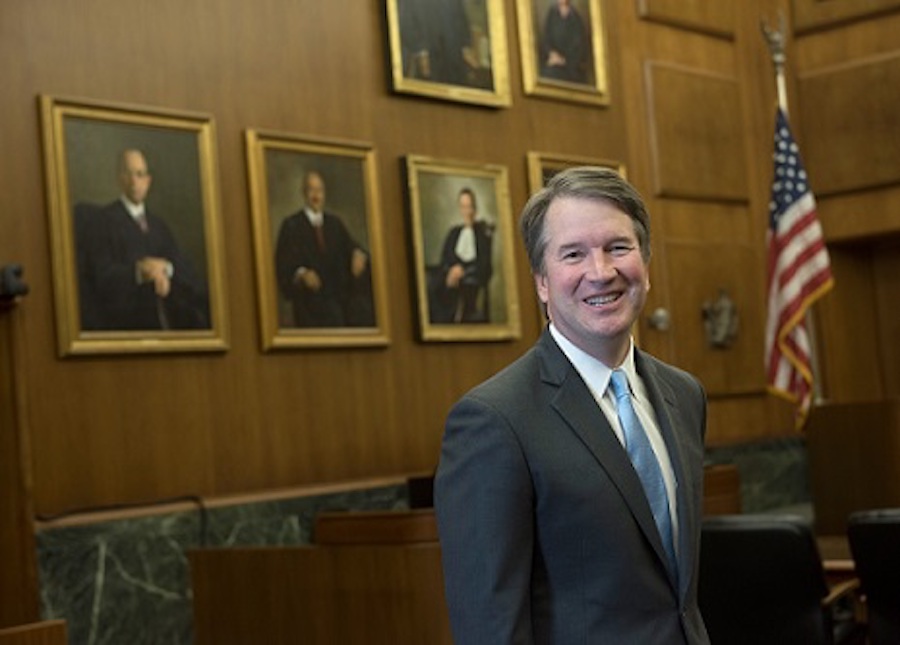
Blame the Democrats for Brett Kavanaugh

Why going “nuclear” is killing America

America is lilting toward the latter half of the motto, “United we stand, divided we fall.” It’s a scary thought, ripe with tension and borne through the electoral bickering that has defined a generation of extremely partisan governance.

Here’s another scary thought:

A man with credible accusations of sexual assault was just confirmed to the highest court in the land. Now there are two Supreme Court justices with sexual misconduct hanging over their heads — both conservative, and both confirmed following scandalous hearings.

We should blame Senate Republicans, of course, for voting in Kavanaugh. But that’s too easy. Part of the blame lies with Obama-era Democrats as well.

There hasn’t been a judicial battle like Brett Kavanaugh’s — confirmed by a 50-48 vote on Saturday — in recent memory. Democrats are furious; Republicans are euphoric.

We all know this.

Kavanaugh’s position on the Supreme Court was never really in doubt because confirming him was simply a numbers game. Republicans only hold a slim 51-49 majority in the Senate –– before last year, a two-vote margin was not enough to confirm a nominee.

How did we get to the point where a simple Senate majority could determine the Supreme Court?

In 2013, Democrats held the Senate majority under the leadership of Harry Reid. After Republicans marshalled filibusters to a level unseen in modern American history, the Democrats wanted a quicker path through the Senate for executive nominees to lower courts and other federal positions.

Reid passed a measure that fall which eliminated the long-held 60-vote requirement for executive nominations. The new rule, carrying the undignified title “nuclear option,” allowed a simple majority vote for federal judicial appointments (excluding the Supreme Court).

Mitch McConnell — a Republican and the current Senate majority leader — invoked Reid’s example during Neil Gorsuch’s confirmation hearings in 2017 by holding a vote to allow a simple majority to determine positions on the Supreme Court. It passed.

These aren’t the only times the nuclear option has been used. But they may be the most impactful.

We are witnessing the repercussions of Reid’s decision today. By setting a new standard of partisanship, Reid opened the floodgates for a more sinister political culture that McConnell exploited.

If Reid and the Obama-era Democrats hadn’t gone “nuclear” in the first place, McConnell would have been hard-pressed to justify transferring this rule to the Supreme Court hearings. He may have applied this nuclear option to the Supreme Court anyway — McConnell is not one to avoid morally questionable tactics in the name of “party first.”

But why give McConnell the ammunition? It was a disastrous decision, and one that paved the way for a bitterly contested man like Brett Kavanaugh to alter the ideological balance of the Supreme Court for decades to come.

Republicans shouldn’t be absolved of blame. Obama’s presidency was marred by Republican grandstanding that bordered on the absurd — witness the birther movement and the rise of the Tea Party. America’s divide is the work of two parties, not one.

Harry Reid did what seemed necessary for short-term political gain under the Obama years. But his myopia induced recklessness. Reid and his colleagues failed to predict the dystopian possibilities should Republicans take the nuclear option further. What worked five years ago is now haunting the nation.

Brett Kavanaugh was confirmed with the nuclear option this weekend.

Rules designed to safeguard the American experiment from the “tyranny of the majority” — at least in terms of judicial nominations –– are gone. How long will it take before the Senate majority reduces the 60-vote requirement for passing legislation to 51?

We must take this very seriously indeed.


Written by: Nick Irvin — ntirvin@ucdavis.edu  

Disclaimer: The views and opinions expressed by individual columnists belong to the columnists alone and do not necessarily indicate the views and opinions held by The California Aggie.

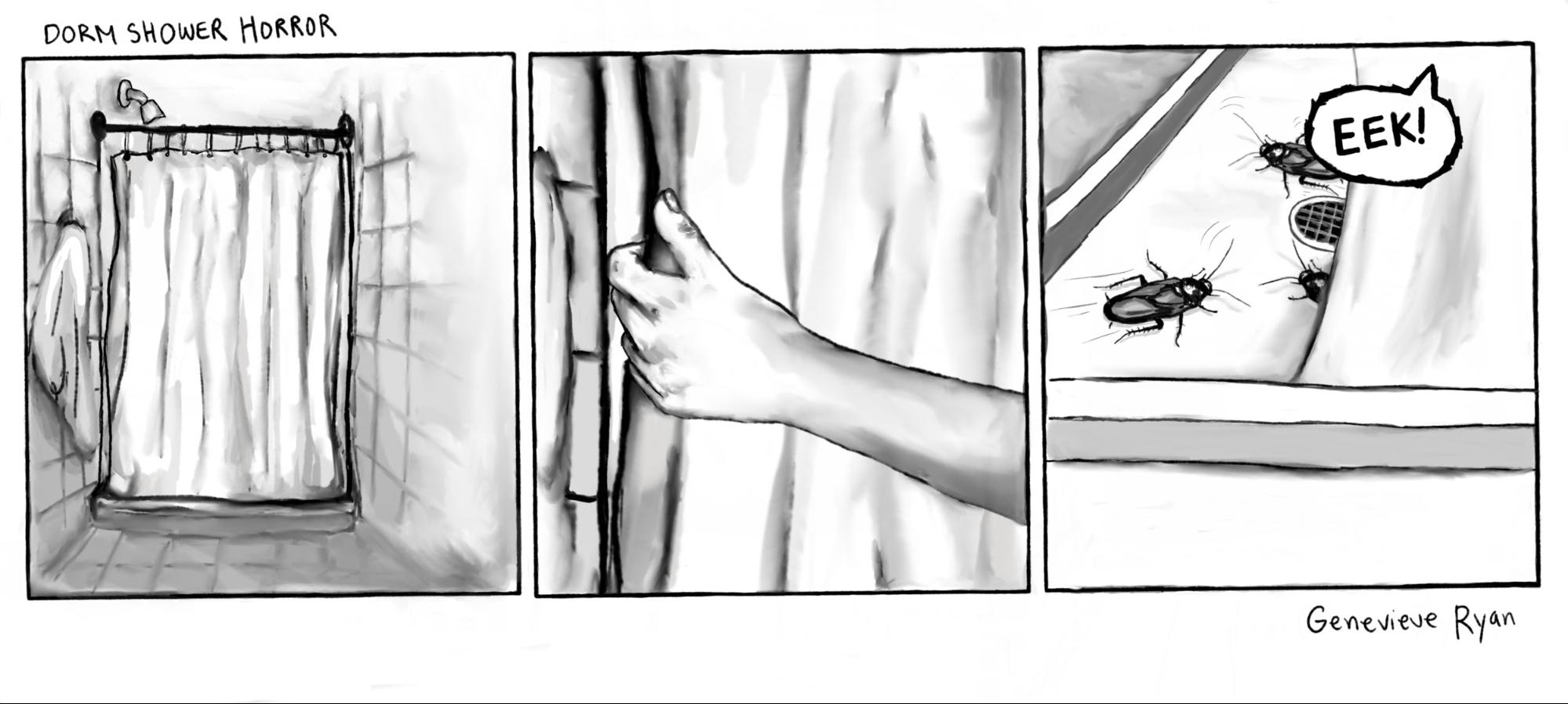
Cartoon: Dorm Shower Horror

GENEVIEVE RYAN / AGGIE

By GENEVIEVE RYAN — geryan@ucdavis.edu

Coffee-goers, beware!

JEREMY DANG / AGGIE

Robberies at various coffee shops around Davis

The Davis Police Department identified four stunts of coffee shop robberies in Davis and surrounding areas in the last few weeks. Students and coffee-goers alike are advised to be more aware of risks.

Andy Fell, the public information representative for the UC Davis Police Department, indicated where the robberies occured.

“There are four cases that Davis PD brought to our attention,” Fell said. “Most recent is Peet’s Coffee on E Street in downtown. Before that, there was yet another Peet’s on Covell Boulevard and Temple Coffee on G Street in August as well as the Starbucks in Dixon.”

Paul Doroshov, the Davis police lieutenant, elaborated on the information they have so far about the robberies.

“All of these robberies have been perpetrated by young males,” Doroshov said in the Davis Enterprise. “In these cases the suspects entered a coffee shop, looked around, and began grabbing laptop computers. In some cases, the suspects grabbed computers out of the hands of people sitting at tables conducting business or studying.”

Even so, the Davis Police Department is still investigating for more information about the perpetrators.

“Davis PD is still investigating this, and we ask if anyone has information to please contact UC Davis Police or Davis PD,” Fell said. “Davis PD believes that they are linked because all the crimes are similar.”

Virginia Roden, the store manager for Peet’s Coffee, described her reaction when she first heard about the incident.

“I was discouraged and angry,” Roden said. “I was notified the night that it happened, as it’s part of our policy to let the store manager know if there are any incidents like that at the store. I will say that I was not aware of the fact that so many other coffee houses — not only in Davis, but throughout Sacramento and Dixon and other areas — have been having this issue.”

Furthermore, Roden noted that she was upset about a lack of communication which, if corrected, might have prevented the robbery from occurring.

“The following day, I was pretty upset to find out that there was really no communication from the police department in regards to this,” Roden said. “I feel like we could have been more proactive to prevent this from happening in our store.”

Roden elaborated on how the crime was carried out at the Peet’s Coffee on E Street.

“On the night of the incident, two perpetrators came in and they were dropped off by a vehicle,” Roden said. “They walked in and went to the bathroom area, and in less than four minutes from the time they walked in until the time they turned back around, their car circled the block and came back up. On their way out, they both had their eyes on particular laptops, and they grabbed the laptops and ran. Both of the victims ran after them and police were notified.”

In order to prevent an incident from happening in the future, Roden noted that educating guests would be beneficial.

“First of all, by notifying our guests that there is an issue and letting them know that when they are sitting in areas that are close by the door or they’re positioning themselves where they are not aware of their surroundings, they are potentially putting themselves at risk [by] just not being present and aware of people around them,” Roden said. “Often times, students would get up and walk away from their stuff. Unfortunately, they are too comfortable in an environment that’s not always safe — just making the public aware that there is an issue so that they can be more proactive.”


Written by: Stella Tran – city@theaggie.org


New Season, New Controversy

0

JOHN TRAINOR [CC BY 2.0] / FLICKR
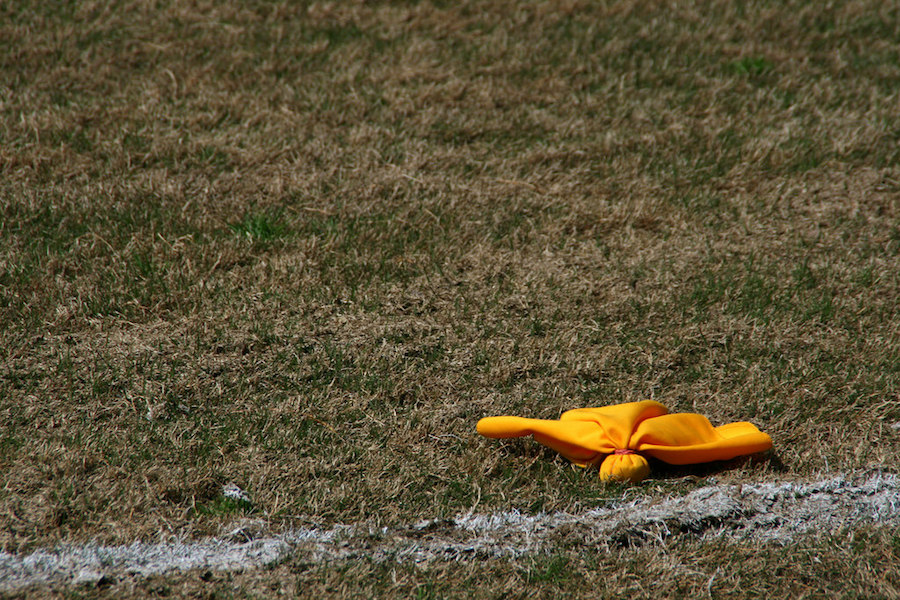
New ‘roughing the passer’ rule regulations surround NFL in  controversy

As the first quarter of the 2018 National Football League regular season comes to a close, fans and players alike are dumbfounded by the interpretation of a newly-emphasized rule. Rule 12 Section 2 of the league’s official rulebook, which stated the exact laws of player safety, to this day has not been altered after being implemented in 1995.

However, the NFL Competition Committee, the entity in charge of making changes to the rule book, put a major emphasis this year on quarterback safety with regards to hits to the head or being tackled into the ground with excessive force. Essentially, the main purpose of this new focal point is to ensure a quarterback who is important to the NFL’s viewership does not go down with an injury, like the way Green Bay Packers’ quarterback Aaron Rodgers did last year. After a rampant increase in “roughing the passer” penalties this year compared to last, the masses of fans and even a handful of members from the Competition Committee are unhappy, and calling for changes to be made.

The league has done everything it can to protect quarterbacks, but have they gone too far? According to fourth-year English major Paris Lucci, they absolutely have.

“I feel that the penalties are taking away from the game, and that football is a full contact sport,” Lucci said. “Knowing it’s a contact sport allows viewers to be entertained and cheer loudly for their respective teams. However, implicating [these new] penalties downgrades the game of football because it diminishes the whole aspect of a ‘contact sport.’”

Considering the NFL was founded in 1920, it is understandable to see long-time football enthusiasts exasperated with the changes to the game they hold so dear. In 2017, there was a total of 106 roughing the passer penalties, an NFL record, equating to an average of 6.24 calls per week. Out of the past eight seasons, however, the lowest single-season total for roughing penalties was 85, coming in at 5.00 per game in 2016. That number has skyrocketed in 2018, with a grand total of 38 roughing the passer penalties called through only 4 weeks of play, culminating in an average of 9.5 called per week.

Second-year neurobiology, physiology and behavior major Enrique Chavez is fed up with all the outside noise and distractions encapsulating the NFL, and explained how it is taking away from the actual sport.

“Basically all the penalties have pushed me a little away from the entertainment of it all, especially since there’s so much media drama with the NFL at the moment,” Chavez said. “From the health dangers to the political controversy, the penalties don’t really help at all.”

Although the NFL took these precautionary measures to purportedly protect players’ safety, many feel that the league has overcalled this one penalty to the point where fans feel alienated.

Fourth-year applied mathematics major Slava Zinevich had some strong words regarding the first few weeks of the NFL season and how the new rules have changed watching the game.

“It [makes] the experience worse, breaks the continuity of the game, as well as forces the players to change their game to an unnatural style they are not used to, due to the artificiality of the new rules,” Zinevich said.

It is clear, to these students, that the new rules’ emphasis has been an exceedingly detrimental addition to the league and its viewability. One official on the Competition Committee believes that fans will see a change going forward, with less penalties being called, which most fans will be ecstatic to hear. If this turns out not to be true, the league could face a potential drop in ratings, which is what the $74.8 billion dollar company was attempting to avoid in the first place.

Hence, UC Davis students patiently wait for the fifth weekend of regular season play with their excitement plagued by the lasting effects of previous weeks’ officiating catastrophes. Although it might be farfetched to conclude that these students, and other Aggies, will be entirely shutting out professional football for good, it is undeniable that many will approach this weekend with apprehension.


Written by: AJ Seymour—sports@theaggie.org


Field hockey continues upward trajectory despite tough loss

BRIAN LANDRY / AGGIE

UC Davis falls to 6-8 with agonizing loss at home

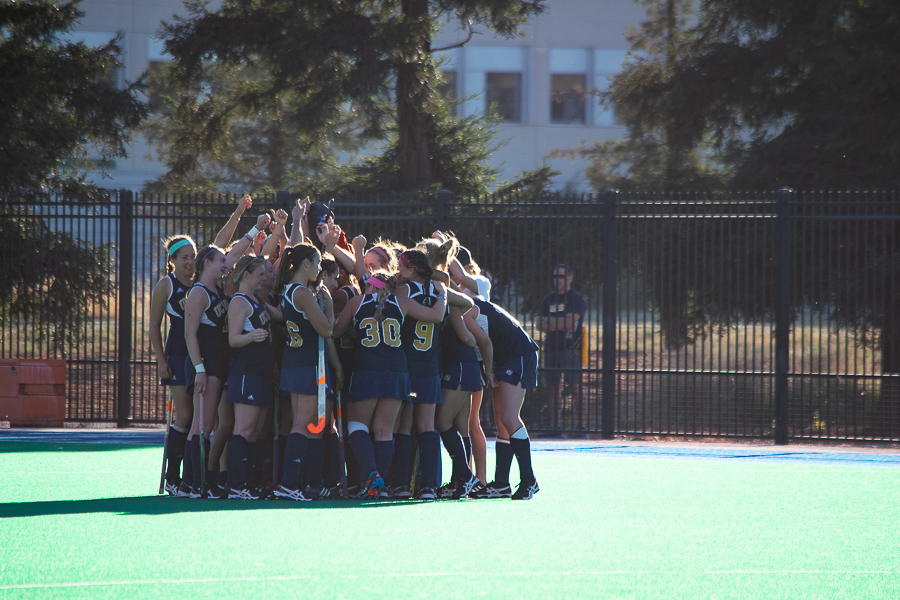
The UC Davis field hockey team dropped its second consecutive America East Conference game on Friday afternoon, losing to the visiting University of Pacific Tigers in a game that went to double overtime before being decided by a penalty shootout.

The teams were tied 1-1 for the majority of the second half and remain deadlocked through a pair of 10-minute overtime periods. In the middle of the shootout, both sides scored with two straight goals to keep things tied. After each team had five attempts and the score was still knotted, the shootout moved to a sudden-death scenario. UC Davis had the first chance to win the game, but a shot by redshirt senior Kelley Kramer barely sailed past the bottom-left goal post and went out of bounds. Pacific found the net on the very next play for the game-winning goal.

“The game could have gone either way — both teams were playing at the tops of their games,” said UC Davis Head Coach Britt Broady. “This is the way we aim to compete in every game, the results will come. It’s just unfortunate we didn’t earn the ‘W’ after such a great team performance.”

The Aggies have made positive strides so far this season with a young, 24-player roster that is comprised of 17 underclassmen and nine freshmen. Broady, in her second year at the helm, has continued to foster an inclusive and upbeat environment around the program, which has helped younger players quickly adapt to the standard of competition found at the Division I level.

“We work on our team culture and team chemistry so that a team member’s class does not determine their value or role on the team,” Broady said. “With such a large number of newcomers it was vital to our success to have them trust that concept so they could play and feel comfortable taking risks. I think the upperclassmen were able to welcome our newest members and get them on board quickly… so that no one on our team plays like a ‘first year.’ We play like a team of experienced veterans.”

No matter how the rest of the schedule plays out, this season has surely been an improvement from last fall when the Aggies suffered through a 1-17 campaign.

“I am very pleased and proud of the progress this team has made in just over a year,” Broady said. “Last year we fought with everything we had — the heart and work ethic this team showed was remarkable.”

Broady credits her team’s hard work during the off-season as a big reason for its success and continued improvement thus far.

“After a winter and spring of technical and tactical focus, we are able to compete at a high level with any opponent,” Broady said. “We’ve continued our progression through this fall and have an incredibly strong defensive unit matched with sustained attack and the ability to score. We are confident when we step on the field that we have a game plan which will allow us to win if we’re able to execute.”

On Friday afternoon, the Aggies started out well and got on the board just over 10 minutes into the first half. Freshman forward Siena Dwyer possessed the ball down the sideline and into the right corner, before quickly firing a pass to freshman midfielder Eline van den Bosch in front of the goal. Van den Bosch swiftly guided the ball into the bottom-left corner of the net to put UC Davis ahead 1-0.

Van den Bosch has taken the league by storm in her short time with the Aggies so far, setting program records and leading the team with 19 points and eight goals. In a game at Ball State on Sept. 24, she became the first Aggie to record seven points in a single game. Her hat trick in that contest was also the first three-goal performance in program history in the past seven seasons.

The game went scoreless for the remaining 25 minutes of the first half, despite an onslaught of shot attempts by Pacific. Nonetheless, the UC Davis defense held its ground and came up with several blocked shots. In addition, junior goalkeeper Chelsea Bigelow had three saves between the pipes.

“We dominated the first half by sticking to our game plan which included transferring through the midfield and neutralizing [the Tigers’] greatest scoring threat — their incredibly skilled drag-flicker on attack corners,” Broady said.

Pacific finally broke through in the 42nd minute on a penalty corner play. The Aggies deflected a shot in front of the goal, but a Pacific forward quickly scooped up the rebound and put it into the back of the goal for the equalizer.

“Pacific is a fast and highly skilled team, so we knew a 1-0 halftime lead would not be the final score,” Broady said. “Unfortunately, we were unable to capitalize on our second half scoring opportunities.”

Pacific once again dominated possession for the remainder of the second half, but UC Davis didn’t give in defensively. Both teams had their opportunities in the two overtime periods, but nothing materialized.

The Aggies now sit at the bottom of the America East Conference division standings, having dropped both of their league contests so far. The team lost 5-0 at Stanford last Sunday to open up the league schedule.

UC Davis originally started the season on a 6-6 run in non-conference play, which included a long East Coast road trip with contests at Virginia, Vermont, Ohio, and Indiana. The team will finish out its regular season with back-to-back games against UC Berkeley, as well as meetings with Pacific and Stanford again.


Written by: Brendan Ogburn — sports@theaggie.org


Vinyl and Music Fair

SAHAR FOROUZANFAR / AGGIE

Local record shop, KDVS scheduled to co-host music vendors

Armadillo Music and KDVS will co-host a vinyl and music fair at the Davis Senior Center on Oct. 13. The event begins at 9 a.m., but early birds that want first pick can pay a $5 fee for early entry starting at 8:30 a.m. The event will feature a wide variety of music genres and vendors selling CDs, cassettes, music memorabilia and, of course, vinyl records.

Paul Wilbur, the manager at Armadillo Music, shared his thoughts on the prospering community around vinyls that has become noteworthy over the past few years.

“We have a generation of new music fans that had no connection to the artists they love,” Wilbur said. “It allows people to feel more invested in the music they love rather than having an iPod filled with MP3s they never listen to.”

Wilbur also discussed the sense of community that vinyls create.

“Being able to share music in the moment together is something that the last generation missed out on and this new one is showing an appreciation for it,” Wilbur said. “Nobody ever went to anyone’s house to look at an MP3 collection.”

Chloe Breaker is in charge of booking at Armadillo Music and has been part of several vinyl fairs in the past three years she’s worked there.

“I like seeing different people’s collections,” Breaker said. “Each vendor always has a different feel and something to offer.”

Breaker reminisced on her first exposure to vinyl records when she was younger.

“When I was in high school, my mom got me a portable record on vinyl,” Breaker said. “I got The Black Keys’ “Turn Blue” album and I realized that this is how records are supposed to sound.”

Many UC Davis students resonate with this revived obsession for vinyls and enjoy what comes with it. Rodolfo Pascual, a second-year economics major, feels that Davis is a good place for vinyl culture to continue thriving.  

“Vinyl culture for Davis plays an integral part in defining what Davis is,” Rudolfo said. “Davis within itself is a city that doesn’t conform to the stereotypes of other cities. There are no huge skyscrapers or corporate conglomerates in Davis. Vinyl culture allows for Davis to maintain a sense of a time that allows for it to carry a state of timelessness.”

The fair will also feature a live performance by Yo and the Electric at 1 p.m.

Information regarding the fair can be found on the Armadillo Music website as well as the event page on Facebook.


Written by: Josh Madrid – arts@theaggie.org


UC Davis receives high marks in numerous national rankings

REBECCA CAMPBELL / AGGIE

University placed in top 10 of best public universities

UC Davis received multiple top 10 placements over the summer as one of the country’s best universities.

U.S. News and World Report, The Wall Street Journal and Times Higher Education awarded its rankings in September, while Washington Monthly gave its public and private institution rankings in August. UC Davis tied with the College of William and Mary for 10th place in U.S News’ 2019 Top Public Schools listing.

U.S. News and World Report determined its rankings through surveys distributed to university leaders. Based on their responses, the organization created an estimate of prestige for each institution, according to Melissa Blouin, director of News and Media Relations for UC Davis Strategic Communications.

“Reputation is another aspect sometimes put into ranking,” Blouin said. “This recognition shows that UC Davis is on an upward swing with a lot of different kinds of programs and I think it’s a testament to the fact that people in those programs are working hard to do the things that would help get them recognized.”

The Wall Street Journal’s best public university ranking placed UC Davis at fifth, one place above its ranking last year. And Washington Monthly ranked UC Davis in tenth place in its 2018 ranking of best National Universities.

Washington Monthly determined UC Davis’ ranking on its “contribution to the public good in three broad categories: social mobility, research and service.” According to Steve Weisler, interim associate vice chancellor for enrollment management and chief data officer and senior advisor to the provost, social mobility is “the change in earnings from the parents of students who come to a university compared to their own earnings later after they graduate.”

Money Magazine ranked UC Davis eighth in its 50 Best Public Colleges and 11th in its 727 Best Colleges in America.

One third of Money Magazine’s methodology for determining its ranking, according to its website, is quality of education, with 60 percent of that third focused on graduation rate. The other two-thirds are composed of affordability and financial outcomes of the university’s students.

“The rankings are not, for us, a goal in and of themselves,” Weisler said. “They’re one mirror that reflects the performance of the institution. The factors the rankings rely on that we consider important and that we wish to excel at or improve at, we take those particularly seriously.”

Among rankings in Innovation, Best Colleges for Veterans and Ethnic and Economic Diversity, U.S. News and World Report ranked UC Davis 32nd in Best Undergraduate Engineering Programs and fourth in biological and agricultural engineering.

“We are, of course, greatly pleased to see the quality of our program recognized in this way as we strive to provide the best education a student in this field can get anywhere,” said Bryan Jenkins, biological and agricultural engineering professor and department chair.

Weisler went on to state that the rankings UC Davis received also serve as a means of identifying areas for improvement — not only by being compared to other institutions in search for aspirational characteristics, but also in highlighting potential initiatives within the university.

“Several months ago, the provost charged a committee called Equality Metrics Committee,” Weisler said. “It’s in the process of finalizing and distributing a report. That report is meant to look across all these rankings […] and to try to identify the areas that happen to be in those rankings that also correspond to areas for continuous improvement. It’s trying to find a correspondence between what rankings care about but also what we care about.”

From an administrative perspective, UC Davis’ placement is meant to invigorate current students and encourage potential ones.

“The rankings really speak to how talented and energized our students and our faculty are,” Blouin said. “I think it’s a real point of pride for the students that are looking at UC Davis and also those who are here that we are considered to be one of the best in the country.”


Written by: Elizabeth Mercado campus@theaggie.org


Every vote matters

CAITLYN SAMPLEY / AGGIE

Exercise your right, register by Oct. 22

Fall midterm elections are approaching at the same pace that chaos is erupting in Washington so much so that people’s faith in politics and democracy is withering away. This should be all the more reason to vote.

The last day to register to vote online or send in a mail-in registration in California is Monday, Oct. 22. A paper application is also available at the Yolo County elections office, any DMV field office and many post offices, public libraries and government offices. If you miss this pertinent deadline, you can conditionally register to vote using a paper application and cast a provisional ballot on Election Day, which will be validated once your eligibility to register is determined.

To check your registration online, go to voterstatus.sos.ca.gov. On this page, you can also check where you are registered to vote, and your political party and language preference for election materials as well as the status of your vote-by-mail or provisional ballot. You may also find your polling place on this site. It’s important to check your registration and follow up with officials at your local county elections office if you detect anything is peculiar or amiss, especially in the face of the thousands of erroneous registrations recently disclosed by the DMV.  It’s equally important to note that, if you’re currently registered in your hometown, you need to send a mail-in ballot or re-register in order to vote at polling places in Davis.

But more than just proper registration is needed to induce real action. The last day to cast your vote is Tuesday, Nov. 6.

Voter turnout among the college student population has historically been 10 percent lower than the national average, an unfortunate and regrettable statistic that students could pay for in the form of higher tuition, less student aid and job insecurity upon graduating. While voting only takes a few minutes, these obstacles related to higher education can have long-lasting impacts on college admission rates and students’ futures.

The importance of informed voting and choosing candidates who represent your belief system and enact change in the House of Representatives, Senate and the governor’s office cannot be overstated in these tumultuous times. By exercising your right to vote, you can weigh in on pervasive issues that are at the forefront of everyone’s minds: women’s rights, education, gun reform, immigration and healthcare. Critical decisions such as the recent confirmation of Brett Kavanaugh to the Supreme Court by a slim margin of 50 to 48 has both renewed vigor in voters and revealed the impact of a single vote. Those who have been disappointed by the route that the country has taken have a chance to convert that disappointment into influence by voting.

The Editorial Board urges voters to make their voices heard at the crossroads of American politics and get themselves to the polls on Election Day.


Written by: The Editorial Board

Guest: Congregation Bet Haverim condemns recent anti-Semitic flyers at UC Davis

NICHOLAS CHAN / AGGIE FILE

The Board of Directors of CBH calls upon the university to uphold its principles of community

On Monday, Oct. 8, the leadership of Congregation Bet Haverim (CBH) was alerted about a graphic anti-Semitic flyer that was posted at multiple locations on the UC Davis campus. This flyer, which blamed Jews for “anti-American” treatment of Justice Brett Kavanaugh, was also found at other college campuses in California and on the East Coast. The cartoonish imagery intentionally recalls the chilling Nazi propaganda designed to turn European sentiment against the Jewish people in the pre-World War II era.  

This event accompanies another set of highly disturbing hate incidents in our community. During the past week, violent, racist threats and Nazi imagery were found at Sacramento City College, threatening to “kill them all” in reference to African Americans. We know more than ever that all communities must stand together rather than fall separately, and we condemn hateful scapegoating of ANY population, not only that of the Jewish community.

These events are happening where we live and work, and they are affecting our senses of well-being and safety. The Congregation Bet Haverim Board of Directors strongly urges the UC Davis administration to conduct a serious and thorough investigation of the distribution of these flyers and to report back to the larger community on its findings. We recognize the work that Chancellor Gary May has done, and we call upon him to further build on his promise to uphold the UC Davis Principles of Community by actively assisting the Jewish student body and all other marginalized students who are feeling victimized or unsafe. Additionally, CBH requests that the City of Davis and the Davis Joint Unified School District actively participate in creating strong and proactive policies to deter hate crimes.

CBH stands ready to work side by side with any or all of these institutions to address this most recent spate of anti-Semitism and racism. CBH simply will not remain silent while any group is threatened in this manner.

Rabbi Wolfe and Hillel staff are available to support any UC Davis community member.  CBH seeks active communication from and with the university regarding this matter and others like it. Let us work together against crimes of bigotry and racism.


Written by: Board of Directors, Congregation Bet Haverim

So you want to nap on campus

CAITLYN SAMPLEY / AGGIE

A comprehensive list of all places to snooze at UC Davis

So you were up late last night, tapping the keys on your computer and getting that essay in just in time to hit the submit button before 8:59 a.m. The single most important thing that could get you through your day without snapping at your co-worker or professor (well of course, coffee, but alas) is what we’re talking about: Naps. Yes.


Where should you take a nap on a campus flooded with thousands of under-caffeinated, sleep-deprived students? The answer is shockingly not on the desk of your next class.


  1. The CoHo:

This might sound a little odd since you may think that there’s barely a spot to sit and eat your sandwich in peace there, let alone rest your eyes and recharge yourself. Really, most of the time, tables at the CoHo aren’t fully occupied — there are people sitting on one side of them which makes the space look occupied as you pass by,  but if you’re courageous enough to ask them if you could quietly occupy the other end, most people say yes.

“It’s possible,” said third-year theatre and dance major Katie Halls. “I’ve taken a nap at the CoHo at one of those comfy green booths.”

The CoHo draws in hundreds of earbud-wearing students looking for a quick rest and if it isn’t your lucky day and you don’t end up finding a comfy spot, at least you know you’re close to the magic tonic — COFFEE.


  1. Third floor of Shields Library

Some may say that it’s smelly, gross and not humanly possible to take a nap at the library, but desperate times call for desperate measures.


“There’s a perfect spot right next to a window on the third floor, to just stretch out,” said second-year clinical nutrition major Julia Lobo. “Don’t go to the 24-hour reading room, though, because people just eat and don’t shower and it smells gross.” (There’s your warning).

Nonetheless, the library just might be your go-to if you have classes till late in the evening— When everything else is closed, it will still be open, providing you with quiet, private spots to take a quick nap or just enjoy some alone-time after a long, stressful day of social interaction.


  1. The Hammocks

Getting a hammock is like going to the DMV and returning within 2 hours, it puts you in a good mood. It’s rare and you usually have to run to get what you want.

You get the idea. Nonetheless, it’s worth a shot. The hammocks on the Quad in front of the Memorial Union are the most popular, in-demand spot to take a nap during Spring Quarter. The location is prime, there is just enough shade and sun whether you want to read a book and relax or take a power nap.

“Once after class, I was super tired and was lucky enough to find a hammock,” said second-year biochemistry and molecular biology major Jiayi Peng. “It was a blessing. It really was. I fell asleep for a good thirty minutes and woke up so relaxed.”             


  1. Wyatt Deck/Arboretum

This spot is mainly used for graduation photoshoots, nature photography or as a calm corner to recharge yourself and prepare yourself for the day. It is located just about a five-minute walk from Olson Hall and is an easily accessible location if you want a little break from the constant rush and noise on campus, or just a chance to simmer in the beautiful nature that the campus offers. Unlike the CoHo or the library, it is quite possible to take longer, more relaxing naps here due to its lack of foot traffic. Plus, you’ll get to see a ton of the famous Davis squirrels.


So check out these napping spots on campus if you like. Good luck and happy napping!

Written by: Rabiya Oberoi  — features@theaggie.org


Police Logs: He robbed for her, how sweet

SHEREEN LEE / AGGIE

September 20

“Reporting party believes the smoke detector to her room had recently been replaced with another unit that contains a hidden camera and requesting officer assist to check it with her. Reporting party believes her ex husband is harassing her.”

“Reporting party was scammed into paying a known suspect for tickets via bank transfer — ID packet complete.”

“Reporting party just noticed a spare sized tire laying in the roadway and nearby motorists inadvertently driving over it.”

“Complaint of a live band or live music being performed outdoors, specifically a female singing via amplified sound.”

“Reporting party could hear a male subject outside of her bedroom. Reporting party thinks the subject said ‘I robbed him for you’ — reporting party is afraid and is locked in her bathroom — negative description.”


September 22

“Noisy bathroom fan, while on lower level fan turned off.”

“Dogs barking all night last night and all day today.”


September 23

“Subject on the playground swing by restroom. Subject shouting out obscene lyrics and appears to have urinated on himself.”


September 24

“Female causing disturbance and took another customer’s drink, refusing to leave when asked and smoking in close proximity to the door.”


Anti-Semitic fliers posted throughout campus

HANNAH HOLZER / AGGIE


Students call for stronger, more substantive administrative response

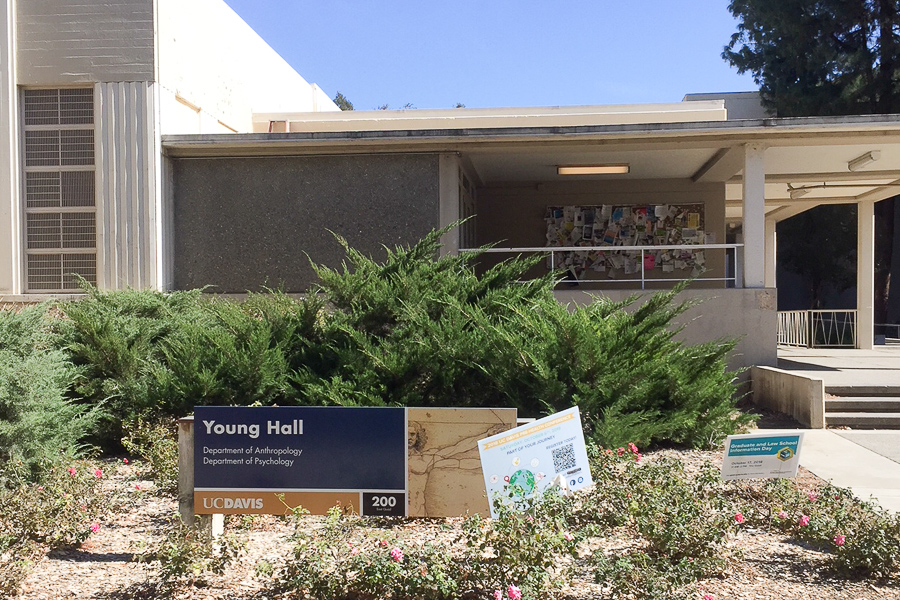
ASUCD President Michael Gofman was on his way to class on Monday morning when he saw a Facebook post from a friend reporting the presence of an anti-Semitic flier posted at Young Hall. By 3 p.m., Gofman received reports of the fliers at the Memorial Union, Hunt Hall, Wellman Hall and Hutchison Hall.

“I’m not scared for my safety,” Gofman, who is Jewish, said. “But a lot of my friends are. A lot of my friends texted me saying, ‘I’m worried about being on campus today.’ A lot of my friends are texting me saying they’re fearful someone is going to attack them, they’re scared, they’re horrified.”

The fliers, which are credited to a local division of The Daily Stormer, a known neo-Nazi site, depict recently-confirmed Supreme Court Justice Brett Kavanaugh surrounded by politicians and individuals — including a likeness of California Senator Dianne Feinstein, and Senate Democratic Leader Chuck Schumer, who are both Jewish — with a Star of David on their foreheads. Dr. Christine Blasey Ford, who accused Kavanaugh of sexually assaulting her, is depicted with the words “Good Goy” written on her forehead.

“Every time some anti-white, anti-American, anti-freedom event takes place, you look at it, and it’s Jews behind it,” the flier states in large, bold type.

Gofman removed a copy of the flier, found by a student, that he had tacked to a bulletin board in his office on campus and observed it — “it looks like it’s from the Nazi era.”

“From my experience, Nazis have gotten a little more subtle with their marketing approach,” he said. “But this is just right out of Nazi propaganda.”

This is not the first time an anti-Semitic incident has occurred on campus. Last year, a sermon given at the Islamic Center of Davis called for the annihilation of Jews. In 2016, UC Davis printers received anti-Semitic fliers by The Daily Stormer.

Also in 2016, UC Davis ranked in a list of universities with high incidents of anti-Semitism. And in 2015, Swastikas were spray painted on the Jewish fraternity Alpha Epsilon Pi’s house in Davis.

“This is a historically anti-Semitic campus — this is not the first time this has happened, this is not even the first time this has happened in my time here,” Gofman said.

In the city of Davis, one day before the fliers were posted on campus, fourth-year political science major Noah Dickman said he found swastikas carved into the concrete at Arroyo Park.

Since the discovery of the fliers on Monday, UC Davis officials and student leaders have responded swiftly and in resounding opposition of anti-Semitism on campus.

A statement released online by Chancellor Gary May addressed the fliers, stating the university is “working to identify those responsible for posting them.”

“The message on these flyers is reprehensible and does not represent who we are as a community,” the chancellor’s message states. “In addition, the person or person responsible violated our posting policy. Our Principles of Community expresses our dedication to mutual respect, understanding, compassion and caring for everyone, regardless of their religious affiliation, culture, ethnicity or gender.”

May’s message concludes by informing the campus community he will not stand “for intolerance of any kind.”

On her professional Facebook page, student Senator Alisha Hacker called the postings “a horrific display of anti-Semitism” that “should not go unnoticed.”

“All students should feel safe from this kind of bigotry at UC Davis,” she wrote. “Jewish students should know that student government and all of their elected representatives, including me, are here for them.”

Gofman posted about the fliers on his personal Facebook page, saying his office “is working with administration to investigate this further.” His post was shared over 300 times.

Both Gofman and fourth-year communication major Dana Benavi, the president of UC Davis’ Sigma Alpha Epsilon Pi chapter, a Jewish sorority, made a personal offer to assist any students who feel unsafe.

“I was sitting in my class when I got messages from the Jewish community about this incident,” Benavi wrote on Facebook. “I started crying in class because of how upset, frustrated and sad it made me. I have already met with the campus staff to work on resolving this hateful anti-Semitic incident.”

Students have also expressed frustration with what they see as a lack of substantive action on the part of university administration.

In a Facebook post, the Davis College Democrats condemned “in the strongest possible terms” the fliers posted on campus, and also urged UC Davis administration to take a stronger stance to fight “neo-Nazis and other hate groups.”

“Chancellor May, you need to make more than a generic statement of condemnation, and send a campus-wide email informing the student body of this horrifying incident rather than let students find out on their own via word of mouth or social media,” the post read. “We look forward to the results of the investigation into this incident and to hearing the administration’s plan to stop these events from occurring again.”

Gofman said there was no official response or action taken after a friend of his reported having found a “massive swastika” carved into a bathroom stall a year ago. Every time an anti-Semitic incident occurs, he said, “it’s swept under the rug.”

At the present time, Gofman and other student officials are working with administrators in attempts to find additional information about the posting of the fliers. They are also drafting a resolution in response to the incident and working on an anti-Semitism training event with help from the Anti-Defamation League.

“In my opinion, there’s only one group of people that can stand up for the Jews, and that’s the Jews, because no one else is going to do it,” Gofman said. “We’re not going to be silent about this. We’re going to make sure people know about this and do everything in our power to make sure this will never happen again.”


Written by: Hannah Holzer — campus@theaggie.org

 

A case of sex and deception

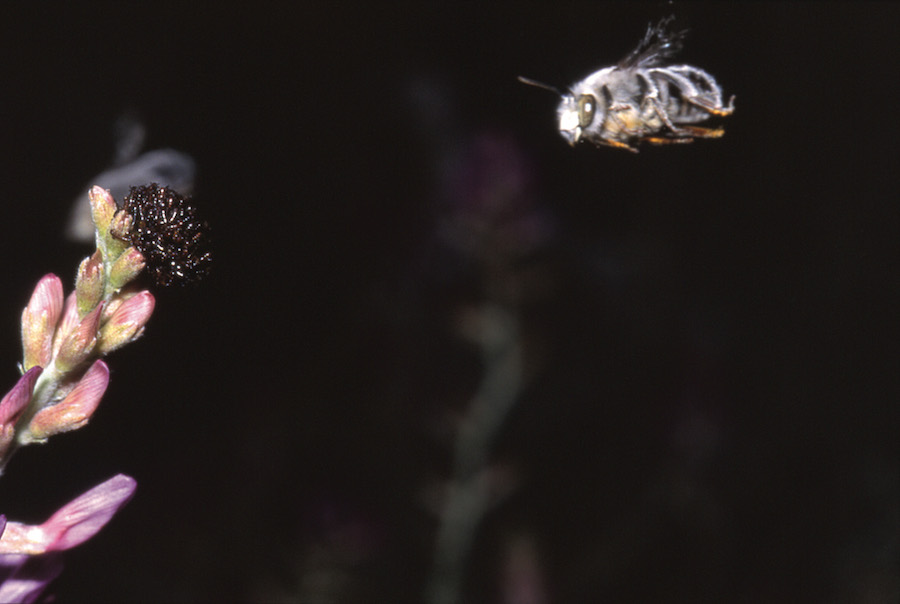
Reprinted with permission from Saul-Gershenz and Millar 2006. Copyright (2006) National Academy of Sciences, USA. (All images, L.S.-G.) (LESLIE SAUL-GERSHENZ / COURTESY)

Parasitic blister beetle larvae exploit the sex pheromones of their host bee species and reap benefits

Abandoned by their parents on a blade of grass in the sand dunes, parasitic blister beetle larvae cluster together after hatching and laying dormant for an entire winter. Spring has come, and their chances of survival depend on their ability to secure a ride to a local bee nest, where there will be abundant bee eggs, nectar and pollen for feeding. The larvae resort to deception, emitting chemosensory signals that mimic the sex pheromones of female bees in a sly attempt to attract male bees to the aggregation. Once contact occurs, the larvae attach to the male bees and eventually to female bees through various acts of mating. Oblivious to the inevitable devastation of their home and young, the female bees transport the larvae to their nest.

The beetle larvae, M. Franciscanus, managed to pull off this complicated and deceitful stunt through the process of local adaptation. According to research lead by evolutionary ecologist Leslie Saul-Gershenz, the pheromones emitted by M. Franciscanus are blends of various compounds that are specialized to mimic the reproductive signals of their local bee species. The investigation included a series of transplant experiments that examined the interaction between the parasitic larvae and different host species, Habropoda pallida from California’s Mojave Desert and H. miserabilis from the coastal dunes of Oregon.

“Take an organism from its original location and move it to another location in a caged environment and compare it to the local organism,” Saul-Gershenz said. “We brought the larvae from the Oregon population to the Mojave desert because we wanted to see if the Habropoda pallida bees were attracted to them and vice versa, the larvae from the Mojave Desert were brought to Oregon to see if Habropoda miserabilis was attracted to them.”

In each geographic location, the host species significantly preferred local aggregations relative to the aggregations from a different geographic location. By becoming adept at tailoring its chemical signals and perching height to those of its host species, the parasitic larvae were able to target and attract the bees in its geographic location.

While not exactly what one would consider an honest living, similar examples of local adaptation can be observed in other species. For instance, the bolas spider shamelessly uses mimicry of pheromones of several moth species to lure its prey.

“This demonstrates that a single species can adapt and evolve in different ways depending on the local conditions,” said Jocelyn Millar, a chemical ecologist and a distinguished professor in the entomology and chemistry departments at UC Riverside. “Here, we showed that two different and isolated populations of the same meloid beetle species had evolved to adapt themselves optimally, in terms of both their behavior and the chemical signals that they were using to attract their hosts, to the two different bee species that were present in their local habitats in Oregon coastal sand dunes or the southern California desert respectively.”

Using electroantennography and complex chemical analysis, chemical ecologists Jocelyn Millar and Steve McElfresh were able to synthetically reconstruct the chemical components of the pheromones.

“Basically, what we looked for were compounds that were present in extracts from both the female bees, and from the beetle larvae, because we knew that the beetle larvae were mimicking the attractant from the female bees,” Millar said. “We then reconstructed that blend of compounds from synthesized chemicals.”

The knowledge from this research gives insight into interactions between species in ecosystems that are similar to this parasite-insect interaction and can be beneficial when trying  to conserve a particular species.

“It is hard to envision a scenario where the bee perishes and the beetle doesn’t disappear along with it,” said Steven McElfresh of UC Riverside. “It shows that when we protect a single species we may in fact be protecting many species which depend upon it.”

One obvious question may still be lingering in the minds of readers: if the male bees can clearly see that the aggregations are not female bees, why are they not able to evade this deception?

“For this particular mating system, olfaction is more important than vision,” Saul-Gershenz said. “Mimicking a subset of the female pheromones is very important.”

Written by: Harnoor Gill— science@theaggie.org