55.4 F
Davis

Davis, California

Monday, December 22, 2025
Home Blog Page 639

One for the books

ANH-TRAM BUI / AGGIE FILE

Logos Books changes ownership, holds grand opening

After running Logos Books for seven years, owners Peter and Susan Linz decided to transfer ownership of the store to Friends of the Davis Public Library (FOL). Logos Books is a completely non profit organization that raises money to donate to charities and benefits people all over the world.

Mr. and Mrs. Linz’s retirement comes with the welcoming of a new grandchild into their family. While they owned the bookstore, however, there were about 8,000 books in stock, many of which they had purchased themselves.

The couple searched for books together on weekends. The only criteria: books that were curious and of interest and that hadn’t been seen before. And of course, the bookstore had the classics –– well-known books that were widely read by the community.

The Linz family’s favorite memories over the past seven years have to do with watching younger people enter the bookstore to find a good book, and having to browse the store since not every book was readily available, unlike online shopping. They would hear people looking at the shelves, whispering to each other that they had read a certain book, and recommending it to their other friends. Conversations about authors or books that they had enjoyed sparked others’ interests to read the same book or find one with a backstory that they could personally relate to.

“We probably sold 2,000 to 3,000 books a month –– the turnover is rapid in a business like that,” Mrs. Linz said. “We got books donated every day. It’s an ongoing process, and that’s why one of the reasons why FOL is going to do a very good job of this; they’ll have a constant influx of books on their shelves.”

Profits from the book sales went toward two major organizations –– Doctors Without Borders and Save the Children, which helps with children’s programs all around the world.

FOL signed a three-year lease for Logos Books.

“The former owners have owned the bookstore for seven years,” said Hank Wyman, FOL manager. “[…] First of all, we didn’t want to see the last used bookstore in Davis disappear –– there were almost a dozen bookstores that had gone in the city. One objective was to help keep that tradition in the city, the other one was to provide an outlet for a sale of donated books that we get for the Friends, other than the sales we get every two months from the book sales.”

Logos Books is staffed with about 25-30 volunteers; no positions are paid. Some have one shift per month, while others do a shift every week. These positions are crucial to the upkeep of the bookstore, as it is a completely non profit organization that raises money to donate to other organizations and charities. Logos Books held a ribbon-cutting ceremony, sponsored by the Davis Chamber of Commerce, as a grand opening on March 23. Over 100 people were in attendance, including board members of the FOL, Chamber members and volunteer employees.

“I started [volunteering at Logos Books] maybe three to four years ago, and the FOL assumed running it on February 1,” said Sandy Shaw, a volunteer at Logos Books. “I love books, I love used books and recycling books, and I really enjoy giving service for the first years to Doctors Without Borders. I’m thrilled that Logos didn’t close down and that the FOL assumed ownership, and that all proceeds will go to the Davis Public Library. I think for a lot of reasons, it’s wonderful to have a used bookstore in Davis. People love to get books for a bargain price and people love donating money, knowing that it’ll fund very good things for the community and the world.”


Written by: Kaelyn Tuermer-Lee — city@theaggie.org
Milking Davis for its sustainable food opportunities

NICHOLAS CHAN / AGGIE

The truth about how much it costs to eat sustainably

Students are leaving behind the drudgery that is Winter Quarter with a reborn hope for sunny days, easier classes and good times at the Rec Pool. While Spring Quarter is the time for students to revisit old hobbies and once again experience the lively Davis community, it is also the time for reviving the sustainable agriculture efforts on campus.

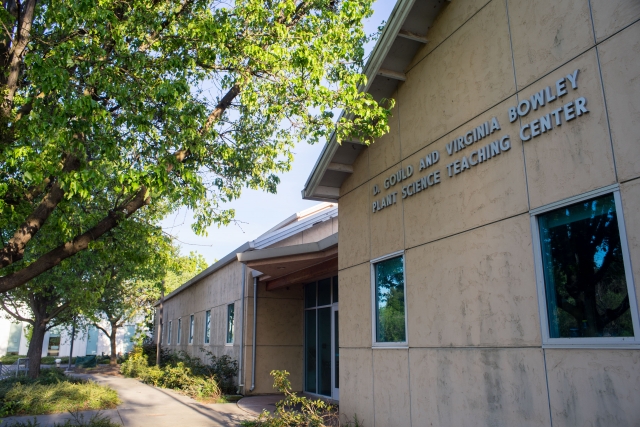
John Campbell, a second-year graduate student in both the plant sciences and land, air and water resources departments, is teaching PLS 15 — Introduction to Sustainable Agriculture this Spring Quarter. Spring is a great time to work in the student farm where students can plant, harvest and experience first-hand everything associated with growing food.

“PLS 15 is offered only in the spring because this allows students to see the way that the change in the season affects life and observing the transition from dormancy to rapid growth in things that we plant,” Campbell said. “The changes in temperature and day length make a huge impact in what things are growing so students get to see much change over time and a lot of activity in both plants and animals in the farm.”

Introduction to Sustainable Agriculture is not the only way students can get their hands dirty in agriculture on campus. Many students volunteer their time or intern at the student farm where they do quite a bit of coursework and hands-on tasks such as harvesting vegetables. However, students also get to learn how sustainable agriculture operations work and even get to take fresh produce home with them.

“To learn about sustainable agriculture by doing is a great way to internalize the complex decisions that go on with regard to the ‘right’ food,” Campbell said. “One of the big questions that comes up is how to balance the different needs of sustainability, and students who work on the farm actually have to make some of those decisions rather than think about them abstractly.”

Sustainable agriculture is an interdisciplinary field that goes hand-in-hand with the food system: how the food is grown on a farm and how it gets to the consumer, including what happens after the consumer is done with it. The food system encompasses the entire cycle, starting with the seeds used to grow the food, the transportation from the farm to the processor and how consumers buy it. The system also addresses the food waste along with the entire cycle and the environmental impacts of that waste.

Davis provides students with numerous opportunities to interact directly with the food system, locally or globally, and foster discussions of making sustainable food more accessible for college students.

“Local, organic, sustainable products can be very expensive so it is important to make these products accessible and equitable,” Campbell said. “If we’re growing high-quality, sustainable produce here and then shipping it 1000 miles away, there’s something about that and it feels wrong not making it available to people locally. Having it be financially accessible is the first step to making it accessible to people.”

It can be easy to fall into the vicious cycle of fast food and coffee when classes get tough and free time disappears. However, the UC Davis community makes it very feasible for students to pursue a sustainable food system within their own diets, despite the expenses.

Shea Robinson is a fifth-year sustainable agriculture and food systems major and peer advisor at UC Davis. Robinson is also president of the Students for Sustainable Agriculture club and has found a passion for breaking the stereotype that sustainable living is too expensive for the average college student.

“There are so many populations of people who don’t have the right access to the food so it is very important to have a club where we can bring together students of different majors and different backgrounds to discuss how to make a healthy food system accessible,” Robinson said. “The club looks at why healthier food is so much more expensive and addressing all kinds of ‘right ways’ to address this issue.”

Robinson, who hopes to eventually open her own student-accessible, locally-supported café in Davis, said the term “sustainable agriculture” refers to looking at the agricultural system as it is today and figuring out how to make it last for many years in the future.

“One of the biggest issues I keep going back to is the idea that the sustainability movement is only for the rich or only for those who have the time to spend on better food,” Robinson said. “These perceptions prevent people with a lower income, including college students, from buying food from sustainable sources because labels like ‘organic’ or ‘fair trade’ scare them away.”

With the revival of the student farm, the Wednesday evening Farmers Market and weekly produce stands on the Quad, spring is the perfect time to break the notion that healthy food is too expensive and reconsider personal food choices. Since Davis provides almost too many places to start when deciding how to pursue a sustainable food system, the difficulty lies within picking the right one.

“It can be overwhelming to find a place to start using your purchasing power more sustainably, so I try to pick one or two things that I want to be consistent on,” Robinson said. “I buy eggs from hens that have room to roam around, even though it can be literally twice as expensive for a dozen, because that’s one of the decisions I made for myself and I find it very important. I can’t spend that much in every aspect, but eggs is one of the places that I feel good about spending more.”

After students pick which area they are willing to make more sustainable, they must analyze how this more sustainable option will affect their wallet and figure out how to make it work economically.

“In terms of the standard college budget there’s a lot that’s spent on alcohol and coffee, as well as books and classes,” Robinson said. “When you add up the one to five dollars you spend going to a fast food restaurant every day of the week, it is considerably more expensive than pooling your money and going to the Farmers Market and spending $20 on produce that will last you all week. The Farmers Market is a great option that makes sustainable choices available for students.”

The Pantry is another resources on campus that receives food grown on the student farm, making free, fresh produce accessible to students. The meat lab is another great resource that sells cheese, eggs and all kinds of meat for extremely cheap prices. Students can stop on Thursday and Friday afternoons when the lab has an open market and find eggs for as cheap as six dollars for a flat.

As a seasoned Farmers Market patron, Allie Fafard, a third-year sustainable agriculture and food systems major and peer advisor, divulged that students can even redeem Aggie Cash for Farmers Market credit used to purchase produce. In addition, students can subscribe to the student farm’s Community Supported Agriculture program which puts together baskets of produce for students to pick up for a good price. With all of these options, it is important for students to take steps toward making the change to a more sustainable lifestyle and not become overwhelmed.

“It starts with asking yourself what you value because sustainability is all about analyzing your values,” Fafard said. “Personally, I decided that I really value organic, local produce so I allocate $20 a week from the food budget my parents give me to buying produce from the Farmers Market. That was my personal choice, but it caused me to make sacrifices elsewhere.”

According to Fafard, the change toward a more sustainable lifestyle begins when students start analyzing their individual impact on food systems and thinking about the choices they can make for a more sustainable system. For example, healthy produce may be a lot cheaper at Trader Joe’s than the Farmers Market, but this is a choice that produces a lot of plastic waste and is not sustainable for the environment.

It can be very difficult to make a decision that will benefit the individual, community and environment without having any negative impacts, so students must analyze where they personally can make the most change and have the biggest impact.

“It starts with taking a chance,” Fafard said. “A lot of people have a notion that you need to have a certain amount of money to make these better food choices and there is definitely some truth to that, but you will be surprised at how much you can buy and make with $20 at the Farmers Market. If you’re unfamiliar with this lifestyle, spring is the perfect time to start with plenty of resources to get you moving in the right direction.”
Written by: Gillian Allen — features@theaggie.org

Happy Birthday, Davis!

NICHOLAS CHAN / AGGIE

City of Davis reaches milestone marking in centennial celebration

A 32-block area in front of Putah Creek  and some 400 odd residents — this was the entirety of Davisville in 1870. It wasn’t until the University State Farm, an agricultural offshoot of the University of California, was selected to be implemented in Davisville that the tiny town really began to take shape. Davisites celebrated with fireworks and flying flags and immediately the women’s improvement club organized Cleanup Days to make the town presentable for the new university.

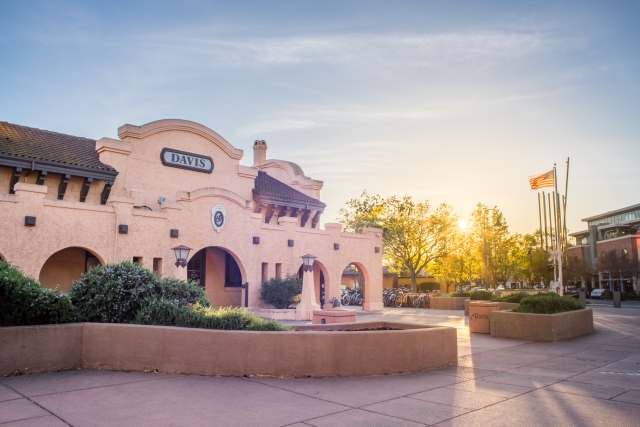
Over a hundred years later, on March 28, Davis marked the 100th anniversary of its incorporation by making over G Street, the original two blocks of Davisville by the railroad, and dedicating Davis’ annual celebrations to the centennial.

“The 1917, March 28, date is what we, the city, consider to be the day when it was officially recorded with secretary of state’s office,” said Bob Bowen, the public relations manager for the City of Davis and the president of the U.S. Bicycling Hall of Fame. “So, that’s what we consider our birthday.”

The City of Davis has chosen to focus on Davis’ little-known — but extensive — history as a small agricultural town. Pulling from the private collections of Davis’ longest-standing residents and with some help from the UC Davis community, Bowen and others created an hour-long presentation to show residents the historical significance of Davis.

“Here we are 100 years later, and we presented a couple of powerpoint slide shows based on the images that special collections at the UCD library had assembled, in addition to some images from the city and private family archives,” Bowen said.

These presentations will occur at the Varsity Theater on a semi-weekly basis until the summertime, in addition to a special display of Davis’ 100 years of history in Shields Library.

“It’s just our year of […] things that affected how the city came about and why the city came about,” Bowen said.

Several other special events have been coordinated in conjunction with the centennial, including a makeover of G Street, a Fourth of July birthday party, and a “Centennial Plaza.”

According to the City of Davis website, “The walk from the history [sic] Southern Pacific train station to the intersection will be updated with new landscaping, hardscape, art work, interpretive historical signage, a time capsule, and a public plaza.”

The city is also planning on recreating events from 100 years ago. The City Council met to discuss the incorporation of Davis on April 3, 1917, a meeting that Bowen announced will be replicated by the current City Council as an homage to this monumental decision. Original ordinances will be read, such as where to keep livestock and what to do with turkeys that roam the streets. Some of which, Bowen jokingly pointed out, may still be relevant to this day.

The name change from “Davisville” to “Davis” is also another piece of history that the City of Davis is highlighting.  It was actually The Davis Enterprise that had changed the name from Davisville to Davis over 100 years ago, a decision made in part because of the staff of the local newspaper receiving unwanted mail from nearby Dansville. The sudden name change proved to have lasting effects, as “Davis” quickly caught on.

And of course, The Enterprise is joining in on the historical fervour, publishing a three-part series on Davis’ history and a fun weekly column of news which reaches back into the archives of The Enterprise from 100 years ago. While things have changed in the Davis community over the last 100 years, Debbie Davis, editor and assistant publisher of The Davis Enterprise, appreciates the city’s continued encouragement.

“Davis is a wonderful town for a journalist,” Davis said. “There’s a new appetite for sound, well-researched journalism in this country, and Davis is no different. We appreciate the support our community gives this venerable institution, and we look forward to covering Davis for 100 more years!”

Planner’s of The City of Davis’ centennial is encouraging all residents to join in on the festivities, whether that means attending Picnic Day, in which city members will parade with high-wheel bikes as a nod to Davis’ prolific biking past, joining the party on July 4 to officially ring in 100 years or scavenging through old memorabilia to find the dusty past of the City of Davis.

“We’re encouraging people to look into their archives and see if they can find people riding bikes […] and certainly if they have something on Davis film of people riding high wheel bikes,” Bowen said.

To find out more information about the centennial, visit the official centennial page on the City of Davis website.


Written by: Samantha Solomon — city@theaggie.org

Culture Co-op presents second annual “We All Have a Heritage” showcase

JAY GELVEZON / AGGIE

Davis community celebrates diversity

Davis is often recognized as a town with a strong sense of community well-being and resounding harmony, whether it is due to the culturally diverse college-town atmosphere or the physically tight-knit aspect of the city. The Culture Co-op (with “Co-op” standing for “caring, optimistic, open-minded people”) understands the importance of learning and respecting people’s cultural backgrounds and emphasizes the necessity of stepping out of one’s cultural comfort zone.

Sandy Holman, the founder and director of the Culture Co-op, is hosting its second annual “We All Have a Heritage” showcase as an opportunity for Davis residents and people in the area to come together to educate and acquire knowledge about many different heritages and cultures in hopes that they will gain appreciation and love for what makes them diverse. The event will be just as educational as it will be enjoyable and entertaining.

“I call it edutainment because you get entertainment, but you might learn a few things that you didn’t know about someone who’s different from you too,” Holman said. “With all the craziness going on right now in our country, I think we need a time where we can come together with friends in a loving and educational way. I’m very concerned about the current state of affairs, but I’m hopeful because there are people who are out there doing events like the We All Have A Heritage showcase to bring people together.”

With the current political atmosphere in the United States, people like Holman realize that now is the best time to promote cultural awareness and spread compassion where it is needed most. She also acknowledges that the very things that make people unique can bring them together, as realizing differences can reveal a sense of similarity among people.

“I’ve always said that it’s important to know about our own cultural identities because when we know about our own, we’re not threatened by others that we may not understand or know, and it’s so critical where fear is paramount right now,” Holman said. “If you choose to live in a bubble and interact with people who only look like you or seem like you, you make yourself more susceptive to stereotypes, manipulation and fear. It is so critical that we all reach out and interact and learn about people who are different from us, because what we’ll find is that we actually have a lot of similarities from a humanity standpoint, and the differences that we have are things that can often strengthen us as a society.”

Heritage nowadays is an element that appears to be forgotten or even neglected. People sometimes lose their cultural background to assimilate into modern American society, meaning that it is even more important to go back and learn more about the cultural significance of one’s heritage.

Maryam Irfan, a fourth-year communication and community and regional development double major and assistant lead for the PR marketing and event planning team at the Culture Co-op, believes that the differences we have in our community present the opportunity to make changes in ways that would not be possible without that diversity.

“Heritage is something that connects us back to the community that we come from and all of the people before us who worked hard to build better lives from us, so we should hold onto that culture people try so hard to pass down, like the customs and values of our heritage,” Irfan said. “Cultural diversity is incredibly important because we learn so much from one another and from our differences and opinions and experiences. These experiences allow us to create something that we might not have been able to do without different minds. The more differences, the more opportunity to create something amazing.”

Silvia Chen, a third-year design major and the lead team intern for the PR marketing and event planning team, agrees that one of the most rewarding aspects of this event is the chance to give back to the community.

“I feel like we’ve been working on this so long and it’s finally coming together,” Chen said. “The most exciting thing for me is to see how it’ll play out and how influential it will be on the community because we all have a heritage, just like the name. Heritage is more than just about restoring or preserving. It’s more about the tangible things like cultural ideas and memories that are passed on. I feel like it’s made up of personality and perspective of life. It’s one of the most important things in life.”

The showcase is not just an event for people to gather and learn about cultural difference, it is also a fundraiser for an even greater cause.

“We will have edutainment,” Holman said. “There will be a lot of fun entertainment and little moments of spoken word of cultural sharing that I think will touch people’s hearts. It’s also a fundraiser for our non profit, United and Unity. We try to work nationally and especially locally in Northern California with young people to plant a seed of respect for equity, diversity and cultural competency and education. This money allows us to support our We All Have A Heritage campaign, which is more critical now than ever.”

The Culture Co-op seeks to use its funds for materials and workshops for youth and to prepare children and families to embrace various cultural identities and heterogeneous communities.

“Our main goal is to showcase diverse talents, so we have a lot of different performers such as a hip-hop and spoken word group performing and a children’s dance group performing,” Irfan said. “We work with a lot of community organizations, educators and youth of all different ages. We do a lot of anti-bullying programs and our goal is to increase literacy and build appreciation of diversity and we also partner with a lot of teachers and businesses to help with events that promote student success.”

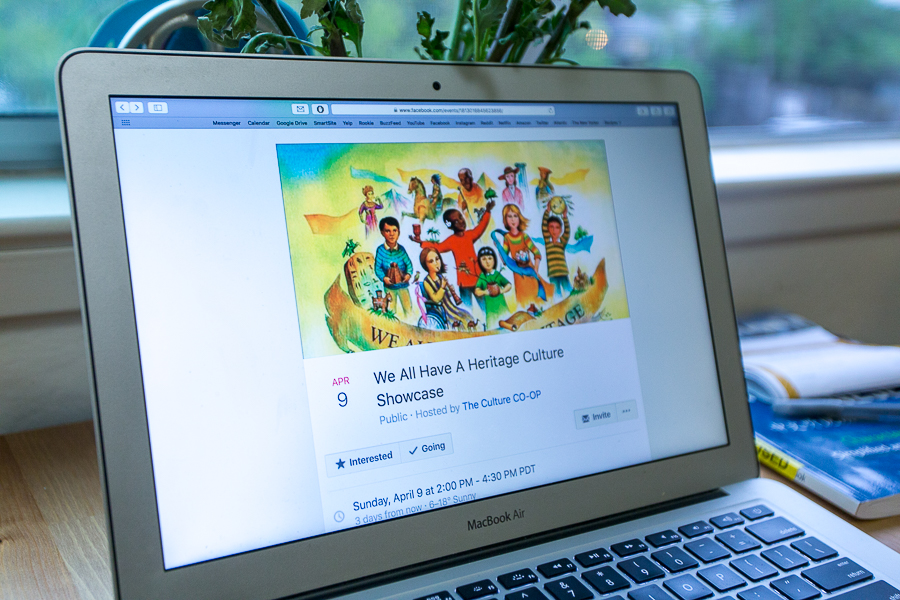
Join the Culture Co-op on April 9 from 2 to 4:30 p.m. for its second annual event. Learn more about the campaign here, or visit its Facebook event page to find out more about the showcase.


Written by: Becky Lee — arts@theaggie.org

Predictions for MLB season

COMMSCOPE [CC BY-SA 2.0] / FLICKR
Aggie columnist explores potential award winners for upcoming season         

National League MVP: Nolan Arenado

Nolan Arenado is my prediction to win the National League MVP. But he will have significant competition, as Kris Bryant continues to be the cog in the lineup of the reigning World Series champions, and Bryce Harper looks to bounce back from a lackluster season. With Arenado’s otherworldly defense at third base and amazing power-stroke that has amounted to two 40-home-run seasons in the last couple years, he is a great bet. Additionally, the Colorado Rockies are a sleeper team this year and are banking on significant improvement that — if it ends up happening — will fare well for their best player.

American League MVP: Manny Machado

Mike Trout is the consensus pick for the best player in baseball and has definitely been robbed of a few MVP awards in his six seasons of professional baseball, but Machado will be this year’s MVP. I predict that this season, Machado will crack the 40-home-run mark for the first time in his career as he has improved upon his total every season without sacrificing batting average. Also, his OPS has climbed every season since his rookie campaign, and he is a dominant defensive force at third base (and a little bit of shortstop, too). In order for this to happen for Manny, he must better his plate discipline and get on base at a higher clip, but I still believe he will take this one home.

National League Cy Young: Clayton Kershaw

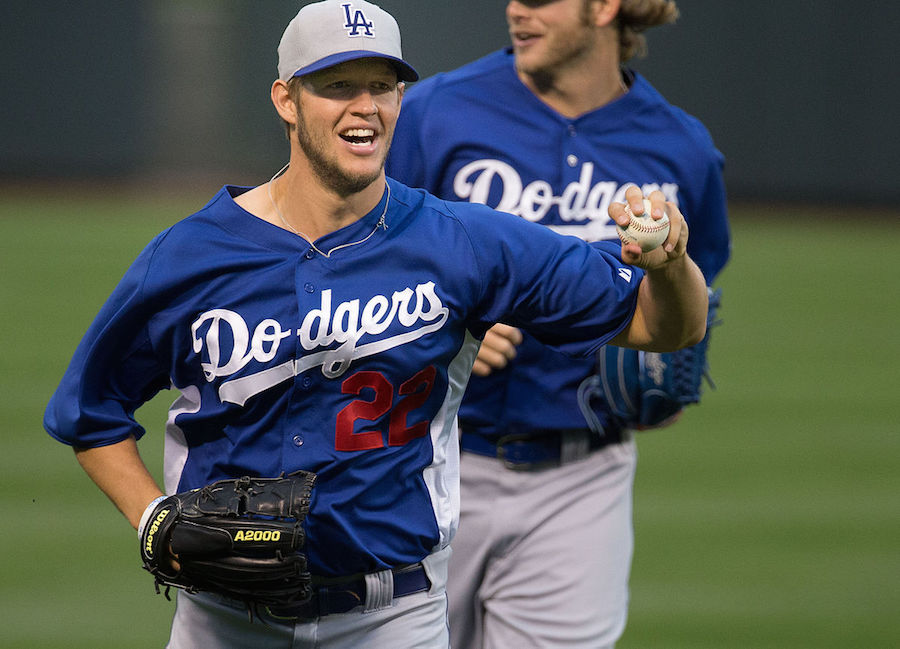
Never bet against Clayton Kershaw to win the Cy Young. He is miles ahead of every other pitcher in Major League Baseball, and the only reason he didn’t come up with it last year was because of a back injury that limited him to only 149 innings pitched. In spring training, Kershaw has looked healthy, and hopefully these back issues are a thing of the past for the 29-year-old who hopes to carry the Los Angeles Dodgers all the way to the World Series this year. In terms of metrics, this pick doesn’t really need any explanation. He’s pretty much a lock for a sub 2.50 ERA (a conservative estimate) and 200 strikeouts.

American League Cy Young: Chris Sale

Chris Sale has been one of the very best pitchers in baseball, but has flown under the radar due to being a member of the Chicago White Sox, who have been consistently bad in recent memory. Fortunately for Sale, he was shipped to Boston this offseason in a blockbuster trade that sent a package of prospects to Chicago for Sale’s services. Sale is now the ace on a championship contender and he will be in a prime position to take home his first-ever Cy Young.

American League Rookie of the Year: Andrew Benintendi

I have yet to get a good look at Andrew Benintendi, but, from what I’ve heard, he seems legit. Benintendi is nearly everyone’s pick to win Rookie of the Year in 2017, and he did very well in the majors when he was briefly called up last year. I can’t argue with the .295/.359/.476 slash line. The 22-year-old left fielder is set up to have quite the career out in Boston.

National League Rookie of the Year: Dansby Swanson

Swanson was the first overall pick in the 2015 MLB June Amateur Draft by the Arizona Diamondbacks but was sent over to Atlanta in a heist of a trade for Shelby Miller, who had a disastrous first year with the Diamondbacks. Swanson, on the other hand, has been very good and looks like a player mature beyond his years. The Vanderbilt product didn’t need much time in the minors to show off his talent, and now he is firmly entrenched as the starting shortstop for a young Atlanta team. He will be this year’s National League Rookie of the Year.

World Series Winner: Boston Red Sox 4, Chicago Cubs 2

Repeats in baseball are hard to come by unless you are the New York Yankees, and with the acquisition of Sale and the full season of Andrew Benintendi, the Red Sox are primed to make another World Series run. They are going to need star pitcher David Price to make this happen, whose health has been a concern with a flare-up in his elbow that has kept him sidelined. If Price can return to full strength and be the innings-eater that he has been throughout his career, Boston is my pick.


Written by: Michael Wexler — sports@theaggie.org

Aggies clinch series with victory over Matadors

JAY GELVEZON / AGGIE

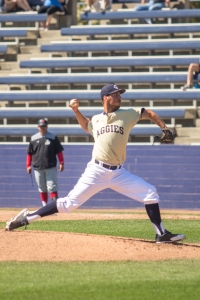
UC Davis baseball team beats CSU Northridge 7-5

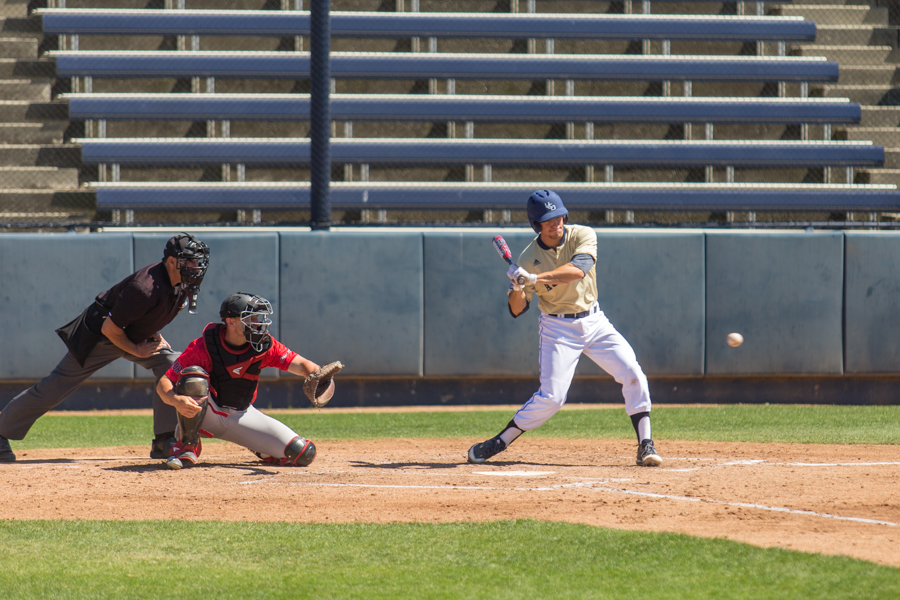
The UC Davis baseball team won the weekend’s Big West Conference series over Cal State Northridge with a score of 7-5 in the finale. After a 8-2 win on March 31 and a 4-2 loss on April 1, the Aggies needed a win to secure the series.

“I thought that the first game we played really well,” senior catcher Ignacio Diaz said. “Yesterday we only had four hits, the pitcher kept us a little off balance, but we stayed hopeful and optimistic.”

Redshirt junior pinch hitter Guillermo Salazar echoed his teammate’s sentiments.

“We knew we needed to win today, obviously,” Salazar said. “We lost yesterday in a tight one, but we kept the confidence that we were the better team the entire time, so that’s what really helped today.”

Senior pitcher Justin Mullins started the game on the mound with Diaz behind the plate. Going into the bottom half of the first inning, senior shortstop Jacob Thomas scored on a pass ball. The inning ended with the Aggies leading by one.

Mullins stayed on the mound for seven innings, only allowing three runs on five hits with five strikeouts.

“[I felt] good, prepared, just been working all week to get ready,” Mullins said. “But [my] body felt good and I was just ready to help my team win the series.”

After a scoreless top half, leadoff batter Diaz increased the Aggies’ lead with a home run.

Uneventful third, fourth and fifth innings set the stage for an exciting sixth. The Matadors scored three runs on two hits, and the Aggies responded with two runs, with Diaz batting in sophomore designated hitter Caleb Van Blake and sophomore left fielder Ryan Anderson.

The Matadors tied the score and took the lead during the seventh and eighth, with one run in each. The eighth inning saw two UC Davis pitching changes, with junior Connor Loar and sophomore Chris Brown both stepping up to the mound.

JAY GELVEZON / AGGIE

The Aggies rallied in the bottom of the eighth. Redshirt junior center fielder Alex Aguiar batted in Anderson for the tying run, bringing the score to five to five, and Salazar’s pinch-hit base hit for sophomore second baseman Cameron Briggs scored the winning two runs. Both Diaz and Aguiar scored, lifting the tally to 7-5.

The Aggies kept a defensive edge during the top of the ninth and secured the win.

“That was a fun game,” Diaz said “We started off early, then it kind of settled down a little and they started scoring and we then we kind of just fed off of that.”

Head coach Matt Vaughn weighed in with a similar sentiment about the series finale win.

“This was a really, really good win,” Vaughn said. “I mean, they’re all good, but the way that we lost yesterday at the end of the game, to come out today and kind of have the same scenario playing out in the seventh inning, to come back, it makes this one a little bigger than others.”

The UC Davis baseball team now heads to another three-game series down south against defending conference champions Cal State Fullerton on Friday, April 7.

“We’ve been very good offensively in games,” Vaughn said. “We had a lot more quality at-bats today, so we’re going to practice tomorrow. We’re going to try to stay on it and try to put two straight games together of good offense.”
Written by: Liz Jacobson — sports@theaggie.org

Davis Women in Business to host first OWN IT Summit

Leadership conference empowers young women to strive for their ambitions
On April 15, Davis Women in Business (DWIB) will be hosting its first ever OWN IT Summit, a leadership conference geared toward empowering and encouraging young women to take on leadership positions in a variety of fields and to strive to achieve their goals.  

According to Disha Bahl, director of the OWN IT Summit and a third-year genetics and genomics major, the primary objective of the conference is to “empower, educate and to OWN one’s identity as a woman.”

Lindsay Chan, a third-year computer science major and events committee member, noted that “OWN IT was started to address the leadership gap.” She also stated that although women have begun to fill the education gap, there is still a discrepancy between the number of women who are graduating college at higher rates than men and the number of women in science and technology, c-level positions, government and general leadership roles.

Disha believes that the concept of the “glass ceiling” often hinders young women from pursuing their ambitions.

“OWN IT seeks to provide college women with real life examples of top level professionals in various fields living their dreams,” Bahl said via email. “This summit [seeks] to provide an experience for women of ALL fields. This is why we chose our respective four panels, as we felt it encompassed a large audience of the UC Davis population and the fields they were interested in.”

Bahl is hopeful that the event will facilitate conversation throughout the university about “the mentality of ‘I CAN’ vs. ‘I CAN’T.’”

“There is this mentality of a certain job being a “man’s” job […] this summit [aims to] break down that mindset and give women, as well as men, food for thought regarding their futures and how being a woman shouldn’t be a barrier but an asset,” Bahl said.

Mary Serafin, a third-year economics and design double major and the president of DWIB, believes that empowering women will lead to an improved community.

“Unapologetically empowered young women result in an empowered greater community,” Serafin said. “An empowered young woman, supplemented by the right tools and resources, can create a ripple effect that influences those around her [to] make strides towards their own goals in any field.”

The event’s agenda includes four panels consisting of esteemed professionals in the fields of business, activism and STEM. The first group of panelists are scheduled under the theme of women in business — specifically consulting, marketing and finance — and include Laurie Lavaroni​,​ the regulatory compliance manager of the Federal Reserve Bank; Jyoti Sarin​,​ the senior manager of IT at Cisco; Shujan Bertrand​, ​the CEO and founder of Aplat Inc. and Brenda Dulger-Sheiken​, the ​senior vice president of State Street.

The second panel will showcase professionals in the fields of science and engineering. The speakers for this portion are Rose Grymes,​ the deputy director of partnerships at NASA; Pratima Rao, ​an entrepreneur in residence of NanoDimension; Jennifer Sinclair Curtis, ​the dean of UC Davis College of Engineering and Erin Cooke, ​the director of sustainability & environmental policy at San Francisco International Airport.

Speakers for the third panel are women involved in activism, politics and media. The panelists will include Ann Shimasaki​, ​the chief consultant of the API Legislative Caucus; Rachel Michelin​, ​the executive director and CEO of California Women Lead; Sheryl Evans Davis​, the executive director of the San Francisco Human Rights Commission and Emily Bender,​ the director of programs at Sacramento LGBT Community Center.

The fourth and final panel addresses women in tech and is led by Facebook’s Infrastructure Team. ​Application Product Manager Somdatta Banerjee,​ ​Systems Roadmap Manager Jeanne Lim Biz and Operations Program Manager Kate Lechner ​will be speaking.

Each panel will be followed by a breakout session preceding the next panel of speakers. During these sessions, attendees will have the chance to participate in discussions and workshops with different themes relating to various occupations. Of the multiple sessions scheduled, topics covered will include “life of a NASA scientist,” “women in education” and “joining the workforce.” There will also be opportunities for networking and recruitment during the conference.

Tickets for the event are free and can be reserved via the Davis Women in Business website. Young women of all majors are invited to attend.

“We want attendees to walk away from this summit feeling motivated and ready to take on what college has to offer and beyond,” Bahl said via email. “As our motto states, Dream It, Achieve It, OWN IT.”

As for the long term goals of DWIB as an organization, Serafin hopes that this inclusive space will inspire young women to “educate themselves, empower others and take action toward their respective ambitious goals regardless of gender stigmas, biases or other inhibitions.”
Written by: Kimia Akbari — campus@theaggie.org

University of California spent almost $1 million on Katehi investigation

CIERA PASTUREL / AGGIE FILE

Katehi responds to criticism that she should have resigned earlier

The Sacramento Bee reported on March 24 that nearly $1 million was spent investigating former UC Davis Chancellor Linda P.B. Katehi, according to information released by the UC Office of the President (UCOP).

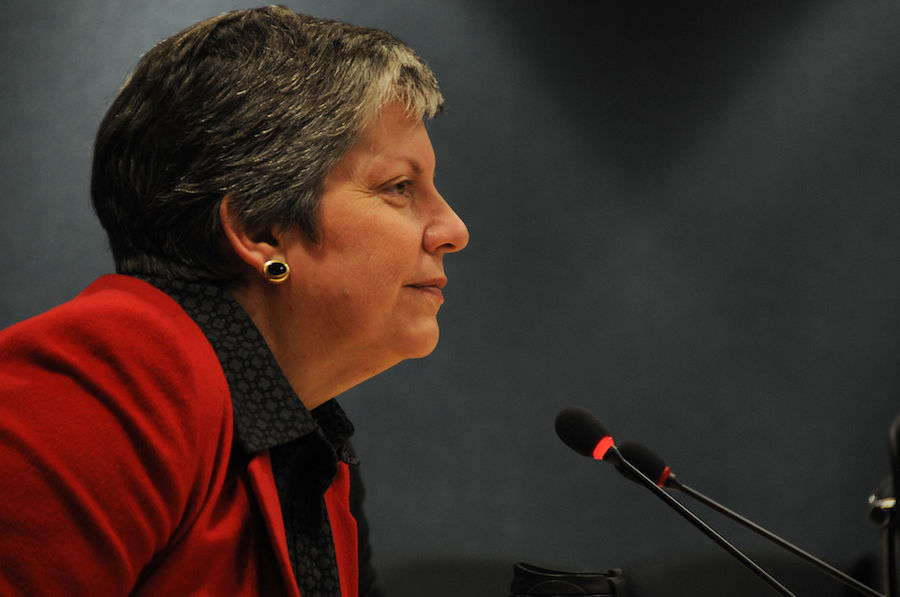
Last April, UC President Janet Napolitano ordered a four-month investigation into various allegations against Katehi. The investigation focused on Katehi’s acceptance of board seats for DeVry Education Group and textbook publisher John Wiley & Sons, improper use of student fees, nepotism and involvement in the payment of hundreds of thousands of dollars to public relations firms to clean up her and the university’s online reputations after the 2011 pepper spray incident. Katehi resigned on August 9, 2016, the same day the investigative report was released. She was offered a year’s salary with benefits while placed on leave.

The probe was conducted by the law firm of Orrick, Herrington & Sutcliff LLP. Dianne Klein, the press secretary and executive director of strategic communications of the Office of the President, provided a statement to The Bee regarding the exact cost of the investigation.

“After taking into account the discounted hourly billing rates and other fee accommodations that the firm agreed to, the final cost to UC will be $988,142.75 for Orrick’s fees and expenses,” Klein wrote in an email to The Bee. “The funds used to pay for the investigation come from the presidential endowment, which does not include any state or tuition dollars.”

Many people feel that the amount of money spent on the investigation could have been allocated elsewhere to provide more resources to students and faculty.

“The big losers in this are the students at the University of California, Davis specifically, and the University of California generally,” said Ed Howard, of the Center for Public Interest Law, to The Bee. “If you think of the number of scholarships or the number of computers, or the excellent professors or programs that could have been paid for with that nearly million dollars, that is just tragic.”

Connor Gorman, a fourth-year graduate student in the Physics Department who was an active participant in the Fire Katehi movement, expressed a similar sentiment.

“Obviously I think it’s ridiculous,” Gorman said. “That money could have been used for other things […] on students, we need so many things. We need more counselors, we need more housing, we need more classes. Tuition also just increased.”

Gorman also expressed his displeasure with the lack of credit given to activists — who held protests and camped out in Mrak Hall for weeks — for their contribution in Katehi’s resignation, since it was amid this student activism that Napolitano put Katehi on a paid leave. According to Klein, Katehi was placed on paid leave because she refused Napolitano’s request for her resignation.

“As you know — but it bears repeating — all of this could have been avoided had Katehi resigned as chancellor of UC Davis as President Napolitano had asked,” Klein wrote in her email to The Bee. “Instead, in direct contravention to the agreement she and the president had made to keep the matter confidential until the terms of the resignation could be finalized, the chancellor waged a public campaign to keep her position while at the same time denying any wrongdoing.

Katehi believes that the investigation last year and the allegations presented against her were not represented well by the statements made by the UCOP, having sent out several tweets against the article by the Davis Enterprise. One tweet read: “I have been working in Higher Ed in the US for 38 years. This is the first time I have experienced this treatment.”

Katehi feels that the UCOP was trying to place the blame on her for the expensive investigation.

“The only thing a President has to do is to ask the Chancellor to leave the position,” Katehi said. “That happens all the time and there are many respectful ways to allow the Chancellor to step down from the position.”  

Katehi maintains that she and her family were threatened and that she was asked to leave her position without any proof that she violated the trust of the university or the law.

“I was asked to leave the university and I am a distinguished faculty member. I have tenure,” Katehi said. “There is a process the UC Senate takes if tenure is to be removed for a faculty member.”

Katehi believes the whole development of the investigation could have been avoided if the UC president had asked her to step down from chancellor by justifying the accusations instead of threatening her and her family.  

“There was no need for an investigation,” Katehi said. “The only thing that the president should have done was tell me for all the reasons she wanted me to step down from my position. But this is not what happened. What happened was that I was threatened that I and my family will be investigated unless I would leave the university, not just the chancellor position. […] I am a member of the National Academy of Engineering and am one of the most cited engineering women in the U.S. and around the world. I would not leave the university overnight as a thief without knowing why I’m leaving the university.”

Katehi believes that the funds might have been better used to support universities and the students, and hopes that UC Davis can focus on improving education and research, increasing the number of scholarships provided and improving the quality of teaching and facilities. Katehi plans to return to UC Davis in the fall as an electrical engineering professor and researcher.
Written by: Jayashri Padmanabhan — campus@theaggie.org

Guest: Replace Whole Foods with a Food Hall

CAT TAYLOR / AGGIE FILE

Food halls provide a community gathering space with strong economic benefits

One in a string of recent downtown retail closures, Whole Foods’ departure from the Davis Commons raises the question: What should take its place?

Many Davis residents have been speculating about what would best occupy the new vacancy. A wealth of suggestions and concerns have been voiced on social media comment threads, among city council members and between friends and coworkers. From one person to the next, you’ll likely hear a distinct, and maybe conflicting, primary criteria for a newcomer. People want, for example, a source of plentiful sales tax for city funding, a locally-owned business or an establishment that contributes to a unique, diverse and safe downtown environment.

The ideal solution to the vacant spot, however, satisfying many if not all of the public’s conditions, is to take a cue from the thriving culinary trend and invite a Food Hall.  

A food hall is, in essence, a casual and open space housing a diverse mix of small, independent food vendors — a place that also serves as a hub for the community. Imagine under one roof, an inviting, vibrant, eclectic and social atmosphere where you have the convenience of choosing from a true variety of cuisines.

Unlike a mall food court with franchises serving bloated portions of reheated engineered food experiments, a food hall houses efficiently-managed cooking spaces for enterprising vendors. Bar seating, some small tables and open space for mingling and foot traffic makes it inviting to all. Visiting a food hall would be similar to the charm of milling about and sampling from vendors at a farmers market in Central Park, but with new flavors and no mosquitoes. It’s like the excitement of a food truck festival, but housed in a pleasant and clean indoor venue. Influenced by traditional city-center markets and shaped by a pedestrian public like Davis’, a food hall would be ideal for supporting a thriving social scene and providing opportunities for small local businesses.

For a good representation of what food halls have to offer, you don’t have to look any further than the greatly successful Oxbow Market in Napa. Browse through photos of the market’s assortment of delectable offerings and you’ll quickly be convinced. In fact, food halls are popping up rapidly and to wide acclaim, with popular examples like Pine Street Market in Portland, the Packing House in Anaheim, Union Market in DC — as well as Eataly, Chelsea Market and Hudson Eats in New York City. The list goes on!

Not only are food halls a joy for consumers, but they are also perfectly suited from a business perspective. Compared to a stand-alone restaurant, food halls reduce risk for the real estate owner by diversifying across multiple vendors, and they also reduce the operational costs for each vendor, bringing down the barrier to entry in the restaurant market.

With the many advantages that food halls bring, it’s not hard to see why they have been growing so much in popularity. Food halls benefit their patrons by delivering on the demand for diversity and locally-sourced fresh food — all while easing the high-stakes restaurant business for everyone involved. The vacated space in the Davis Commons would be a prime location for a food hall that could enormously benefit our community.
Written by: Sam Rusoff

Deciding on Davis

HANNAH LEE / AGGIE

Members of Editorial Board share why they chose UC Davis

With Decision Day 2017 this Saturday, prospective students may be seeing campus for the first time. They’ll weigh the pros and cons of going to one of the highest-ranked public universities in the world. Here, members of The Aggie’s Editorial Board share moments and stories that helped them decide that UC Davis was the right school for them:


Scott Dresser

My first time in Davis, I went to class with my older sister, who was a senior at the time. I was amazed that people actually seemed to care about what they were learning, a stark contrast from my high school experience. We then walked through campus to the Quad, and, while sitting on the grass eating CoHo tacos, I knew then I wanted to go to school at UC Davis. The sprawling campus, the looming, protective oak trees lining the bike routes and the students playing frisbee on the Quad immediately told me that this campus was where I wanted to spend the most defining years of my life. I feel the same appreciation for the campus (asbestos aside) and its inhabitants now as I did then, and I know that coming to UC Davis (and joining The Aggie!!!) are the best decisions I ever made.


Ellie Dierking

It was springtime when I first set foot on campus. So, obviously, I fell instantly in love: the towering trees on the Quad, the classic brick of Wellman Hall, the hustle and bustle of the CoHo, the serenity of the Arboretum and my parents’ unrelenting requests to take a picture of me by “that rock-egg thing,” “that London bus” and “that squirrel.” Looking back at those pictures, I was blissfully unaware of how many times I’d later walk past those rock-egg things, ride those London buses and Snapchat those squirrels as they fearlessly approached me on the Quad. Nevertheless, being at Davis felt right — I knew it was where I wanted to be. I still have the pic collage from my first visit that I posted on Instagram with the embarrassing caption, “This place is the coolest, ever.” And although that was a whole four years ago now, I can still say wholeheartedly that this place is the coolest, ever.


Alyssa Vandenberg

I visited UC Davis for the first time during week one of Spring Quarter. I stopped by an English class in Wellman (little did I know at that time that I’d have classes in Wellman every single quarter and would end up writing a story for The Aggie about Wellman being plagued with asbestos the summer before my junior year). I came back about a week later for Decision Day with my dad again. We were listening to the Backstreet Boys’ “I Want It That Way” on the ride over and, when I opened the car door, Band-Uh! was playing the same song. I decided it was fate, so I came to UC Davis. I am so happy with my choice, because I love this quirky town and the friendly people in it.


Sam Solomon

My first time in Davis was actually Picnic Day 2014 because my poor mother thought it would be lively and spirited, which it was, but it was also, well, Picnic Day. I saw a couple drunkenly making out on a couch, which freaked me out a little. However, that fateful day was my deciding factor, as I saw a campus that was large and bright, full of people having a good time. I liked the quintessential college vibe, and just walking around on Picnic Day showed me the vastness of the campus. I also got to meet the cows, which was a life-changing experience.


Eli Flesch

Well, my dad went to UC Santa Barbara and it was a little close to Los Angeles. Plus, I wasn’t really feeling the “Keanu Reeves in Point Break” vibe of that campus. I wanted to study, apparently. So I visited Davis and was immediately struck by how unnervingly, disgustingly friendly everybody was. Was the economics program good? Yup. English? Sure. Okay then. I didn’t fall in love until my second year. What happened? Not sure. But Davis is good. Come.


Emilie DeFazio

Though the recyclable cardboard pen they gave me at Decision Day 2013 was pretty cool, what really convinced me to come to Davis was its location. Other UCs love to say how our campus is in the middle of nowhere — “cow country,” if you will — but have no idea what northern California beauty surrounds the area. Yeah, there are the bike trails, but those paths can show you sprawling vineyards and fields, open expanses of clear blue sky that show off the white caps of the Sierras and incredible sunsets that remind you of just how lovely it is to be alive, even as a stressed-out college student. I grew up in the area, and knowing that I would have the opportunity to go to a school in the region I love that was close to my family and had everything I could hope for in a university, I couldn’t bear to leave just yet.


Bryan Sykes

I’m from a rural mountain town in the Sierra Foothills, so when I heard that I had gotten accepted into UC Davis I was thrilled — finally, after 18 years, I was going to live in a bustling metropolis. Davis was (to me) a massive urban environment, larger, busier and unlike anything I’d ever experienced before. I was close enough to home where I would regularly get food care packages, I could see my family while retaining my independence and I could wash my clothes in my childhood home. Also taken into consideration: Cows were cool, Picnic Day was cool and bikes were cool.


Amanda Ong

The drive from Los Angeles to Davis is boring, dusty and devoid of any charm. But my first impression of Davis itself was quite the opposite, and after driving up for Decision Day 2013, I knew I wanted to spend the next four years of my life learning and growing in this charming college town. I, like Alyssa, was instantly won over by the Band-Uh’s delightful rendition of “I Want It That Way.” I was in marching band all throughout high school and I thought I’d join the band in college too, but instead, I ended up trying out something I’d never done in high school: writing for the paper. I think that’s the beauty of of a big school like Davis; it may seem like a large, intimidating campus at first but there’s so many opportunities for personal growth, for trying something new, and for you to find your own niche. I thought I wanted to attend a small liberal arts college, but after four years here, I can honestly say that Davis has been everything I hoped for and more. True, the route up from L.A. is still mind-numbingly dull, but the wonderful university awaiting you at the end of the drive makes it all worth it.


Ariel Robbins

I knew UC Davis was the right choice for me after this particular anomaly, which happened to me as follows:

It was my first week. I hadn’t ridden a bike since my mom gave away my childhood one for $5 at a garage sale without me knowing. So, there I was, back in the saddle, locking my wheels up in front of the CoHo before going to class. Or so I thought. In my first-week, flurried state, I rushed to class and upon re-emerging, realized I forgot exactly where I locked my bike in the sea of bikes surrounding the CoHo. I searched for my dear two-tired friend for 20 long minutes before a kindly stranger chirped behind me, “Hey, are you looking for your bike? Do you need help finding it?” I sure was, and I sure did. To cut to the chase, I ended up with a gaggle of 10 or so strangers taking time out of their busy days to help me find a bike I really shouldn’t have lost in the first place. And, turns out, it was across the street the whole time. Lol.

Moral of the story: 1. Pay attention when you lock your bike, 2. If you don’t, your fellow Davis-folk will have your back.

Fallen branch injures four UC Davis employees

JAY GELVEZON / AGGIE

Employees’ injuries still unknown

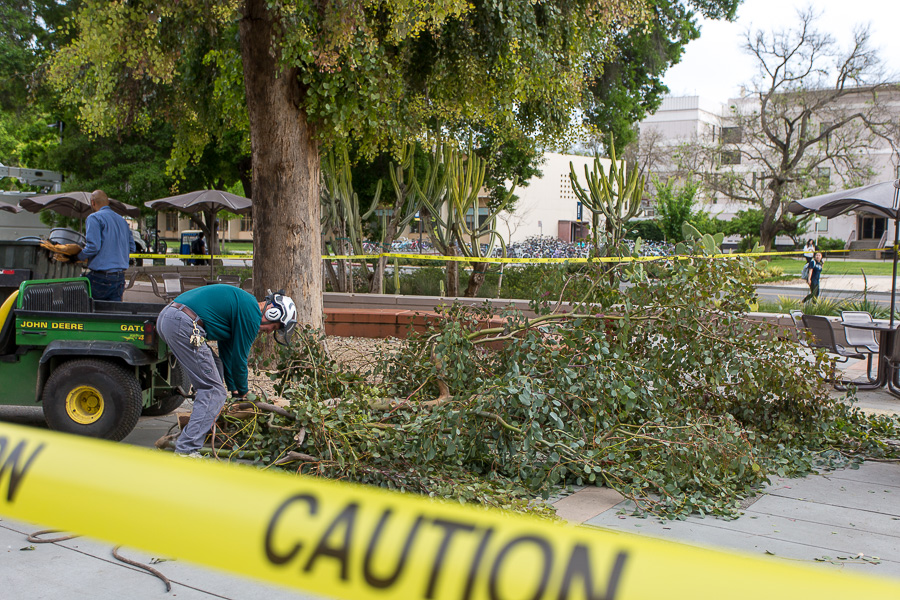
A branch of an eucalyptus tree in front of the Student Community Center (SCC) fell, injuring four female UC Davis employees on April 5 around 3:30 p.m.

“[The branch] missed the majority of the people, but it did hit one of the tables, where it broke off all of the metal panels and kind of trapped the people under it,” said Ashley Collins, a third-year political science and Spanish major who was at the SCC when the branch fell. “Everybody from the [SCC] runs out […] and it’s kind of an emergency at that point, so everyone is lifting the tree, people are calling 911, it was like a very fast response.”

The Fire Department and Police Department arrived on the scene shortly after the incident. Three of the four people injured were taken to area hospitals via ambulance. According to the associate director of News and Media Relations, Andy Fell, the severity of the injuries cannot yet be publicly confirmed.


Written by: Alyssa Vandenberg — campus@theaggie.org. Kenton Goldsby contributed reporting.

Last week in Senate

HANNAH LEE / AGGIE

The new ASUCD executive team and senators were sworn into office on March 16 at the last ASUCD meeting of Winter Quarter.

The ASUCD-filled evening kicked off at 6:00 p.m. in the ARC Ballroom. Former ASUCD President Alex Lee, former ASUCD Vice President Abhay Sandhu and former ASUCD Controller Joseph DeAngelo gave farewell speeches, reflecting on their time spent in student government and giving out copious thank-you’s to their staffs and supporters. Lee received both a personalized engraved clock and The Dictator’s Handbook as farewell presents from his staff.

Following the speeches from the outgoing executives, Josh Dalavai and Adilla Jamaludin, the new ASUCD president and vice president, respectively, were sworn into office. Dalavai and Jamaludin took their oaths of office in front of the audience.

After the executive farewell ceremony, the regular Senate meeting was called to order at 9:08 p.m. in the Mee Room of the Memorial Union. 11 out of 12 senators were present, with Senator Julie Jung absent from the meeting.

Prior to the official start of the meeting, the leaving senators gave brief farewell speeches to those present in the Mee Room. Many of them reflected on their time spent in ASUCD and the legacies they hoped to leave behind.

The first order of business in Senate was the swearing in of new and returning senators. Following the swearing in, Dalavai gave a presidential address to the senators and audience members that outlined changes the executives hope to implement in Senate as well as an overarching statement on the new presidential term.

“We have an open door policy […] through [Jamaludin] being the pro-tempore before, she has a really good grasp on what she’s doing right now with the present and has a lot of transferable skills from that,” Dalavai said. “She’s going to run a tight ship as far as meetings are organized. Please refer to us as a resource whenever things seem to bog down in bureaucracy, when things seem overly complicated or you’re just frustrated with how many processes you have to go through […] I want to see you all achieve the great ideas that you were elected on.”

The executives then asked if anybody had questions for them, and Senator Sam Chiang asked when Senate could expect a new controller. Dalavai replied that a listing would be posted soon for the position and that Senate could expect to see a new controller early in Spring Quarter.

Next, Senate held a President Pro-Tempore election. Senator Jose Antonio Meneses nominated Chiang. Chiang accepted the nomination and proceeded to occupy the traditional pro-tempore seat to the right of the vice president at the Senate table.

Afterwards, Maria Chang, the unit director for the Pantry, gave her quarterly unit director report. Chang mentioned that there was a lack of space with the Pantry’s current setup and, because of this, the unit has faced increased difficulty in keeping up with the growing demand. The Pantry reported to have around 100 to 110 students utilizing its food resources daily. Senator Simran Grewal asked if there was a lack of donation. Chang replied that there was no lack, but that, if there were more staff members and available space, the Pantry could reach out to private donors and hold a greater capacity of donations.

The meeting then proceeded to review old legislation. Senate Bill 62, a bill that clarifies the scope and structure of the Board of Unit Directing Students, was brought into consideration. Internal Affairs Commission Chair Nick Flores said that the bill was essentially a repeat of a few sections. Chiang motioned to overturn the veto on Senate Bill 62, which was passed with no objections.

With no more past or current legislation to review, the meeting opened up into public discussion. Experimental Community (EC) staff member Rebecca Young came to Senate to ask for assistance in getting a plot at the EC gardens. Young mentioned how difficult it was to make progress toward getting a place and, and she felt that her request got caught up in UC Davis Legal. She said that it would be more beneficial for the EC to designate plots prior to the peak growing season so that individuals do not miss the opportune gardening time. Meneses, the adoptive chair for the EC garden, said that Young was not the first person to bring up this complication and that he would look into expediting the process.

The senators then volunteered for their unit adoptions for all the ASUCD units.

After public announcements from Jamaluddin and Recorder Naeema Kaleem, the meeting was adjourned at 10:40 pm.


Written by: Lindsay Floyd  — campus@theaggie.org

University of California spent almost $1 million in Katehi investigation

FEMA / BILL KOPLITZ / PUBLIC DOMAIN

Former chancellor placed on investigative leave following controversies

The Sacramento Bee reported on March 24 that the University of California (UC) spent almost $1 million investigating the controversial activities of former UC Davis Chancellor Linda P.B. Katehi last year.

UC President Janet Napolitano had placed Katehi on a paid investigative leave in April 2016 after reports showed that the then-chancellor was involved in outside corporate boards and that UC Davis had spent at least $175,000 to erase the 2011 pepper-spray incident online.

“As you know — but it bears repeating — all of this could have been avoided had Katehi resigned as chancellor of UC Davis as President Napolitano had asked,” wrote UC spokeswoman Dianne Klein in an email to The Bee. “Instead, in direct contravention to the agreement she and the president had made to keep the matter confidential until the terms of the resignation could be finalized, the chancellor waged a public campaign to keep her position while at the same time denying any wrongdoing.”

Katehi, who resigned in August, will return to UC Davis as an electrical engineering professor and researcher in fall 2017.


Written by: Alyssa Vandenberg  — campus@theaggie.org

The resurgence of political comedy

BRAD BARKET / GETTY IMAGES FOR COMEDY CENTRAL

John Oliver, Trevor Noah, Samantha Bee add much-needed humor in wake of new administration

Over the past few years, political comedians like John Oliver, Stephen Colbert, Samantha Bee, Jon Stewart and Trevor Noah have had tremendous success with their social commentary. With the Trump and Clinton campaigns, not a day passed without something new to cover. The jokes practically wrote themselves with the sheer ridiculousness of the past election.

Karma Waltonen, a senior lecturer in the writing program, is passionate about the necessity of political comedians.

“One small upside of Trump is that political comedy is getting this resurgence,” Waltonen said. “It is frustrating because Trump is in office but also great because we have a new civil rights movement.”

John Oliver and Samantha Bee both have weekly half-hour shows (Last Week Tonight on HBO and Full Frontal on TBS, respectively) in which they present in-depth comedic analyses.

Their shows use long-form journalism, and that means they are able to inform the public about topics that generally wouldn’t be covered by traditional news, using comedy to make the material accessible and easier to understand. They make fun of themselves which takes away the sting from Twitter trolls. Whenever Oliver says something he knows will have backlash, he digs at himself to soften the blow, and Bee does the same.

“For this generation what we need are shows like 60 Minutes with humor and sarcasm to actually take in this information,” Waltonen said.

Peter Swanson, a third-year political science public service major, said that John Oliver is his favorite political comedian since he covers topics not addressed by news media. Oliver also utilizes an incredible research team to produce well-researched, informative comedic pieces, in Swanson’s opinion.

“Twenty minutes is a solid amount of time to get enough substance across and short enough to keep people’s attention,” Swanson said.

Kyle Patterson, a fourth-year communication major and a member of the UC Davis Stand-up Comedy Club, believes humor can ease people into topics that make them uncomfortable or scared.

“If you can joke about something you can take it less serious[ly] and if you take it less serious[ly] you don’t panic and can actually tackle the the issue at hand,” Patterson said.

Patterson thinks a neutral and holistic approach is the best way to approach these times and thinks that Trevor Noah, host of Comedy Central’s The Daily Show, does this best. To Patterson, Noah’s position as a South African comedian coupled with his ability to joke about topics that do not necessarily offend or polarize people is one of his comedic strengths.

“He is a lovable outsider looking in on our community,” Patterson said.

Political comedy is a necessity right now. These shows are an accessible way for people who do not like watching full news programs to learn about current events and the important news of the week. They are certainly not new, but they are much needed, especially in these political times.
Written by: CaraJoy Kleinrock — arts@theaggie.org

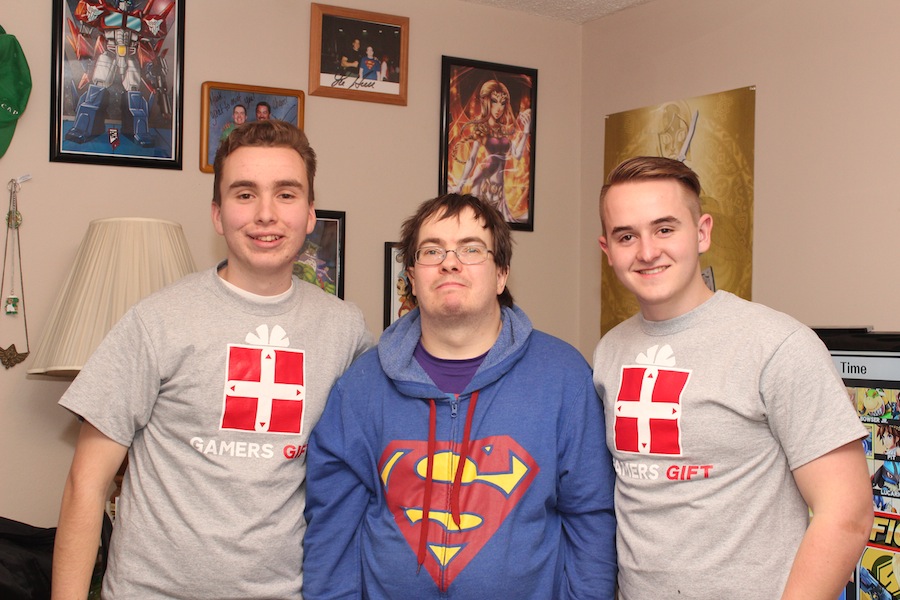
Gamers Gift gives the gift of joy

GAMERS GIFT / COURTESY

Student-run nonprofit provides children in hospitals, older adults with access to virtual realities

Thoughts of aging and hospitalization may unearth fears of immobility and a loss of opportunity for outdoor exploration. With the help of a student-run, nonprofit organization and a virtual reality headset, reliving and discovering new experiences doesn’t have to end at old age or hospitalization.

Gamers Gift was founded by Dillon Hill, a first-year cognitive science major, and uses video games and other electronic technologies to alleviate psychological stress caused by lengthy hospital stays, loneliness, poverty or other difficult circumstances one might face.

“The epitome of Gamers Gift is allowing people in the hospital and in really bad situations to escape and have fun with the virtual situations they’re in,” Hill said. “For the kids that can’t walk and for the elderly that can’t move as well, they can put on the virtual reality and experience those things again.”

Prior to creating Gamers Gift, Hill often played video games with a close friend who was undergoing treatment for cancer during middle school and high school.

“Playing video games was always a more unique way to spend time with him than reading books or watching TV,” Hill said.

Hill organized the nonprofit in 2016 after learning that his friend was experiencing a cancer relapse. He felt motivated to provide companionship in facilities that housed children and older adults who were immobile or sick, and he was inspired to incorporate video games into charity.

Gamers Gift volunteers are helping hospitalized children and older adults in assisted-living facilities visualize and relive exhilarating experiences using virtual realities.

“If people used to do something and want to do it again, we try to find a specific program that can fit their needs,” Hill said. “That’s how we found the snow-skiing simulator; an old woman told us that she used to snow ski all the time and wanted to do it again. So we were able to find that program and allow her to relive that experience.”

Thanks to the efforts of Gamers Gifts, over 1,000 people across Northern California have had the chance to play video games with volunteers and peer through the virtual reality headsets.

“It’s been really eye-opening,” said Kristen Chrisco, the director of outreach for Gamers Gift. “[Gamers Gift has] really shown me how video games can really help people and bring people together. We’ll go to the children’s hospital, and just seeing how excited the kids get from playing a game with them for like 10 ten minutes is really heart-warming.”

The nonprofit also donates funds and computers to schools within the Sacramento and Bay Area regions. In its first year, Gamers Gift raised over $20,000 in donations.

Gamers Gift aims to continue raising money during its upcoming fundraiser GG: WP, A Charity Gaming Convention (short for Good Game: Well Played) on April 29, in which gamers are welcome to socialize with one another and help raise funds for the organization.

“The goal is to have a whole lot of people who enjoy playing video games in a room together playing with their friends, meeting new people and helping Gamers Gift,” Hill said.

The event will be split up into different sections, which include a virtual reality section, a retro section, a console gaming section, a Nintendo section and a single-player section. GG: WP will also feature several giveaways and guest speakers.

Brian Wu, a first-year computer science and engineering major and Gamers Gift’s secretary, emphasized that GG: WP is an opportunity to highlight the benevolence of gaming communities.

“My whole life people have been telling me that video games are a waste of time, you’re melting your brain — that kind of stuff,” Wu said. “I just thought it would be cool to prove people wrong and show what good it can do for you and help out overall.”

In upcoming years, Gamers Gift hopes to organize competitive events for electronic sports and to host competitions at local children’s hospitals. Until then, the nonprofit will continue to raise money and do outreach for interested students and volunteers.

“We just want people here on campus and around the area to understand that there are so many people here playing games, and to really just recognize that we’re doing good things with videogames, too,” Hill said. “That’s what’s important.”

GG: WP will run from 4 to 8 p.m. on April 29 at the Walter A. Buehler Alumni Center. Attendees can register online. No gaming experience is necessary, but bringing personal gaming equipment is encouraged. Donations can also be made on the Gamers Gift website.
Written by: Emma Sadlowski — science@theaggie.org