57.5 F
Davis

Davis, California

Wednesday, December 24, 2025
Home Blog Page 367

Major Baseball League rocked by Sign Stealing Scandal

0

Astros Move Forward while Boston, Los Angeles Wait for Answers

Amid the Major League Baseball’s investigation into the intense sign-stealing scandal, the Houston Astros are working to rebuild their organization while Boston and Los Angeles await further results. 

The MLB investigation into the Houston Astros’ organization has shocked both the professional baseball world and MLB fans alike. The investigation was prompted after former Astros pitcher Mike Fiers’ admission of the team’s wrongdoings to The Athletic.

“That’s not playing the game the right way,” Fiers said, openly speaking out against his former team. 

  Fiers explained that the 2017 Astros, who went on to defeat the Los Angeles Dodgers in the World Series, illegally utilized an outfield camera to observe the signs exchanged between the opposing team’s pitcher and catcher. Team employees then monitored these signs s through a screen that was placed near the Astros’ dugout, and then relayed the message to the player at bat to let him know what pitch was coming. Signals were either communicated from the dugout to baserunners and back to the batter, or through loud noises, such as banging on a trashcan.  

Following the investigation, the MLB confirmed that the Astros did, in fact, engage in sign-stealing. MLB Commissioner Rob Manfred announced in January that the Astros will be fined the maximum penalty amount of $5 million, and would also have to give up their first and second round draft picks for 2020 and 2021. On top of that, the MLB issued one-year suspensions to Astros Manager AJ Hinch and General Manager Jeff Luhnow. 

Houston Astros Owner Jim Crane responded to these punishments further by firing both Hinch and Luhnow immediately, and expressing his desire to “move forward with a clean slate.” 

Crane’s decision seems fair, especially since many believe that, as manager of the team, the responsibility fell on Hinch to make the call to end the illegal activity. Hinch has apologized for his involvement, stating that he did not endorse sign-stealing, but failed to put an end to it. Luhnow, meanwhile, maintains that he was not aware of any misconduct taking place.

Although Luhnow claims he was not involved, a recent report by the Wall Street Journal provided additional insight that contradicts his statements. The report revealed that in 2016 an Astros intern approached Luhnow with an algorithm-based program known as Codebreaker. 

The program, referred to as “Dark Arts” by team employees, required that someone watch a live feed of the game and then record opposing catchers’ signs in an Excel spreadsheet. The team would then utilize this spreadsheet to create an algorithm that would essentially “break down the correlation between signs and pitches.” It is now suspected that this system is what led to the Astros’ development of their other cheating methods.

Although sign-stealing is not a new concept in baseball, the use of any electronics to do so is considered illegal. It is common for base runners to spot signs from opposing catchers and relay them to their teammates at bat, but the Astros were caught using technology outside of what is common in the normal field of play — the consequences for doing so are much more severe.

Neither Crane nor the Astros players are facing any punishment, as the investigation revealed that Crane was completely unaware of the activities and punishing every single player involved would be far too demanding for the League. 

Although no specific player is being punished, a look into the Astros’ statistics for 2017 reveals some clear discrepancies. For instance, the Astros reduced their strikeout total by 365 between the 2016 and 2017 season — including 242 fewer strikeouts at home where they were utilizing the sign-stealing system. 

After the dismissal of Hinch and Luhnow, attention then fell onto former Astros bench coach Alex Cora, who was the manager for the Boston Red Sox at the time of the investigation, and is now being referred to as the “ringleader” of the entire scheme. The MLB revealed that Cora played a central role in the use of electronics, working with former Astros player Carlos Beltran to arrange the placement of monitors and improve their sign-stealing tactics altogether. 

Cora’s extensive involvement in this situation pushed the MLB to investigate the 2018 Red Sox, who also went on to win the World Series against the Dodgers that season. 

It is possible that the Red Sox’s success in 2018 immediately following Cora’s arrival was a contributing factor in taking this investigation further than just the Houston Astros. However, there is not enough information to indicate that any form of cheating took place in Boston. 

The Red Sox’s possible involvement in this cheating scandal is reminiscent of their use of an Apple Watch to steal signs from the New York Yankees in 2017, which Manfred referenced in his investigation report. Manfred ended this investigation by issuing a notice that any further electronic use in this way would be met with more severe consequences. 

The day after the Astros fired Hinch and Luhnow, Red Sox management and Cora “mutually agreed to part ways,” in a statement released on behalf of the team and Cora. In both the statement and a press conference, the Red Sox seemed adamant about expressing their admiration for Cora and stated several times that it was in fact a mutual decision. It is safe to assume that this “mutual decision” is just a careful way of saying that Cora was fired because of his actions with the Astros. 

Beltran also resigned as the New York Mets’ manager just two months after being hired for the position. He is the only Astros player named in the investigation due to how closely he worked with Cora to set up the cheating systems. With spring training less than a month away, Beltran’s resignation marked the Mets as the third team to lose a manager because of this scandal. 

Despite the difficulties these teams are facing, some players are beginning to speak out, including Houston’s Jose Altuve, who insists, “everything will be fine,” and claims the Astros will make it to the World Series again. 

Meanwhile, Red Sox designated hitter J.D. Martinez believes the MLB will not find any sign of cheating from the 2018 season. He asserted that the Sox were already a good team before Cora, and that they simply “got better.” 

The Red Sox 2018 statistics indicate that they slugged .482 at home, but also maintained a .426 away. Their statistics are not as telling as Houston’s, instead indicating an especially exceptional season offensively, both at home at Fenway Park and on the road.  

In the midst of the scandal, the last team left to look at is the Los Angeles Dodgers, who lost two World Series’ in a row to a team accused of cheating and to another team that is under investigation. Naturally, Los Angeles fans want more from the MLB, and the L.A. City Council recently voted to take away the World Series titles from both Houston and Boston. 

Manfred was quick to respond to this case, explaining that not only is there no way to tell if the Dodgers would have actually won the championships, but also the Red Sox are still under investigation. Manfred claimed that a title could not be taken away from a team that has not yet been found guilty of anything. 

The Houston Astros are now working to rebuild, and hired former San Francisco Giants player and well-known baseball figure Dusty Baker as their new manager and James Click, the former Rays vice president of baseball operations, as general manager. The Red Sox made the decision to stay in-house when they officially promoted bench coach Ron Roenicke to interim manager on Tuesday. 

Based on Crane’s decisions for his team, it is clear that the Astros are trying to move past this incident with a fresh start. The information regarding Codebreaker, however, indicates that there may still be underlying details that were not originally discovered or reported on by the MLB. The Red Sox, along with many baseball fans, now just have to wait for the release of the investigation results. 

Overall, cheating in professional sports — especially baseball — is something that has been going on for many years and can take many different forms. The MLB’s investigation and subsequent punishments may serve as a temporary deterrent, but will most likely not prevent cheating in the long run. 

Written by: Rain Yekikian — sports@theaggie.org

Emotionally Swiped

App-driven hook-up culture and mental health 

One of my favorite images on the internet is of a small, white and grey shorthair cat looking solemnly into a sea of one of America’s favorite foods: the humble hotdog. The text that accompanies it reads: “I have finally gathered all the hot dogs, yet I still feel empty inside.” 

The image is funny in a high school sort of way, and when I show it to friends, I am met with puzzled looks and forced chuckles. Yet, there is no better picture to express what the Wild West of online hookup culture can really be like.

In the historical context of Western civilization, casually “hooking up” has been frowned upon at best and a societal alienator at worst. Of course, this is considering what has shaped culture up until the middle of the 20th century — namely Abrahamic religion, conservative politics and an embrace of traditional European values. Starting in the swinging 1960s and peace and love 1970s, a shift in hook-up culture perceptions occurred. Maybe it was okay to just… sleep around? Perhaps a hedonistic approach to things wasn’t so bad after all.

Spike that line of thinking with psychedelics, hallucinogens, wacky tabacky and all other kinds of stimulants, and things began to blur. People were experimenting with casual sex openly, stopped using buzzwords for their private bits and even held swinger parties! Especially on college campuses, it seemed as if things were finally starting to get interesting. 

Fast forward to those same campuses 40 to 50 years later, and many things have changed. For one, we no longer have Reagan as president (thank God). Another thing is the explosive shift from conversative physical relationships to ones that are more open, promiscuous and, in some ways, liberating. Nothing has pushed this proliferation more than the rise of the apps, ones where users swipe away at a hope of meeting someone. 

I remember the first time I downloaded Tinder. I didn’t receive many matches; this was around my junior year of highschool, before The Great Glow-Up. The matches I did receive, however, brought a sense of validation like nothing I had previously experienced. To a neurotic young Jew who embraced the void, the very notion that there were women who were interested in me seemed absurd. Unbelievable, even. Yet, here they were, on a six-inch screen, exchanging GIFs and chatting about whatever came to mind. 

This feeling of instant validation became addicting, not just for myself, but for many others. Tinder has about 50 million users, more than the populations of Texas and New York combined. Bumble is at 40 million, and Grindr trails at a still impressive 3.5 million users. The statistics speak for themselves: People, particularly college students, have become more inclined to dip their toes in the waters of app-driven hook-up culture. Speaking to myriad students at UC Davis, they all had two things in common: stories about how the apps and the culture around them affected their mental health, and the request to remain anonymous. 

A student majoring in neurobiology, physiology and behavior cast doubts on the system.  

“Hook up culture kind of made me feel like I was expected to be sleeping around, but for a while, I wasn’t,” the student said. “That stressed me out.”

 It’s interesting to see how college students see themselves in the context of this environment — one where physical intimacy is casual and emotional intimacy is arguably reduced. 

“It made me think I wasn’t performing to my standards, so overall I would say it was negative for me mentally,” the student continued.

Creating an environment where intimacy can come so casually is beautiful in many ways, but some students may feel like something is wrong when they decide to opt out of that. 

At the beginning of Fall Quarter, I spotted a student representative for Tinder doing whatever a student representative for Tinder is assigned to do on a daily basis. Since I was late for class, I promptly ignored them. But as the person a few steps behind me was approached by the representative, the last thing I heard them say before going out of earshot was, “Now is the time! You’ll never be hotter!”

This is something that has stayed with me, not just for it’s ridiculousness, but also for the underlying message: Apps have a way of convincing you that you need them now, even though there is often no rush. 

“I just think it gamifies meeting people,” one design major said. “And nothing can be worse than that, honestly. Like how many points am I going to score with this person? How far will I get? It becomes this game, and I just couldn’t keep doing that.” 

Indeed, the act of swiping, the short-lived simulation of playing God in a romantic sense, is not only exhausting, but seems to reduce people to little more than tiles on a screen. 

  After a lengthy morning of investigating, it was my last chat that stayed with me the most. The student, a psychology major, said that they actually had no problem with apps, nor the extreme ease of meeting someone and being physical. 

“I don’t see a problem with it if you’re being safe and healthy, in like every sense of the word, physically and emotionally,” the student said. “But […] it seems as if most people aren’t, at least emotionally. We’re so young, meeting people organically should be like, the easiest it’ll ever be. It just seems like with these things, the apps, that a lot of people aren’t equipped for it. Maybe just people in general aren’t equipped for it.”

If you use these apps and enjoy yourself, more power to you. If you’ve even found something great within them, all the better. But it seems that in many cases, the average college student has a high chance of negatively impacting their mental health with the fast and loose nature of these apps. Everything in moderation, of course, but the next time you swipe, perhaps think about yourself in the long-term well-being. After all, how will you feel after you finally gather all the hot dogs? Hopefully better than our feline friend — unconvinced and uncertain. 

Written by: Ilya Shrayber — arts@theaggie.org

The names of students who spoke about their romantic lives have been omitted in order to protect their identities.

“That’s so Davis”: the course that revolves around milking cows at the break of dawn

ANS 49C gives students the opportunity to apply their knowledge to hands-on work with dairy cattle 

While the majority of students are likely sleeping soundly in their beds at 5 a.m., third-year animal science major Nicole Elmer is already awake and beginning her three-hour lab session at the UC Davis dairy. When she was enrolled in the two-unit Animal Management Practices in Dairy course (ANS 49C) last quarter, Elmer worked with the dairy cows on campus to learn the processes for safe and healthy milk production in the early hours of the morning. 

Although students take the class to enrich their knowledge, the animals’ welfare is always prioritized, which is why the lab is at 5 a.m. The dairy cows need twelve hours in between milkings, which are scheduled at 4 p.m. and 4 a.m. The ANS 49C students work one-on-one with a full-time milker at the Dairy, who typically comes in an hour before the students to get started on the milking process.

ANS 49C is part of a series of ANS 49 courses through the Department of Animal Science, offering students hands-on experience at each of the animal barns on campus while under the careful guidance of animal facility managers. Currently, there are ten courses offered including management of goats, horses, swine and companion avian species. 

The series is not a requirement for the major, but since many animal science majors come in without much hands-on experience with different types of animals, the 49 series is integral in specifying one’s field of interest for their future career. For Elmer, the class enabled her to take her interests in the classroom and explore them in real life, affirming her decision to specialize in livestock and dairy. 

“I had taken an animal physiology class in high school, and we learned a bunch of stuff about cows, and I think we dissected like an eye or something, and I thought, ‘This is amazing,’” Elmer said. “I wanted to see if I actually like them in life or if I like them on paper, and that class is really helpful in solidifying the fact that yes, I do like cows, I’m comfortable around them and I like working with them.”

Dr. Edward DePeters, a distinguished professor and master advisor in the Department of Animal Science, said the courses also teach students the “how” and the “why” behind the science they learn in lectures. 

“How to do things is important — and for the urban students, learning how to milk a cow is a great experience,” DePeters said. “But, the ‘why’ is just as important. Why do we do the various management practices to ensure proper animal care and welfare and to ensure safe and wholesome milk and meat? An instructor may talk about milking cows and goats in lecture, […] but that is different than actually milking a cow yourself, doing the udder preparation for milking, applying the milking unit and then doing the post-milking procedures.”

ANS 49C also has a 50-minute discussion section for students to learn more about the Dairy’s operations in a more traditional classroom setting. It covers both management and milking related topics such as preventing mastitis, an inflammation of the udder tissue, and efficiently setting a milking schedule. A dairy industry professional leads the discussion section, which Elmer said helped her learn what a future client looks for in a veterinarian.

“He would tell us what he looks for in a vet and like skills that we should have, [such as] ‘Oh, you should know about nutrition so when I ask you a question you don’t just have to go look it up, because there are certain things that you should just kind of know,’” Elmer said. “That was really cool to learn from somebody because you learn all of this stuff in class and you’re just like when am I ever going to use all the stuff that I learned, and he’s just like ‘Oh, you actually use all of those right here.’”

For Elmer, the fact that the lab was at 5 a.m. was inconsequential. In fact, she said she looked forward to seeing the cows early in the morning. 

“You kind of get to know the cows and form a little bond with them, like I had this favorite Jersey cow, 883, and I would get excited everytime I would get to milk her like, ‘Oh, it’s my buddy!’” Elmer said. “I think that was just the coolest part, seeing the progression of, ‘Oh I’m comfortable around these cows and they’re comfortable around me ‘cause we’ve been together three hours a week for ten weeks.’”

The ANS 49 courses are open to any undergraduate student, no matter their major. Professor DePeters encourages non-majors to try out a course, especially because there are no prerequisites.

“I always say that the prerequisite is that you gotta have a pulse.” DePeters said. “You gotta go to the lab, and you gotta go to the discussion. And if you do that, and you write a simple paper, you’re gonna pass the class because it’s a pass/no pass class — it’s not letter graded. So if you have a P as in ‘pulse ’ — you do your stuff, you go to class — you’ll get a pass. If you have no pulse, that’s NP — you don’t go to class, you won’t pass.” 

And if students are intimidated by the 5 a.m. lab section, fear not — a 4 p.m. milking lab is offered as well. 

Written by: Lei Otsuka — features@theaggie.org

Social media is no longer social

Algorithms have taken over and they may never give it back

Our social media feeds are no longer an indicator of a ‘natural’ social media experience. The feeds and timelines that are put in front of our faces are algorithmically constructed by the elite in silicon valley. 

Of course, social media was never a reflection of anything natural, at least in the traditional sense of the word. Natural is subjective. The city may be natural to some, the countryside to others. 

To me, “natural” social media feed looks like it did back in the beginning of our current social platforms. Far fewer algorithms to determine what I see, no overwhelming amount of advertisements, just a stripped down version of what we have now — where what we see is left up to how we want to see it. 

Just last week, the UK’s advisory body on artificial intelligence ethics recommended that new regulations be passed to control the algorithms that dictate what content appears on our feeds. This could affect our feeds in the same way that the General Data Protection Regulation swarmed our inboxes with updated terms and agreements and spurred similar laws like the CCPA because of legislation passed by the European Union. This is something the U.S. desperately needs as major tech companies orchestrate our online behavior to keep us in addiction loops and manipulate how we think.

Recent studies have found that social media algorithms reinforce gender biases, race biases and polarization. Of course, we only see the outcomes of these algorithms because how they actually function is hidden behind nondisclosure agreements and trade secrets. How are we expected to overcome these biases when they’re now ingrained into the algorithms that drive our experiences?

There’s so much talk of cutting through the “noise” of social media, but noise is all that social media is. 

Recently, at the hacking conference Shmoocon, a group of teenagers devised a way to cut through all of this noise by using group accounts to flood Instagram with data that the platform could not possibly use. By creating a network of users all with different devices and locations, users can create a massive amalgamation of data that social media platforms couldn’t possibly use to isolate and target individuals. 

Social media is no longer social and it hasn’t been for a long time. Gone are the days when Instagram’s feed let us see a chronological timeline of what our friends were up to; instead the first photo on our feed is the oldest post we have yet to scroll to. Social media used to be a place where the world seemed small but we were still engaged; now it’s a minefield of advertisements and curated content that extracts our personal data. 

There is very real nostalgia for the good old days of social media. It was a place where we stored memories, made new friends, furthered our relationships and didn’t have to deal with the pressure or stigmas of posting that we do today. It was an online place where I actually wanted to be. 

Now it seems like the only things I see in my feed anymore are people I don’t know, brands that I don’t follow and tabs about which I don’t even care. The amount of noise and information that Instagram, Facebook and Twitter will put on our feeds to keep us hooked and coming back for more are overwhelming. We couldn’t possibly see everything we wanted to, even if we tried. The noise is never ending –– incapable of being quieted.

More than anything, Instagram, Twitter and Snapchat have become places where we just directly message each other or small groups. The social scope of social media has shrunk as a result of the forced algorithmic feeds we face. These platforms have become a “digital campfire” where users can escape the incessant presence of brands, influencers and advertisements that flood social feeds. These spaces have been created outside of the original attraction of social media, just to get away from it all. 

We need to take back control of our feeds — without that agency, we’re just mindless scrollers who like, retweet and comment on whatever pleases us. You can read the books you want and see the movies you want, so why can’t you also see the media you want on your timeline? 

Written by: Calvin Coffee — cscoffee@ucdavis.edu

Disclaimer: The views and opinions expressed by individual columnists belong to the columnists alone and do not necessarily indicate the views and opinions held by The California Aggie

Hear what every ASUCD candidate said in their endorsement interviews

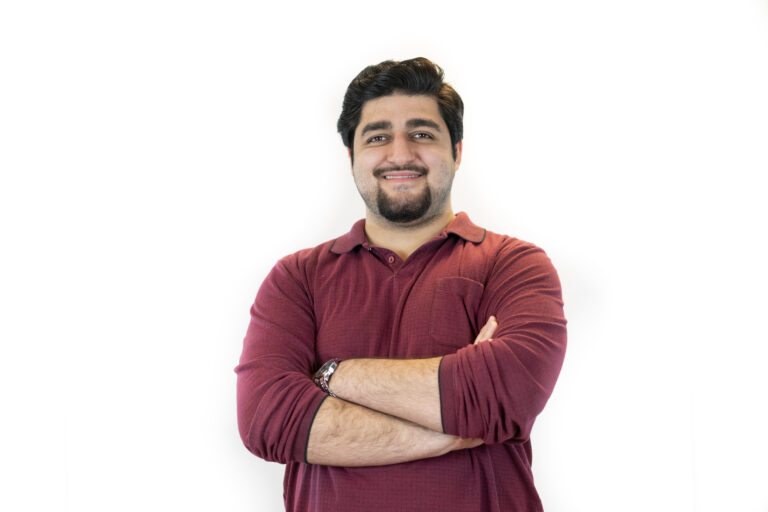
Photo Credits: HANNAN WALIULLAH / AGGIE

For the first time ever, The California Aggie publishes full transcripts of endorsement interviews

Every fall and winter, The California Aggie Editorial Board offers each candidate running for a position in ASUCD the chance to sit down and be interviewed for a potential endorsement. 

The Board can endorse up to six candidates for Senate, one Executive ticket, one candidate for external affairs vice president (EAVP) and one candidate for student advocate. This year, the Editorial Board chose to endorse three candidates for Senate (Shreya Deshpande and Alexis Lopez from the BASED slate and Derek Foster from the Thrive slate), one candidate for EAVP (Adam Hatefi, independent) and one candidate for student advocate (Ashley Lo, nonpartisan).

In an effort to be as transparent as possible, this year, for the first time ever, the Board has decided to publish the entire transcript of each of these endorsement interviews. It is the Board’s hope that these transcripts will help voters make informed decisions when choosing who to vote for.

The following transcripts have been edited for length and clarity.

Click on a candidate’s name to be taken to the transcript of their interview:

Written by: The Editorial Board

Student Advocate candidate endorsement interview: Ashley Lo

The California Aggie: If you could introduce yourself — your name, your year, your major and your pronouns.

Ashley Lo: My name is Ashley Lo. I’m a second-year here at UC Davis. I study economics and political science. My pronouns are she/her/hers.

TCA: This is the first time that we are ever having an election for a student advocate. Why do you think that you deserve to be elected?

AL: I’ve been working in ASUCD ever since around my third week of my freshman year. I was very gung-ho to get involved in student government here. Even the summer before coming to UC Davis, coming out of my senior year of high school, I knew the first thing I wanted to do was join ASUCD and really get involved in our campus community. I actually had this little phone call with the then president, Michael Gofman, and we chatted a little bit about what ASUCD was to get an idea of that since I hadn’t really stepped foot onto campus yet.

I ended up joining the Internal Affairs Commission [IAC], which is the commission that basically reviews all the ASUCD Bylaws. It ensures that our association as a whole is following those bylaws in bills, as well as the resolutions that we pass. Eventually, I became IAC chair. That’s the role that I have right now. That commission actually was the one who created the bill that made the student advocate position. As we were creating this position — it was actually the idea of our now-President Justin Hurst — I definitely found interest in being the Student Advocate. I thought this was a great idea terms of a position to have. That’s what initially drew my interest to it.

I believe that I would be a good candidate because I’m familiar with the role. I was involved in the creation of the role as well, drawing inspiration from schools like UC Berkeley, UC Santa Barbara and UC San Diego. So I’m familiar with those roles. In addition to that, I’m also familiar with our association, obviously, at UC Davis. So I have an idea of how to integrate what they have done in their UCs into our UC at Davis. 

TCA: What do you envision the role of the Student Advocate to be? 

AL: I envision it to be a nonpartisan office that is open to providing free and confidential service and advocacy for any undergraduate student here at UC Davis. It would also be a confidential service as well. I really hope that there are going to be four different divisions, similar to what there is at UC Berkeley: There’s going to be an academic division, a financial aid division, a conduct division and then a grievance division. I hope that within those divisions are specializations and caseworkers working in each division for that. I hope to have people specializing in different areas or policies that we have here on campus in order to provide the best service possible to our students.

TCA: So that we have a really good idea of how this actually looks and functions, in what case would a student come to you to talk about financial aid, or conduct, for instance? And what sort of advice or resources would they be given? 

AL: For example, UC Berkeley, what they do for their financial aid division is kind of a mix between advocacy and basic needs. For example, as you know, this Student Advocate office would probably have some sort of budget, similar to our other units and the commissions that we have in ASUCD. I believe that the UC Berkeley Student Advocate office actually uses its budget for an emergency rental assistance program, as an example for that. So the student shows need or demonstrates need, for example, they can apply for one month’s rent if they are in some sort of housing insecurity situation. So that’s an example of how that can be done. Or, for example, working with a financial aid appeals case, that might be something else that we do as well.

In terms of student conduct, as you may know, OSSJA [Office of Student Support and Judicial Affairs] handles a lot of our student conduct here on campus. A lot of that work would also be accompanying the students to these meetings with OSSJA, advising them on what materials they may need to bring to different meetings, for example, and telling them how the procedure will go. Just being a helping friend — someone supportive to have there with you in the meeting.

TCA: Can you tell me about your understanding of the Basic Needs and Services Referendum?

AL: Absolutely. From my understanding of it, UC Davis has had one of the lowest student fees in the whole entire UC system for the past few years or so. UC Santa Barbara has the highest fees, currently over $200, I believe. However, our minimum wage is going up here in California. So we’re subject to that. In addition, we operate the most amount of units and businesses out of any UC campus too. And we’re the only financial autonomous Associated Students body in the UC system as well. So we have a lot of different hands on campus, which is really awesome, because we’re the largest on-campus employer here at UC Davis. We’re honored and grateful to have that role.

But at the same time, in order to do that, and to keep up with the work that we’ve been doing, we obviously need to have some sort of financial support. And a big chunk of that comes from the fees that students pay into it. So right now it’s a fee of around $8, and they’re hoping to raise that I believe buy around $26 or so per quarter, and that will all go to be able to make sure that our student jobs can be sustained, and that our student government can be sustained as well, and just to make sure that the day-to-day operations of ASUCD can continue.

TCA: Are you in favor of the fee referendum and, if so, what have you done to ensure its passage?

AL: I’m definitely in support of the fee referendum, especially being able to work with Controller Kevin Rotenkolber. He’s a person who has been really spearheading this effort. Especially being in IAC, I’ve seen a lot of bills in my condition about the fee referendum. I was also able to see the 10-year plan going forward that our Executive team worked on the whole entire summer. The first Senate meeting was when I first heard about the fee referendum. So starting from September, this was already on my mind. 

I’m definitely in support of it, just because I know a bunch of people on campus work for the CoHo, for Unitrans. Obviously, I’ve been in student government, so I know what goes into supporting our student government financially as well. I want to keep this association functioning as well as it can, and I know that for this to happen, we need to increase student fees. And if we’re also talking about roles like this, like Student Advocate, expanding our student government, that really speaks to the testimony that we have to be increasing these fees if we have so many big visions and long-term plans and intentions for our association as well.

In terms of what I’ve done to support the referendum, I’ve gone chalking, for example, with our Senate to support it. I’ve also tabled in the CoHo with some of the senators too, to tell students about the fee referendum. I’ve also posted on social media, as well as kind of like grassroots talking to people, my communities, my friends and all that, explaining what the marketing and the purpose of the fee referendum is. I have also been clarifying to the everyday person what the fee referendum and all the marketing means such as A-frames and social media posts, answering questions, etc. and why we need it.

TCA: I know that this is a brand new position. Is there any way, or anything that you have specifically planned, to make sure that undergraduates and students at Davis know about this position and how it can help them?

AL: Yeah, absolutely. I believe that by trying to get a staff of caseworkers — that’s going to be our first way to really publicize this role. I would like to hire caseworkers who are hopefully really committed and excited about the spirit of this project. I think it’s a very cool opportunity to create a new office here at UC Davis. I’m hoping to be able to gather a really great team. From there, I hope that the communities that they are a part of and everything, we can go out, table and talk to different clubs and organizations about what this office will be. Truthfully, I’m hoping to tap into the pre-law community here at UC Davis, who may be interested in some sort of advocacy role. From there, I hope to have those people help me publicize what this office is actually going to be like, and I guess just do some efforts around campus to really make this known. That will obviously be our first course of action to be able to make this office an effective one.

TCA: So these case workers are students?

AL: Yes, they will be. As undergraduate students, and especially with the fact that this role is so new, I hope to have my caseworkers build relationships with the centers on campus. For example, going to collective meetings with OSSJA and saying, ‘Hey, here’s what we do. How can we collaborate with you to make this something that’s actually going to be a good resource for our students?’ I think that oftentimes ASUCD can run into the issue of trying to be a jack-of-all-trades, and do things that may be already being handled on campus. My intention for this office is to really make it as niche as possible and to do what we do well, even if that means quality over quantity. I would like to have caseworkers that can help me go to OSSJA, for example, the Basic Needs Center, The Pantry — any resource on campus — and try to see how we can collaborate and really make this office one that will serve students to the best of its ability.

TCA: You mentioned that the Student Advocate position is nonpartisan. We’ve heard some unverified murmurs that you may have some ties to the Thrive slate. Can you address those claims?

AL: Absolutely. Thrive originally reached out to me through Alisha Hacker and they added me to their group chat. That was something that I was added into. However, I told them that I’m nonpartisan and so I cannot take that up. I never asked for any endorsements either, so no slate has endorsed me. I remain as nonpartisan as possible. Obviously, I’m still in ASUCD, so I have those ties to people. But I’m not in any group chats, I don’t go out and take pictures with them or go to their meetings or anything. It’s the same with BASED as well. I do have friends in each. Both slates have reached out to me — it wasn’t just Thrive. BASED also reached out to me as well. I told them that with the nature of this position, unfortunately, I was not able to be in any slate or run with any slate. So I’ve been doing everything myself, like my campaign photos, for example, I just took them by myself.

External Affairs Vice President endorsement interview: Maria Martinez

The California Aggie: If you could introduce yourself — your name, your year, your major and your pronouns.

Maria Martinez: Hi everyone, my name is Maria Martinez, I’m a second-year political science public service major, and my pronouns are she/her/hers.

TCA: Are you associated with a slate?

MM: Yeah, I’m running with Thrive.

TCA: And why did you choose to run with Thrive?

MM: So for a while, I was a little hesitant about running with a slate, just because there is a lot of conflict, but in the end I ended up choosing Thrive because I feel that the overall mission is to benefit students across the board, and in all cases — whether it be, you know, resources in the classroom or supporting them after graduation. I think Thrive has a very holistic view of student success and how you go about doing that.

TCA: As the potential External Affairs Vice President, how do you see your role in the association?

MM: So for my first two years here at UC Davis, I got involved in ASUCD as a Senator and as chairman of the Judicial Council. So I see how ASUCD functions, and the way that I envision the Office of the EAVP is just overall, the main focus should be supporting the students on and off campus. And so I’m envisioning EAVP working with all of the offices, all the Senators, the Executive board. Just overall supporting. Although, I feel like EAVP has more of an impactful role off campus, lobbying and enacting policies and working with UCSA [UC Student Association]. I believe that reporting back and kind of bridging the connection between our actual government representatives and our student body representatives is kind of the goal that I have.

TCA: How do you see yourself working with the UC Student Association and lobbying at the Capitol? How do you think that’s going to go for you?

MM: So one of my goals is to work with UCSA on the Fund the UC campaign. Fund the UC is designed to ensure that there’s accessibility, quality and affordability to the University of California as a whole. So they kind of stay focused on lowering tuition and fees. My plan is to run to Chair that campaign, because it’s something that I feel like overall, every student, [thinks]

is important — to make sure that tuition and fees stay low, stay where they are. Because I know right now, there’s a proposal to increase tuition and fees and stuff, and Fund the UC is working really hard to keep it at a level amount. And so that’s kind of the direction that I would like to take.

TCA: What is your stance on the fee referendum?

MM: I support the fee referendum. I know that ASUCD encompasses a lot of units that have a big impact on campus. I feel like not many people are aware that even the CoHo is run by ASUCD or Picnic Day or the Whole Earth Festival or a bunch of events like that. So I definitely support it [because] I know that without that money, our campus wouldn’t be as good as it should be. For example, without Unitrans UC Davis would just collapse. So I definitely support the fee referendum.

TCA: What have you done to support the fee referendum?

MM: What I’ve done specifically is kind of reach out to the communities that I’m involved in to explain what the fee referendum is. So for example, I’m involved in a sorority called Sigma Alpha Gamma, and a lot of the people in my chapter don’t necessarily know too much about ASUCD, but I realized that since it’s a lot of new members, those votes can count. So I made sure to speak in our chapter meetings [and] speak to the people in other fraternities and sororities that I know are under our council because I know ASUCD is not the priority in people’s minds or they might not understand exactly what it is. Yeah, just talking to people that aren’t necessarily involved in the association and just explain how it does affect them, even if they don’t necessarily have an active role in the association.

TCA: Can you talk about your communication skills and the extent to which you think it’s important to keep an open communication between your office and The Aggie?

MM: I’ve noticed [that] a lot of problems and conflict can come up because of miscommunication or because of things being taken out of context or social media posts are flaring up. I definitely understand the importance of keeping that communication. I know that there is usually an Aggie reporter at Senate meetings, there was one at our candidate meeting. So I think communication is super important as well as transparency. I think my communication skills are up to par because of my understanding of the importance of it as well.

TCA: I don’t know if you know about the Boards of Units Directors (BUDS), but basically all of the ASUCD unit directors meet at least once a quarter. Is maintaining communication with BUDS and showing up to meetings something you would be interested in?

MM: Yeah, definitely. The units of ASUCD are kind of the backbone of this university in terms of [providing] student services, and in any way the [Office of the EAVP] could be of help to the units, whether it be looking for government grants that the government offers or anything like that or if there are any bills that need specific lobbying. I think that my role would be pretty necessary.

TCA: As the External Affairs Vice President, you would be the outward face of the association in the community and outside of it, especially with UCSA as at the capitol. What do you hope that others would immediately understand about ASUCD once they meet you?

MM: I hope that others would understand that our association is really based on professionalism and just understand that we have a very clear duty.

TCA: What made you want to run for this position?

MM: I wanted to run through this position because I believe that I can represent a portion of ASUCD that isn’t necessarily represented in the Capitol. I’m a first-generation college student, so my experience is completely different from other people’s experiences. But regardless of my background, I feel like, as a student here, I can represent the interests of the entire student body. And I’ve always had a passion for public policy and understanding how to affect students. I know that there’s miscommunication between students and their elected representatives in government. I want to be a gap between people that don’t see themselves represented.

TCA: If elected, how would you redefine the role of the position, if you think that’s necessary?

MM: There’s not really a precedent of what should or should not be done in the office, so I conducted some research into other campuses. For example, I looked at UC Berkeley’s [office] and something that I would want to implement from their office into [ours] is more student involvement within the office. Right now, I’m not entirely sure how big our office is, but something that I would want to reinstate, or [implement], is a voting coalition — a committee of students specifically dedicated to pushing out voting, especially with this year being a big catalyst for politics. Other things would be the reinstating of [the] lobby corps. So, having people that are interested in public policy and interested in lobbying being sent to the Capitol. I understand that the office has a pretty reasonable budget, so that’s something that I want to do. Something else that I noticed is that UCSA holds conferences for any student in the UC that wants to attend, so I want to send students to the lobby conference in Sacramento. Because although I can be in these meetings and speaking for the campus and stuff, I think the most effective if students here that really care about the issues [attended].

TCA: Are there any other comments or thoughts you feel are important that you would like to mention or address?

MM: Yeah, so I kind of want to talk about what I want to do for the housing crisis in Davis and how I want to work with the city of Davis to get a handle on things. Starting on campus, I would like to work with the Housing Advising for Undergraduate Students [HAUS], which is a unit of ASUCD. I would want to implement and have kind of a team of advisors under that unit and make it mandatory for first-year students to meet with them [throughout] winter and spring quarters. Housing is kind of the pillar of having a good education because, with housing instability, not having a place to sleep and study is really tough. I think that if first-years have that kind of base of understanding how the housing system works, or even what a lease is, it would be something that prepares [them for] the future.

External Affairs Vice President endorsement interview: Adam Hatefi

The California Aggie: If you could introduce yourself — your name, your year, your major and your pronouns.

Adam Hatefi: My name is Adam Hatefi. I’m a fourth-year political science and science and technologies double major. My pronouns are he/him/his. 

TCA: Are you associated with a slate? Why did you choose to run with that slate?

AH: I am not. I’m running as an independent. The external vice president is the person who goes out to other governmental organizations and political organizations and represents the interests of the student body. The interests of the student body are issues like housing and food insecurity. I feel like those are issues that are very much, within ASUCD, nonpartisan. I feel like those issues are very much nonpartisan. 

I think that it is important that the association is presented as a united face and as a united body — the entire student body — when it comes to issues that affect every single student, such as the cost of housing, the cost of attendance to college and the cost of tuition. All of those issues are issues that affect all of us, and our issues that should be voiced as a united student body.

TCA: You currently serve as the EAVP. What do you currently do in your role? What does a regular day look like?

AH: A regular day starts at around 6 a.m. I get up at 6 [a.m.] After getting out of bed and everything, it starts with sending some emails to members of the legislative staff at the Capitol, to people that we have coalition partnerships with. I check in with the UCSA legislative director to see what’s going on that day. He gets back to me at 8 [a.m.] when he wakes up. About three or four days a week, I leave for Sacramento at about 8:30 [a.m.] and get there at 9 [a.m.] By [the] time I park, the members of the staff have actually started working. 

I begin by just talking to the offices that we’re working with, going to talk to people that we’re not on a regular basis working with, see if they’re interested in working with us. Every week, something’s up in the legislature — something that we’re in opposing or endorsing, or is in some way relevant to us, or something that we need outside of the legislature that we need the members help with. For example, for the tuition increase was being proposed, I was in the Capitol pretty much all week that week, trying to convince members to put out public statements. I met with 17 or 18 offices asking them to. UC Davis is the most active one when it comes to legislative activity because we’re so close to the Capitol. I was asking them to put out public statements asking the [UC] Regents not to increase tuition. It wasn’t a legislative issue, but we were still in the capitol pretty much all week that week.

Depending on what’s up that week, I’m there in the building talking to members, their staff. Sometimes in the evenings, there are social events in the Capitol in Sacramento, where the Capitol staff, members of the different organizations, members of the legislature themselves and sometimes the governor stuff — once, the governor himself — come and just mingle. It’s really important for us to be at those events because those are, to be honest with you, more work gets done at these events than gets done in formal meetings. Still don’t know why that’s the case. But that’s the case.

So my usual day is usually spent in meetings in the Capitol, making phone calls with our coalition partners and making phone calls with our other UCs just reporting what we’re doing, because I also serve as the UC Student Association statewide campaigns chair. There are four campaigns that I oversee on the statewide level. And then going to these events and making sure that we have some friends when we need them.

TCA: How are you able to juggle these various duties of your various positions, as well as your double major and just being a normal person?

AH: With extreme difficulty. I speak to my professors at the beginning of the quarter. I let them know that I’m not going to make it to like 60% of lectures. That’s just the nature of what I do. Most of them are fine with it, to be honest with you, because there’s like three students who have schedules like this, and they can usually live with it. It’s a challenge. It’s being able to do this position.

When I started as Chief of Staff a year and a half ago, we didn’t have a state presence. We didn’t exist on the state level. If you said, ‘ASUCD’ to somebody, they’d be like, ‘What the f-ck is ASUCD?’ Yeah, feel free to publish that. That’s gonna be great. But now, we are, from what I’m told, I believe we’re the largest single campus legislative operation in the country. I’ve been doing this for a year and a half and that’s been the result. It’s a challenge having to build something from the ground up and having to balance that with everything else. But I mean, so far, I’ve passed all my classes. So it’s kind of working out.

TCA: You already do so much at the Capitol. Do you think that is you going above and beyond the job description, spending so much time there? Or even if you weren’t reelected, do you think that what you do on a day-to-day basis is the baseline for what an External Vice President should do?

AH: I would say, for the UC Davis External Vice President, this should be what we do. That’s considering our proximity to the Capitol. With the baseline level of what an EAVP should do, I’ve kind of locked us into this at this point, because we’ve committed to so many things that even if I’m not the EAVP the person that is the EAVP is going to have to finish all these things we’ve started. We’re committed to it.

Let me put it to you this way: If we don’t if we commit to sponsoring a bill and then we don’t see it through, not only will that member and their staff never work with us again, but anybody who was in any way involved through that process will never even answer our emails. Right? If we don’t finish what we start, we’re done. That’s the biggest reason I’m running is because we have to see these through. We have to finish what we started or we’re not going to be taken seriously.

I feel like with the relationships that I’ve established in the last year and a half, I’m most effectively equipped to actually finish these projects. I think if somebody new comes in at this stage in the calendar, they’re going to have a hard time because not only will they have to keep doing what I’m doing on a daily basis, but they will have to catch up with all the stuff I did in the past.

I’m a fourth-year but I’m staying on until fall, and there is a constitutional amendment that is being considered right now by the Senate to move the EAVP election to fall, just because the legislative session starts in January and ends in September. It makes no sense whatsoever to elect the EAVP in the middle of winter. I mean, it’s just one of those nonsensical things that we need to move. It was conceived of at the time when this position didn’t exist. And it makes sense that that was an error. But we’re moving that so I would only serve until fall, even if I was elected.

TCA: Given that this is the first time students will be voting to elect the EAVP, what sort of tangible accomplishments can you point to, for students, so that they know and get a sense of what you’ve done?

AH: Well, I can say that for the first time this year we will have on-campus, same-day voter registration because of the the partnership we established with the county. For the first time, ASUCD last year introduced a bill in the State Legislature. We wrote the language and we sponsored it. It got past the first house. I actually got the call yesterday that that bill is now actually dead, which was really sad. It was our first bill. I mean, when I talked to people, they were baffled that we even managed to do something like that in that short of the time that we had. But we’ve established a presence in the state that did not exist before. 

My office has established a partnership with the city of Davis to promote services for the homeless and Davis. It’s called the Davis Health Project. Actually today I set up a preliminary agreement with Unitrans to work with my office, H.O.P.E. at UC Davis and the city of Davis to provide a monthly allowance of bus passes to the homeless so they can get to services. We are at the moment pushing for a bill in the State Legislature that already has a backer. We’re just finalizing everything and that will be introduced soon.

You all published my statement on the Nishi project. The issue that has happened with Nishi, if that bill passes, will never happen to any student housing project anywhere in the state of California ever again. We’re working on that right now.

We have established UCSA statewide campaign chapters at Davis. They didn’t exist before. Now they do. There are four statewide campaigns. Each campus has a chapter. All four of them: Fund the UC, Racial Justice Now, UC We Vote and Acquire. Right now, Acquire is focused on undocumented student resources.

I, myself, was very much involved in the internal matters of ASUCD. That’s not going to be the case with future EAVPs. This year, this needed to be done internally. I kind of had to help out. One of my personal accomplishments was finishing the 10-year plan for ASUCD, which was endorsed by the Senate last night. The final version will be released tomorrow. I was supposed to send it out today, but it will be released tomorrow. That’s one of my personal accomplishments that I’m very proud of.

We have established a permanent partnership with multiple student organizations on campus to register students to vote. We started it last year and it’s still going this year. I’m fairly confident that it’s going to keep going for a few years in the future, and that we’ve set up the infrastructure for it to not end anytime soon.

We’ve established the UC Davis Lobby Corps as of a few days ago, which is how students can sign up and go lobby in their Capitol. We’ve had more or less, except for last quarter, we’ve had quarterly lobby days where we’ve opened it up to students who want to go lobby in the Capitol with us.

We have successfully supported multiple bills in the state legislature. We lobbied on Senate Bill 24 last year, which was Senator Connie Leva’s bill, along with many, many other organizations, to provide medication abortions, or the abortion pill, on college campuses in California. We worked on a few bills that failed last year, but we also worked on a bill to provide financial aid to students who are asylum and refugee recipients in the U.S. who still haven’t gotten their green cards, but they have their social security number.

That’s all I can think of right now, but I’m fairly certainly we’ve done more than that. My workload on a weekly basis has been between 30 to 50 hours, so I can’t remember everything we’ve managed to do.

TCA: As the editor-in-chief, I am on the Board of Unit Directing Students (BUDS) and serve as Chair. I have reached out to you via email to ask if you would like to have any involvement with BUDS. Is that something you would be interested in, and why or why not?

AH: Technically, bylawfully, I have a seat on BUDS. I have been reluctant to actually come to BUDS meetings just because I didn’t see it as very proper for a member of the Executive branch to be sitting in and be a member of BUDS. I didn’t want it to be a situation where I was in any way interfering with the operations of the units. I feel like the independence of the different units is critical to ASUCD’s success, while also the coordination and a certain level of oversight is critical.

I also think that the units should be able to operate independently. I didn’t want to establish a precedent where the EAVP, even though the EAVP has a seat on BUDS, I didn’t want to create a precedent where that involvement went too far. And so I basically avoided BUDS altogether. I have been thinking about coming to the meetings now that the fee referendum is on the table and as the Executive and the units are coordinating their efforts to inform do outreach about the fee referendum.

I feel like the EAVP’s purview is external affairs and the less involvement the EAVP has with the operations of the units, and the spaces that belong to the units, the better. That’s the reason I haven’t been too involved with BUDS.

TCA: With the fee referendum, it sounds like you’re in support of it. What have you done to support its passage?

AH: Well, I wrote, myself and President [Justin] Hurst, we came up with the 10-year plan, which is supposed to reassure students that this money is going to be put to good use. I have personally been in the fee referendum meetings, the meetings that have been done to come up with campaigning strategy with the Executive office. I have worked with the Controller and the President on actually coming up with a number and the language of the referendum. The language was mostly there, but I mostly worked with helping them come up with a number, and the 10-year plan was how we achieved coming up with that number.

I’ve also, in my capacity as a UCSA board member, spoken to UCSA and I’ve spoken to the University of California Office of the President and the Student Affairs department to make sure that the fee referendum proposal makes it through the UC Office of the President as fast as possible.

TCA: We don’t have any more time for any more questions, but do you have any questions for us, or do you have any additional comments, or any final thoughts based on things we haven’t specifically asked you about?

AH: I would just like to give a shout out to the staff that has been working with me this past year and a half. My legislative director, my new chief of staff, my organizing director and my communications director. They’ve been phenomenal, and we could not be as successful as we are now if we didn’t have a good staff.

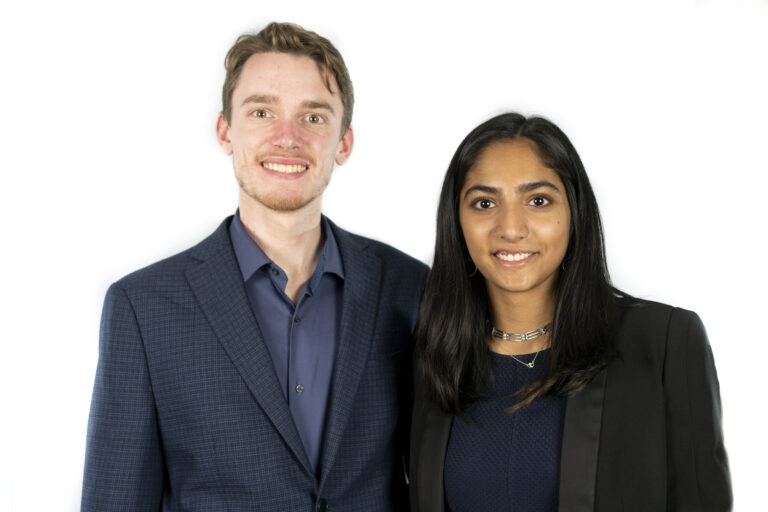
Executive ticket endorsement interview: Kyle Krueger and Akhila Kandaswamy

The California Aggie: Can you introduce yourself — your name, your year, your major and your pronouns?

Kyle Krueger: My name’s Kyle Krueger. I’m a second-year evolution, ecology and biodiversity major. He/his.

Akila Kandaswamy: My name is Akila Kandaswamy. I’m a second-year managerial economics major, and my pronouns are she/her/hers.

TCA: What slate are you running on and why?

KK: We’re running on the BASED slate. My reasoning for running for BASED is partly because of the values the slate is willing to speak about, not only to the basic needs and services that are essential, but also some issues like climate change and sexual assault awareness that are sometimes uncomfortable to talk about. I would say, more importantly, just the people on the slate. I’ve found great friends over this past year, and I’ve enjoyed spending time with them and talking to them and I believe there are great leaders on the slate. 

AK: Having connected directly with individuals on the slate, I’ve realized we fundamentally share a lot of the same values. Values are really important, and what we found our campaign off of — what we found our lives off of — and I feel like that’s really core to us as human beings. 

KK: And just to emphasize, we are running on a slate but we are here to work across the aisle to make sure everyone is included in any projects or decisions that we’re making. In discussion, we talked about things like people having enough food to eat from day to day and affordable housing. I think pretty much everybody agrees on those things and sometimes disagrees on how to solve them, but it doesn’t have to be partisan.

TCA: What is your history in ASUCD?

KK: I’m the current Chair of the Environmental Policy and Planning Commission [EPPC]. I’ve been in ASUCD for the past year and a half, I guess. I joined as a commissioner my first year. I tried out the carbon tax project that turned out to be not viable, but I was learning about the association at that time. And over time, [I] kind of grew into my role in the fair trade initiative now, and I represent the association and environmental issues and lead a team of 14 people divided into several different initiatives and projects.

AK: I am the current Sexual Assault Awareness Advocacy Committee Chair [SAAAC]. I’ve been involved in ASUCD for the past quarter and a half. I also serve directly as the assistant to the President, and so through that I’ve been able to see what it really takes to run the association and what the day-to-day responsibilities look like a big Executive office, which has been really great in preparing me to run for office, and beyond that just having a realistic expectation of what the Executive office really is — knowing exactly what I’m going into, knowing how I’m going to help you prioritize your day if you are elected, and just learning how to navigate the bureaucracy at the university. In my role as SAAAC chair, I’ve been able to begin putting together a conference for the month of April, which we’re hoping to have as a repeatable and annual conference, which is really awesome because I was pretty surprised actually to find out that UC Davis didn’t have a Sexual Assault Awareness conference, because a lot of universities like Berkeley and Stanford do. By speaking with representatives from these campuses, I was able to get insight into how impactful that conference has been for their survivor communities and for their communities as a whole. I’m really excited to implement that, and I will be working closely with CARE, who has put together a Sexual Assault Awareness month committee for the entire month of April, which is Sexual Assault Awareness month. I’m really excited about all the kinds of stuff going on for that.

KK: I feel inspired to go into a little more detail on my mission. These are all projects I need to transfer over and kind of expand with with some of the abilities and resources I’d have with the Executive office, but currently I’m spearheading an environmental coalition to bring all the umbrella organizations across campus together under one body. I can meet once a month and coordinate efforts. One of the great issues I guess was the structural errors with EPPC was that it was just disconnected from things when I first took over as Chair, and and we’re doing double work or doing things that maybe other clubs are doing, and we’re not talking and and making sure that we’re all in coordination or talking on a frequent basis, as well as including admin in that conversation, I think is really, really important. And I’d love to spearhead the coalition and expand that to other issues as well. It kind of works out in the environmental area. We’ve got like five other projects. We’ve got an environmental career fair we’re currently working on that can get people involved to see companies that are going to help them begin their career and do something that they’re really passionate about. And I think that’s really important because right now the career fairs are stock, global oil, gas companies, especially for engineers. So we want to bring some diversity to that. I’m working with Camille Kirk in the same building right now and implementing different environmental surveys, typically an environmental literacy and environmental cultural assessment. And even though surveys, we’re hoping that it can be offered on a really frequent basis, kind of like a TAPS survey, and get a lot of responses. And that by doing that we can demonstrate to university where there’s gaps in educational knowledge, and demonstrate different clubs and organizations where there’s gaps in the environmental culture where we need to be focusing our efforts in terms of environmental education. We’ve got several others working — the CoHo, Picnic Day, and we’re coordinating with the Office of Sustainability to help them become more sustainable. We’re working with the Office of External Affairs right now — and they’re working on state policy and reforms — and affordable housing.

TCA: How would you make sure to incorporate the ASUCD units that already work from an environmental standpoint, like Campus Center for the Environment [CCE] and Gardens?

KK: CCE and EPPC have written the environmental coalition outline they’re going to be presenting soon. I think that it’s possible that the coalition house underneath CCE, and I think we’re still figuring out how the coordination would work, at least in partnership with EPPC and the legislative advisory body on, but it is important to us that we make sure we delegate tasks and that we’re not doing double work with EPPC and CCE. In Gardens, we’ve been bringing that conversation in as well, and I think that there’s a lot of intersection between what we’re working on and what the Gardens want to accomplish, particularly in sustainable agriculture. Agriculture is certainly an area where we see outside impacts on the environment, so certainly we would bring them into the coalition. The whole point of coalition is to make sure the efforts of one commission doesn’t conflict with another or do the same work, but instead build off of each other.

TCA: What is your understanding of the Basic Needs and Services Referendum?

KK: We are in support of the referendum, very strongly. I think it’s one of the reasons that I really wanted to run — I became interested in the association from a kind of environmental standpoint, and I’ve been involved in environmental activism for a long time. But over the course of time, these existential issues like climate change are becoming really, really important and what happens to future generations is really, really important. Realizing that we have such a large percentage of students who are food insecure, can’t put food on the table, and there’s literally people who don’t have a roof over their head when they sleep. We, as an association, have this power to actually run some of these services directly, and it’s amazing. Not every university has this. We see the Berkeley Pantry is open one day a week and is run by administration. And so the ability to have this autonomy, and provide these basic needs is something we need to rapidly expand, not contract. The referendum will ensure that we can expand that. When we expand that, we need to do it the right way, that we’re making basic needs the emphasis of what we’re doing and that we’re making sure that we’re fighting through insecurity. I actually met with Ryan from The Pantry just last week and talked about, hypothetically, if the Basic Needs and Services Referendum passes, what would his unit need the most? I think he told me not to go into too much detail but sounds like food storage and some other things. There’s a lot that The Pantry needs right now, for instance, and the referendum will help them to expand and will help with shorter wait times and increasing the amount they can offer to make sure that students don’t go hungry. 

AK: I second that. This isn’t a surface level thing. This is something impacting students wages, how people can feed themselves — that’s not something that should be taken lightly. It’s not something that shouldn’t be voted on for external reasons. It’s something that everyone should be voting yes on.

TCA: What, specifically, have you done to ensure the passage of the Basic Needs and Services Referendum?

KK: I have sat on the task force for the referendum. It’s been, honestly, so far one meeting. Most of my work has just been making sure that every time I talk to a group of students that I’m talking about the referendum, anytime we make posts, we’re also posting about the referendum and making sure that’s separate from us and from our campaign. In a sense, it’s tied to it because we want to ensure that the funds from the referendum are spent responsibly in a way that is really conducive to basic needs and services. But also, at the same time, we want to say, ‘Hey, look, even if you hated me and hated my speech and you don’t want to vote for us, please vote for this referendum.’ That is separate and that’s not a partisan issue.

AK: I’ve been working with the current Executive office, sitting in on meetings, to figure out how we can spread the word and how we can really market and advertise truly how impactful this referendum is. That’s been the biggest role I’ve had, along with advocating for the referendum almost every moment I have — whether that be in a club, speaking in meetings, almost every single day for the past month I’ve talked to someone about it.

TCA: Can you speak generally about your platforms?

KK: We’re going to bring our experiences in our respective positions, and kind of expand upon the current issues that we’re currently doing. I think I talked some detail already about what we’re doing on the environmental side. I think that spearheading this coalition structure is going to be important because it’s something that can be replicated in other areas, like affordable housing and other issues.

AK: Like I mentioned, as SAAAC Chair, I’ve seen the prevalence of sexual assault on this campus and on campuses across the nation. I’ve heard the firsthand experience of survivors on this campus, their challenges with the recording process, their challenges with being heard and being seen and being acknowledged and having your needs met, which is, again, a fundamental issue. It’s not something that’s superficial to me, it’s something that impacts how people view themselves, how people persist, how people live and go about their day-to-day lives. I’ve seen firsthand how big of an issue it is, and how the current university standards and regulations are really not moving. Along with that, I’ve seen the intersectionality of individuals identities and how that comes into play with individuals with LGBTQIA+ disproportionately impacted by sexual assault and sexual violence. And again, those things are not being addressed at all. Along with that, I’ve learned how to navigate through the bureaucracy of the university, which I think will be really helpful, again, in knowing what we’re getting ourselves into with this campaign, and then also knowing how we can find solutions to meet individuals needs that are realistic. We’re hoping to work with different organizations, like sororities and fraternities, to collaborate and help decrease sexual assault and sexual violence in those areas and on campus. Stanford and Berkeley both have a sober safety patrol officer. They have them at every single one of their parties, and I know a couple of fraternities on campus are implementing this. I’m not really looking to enforce or regulate these things, instead we’re really looking to genuinely work with them. I do know that there are currently workshops that are mandatory for those organizations. But the biggest problem is that they aren’t really effective, because it’s seen as something that’s been forced upon them rather than something that they want to do, and I think changing that will really be effective in making an impact and changing the culture. And, like I mentioned, I’m working on the conference. We’re going to have panels of survivors along with students and faculty and members, and community and members of the state as a whole. Along with that we’re looking to have members who work on the SJA board on to come and talk about their experiences with the reporting processes and the problems that they’ve seen, along with successes. We saw how the MHI [Mental Health Initiative] conference created amazing spaces for individuals, so they had certain areas for community members who needed a moment a way, whether that was play-doh or lavender-scented spray, yoga rooms, etc., and we want to do something like that too.

KK: Well, I realize we’re about halfway through the platform, but I mentioned all the projects we’re doing and I think especially with the coalition we will be able to expand that within the Executive branch and be able to more quickly get people on board and then replicate it. But one area that I think people were surprised to see under the environmental area of the platform was affordable housing. I think people don’t generally think of that. They think of it maybe as a separate issue. But it’s really really strongly intersected, I think, with the goals that we have. I’m on the fairly marginal side, you find that when there’s less affordable housing, there’s a less centralized campus and people are also driving from further away, increasing transportation emissions. On the very human side, we literally have people sleeping in their cars because the vacancy rate is ridiculously low. I think people run for housing all the time, like every other Senator, or affordable housing, and I think the issue is that we keep running on it and advocating at a local level, just talking to people, but then nothing really happens because the reason that affordable housing such a big issue because of these huge structural issues across the state of California in terms law. EPPC has partnered with and has been working with the Office of External Affairs and [Adam] Hatefi to reform the California Environmental Quality Act in a way that is both conducive to environmental sustainability that also ensures that individuals can’t abuse the California Environmental Quality Act to basically stop affordable housing projects.

AK: I just want to add on briefly, we’ll also be working with the LGBTQIA center and the Women’s Resource and Research Center, along with a variety of organizations from underrepresented minorities. We do realize that a lot of these issues actually disproportionately impact underrepresented minorities far heavier, which is something that’s completely unacceptable. We really want to make sure that we’re addressing the needs of all these different communities and not just addressing the needs of the majority.

KK: Basic needs and services is the third part of our platform. I met with The Pantry, we’re talking about how to best expand it. We’re very much interested in supporting the Mental Health Initiative and other resources as well that are just really fundamental rights that you should have as a student you deserve to have food, physical and mental health in all areas. The last point is something I’m really passionate about — I’m sad we’re running out of time — but it’s organizational. We’ve seen, unfortunately, elected officials show up during election period and then have all these grand plans for what they’re going to accomplish, then they disappear. We want to keep our platform attentive to the needs of different communities and continually reach out to them once we’re in office. One of the areas I want to see reform in is increasing the number of outreach hours that senators have and then enforcing them, as well as making sure people are constantly visiting different clubs or communities, making sure everybody gets seen at least once a quarter, a couple times if possible. We’re not just framing our platform points, getting them down and saying, ‘I got my platform done. And that was what I want to accomplish,’ but that we’re rapidly adapting our platforms and adapting based on these frequent meetings with campus communities and what they need. I want to build out a research department within the Executive branch and build out surveys and other research methods that can help us to better pinpoint issues in the student body and solve them accordingly.

AK: Theses surveys will also pertain to sexual assault. I’ve been working with people on different campuses, and I’ve learned that they’ve implemented programs such as this one to increase the statistical data they have on sexual assault, because as you all may know, there is a significant issue of underreporting sexual assault issues. Getting raw data from the communities will be really impactful.

KK: One of the other things that we’re interested in is making sure that when we’re doing a structural reform, or when we’re looking at our business practices, that we’re not treating this as as partisan politics. We’re trying to set up the association for success in the next 10 years. Currently there’s a 10-year plan, and we’d love to work within the framework of that plan, but then also build upon it and ensure that we’re dealing with structural errors of rapid turnover and inexperience, and that we’re directly addressing them with solutions like human resource managers, historians and thorough training.

AK: This isn’t just like a resume builder for us or something to do in our free time. This is something that we fundamentally want to do and feel the need to do as members of the Davis community. This is how we’re going to create change and make members of the community feel safe and feel acknowledged.

TCA: Some of your platform sounds like work you’re currently working on, or an expansion of that work. Why do you feel you need to be President and Vice President to accomplish your entire platform, rather than continuing on in your current positions or as Senators?

KK: I think that the President and Vice President set a precedent for which issues are going to be focused on, what’s going to be important, and I’ve certainly felt a lot of support from the environmental commission within the administration, but that’s not guaranteed. Making sure that support for our efforts, for instance, with the environment and sexual assault awareness are brought to the highest level possible is important because again, that’s certainly not guaranteed. Now, I see what you’re saying, all these different conditions and units are in many ways, self sustaining, and ultimately they’re the ones who are the most impressive in association and part of what we’re doing is just making sure that we’re being good listeners to all these different projects and different different people who are running different initiatives and that we’re not imposing our own ideas on the areas.

AK: Creating fundamental change in community and large-scale change is the biggest difference between what we’re currently doing. While we are creating change, we are able to work across a variety of issues, we’re able to work on sexual assault, whereas advocacy and we’re able to work on environmental protection, sustainability. I guess creating widespread changes is the biggest reason. We’re also looking to work with individuals from a variety of backgrounds and others. While we are able to do that in our current roles, we really want every single individual in the association to carry on that same record, and we carry on that the same set of values. That is going to create long-term change. It’s going to take the fiscal partisan politics idea out of ASUCD, in which there really should be no role of polarization or partisan politics. A couple examples of how I’ve been able to create this change on a lower-scale level. I’m also the grant writer for the environmental club. Last year we hosted [a] panel for the Davis College Republicans, where we talked to them about their opinions on climate change and climate solutions. This year, we are doing a follow up between the Young Democratic Socialists of America and the Davis College Republicans not this Wednesday, but next. I’m really, really excited about the panel; it was the main reason I chose to join the board because, again, we really don’t think that environmental sustainability and climate change should be a partisan issue at all. And the biggest thing we learned from last year is that if people talked about problems and issues on this campus, they would realize that they have a lot more in common. That can be hugely impactful when we’re talking about resolving these huge, fundamental issues that impact our lives, right, because when we come together we’re able to be so much more productive and accomplish so much more for communities. We really want to have the power to spread that message throughout the community and to reach as many individuals from as many different backgrounds as we can. I’m also Managing Editor for Davis Political View, so through that I’ve been able to see what it’s like to be a part of the only nonpartisan magazine on campus. That’s really been awesome because I’ve been exposed to a variety of opinions — we have people from all sides. I’ve learned how much people have in common when they come together and just talk openly and have open discourse. We just want to bring those ideas into existence.

TCA: Are there any final comments or thoughts you have that you haven’t had a chance to talk about?

KK: In terms of my past experiences, I’ve worked in environmental activism for a while but I also did cancer research and, and I’ve worked with the Director of the Institute at UC Irvine. For a while, I thought I was going to be a scientist. I wasn’t expecting to go into politics. I think what frustrates me is that we look at cancer research, and when you’re doing cancer research, you’re looking at, ‘Does this treatment stop cancer from growing or not?’ That’s not partisan, and it can’t be, because people’s lives are literally on the line. You have to look at that objectively. But then we get to these bigger issues, and we get to the things that are affecting the community like food insecurity and housing and the environment, and suddenly somehow we throw in this this partisan aspect in this and personal vendettas and silly things that stop us from accomplishing stuff. We can step-by-step identify the solutions in the same way that you would with cancer research, and that’s what I plan to do, is to look at things objectively and solve problems with the same process.
AK: The last thing I wanted to touch on is that I know I’ve only been in ASUCD for the last quarter and a half, but during that time, I definitely gained so much insight into the Davis communities on campus as a whole and have learned the needs of individuals. Along with that, in my experiences outside of the campus, I’ve served on boards for a variety of clubs. I’ve seen how these issues that we’re talking about today impact large scale communities. With the countless lawsuits the attorney general has filed against the administration — I’ve seen the power that actions taken by a small group of people can have on large communities, whether that’s a recent lawsuit that I just worked on supporting a transgender individual and making sure they had access to the right bathroom in Virginia, or whether that’s working with the Affordable Care Act or working on environmental efficiency standards, I’ve really seen these issues in the real world. I’ve seen their impact there and how to navigate all these issues and how to find solutions. I really want to bring that knowledge and that experience to our Davis community and I genuinely want to help.

Executive ticket endorsement interview: Alisha Hacker and Justin Weiner

The California Aggie: If you could introduce yourselves — your names, your years, your majors, your pronouns and what positions you’re running for.

Alisha Hacker: My name is Alisha Hacker. My pronouns are she, her, hers. I’m a third-year and I’m a political science major. I’m running for President.

Justin Weiner: I’m Justin Weiner — my pronouns are he, him, his. I’m a third-year neurobiology, physiology and behavior (NPB) major and economics minor.

TCA: What slate are you running on? 

AH: Thrive.

TCA: And do you have — as an Executive slate — any platforms that you’d like to talk about?

AH: Most candidates are running on three platforms, which is a little bit of what we want to do if we are elected for the Executive office. One of the first ones that we have started to work on is an idea for a little bit of a CoHo expansion into the library. So, what we are hoping to do is expand the program that the CoHo currently does, which is they offer coffee and snacks during finals week in the library. Unfortunately, this program is not super well advertised, and not a lot of people know about it right now. They do it more like a mobile coffee style, so we are hoping to expand that program to offer to more students with better advertising and also potentially expand it to midterms and finals week so it gets a little more popular. Potentially in the future, we can work on getting a permanent installation. We talked with Darin from the CoHo, and he informed us that it is a profitable thing that the CoHo does. With better advertising and awareness, it can definitely be more sustainable. The president can actually work a lot on the dining features that happen at the university because they sit on this thing called the dining pack which is the CoHo, the student housing — all those people who run different dining operations and actually have more information on how CoHo expansions can be implemented.

JW: My big things are more focused on student health. One of my big platforms is to start a program to teach student leaders on campus how to recognize drug overdoses and teach drug safety. Going along with that, [also] making sure that no one gets in trouble for seeking medical help. Right now, if you call 911 in the dorms, or if an RA calls 911 in the dorms, the student gets sent to Student Judicial Affairs. And that discourages students to seek help when they need it. No one should be afraid of school repercussions when it can potentially be life-threatening. Anywhere else in the state of California, healthcare information is private, and I think that should be the case on campus as well. 

AH: The last thing we want to do is sexual assault awareness and advocacy. Some of you may have seen that there are some blue lights on campus, but there are only about eight for a campus our size. UC Irvine has over 150 blue lights around their campus and they’re five times smaller than the size of our main campus area. We want to expand that further, which we know [that] this is something the police department has been talking about or has started to work on; however, it’s been several years since they have even mentioned it again. Additionally, we want to make sure that every student has immediate access to resources and reporting options if they feel like that’s necessary for them. We want to put the number for CARE [Center for Advocacy, Resources & Education] on the back of every student ID. Right now, you have some non-emergency numbers for different things, but the CARE number can sometimes be hard to find. Reporting options are not always easy to access. 

JW: I think just generally making it more publicized that there are a lot of options for victims to report, and I think that’s something that hasn’t been very well publicized and is still stigmatized for people to report — that’s unacceptable.

TCA: I know that we talked to UC Davis Police Chief Joe Farrow, who’s told us that the blue light expansion costs quite a bit of money. Have you thought about where you would get the funds for that?

AH: The police chief has been working on this, and this is something you can get different grants for, and that’s definitely the route that I would also look into. I’ve been reading a lot of articles saying that you should be able to see them around you and that if they’re near each other, the police can also follow your progress. Hearing students say that we want this for safety purposes, I think we can find a way either through grants or through speaking with police departments or through campus in general.

TCA: This isn’t the first time that either of you has run before. What about the office specifically is making you want to run again?

AH: I ran through the Executive office before and, in a personal sense, I’m in a very different place. I feel a lot more comfortable with the idea of stepping into this role. I think last year — if I’m being honest and being reflective — I think it was a big jump that I wanted to make as a sophomore especially. Now, I’m a junior. I feel like I’ve learned a lot more about the campus [and] learned more about the space at ASUCD. Right now, ASUCD is at a very precarious point with the fee referendum going on. It’s like a life or death situation for ASUCD. Either we lose our autonomy or we pass this fee referendum. I do believe that my experience as a Senator — working on the fee referendum — and now, my experience as co-Senator [and] as a member on COSAF [Committee on Student Affairs and Fees], which oversees student fees, I am in a unique position to feel comfortable to start working on the post-fee (either pass or fail). I think because of where we are right now, I feel comfortable trying to do this, and I had so many things that I wanted to do before. The desire to help and to serve and to give back to ASUCD never went away, and now, we’re in an even more precarious point. I do feel that I gained the necessary experience and knowledge to take on this position. 

JW: I think [that] it’s a little bit of the same deal for me. At first, I wasn’t really that interested in ASUCD until my campaign manager when I was running for Senate, Daniella, pushed me toward it and opened my eyes. I got into the process really late, but I think I learned a lot from that. I was just a mess a year ago, and I’ve done a lot differently since then. Realizing this, I could take on a bigger role and get more of these things done more effectively. As Senator, your power is limited, and to come in with big ideas as we have as senators is a little bit tough to do. But having the Executive office to back you up can give you the platform to go into the community and make these changes.

TCA: Alisha, you were talking about the fee referendum — what, specifically, have either of you done to support the fee referendum in order to ensure its passage?

AH: As a [voting] member of COSAF — COSAF is one of the first on-campus steps for passage — we reviewed it, and I did vote in favor of it when it was proposed to COSAF. I’ve also been meeting with those at the Executive office. I’ve been helping back in last spring with some of the draftings, as I have been very involved with the Unitrans fee referendum before. Now that it is officially going on the ballot, we’ve done a lot of outreach just on people we’ve been talking to. We both fully support the fee referendum, [and] we encouraged everyone on our slate to support the fee referendum too. Every time we ask somebody to vote for us, [we ask them] to also vote for the fee referendum. 

TCA: In terms of how the current Executive team has handled the fee referendum process from drafting to getting the word out about it, how would you have done things differently had you been on the Executive when this was trying to get passed?

AH: They started toward the end of spring quarter, which I think they would’ve needed the beginning of spring quarter, and the reason why I say this is because the language hasn’t even been fully finalized, as you are all aware, and the election is in two weeks. I don’t think that’s necessarily fair that students haven’t had the chance to read something that can increase their fees by $26 and then $8 after. I would’ve started that outreach process a little bit sooner, and I would start the original fee process at the beginning of the quarter because the fee process for Unitrans took us almost a year. You have to get it approved by different campus organizations, you have to get it approved with the Chancellor, you have to get it approved by UCOP, [University of California Office of the President] [and] you have to get it approved by Senate. There are so many steps, and all of these things take time. I met with the current ASUCD President yesterday to ask for updates, and they said that they’re still having UCOP edit the language, and it’s time to get that on the road. If I was in that position, I think I would have just started the process earlier. I would put down some more hours.

TCA: What do you think is the biggest issue on campus? If elected, what would you do to address this issue?

JW: Personally, I think it’s a lack of attention to student health and wellness. There’s mental health, physical health — like even our platform about sexual assault awareness falls under health as well. I think that the campus is ignoring a lot of these issues, and you guys publish the article about the suicide thing more or less swept under the rug. I’m an EMT in the community, so I’m the one who gets the 911 call and sees that. Sure, I have a bias toward thinking that these things are bigger than they are, but I don’t think that a single student should be dying because of a lack of access to resources.

TCA: If elected, how do you plan to manage your time with complex classes and balancing your majors?

AH: Luckily, for me, a lot of the positions that I currently have are at the end of their term, [such as being] President of a club that I’m turning out in the next couple weeks for spring quarter. Just making sure that I dedicate myself to being President of ASUCD, I think that it’s a full-time job. It’s unrealistic to think that I can do that and have another job necessarily because you are on call 100%. I talked to Justin [Hurst], and he said he’s been sleeping in the office the last few nights preparing for the fee referendum, making sure that we’re going in understanding that this is what we are signing up for.

JW: Personally, I do a lot of things — it’s not super hard to manage your time. I have a Google calendar, and I say, ‘Okay, I have two hours to do it, let’s get this done.’ I told my EMT work that I’m running for this. If I win, I’d cut back my hours, and they have been fully supportive of it. And I’ve told a lab that I work in the same thing. Our grant [at the lab] ran out at the beginning of the year, and we’re about to close shop in May, so I’ll be significantly less busy.

TCA: Where do you both see either flaws or room for improvement in the budget?

AH: Well, it does depend a lot on this fee referendum passing. I can give you two scenarios — if it passes, I would like to see us focus on giving back to the students that work for ASUCD. I know that with your stipend positions, the amount of hours that you put in does not equate to the amount of money that you get back from ASUCD. I know that a lot of us who do work for ASUCD do it because we care, but we’re also students. This is such a huge time commitment for so many people that they can’t do other jobs, and they need money to survive. One of the things that I would like to do is focus on increasing stipend position pay. If the fee referendum passes, I would make sure that students can do this as a job and not have to risk their financial security. Additionally, assuming that we get this money, I would focus on reviving units that had to be cut because of the previous budget cuts such as Tipsy Taxi, which the police department has graciously taken over. It did mean that students at ASUCD had lost their jobs [though], so I would like to see if we can bring that back as well. On the flip side, if this fee referendum doesn’t pass, it will mean that we would have to make more cuts, which is why we are so supportive of the fee referendum. I don’t want to see more units or jobs cut, and I believe that so many people give so much for ASUCD that they deserve to get a fair compensation for the work that they do.

TCA: One of the things that the university is doing right now is working on moving pay from stipend to hourly wages — where would you foresee this heading for ASUCD if the fee referendum doesn’t pass?

AH: If it doesn’t pass, I know the plan is to transition stipends to hourly over the next 10 years, so I think we would have to start looking for other organizations on campus. I don’t want to say buy similar units but kind of like how Tipsy Taxi has gotten taken over by the police department. I think that can be an option to shed some of our units — to either sell them or let them be taken over so that we don’t lose their services. Additionally, there are so many programs that are so valuable under ASUCD, so I think we would probably need to reach out to the university and ask them for more funding. I know they currently fund MHI and they already pay for some staff positions, so asking them to take more of that burden would help but be extremely difficult, and I think we would need a lot more cuts.

TCA: How do you plan to make sure that ASUCD is working as a cohesive unit and not developing into partisanship?

JW: I can say that I personally have no interest in partisan politics. I think that almost everyone here pretty much agrees on most issues, and they tend to fixate on very minor things that don’t affect anything that ASUCD actually does. A lot of national political issues have no difference in how we handle the budget here or how we hire people for units. Frankly, I think a party system on a college campus is kind of silly. I say that while knowing and being part of one, I have no issues working with the other party. I think that all the hostility is made up and perpetuates itself because people get so fixated on how, ‘Oh, they aren’t going to vote with me on something,’ and I just have no patience for that. I think you should vote on what you believe in because that’s what you’re elected to do.

AH: I think as someone who has served on the table and had voted for things, I would say 99% of the time, things pass almost unanimously. I think it’s just divisive; we’re here for student government. We are not Congress, we are not the United States Senate — we are here for ASUCD. We are here to represent students, and we can do so much more if we work together. I think passing the Unitrans referendum last year was a great example of bipartisanship because everyone from both sides supported it. It passed, and if the fee referendum passes, [then] it would be the same concept.

TCA: What are your stances on resolutions regarding national politics since those tend to build more toxicity?

JW: I personally don’t think they’re the most valuable because they create divisiveness unnecessarily. Frankly, I don’t think anyone outside of the bounds of this town really cares [about] the university’s opinion on a national subject. I think that if we released a statement on something that’s happening in our community, it should be solely on what the university and students care about. We’re not elected for our beliefs, we’re elected to represent the students’ beliefs. I have no interest in bringing my personal politics, or lack thereof, into a resolution. 

AH: The only resolutions that I saw that were effective were directly related to issues on campus. There were issues related to getting more funding for mental healthcare — I thought that was an absolutely perfect piece of a resolution — and there were [also] ones related to housing that we passed and sent to City Council. These are direct issues that directly affect students. If you cannot draw a direct line that encompasses students’ ability to succeed at UC Davis, then we don’t care.

TCA: Justin, if elected as Vice President, you would be leading Senate meetings. Where do you see room for improvement with these meetings?

JW: Actually enforcing rules and not wasting time debating pointless issues. If people have something legitimate to say then they can say it, but if they have redundant statements, arguing the same two sides over and over again is never going to change anyone’s minds. If you have meaningful discussions then that’s important, and you should have it. But there’s no point to bicker for two hours. 

Senate candidate endorsement interview: Tenzin Youedon

The California Aggie: Introduce yourself — tell us your name, your year your major and your pronouns.

Tenzin Youedon: Hello, my name is Tenzin Youedon. I’m a second year, my pronouns are she/her and I’m a political science and philosophy major.

TCA: What slate are you running on and why?

TY: I’m running on BASED because I feel like my values align with theirs and I came into ASUCD meeting people that ran with BASED and I feel like I really agree with the words of these people.

TCA: Have you served in ASUCD before or do you currently serve on ASUCD?

TY: Yes, I do. I am currently the Legislative Director for Senator Shondreya Landrum. 

TCA: What are your platforms?

TY: I’m running on ethnic representation, transportation as well as funding for ASUCD.

TCA: Can you go into a little more detail about thos?

TY: Yeah, so for ethnic representation, I feel like there are so many different communities here at Davis, but not all of them are really being represented or heard through ASUCD. So, what I would do is email them, go into meetings, do whatever I can to communicate with them and make sure their needs are being met. Also, I know [a senator] is currently working on creating some sort of email system newsletter, and I would collaborate on that. 

Going into transportation, so Unitrans is just a really great, affordable method to get to school. However, I believe there are a few issues that will need to be resolved, [including] overcrowding. Through personal experience, and through my friends’ experiences, it can be kind of crazy on Unitrans sometimes, in certain parts of the day. Sometimes everyone has to stand up, and they [are] asked to hold their backpacks. I feel like, one, that is a safety issue, because there has to be a limit for people that can get on the bus. And two, it’s just uncomfortable. I think it’s an invasion of your private space. And it’s unfair to have to go through that every single day trying to get to school. So how I would try to relieve that issue is by creating this carpooling system. I know that TAPS already has one, however, that one is purely online and you have to schedule it ahead of time. My idea would be creating designated spots right next to the Unitrans bus stops where cars who are registered to the school can go by if they have empty seats in the car and can pick up students and drive them to school in the morning. The plan isn’t completely thought out. It is an idea, and I already have contacted TAPS with the idea and I plan on collaborating with them, maybe creating a new system or adding on to the system we already have.

And for funding, we all know that there is a $500,000 deficit and that means the potential loss of student jobs and that means the potential loss of a bunch of resources that ASUCD provides on campus. So I think another goal that I strive for is removing that deficit as much as I can because it’s really important to keep ASUCD running. I’m currently working on fundraising for the gala with Senator [Shondreya Landrum].

TCA: So for the ASUCD Basic Needs and Services Referendum, it sounds like you’re in support of it. What have you done specifically to ensure its passage? 

TY: So far, I have just been advertising it as much as I can to the people that I know and on social media.

TCA: What do you think the biggest issue on the campus is right now, and how would you, as a senator, be able to address this issue? 

TY: I think a big issue on campus is, again, transportation and parking and just getting to school. It may be an inconvenience and it may be considered a minor inconvenience, but I feel like it is a really big issue that a lot of people face every morning trying to get to school, trying to get parking, and it’s really expensive to pay for [a] parking permit. The buses are overcrowded and I feel like it’s a big mess 

TCA: So serving as Shondreya’s legislative director, what specifically have you accomplished so far?

TY: Well, we’ve been really focusing on the gala so far. That’s been, I think one of her biggest projects. Another thing we’ve accomplished [is] communicating with different communities [and] going to events. Shondreya has a large staff, so we’re been really able to do outreach, and I think that’s really important. 

TCA: What do you think is one of the biggest issues within the Senate right now? And what would you hope to contribute or do differently on the table?

TY: A big issue, for sure is partisanship. I think there is a lot of politics that goes on that definitely divides the Senate. And how I plan to run, or how I plan to go into Senate isn’t by making decisions based on my party, it’s based on listening to what the community needs, and putting the community’s needs first before, you know, decisions based on what the other party wants or whatever. I think that’s definitely a big issue.

TCA: So a lot of students feel that ASUCD has little to no impact on their day-to-day lives. Do you think that’s an error in perception, or do you think there’s anything that can be done to kind of rectify that? 

TY: That definitely has to do with ASUCD’s lack of being able to reach out to the community. Because I feel like UC Davis isn’t UC Davis without all the resources that ASUCD provides. And I feel like if the students really knew that, really understood that and we were able to get that in their heads, then that wouldn’t be their conception of ASUCD. Because it’s Unitrans, the CoHo, the Bike Barn, it’s everything. We definitely have to talk to our community, reach out and advertise it.

Senate candidate endorsement interview: Madeline Thompson

The California Aggie: Can you introduce yourself — your name, your year, your major and your pronouns?

Madeline Thompson: I’m Madeline Thompson. I am a second-year political science major, economics and Spanish minor. I use she/her/hers pronouns. And I’m on the Thrive slate.

TCA: Why did you choose to run on the Thrive slate?

MT:  I was reached out to by Alisha [Hacker], who presented me with this really amazing opportunity. I had always been looking for ways to get involved with ASUCD, whether it was through committee — I was looking at kind of the different committees that were offered — [but] I always had this idea of getting involved in student government. In high school, I was involved in student government from freshman year all the way until graduation being ASB president. So I knew coming to Davis, I wanted to be involved in that capacity. So when Alisha presented that to me, I was more than happy to kind of run with it and go for it.

TCA: What are your platforms and how do you plan to accomplish them?

MT:  My first one is a mental health initiative. The mental health services you have on [campus], in my opinion, are not adequate for the students we have. I’ve done some research and personally, I’ve tried to get counseling appointments and it takes over a month to three months to even meet with the counselor. For students that are going through [something], whether it be stress or things they’re dealing with like anxiety or depression [and] you just really need to talk to someone, that’s not adequate. Especially as talking about mental health is something that’s becoming more and more kind of accepted. People are talking about it, which is amazing, but with talking about it, we need to then adjust the resources for it. I know some people on the Mental Health Initiative committee, and they have been agreeing, if I was elected, to work with me and really refine and get that stuff working and get more services, more awareness for the services we have within our Student Health and Wellness Center for some counseling center and just increasing the volume of counselors and really, overall kind of changing the way Davis now addresses mental health. 

My second platform is The Pantry. I love The Pantry. I go to it at least once a week. It’s a great resource for students that are experiencing food insecurity, because being a college student is expensive. Books are expensive. Tuition is expensive. Living is expensive. So food, in my opinion, should be something where any student, faculty or community members shouldn’t have to compromise. So if elected, I would really want to work with The Pantry. I have the contacts for people that work there. I want to reach out and find new ways that we can increase supplies through donations, or increase the funding, or maybe increase the space, because it is a small room and a large amount of our students and faculty do go there. So increasing the supplies and resources that go toward that because it is such a great resource we have here on campus for our faculty and students. 

And then my third platform: I am a member of the Greek community, I am in a Greek organization and I really want to improve the relations between Greek life — social, cultural and business — with our university. I can’t speak for the culture and business ones because I’m just not as educated as I’d like to be on them. But I know for the social ones, in addition to providing just friends and [a] network, there’s a lot of great donations that come out of it. In my chapter alone, we donate over $10,000 to Domestic Violence Awareness and to our local Yolo shelters. And then there’s another one that donates money to the Ronald McDonald House [Charities], which houses parents with kids going through cancer. I feel like there’s a disconnect between the stigma Davis has around Greek life versus what Greek life could actually represent if we had better relationships. 

TCA: Do you feel that you, as a potential student senator, will be able to improve the accessibility and availability of mental health resources on campus? 

MT: Yes. I’m not sure exactly the specifics, but increasing the staffing and the way in which we have counselors [be accessed by] our students and connect with them. Whether it’s through having more accessible drop-in hours to talk or having more staff in general or having tabling opportunities with other clubs, kind of connecting Davis’s perception of it. Like what kind of clubs we have on campus — we have so many clubs that are just aware of mental health and wanting to increase the resources. I think we all [can] join together to kind of tackle that together. And then being the person that is like, “You care about this, you care about this, you care about this, we all care about it together and let’s work on it together.”

TCA: Regarding your third platform, why do you think you need to be a member of ASUCD Senate to improve relations between Greek life and the university, rather than working more closely with say, Panhellenic and OSFL [the Office of Sorority and Fraternity Life]?

MT: I don’t think that it’s necessarily required to be a senator to be a part of that [progress]. But I’ve held a lot of leadership positions within my sorority, and I just don’t feel that was happening. So I feel like the senate position would be a good way to kind of jumpstart that and really make it happen. I don’t want to just solely focus on Greek life, I think Panhellenic is amazing and they’re doing an absolutely amazing job, and OSFL as well, but I just want to kind of have another outlet or another person just kind of pushing that message and breaking that stigma down.

TCA: Are you in favor of the ASUCD Basic Needs and Services Referendum?

MT: I support it. I think it’s absolutely insane that we haven’t had an increase in our base fee since 1979. So I do support it. And I think it’s absolutely a great way to better the services and better what we have on campus because I personally work at the Coffee House and I can’t imagine that shifting from a student organization to an outsider [organization].

TCA: And what have you done to support the referendum?

MT: We’ve definitely gathered as the CoHo people, as a CoHo group, and we have just been spreading the word. We talked about it amongst ourselves and everyone that asks about it, we will absolutely share it. And I personally talk to friends. This is a really, really, really important thing. I brought [it] up in my Greek chapter meetings because I just feel like it’s something that we really need to spread the word about and increase voting. Jus word of mouth spreading it, letting people know that it’s a thing.

TCA: Have you been able to attend a Senate meeting?

MT: I have not, yet. I plan to go next Thursday.

TCA: If elected, what units do you plan on adopting?

MT: I think The Pantry is one of my main ones I really would like to adopt. And since I do have such a personal connection with the CoHo, I would love to oversee that and make sure that there is a student voice on the Senate for that, because I think that’s [an] under appreciated resource, but they might not understand the weight of the referendum. Being a voice for them.

TCA: What have you done to campaign so far and how do you target your outreach for various platforms? 

MT: As I mentioned, mental health is one of my main [platforms]. I’ve reached out [the] Mental Health Initiative, [which is] kind of a committee. I’ve gone to the counseling department and observed from an outsider perspective what the ins and outs are and how it works. I reached out to several other random students — I’ll run in [to them] and ask, ‘What is your opinion on mental health at Davis? What do you think?’ So gathering the sense or the feel for it.  

I have the contacts at The Pantry, so I do want to figure that out and see where the resources can be [re-allocated]. In terms of campaigning, I’ve gone to chapter meetings and announced myself, my platforms and what I want to represent, and I will continue to do that [as well as] social media campaigning. 

TCA: What do you think is the biggest area that ASUCD falls short on and what would you do to correct that?

MT:  I would like to see [improvements] in The Pantry, just because I have personally seen the lines that go out the door all the way to the Death Star for the small room that is supposed to provide food for a massive amount students, and sometimes, if you’re at the back of the line and you get in, there’s nothing left other than some kind of things [that] aren’t substantial food. I think increasing not only the capacity of resources they have, but maybe even just the logistical space of it would be better because it’s a small room, it only fits so many at a time. And when the last person gets in, there is not that much left. I’m not sure how that would work. I have to kind of dive deeper into that, but just increasing resources space and just expanding will be putting more effort into The Pantry.

Senate candidate endorsement interview: Roberto Rodriguez Ibarra

The California Aggie: If you could introduce yourself — your name, your year, your major and your pronouns. 

Roberto Rodriguez Ibarra: My name is Roberto Rodriguez Ibarra, but I’m also known as Rob. I’m a first year, and my major is biological sciences and I’m doing a minor in professional writing. And my pronouns are he/him/his.

TCA: What slate are you running on and why? 

RRI: I’m running as an independent because when I first wanted to get into elections, I didn’t really know what slate to pick or who to join, so I’m just running as independent. 

TCA: What are your platforms and how do you plan to accomplish them? 

RRI: The main thing that I want to accomplish is provide more resources for homeless and independent students because one of the main reasons I picked UC Davis was because it was ranked as the second best university supporting homeless and independent students. And when I came here, there was not resources for homeless and independent students. There was only the Guardians Scholars Program, and they’re only focused on foster kids. So I was really triggered because I was like, ‘This is why I picked this university, and there’s no resources for me.’ Another thing that I want to accomplish is the expansion of European step because it really helps a lot of people, and sometimes I feel they need more budget or they need more resources to provide for all of their population.

TCA: Are you aware of the Basic Needs and Services Referendum, and if so, are you in favor of it?

RRI: Yes, I’m aware of that and I support it because I know a great part of the programs that help people come from ASUCSD and such funds come from ASUCSD.

TCA: What, specifically, have you done to ensure the passage of the referendum?

RRI:  Among my own followers, or I call them family or supporters, I really call them family because, well, they got my back and we’re all really close. And they have been like supporting me through my campaign. And I’ve been explaining to them what it means — why is it raising from $8 — and I’ve been explaining to them that it also has to do with, like we have the CoHo, we have other clubs and associations on campus that the extra money would go to.

TCA: Have you been able to attend an ASUCD Senate meeting?

RRI: Not yet, I think next week I’m going to attend one. 

TCA: If elected, what units would you be interested in adopting?

RRI: I’d probably be interested in Sunset Festival, and then I forgot the name but it’s the one like The Pantry.

TCA: There have been a lot of accusations in the past of toxicity and gridlock in ASUCD. How do you plan to work with everyone at the table, including and especially those you disagree with?

RRI: Just staying neutral. Try to represent what people really want, not represent what other parties or slates want.

TCA: Why are you interested in being a senator?

RRI: I’ve always had a big interest in helping people, and I think by being part of the Senate, I can help others who don’t have a voice or people that are looking for a change at UC Davis. And I can be that intermediate point and descendant for them.

TCA: You mentioned that one of your platforms was to provide more resources for homeless and independent students — how would you go about doing that?

RRI: My plan is to designate an office or somewhere that could help homeless students because I know we have Aggie Compass and other resources like The Pantry. But there’s a part of being homeless that helps you with FAFSA, but the school has to provide documentation. So right now, I’ve been investigating the director WP dirtiness that I think even some people from the Guardian Scholars Program have been helping me and there’s like no designated office to give the paperwork confirming that you’re homeless. Because a lot of people mistake homeless — it’s not just not having a place to stay is not having like a permanent place to stay or permanent address. I have been homeless for two years because I’ve been living with family friends, staying on couches, and that’s what being homeless means. It doesn’t really mean that you live in the street, it means that you don’t have a fixed home. 

Derek Foster

The California Aggie: If you could introduce yourself — your name, your year, your major and your pronouns. 

Derek Foster: My name is Derek Foster. I’m a managerial economics major. My pronouns are he/him/his. I grew up in Chico, just a little bit north of here. I’m a transfer student, actually, I went to Menlo College in the Bay Area. After two years there, I came back to UC Davis, out of the city and back to the small town vibe. I love it here at Davis. It’s really where I feel like I belong, it’s a great place. I’m a fourth-year, and I’m going to be graduating next winter. And I really wanted to get involved with ASUCD because I felt like I can do a lot of good in my last year. I want to give back to the campus that’s given so much to me, and I thought that ASUCD was the best way to do that.

TCA: And are you running with a slate? 

DF: I’m running with Thrive.

TCA: What are your platforms and how do you plan to accomplish them?

DF: So my first point on my platform is that I’m running as a financially experienced Senate candidate. I believe that the biggest troubles right now facing the ADUCD are of course their financial woes. If we don’t get the fee referendum passed, we’re going to be having to cut a lot of units. And we have to prepare for two things. Essentially, what happens is the fee referendum does pass, if it’s successful, then that would be the optimal route to go. But the work wouldn’t end there, it will just start. We’d have to then allocate those funds back to the units that have been having their funds reduced because of financial woes. And then, unfortunately, we have to prepare for what happens in the referendum doesn’t pass. What are we going to do then? ASUCD needs somebody that is financially experienced. I’ve worked at a bank for six months. I’ve been in the Finance and Investment Club. I’m a managerial economics major now, but I used to be a finance major when I was at Menlo College. I have a lot of experience in those, and I think that ASUCD needs that experience. Also, just the second point on my platform would be I really want to improve how UC Davis helps students launch their careers, particularly with internships. In the Finance and Investment Club, we have a structure that we help students from the time they’re sophomores, essentially getting into programs for sophomores, then [getting them into] a junior internship and then eventually launched into that career. That comes with a lot of resume work, reaching out to alumni — having them review all our resumes, cover letters, mock interviews, all the things that UC Davis does provide outside or clubs, but it’s not nearly as special. I would say that UC Davis really needs to go one of two routes: provide more funding to our professional clubs that would allow them to bring in more members to really, and then support those members based on their internship needs, or try and hire more specialized students to help kids go through, say, ‘Okay, this is my major, this is the field I want to go into,’ and have a student working there that has been in that field, has gotten an internship in that field, and understands what it takes.

TCA: You’ve discussed the fee referendum — what, specifically, have you done to ensure its passage?

DF: What I’ve done is when I’ve talked to people, I tell them, ‘Hey, this is what we need to do. This is why we need the fee referendum.’ And, unfortunately, I’ve gotten some pushback on that. I think a lot of people don’t want to pay more, and I have to explain to them, ‘Hey, this [fee] hasn’t been raised in 40 years. There are increased costs, minimum wage is going up. I understand no one wants to pay more in student fees, but in order to have the things that we have, we’ve got to find a way to pay for it. And they tend to come around after that. So I think just really spreading the word, making sure that people know — not just saying vote for the fee referendum, because everyone just says that — you got to explain why, you got to really take the time. 

TCA: Given that your platform is largely finance focused, why do you feel that you need to be a senator to accomplish your goals as opposed to being ASUCD Controller?

DF: Yeah, so I feel that in the Senate is the best way to do that. Because the Senate has control over the budget. I think that me being able to be a voice in the room to convince other senators. If someone maybe comes into the Senate and wants to pitch an idea that maybe isn’t very good, I need to be able to talk to the other senators. I think that’s the best way, to be in the room with the legislative body to make sure that we have a voice. 

TCA: What is your understanding of the ASUCD budget? 

DF: We’ve got 30 units, I believe. Some of the units that receive less funding would be The food Pantry. The Aggie is another one of our units that we fund, and the fee that supports The Aggie, I believe, is running out, so that’s going to be another cost that we’ve got to be able to pick up, and right now we wouldn’t be able to pay for it. Something’s got to change.

TCA: As a Senator, which units would you be interested in adopting?

DF: I would say that Unitrans is a big one that I’m concerned with, even though they’re semi-autonomous. I would like to deal with Unitarians just because I believe it’s been one of our most complicated units of high cost, high amount of assets, independent cash reserves, things that I would like to really be involved with the budget to the tune of five-and-a-half million dollars.

TCA: What do you think are the most pressing issues on campus that students are currently facing, and what would you do about it, if elected?

DF: Food insecurity is a big one. Not only do I think it’s an important issue, but it’s a dire issue. There are a lot of issues on campus, but very few [are] as important as being able to feed the students that came here. With the fee referendum passing, with more money that we have, we can help get The Pantry to a bigger place, help them be able to store more food and overall give them the things that they need, essentially. I would be willing to go and talk to them, listen to what they need. And I think it’s an extremely important issue here at UC Davis.

TCA: Why did you choose to run with Thrive?

DF: I felt that the Thrive slate was the most moderate slate, and I felt that they encompass what the whole of UC Davis, as a student body, feels. I’ve known people in Thrive before — they’re people that I’ve gotten along with well — and I thought it was the most natural fit for me. 

TCA: Have you been to a Senate meeting? 

DF: I have not been to a Senate meeting yet. Unfortunately, this quarter I have a class at the exact same time, and it is intermediate macroeconomic theory — not the class I would want to skip to be able to get there. I do plan on getting to one, and I do plan on going to one Thursday of next week, if I can talk to my professor. 

TCA: Being a transfer student, do you think that there is a lack of attention that UC Davis puts toward transfers? And if so, how would you rectify this? 

DF: The biggest one that I’ve seen is I like to compare the transfer student programs to, essentially, what the freshmen are going through, because both groups are coming in. And I see that freshmen are a lot more cohesive, and a lot of that is not just students living together in the dorms, but I think they’re really encouraged to go out and go into the clubs and meet new people and being surrounded by other people that are a lot like them. Transfer students have transfer housing as well where they all live together, but I don’t think that it’s as encouraged to go get into clubs to meet people — I only started doing that in my third quarter here at Davis, really getting out. I’d like to go talk to people and say, ‘The best thing you can do to try and find people that you really like to be with, and that’s your best way of succeeding here at Davis.’

TCA: There have been a lot of accusations in the past of toxicity and gridlock in ASUCD. How do you plan to work with everyone at the table, including and especially those you disagree with?

DF: I think that the best way to get around differences is to not go for the personal shots — the ugly stuff is what I like to call it. It just doesn’t help anybody. What we’re meant to do at ASUCD, and what the Senate is for, is to put students’ interests first, and going on personal attacks, going after people, does not serve students. And we need to be laser-focused on our goal of making sure everything we do is to advance the interests of students, and attacking each other doesn’t achieve that. And another way that I would say, going back to that, would be just putting facts first. My opinions in the Senate aren’t as important as the facts that back them up, and just going out and saying, ‘This is what I think this, is what I feel we should be doing’ is a lot different than saying ‘We have this amount of money, these clubs have said they needed it or these units have said that they need it. What do we want to do for them?’ At no point in that Is there any, ‘I don’t like you, your views are wrong, etc.’

TCA: Do you have any final thoughts?

DF: I would just go over the last little bit of my platform, my biggest pet peeve here in Davis is just seeing bikes that are abandoned. I think most of us bike around campus, and when I’m going to park my bike around Wellman, and you’re a little late for class and you just see flat tires, parts missing, abandoned, you’ll see them there all quarter. One of the big things I want to do is get going and getting those things out of there. It’s my biggest pet peeve, it bothers me every time I see it — abandoned bikes taking up spots.

TCA: Do you know who removes bikes on campus when they’re left abandoned?

DF: I was under the impression it was TAPS.

Senate candidate endorsement interview: Alexis Lopez

Alexis Lopez Perez

The California Aggie: Can you introduce yourself — your name, your major, your year and your pronouns?

Alexis Lopez: My name is Alexis Lopez, political science and economics major and I am a current third-year. He/him/his.

TCA: Are you running with a slate?

AL: Yes, BASED slate.

TCA: How come?

AL: To be honest, there isn’t really much to it. When I first got into ASUCD I so happened to work with a lot of people that were on the BASED slate, and they were just incredible [and] caring people. I thought the mission that they had to serve students was something that I could really get behind, [so that] made the choice pretty easy for me.

TCA: What are your platforms?

AL: My platforms are the idea of making sure that we get funding [for] basic needs and services that we are pushing with the referendum, as well as academic success and outreach. 

The first one is pretty much when the budget comes in Spring Quarter, if the fee referendum were to still pass, hopefully, that I make sure that I work with other senators on the table as well as on the Exec. team to make sure that funding goes to those resources such as The Pantry and Mental Health Initiative. I know the Mental Health Initiative historically has had very little funding, if not any funding at all, and I think it provides a very good resource for our students, as [does] things like The Pantry. They have, on occasion, asked the Senate for more funding, but given that there’s such a big budget deficit, it’s been something that’s increasingly harder for them to do. Making sure that our money gets allocated to those units that really do need it and follow that idea of basic human services. 

Second one is academic success. I am a first-gen student, so when I came here, for me, it was very new compared to the high school I went to [in a] under-poverished area. [During my] first year, first quarter, I failed a class — straight F. A quarter later, I failed another class — straight F. For me, it was very difficult to find that type of support system academically — finding a tutor was difficult for me. I think that one of the things that we need to work on is our academic success and the way that we help our students, given that they do pay that money into our association. And if the fee referendum were to pass, they’d be paying even more. I want to make sure that that money that they allocate to us gets sent right back to them with the resources that we provide. One of the things that I’m trying to campaign for is a free tutoring program that ASUCD can provide. Even if we didn’t use the same fee referendum dollars, I do know that the Senate reserve is about $11,000 that historically has not been used in the past four years. Even if we use half of it, we could offer — the average rate of a private tutor goes $35, $30 dollars I would say — around 180 free tutoring hours. That’s something that I want to work with, and I don’t really see myself having too much trouble passing [it]. I do know that there will have to be some compromise and some collaboration with a lot of the other senators to get it passed. But I feel that academic success is something that every senator can and should get behind. 

The last one is outreach. One thing that I’ve learned through campaign[ing] is that there are a lot of clubs and organizations out there that don’t know much about ASUCD. On top of that, some of them have told me, ‘Yeah, I wanted to get involved, or we wanted to get involved as an org, but it’s been very difficult. We’ve had a hard time getting a hold of you.’ I think that’s another historical problem within the association — we do not have a lot of outreach, and we don’t communicate with our students the way we should. The idea of outreach is to pretty much create an outreach committee. I know a lot of senators that campaigned on the idea of transparency, on the idea of outreach. And it’s not to say that they weren’t successful in doing it. I think it’s just a very difficult task to do just because, again, we are students as well. We do have our own midterms and finals. On top of your Senate duties and the other things you campaigned on, it can get pretty difficult. I think creating an outreach committee that works specifically on reaching out to different orgs [and] clubs, saying, ‘Hey, do you want to get involved in ASUCD? How can we help you?’ and listening to their concerns is something that would be very important, because a lot of times I feel that ASUCD might not listen to some of the student concerns when there are a lot of them. We campaign on our own platforms, and we say, ‘This is what I think is great for students,’ but I think it’s important that we reach out to the different communities and say, ‘What’s important to you?’ and, ‘Let us work on that.’ Like, if you want to talk at a Senate meeting, public announcement isn’t until 10 p.m. — that’s not something we should expect students to come [to]. I think this idea of an outreach committee, again, is something that other senators would definitely get involved in, and I think it’s something I can pass within the first quarter of my term.

TCA: What specifically have you personally been doing to ensure the fee referendum’s passage?

AL: I do have a couple of positions within ASUCD. One of them is Senate recorder. There isn’t much to it, most of the communications are with the Executive office. I’ve been working with them to reach out to different clubs and orgs. I talk to them about the fee referendum specifically. I would send a lot of orgs emails like, ‘Hey, can we come talk to your organization as ASUCD executive office outreach? We want to talk to you about the fee referendum and answer any questions.’ Just last week, me and one of the other senators went to H.O.P.E and they were the ones that told us, ‘Yeah, we wanted to get involved, but it’s very difficult.’ And so not just from my own campaigning, but through Executive Office campaigning for the fee referendum, I’ve learned a lot of these different lessons. Of course [I’ve been] talking to my friends and people that I know like, ‘Hey, do you know about this?’ and answering any questions that I can because I think that it is very important that we are transparent about where their money is going. You can’t just ask students to raise their fees and not be transparent about it. 

TCA: As Senate recorder, you’ve gotten an inside look into ASUCD. What do you think that you could personally do to make things run more efficiently?

AL: Personally, I think it is that idea about outreach. I think that a lot of times when certain decisions are made or have been made — not to say that they aren’t right decisions, a lot of the justifications for them make a lot of sense — if we told some of the students [about those] decisions, they might not be okay with that. I think the best thing is to listen to students, because at the end of the day, in a perfect democracy, I think it’s about your representatives representing your ideas, not just their own. I think having the word and the voices of others besides those that are on the Senate table [is important], because a lot of times you can kind of get in that ASUCD bubble. 

TCA: Why do you think you have to be an ASUCD senator to accomplish these goals?

AL: One of the reasons why I ran for Senate is because I saw what the Senate can do for others. The budget is insanely huge right now, obviously there’s some issues with it given the fee referendum, but knowing that if the fee referendum did pass, there is going to be a lot of weight on [the] budget hearing. Come next year, when anyone talks about anything budget related, there’s a lot of weight that comes to those bills, and that’s something that I’ve seen as Senate recorder. 

TCA: What is one area that ASUCD falls short on, and how would you address this?

AL: I don’t want to sound too repetitive, but it really is outreach. I’m talking about academic success and I’m also talking about making sure that those basic needs and services get their funding that they need. But at the same time, how are we supposed to know what students find beneficial if we don’t talk to them? I know it’s very repetitive to say outreach, but outreach is really the biggest thing that we can do after — hopefully — this fee referendum passes. The fee referendum is going from here to another 10 years where their fees are going to get raised. So I definitely think outreach is just the number one thing that we have to do and the number one thing that I hope the fee referendum is kind of an eye opening, kind of a wake up call like ‘Hey, it’s really focused on our students and working for them.’

TCA: How would you do outreach to make sure more people know about ASUCD?

AL: First would be the outreach committee. I would start talking to other senators that I know have campaigned on the idea of transparency and getting others to know about what’s going on in ASUCD. I know there are at least a couple of senators that are running on that platform, and I think that we could get together, write some legislation to start the new committee, set up a committee chair and provide them with the resources, clubs [and] organizations and have them start contacting. We could start contacting clubs and organizations. [An] outreach committee would be a great way for us to get the voices back to the Senate table.

TCA: In terms of outreach, what are you planning to tell those different organizations about what ASUCD can do for them? 

AL: It really depends on what it is they want, right? H.O.P.E. [wants] to help with housing. I think it’d be a great idea to connect them with HAUS — Housing Advising for Undergraduate Students. I think that would be a great connection to make, and I know that they expressed interest in doing that. I think [with the] outreach committee saying, ‘Hey, what ways can we help you?’ they’ll tell us and we’ll say, ‘You know what, this is a good unit that you can talk to,’ connecting them together and getting them to work together to accomplish what it is that they have because there are a lot of units, or at least committees and commissions, that have very similar goals. 

When I tell people, ‘You should probably vote for the fee referendum,’ it’s not because I’m saying, ‘Save the student government, save the Senate, save the president,’ it’s save those units, save those committees that do a lot of great work and that people are very passionate about. Aggie Studios, you see them doing their thing and I’m pretty sure they love doing that. And there’s just a lot of career opportunities and basic things that the association does that’s more than just our student government. That’s something that I try to campaign on. This is why. It’s not the Senate. It’s not the president. It’s about these committees and units that do a lot of great work and we need to connect them to our students. 

TCA: You were a writer here and you covered ASUCD as a writer, what made you want to switch over from covering ASUCD to being on the table?

AL: Every now and then, I would do the [article that week] cover[ing] Senate. [While] there, I would see, not necessarily inefficiencies, but I [thought], ‘Hey, there’s a lot going on here.’ Just like many other students, when I got here, I didn’t really know how much ASUCD really did. And so going to those Senate meetings [then made me think], ‘Oh okay, they’re talking about some serious stuff.’ I remember I went to one of the meetings where they passed the Disarm the UC resolution. I saw that these things affected our communities here at our school, and that there was a lot that goes on and there’s a lot that they can do for our students. So I said, ‘I want to get involved in any way possible,’ and see where that takes me. That’s taken me to apply for communications director, I also applied for Senate recorder and now I’m here campaigning for a Senate position. 

TCA: Is there any part of basic needs and services that you specifically want to focus on or is there any particular unit that you plan on adopting as senator? 

AL: There’s a few units that I really want to adopt as senator. One of them is The Pantry, but I know that there’s a lot of people that focus on The Pantry. So of course, if I get the opportunity, I would love to help The Pantry, because I know that they’ve been seeking more funding and I know that they’ve been wanting to expand and I know they moved their area from the current unit that they have over to by Aggie Compass so they have a much bigger space. And definitely The Aggie. There’s also HAUS that I really want to adopt, because the one thing with ASUCD is again providing resources for students. When you think about HAUS, I don’t know if many people know this, but it is a commercial unit, so its goal is to make money. When you think about housing for undergraduate students, and you think [HAUS’s] goal is to make money, it kind of doesn’t add up. When we talk about those basic needs and services, [The] Pantry, of course, that’s insanely huge. I don’t think there’s one person that would say that The Pantry shouldn’t exist. But as well with HAUS — housing has been a huge problem here. And there’s a lot of students that have trouble finding an apartment. I would consider that a basic need in Davis right now, it’s getting worse and worse and worse, so that’s definitely a unit that I want to get involved with and I would want to adopt.

TCA: You talked a little bit about external efficiencies in terms of how ASUCD can improve its relationship with the student body, but in terms of internal efficiencies within the student government, I think it touches upon this idea of an ASUCD bubble that you mentioned. We are thinking about toxicity that the student government is notorious for, and having gone to numerous Senate meetings as recorder and then as campus news reporter, how do you think that some of that toxicity might be mitigated? 

AL: There definitely is that toxicity, or there has been at least. At my time sitting at that table, Fall Quarter there really wasn’t much of it, but probably because a lot of them were on the same slate. Then, this coming up quarter, you have some new, different slate Senate candidates. I want to say that the toxicity, I don’t want to say it’s necessarily there anymore. At least from what I’ve heard years prior, it was very bad. But I do know that there is still some differing opinions. Regardless, people have certain political beliefs or they think certain things. I really do think it is about finding a middle ground. Like I said, when it comes to the idea of the free tutoring program, I know for a fact that if I bring that up with [a] ‘this is what I want [attitude]’ I know that that probably won’t get passed. I do know that there’s going to have to be some collaboration, and there are going to need to be some cuts or maybe some expansions here that I don’t really think that that’s what I want to do. But I know that part of passing Senate bills, Senate resolutions and making sure that the table works together is by working together. We can’t just come up with a bill or resolution saying, ‘This is what we think, this is what we want passed,’ without even talking to the other side. From what I’ve seen, all the people on the table have been reasonable. I’ve seen them this quarter discuss certain topics, and I’ve seen them go back and forth. And you can tell that they differ very much so. But I’ve seen that they all have the ability to come to a compromise. And I’ve seen that they can work together. So knowing that I know that if I just went in with that same mentality of compromising and working with them and always having everyone involved in the discussion, at least, is what would work best. That’s what I’ve seen work. I’ve seen that when you don’t involve others in the discussion that’s where that toxicity comes in and that partisan divide comes in. We can just definitely come in with the mind that we might not always get what we want but if we can compromise, we will probably get something great done for students. 

TCA: Is there anything else you want to touch on or any questions you have for us?

AL: I don’t necessarily have any questions. But if anyone ever does read this transcript — I hope people do — the one thing that I want to talk about when it comes to the fee referendum is, again, it is not the student government that I’m trying to save. Of course, I’m running for this Senate campaign. But let’s say someone gave me an opportunity [of] fee referendum or my campaign, obviously, it’s the fee referendum for two reasons — there’d be no Senate without the fee referendum, but if there was a Senate without the fee referendum, that’s not really an association that I would want to be [in]. Because those are a lot of student jobs, a lot of student services that are cut. When I talk about the fee referendum, I plead to everyone that it’s not the student government that you are saving. It’s those units and committees and all those jobs and all those people that do great work and care about what it is that they do.

Senate candidate endorsement interview: Jonathan Iniguez

The California Aggie: Can you introduce yourself — your name, your year, your major and your pronouns?

Jonathan Iniguez: Nice. My name is Jonathan Iniguez. I’m a third-year — I’m a transfer student. I’m a political science major. His and him are my pronouns.

TCA: And then are you running on a slate? 

JI: Yes, I’m running on a slate. I’m running on [the] Thrive slate.

TCA: Okay, and why did you choose Thrive?

JI: I chose Thrive just because I — before I started to run, or decided to enter the election, I kind of liked the way that Thrive’s message is about every Aggie matters, and that’s something that I felt like I could really relate to, just because I felt like every person’s voice matters. Especially because they have a mental health awareness on there and something that I’m very — that’s something that I’m actually running on. One of my platforms is for mental health — our own viewpoints, our missions were kind of together.

TCA: And then, speaking about platforms, could you go into your platforms and explain how you plan to accomplish them?

JI: Sure. My first platform, it’s on safety — campus safety. The reason I’m choosing campus safety is because the first semester that I’ve been here, I mean the first quarter that I’ve been here, I’ve noticed that we have the emergency blue lights around campus. But something I’ve noticed is that they are in heavily dense student populations, like the library and the MU. But I’ve noticed that there’s not emergency blue lights around areas of campus where there’s not a lot of students, because students have to walk home at night. So for example, like right now that it’s spring, the sun doesn’t — the sun goes down like around six o’clock. Students that finish class at like eight, nine o’clock, students that are riding their bike or walking home, to have some type of forum to reach someone in case they need an emergency. Just because they’re so — that they’re so far apart — that if someone does have an emergency, how are they going to reach that emergency call on time without them getting harmed or anything like that? So that’s one of my platforms. My second platform is actually mental health awareness as well. I think that mental health awareness is very, very important. Actually, myself, I felt like I dealt with mental health during community college. I felt like it was a rough patch to me. So just knowing and being able to accomplish and being able to escape our mental health is something that I’m really passionate for. The way that I want to help that out is by letting students know that it’s okay to talk about it. Trying to — like posters, flyers in classrooms, letting them know that it’s okay to talk. See if we could write legislation, or some type of bill that we could finance to have a number in case students just want to call and say, ‘You know, I’m not going to go out today,’ because they don’t feel comfortable — just because a lot of them are transfer students or a lot of are freshmen. You don’t feel comfortable talking to a lot of people you just met. So, I actually have a friend who’s a freshman. He’s very homesick. So I talk to him every once in a while, he doesn’t really feel like he has a chance to talk to anybody — so that’s something I thought about. My last platform that I’m running on is campus management and development. The reason I chose this is because I’ve noticed that as I ride my bike and try to look for parking, but yet parking is so limited just because there’s a lot of bikes that look like they were left over for like six months to like over six months just because of the dust accumulation on the bikes. So my goal would be to work with [the] External Affairs committee and try to get that resolved. And this is something people complain about: There’s not enough parking. But I think there is enough parking, it’s just the space available. And also I wanted to work on filters for the water hydration systems. Sometimes I’m trying to fill up my water bottle and you see the filter is like red. So I want to make sure that all that is kept up to date because students here during finals or midterms, they don’t want to walk a lot of places just to get to hydrate themselves. So especially when you walk to a hydration station and you see that the filter needs to be replaced, I don’t feel comfortable. And you kind of feel like you’re just drinking sink water. And I don’t — I think everybody kind of feels the same way. So it’s my goal to be part of and try to get that fixed. I’m trying to get goals that are attainable, not goals that I want to promise people, and that are going to be attainable if I do get elected into Senate. So those are the platforms on running on.

TCA: You talked about campus management and the old bicycles taking up the space, do you know who’s in charge of getting rid of those bikes?

JI: Yes. I did my research and it had to do with [the] External Affairs committee in ASUCD. They handle all those situations. So I was kind of — I wanted to kind of talk — if I do get elected, I want to kind of get personal with them and really try to see how we can change this. Either getting some type of funds to hire students just to go around. This bike’s been here [for] more than a week, put a tag on it. Because I kind of seen that some bikes have yellow papers on them. I’m assuming that’s — I wasn’t trying to just read someone’s paper — but I’m assuming that’s kind of giving someone a warning that your bike, somebody may impound it. So I just think that not just waiting, and I think it was like two weeks later, I still see the same things. So hiring students, giving more students jobs just to go around campus and figure out the type bikes that aren’t being used.

TCA: What do you feel is one area that ASUCD falls short on and what could be done to improve it?

JI: I think something that ASUCD is kind of short on is communication or the link between students and ASUCD. I don’t think a lot of students realize how many benefits ASUCD provides for them, like the Coffee House. A lot of people probably think it’s an individual party, but it’s actually ASUCD the one that’s actually helping us out with that. So I think that just the link between ASUCD and the student body. I think that’s the biggest problem that ASUCD has, and I’m more than happy to kind of link that barrier.

TCA: Why do you think that you have to be a senator to accomplish your platforms, your goals?

JI: I feel like I don’t have to be a senator to accomplish this. I know that I could go around campus and gather the student body up. But I feel like I could do a lot more changes being a senator. Just because a lot more doors open up for you, a lot of things are more accessible just because it’s easier to talk to more people, right? I think that being a regular student trying to make those movements, you’re sometimes put on like a wait list or, okay, the email response is not enough. As when you become a senator, you’re actually in charge of something. So like people are willing to actually reach back out. So that’s something I felt. Just because I felt, when I was at community college, I actually had the same problem with trying to get changes done onto campus. And eventually, it used to be hard just because it used to be so hard for communication between a student and student government.

TCA: What is your stance on the Basic Needs and Services Referendum?

JI: I support it. I think that everybody needs the basic needs. I think that minimum wage has gone up. So I think that the fee also needs to, just because I think that if students want to continue having these benefits, I think it’s a must. But if students aren’t willing to vote and kind of pick up the fee, I just think that, as a senator, as a budget, I think there’s ways that — finding different ways to kind of still keep the resources that students need.

TCA: What, specifically, have you done to ensure the passage of the fee referendum?

JI: I’ve been talking to everybody that I know, I’ve talked to them and I’m basically communicating with them that yes, that fees might go up, but it has to do with the benefit of the students. And I don’t necessarily tell them, yes, vote on it yes, don’t vote on it. I feel like everybody, at the end of the day still has their own opinion. I just give them my point of view, but I just tell them that it’s to keep the resources that we have. Something that I usually tell students is — because I eventually started riding the bus as well — when I’m on the bus, I actually mention to students that this is something that’s provided by ASUCD. As you walk into the bus, we have — ASUCD has — flyers posted saying, ‘This is brought to you by ASUCD.’

TCA: If elected, what units would you be interested in adopting?

JI: I think the units like the Coffee House, Unitrans. Just because I feel like a lot of those units are heavily correlated with students just because a lot of students are inside the Coffee House every day. And I think Unitrans just because a lot of students ride the Unitrans.