55.1 F
Davis

Davis, California

Saturday, December 20, 2025
Home Blog Page 632

What is SB 54?

NICKI PADAR / AGGIE

California Assembly set to vote on sanctuary state bill

With the arrival of new political leaders, California is reining in a new set of legislation meant to protect all  of its residents— both immigrants and citizens of all cultural backgrounds. What does the bill truly mean, though, and what changes will this bring to the City of Davis?

SB 54, or the California Sanctuary State Bill, proposed by Kevin de Leon, senate president pro tempore, passed in the Senate with a vote of 27-12 and is now heading to the California State Assembly for final approval. If passed, California will experience changes across the state to any federally funded programs. This includes public schools from kindergarten through twelfth grade, law enforcement, and many other programs. In a basic breakdown, the bill will prohibit state and local law from acting on any pre-existing immigration laws, and put new laws into place for joint task forces between state and local lawmakers and enforcers, as well as require more specific documentation of actions taken by public works.  

The major effect of this bill on California will be seen and felt by law enforcers in every county across the state, though some will have to make more changes than others.  

According to the bill, law enforcers of all levels, including school police and security guards, cannot “… Investigate, interrogate, detain, detect, or arrest persons for immigration enforcement purposes.

On top of creating refined law for the law, SB 54 is requiring public schools, public libraries, health facilities of all types and courthouses to implement model policies. The aim of the legislation is to make California self sufficient by means of public works.

In an interview with Maria Blanco, a member of the University of California Immigrant Legal Services Center, Blanco explained that the bill is meant to reaffirm pre-existing laws for law enforcement agencies. Currently there are already laws in place that prohibit over-holding persons for more than 24 hours “without a probable criminal warrant.”

Essentially, current state laws require that local and state police contact U.S. Immigration and Customs Enforcement (ICE) when they have arrested a person under the suspicion of breaking immigration law(s). After 24 hours, if ICE has not transferred said arrested person or provided a warrant, the arrested person is, by law, supposed to be released. In other words: an arrested person can only be in jail for 24 hours without charges against them.  

Under the new bill, “If [the arrested persons] are a violent, convicted felon, they will go to ICE.  They [ICE] are picking up those people with violent convictions…and have deportable arrest. ICE has 7 – 10 databases tracking down people…so [that] local police don’t need to seek immigrants and can focus on other law offenders.”

Blanco further reassured that the state law would have little to no effect upon the City of Davis or UC Davis, as the area has been following the bill’s sanctuary enactments already. In an email interview, Police Chief Darren Pytel similarly stated that this legislation is nothing new for Davis.

“This proposed legislation does not represent a significant change in current law or how California agencies currently handle undocumented immigrants […],” Pytel said. “It does not make California a Sanctuary State as defined by federal law nor does it prohibit communication with federal immigration officials. It does further codify constitutional prohibitions/limitations already in place.”

While the law is written in a fairly intimidating manner to those without law degrees who can fully understand what is being proposed, Blanco noted that the language of the bill is promising for its passage.

“These very bold statements are made to sound like […] this is going to happen,” Blanco said. “[It still] has to be signed by the governor.”

Such bills are still important to pay attention to as they make their way through the political chambers. This is not the first time a state has attempted to seek sanctuary, though. Arizona and Texas have also sought to enact similar bills. While Arizona’s sanctuary bill failed to make it past the senate, Texas is currently working its way toward sanctuary status. When asked how she felt about the proposed California bill, Blanco expressed her excitement.

“I think it’s good,” Blanco said. “It’s being criticized by some as radical. I think the best thing about it […] is that it creates uniformity throughout the state.”

While it is still too early to fully see the extent of changes this bill would apply to California as a whole, this bill has certainly gained significant momentum as it works its way through the chambers.

Written by: Madison Lyznick — city@theaggie.org

The famous ARC Wall of Fame

UC DAVIS / COURTESY

Whether you are a regular visitor to the Activities and Recreations Center (ARC) or you have simply been inside only to look around at the amenities the ARC has to offer, there is a pretty good chance you have stumbled upon the Wall of Fame. The famous Wall of Fame: rows upon rows of pictures lining the wall in the first floor of the ARC next to the weight room, showing the pictures of individual and team champions in Intramural (IM) Sport competitions during a given quarter of the school year. Many students hope to be put on this wall one day and crowned a UC Davis champion.

The Wall of Fame was started in the late 1960s by Gary J. Colberg, then the director of IM Sports. Colberg made many strong additions to the IM program during his time at UC Davis, including establishing women’s flag football in 1967 and co-ed flag football in 1969, the first of these IM sports to be created on any American campus and a major step during a time when women’s sports were hardly recognized. Colberg cemented his legacy by establishing new IM programs at UC Davis and creating the wall for past, present and future generations to see.

“Prior to [the ARC] getting built, the wall was all over the Pavilion,” said Ben Dao, the interim assistant director of Intramural Sports. “About ten years ago, we archived and scanned them all to make digital copies. The earliest pictures we have are from 1968.”

Originally, the wall was meant as visual advertising in order to entice more students into playing IM sports on campus. Some of the first photos developed for the wall took place inside Hickey Gym in the IM darkroom. When the ARC was built, the policy of the wall changed, limiting the time that a student is up there to one year. The photo is then scanned into the archives.

“I think it is definitely one of the biggest incentives,” Dao said. “I hear college students talk about wanting to have their picture on the Wall of Fame as something they want to accomplish. It is very important to students.”

Kelly Finn, a now-third-year Ph.D. student in the Animal Behavior program at UC Davis, won the Women’s Open IM Tennis Singles in the fall of 2016 and had her picture placed on the Wall of Fame as a reward.

“I participated quite a bit in IM sports,” Finn said. “I did a lot of team sports but I played tennis growing up and so it was fun to play a sport in IM that I was familiar with. When I started going to the gym I thought it would be super cool to have my picture up there. We didn’t have the expectation of winning so when I decided to play a sport I was competitive in, it was a goal to be up there.”

For those students who have the goal of being up on the wall but do not want to experience a high competitive level of play, Dao had some advice.

“The best way to get on the wall is probably to play the more obscure sports where there isn’t as much competition,” Dao said. “But for students in general, it is a point of pride to be able to get on that wall.”

The Wall of Fame is a staple of the UC Davis campus that highlights the strength and popularity of the UC Davis intramural sports program.

“It’s really cool,” Finn said. “You can see all the different people that have played and how many different IM leagues there actually are. It’s a great way to connect people.”


Written by: Ryan Bugsch — sports@theaggie.org

Davis Dance Revolution 2017

SONE1 / COURTESY

Picnic Day dance competition features Davis’ best dance groups

The UC Davis Center for Student Involvement will host Davis Dance Revolution (DDR) in the Pavilion at 7 p.m. on Picnic Day, featuring several Davis dance groups showcasing both traditional and modern dance styles.

One of the teams performing will be SoNE1, UC Davis’ first K-pop dance group.

“The majority of us are actually not Korean,” said Karen Cheng, a third-year communication major and a member of SoNE1. “We are very diverse and have all kinds of people.”

At last year’s DDR, the group was criticized for its lack of original choreography.

“People were giving us slack for not doing our own choreo. The whole purpose of K-pop is that there is a whole dance that goes with a song,” Cheng said. “This year for DDR, we are showing we can do our own choreography.”

Agape, a Christian dance group, will be competing against SoNE1 in the modern dance category.

“I am expecting for everyone to just do their best and to have fun, because that is what is about,” said Tristan Bala, a third-year computer science major and a dancer for Agape.

Members of the crew all have opportunities to choreograph, as well as perform in dance numbers.

“The highest-voted pieces were the ones we chose for DDR,” Bala said.

The team’s theme for this year’s competition will be ‘support.’

“Everyone goes through hard times,” said Rianna Chu, a third-year neurobiology physiology and behavior major and the director of Agape. “We all feel hurt and stress and feel the same thing. We want to show we are all in this together.”

According to multiple members, DDR is one of the only opportunities for all of Davis’ dance community to perform with one another.

“Davis’ dance community is a little segmented,” Chu said. “DDR is the only thing where all the dance teams come together.”

Other groups performing include: Davis Chinese Dance, Davis Wushu, English Country Dancers, Filipinx, Mga Kapatid, Na Keiki ‘O Hawai’i, Sunatya, Davis Ballet Company, Elite Dance Company, MK Modern, MOBility and Unbound Progression Dance Company.

Tickets are $15 presale and $17 at the door for students, $17 presale and $22 at the door for general admission, and $9 for children 13 and under.
Written by: Myah Daniels — arts@theaggie.org

The cultural phenomenon of Get Out

GENESIA TING / AGGIE

What Jordan Peele has planned next

When writer-director Jordan Peele’s Get Out was first released in February, audiences were not sure what to think, as the storyline was unique and the mixing of horror and racial issues was shocking. After receiving rave reviews from audiences and critics alike, Get Out is now officially the third-highest grossing R-rated horror movie ever, closely following Hannibal and The Exorcist and recently outpacing the infamous The Blair Witch Project. The film has grossed an astounding $165 million since its release, setting a record as the highest-grossing original screenplay debut in movie history.

Shortly before the film’s success, Peele was best known for being one half of the Key & Peele sketch comedy series that aired on Comedy Central from 2011 to 2015. Many of their skits, such as the infamous “Substitute Teacher,” have raked in millions of views on YouTube, and the series became a sort of pop-culture phenomenon from which hilarious catchphrases were often quoted. There was something about Key & Peele that was different than other sketch-based comedy, like SNL, for example — the comedians addressed racial issues, gender roles and stereotypes in a cleverly-written way that was unique, refreshing and occasionally shocking. Never shying away from potentially controversial topics, the pair tied comedy with social commentary in a fashion that didn’t make the audience feel as though they were subjected to a PSA, but still brought the intended attention to important topics, specifically the African American experience (both Key and Peele are half-African American).

Although it shouldn’t have been a surprise that Peele’s feature film debut is centered around an African American character meeting his white girlfriend’s parents — and that somehow, a horror story would ensue — many people were still taken aback by just how direct the plot was. What exactly was Jordan Peele trying to say? Browsing through the countless YouTube comments for the film’s trailer, there was a divide between people who were excited to see the movie and those who believed it was “racist” against white people. But all that Peele was attempting to convey was the unique set of difficulties and circumstances that Black people face in America, ranging from microaggressions to full-blown, blatant racism.

What was so unique about this film was that it weaved together horror with real, current fears, and it did so beautifully with usage of metaphors and historical context. Peele has certainly raised the bar not only for the horror genre, but original films overall.

“I feel like my responsibility to the world at this point is to keep making original films,” Peele said. “To try to do some elevated horror, fun horror, that says something. I think that’s what I’m here for.”

In an interview for ScreenJunkies, Peele revealed that he has written four more scripts that he would like to produce in the future, and his Monkeypaw Production Company recently signed a TV deal with Sonar Entertainment studio, in which he will be creating new projects for TV audiences. It is also rumored that he will direct the upcoming film Akira, based on the widely popular 1980’s Japanese graphic novel. Although we may have to wait some time for new Peele material, we can be certain that it will raise the bar once again.


Written by: Pari Sagafi — arts@theaggie.org

TAPS installs new bike cage in Quad parking structure

ZOË REINHARDT / AGGIE

Faculty, staff, students can now safely park their bikes overnight for a fee

In an attempt to make bike parking safer and more efficient, Transportation Services (TAPS) opened a bike cage in the Quad Parking Structure near the Memorial Union (MU) on March 27.

All UC Davis faculty, staff and students are able to access this service through annual payments. For access for the rest of the 2016-17 year, the cost is 30 dollars, and 24 dollars for goClub members. Starting July 1, access for the 2017-2018 year will cost 120 dollars , and 96 dollars for goClub members. Both of these payments require a $20 deposit.

After the initial payments, customers will have complete access to the cage 24 hours a day, seven days a week, and are able to leave their bikes in any of the 26 secure bike racks within the structure.

Timothy Bustos, the Bicycle Program Coordinator for TAPS, said that the price is worth the protection the bike cage offers.

“A bike cage would make it much more difficult to steal a bike from than a conventional bike rack,” Bustos said via email. “Bicycle access is much better protected with a bike cage because you get much more restricted access to your bike.”

The bike cage was placed near the MU due to high traffic in the area, in addition to the convenient walk to the Unitrans Memorial Union Terminal. However, TAPS does not plan for this to be the only bike cage on campus.

“There are at least 2 other bike cages already planned: one in the Pavilion parking structure on the west side of campus; and, one in the Gateway parking structure on the south side of campus,” Bustos said via email.

Even though the cage offers more security and allows for students to keep their bikes at school instead of transporting them home, some do not think it is worth the cost .

“I think this service is great,” said Kristina Ivanova, a first-year biochemistry and molecular biology major, via email. “As somebody who drives to school every day from Sacramento, it gets exhausting having to constantly lift my bike onto my car, at school and at home. Unfortunately I don’t know if I would be willing to pay that much  […] I would use this service only if they made more bike cages and lowered the price a bit.”

Kennedy Walker, a first-year English major, echoed this sentiment, highlighting the issue of the cost.

“I think the service is a good idea, especially for students who don’t live super close to campus, but I think the cost will turn a lot of people off to it,” she said. “Personally, I live close enough to campus that biking is the easiest option, so I wouldn’t use the bike cages. The only things that would change my mind about it would be if the cages were free or if i lived farther from school.”

Despite concern over the cost of the cage, Bustos urges students and faculty to use the service due to its many benefits, based off personal experience.

“I’ve used a bike cage for some time now to get from the UC Davis Medical Center in Sacramento to my job at the UC Davis main campus, and it’s the best fit for me,” he said via email. “It’s easy, safe, and secure. Another ancillary benefit is that bike thieves can’t get to expensive bike components (e.g. handlebars, seats, pedals) which are vulnerable to being stripped and stolen.”

Written by: Emily Shintani — campus@theaggie.org

UC Title IX coordinator addresses sexual assault prevention concerns

MORGAN TIEU / AGGIE

Kathleen Salvaty discusses program improvement, undocumented student protection, transparency

UC Title IX coordinator Kathleen Salvaty hosted a conference call with University of California (UC) student reporters on April 3 to discuss sexual assault prevention and concerns regarding sexual assault within the UC community.

“What I’m working to achieve is the president’s goal of having a strong and consistent and fair processes in terms of preventing and responding to sexual violence and harassment,” Salvaty said. “Ultimately, our goal is culture change.”

Salvaty added that the primary objective for the Title IX Office is establishing its processes in order to work with all UC campuses to improve sexual assault prevention education.

These efforts were initiated in 2014 when UC President Janet Napolitano issued a task force to create a new model for handling sexual misconduct acts, which has since been integrated at UC campuses.

Salvaty added that Napolitano has now turned her attention toward cases involving faculty and staff. In doing so, Napolitano has “suggested numerous policies regarding how we investigate [these] sexual assault cases.”

One of these changes includes creating a peer committee to preside over cases that involve a “senior university leader.” This new update to the sexual misconduct policy would require that when a faculty respondent is found responsible for sexual misconduct, “the chancellor or their designee would consult with a peer review committee [regarding] appropriate discipline,” according to Salvaty.

With regard to the 124 released cases of sexual assault involving UC employees, Salvaty noted that many of these occurred between 2013 and 2016 and they would be handled a lot differently ”if they were proceeding now” under the new leadership.

In light of April being Sexual Assault Awareness Month, Salvaty stressed the importance of publicizing the resources already available to students on campus.

According to Salvaty, advocates at the UC Davis Center for Advocacy Resources and Education (CARE) work exclusively with UC community members and are the victims’ first line of contact. Complainants can reach out to a CARE advocate confidentially without triggering any university response or acknowledgement, making CARE “an incredibly valuable resource to the complainant.”

The type of support provided by an advocate includes referrals, counseling, academic support and advising on what it would entail if the victim did want to notify the university. CARE advocates may accompany the complainant through the entire reporting process, which encompasses police reports, university reports and safety planning. CARE advocates are confidential sexual assault counselors, even in a criminal context.

“In the Title IX Office we work very hard to keep those records as private as possible, there’s nothing that would be shared […] it really depends on what the reporter wants and what type of claim they are making,”  Salvaty said.

In addition to resources for complainants, Napolitano is focusing on implementing accessible resources for respondents, students who have been accused of sexual assault.

When asked to comment on the recent sexual assault acts at several UC medical centers, Salvaty could not discern whether this issue is a trend surrounding UC medical centers. She said that the apparent correlation between recurrent investigations and medical centers may be a result of there being a large number of employees at the multiple medical centers. She emphasized that the Title IX Office is working closely with medical centers and “building stronger bridges to work in prevention education.”

Salvaty admitted that these efforts may be challenging, since many medical centers are not located on the actual UC campuses. However, she believes that the many reports of investigations taking place are an indication that employees are aware of where to report and that the university does see their obligation toward them.

With the relatively recent action taken by President Donald Trump to rescind protections for transgender students to use bathrooms corresponding with their gender identity, Salvaty addressed the concerns of gender protection by explaining that the “policies protect from discrimination based on gender orientation.”

In addition to protecting the LGBTQIA community, Salvaty answered concerns regarding the protection of undocumented students when filing sexual assault reports, especially under the Trump administration.

“It is certainly an issue we’re concerned about,” Salvaty said. “[We are] always concerned that undocumented students are not feeling safe to report.”

Salvaty stressed that the Title IX Office is a safe place for undocumented students and strongly advised undocumented students to communicate with a CARE advocate about what steps to take when reporting sexual assault.

In response to the question of whether the Title IX office has ever considered establishing legal clinics for sexual assault victims — similar to UC Davis’s immigration law clinics — Salvaty replied that it is “something I would think about” as some campuses, such as UCLA, have legal interns working on cases concerning domestic violence but not sexual assault cases yet.

Rachelle Fishbin, ASUCD Sexual Assault Awareness and Advocacy Committee (SAAAC) chair, expressed her concerns about the direction of the Title IX Office’s efforts.

“The efforts I have seen have been reactionary,” Fishbin said. “ I would like to see the university be more proactive in stopping sexual assault. That doesn’t mean social media campaigns or putting banners up.”

She hopes the university will implement better preventative education programs, such as requiring students to take a type of educational seminar facilitated by the Title IX Office.

“I love that they did some consent training at freshmen orientation,” said Claire Chevillier, a SAAAC committee member. “It is important to make sure than first-year students know their resources.”               
Fishbin was also concerned about the lack of transparency regarding the resources available to complainants.

“[Resources] are very targeted in certain communities, such as Greek life,” Fishbin said. “There is a large push for Greek life to know what the resources are […] obviously sexual assault occurs outside of Greek life, so what is being done for those communities, is there a similar push to make them aware of what their resources are?”

While certain changes have already been implemented, the Title IX Office will continue to expand on its current agenda by increasing the staffing of Title IX Offices across the UC system, planning new programs and expanding on the CARE program, while working with respondent coordinator representatives to establish more resources for accused students.
Written by Kimia Akbari  — campus@theaggie.org

Police Logs

NICKI PADAR / AGGIE

Who let the dogs out?

April 9

“RP hit in the face last night with a bottle of urine causing minor eye injury.”


April 11

“Upset that friend let his dogs out of the house.”


April 12

“Male running in the street and making odd statements.”

“Outside with a bottle of vodka that he is currently drinking heading to Chevron.”


April 13

“Female locked herself in porta potty for past 3 hours, shaking it from the inside and yelling that her boyfriend left her — requesting she be moved along.”


Written by: Sam Solomon — city@theaggie.org

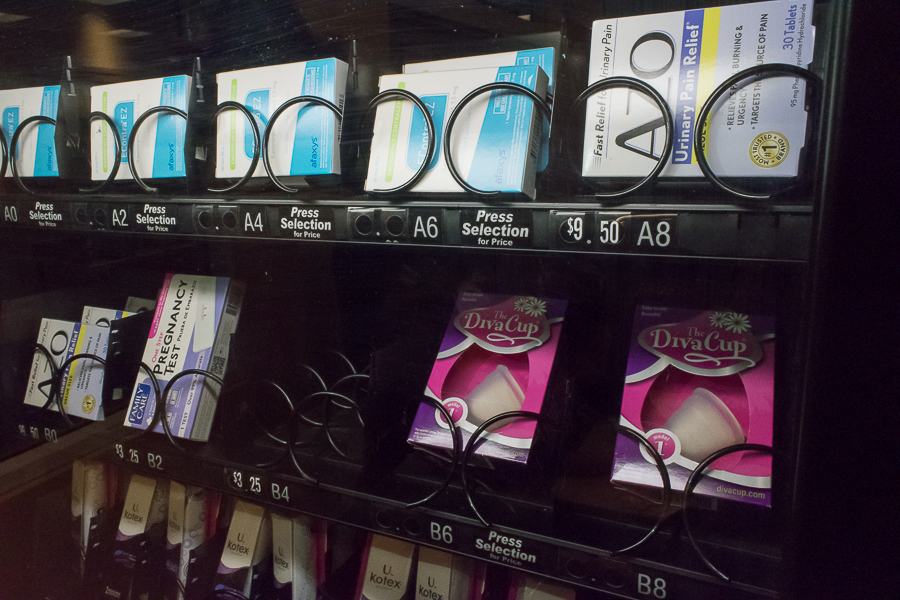
UC Davis installs Plan B vending machine

ALEXA FONTANILLA / AGGIE

ARC vending machine sells morning-after pills, emergency contraceptives, condoms, other birth control

UC Davis joined several universities in the United States in implementing a vending machine that dispenses morning-after pills, condoms, other forms of birth control, tampons and lubricant on March 31. The vending machine, located in an Activities and Recreation Center (ARC) study room across from the Amazon mailboxes, also sells Advil and Tylenol.

Parteek Singh, a former ASUCD senator and a fourth-year managerial economics major, has worked with the Student Health and Wellness Center (SHWC) and Student Health and Counseling Services (SHCS) since the fall of 2015 to advocate for this vending machine. Singh believes the discrete, readily-available and convenient ability to purchase emergency contraceptives and birth control on campus will bolster reproductive health and promote safe sex.

“Fall of 2015, I ran for ASUCD elections, and the Plan B vending machine was one of my platforms,” Singh said. “My friends proposed this idea, actually. They told me about a Plan B vending machine in Pennsylvania — Shippensburg University. At the time, this seemed like one of the most impossible things to do, like ‘What? You’re running on a Plan B vending machine? That’s never going to happen! That’s going to be so expensive!’ People were excited but it didn’t seem very realistic at that time.”

Lack of easy access to birth control and emergency contraceptives in a college town teeming with thousands of young adults seemed like a strange juxtaposition to Singh. He began to explore some of the obstacles UC Davis students faced regarding safe sex and proper reproductive health.

“I talked to more of my friends, and there was some concerns brought up about there being only one 24/7 pharmacy, Safeway in North Davis,” Singh said. “My friends shared some incidents where they went to get some Plan B on a Friday night, and the store was all out. And they weren’t getting a new shipment until Monday. These stories and talking to my friends persuaded me to run on this platform. Also, with the Plan B vending machine, you don’t have to face another person when you buy this.”

Evelyn Aron, a second-year anthropology major, supported the idea of the Plan B vending machine but is unsure if it was located in the best place.

“It should be somewhere else,” Aron said. “Maybe the Student Wellness Center or somewhere where students go for those things, not the ARC.”

Singh understands student skepticism about the location, but he explained how temperature affects contraceptive drug efficacy and degradation, which limited the location options.  

“We looked at a couple options on campus for where to put it,” Singh said. “The original option was to have it 24/7 available, and we were thinking outside the MU [Memorial Union], maybe outside the SCC [Student Community Center]. The machine doesn’t only have emergency contraceptive, it has other medicine too, and with the temperature change — say, over the summer — it gets really hot. It wouldn’t be stable to keep the medicine in the machine. We decided on the ARC. It’s located inside one of the study rooms. People know where the ARC is, people know where the study rooms are, and at the same time, it’s still kind of discrete and private because it’s inside the study room and by the Amazon box. The fact that it has other medicine and other products in it, it doesn’t necessarily mean the person is buying Plan B.”

Emilia Aguirre, a sexual and mental health awareness educator at the SHCS, worked closely with Singh in advocating for the machine, a process that spanned well over a year. The interim director of SHCS Cory Vu also supported Singh’s project.

“SHCS has been working very closely with Parteek and was instrumental in gathering the research, assessment of student need and data to offer contraceptive vending machines,” Aguirre said. “My role was essentially to get everyone in the same room and get the conversation going. Overall, it was a very positive experience.”

Singh views this vending machine as a step in the right direction amid the current presidential administration’s restrictions on sexual health clinics like Planned Parenthood. However, in advocating for increased sexual health and availability of medicine, Singh understands conflicting ideologies about reproduction will always be present on a college campus.

“I think this is good news,” Singh said. “[It’s] something finally good to hear after all the moving back on women’s health rights and LGBT rights that’s been happening because of the new administration. I remember someone I was friends with telling me how some girl was sitting next to him. My picture popped up on the girl’s news feed and she was yelling out, ‘I hate this guy — he’s trying to bring an abortion machine on campus!’ or something. And I was reached out to by a pro-life student organization to introduce a pamphlet in the vending machine avoiding the idea of abortion completely. We had a genuine conversation.”

Singh’s initial proposal was rejected by the school, so he had to reform the venture. He reintroduced the project as a more all-encompassing student health-oriented machine, with headache and pain medication alongside the morning after pills and condoms. After an arduous process beginning in the fall of 2015, the vending machine was finally approved this past winter. In December 2016, Singh ordered the vending machine, which is on a two-year lease.

“One of the hurdles we faced was if it was legal in California pharmacy bylaws,” Singh said. “But it is legal, and the director of the SHWC told us that if it was legal, that she was for the idea. The goal was to get their support and then take it to Student Affairs and get them to pay for the machine. I met the vice chancellor and said ‘give me another chance, let me present this idea again.’ During that time, I changed the concept from a Plan B vending machine to a health and wellness vending machine and added more products, so it’s less controversial.”

After this, Aggie Studios helped Singh conduct surveys to gauge student interest in the project. Singh then reintroduced his idea to the SHWC and presented his project as wholly boosting student health and wellness — not just sexual and reproductive health. He finally got approval from the SHWC around last Spring Quarter, and the vending machine was installed on March 31.

“It’s just amazing to see this on campus,” Singh said. “When I heard the news that we got this on campus over spring break, I went there on Sunday night and we took a picture and I posted it as my profile. People were really excited. It was shared by 1,400 people. I see this as my baby! When you go into these meetings with bigger directors, at least one person in the room is like, ‘Who’s this kid?’ But while I’m here, I wanted to fight for this machine. That was my journey with this vending machine.”

The project has the potential to spread to more schools — three other campuses have reached out about the machine to Singh, who also plans on speaking with students senators from different UC campuses about the venture.
Written by: Aaron Liss — campus@theaggie.org

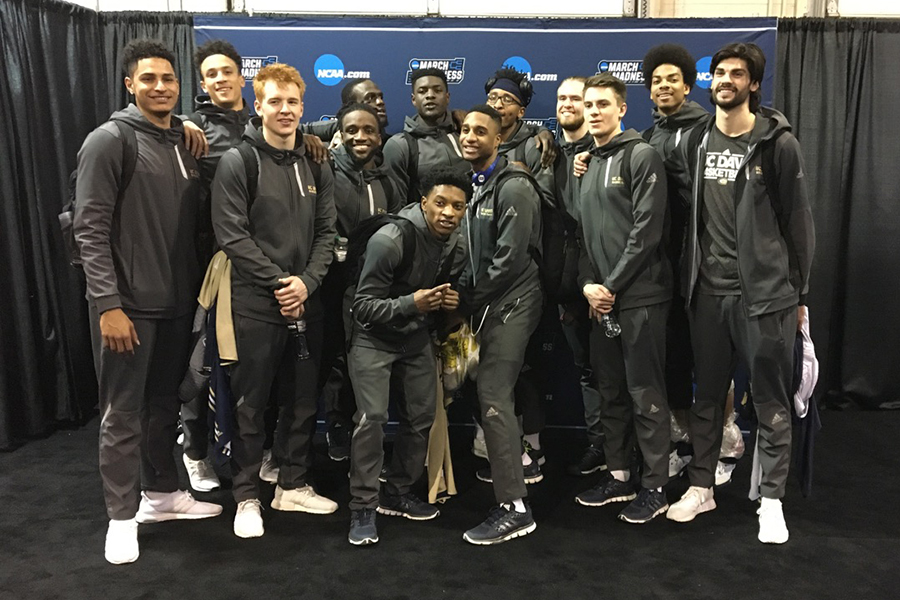
Experiencing March Madness

UC DAVIS ATHLETICS / COURTESY

Men’s basketball team reflects on historic NCAA run

On Saturday, March 11, the UC Davis men’s basketball team defeated UC Irvine 50-47, winning the Big West Tournament for the first time in school history and clinching a spot in the NCAA Tournament. While larger sports programs like Duke or UCLA may see a trip to the tournament as a mere formality, for schools like UC Davis, it is considered to be another step in securing a place in the world of college basketball. Although the six days following the win over UC Irvine proved to be daunting, they were some of the most memorable days in the lives of both coach and player alike.

For alumni, students, faculty and members of the surrounding community, the tournament appearance was a monumental opportunity for the Aggies, and the players and coaches knew this. Assistant Coach Kevin Nosek spent his childhood in Davis, eventually attending, playing basketball for and graduating from the university in 1999. He has been part of the UC Davis family off and on for over 20 years, and, as a result, this experience was extra special.

“It was something not only that have I been working on as a coach, or dreamed about as a child,” Nosek said. “As an alum, I do feel as though I carry the torch for many, and I take a lot of pride in that, and that was a really special moment to be able to share that moment with so many alums across the nation and across the world.”

This civic pride was also felt by outgoing senior guard Darius Graham, who grew up in nearby Sacramento. For Graham, while March Madness was something that he often thought and dreamed about, the magnitude of the situation did not hit him right away.

“I didn’t understand how big it was until we got back from Anaheim,” Graham said. “The amount of people that were blowing up my phone, the amount of news people that were trying to contact me and get an interview, just how big it was for both Davis and Sacramento.”

The ambition to experience March Madness didn’t start with that win, however. According to both Nosek and Graham, inklings of March basketball came during the opening moments of the preseason.

“For this team, we scheduled the trip to Costa Rica for a tour this past summer because we knew we had a team that could compete for a conference championship and potentially move on,” Nosek said. “So, a year ago now is when we really had an idea that this team had some special component to it.”

From there, it was a long journey to make those dreams of March Madness a reality. Both Graham and Nosek were there two years ago when the team lost to Hawai’i in the Big West Tournament in what had, at that point, been the most successful season in the Division I era of UC Davis basketball. It was that heartbreak that guided those who played for and coached the team to drive forward and finish what they had started.

“I told them that I vividly remembered my sophomore season,” Graham said. “Losing to Hawai’i in the Big West tournament, walking off the court, and just all the things that came about with that. I was very emotional at that time, and I knew that these opportunities don’t come across a lot. So I was happy that we got this opportunity again, a lot of the seniors were happy to get the opportunity again.”

On March 12, “Selection Sunday,” it became official. Over the next five days, the team found itself hopping between Davis, Dayton, Ohio and all the way to Tulsa, Okla. Between the hectic travel and the newfound national spotlight, it would have been easy for the team to get caught up in the moment, but the players never allowed themselves to lose sight of the final goal.

“Motivating these guys — clearly not an issue,” Nosek said. “They were motivated to give everything and take care of everything they needed to get taken care of.”

Graham echoed this sentiment when he reflected on the hectic week that preceded the tournament. He credited the coaching staff, led by head coach Jim Les, with keeping the team on its toes. Les already had his own fond memories of the NCAA Tournament, having coached his alma mater Bradley University to the Sweet 16 in 2006. He drew from this as he tried to motivate the Aggies.

“He understood,” Graham said. “Even before we got to playing tournament, Coach Les was telling us ‘You have to be able to block out the noise. Just like when you’re not doing good, and people are talking negative about you, you have to block out that noise, you’ve got to same thing when things are going very good.’”

While the play-in game, a recent addition to March Madness, is seen by some as a middle-ground between conference tournaments and the NCAA Tournament, for schools like UC Davis, it is a time to make a name for the university before stepping into the round of 64. This was March Madness, and if anyone asked coach Nosek, the entire event started even earlier than that.

“I think the moment you start the Big West Conference, you’re beginning March Madness,” Nosek said. “And the moment you lose a game in the Big West Tournament your March Madness is over.”

The Aggies used this mindset to push through into the round of 64, eliminating any of the doubts about the play-in game when they defeated North Carolina Central 67-63 in front of the entire nation.

From that point, as the 16 seed, the Aggies had no time to relax. In the history of the NCAA Tournament, a 16 seed has never defeated a one seed, but the players and coaches refused to pay attention to that.

“That’s the opportunity you want,” Nosek said. “In order to move on, those are the types of teams you’re going to have to beat and try to compete with and that was what all of us wanted as competitors.”

For Graham, it was just another game. While they may not have faced schools like this within the tournament, those opponents were the caliber of players whom he and the rest of the Aggies had played throughout their playing careers. They went out and competed against Kansas just as they did every other team.

“We couldn’t go in there giving them the respect that they wanted,” Graham said. “They had to earn that respect from us, and they did at the end of the game.”

While the team was unable to overcome that hurdle, eventually falling 100-62, both Graham and Nosek have nothing but fond memories of their March Madness experience. For Nosek and next season’s returning players, it was a season off which to build off of — and some extra motivation to go even further next year.

For seniors like Graham, it was a fitting end to a time in his life that he will always look back on fondly. While he can no longer help the Aggies on the court, he hopes that his time with the returning players can help them when he is no longer there.

“The crazy thing is when you go back two years ago to that senior class,” Graham said. “There was a lot of things that they did verbally, but there were a lot of things that those guys did that I didn’t even notice until those guys left. So there’s going to be things that those guys notice that we did and that was done without being said. They’re going to appreciate that kind of stuff. Now, they know that they can win, they’re winners. They know what it takes to win, and they can move on from that. I think the future is really bright.”

The memories of March Madness will linger with all who were involved with it. It will be a snapshot of a special time that coach and player alike got to spend with a group who joined together as a family and did what no other team in the history of UC Davis has been able to do.

For that, their legacy will live on well past their time with the school.
Written by: Bradley Geiser — sports@theaggie.org

Humor: Student who walked up to 3rd floor of Shields thinking of becoming exercise guru

How a student turned into an exercise icon by bravely going where people go all the time
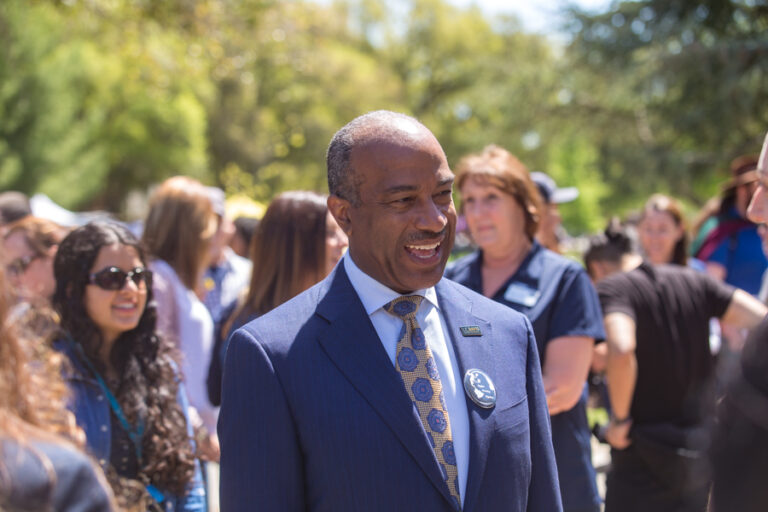
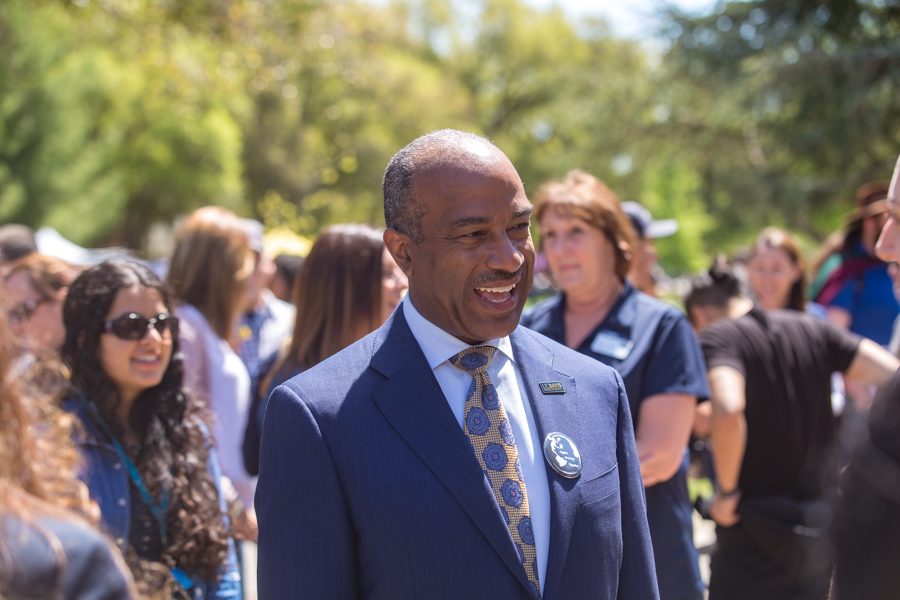
Students exercise in all kinds of ways on campus. Some bike. Some run triathlons. Some go to the ARC (boring). But above all there are those who brave the trek all the way up to the top floor of Shields Library. Those people are the true heroes.

“It’s difficult sometimes to be such an exercise icon in my own mind,” said Trevor Slutt, a regular on the top floor of the library and engineer who allegedly helped design the 360-degree ice wall that keeps the ocean contained on the flat earth. “It’s a lot of responsibility, but I feel as though I have a duty to share my passion for ball-busting exercise with the rest of the student body. So I’ve decided to become an exercise guru in order to encourage my fellow Aggies to become fit enough to climb the stairs to the top floor of the library while only sweating a medium amount.”

Slutt is turning out to be quite the inspiration on campus by encouraging students to praise themselves for doing simple “fitness” tasks.

“I walked a different path to class today to change up my walking routine,” said Helen Ellen, a fourth-year exercise biology major and human coffee grinder. “It wasn’t actually any longer. In fact, it was half as long. But what I was really doing was exercising my mind by figuring out the shortest way to get to class. And that’s something really special.”

Ellen is not alone.

“I was really inspired by Mr. Slut,” said Rich Squirt, a first-year computer science major and a breakout star of TLC’s My Strange Addiction for his episode about being addicted to wearing as many jackets as possible. “I decided to stop staying on the first floor of the library all the time. Instead, I’m just going to stay home and exercise my right to do absolutely nothing. And maybe I’ll finally find my son.”

Trevor Slutt has forever changed the UC Davis campus. He should be celebrated for bravely climbing up the two flights of stairs that lead to the library’s third level and inspiring a generation of student-athletes.
Written by: Brian Landry — bjlandry@ucdavis.edu

(This article is humor and/or satire, and its content is purely fictional. The story and the names of “sources” are fictionalized.)

Humor: Trouble brewing — Gary May shouts out UC Riverside Aggies on local game show

JAY GELVEZON / AGGIE

New chancellor already in hot water before stepping foot in office


A few months after being assigned his new role, future chancellor Gary May has already made a huge mistake. Appearing on the hit television show Jeopardy!, May introduced himself as the future chancellor of “UC Riverside.” He then added a “Go Aggies” to the end of his introduction, which also featured a confession of his love for Star Trek and highlighted his creation of Georgia Tech’s Summer Undergraduate Research in Engineering and Science.

This episode of Jeopardy! was centered around administrative officials. May’s recent promotion to the helm of UC Davis made his appearance on Jeopardy! even more important moving forward. It provided free publicity to a university that is often overlooked despite being one of the best schools in the nation.

“It was a missed opportunity,”  former chancellor Linda Katehi said. “He will learn on the job, but this was something that would have really helped the school.”

May has since apologized to the school and Aggie fans across the country. He immediately flew back to Davis from Jeopardy!’s Los Angeles studios to make amends with the community.


Some students, however, are not impressed with May’s national gaffe.

“The dude was on TV and had a great opportunity to help us get some more exposure,” said avid Jeopardy! watcher and third-year mechanical engineering major Thomas Wilkes. “We can’t all be the basketball team — that was great for the school. But this, what May did, dang. Just dang. So close.”

May admitted to feeling bad and has pledged $100,000 to the College of Agricultural and Environmental Sciences to fully show his commitment to what the school has to offer and to help further the goals of what Aggies stand for.

One of the points that May did make was the significance of all the UCs sticking together. While he is apologetic about giving the wrong school a shoutout, he acknowledged that when one UC wins, they all win. May’s press conference upon his return to Davis made that very clear. As the strongest public university system in the nation, the significance of growing together has been made clear.

May seems to understand his mistake, but has also been incredibly supportive of Riverside and all other UCs. He said he wished he could give a shoutout to all of the schools, not just his own — a sentiment shared by many members of the community.
Written by: Ethan Victor — ejvictor@ucdavis.edu

(This article is humor and/or satire, and its content is purely fictional. The story and the names of “sources” are fictionalized.)

The Age of Chance

AMY HOANG / AGGIE FILE

More than just the artist with no label, Chance has altered the music scene

Back to back tours. Best Rap Performance. Best Rap Album. Best New Artist. The past year has been a time of achievement and maturity for 24-year-old Chance the Rapper. With his ascent to fame and influence, Chance is no longer just the boy from Chicago who got suspended from school for 10 days. Chance recorded his debut mixtape, and then later recorded Acid Rap while tripping on, well, acid. There is more to him than the fact that he created his success without a label — that’s just a part in his championship of the music game.

Fame to his degree without a record label is of course an accomplishment worth recognition and admiration. Keep in mind, however, this is also the result of a configuration of lucky situations — the classic “right person heard him at the right time.” The real merit does not solely lie here. I stated in a previous article that Chance’s title as “the most famous record-less artist of our time” would earn “a top place on my list” of the best albums of 2016. I take back my claim after further consideration. Chance has differentiated himself in more substantive ways, ways that prove him more masterful and important as an artist. And that earns him the number-one spot on that article’s list.

The praise for Chance’s recordless artist title must be taken with a grain of salt. Indeed, he is not humble about it — Big Fella roars it. “No Problem” off of Coloring Book was entirely about record labels trying to claim him — jokingly threatening “if one more label try to stop me.” He petitioned to make stream-only songs eligible for a Grammy nomination. This could be interpreted as a philanthropic act for music creativity, but it’s no coincidence the success of this petition allowed his songs to be nominated for awards (which he won).

Being an unsigned artist does not take Chance out of the music scene; he is an active member of it, pulling similar high-status stunts other musicians have done. After all, he strategically announced the surprise of a new album a week before it dropped — very Beyoncé-esque. He still has high-production nationwide tours, and he still surrounds himself with a possé of rappers like Future and Kanye. He has in no way exiled himself from media attention; he is not the lone wolf people often perceive him as. What’s funny is that he doesn’t hide it. He says it himself: “I don’t make songs for free/ I make ‘em for freedom.” But that’s also the point — he utilizes his fame now for a purpose.

Chance is obvious in his attachment to and involvement in the music scene with no hidden agenda; I think he wants us to notice it, to see past his “no label” label — he is not exempt from change as an artist. His label now is himself, what he speaks for — he makes songs for “freedom.” To be even a minor character in the music industry, you cannot be a shadow. You must be the light. Even with his humility, deep roots and compassion, he has to play the game. He knows that. He made his platform of the underdog turned rap star, and he’s currently making the careful steps to shed himself of such a close-minded and superficial label. He’s focusing on the “so what”: what can he represent, what can he say, what he can capitalize on, what impact can he make with his personal label?

His label is altering into a humanitarian rapper. He is a voice of reason beyond his years; he is an optimistic and masterful poet; he is a kick-ass dad on his Instagram stories. Part of his aura is his humility to know his roots, to know himself, to understand the power he holds. He can address the responsibility that he has and his listeners directly — he can call for a better and more hopeful future “so his daughter can have somewhere to play.”

Likewise, something greater can be added to his list of accomplishments: his recent donation of one million dollars to the Chicago Public School (CPS) system. This act that has been a concrete step in the solidification of his new label — his platform was strategically made for the purpose to do good, to make immediate and direct change. Indeed, in order to even enter his website, the viewer is presented with the option to donate to CPS — he encourages us to be equal members in the future he plans to experience.

Chance is now setting the precedent of what an artist can do. He not only altered how an artist can distribute music; he not only created unconventional ways an artist can reach fame; he not only set the standard for great music. He set the expectation of good — musically and morally.
Written by: Caroline Rutten — arts@theaggie.org

Hidden in Davis

JORDAN KNOWLES / AGGIE

Three spooky spots off the beaten path

Davis, California — a sleepy, quaint college town where grunge and grime is there for only those who keenly seek it. Davis’ immaculate crop fields and pristine storefronts on blocks labelled in alphabetical and numerical order reassure its residents of their security. But when those special seekers look hard enough, they may find a surprisingly different story. An entire bridge covered in graffiti, a mysteriously abandoned house on campus and the site where 157 pounds of human remains were once stored all lurk in the shadows of the town of Davis.


Stevenson Bridge

Seven miles from the edge of campus between the towns of Winters and Davis lies a graffiti-covered bridge that gives car traffic passage over the murky waters of Putah Creek. Dubbed “The Graffiti Bridge” by locals, Stevenson Bridge’s colorful exterior and gritty aesthetic has attracted taggers, bikers and photographers alike and has inspired many offbeat projects including a miniature library, a music album entitled “Memories of Graffiti Bridge” and a softcore pornography shoot.

“It’s an interesting landmark seeing that it’s super narrow, super run down, but it’s also covered in graffiti so it has a lot of artistic elements to it,” said Scott Cohen, a third-year mechanical science and engineering major and president of the UC Davis Cycling Club, who often crosses the bridge on rides with his team.

Cohen is one of many who noted the bridge’s endearing, ever-changing paintings, as well as Matt Tuggle, Solano County engineering manager, who has been overseeing rehabilitation of the bridge for a decade.

“The paint that’s on it one year will actually change because folks will get out there and change the hues and colors over time,” Tuggle said.

Evan To, a second-year civil and environmental engineering major, who also frequents the bridge as a member of the UC Davis Triathlon Club, explained how part of the intrigue of the bridge was how tags relating to current events — like “Feel the Bern” and “F*ck Trump” — often appeared on the structure.

Beyond its exterior, Stevenson Bridge is only one of three California bridges built in the overhead tie arch style, but has been deemed structurally unsound since the early 2000s. A collaboration between Solano and Yolo counties to rehabilitate it has been slow-moving, but is predicted by Tuggle to be completed by 2019.


Abandoned House

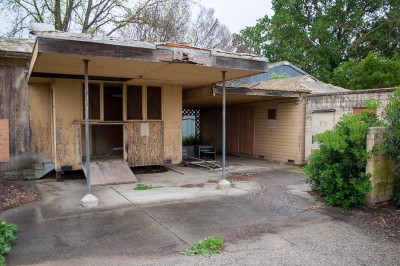
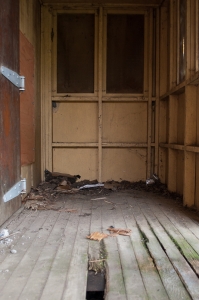
Traveling toward the southern end of UC Davis’ campus, flat beds toting agricultural supplies rumble by modern research buildings, farm technology and a decaying, one-story building that poses an enigma. Framed by spindly trees and overgrown bushes, a yellow-fading-to-brown enclosed porch juts out, its windows either wholly missing or boarded up. Entrance to its interior is now barred by newly installed boards, but broken windows still expose scattered papers, open filing cabinets and a yawning darkness stretching into the depths of the building. And one can still explore parts of the building, including a rusty generator room, dilapidated courtyard and a wide space one might presume to be a garage, all which remain a mystery even to John Zertuche,  the director of UC Davis Building Maintenance Services.

JORDAN KNOWLES / AGGIE

“The history of it, I could not tell you what it was” Zertuche said. “That I just don’t know. It’s just one of the older buildings slated for demolition, timing still being considered. We’re just waiting for it to be removed from the campus.”

Meanwhile, the fading house sits quietly resting; its future a mystery, just as its past.


Human Remains

The story of Davis Lawrence Beale, a former autopsy aide at the UC Davis Medical Center, made national headlines in 2003 when he was convicted for storing 157 pounds of human remains including organs, severed limbs, fetuses and at least two fully recognizable human heads in his former home on Olive Drive and a nearby shed and locker.

Beale allegedly stole the remains over the course of a decade from various Davis medical facilities to dissect for personal interest.  

Lt. Jim Harritt of the Davis Police Department, reported to the San Francisco Chronicle how Beale would place body parts underneath his trailer for vermin to eat until only the bone was left behind for him to collect. Police were tipped off to Beale’s behavior by a passerby who discovered a container of four people’s remains next to a dumpster nearby his house.

JORDAN KNOWLES / AGGIE

Today, Beale’s former home at Slatter’s Court is just a couple blocks away from campus and is a popular affordable housing spot for quirky UC Davis students. According to the Slatter’s Court website, the housing area and trailer park “is an eclectic mix of artists, musicians, students, retirees, and everyone in between” — including the the likes of Beale and the deceased.

Audrey Salbacka, a third-year art studio major and English minor, had never heard of the Beale case and said she was horrified when she found out about it. However, such horrors could just be one of many hidden in Davis.

“It does make me more interested in the history [of Davis],” Salbacka said. “It’s like, this was a small town but got bigger, so I bet lots of really weird things have happened in the past.”
Written by: Kristen Leung — features@theaggie.org

Gary May should donate income from board positions

HANNAH LEE / AGGIE

Promising to donate money to programs benefiting students would show dedication of new chancellor

This editorial board wrote in February that Gary May, the incoming UC Davis chancellor, was a “promising pick” for the chancellor position. Since the editorial was written, however, the Sacramento Bee reported that May is set to earn $325,780 from serving on two corporate boards, both of which are in the defense and technology industry. May received $288,280 in 2015 from the Virginia-based defense and technology company Leidos and $37,500 from the defense, technology and medicine lab Charles Stark Draper Laboratory.

While holding external board positions is neither inherently problematic nor by any means illegal, the optics are pretty lousy: Linda Katehi, who served as UC Davis’ chancellor from 2009 to her resignation last summer, served on various corporate boards, and these moonlighting activities prompted widespread and fierce condemnation, which likely contributed to her ousting as chancellor. If May wants to avoid the same mistakes of Katehi, he can start by promising to forfeit any income he receives from corporate boards.

The circumstances surrounding Katehi’s paid board positions were significantly different than May’s. She faced just criticism for serving on the board of John Wiley & Sons, a textbook publisher, which undeniably screamed conflict of interest. How could someone who profited from textbook sales claim to represent and serve students who constantly struggle to pay for exhorbitantly expensive textbooks?

Regardless, the fact that May will also make a substantial income from serving on these external boards, in addition to his $495,000 salary (85 percent of which is taxpayer-funded) is troubling. Now, it could be that all of the candidates for the UC Davis chancellor position held seats on corporate boards, but a pragmatist would assume that UC Davis students would not respond positively to their chancellor moonlighting on paid board positions, given the salience of the issue.

This student response was evident last week, when a group of students protested May’s appearance on campus, chanting “No war profiteers are welcome here,” and shouting over his public meeting with students.

May has indicated that he will not give up his two board positions. According to a University of California spokesperson, “[The boards] are not conflicts. For example, the Leidos board activity has resulted in millions of dollars in philanthropic gifts for Georgia Tech, and the company also hires Georgia Tech students.”

If May’s board positions can help employ UC Davis graduates and bring in significant revenue to the university, the Editorial Board can accept his activities. This would indicate a willingness to be transparent and would show that he is fully committed to UC Davis as opposed to private interests. We do call, however, for May to donate his income from his board positions to services and programs that benefit UC Davis students.

Katehi attempted to remedy her situation last year by announcing that she would donate her textbook stock to student scholarships. But that was too little, too late. May has the unique opportunity to show from the outset that he knows that serving as the leader of UC Davis is his full-time job.

The Editorial Board still believes that Gary May is a promising pick for chancellor at UC Davis. But donating income from his board positions would be a show of good faith and an indication that May understands the concerns of his new student body.

Finding new ways to keep up old traditions

NICKI PADAR / AGGIE

College students find ways to keep their religion present while in college

For students who grew up with organized religion, it can be difficult to include their practice in the college starter-pack when they move away from home for the first time. Even though there seems to be an infinite number of new opportunities to try once the college journey begins, many students also find ways to keep their faiths and traditions alive despite other distractions.

Pastor Jocelynn Hughes has lead the The Belfry, UC Davis’s Lutheran/Episcopal ministry, for about eight years and helps both Christians and non-Christians experience Lutheranism. Holy Week, the week leading up to Easter, was a particularly busy one for Pastor Hughes.

“Some services are really important to students more than others depending on how they grew up, so here we try to offer as many of the holiday services as we can,” Pastor Hughes said. “For Holy Week we had services for each holy day, such as Good Friday, in preparation for Easter Sunday.”  

Although spring break does not coincide with the Easter holiday, this did not stop students from celebrating. While it might be discouraging to students who have never celebrated their religion away from home, The Belfry, located just off campus, and other organizations offer services to bring students together and celebrate as a community.

“Being able to offer these services that students may have experienced at home with their families is comforting because the ones that don’t go home for Easter weekend really appreciate having the ability to just walk across the street and celebrate here,” Pastor Hughes said. “A lot of these services encourage more participation because our ministry is so small and it gives students a chance to dive in in a new way.”

For students who had a good experience with the Christian community growing up, Pastor Hughes believes that having a community in their college town is very important and helps students stay connected to their faith. However, many students that The Belfry connects with are not religious themselves.

“Something that sets this ministry apart from the others is that we don’t have all of the answers, and we want you to come with your questions because we’re all on this journey together,” Pastor Hughes said. “Many students are in a questioning mode in their lives, and this can be a really fertile time to ask those hard questions and start seeking out what works for you as an adult.”

For students who are used to a more structured religious path, UC Davis organizations such as the Muslim Student Association, the Newman Catholic Center and Cru, an on campus Christian ministry, provide students with opportunities to stay connected to their faiths while away at college.  

Jared Fong, a fourth-year environmental science and management major, has been an active member of Cru since his freshman year and found an even stronger community than the one he was used to at home.

“I wasn’t looking to find a Christian group on campus, but Cru was the first time I saw a community that was generally loving to each other, and that was very attractive to me,” Fong said. “Going through the school years was not always an easy ride, but Cru has always encouraged me to see my relationship with God as the most important thing.”

According to Fong, college is the time that makes or breaks students’ faith as many people fall out of their practice once away at college. He recommends participating in a student organization because it helps provide structured opportunities to practice faith. For example, Cru hosts Bible studies every week in addition to weekly meetings on Thursdays in which students worship, sing songs and host speakers.

For Leah Ahdoot, a second-year biological psychology major and an inreach chair for Aggies for Israel, attending school at UC Davis was a serious transition from the schooling she was used to.

“I went to a Jewish school my entire life and coming here was the first time nothing was organized like that,” Ahdoot said. “The first week of freshman year I went to Hillel [a Jewish campus organization] just to see what it was, and I ended up meeting my best friends and roommates now.”

According to Ahdoot, when students live with people who practice the same religion and similar beliefs as them, it becomes easier to remember the traditions they were used to back home and keep those alive throughout their college years.

“The first holiday I experienced on my own, Yom Kippur, was during the second week of fall quarter my freshman year, and it was different because my schools growing up would cancel classes during the holidays so we could all go to temple,” Ahdoot said. “However, the Hillel organized some activities and we were able to go to temple and fast on our own, but it was still different because you’re not with your family or in your usual place.”

Joining Aggies for Israel, a student organization dedicated to preserving the bond between the United States and Israel, allowed Ahdoot to have more friends who were Jewish and have the same practices and understanding of what she was going through.

“Through Aggies for Israel I helped make a Passover Seder for Tuesday night of Passover when everyone came together since we couldn’t celebrate at home,” Ahdoot said. “It was a way for us to have a little piece of home.”

According to Ahdoot, college students are generally at points in their lives where they value other things more than their faith. However, joining Aggies for Israel was a way for her to reconnect with a familiar part of her life and find a motivating group of friends to help put life away from home in perspective.

“Keeping my Jewish faith alive has helped me solidify the long-term values I want to have and what I want to see in myself and other people I surround myself with whether they’re Jewish or not,” Ahdoot said. “Students shouldn’t be afraid to branch out and meet new people of various faiths and go out for different organizations because it might be one of the best experiences you’ll have had in college.”
Written by: Gillian Allen — features@theaggie.org