55.5 F
Davis

Davis, California

Tuesday, December 23, 2025
Home Blog Page 609

Senate constitutional amendment to limit budgetary autonomy of UC Regents

BRIAN NGUYEN / AGGIE FILE

SCA 14 would implement changes in 138-year-old governing system of UC Board of Regents

On May 23, California State Senator Ed Hernandez proposed Senate Constitutional Amendment 14 (SCA 14) with the primary objective of curbing the budgetary autonomy of the University of California Office of the President (UCOP) and implementing changes to the UC Board of Regents.

According to a press release from Hernandez’s office, the reports from the state audit following the UC tuition hikes created a need for more accountability in how the university system is governed.

Some of the proposed changes include more faculty, student and staff representation on the Board of Regents as well as the presence of the Chancellor of the Community Colleges. Furthermore, SCA 14 would reduce the appointed members’ terms from 12 years to four years and set a limit of three terms.

The press release added that constitutional authority of the UC system was last amended in 1976. At the time, the state’s population was around 20 million people and the annual tuition for in-state UC students was $630 (about $2,700 in today’s dollars). The state population has since doubled and tuition prices have risen to $13,500 for California residents.

“California has grown and changed since 1976,” Hernandez said in the press release. “It is only natural that we have a conversation about how the University of California’s governance can best reflect and adapt to those changes.”

In regards to budgetary practices, if SCA 14 passes, UCOP will have its budget allocated by the state legislature.

Duane Wright, a graduate student in the UC Davis Department of Sociology and a member of the UC Student Workers Union (UAW Local 2865), expressed his support for countering the unchecked power of the UC executives while still maintaining concerns regarding transparency within the UC administration.

“As a defender of public education, I support efforts to counter the unchecked power of UC executives,” Wright said. “However, I also know that Sacramento has been complicit in the privatization of the UC and has often looked away while the administration does what it wants.”

Wright said that he hopes to see some changes integrated into the university system as a whole.

“It has always been students and workers who have been the fiercest fighters for accessible quality public education, and I want to see reforms in the UC system that would increase student and worker power within decision-making structures of the university,” Wright said.

According to the LA Times, a number of regents have spoken out against legislative control of the UC, emphasizing that the 10 UC campuses developed into the nation’s top public research university under an autonomous regents system.

The article also included concerns from Regent John A. Pérez, a former Assembly speaker, who asserted that UC budget practices should be handled by regents rather than legislators.

“The level of depth that’s required to right-size this and to deal with the complexity is appropriately, both constitutionally and functionally, with this board,” Pérez said at a UC Regents meeting.

Ricardo Vazquez, the UCOP director of media relations, echoed the same sentiments with regard to maintaining financial autonomy, expressing that amending the state constitution based on the audit findings would be a mistake.

“We continue to believe that the UC Board of Regents is best placed to provide fiduciary oversight to the Office of the President, which includes appropriating the Office’s budget […] UC’s constitutional autonomy has ensured that the university’s mission, vision and values emanated from its students, faculty and staff, free from political or sectarian influence,” Vazquez said via email.

Vazquez also noted that UCOP is currently implementing all of the state auditor’s 33 recommended changes.

If SCA 14 passes with a two-thirds vote from the state legislature, it will be scheduled to appear on the November 2018 ballot.  


Written By: Kimia Akbari — campus@theaggie.org

Your National League MVP and American League Cy Young are not who you think they are

ARTURO PARDAVILA III [(CC BY 2.0)] / FLICKR (changes made)
If you’ve ever watched the movie Moneyball, you’ve learned that the mainstream statistics in baseball, namely Home Runs (HR), Batting Average (BA), Runs Batted In (RBIs), Wins (Ws), Strikeouts (Ks) and Earned Run Average (ERA), do not tell the whole story of a player’s success. In this day and age, sabermetrics, a quantitative analysis of a player’s statistics, are a much more comprehensive and important approach in determining a player’s value.

The MLB season is over a third of the way complete, and there have been many standout performances that merit some serious discussion about whether or not players’ Most Valuable Player (MVP) and Cy Young-like numbers can be backed by sabermetrics.

Here are my frontrunners for each major award thus far:


American League MVP: Aaron Judge

Home Runs: 17

RBIs: 38

Batting Avg: .326

Looks like an MVP, right? Judge has been a solid prospect in the Yankees farm system for a few years now, so his success should not be that surprising. We can imagine it might even be sustainable, but that is where sabermetrics say otherwise. Judge currently holds a 70.7 contact percentage, which indicates that his batting average will fall immensely. Compare Judge’s contact percentage to that of Daniel Murphy, the second baseman for the Washington Nationals  and a consistent .300 hitter who batted .347 last year and is batting .325 this year. His contact percentage stands at 89.6 percent, for reference.

Additionally, Judge is the only player in the league to have a .300 batting average while also landing in the top 20 in strikeouts. That should signal huge regression in that department as well.

Judge is not the triple crown threat he seems — his mid .200s batting average will be palatable with the immense strength he offers — but he is not a triple crown candidate nor an MVP.


National League MVP: Ryan Zimmerman

Home Runs: 15

RBIs: 44

Batting Average: .368

Ryan Zimmerman has been the biggest surprise of the 2017 season. From 2006-2012 he was one of the premier players on the Washington Nationals, but he soon bottomed out and faded into obscurity after sustaining multiple injuries. In 2017, the story has been different. He has been the best player in baseball and people have been dumbfounded by his resurgence. When looking deeper into the numbers, a sabermetrics analyst would argue that Zimmerman can not sustain this rate of play. Batting Average on Balls in Play (BABIP) is a good indicator of how lucky or unlucky a player is. The average for the league is usually around .290-.300, but Zimmerman stands third in the league at an absurd .403 BABIP. In his career, his BABIP has been .312, so he is due to regress significantly. To put it simply, some of the balls Zimmerman has been hitting have been finding holes —  and not gloves — at an unsustainable pace.


American League Cy Young: Ervin Santana

Wins: 7

ERA: 1.75

Ks: 56 in 77 innings

Walks and Hits/Inning Pitched (WHIP): .844

Ervin Santana has a reputation as one of the most volatile pitchers in the game, but this year he has been absolutely lights out. His numbers are Cy Young-worthy, but by the end of the season he will not even be in the conversation. To analyze Santana’s deserved performance, we will look to a sabermetric statistic called Fielding Independent Pitching (FIP).

FIP is an attempt to isolate the performance of the pitcher by using only those outcomes we know do not involve luck on balls in play or defense; strikeouts, walks, hit batters, and home runs allowed,” FanGraphs Sabermetrics Library clarifies. “Research has shown that pitchers have very little control on the outcome of balls in play, so while we care about how often a pitcher allows a ball to be put into play, whether a ground ball goes for a hit or is turned into an out is almost entirely out of their control.”

While Santana has the league lead in ERA, he stands at a 4.10 FIP. That lands him at 46th in the league. Additionally, BABIP can be used to show that Santana has been getting extremely lucky as well. He has the lowest BABIP in the league by far, at .143. 2nd place stands at .212. Remember how I said .290-.300 was the league average? If you have Ervin Santana on your fantasy team right now, sell high before it’s too late.  


National League Cy Young: Mike Leake

Wins: 5

ERA: 2.24

Ks: 48 in 68.1 Innings

WHIP: .94

I am going to pretend for a second that Clayton Kershaw does not exist, because though he has a higher ERA than Leake, Kershaw has performed much better. All you Giants fans are probably devastated you let Leake walk away after the 2015 season, but fear not, Giants fans, you have other issues on your hands, and there is a “Leake” in these pipes. Though not suspiciously low like Santana’s, Leake has an unsustainable .235 BABIP. The giveaway lies in another stat. I’d like to ponder Mike Leake’s Left on Base percentage (LOB). This measures the percentage of runners that a pitchers strands on bases at the end of an inning over the course of a season. The norm is usually around 70 to 72 percent. Strikeout pitchers have more control over their strand rates, but Leake is absolutely not a strikeout pitcher –– averaging only 6.3 Ks/9 innings –– and his LOB stands at 84.5 percent. That places him at 6th in the league. Guess who is first? Look up, it’s Ervin Santana at a 91.2 LOB. All other guys above “Leakey Mike” strikeout significantly more batters than he does. The sports nerds tell us that some of those stranded runners are going to begin scoring, because they haven’t been thus far.


Sabermetrics is a very complicated subject to understand, and there are a lot of variables to account for. If you love baseball, and you are interested in understanding why certain players are performing the way they are, and what to expect in the future, than this may be something to dig a little deeper into, especially if you are a stats major. Though the aforementioned players are respected pros and would be a valuable asset to any ballclub, they are not going to be the award winners at the end of the year. Regardless, kudos to them for what they have been able to accomplish in 2017.


Written By: Michael Wexler — sports@theaggie.org 


Disclaimer: The views and opinions expressed by individual columnists belong to the columnists alone and do not necessarily indicate the views and opinions held by The California Aggie.

Regents bill university $225,000 in dinners, party expenses since 2012

BRIAN NGUYEN / AGGIE FILE

Private endowment for university business costs reimburses expensive regent dinners

Documents retrieved through a state audit of the UC Office of the President (UCOP) show that UC Board of Regents members have footed the UC with an accumulated bill of $225,0000 since 2012. On January 25, the Regents threw a party costing $17,600 amidst voting to raise student tuition.

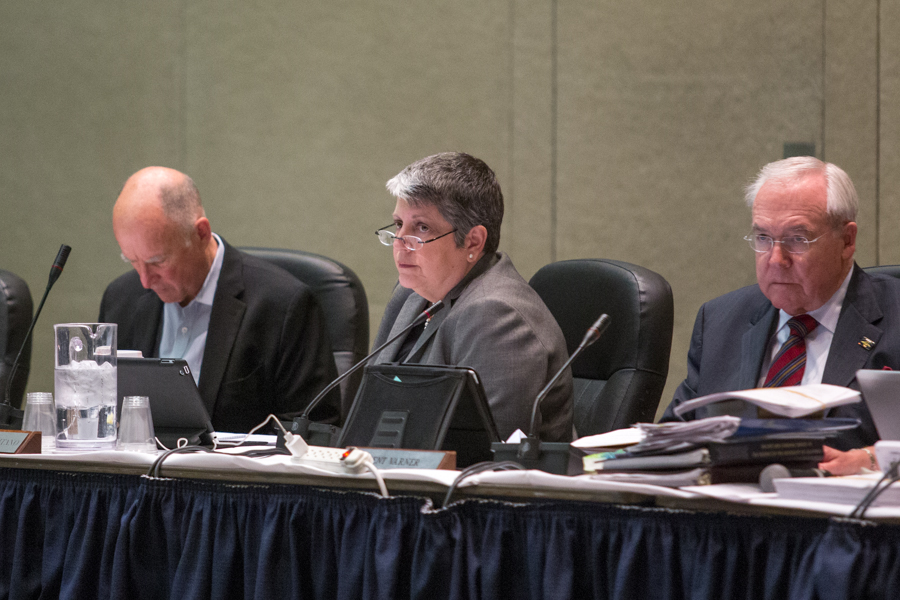
The UCOP reimburses the Regents for the banquets, dinners and parties with private endowment funds given for university business costs by donors. Some regents disagree with billing the parties as a university business expense, such as Governor Jerry Brown and Lt. Governor Gavin Newsom, who reportedly did not attend the January or May parties.

The California state audit alleges that $175 million was found in hidden funds, excessive executive salaries and misleading budget practices. The dinner expenses were discovered through the state auditor’s probing of UCOP records.

Stephanie Beechem, the officer of media relations for the UCOP, responded to the Regent dinners and the ongoing state audit allegations. Beechem explained how the costly dinners and parties are footed by a private donor endowment, the Searles Fund. She said that from now on, board dinners will be paid for by the Regents themselves, absorbing the cost.

“The Office of the President already has begun reviewing its policies governing entertainment and travel expenses as it implements the state auditor’s 33 recommendations to improve the office’s budgetary practices,” Beechem said via email. “The Office of the Secretary of the Regents aligns reimbursement policies to that of the Office of the President and will make the appropriate modification once that review is complete. Up to now, board dinners have been paid for with monies from the Searles Fund, a private endowment that the donor designated for university business costs not covered by state or tuition funds. However, to avoid any question over use of university or university-associated funds, regents will absorb their costs for board dinners from this point forward.”

Itamar Waksman, a third-year international relations major and the Internal Affairs Commission vice chairperson, voiced his disdain for the expensive dinners which have not been paid out-of-pocket by the regents. He is also concerned about how the university system levies lowering student costs with maintaining quality, public reception and accountability.

“The truth is that dinners like these will continue to happen,” Waksman said via email. “A large university system like the UC feels it needs to have events like these in order to continue to attract the administrators and other staff that make this one of the best university systems in the world. Now, this isn’t to say that the optics for this aren’t bad because they are. However, spending $225,000 a since 2012 is really a drop in the bucket. The important question to answer is how does the UC system improve its accountability to the people of California and find a way to lower costs for students while maintaining its quality? If the UC’s find a way to freeze tuition or and give more educational opportunities to disadvantaged communities in our state, then they can continue to have $250 per person dinner parties in my mind.”


Written by: Aaron Liss — campus@theaggie.org

From Rolex to Rompers: What fashion trends throughout the decades say about each generation

DAVID GOEHRING [(CC BY 2.0)] / FLICKR
Millennials abandon conservative fashion of the 70s and 80s

There have been many fashion trends throughout the years that define each generation and its respective cultural identity. But what constitutes the Millennial generation’s typical fashion choices, and how do these express its culture and identity? Navigating through the decades starting with the 1940s, we’ll examine why certain fashion trends spoke to specific generations and why some of these have reemerged in the Millennial generation.

In 1945, the Baby Boomer generation was conceived partly to celebrate the defeat of tyranny and oppression in the world. This newfound liberation paved the way for more progressive fashion, as seen in the notion of menswear for women — even though the country had only given women the vote 20 years prior. The previously controversial off-the-shoulder dresses, wartime garb, drawn-on leg stockings and bikini (thanks, grandpa and grandma!) provided women a more prominent voice in fashion trends. Meanwhile, cat-eye sunglasses, swim caps and bullet bras just scream 1950s. It’s clear that Americans in the ‘50s were expressing themselves more liberally as a continuation of the ‘40s.  

Winklepickers (Google them for a laugh), pillbox hats, babydoll dresses and the “psychedelic trend” reflect the expressive and radical Swinging Sixties. Despite the trials and tribulations of the ‘60s, the country remained in the world of liberated and expressive fashion before falling into the conservative ‘70s and ‘80s (those poor Gen Xers). In addition to pillbox hats, which should definitely make a comeback, other trends that helped finish off the Swinging Sixties included shoulder dusters (A-line dresses), sculpted hats, patterned tights and leggings and ginormous sunglasses that begged the question: Was everyone allergic to the sun or just crazy?

Hot pants (think ground zero for booty shorts), bellbottoms and platform shoes would usher in much more conservative yet innovative fashion trends into the 1970s. The disco era left young Baby Boomers showing up to the club with the highest shoes and largest afros imaginable. Prairie dresses, muumuus, plaid dresses and floral dresses were the “bee’s knees” and would set the precedent for the Gen Xers on what was radical and tubular.

Defined by aerobics gear, punk, side ponytails, parachute pants and the Jheri curl, the 1980s unfortunately has gone down as one of the most critically panned and scrutinized decades of fashion. Pop stars like Michael Jackson, David Bowie and Madonna catered to progressive Gen Xers with big jackets, big hair and pants that made you look 10 sizes bigger. But there was also another portion of the Gen Xers heading in a different direction. Heavy metal and glam rock would distinguish the ‘80s as not only the pop generation, but the punk or rock generation as well. Neon clothes, acid-washed jeans, shoulder pads and cut-off tees marketing metal bands reigned supreme throughout the decade of rock and pop.

The 1990s was by far my favorite decade — but not in terms of fashion. Overalls, the “grunge” look, JNCO jeans, scrunchies in every ponytail and chokers dominated the last decade of the 20th century, prompting me to ask, ‘Why, God, did I have to grow up in the most confusing decade of fashion yet?’ The mid-to-late ‘90s was the first glimpse that Millennials had into the world of fashion. With Britney Spears introducing the tube top, every guy having frosted tips in his hair and the inception of the “schoolgirl” look, the ‘90s serves as one of the biggest mysteries in American fashion.

What about the last 17 years? Uggs, low-rise jeans and those infamous Juicy Couture tracksuits helped ring in the 21st century. Believe it or not, the “Bag Lady” look was actually a thing during the mid-2010s. Looking disheveled in 2005 was actually considered fashionable. The “unforgiving cousin of skinny jeans,” jeggings also came onto the scene within the past 10 years, along with formal shorts. Whether you agree or disagree with the fashion trends of the past 17 years, one thing remains true: Millennials are living in a quite progressive, individualistic era of fashion.

What about the hot fashion items that will define the “teens” of the 21st century? To my surprise, going braless is becoming one of the most trendy fashion statements in the world today. The male romper has also arrived onto the scene, and hopefully the glorified “romphim” leaves as quickly as it arrived. With a considerable amount of college-aged women and Millennials having one-eighth of their buttcheeks hanging out, it’s clear that Daisy Dukes from the ‘70s are making a comeback, making Baby Boomers more confused about these new alterations of trimming more and more jean to show more and more buttcheek. All in all, it looks like fashion is heading in the right direction — or heading straight to the trash, depending on your  personally preferred catwalk look.


Written by: Brody Fernandez — bwfernandez@ucdavis.edu


Disclaimer: The views and opinions expressed by individual columnists belong to the columnists alone and do not necessarily indicate the views and opinions held by The California Aggie.

Frat stars and all stars compete for charity

BRIANA NGO / AGGIE

Greek life and sports life collide for one-night charity event

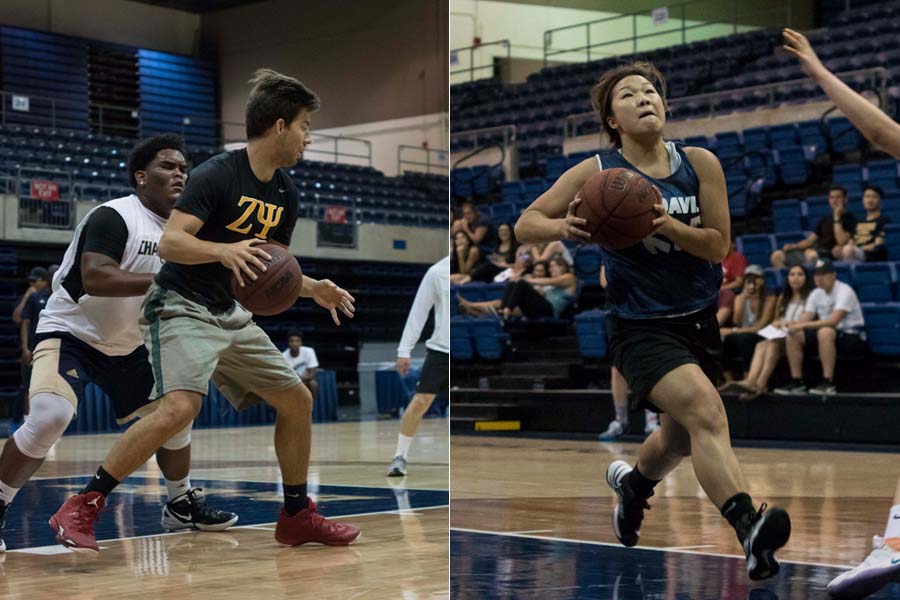
On Saturday, June 3, the doors of the ARC Pavilion opened up for a different kind of basketball game. A Frat Stars versus All Stars charity basketball event was organized by fourth-year mechanical engineering student Nicholas Aikawa, who first got the idea when talking to a friend at the end of Winter Quarter and immediately started planning.


“Greek is only 10 percent of the student population, and it can be sort of exclusive at times,” Aikawa said. “We wanted to branch out beyond that and involve the whole community. That’s why we picked Team Davis […] because it’s local, and we wanted to get the athletes involved.”
Team Davis is a local charity that works with children and adults with physical, intellectual and developmental disabilities. Its goal is to integrate those inside their organization all throughout the Davis community, so an event such as this one was tailor-made with their goals in mind.


The concept was a simple one. There would be two games (a men’s and women’s game) where members of UC Davis’ Greek community would take on different athletes from club sports. The event was presented by the Order of Omega, an organization that aims to shape and honor members of the Greek community who excel both in the classroom and throughout the community.


“These are two of the largest and most influential groups on campus,” Aikawa said. “And being able to unite them and do an event that anyone can have fun at is really what we are trying to do.”
Putting on an event such as this required a lot of work from a lot of people; all of the students who were involved were doing so on a volunteer basis.

The event also attracted members of the UC Davis men’s basketball team to get involved, not as players, but as coaches. Junior forward Chima Moneke, who made splashes both locally and nationally during the Aggies’ historic NCAA run this year, had a lot of fun coaching for such a good cause. Moneke coached the women’s All Star team alongside his teammate, junior guard Michael Onyebalu. He took some time to dissect the game at hand during halftime of his team’s 48-20 win over the Frat Stars.

“I think our girls are well-coached. We’ve got a good system,” Moneke said. “We’re playing great defense and forcing a lot of turnovers.”
The event also required commitment from students. Greek star and first-year political science major David Aparacio jumped at the opportunity to get on the basketball court after playing for three years in high school.
“I feel like right now, Greek life in the UC Davis community is being questioned a lot,” Aparacio said. “So we have to prove them wrong by playing for a good cause.”
In the end, the game was not about a win or a loss. It was about bringing these communities together and supporting a good cause, and it is a cause that Aikawa hopes will continue for many years to come.

Written by: Bradley Geiser — sports@theaggie.org

The finesse of the human voice

Local a capella group brings community wellness to Yolo County
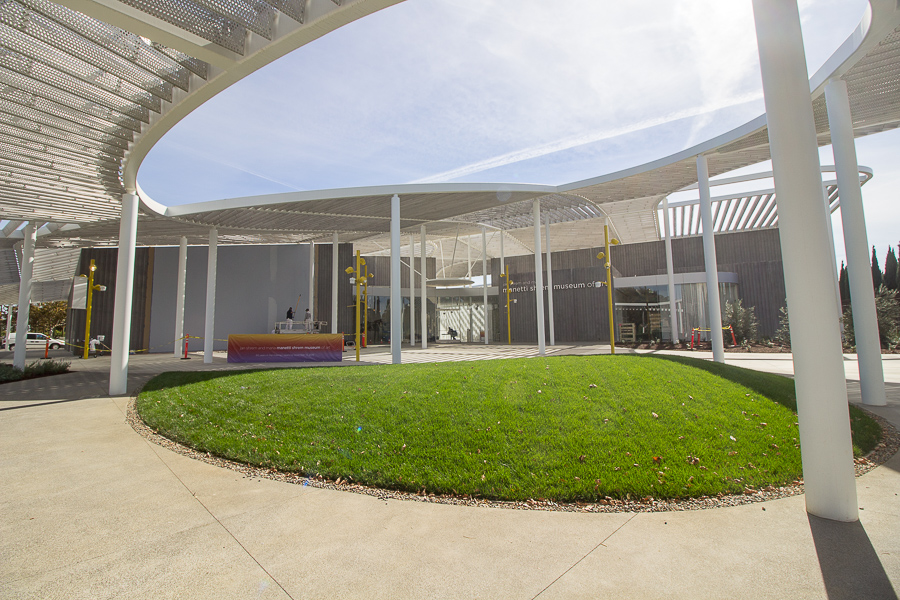
The Vocal Art Ensemble (VAE) brings together people from different backgrounds and with various talents to express themselves on a platform where all communities can enjoy a genuine, unique experience.

Founded in 2008, VAE aims to “blend musical artistry, passion and camaraderie,” encourage growth via the human experience and present unique performances for any and all music lovers.

“I began the group […] when I called up a dozen singing friends, [and] with a little word of mouth that first season grew to 15 singers. After just a few seasons, we were 20 to 24, as we are now,” said Tracia Barbieri, the director of the group. “Musically, the group has grown and finessed by leaps and bounds.”

Over the years, VAE has become a family that has grown through the group’s progress. Their dedication continues to take music and make it their own with an united, undying spirit.

“I love singing with VAE. The group is like a family. Some of the members have been singing together for almost 10 years,” said Rachel Hartsough, the arts and culture manager for the City of Davis and a member of the group. “When I first moved to Davis, […] I was working in my yard and heard this amazing music that appeared to be coming out of nowhere. I peeked over the fence and saw this group of people singing the most beautiful music.”

As this group encourages the art of music through community wellness, there are many members who are in some way affiliated with the university and contribute to the overall art experience.

“The music is fun and challenging, and there’s a tremendous variety,” said Lori Leong, the manager of the Foundation Plant Services disease testing lab at UC Davis and one of the group’s original members. “Our group is made up of people of a wide age range […] with different ethnic, religious and professional backgrounds, […] but the music brings us all together; […] it’s really good for a community to come together simply to celebrate something beautiful.”

Barbieri shared that the group is truly her family, as her own family also performs in the group.

“My husband, daughter and son are all performing this season, [and] the singers are also very dear to my heart and have helped me grow into a leader, teacher, performer and person in more ways than I can count,” Barbieri said. “It’s been such a gift to have such a support system and circle of lasting, loving relationships.”

Through the art of music and community, the group has created a vibrant foundation of flourishing collaborative expression.  

“Tracia Barbieri […] is able to pick pieces that fit our group well and craft well-rounded programs around them, using the strengths not only of the whole group but also the particular strengths of each of its members,” said Isabelle Henry, a plant genetics researcher at UC Davis and a relatively new member. “VAE often collaborates with local groups; […] we always learn a lot from those collaborations and performing together strengthens both groups.”

In the past, VAE has collaborated with Sacramento-based recorder group “Baroque and Beyond”; Rene Jenkins, a sound-healing professional musician; and the UC Davis Viol Consort, led by UC Davis musicology graduate student Melita Denny.

This a capella group continues to grow as members of the community, both from Davis and from around the world, continue to dedicate their time, effort and talent to becoming a part of something much greater.

“I started singing in choir in Belgium when I was 12, and have been singing on and off most of the time since then,” Henry said. “I have lived in several countries over the course of my […] studies, and I have always found that joining a local choir was an excellent way to integrate into a community.”

Although not all people are professional musicians or feel as if they can contribute, Leong advised students to engage and explore, even after college.

“Group singing just makes you feel good,” Leong said. “We have bonded over our mutual joy of singing, and over the years VAE has become like family to me, [as] Tracia takes the music and uses it to tell a story or paint a picture [and makes] it into something far greater than the sum of the individual parts.”

Members bring their own personal touches and cultures as creating music becomes a healing activity for the group and audience alike.

“Everyone in our choir has many other parts to their lives. This is where we all come together and share our love of music and singing,” Hartsough said. “We sing music from all over the world.”

The role of the conductor is clearly significant and rewarding, but the unique voice and talents of each member transforms the act of singing into something much more powerful that embraces everyone.

“We bring a unique blend of music and theatrical expression that embodies a full spectrum of performance,” Barbieri said. “Music can reach across barriers of culture, age, experience, upbringing, time and space.”

Recent free concerts included performances from June 2 to 4 at Trinity Episcopal Cathedral in Sacramento as well as at the Unitarian Universalist and United Methodist Churches in Davis.

Upcoming performances include Davis’ “Make Music Day” on June 21 and a concert in Auburn on July 2. More information and a calendar of VAE events can be found at the group’s online schedule.


Written by: Ray Ruano — city@theaggie.org

Registered student organizations to be charged to reserve on-campus meeting spaces

IAN JONES / AGGIE

Student Affairs no longer able to cover costs to Conference and Event Services due to budget constraints

On May 16, registered student organizations (RSOs) were notified via an email newsletter that they will be charged to reserve on-campus meeting spaces starting on July 1. Previously, the Division of Student Affairs made a financial commitment to RSOs for the 2016-17 school year so that organizations could continue to receive the previous year’s free allotment of spaces. RSOs are currently allowed four hours of meeting reservations per week and three special events per quarter in general assignment and classroom spaces. UC Davis Conference and Event Services also charges fees of $45 for paid spaces and $10 for general assignment spaces exceeding the allotment.

Third-year geology and history double major Minda Moe is the president of Quiz Bowl at UC Davis. Moe is worried about the policy because their organization does not have enough money to pay for reserved spaces.

“They haven’t told us how expensive it will be,” Moe said. “I’m worried that we’ll either have to limit the number of meetings or wander around the building looking for open rooms.”

Moe is concerned that there will be not enough spaces or that organizations may have to share rooms. They explained that meeting off campus is not always feasible because it is difficult to get everyone to the meetings.

“I know a lot of organizations that book rooms every week,” Moe said. “All I see is a bunch of organizations wandering around and trying to get room space.”

Third-year genetics major Mahitha Murali is similarly concerned about being able to get together and afford spaces.

“It poses a great risk for student-led organizations, especially those that focus on philanthropic efforts to continue building their organizations,” Murali said via email. “Visions at UC Davis is solely run by a team of students who are focusing on raising funds for education in different parts of the world, and this policy may affect how often we meet and whether our team will be able to continue our fundraising initiatives to support the education of youth in Ethiopia, India, Nicaragua and Sri Lanka.”

IGNITE at UC Davis is hosting a Facebook event encouraging student organizations to send emails to petition for the removal of rental fees for the next year. Second-year sustainable agriculture and food systems major Abigail Edwards, the secretary of IGNITE at UC Davis, received the email notification, immediately updated the club officers and spoke to Center for Student Involvement Director Kristin Dees about possible actions. Edwards then began to formulate plans to involve the more than 800 clubs on campus that could be affected by the new rule.

“I discussed these ideas with our officer team and we decided we needed to mobilize the UCD community, specifically RSOs, not only for the survival of our own [organization], but for the survival of all the UCD club programming which support students’ well-rounded education,” Edwards said via email.

IGNITE also drafted an email template that organizations can send to Dees, who is acting as a liaison between the students and the administrators at Student Affairs responsible for the fees.

“The email template is intended as a way for student [organizations] to voice their concern without having to draft a whole new email — we are all students and it’s week nine so we’re trying to make this as accessible as possible,” Edwards said. “The more feedback they receive, the better.”

Edwards said the response from students has been very positive and that many students were unaware about the increase or concerned about how the fee would impact their clubs.

“This year, they are $10 to $45 per hour (depending on whether you are collecting money or not) which is a lot for student [organizations] working with a tight budget,” Edwards said.

Edwards believes that the fee increase has the potential to decrease the number of student organizations or deter new organizations from being created because of the lack of accessibility and ability to be involved.

“To be honest, I don’t think there would be so many clubs on campus without access to free spaces to organize,” Edwards said. “Student organizations utilize these spaces to connect with other students with similar interests, which is such an important part of the Aggie experience.”


Written by: Jayashri Padmanabhan — campus@theaggie.org

A Year in Review

REBECCA RIDGE / AGGIE FILE

The Best of Arts in Davis 2016-2017

The 2016-2017 school year at UC Davis saw phenomenal performances and events unlike any other. From concerts to comedy shows, the quality of entertainment available to students throughout the year is just another aspect of what makes Davis such a unique place. Here are some of the most memorable:


Grand Opening of the Jan Shrem and Maria Manetti Shrem Museum

After years of preparation, UC Davis finally opened its very own on-campus art museum this past fall. The Manetti Shrem features a variety of modern art from up-and-coming artists as well as works by UC Davis graduate students.

“I feel really fortunate to have access to such a vast cultural resource on campus,” said first-year biomedical engineering major Ellese Roberts.


Chance the Rapper: Magnificent Coloring World Tour

On Oct. 30, in one of the most iconic events of my freshman year, Chance the Rapper made a stop at the UC Davis ARC Pavilion to perform one of the last shows of his Magnificent Coloring World Tour. Chance’s performance that memorable Sunday night made an everlasting impact on every audience member. His powerful delivery of songs off of his most recent and Grammy award-winning album, Coloring Book, inspired listeners and made for an unforgettable night.


Hasan Minhaj: Homecoming King

Davis alumnus and Daily Show correspondent Hasan Minhaj returned to his alma mater to perform stand-up comedy at the Mondavi Center.

“It was really exciting to see someone who found a lot of success after attending Davis,” said first-year biomedical engineering major Lily Karim. “I liked that he introduced us to his life after college and made it affordable for us to come [see him].”

Due to the significance of Minhaj performing at his old stomping grounds, the show was filmed and is now available to stream on Netflix. In his stand-up, Minhaj explores a variety of topics ranging from race relations to politics to his childhood and more.

Whole Earth Festival

This year saw the 48th annual Whole Earth Festival, a weekend-long experience consisting of live music, dance performances, artwork, workshops and relaxation for the whole Davis community. The event devotes itself to eco-friendliness and sustainability. Visitors can eat vegan foods, shop and more.

“Whole Earth is a weekend for people from all walks of life to come together and enjoy each other’s presence in a collective harmony,” said Emmy Hughes, a second-year managerial economics major. Hughes works as an intern for the ASUCD Entertainment Council and volunteered for the festival. “Volunteering was a fantastic experience, and being able to interact with the performers was a true pleasure.”


Written by: Sydney Odman — arts@theaggie.org


Aggie Profiles: Michael Valenzuela

NICHOLAS CHAN / AGGIE

From Los Angeles to Davis, from mentee to mentor

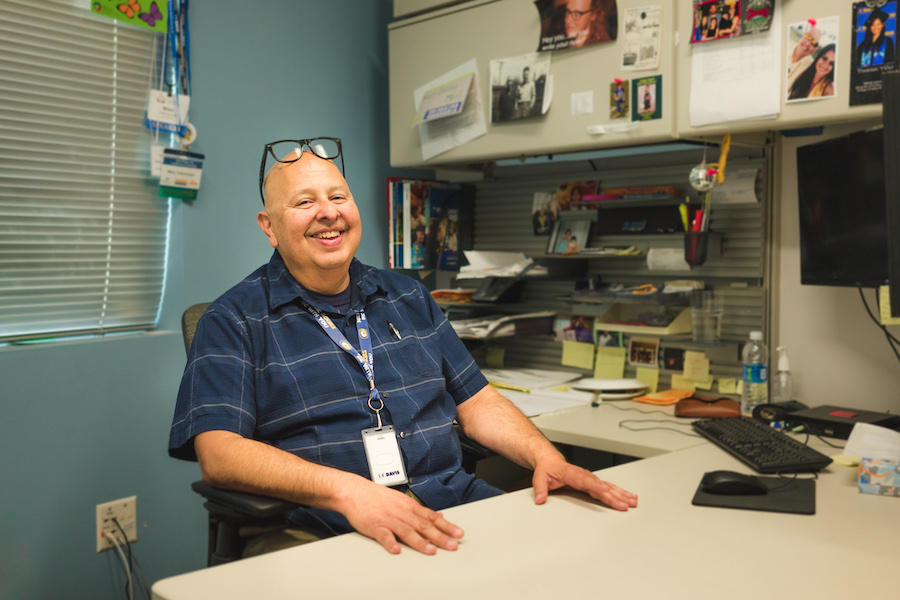
Michael Valenzuela, an advisor at the UC Davis College of Letters and Science Dean’s Office, has an undying passion for college and loves his family and life in Davis more than words can describe. However, Valenzuela did not always have the luxuries he now has today.  

Valenzuela describes Davis as the “photo negative” of the environment in which he grew up. Raised on the edge of what most people would call East Los Angeles proper in the San Gabriel Valley, Valenzuela refers to his hometown as, for lack of a better description, “the hood.”

“I must have been wearing a hard look on my face for a lot of my formative years and thereafter when I was in L.A.,” Valenzuela said. “It actually wasn’t until I got to Davis that I started feeling more comfortable and I started letting my guard down. It was not until […] deep into my life I had realized I am way goofier than I had even realized. I am just one big dork, and I love the fact that Davis has allowed me to find myself in that way.”

Born into a Chicano family that had a long history of serving in the United States Coast Guard, there was no room for dorkiness growing up amidst the unfriendliness of the valley. As a high schooler, Valenzuela’s father told him not to concern himself with talk of college because on the day he was to graduate high school, he would walk into the recruitment office and sign up for the Army. Just as he was beginning to write off college for good, his father passed away, which allowed him to pursue higher education.

“I was the first male in my family to not go into a uniform service either straight out of high school or before high school graduation,” Valenzuela said. “College, for me and for my family, provided that blessing which is why in some part I am so passionate about college. I challenge you to find somebody who loves the idea of college more than I do.”

After graduating from a high school where less than 5 percent of its graduating class went on to college, Valenzuela attended community college for two years and then went on to California State University, Long Beach (CSULB). Valenzuela vividly recalls his registration day at CSULB, as well as the fear and pressure he felt of college before it had even begun.

“I was so scared,” Valenzuela said. “I was afraid to ask anybody about the process because I really didn’t want to embarrass myself, and I didn’t want anybody to know I was way out of my element. I stumbled around that auditorium for the better part of about two or three hours and then finally I remember pausing for a moment [saying] to myself: ‘You can’t figure out in two hours what most people figured out in 20 minutes, you are in way over your head, you just don’t belong here.’”

As he packed up his materials and headed for the exit, he noticed somebody off in the distance staring at him. He looked back, and saw someone standing — looking out of place, just like himself — but also looking like somebody from back home.

“I saw a veteran Chicano who was sitting behind a table, you know, with tats and [more] tats,” Valenzuela said. “He gave me [a head nod] and where I come from, when you get one of those you have to return that or it’s just disrespectful.”

The man, who Valenzuela later learned was a Chicano studies professor at the university, approached the young Valenzuela, inquiring why he was leaving so soon. He then sat him down and went over the registration process. In 30 minutes he had Valenzuela convinced that he in fact did belong in college.

“That’s the day that I kind of abandoned all my thoughts of my being in complete control of my reality,” Valenzuela said. “[I thought] destiny was in my hands. When I had a moment thereafter to process what happened, I realized this man in 60 seconds changed the course and direction of the rest of my life.”

He explained that this man seemed to be almost waiting and expecting him to be there on that day.

“This man did some things he shouldn’t have in his younger days, but he recreated himself from the ground up and was probably the best professor I had ever had and one of the best friends ever,” Valenzuela said. “He really was my savior. I promised him that I would spend the rest of my career paying back what he did for me, so I’m just trying to save one soul at a time, one student at a time. So here I am, decades later, still trying. I hope I’m making him proud, I really do.”

Valenzuela is doing much more than just making his mentor proud. Every day, he advises students on classes, study habits, life skills and how to pursue their individual passions and dreams. Anyone who is lucky enough to have a conversation with Valenzuela will see that he gives his undivided attention to whomever is sitting on the other side of his desk, whether he has known the person for years or if he is meeting them for the very first time.

“I would love to believe that my colleagues on this campus and other campuses are as passionate about working with undergraduates as I am,” Valenzuela said. “It’s no secret [that] I’m not getting rich working for the state here at UC Davis […] but college is my passion. This is where I belong. There is nothing more rewarding than somebody looking you in the eye when it’s all said and done and saying you made a difference — it’s almost magical.”

Taking more of a tough-love approach, he also pushes anyone he meets to work exceptionally hard because he expects great things out of the students at UC Davis.

“I want to believe in one way shape or form I’m emulating [my mentor’s] lessons and allowing people to find their own path,” Valenzuela said. “I got three big passions in my life: First and foremost is family, secondly college, thirdly I love emergency response and first-responder activity. I guess I always am attracted to some kind of soul-saving activity of some sort, academic or otherwise.”

Perhaps Valenzuela’s passion for emergency response stems from growing up surrounded by family members who had all served in the Coast Guard. He speculates that all the years of the drilling and programming planted a sort of patriotic calling in the back of his mind to do his part and serve in uniform.

“Everybody asks about that! It looks cool, right?” Valenzuela said when asked about the framed certificate from the United States government that hangs on his office wall.

“I was in an arm of the U.S. Coast guard when 9/11 occurred, and so it was the result of all that when the Department of Homeland Security was created,” Valenzuela said. “They swept a number of agencies into the newly-formed Homeland Security and all of us who were in these agencies became literally founding members and so they recognize us as such.”

Proud to have served his country for a decade before coming to Davis and to have been involved in this monumental part of history, Valenzuela brings his involvement in the armed forces back to his inherent passion for helping people, even those he does not know.

“It stands among one of the greatest feelings I’ve ever experienced to put on a uniform of your country, but for me it’s a little bit more than that — I love helping people and if given the opportunity, I would love saving lives,” Valenzuela said.

Valenzuela is also on one of the training teams for the UC Davis Police Department, specifically the community response to active shooter team. His team teaches people how to respond in the event of an active shooter.

A college enthusiast, patriot and altruist, Valenzuela consistently makes a point to ask students how they want to be remembered, reminding them to listen to their inner voices and chase after their passion with everything that they have. His journey to the life he lives now was not an easy one, but he believes that if people are able to look in the mirror each day and confidently say that they gave their best effort, then they will reach even seemingly impossible heights.

“It’s going to sound corny, but I just want to be remembered for making a difference and I want to be remembered or embracing life,” Valenzuela said.  “I really believe in living in the moment — it didn’t always used to be that way. I now just love life — as people can probably tell I’m a big dork and I know it, but I just love life.”


Written by: Gillian Allen — features@theaggie.org

Increased SJA allegations in Computer Science Department

Computer Science Department experiences rise in academic dishonesty complaints
There has been a remarkable surge in attraction toward the computer science (CS) major over recent years, and computer science courses have gained an immense amount of popularity among students at UC Davis. Unfortunately, accompanying this increased interest is a dramatic increase in the number of students being referred to Student Judicial Affairs (SJA), the department at UC Davis that deals with academic dishonesty and plagiarism.

“I have noticed more incidents of student plagiarism on homework assignments, but not on exams,” said Vladimir Filkov, a UC Davis computer science professor. “It is difficult to say if this indicates a changing attitude among the students though, as the increase in SJA referrals is tracking the growth in CS student population.  Our classes have been growing in size by leaps and bounds over the past 3-4 years, ultimately doubling the size of our undergraduate majors.”  

Plagiarism lurks behind a non-traditional mask in this new wave of SJA referrals in the Computer Science Department. Code, the language of computer scientists, can be effortlessly copied and pasted from the internet or from one student’s program to another.

“We try to be as clear as possible as to what “cheating” means, but within a community in which code sharing is part of the culture, the concept of plagiarism and code sharing might be difficult to understand,” said Patrice Koehl, a UC Davis computer science professor. “The key is to understand that we do not try to catch situations of cheating for the sake of finding them. Our interest is to train students enrolled in computer science to be proficient computer scientists, meaning that they master the languages used in CS and they are able to use them efficiently and adequately.”

Still, there has been a growing consensus in the student community that the Computer Science Department has gone too far in trying to bring justice to academic dishonesty, often dragging innocent students in as collateral damage.  

“Teachers are doing a ‘refer first, think later’ policy and one-third to one-half of classes are getting sent,” an anonymous CS student said.  

One professor has even established the notorious “Butcher Bill,” a list of the number of people this particular professor has been sending to SJA in the recent years. He frequently shares these lists with students to warn them about the perils of cheating.

Another CS student, who also wishes to remain anonymous, recounted his anxiety-inducing experience with SJA.

“Toward the end of the quarter, I received a very unpleasant surprise: an email from SJA, telling me that I had been accused of cheating on an assignment from a few weeks prior,” the student said.  “I had absolutely no idea what this referred to, and my academic record up until then was spotless, so I walked into the initial meeting with the judicial officer with a great deal of confusion […] I was upset, but confident that I would prevail; after all, I knew I was innocent, and the question I was accused of copying was so short that he couldn’t possibly find any reasonable cause to find me guilty.”

Much to the student’s dismay, the matter was not resolved easily.  After the meeting with the judicial officer, the student’s professor pursued the issue further and the student was subjected to the ordeal of a hearing, in which he was given a guilty verdict. Unwavering in his innocence, he immediately appealed this decision and the university administration finally agreed to overturn the original verdict.  

Many other CS students have undergone similar experiences, varying in degrees of seriousness. Consequences have ranged from a warning to a permanently tainted academic record.  

The climate of the CS department is one of tension and paranoia, hardly fit for learning the difficult and time-consuming language of coding.  

There has also been speculation about some CS professors making inappropriate remarks about students and racially profiling in an attempt to catch cheaters.  

“There are a few particular professors who’ve made comments about ‘internationals, Asians, students bad at English, etc’ being the most likeliest to cheat, and assigning their TAs to profile them,” said an anonymous CS student.

Reddit forums have also popped up within the last few months, showing concern over the mass amount of referrals and warning those considering studying CS at UC Davis of the risky present conditions.  

It is important to note, however, that UC Davis is not alone in this dilemma of overwhelming academic dishonesty complaints in the CS department.  UC Berkeley, Harvard, MIT and Stanford are just some of the other schools that have experienced similar problems, making this a nationwide issue that begs resolve.
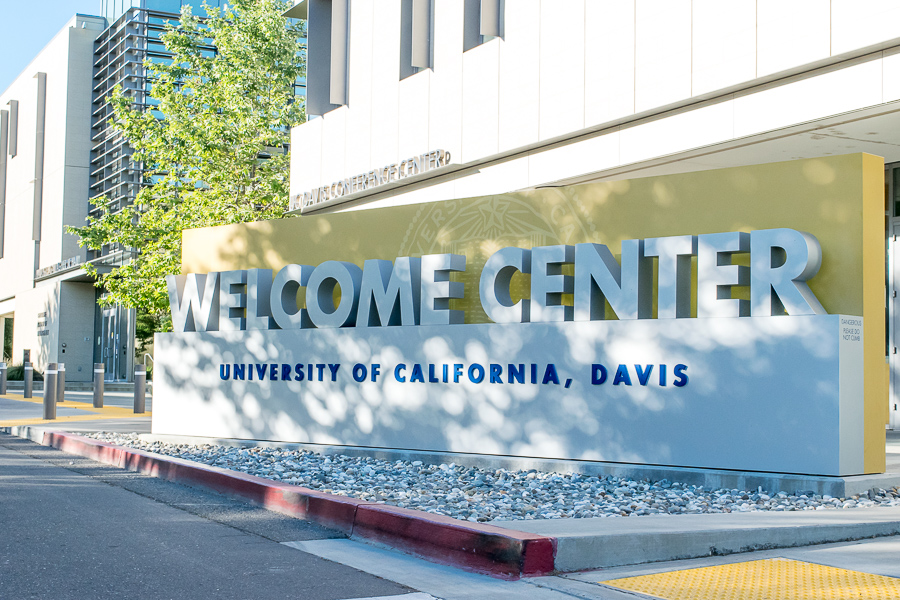
Fear of being accused of cheating also discourages teamwork, which is vital in this field.

“I think that’s really detrimental to the program and it’s a huge shame because working in teams like that is really important for CS majors, both as experience for working in industry and also just to learn different viewpoints and see other ways to work out a problem,” said Matthew Benitez, a current UC Davis CS student.  “Conversation and brainstorming is really important, and I think that currently the state of things is skewed too far towards paranoia.”


Written by: Harnoor Gill — science@theaggie.org

Humor: If my Week 1 self met my Week 10 self, she wouldn’t befriend her

JORDAN KNOWLES / AGGIE

My past and current selves are like heaven and hell — one wants to set herself on fire

We’ve reached that beautiful time of the year in which everything is on fire and there are events on Facebook inviting fellow students to scream in unison to release the kraken within that we refer to as “stress.” Yes, of course we could dwell on the fact that most of us want to die or at least commit some small crime in order to feel alive again, but I prefer to look back to the past for relief: Week 1.

Do you remember your Week 1 self? She was so fresh, so clean. Her backpack was perfectly organized, with no granola bar wrappers scattered inside, no collection of crumbs in a corner. She had done all of her readings for Thursday’s class because the professor had yet to show their true, evil colors. Her social life was balanced. “Dinner after class?” “Of course,” she says, “I’ll be sure to put that into my planner that I’m definitely going to use until the end of the quarter.” Ah yes, your Week 1 self could do it all! And she did it in style. Her hair was brushed, she had a fresh face of makeup applied on a meticulously washed face, and her outfit was not just a trash bag with holes for arms and legs. What a champ she was, and she knew it. She was picky about her plans, her food and her time.

Then there’s this Week 10 scumbag.

Her backpack is a plastic bag that she stole from Rite-Aid, and her face is covered in a layer of dust that has accumulated from sitting in the library for hours on end. She eats whatever vermin walk in front of her, behaving like a small lizard or perhaps a raccoon. She can no longer communicate through words or even texts and simply hisses in the presence of both people and sunlight. Her only writing utensil is a packet of McDonald’s ketchup.

My Week 1 self would never talk to this trash monster. She’d scoff and journal about it during her free hour at Mishka’s. The duality of man is most evident in the fact that I can go from a fresh young woman into one of those creatures from the bottom of the ocean that scientists haven’t even discovered yet. Dazzling.

Happy end of the quarter, Aggies. Let’s hope for a quick recovery so that we can bounce back to the goddesses we start each quarter as.


Written by: Olivia Luchini — ocluchini@ucdavis.edu


(This article is humor and/or satire, and its content is purely fictional. The story and the names of “sources” are fictionalized.)

Humor: AC the only thing actually working in Shields Library

DIANA LI / AGGIE

Library AC gets to Werk™

As finals week rolls around, students are beginning to ask a lot of hard-hitting questions that really demand answers. Questions range from whether the syllabus is going to be on the final to whether it’s unhealthy to sustain a diet purely of CoHo bagels. However, the most pressing question on everyone’s mind has to do with UC Davis’ hub of social interaction: Shields Library. Students are curious as to why the library is always kept so cold to the point that it requires a blanket and starting a fire in the middle of the main reading room to keep warm. The California Aggie has set out to find answers.

Everyone knows that Shields Library is the most poppin’ place on campus because it’s basically just one giant silent disco. But a lot of people don’t know that it’s also a giant freezer.

“I actually didn’t even realize that it was cold in the library, and I think you’re being a little bit dramatic,” said Eli Betch, a library-goer who is unaware of most things.

Despite the skeptics, The Aggie managed to get in contact with the ice cube afraid of melting that controls the air conditioning in Shields Library. As you can imagine, the ice cube had no chill and would not provide any commentary.

In reaching out to further sources, The Aggie got its answers from one Shields Library employee, Grace Tacky.

“When people go to Shields, they definitely think they’re doing the most. But they’re not —  the air conditioning is,” Tacky explained. “So if you’re wondering why the library is so cold all the time, it’s to serve as a reminder of who is putting the real Werk™.”

Well, there you have it. Shields Library really is trying to freeze its students and give them some chill. To celebrate cracking open yet another controversial case, The Aggie staff has decided to crack open a cold one (with the boys).


Written by: Lara Loptman — lrloptman@ucdavis.edu


(This article is humor and/or satire, and its content is purely fictional. The story and the names of “sources” are fictionalized.)

UC Davis club softball makes appearance at NCSA World Series

JODI HINOJOSA / COURTESY

Pacific conference champions fall to Penn State, Ohio State

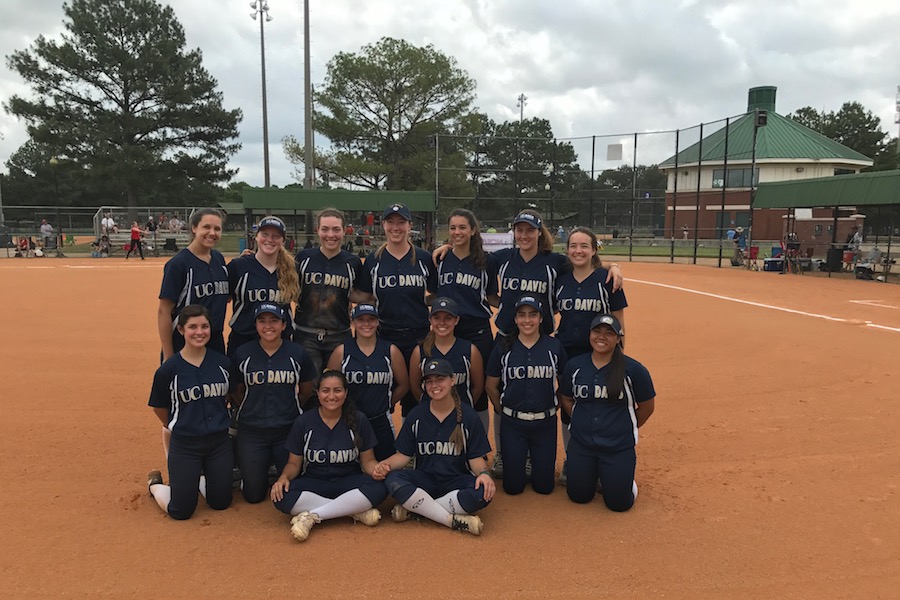
The UC Davis women’s club softball team played in the National Club Softball Association (NCSA) World Series in Columbus, Georgia from May 19 to 21. Arriving in Georgia as the Pacific Conference champions, the Aggies were seeded second for pool play. Once bracket games began on the second day of the tournament, the Aggies fell first to Penn State and then to Ohio State.

In order to qualify for the NCSA World Series, the Aggies needed to become one of the top two teams in the Pacific Conference. The Aggies were undefeated in the regular season and were crowned champions of both the Pacific Conference Central Region and later of the Pacific Conference after defeating Grand Canyon University 5-4.

In Columbus, after pool play, the now tenth-seeded Aggies lost to Penn State 9-3 and 11-1 to Ohio State.

“To be honest, the biggest thing with us this year was the traveling,” fourth-year human development major Alex Baez said. “[It] took a really big toll having to go that far. We were the only team from California. […] We just kind of had trouble meshing and we just couldn’t hit the ball. We couldn’t be as consistent as we were during the season. The teams we were seeing, we couldn’t get used to them as quickly.”

The UC Davis club softball team is entirely student-run, unlike other club teams that enlist the help of outside coaches and managers. The team’s current president, Baez, also acts as a head coach, alongside the team’s vice president. Baez and Jodi Hinojosa, a third-year biological sciences major, both believe this to be a contributing factor to the lack of communication on the field at Nationals.

“This year was really the first time we had to deal with having a player who’s also coaching, who’s on the field and doing everything,” Hinojosa said. “[…] I think people had a hard time adjusting to that because they didn’t really know how to react. I think Alex [Baez] was very stressed. It’s so hard to be out on the field, have to come back in the dugout, calm down, and make the line-up or have to make substitutions.”

The Aggies are already looking forward to next year. Looking ahead, the team has its eyes set on making some improvements.

“I think a lot of [our post-season performance] was just being aware of that big change we had to deal with,” Hinojosa said. “I think that really threw us off a lot because by the end, you could feel there was a little bit of tension in the dugout. So I think one thing I really want to improve on is having that communication across the team, so that everyone is on the same page and we can all calm down a little bit. That way, if we’re not doing well, we’re not pinning that on any players and we’re taking a loss as a team.”

Since the club is completely student-run, the players must be dedicated to all aspects of the game. Officers not only play on the field, but also orchestrate game schedules and fundraisers, communicate with the NCSA League, handle paperwork, and coordinate fields and umpires. Although this a lot for any college student to take on, the passion for the game and the team make it all worthwhile.

“The seniors last year were so awesome,” Hinojosa said. “Our president was just so welcoming. Probably 20 minutes into the tryout, I knew I wanted to do it. I was really excited about joining the team.”


Written by: Liz Jacobson — sports@theaggie.org

Keep meeting spaces free and accessible

HANNAH LEE / AGGIE

UC Davis to implement hourly fees for on-campus meeting spaces

On May 16, UC Davis student organizations and clubs were notified by an email bulletin from the Center for Student Involvement (CSI) that, as of July 1, reserving and using on-campus meeting spaces will require an hourly fee. The exact fees have yet to be announced.

Such spaces were available free of charge during the 2016-2017 school year for up to four hours per week or three special events per quarter. Renting spaces in excess of this allotted time was subject to a $10-45 hourly fee.

The Editorial Board is troubled by the fact that this fee hike has been implemented without transparency or a clear explanation of what the money is going toward or what has changed since last year.

Student organizations have rallied together in repudiation of the fee, providing an email template for clubs and individual students to express their disagreement with the decision. The Facebook page UCD against Student Org Room Fees urges the university to consider the importance of extracurriculars and the harm that a fee hike will cause to student organizations.

UC Davis’ own mission statement encourages student involvement outside of the classroom, stating that the university offers “opportunities for personal development and academic enrichment through undergraduate research, work-learn experiences and extracurricular student life.”

On-campus meeting spaces are vital to the success of student-run organizations, whether they’re being used by creative clubs, charities or any of the 800-plus student organizations on the UC Davis campus. Without the space to organize and collaborate, students’ ability to further their professional careers or pursue extracurriculars is stifled.

Failing to provide students with easily accessible meeting spaces — both in terms of location and of affordability — is a detriment to UC Davis students and their greater aspirations, whether professional, charitable or recreational. Many student organizations run without turning a profit, relying on fundraisers or quarterly dues paid by their members. Such organizations fundraise on an as-needed basis, with little leftover to spend on weekly meetings. Not only does instituting a room fee put an additional burden on already cash-strapped students, but it also creates an access barrier for students and small clubs that cannot afford to pay membership dues.

Though $10 per hour may be a doable fee for weekly clubs, it’s unfeasible for others. For performance-based organizations like a cappella or theater groups, on-campus practice spaces are often rented for extended periods of time, especially before shows. With the implementation of this fee, using on-campus spaces would no longer be plausible for student-run organizations that hold a four-hour, five-days-per-week rehearsal schedule.  

UC Davis is already notorious for charging the highest University of California undergraduate campus fees, which are allocated to provide various services and programs for students. It’s concerning that such resources are becoming increasingly inaccessible for UC Davis students.

The Editorial Board believes that student organizations have a right to free and accessible campus meeting spaces in order to foster student extracurriculars. Given the administration’s lack of transparency regarding the fee implementation, we support student organizations and their efforts to combat this decision by the university.

UC Regents approve first ever non-resident student enrollment cap

ALEXA FONTANILLA / AGGIE

Regents limit international, out-of-state student enrollment

The Regents of the University of California (UC) approved an 18 percent enrollment cap on international and out-of-state students at five of the nine UC campuses, including UC Davis, on May 18.

After scrapping an original proposal for a 20 percent enrollment cap in March, the UC Regents lowered the proposed percentage and excluded UC Los Angeles, UC Santa Barbara, UC Irvine and UC Berkeley. The four excluded campuses bolster a large percentage of non-resident students that already surpasses the 18 percent cap. They will be allowed to maintain their percentage, but not increase the proportion, for the 2017-2018 school year.

State audits last year alleged that a growing number of underqualified non-resident students had been admitted into the UC system. The audits alleged that non-resident students were given priority over more qualified Californians, who pay under one-third of the tuition that non-resident students pay. Non-resident undergraduates contribute over $70 million in base tuition that will “directly subsidize need-based aid for California residents,” according to an “action item” from the May 18 Board of Regents meeting.

The UC Regents grappled with wanting to bolster California’s underrepresented and low-income students, whose need-based financial aid is supplemented by the tuition that non-resident students pay into the UC. According to reasoning in UC Regent documentation from the May 18 meeting, Californians should be prioritized because the public university system is meant to provide a prestigious academic safety net for low-income, local and underrepresented students. UC Regents who support the cap agree that the university system attracts students worldwide and benefits monetarily from the influx of non-resident tuition, yet do not want to see local students and taxpayers left out.

Due to implementing the enrollment cap, the UC system will be allotted $18.5 million from state lawmakers that was withheld pending the rollout of the non-resident cap.

ASUCD President Josh Dalavai voiced concern with the passed enrollment cap because he does not believe Californians should be prioritized over out-of-state and international students.

“I’m a born and bred Californian and proud of it,” Dalavai said via email. “That being said, I’m a strong opponent of any kind of non-resident enrollment cap. While I understand the argument for prioritizing Californian students, I disagree on the grounds of the value of different domestic AND international perspectives on educational enrichment through peer interaction.”

Non-residents pay $39,000 in tuition and fees compared to the $12,300 that California residents pay. The regents also recently passed a tuition hike that will go into effect next fall, raising these rates.

Stephanie Beechem, a media relation officer for the UC Office of the President, mentioned how non-resident tuition supplements the lower in-state student tuition.

“The University of California’s new nonresident enrollment policy balances UC’s commitment to putting California residents first, with the benefits that nonresident students bring,” Beechem wrote via email. “Financial aid funds derived from the tuition paid by nonresident undergraduates will continue to be used to reduce the cost of attending UC for California resident undergraduates with limited financial resources, many of whom are from underrepresented backgrounds.”

Julia Ann Easley, a senior public information representative for UC Davis News and Media Relations, relayed how UC Davis participates in advocating for both residents and non-residents by enrolling 14.6 percent non-resident students, or 4,100 students. The composite average of all UC campuses for the 2016-17 academic year was approximately 16.5 percent.

“UC Davis is committed to serving California resident students,” Easley said via email. “In fact, UC Davis has the highest number of undergraduate California residents among UC campus[es]. At the same time, UC Davis values how the intellectual, social and [cultural] diversity of students from other states and countries enriches the learning and social environment of the campus for all students. As well, the revenues that national and international students bring with them help provide a high-quality education to California students. UC Davis is below the cap that has been set.”


Written by: Aaron Liss — campus@theaggie.org