57 F
Davis

Davis, California

Monday, December 22, 2025
Home Blog Page 570

Fight to preserve children’s health care

CAITLYN SAMPLEY / AGGIE

CHIP at risk of losing funding

The Children’s Health Insurance Program provides health care coverage for children from low-income families, specifically the subset of families whose incomes are too high to qualify for Medicaid but not high enough to afford private insurance. Since its creation in 1997, the program has provided health care for 8.9 million children across the United States. Among the states, California has reaped the greatest benefit from the program, with over 2 million children enrolled in CHIP.

But the continuance of the assistance program is currently in jeopardy. The temporary funding that the program has received since its expiration in the fall of 2017 is limited, and most states are expected to run out of money by the end of March. Meanwhile, Congress is in a state of disarray when it comes to renewing funding for the plan.

The Congressional Budget Office projects that it would cost $800 million to renew CHIP for another five years, which is drastically lower than the CBO’s previous cost estimate of $8.2 billion. This decreased financing of CHIP can be attributed to the repeal of the Affordable Care Act’s individual mandate — which imposes tax penalties on those who don’t purchase health insurance — in the new tax law. Without the individual mandate in place, fewer people buy government-subsidized exchange health insurance plans. As a result, health insurance companies raise their premiums, which increases government spending. Renewal of CHIP would lower federal costs because more people would be using the program instead of buying exchange insurances.

With tax plans, White House drama and the Russia probe making huge headlines, the attention of the general public might be diverted from the millions of children across the country who risk losing their health care coverage. The Editorial Board expects more from the federal government. The parents of these children depend on this form of low-cost insurance for everything from routine check-ups and immunizations to emergency visits. Few things are more important than making sure that a child with Type 1 diabetes receives their insulin shot or that a sick child gets the surgery that they desperately need. The health and lives of children should not be partisan issues.

The dramatically lowered cost estimate for CHIP should pave a smooth path for bipartisanship in renewing funding. Prior to the release of the updated CBO cost estimate, some members of the Republican party asserted that government spending had already reached a maximum threshold and that there was difficulty in deciding how to pay for the program. Some wanted to strike a deal by reauthorizing CHIP in exchange to further cutting parts of the ACA.

With or without the CBO’s modified cost estimate, the use of CHIP as a bargaining tool and the reluctance to make this program a priority on the legislative agenda reflects poorly on Congress.

The Editorial Board urges families — whether they are directly affected by this program or not — to push federal lawmakers to do the right thing and fund CHIP.


Written By: The Editorial Board 
The Year in Photos — 2017

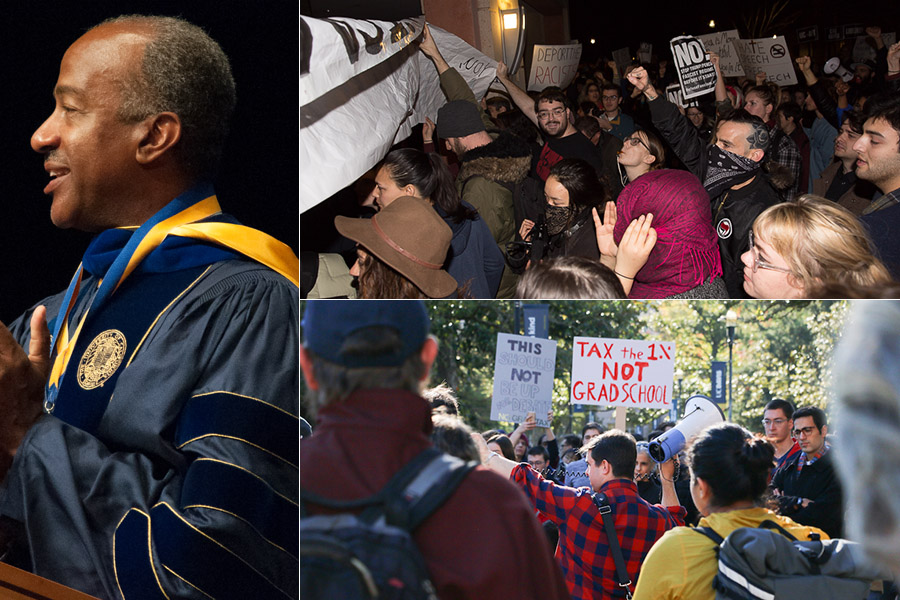
JORDAN KNOWLES / AGGIE FILE (left), JAY GELVEZON / AGGIE FILE (top right), MARINA OLNEY / AGGIE FILE (bottom right)

From Milo Yiannopoulos controversy to new chancellor as well as many protests against Trump administration, this is what 2017 looked like

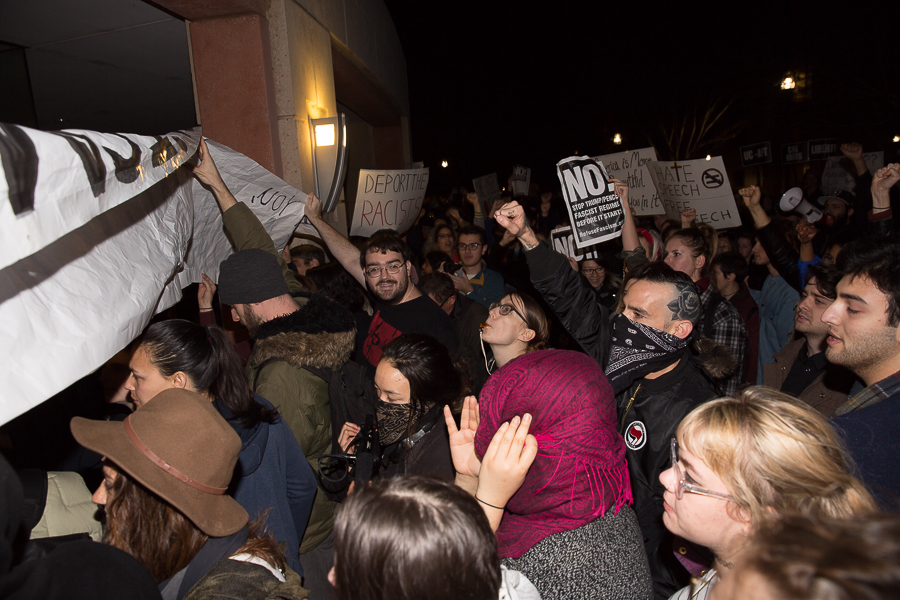
Jan. 13 — After protests outside of the venue, Milo Yiannopoulos’ event is cancelled. (JAY GELVEZON / AGGIE)
Jan. 14 — In response to event cancellation, Davis College Republicans and Milo Yiannopoulos march through campus. (LUCY KNOWLES / AGGIE)
Jan. 21 — Thousands gather at Sacramento Capitol building for women’s rights. (BRIAN LANDRY / AGGIE)
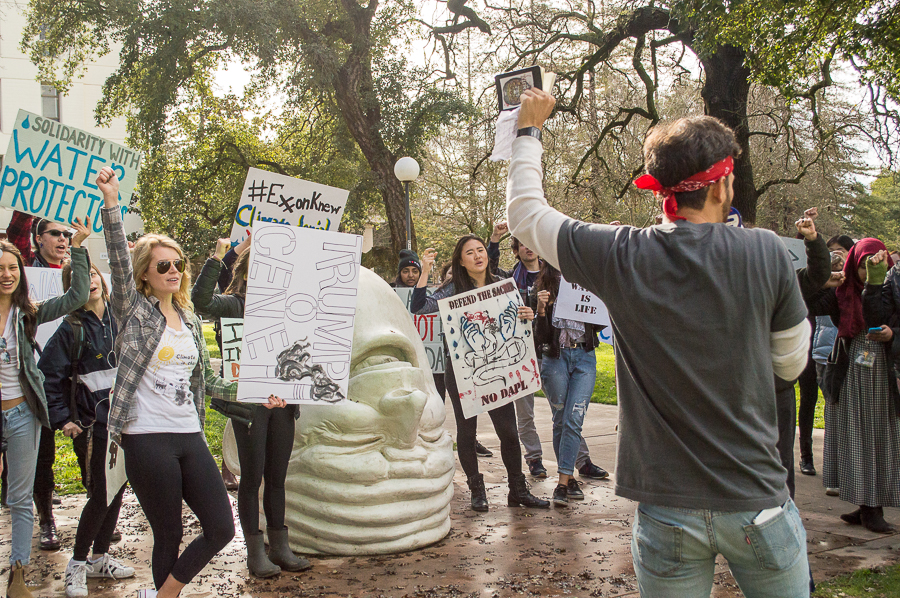
Jan. 23 — Protesters denounce President Donald Trump’s climate change denial and urge UC divestment from fossil fuels. (CAT TAYLOR / AGGIE)
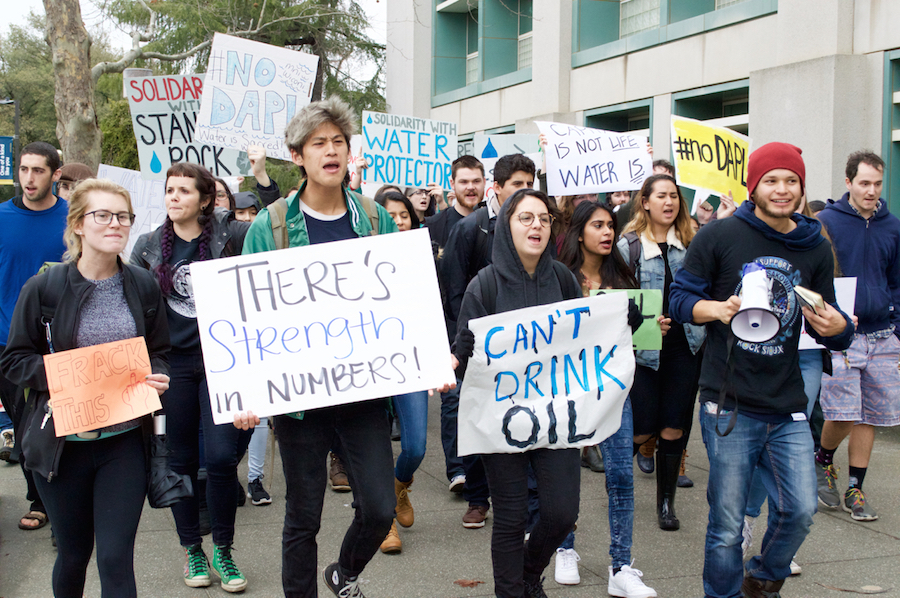
Feb. 2 — UC Davis students participate in UC-wide #NoDAPL day of action. (CAT TAYLOR / AGGIE)


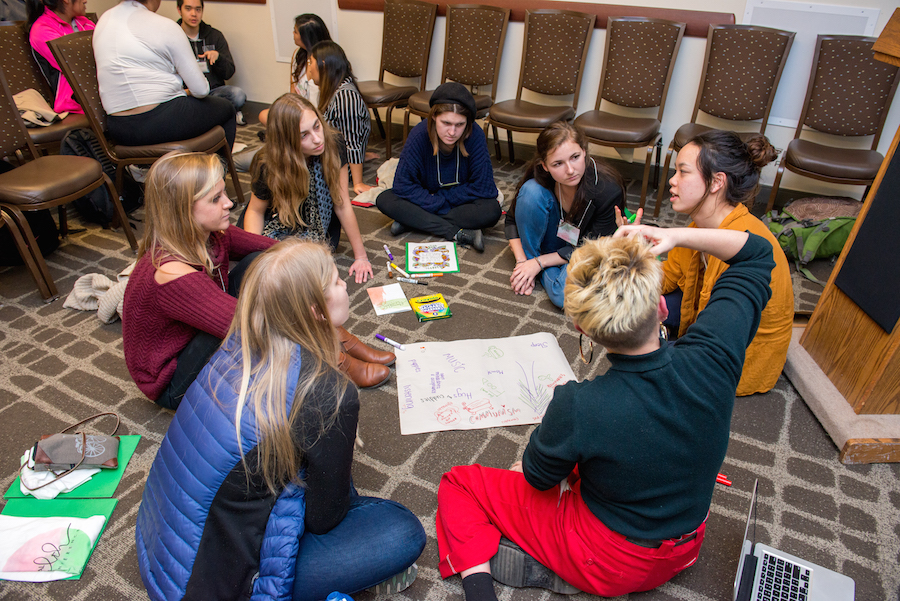
Feb. 7 — UC Davis hosts first mental health conference. (JAY GELVEZON / STUDENT AFFAIRS MARKETING AND COMMUNICATIONS)
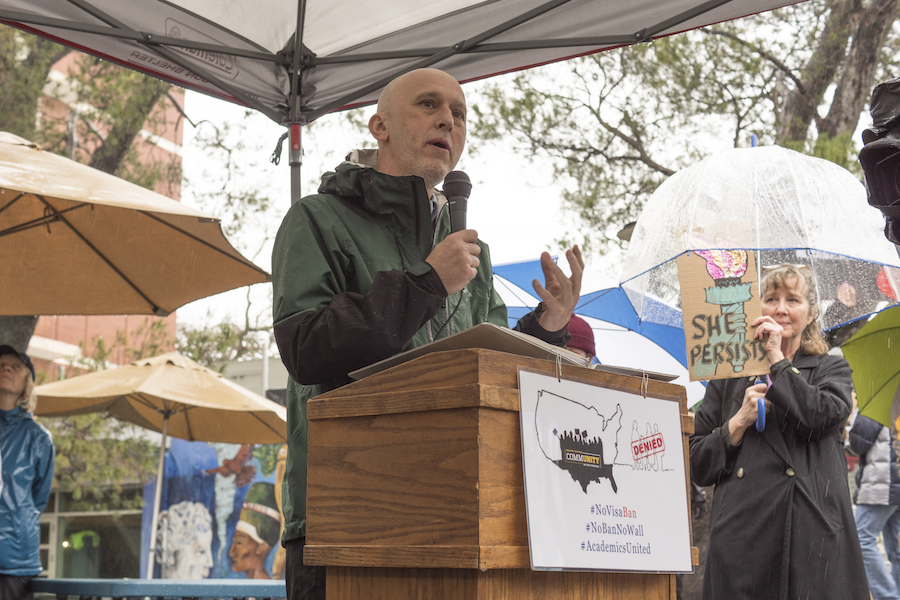
Feb. 9 — Academics unite in peaceful rally against Trump immigration ban. (BRIANA NGO / AGGIE)
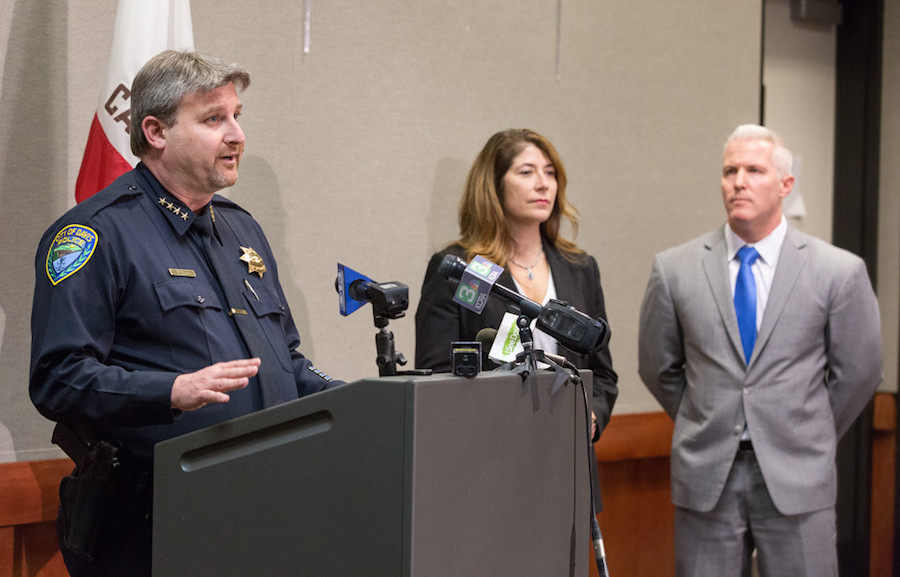
Feb. 14 — Suspect arrested in Davis Islamic Center vandalism. (SUE COCKRELL / DAVIS ENTERPRISE)
Feb. 21 — Gary May selected as new UC Davis Chancellor. (GEORGIA INSTITUTE OF TECHNOLOGY / COURTESY)
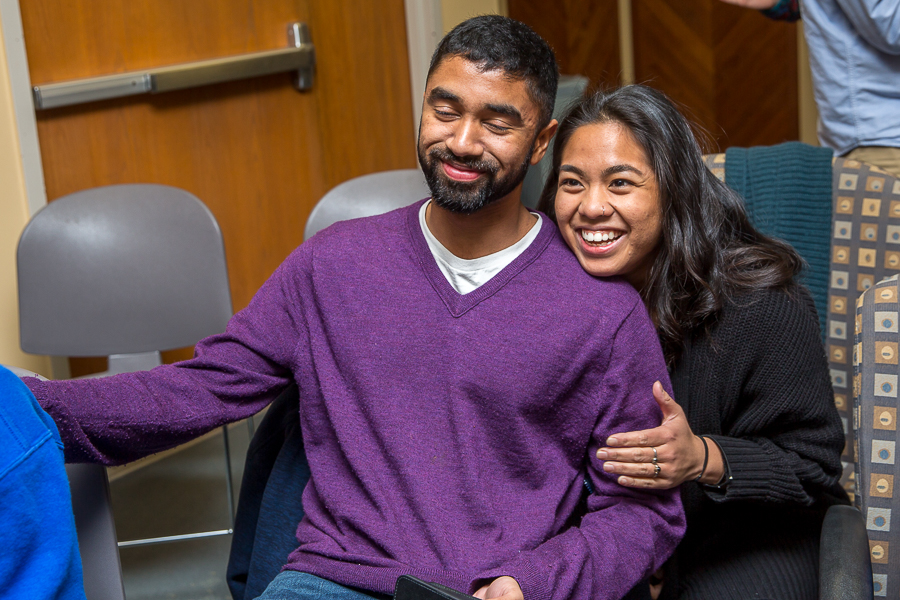
Feb. 24 — New ASUCD president and vice president Josh Dalavai and Adilla Jamaludin elected, along with six new senators. (JAY GELVEZON / AGGIE)
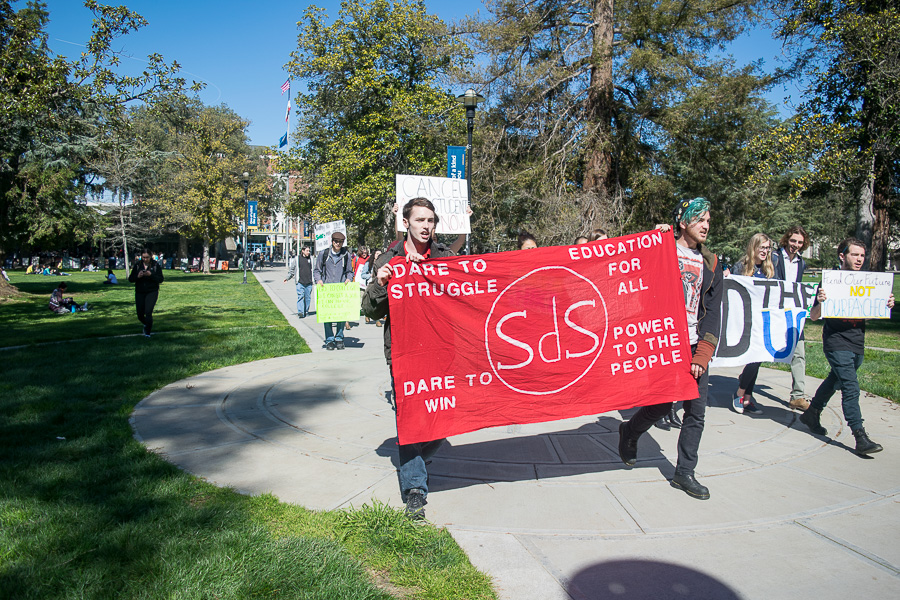
March 2 — Students protest UC Regents’ Jan. 26 decision to raise tuition by $336 per year for in-state and by $1,688 per year for out-of-state students. (BRIAN LANDRY / AGGIE)
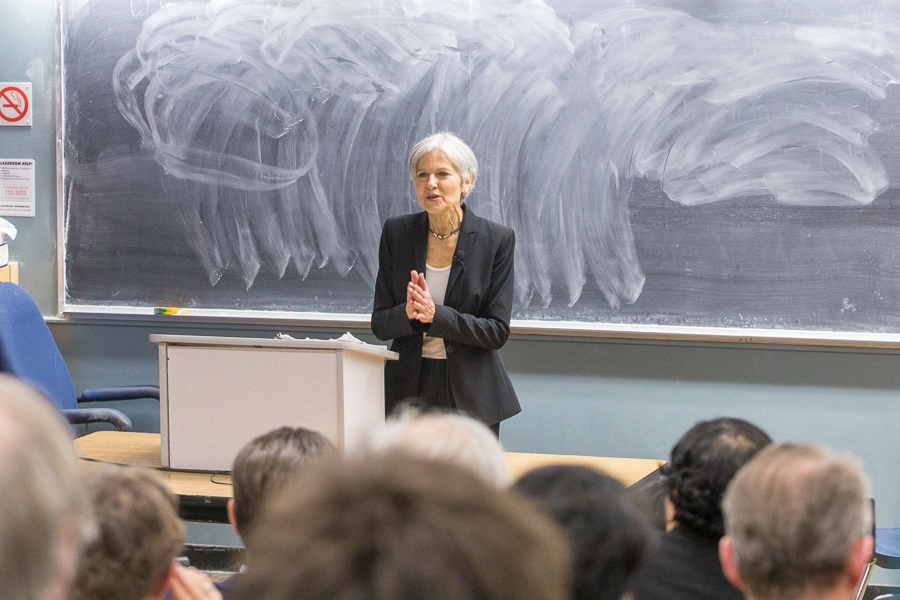
March 9 — Green Party presidential candidate Jill Stein speaks at UC Davis rally. (JAY GELVEZON / AGGIE)
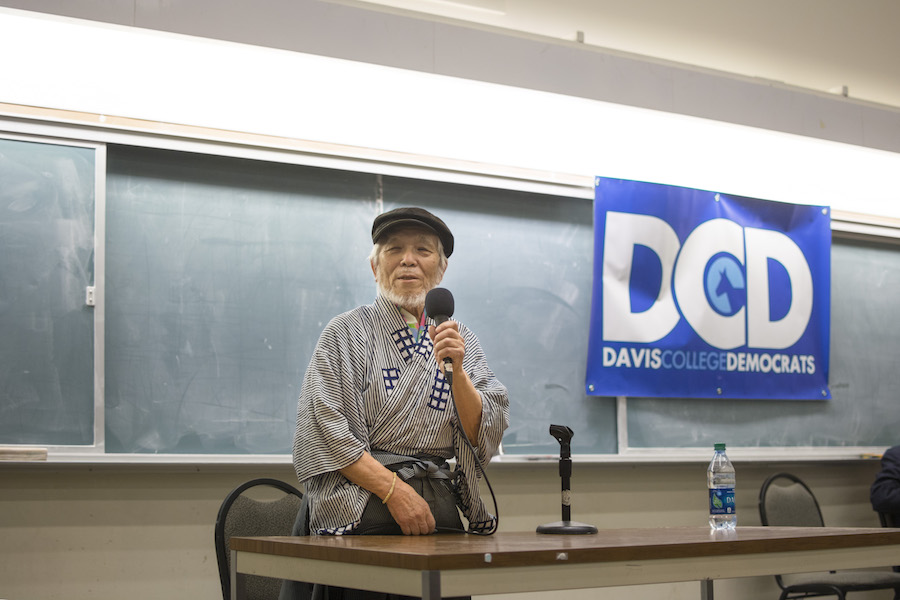
March 10 — Hiroshima atomic bomb survivor Takashi Tanemori speaks at UC Davis. (DIANA LI / AGGIE)
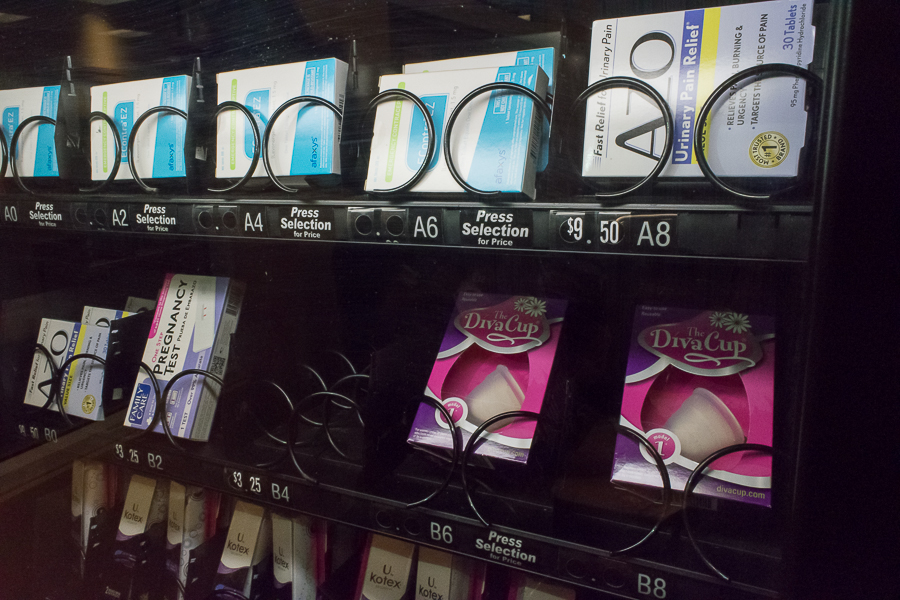
March 31 — UC Davis installs Plan B vending machine. (ALEXA FONTANILLA / AGGIE)
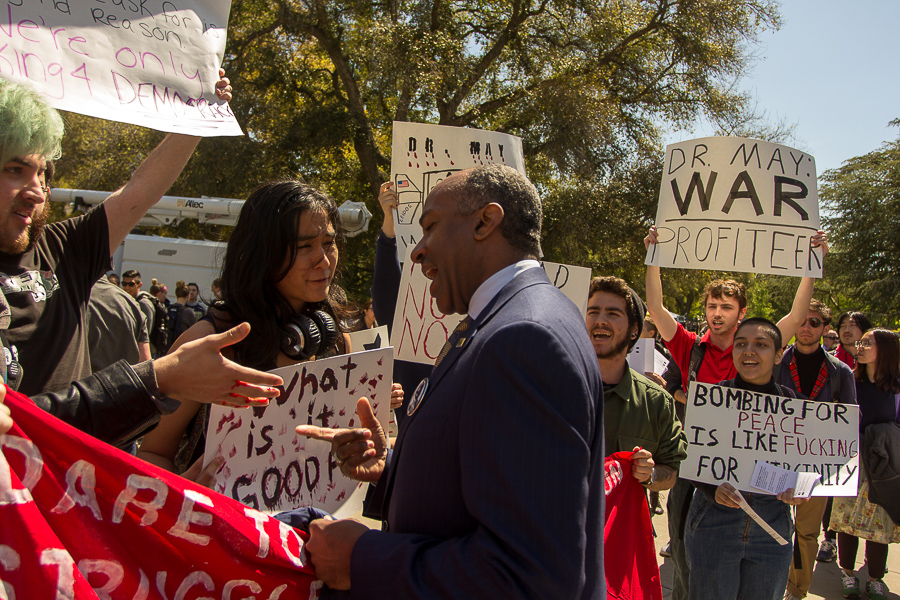
April 14 — Protests erupt at incoming Chancellor Gary May’s first public meeting with UC Davis students. (JAY GELVEZON / AGGIE)
May 2 — Fossil Free UC Davis demonstrators hold overnight sit-in at Mrak Hall. (ALEXA FONTANILLA / AGGIE)
May 18 — Memorial Union officially reopens to the public. (KELSEY GREGGE / AGGIE)
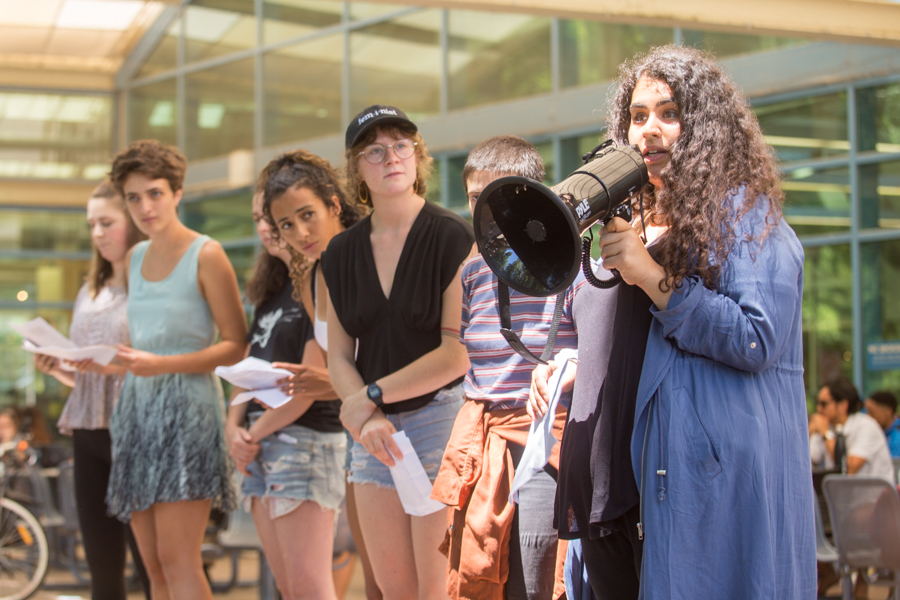
June 2 — UC Davis students gathered to demand change at the Rally Against Rape Culture at the Memorial Union following an article published in The California Aggie which brought attention to UC policies that appear to protect and dismiss misogynistic culture and silence survivors of sex crimes. (JAY GELVEZON / AGGIE)
Aug. 1 — Chancellor May attends meet-and-greets with students, faculty, members of the press on first day in new position. (IAN JONES / AGGIE)
September — Linda Katehi returns to UC Davis as research professor with $318,000 nine-month salary. According to The Sacramento Bee, Katehi’s salary for the 2017-18 school year will be approximately equivalent to her previous 12-month chancellor salary of $424,000. (BRIAN NGUYEN / AGGIE FILE)
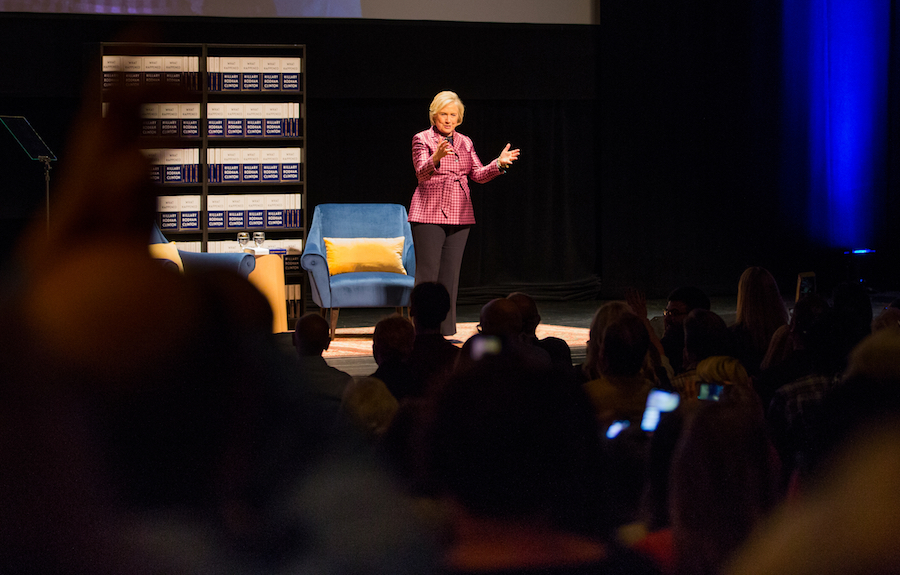
Oct. 9 — Hillary Clinton speaks at UC Davis. (UC DAVIS PHOTO / COURTESY)
Oct. 22 — Interfaith event met with protest outside Islamic Center calling for the resignation of Imam Ammar Shahin, who gave a controversial sermon in July 2017 in which he said (in English) that “the time will come, the last hour will not take place until the Muslims fight the Jews.” (BRIAN LANDRY / AGGIE)
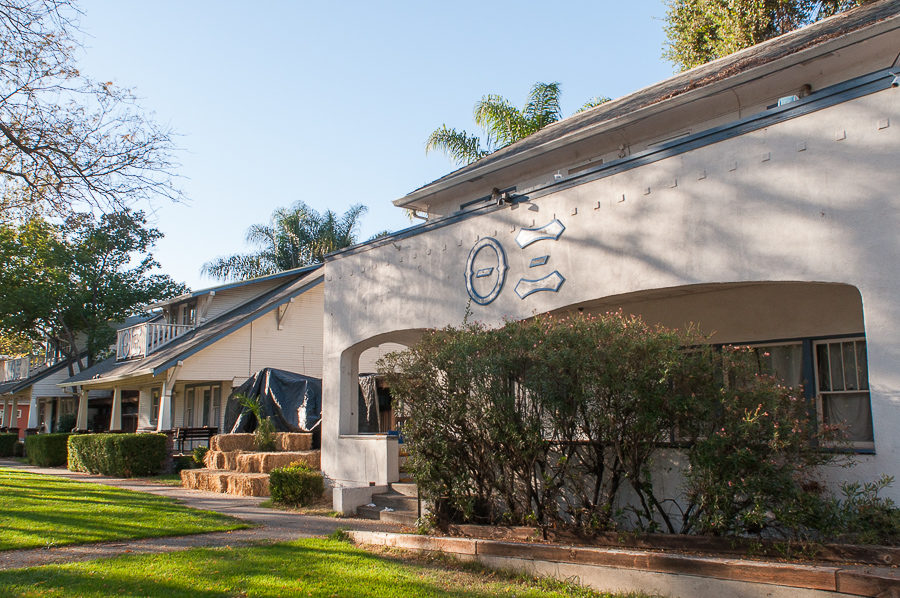
Over the summer — Theta Xi placed on conditional registration for two years after disturbance of peace involving fireworks. The fraternity had previously been at the center of a controversy involving a rape allegedly committed by one of its members, which was written about in The California Aggie. (IAN JONES / AGGIE)
Nov. 9 — Unitrans celebrates its 50th anniversary with bus christening. (KAILA MATTERA / AGGIE)
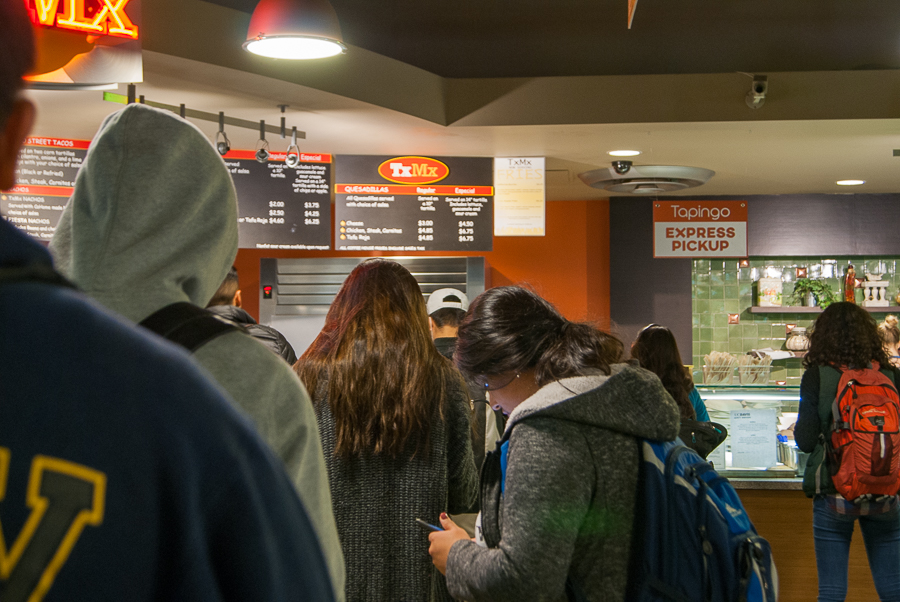
Tapingo mobile ordering app aids impacted campus services. (KAILA MATTERA / AGGIE)
Nov. 21 — Body found in University Lodge. (NICHOLAS CHAN / AGGIE)
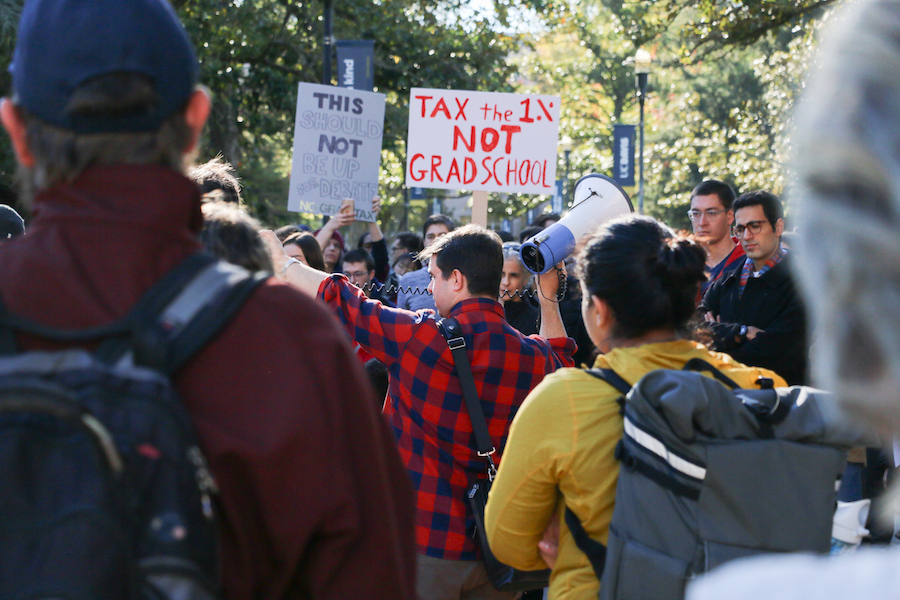
Nov. 29 — UC Davis students participate in nationwide protest over proposed graduate tuition tax in GOP tax plan. The final version of the tax bill kept intact the graduate student tuition waivers.


Compiled by: The California Aggie Photo Desk — photo@theaggie.org

Weed: How will it work?

0
ELI FLESCH / AGGIE FILE

Recreational marijuana use legalized in California

Weed lovers, rejoice! No more back-alley meet-ups, no more looking over shoulders. In January, cannabis will be legally available for adult use throughout the state of California.

For nearly 50 years, marijuana has been classified as a Schedule I drug, and although it remains highly illegal on the federal level, states throughout the nation have slowly legalized it for medical use. Colorado was the first state to legalize recreational use of the drug, a measure that went into effect in 2014. California has legalized medical marijuana use for over two decades, and in November 2016 California citizens voted yes on Proposition 64, a measure to legalize the use of recreational marijuana for persons aged 21 and above.

The ballot measure, known as the Adult Use of Marijuana Act, is scheduled to go into effect as of Jan. 1, 2018.

Proposition 64 regulates the marijuana industry in California, a largely untapped resource. Included on the ballot measure was a fiscal impact estimated around $1 billion annually.

The revenue accrued by taxation of the drug will be used toward programs that include research on the use and impact of the drug and support for various health, legal and support services throughout the state.

Three California state agencies are coordinating to implement this new law: the Bureau of Cannabis Control (BCC), the Department of Public Health and the Department of Food and Agriculture. Together, they are the three licensing authorities in the state.

In the summer of 2017, SB 94 was passed by the California State Legislature and ensured that the previous law regarding medical cannabis use and the forthcoming law regarding recreational use would be unified under a single set of regulations.

“The goal of regulation, obviously, is to try to get as many people into the regulated market and into the legal market and cut down on the black market,” said Alex Traverso, the chief of communications for BCC. “One way to do that is to try to make the process [to join] as easy as possible […] You try to create a playing field for people that is conducive for them to want to come into regulation, and hopefully that’s what we’re doing now.”

The summer passage of SB 94 set back the progress of the BCC, whose members had previously been working to address medical and adult use with two separate sets of regulations. Now required to treat them as a single industry, the three licensing authorities released a set of emergency regulations on Nov. 16. With certain procedures required to implement regulations a 45-day period for public comment being one of them the emergency regulations will allow temporary licenses to be distributed, which will be effective for 120 days.

During the 120-day period, applications will be processed for the two designations of annual licenses. Businesses can apply for both licenses one for medical use (M licenses) and one for adult use (A licenses).

With the state able to distribute licenses by the Jan. 1, 2018 start date, the burden next falls to cities and counties, which must pass ordinances to either allow or ban marijuana.

“We’re going to be ready to issue state licenses, but if local governments aren’t ready to issue their local licenses, it doesn’t matter,” Traverso said.

There are 58 counties and 482 incorporated cities within the state of California, according to 2011 data. This means that the laws surrounding cannabis will vary, depending on geographical location within the state.

Local governments are scrambling to establish ordinances within their jurisdictions, according to Traverso. With Jan. 1 fast approaching, Traverso said that local governments are either considering bans to prevent cannabis, trying to implement ordinances that will structure the local cannabis industry or looking at options to temporarily ban cannabis in order to give local governments more time as they work to establish ordinances.

If no local ordinances are in place by Jan. 1, only state licenses will be needed to conduct various cannabis-related activities, which incentivizes local governments to move forward in establishing their own guidelines.

State enforcement of these measures will have various forms and will often rely on other agencies that have the ability to do so, Traverso said. A different form of enforcement that currently exists comes from the officers who patrol roads throughout the state.

The California Highway Patrol (CHP) Academy dedicates 52 hours to training that covers drug and alcohol impairment, according to Sergeant Glen Glaser, the state coordinator for the CHP Drug Recognition Evaluation program. Following the passage of Proposition 64, Glaser said that all officers and sergeants were mandated by the CHP commissioner to be trained in Advanced Roadside Impaired Driver Enforcement before 2018. Glaser said this goal has been met.

“Just the mere presence of THC does not necessarily mean somebody’s under the influence,” Glaser said. “Until the science gets behind that technology [used to detect cannabis] and we can have a per se limit similar to what we have for alcohol, there’s really no certain level where an officer would make an arrest. And that’s what we’re preaching to our officers. We want to make sure we’re arresting impaired drivers, not just drivers who have a substance in their system.”

Cannabis largely has a public perception of making people slow or lethargic, although that can depend on the type of strain or potency, Glaser said.

“The number one reason people who are stopped and arrested for driving under the influence of cannabis is speeding, which is outside of the norm of what people think,” Glaser said.

According to Glaser, officers will use the same field sobriety test used to test for alcohol and will make judgements based on performances during the divided attention test, dilation of pupils, elevated pulse and other factors.

“There’s a number of clinical as well as psychophysical signs officers will see roadside, indicative to cannabis,” Glaser said.

Glaser expects to see more first-time and inexperienced users with the recreational legalization and urges people to utilize ride-sharing services to counteract the increased potential for impaired driving. Glaser said that the presence of marijuana within someone’s system is not necessarily cause for arrest.

“If you’re going to consume, do it safely,” Glaser said. “Our officers are being trained to detect impairment, […] and so we just want the public to know we’re going to be arresting impaired drivers, not just people who have a substance within their system.”

It’s not just state and local governments that have been working to deal with cannabis. The upcoming legalization of recreational marijuana use brings with it a push throughout the marijuana industry for increased legitimacy.

Nathan Mancini is the vice president of sales operations for Happy Day Grow Works, a company that mainly sells wholesale to various organizations and has products distributed by Northern California marijuana delivery services.

Mancini likened the business side of the marijuana industry to a craft brewery. The importance of branding, he said, is everything. Without a logo, label or brand, a product has no context in which it is viewed.  Take a craft beer, for instance.

“Every company [in a craft beer store] has a logo, an image, information,” Mancini said. “You don’t just see a bare-necked beer bottle, right? So, that’s the thing. That’s a huge push [in the industry], and we’ve been trying to really figure out who we are to tell that story.”

The upcoming legalization will change how business is conducted in an industry that has largely taken place in a grey market, according to Mancini.

“You can really operate in a number of ways and still do your business,” Mancini said. “That can’t be the case for companies that have been issued a license and permit moving forward. There’s going to be way more checks and balances from government officials […] so we’re trying to prepare everything in all that we do, […] where we should likely be in good standing with auditors and officials who are are going to be in charge of checking in on every producer out there and make sure that they’re adhering to things of code.”

As state agencies and businesses work to ready themselves for Jan. 1 by familiarizing themselves with laws, regulations and examples provided by other states that have legalized marijuana, Traverso has no doubt that something will come up that the BCC or anyone else never anticipated.

“There’s going to be something in California for sure that either we didn’t think of or there’s an unintended consequence or something that we need to fix,” Traverso said. “Based on the path we’ve taken to get here […] I think we’re all kind of used to that, so if there are changes that need to be made we’re certainly ready to change gears if we need to. But I think the biggest thing is going to be how we deal with the unlicensed activity and what we put in place to help deal with the illegal market. It’s a process, and it’s been a process in other states, but hey, every legal sale we have come Jan. 1 is one less for the black market, so we just have to keep building on that.”


Written by: Bryan Sykes — bcsykes@ucdavis.edu

Letter to the Editor: Properly bridging Trump’s division of the country

CAITLYN SAMPLEY / AGGIE

To the Editor:

Re: “There and Back Again: The political evolution of a white guy” by Nick Irvin (column, Dec. 7):


In your article you describe Trump as accelerating the divide in our country, but a mere two paragraphs later you say that he “rode the waves of angry white people.” I will not deny that Trump divided this country, but by singling out white people, by calling your own anger “white masculine grievance,” you are doing nothing to bring it back together. You are contributing to the very thing that made you angry following the election.

Your article implies that your anger was misplaced, that “scrutinizing disaffected white people” is the correct thing to do. Other times in the article you mention “whiteness” in a negative context. This is something I truly do not understand: How is it acceptable to judge anybody based on their race?

In your final paragraph there are some sentiments I agree with: that we need to show people where Trump is wrong and how he is hurting our country. There is a truly awful group within Trump’s supporters — the white supremacists. But lumping all white people into the same group does nothing to show these people how terrible Trump is. I’ve lived in rural areas dominated by farmers and miners, and those people were terrified of losing their jobs. They thought that Trump would save their livelihoods or help to improve their lives. There are so many issues to hit Trump on: his tax plan, his nepotism, his rhetoric. But conflating all of his white supporters as a homogeneous group will not help your cause.

EPHRAIM SCOT, DAVIS

Ephraim Scot is a third-year history major at UC Davis.


Disclaimer: The views and opinions expressed by individual columnists belong to the columnists alone and do not necessarily indicate the views and opinions held by The California Aggie.

The Allure of the Emerald City

0
CHRISTIE NEO / AGGIE

What makes Seattle the number one location outside of California for former Aggies?

Many Californians who have never visited Seattle may think of it as a dark, rainy place with too many Starbucks locations. While this may technically be the case, its hub of innovation has given the greater Seattle area the largest concentration of UC Davis alumni outside of California.

“There’s no absence of alumni doing interesting things in the area,” said Lani Chan, a UC Davis class of 2005 alum and a leader of the UC Davis Seattle Alumni Network. “Seattle is quickly finding its way as the Silicon Valley of the Pacific Northwest — we have a ton of alumni at Microsoft and Amazon, for instance.”

According to Thomas Whitcher, the director of Out of State and Special Interest Programs for the Cal Aggie Alumni Association, there are over 5,000 alumni in the Puget Sound Area, followed by Portland, New York City and Washington, D.C..

Many factors have drawn former Aggies to the region, like the desire to pursue postgraduate studies or employment opportunities at the University of Washington, the chance to work at one of Seattle’s high profile companies including Amazon, Microsoft and Boeing or simply the allure of the city’s innovative atmosphere.

“I decided to go back to school to get my MBA,” said Lisa Meyr, who graduated in 2000 with a B.S. in chemistry. “[My husband and I] wanted to go somewhere we could see ourselves living long term and both really loved Seattle when we visited, so I decided to go to University of Washington.”

Now, Meyr is the Associate Director of Research and Development Operations at Seattle Genetics. Meyr says that having an MBA and a background in chemistry helps her to bring together the organization’s business and scientific aspects.

“Seattle Genetics is the largest biotech company in the Seattle area,” Meyr said. “[It focuses] on the development of transformational therapies in oncology, primarily through Antibody Drug Conjugates. Biotech has had a consistent presence in the Seattle market for decades.”

Seattle is one of the foremost cities in the nation for biotechnology and medical research, meaning there is a wide variety of potential careers for students who have earned degrees in STEM fields from UC Davis.

“There is a strong academic research presence through the University of Washington, Fred Hutch Cancer Center and many others that continues to help attract and support great research which in turn feeds the biotech industry,” Meyr said.

Meyr and her husband are both pleased with everything Seattle has to offer with regard to work and lifestyle.

“With my husband in high tech and me in biotech we have been able to both continually find great professional opportunities in the Seattle area while maintaining a fantastic lifestyle,” Meyr said. “Seattle has grown considerably in the 10 years we have lived here but it still maintains much of what attracted us here — great professional opportunities, unparalleled natural beauty that is easily and quickly accessible, less congestion/density compared with the Bay Area, lower cost of living, and a great young energetic and vibrant community.”

Candice Cox Blann, who earned a B.A. in bacteriology in 1975, has also enjoyed being part of Seattle’s large community for biological sciences in her job at the Seattle Laboratory for Quest Diagnostics. She also takes great pleasure in the natural beauty and cultural diversity the region has to offer.

“I work as a Clinical Microbiologist for a large reference laboratory, where I can look out at the Seahawks stadium to the water and if it is clear enough the Olympic [Mountains],” Blann said. “I fell in love with the Mountains and the water, the bays, islands […] Where I live and work I can look out onto the water and the Olympics and turn around and see the Cascades and Mt Rainier […] I love the cultural mix of people, arts, science and technology.”

In addition to finding careers in medicine, healthcare and biotechnology, Seattle also offers many ways for Aggies to apply their knowledge in environmental and agricultural science, two more of the school’s signature fields.

Peter Kelly earned a B.S. at UC Davis in international agricultural development in 2002 and a Ph.D. at UC Berkeley in agricultural and resource economics in 2010. Kelly, who is originally from upstate New York, lived in Seattle during breaks while studying in California and while working as a professor in Beijing but has now settled in Seattle permanently.

“I came to recognize that Seattle was at the center of innovative international models of philanthropy and social enterprise,” Kelly said. “The area is filled with post-tech-career social visionaries like Bill Gates, Paul Shoemaker, Paul Brainerd, Will Poole and Luni Libes, who have founded and nurtured world-class organizations like the Gates Foundation, Social Venture Partners and PATH.”

The city’s philanthropic spirit is well suited to the work Kelly is currently doing: establishing a nonprofit of his own.

“I’m now living in the Seattle area year-round, applying my UC Davis degree in international agricultural development to founding a nonprofit organization, Grow Further, which aims to build agricultural research in developing countries into a new charitable category for individual donors parallel to global health,” Kelly said.

Nicole Tanner, now at Global Geophysics, LLC, graduated in 2013, double majoring in geology and music performance for trombone and voice. Tanner then earned a master’s degree in geology and geophysics at the University of Leeds in England.

“After completing my master’s, I decided to pursue a Ph.D. back at UC Davis, but decided I would like to travel a bit first and have a break from academia,” Tanner said. “I traveled within 6 months to 19 countries in Southeast Asia and Europe.”

The seed for the idea of moving to Seattle was initially planted while reading a book that she received during this trip from her work exchange family in Mosjøen, Norway. The book, “Morning Glory” by Sarah Jio, takes place on the houseboats on Seattle’s Lake Union.

“I had seen and heard of Seattle in movies, shows, and news, but had never before felt so intoxicated by this place,” Tanner said. “During my Ph.D. at Davis, I visited a friend from my undergraduate years who lives in Seattle and fell even further in love. When I decided to discontinue my Ph.D. and find a job, Seattle is the first place I thought of. I quickly found a job as a project geophysicist for a small consulting firm in Redmond, Wash. and packed my bags.”

Andrew Glass Hastings and his wife, Cassady, both graduated from UC Davis in 2003 with degrees in community and regional development and human development, respectively. Like Lisa Meyr, they moved to the region because of University of Washington.

“We attended USC for our masters, and then moved to Seattle so Cassady could pursue her Ph.D. at UW,” Hastings said. “We have been here in Seattle ever since. Seattle has so much to offer and still has all the best of the West Coast. Cassady is a professor in the College of Education at UW, having just started a new undergraduate degree — Education, Communities and Organizations. And I am the Director of Transit & Mobility for the City of Seattle. Seattle has presented a wealth of opportunity for what Cassady and I love and do, and the foundation was provided by our experiences at UC Davis.”

In Seattle, former Aggies have found many thriving industries where they can apply a wide range of skills, all while getting to know a growing, diverse city that is unique from what can be found in California.

“I feel that Seattle combines urban and social life with love for nature and the outdoors in a way that I haven’t seen in other places,” Tanner said. “No matter what one’s expertise, there seems to be a little bit of everything here.”


Written by: Benjamin Porter — features@theaggie.org

Alternative access to on-demand employment

0

ELVERT BARNES [(CC BY-SA 2.0)] / FLICKR
Digital workplace offers flexible jobs, but presents safety concerns

The second time Akram Al-Saber ever drove with Uber, his passenger broke into uncontrollable sobs. Al-Saber, trying to play the role of a friendly driver, asked the young, clearly intoxicated rider how her night was going and she immediately started crying, venting to him about trouble with a guy she liked. A few weeks later, after becoming more accustomed to the ride-sharing environment, Al-Saber decided he was ready to capitalize on high-demand nighttime rides in San Francisco. He picked up a few girls who were headed to the bars, and midway through the trip they asked him to pull over. Before he could process what was happening, one of the passengers was relieving herself in the middle of the street, only to get back into the car seconds later.

These were not the situations Al-Saber, a fourth-year neurobiology, physiology and behavior major at UC Davis, expected to encounter when he first signed up to be an Uber driver early last summer. In fact, he never imagined that he would become a driver at all.

“At first, I was totally against the idea of doing it,” Al-Sabar said. “I was like, ‘I’m not gonna be an Uber driver, I take Ubers.’ But in reality, for a student who’s busy, who doesn’t want a set schedule and kind of wants to work on their own time, it is a very efficient and lucrative way of making some extra money.”

Now a household name in modern transportation, Uber is just one of many mobile platforms contributing to the growing “gig” or “sharing” economy. Though it goes by a number of names and definitions, the gig economy essentially encompasses any repeatable single-task job obtained on a digital platform. Other well-known companies in the market include Lyft, TaskRabbit, JoyRun, Care.com, Rover and Airbnb.

Neighborhood flyers and classified newspaper ads for piecemeal work by mechanics, nannies, lawn-mowers, tutors, car washers, dog-walkers, etc. have been around for centuries. When the internet started to expand in the 1990s, platforms like Craigslist provided a more efficient way of connecting part-time workers to available jobs. Wage opportunities have continued to advance in the modern gig economy thanks to mobile apps that help part-time workers network more easily than ever.

New technology, combined with the post-recession need for alternative money-making, shapes the image of today’s American worker. A Pew Research center survey from 2016 showed that 8 percent of Americans — nearly 26 million people — earned money from jobs found on digital platforms last year. The increasing popularity of jobs within the gig economy comes from flexibility — workers can choose where, when and how long they want their jobs to be.

“Society is prioritizing leisure in a way that it did not in previous generations,” said Janine Wilson, a professor of economics at UC Davis. “It was often thought that there was one breadwinner and one household market producer, and because of that division of labor, there was little need for flexibility in the workplace. And then, as women joined the workforce, [they] actually freed up men in the workforce to become more flexible as well. […] Both household heads can be providing some time to the labor market and some time to the household. That evolution started well before the gig economy took off. […] With technology, now it’s possible to communicate very easily with customers without having a very intense dynamic of marketing or of flyers or of expensive information.”

Obtaining work over the internet or on a mobile app also introduces a new form of social interaction that strays from American cultural norms. Children are taught about “stranger danger” from the time they start preschool: never allow strangers into your home, never get in the car with a stranger and never, ever, take candy or food from a stranger. TaskRabbit, Uber, Lyft and Joyrun break these rules.

Many stories document app users being harassed by gig workers, but there are victims on both sides. Taco Bell executive Benjamin Golden infamously attacked his Uber driver in 2015, and a Miami doctor was fired in 2016 after drunkenly beating her Uber driver. Searching “Uber driver attacked” on YouTube returns over 113,000 hits.

Gig workers are considered independent contractors, so tech companies don’t regulate safety training typically required for taxi services and hotels. Uber, Lyft and Airbnb claim that app profiles are meant to protect users through peer rating systems, but one sub-five-star rating is usually not enough to have an impact on someone’s overall reputation.

Wilson said that the benefit of flexible work comes with the cost of losing the safety net generally associated with formally employed people. Things like disability pay, collective bargaining and basic health insurance coverage are sacrificed when people choose gig economy work. Wilson explained that these benefits are not available for gig workers now but may be available in the future.

“[…] The more people that participate in the gig economy, the more private insurers will see these folks as an opportunity,” Wilson said. “[Workers] will just have to pay outright instead of having it embodied in their wage.”

For app users and workers alike, the convenience and profitability benefits of the gig economy seem to outweigh the skepticism of confronting strangers. Like Al-Saber, many gig workers have learned to prepare for the unpredictable behavior — both positive and negative — of their clients in order to make the best of jobs that provide the flexibility needed to fit their lifestyles.

John Kintner, a UC Davis alumnus, started driving with Lyft as a way to earn extra money outside of his job as a medical scribe. In the middle of applying to medical school, Kintner found himself in need of additional income to pay his rent in San Francisco. He frequently uses Uber and Lyft as a passenger and realized he could benefit from being a driver as well.

Despite his success as a part-time driver, Kintner said that making a living wage as a Lyft driver has costs not everyone accounts for.

“If you plan out your day accordingly and have really good discipline and you drive when you get the most rides, it seems like you’d be able to pay rent and if you had a small family you’d be able to support them,” Kintner said. “But it seems that there are the hidden costs of gas and the depreciation of your vehicle — I did the math. When it comes out with all the math done its almost just like a minimum wage job. I think there would be better opportunities for employment elsewhere.”

Kintner also pointed out that competition is growing in the ridesharing industry.

“When there are a lot of drivers on the road, the rides get picked up quicker,” Kintner said. “The number of drivers is sort of saturating the market. The opportunity to make money is sort of reduced by the popularity of these apps.”

From a safety standpoint, Kintner doesn’t feel personally threatened by his riders, but he explained that he has been in situations that would make many people uncomfortable.

“On more than one occasion I’ve had some girls who’ve been drinking too much, and they’re very flirtatious because of the alcohol,” Kintner said. “They put their hands on me and try to get my phone number and take pictures with me. And that can be fun but also, especially if you’re a female driver, I’d hope that wouldn’t be happening to them. It can be an uncomfortable situation because the boundary is not really set.”

As of 2015, women made up only 14 percent of the Uber workforce. Men with ridesharing experience often say that they wouldn’t want their female family members working for on-demand driving services. Like Kintner, Al-Saber said that driving for Uber or Lyft can pose personal safety threats for women in particular.

“I don’t mean to be sexist in any way, but I think it’s different between guys and girls,” Al-Saber said. “My older sister was like, ‘If you’re doing it I think I might do it on the side.’ I said, ‘Honestly I would not be comfortable if you did just because, you know, I’ve seen the kind of people that I’ve picked up myself. I’ve picked up three to four drunk guys at once. Who’s to know what they’re going to do if I was a female driver.’”

Uber launched an initiative with UN Women in 2015 to create 1 million new jobs for women by 2020. Just eight days after the announcement of the partnership, a collection of 22 union groups released a statement against it, arguing that “the creation of one million precarious, informal jobs will not contribute to women’s economic empowerment and represents exactly the type of structural inequality within the labor market that the women’s movement has been fighting for decades.” Furthermore, the statement said that “Uber drivers are amateur drivers using their private vehicles who are unprotected in an industry where a worker is 20 times more likely to be killed at work than other jobs, according to the Occupational Safety and Health Administration.”

“There’s always a trade-off,” Wilson said. “Balancing the trade-off between flexibility and a safety net — we are actively dancing that line on a regular basis as a society. We all have this spectrum of what expectations we have of the federal government and what we’re willing to give up in terms of efficiency in the market in order to get those fundamental things we find value in.”

The major downside to driving for ridesharing services? The apps hide riders’ destinations until drivers pick them up as passengers.

“Not knowing the destination of the person you’re dropping off, that kind of sucks in a way just because you don’t know where you’re going to end up,” Al-Saber said. “Your day could end up being really long when you only wanted to work two hours.”

Justin Behning, a fifth-year wildlife, fish and conservation biology major who drives for Lyft in Davis, shared the same sentiment.

“[The challenge is] the unknown of who you’re picking up and where you’re taking them,” Behning said. “The craziest drive I’ve had was driving some grad student to San Francisco. It was an $140 ride. He literally fell asleep in the back seat so I played my music and just hung out and drove like nobody was in the backseat. The drawback was that I was stuck in the city at that point and if I accept rides then I’m just kind of stuck to giving rides in that area.”

Despite the downsides to gig economy jobs — safety concerns, client and destination ambiguity, disingenuous pay structures and a lack of employer-paid benefits — Americans still choose to work for on-demand services to make ends meet. For 26 million people in the U.S., the appeal of schedule flexibility outweighs any major costs.

As the industry grows, gig workers will have to decide if they desire government involvement for benefit provision. For now, when choosing whether to enter the market, drivers should proceed with caution.


Written by: Olivia Rockeman — features@theaggie.org

Guest: Return on Investment for Research and Development

NASA GODDARD SPACE FLIGHT CENTER [(CC BY 2.0)] / FLICKR
Nobody likes giving something for nothing. It stands to reason that governments seek out investments that deliver returns for their people. When these returns are intangible and non-monetary, they are difficult to quantify and interpret as returns — lives saved or quality of life improvements, for example. It might seem particularly less fruitful when these intangible returns are realized abroad. Revenue generated domestically for the benefit of citizens, especially in such volatile and uncertain times, feels more effectual. Under these assumptions, it makes sense to concentrate investment within the United States. We can’t afford to be spending large amounts of hard-earned taxpayer money on the health of people half a world away. Or can we?

What if you knew that the amount Americans spend on global health research and development pales in comparison to what we spend on domestic health, military or education? And what if this global money actually came right back and generated revenue here in the U.S.? And what if you knew that this research and development saved millions of lives around the world, stopping epidemics and also keeping Americans safe?

The private sector can’t pick up the slack if the U.S. refuses to contribute. We can save millions of lives while generating returns on investment for our citizens. What could be more American than that?

President Donald Trump has spoken often about Americans getting “bad deals,” about other nations taking advantage of our power and generosity. Considering the administration’s “America First” doctrine, it came as no surprise that, in the president’s proposed budget this past May, he drastically cut funding for diplomacy, foreign aid and global health. In accordance to his guiding principle, he proposed a plan with much higher funding for military and border protection, but less for scientific research and foreign projects.

This hangs global health efforts out to dry. Bill Gates, the co-founder of the Gates Foundation, the largest charity in the world, recently warned that a sudden drop in aid from a developed nation cannot be made up by the private sector.

“We don’t have some special stash that we keep in case some government is less generous,” Gates said. “We’re spending at our maximum capacity because we know that every $1,000 we spend, we’re saving an additional life.”

Some of the most ambitious and successful public health programs the world has ever seen, such as The President’s Emergency Plan for AIDS Relief and The Global Fund to Fight HIV, Tuberculosis and Malaria, would be hamstrung by these cuts, causing millions — literally millions — to die. Take a moment to consider that number.

Wherever your opinion of foreign aid, the U.S. has been a trailblazer and generous donor for decades. Organizations and health programs have come to rely on, expect and build programs based on this assumption. They now find themselves having made promises they may not be able to keep.

Surprisingly, however, investments in global health research and development may not be such a bad deal for Americans after all. Recent findings from Global Health Technologies Coalition and Policy Cures Research demonstrate that 89 cents for every dollar spent by the American government on global health research and development was spent in the U.S. Additionally, each dollar spent by the National Institute of Health generates $8.38 in industry investment during the following eight years, meaning that in 2023, “the U.S. government’s 2015 investment in global health basic research alone will spur nearly $4 billion in additional industry R&D investment for global health that would have not happened independently.”

In 2015 alone, the U.S. spent $1.05 trillion on Medicare and health, $609 billion on the military, and $102 billion on education. But in the eight-year period between 2007 and 2015, the U.S. spent only $14 billion on global health. That averages out to around $1.75 billion each year. Global health research and development is a comparatively miniscule part of the federal budget, yet it delivers big returns, whether you consider the monetary return on investment, or the number of lives saved and the quality of life created.

The U.S.’s greatness lies both in its service to its citizens and its relationship with the rest of the world. Championing global health is not only a humanitarian move to be proud of, but also a way to deliver for the American people.


Written by: Brynna Thigpen

Trump’s Jerusalem speech should be given credit: Media sound-bites have obscured its presidential content

GAGE SKIDMORE [(CC BY-SA 2.0)] / FLICKR
Only by keeping an aura of fairness can journalism reclaim its former glory

President Donald Trump announced on Dec. 6 that the U.S. would officially recognize Jerusalem as Israel’s capital and relocate its embassy to reflect the change in policy. Although hardly shocking — indeed, the last several American presidents made campaign statements supporting Israel’s right to choose its capital —Trump’s speech led to swift condemnation throughout the Arab world, jokes by the late-night television circuit and criticism from many in established media circles.

As with any policy decision involving Israel, controversy is expected. And, as with any big gambit announced by the Trump administration, scrutiny is definitely warranted. The foundation of any liberal democracy relies on a free press’s ability to challenge those in power, and the response from the American media — comedic or otherwise — certainly fits this all-important model of accountability.

But there’s a disturbing lack of balance regarding this specific scrutiny of Trump. Vox and Slate are some big-name culprits, using the speech as a platform for quietly delineating their hostility for Trump (a quick Google search for “Slate Jerusalem” or “Vox Jerusalem” will provide ample evidence).

It’s essential to look at other media channels, too. Late-night comedy hosts lampooned the slurred ending of Trump’s address on Jerusalem rather than pick apart the words themselves. As I suspect, the comedy over Trump’s muddled pronunciation is due to a lack of material available for criticism. This late-night hilarity was also based on the speech’s potential global effects rather than on its actual language —which has been ignored by many analysts.

The headlines belie how Trump’s speech content itself was nuanced and starkly resistant to his inflammatory history. When read in its entirety (not heard, due to a risk of gut-wrenching laughter induced by the aforementioned slurring), the speech is tough to criticize. It delicately urges preserving the status quo of some of the holiest sites in the Abrahamic traditions. The speech is laudable for its rhetoric of unity — it calls for “Jewish and Christian and Muslim” leaders to reach a “lasting peace.”

Yet the surprisingly subdued — dare we say, presidential? — nature of Trump’s speech has been glossed over for punchier headlines. Mainstream journalism is missing an opportunity to combat the barbed “liberal media” attacks and burnish its credentials as a trustworthy source of information.

To maintain this credibility, journalists and other media personalities should recognize when a decision made by Trump actually follows a line set by his predecessors: a thoughtful, considerate speech or statement that plays to conciliation instead of combative rhetoric. Trump rarely demonstrates this. But when he does — like his decision to recognize Jerusalem as the Israeli capital, for example — members of the media have shown their bias, to the detriment of public-media relations as a whole.

We can (and perhaps should) disagree about the bare-bones policy Trump is advancing with his Jerusalem decision, but there’s no denying how his speech is surprisingly sophisticated and thoughtfully nuanced in its approach. Trump doesn’t try to alienate Muslims in the Middle East, instead calling for peace and invoking the humanity inherent in people of all faiths as a bridge to solving enduring conflicts. Trump doesn’t say that Jerusalem is the undivided capital of Israel, thus avoiding the touchy subject of Israel’s annexation of East Jerusalem in 1967 and leaving room for a potential bipartite solution with the Palestinians down the road. The speech appears presidential in scope and assertive in effect. It has the hallmarks of good American leadership.

The media needs to recognize the rare occasions when Trump sounds like an actual president — and not like the firebrand he so often is — so that the public’s distrust of journalism doesn’t slip further into the deep hole it’s already in. We must give credit where it’s due. This is the only way to ensure that fairness and balance are maintained in the name of great journalists and newspapers alike. We have a job to do.


Written by: Nick Irvin — ntirvin@ucdavis.edu

Disclaimer: The views and opinions expressed by individual columnists belong to the columnists alone and do not necessarily indicate the views and opinions held by The California Aggie.

Last week in Senate

HANNAH LEE / AGGIE

Six senators said goodbye, six newly-elected senators sworn in

On Dec. 7 at 6:12 p.m., Vice President Adilla Jamaludin called the ASUCD Senate meeting to order in the Mee Room of the Memorial Union. The first order of business was bidding farewell to outgoing senators — each senator was given a chance to deliver expressions of gratitude and offer advice to incoming senators. Business and Finance Commission Chair Alex Mirov also said his goodbyes, after giving his notice of resignation from his position at the Nov. 9 Senate meeting.

Senators Simran Grewal, Julie Jung, Jose Meneses and Matthew Yamaguchi ended their Senate terms, as did interim senators Michael Swalberg and Manasa Gogineni.

Friends and loved ones were present at the meeting with flowers and cell phones in hand to capture the tearful goodbyes of the senators leaving office.

Swalberg and Jung both advised incoming senators to remember that ASUCD is a place to listen to one another.

“Whichever choices you make, be ready to answer why,” Jung said.

After the last of the outgoing members gave their farewells and the table took a final group picture, the six newly-elected senators all raised their right hands before the table and recited their oath into office.

The six newly-elected senators are second-year computer science major Danny Halawi, second-year economics and environmental policy analysis double major Jake Sedgley, second-year managerial economics and political science double major Bryan Perez, second-year chemical engineering major Jesse Kullar, second-year economics major Andreas Godderis and second-year communication and psychology double major Gaven Kaur.

Roll call was taken at 8:55 p.m. There was full attendance.

A vote for a new pro tempore was held and newly-elected Senator Kaur was nominated and voted into office.

Controller Jin Zhang led ASUCD Committee Reports.

The Technology, Internet and Network Committee’s goals are to purchase new technology, create a reserve to afford present and future purchases and update their website.

The Unit Relocation Space Allocation Committee’s goals are to reallocate the space in Lower Freeborn. The new floor plan would allocate the space currently being used by The California Aggie and Aggie TV to the Pantry. What used to be the Pantry would be used as space for a new Student Services desk. KDVS would move out of Lower Freeborn

The third floor of the Memorial Union will be remodeled to install more windows.

Units and committees with open positions were read aloud so that interested senators could choose to adopt an available unit or become involved with a committee. The assignment of senators to units and committees with available positions will be decided the first week of Winter Quarter.

The Aggie Public Arts Committee delivered a report on its goals to promote outreach and collaboration with the Aggie Reuse Store and mental health groups on campus for future projects. Two new members were confirmed to the committee without objection.

Jacob Ganz, the chair of the Internal Affairs Commission (IAC), introduced Senate Bill #20. The bill calls for online documentation of all ASUCD activities.

The DREAM Committee reported its efforts to collect donations for the campus’ lending library and cap and gown rentals.

The Experimental Community Gardens reported a good number of student farmers. Its shed needs reconstruction and new tools need to be purchased after a robbery occurred.

There was a break at 9:01 p.m. The meeting reconvened at 9:14 p.m.

Ganz, under the IAC, proposed new legislation which would require Senators to dedicate a portion of their mandatory office hours to setting up meetings with clubs and committees. The bill will come to the table the first week of Winter Quarter.

Senator Yajaira Sigala made a plea to the Senate table to call local congressional members in the following two weeks to support the DREAM Act in which thousands of immigrant youth are at risk of deportation.

Ex-officio and elected officer reports were then delivered.

A bill regarding Housing Advising for Undergraduate Students was passed without objection.

Senator Rahi Suryawanshi then motioned for a closed session.

Senator Marcos Rodriguez motioned for a closed session asking for testimony from Controller Jin Zhang, the interim business manager and Judicial Council Chair Ryan Gardiner. The motion passed, and everyone present except the three specified individuals were asked to leave at 10:29 p.m.


Written by: Elizabeth Mercado — campus@theaggie.org

UC Student-Workers Union organized statewide, UC Davis grade-in

BRIAN LANDRY / AGGIE

Grade-in publicized graduate student work, raised awareness for upcoming contract renegotiations

On Tuesday, Dec. 12, the UC Student-Workers Union (UAW) Local 2865 coordinated a statewide grade-in in order to increase the visibility of the work done by graduate student workers throughout the UC system. UC Davis’ grade-in was held at the CoHo from 9:30 a.m. to 1:30 p.m. More than 50 graduate students attended. They congregated at multiple large tables to complete end-of-quarter work and grading.

A poster board which asked graduate students “How much grading do you have to do?” was posted on a window of the CoHo. Post-it notes attached to the board answered: “58 (5-6 page) term papers,” “40 papers (6-10 pages), 40 finals, 40 take-home essays,” “60 essay questions, 40 quizzes, 40 response papers,” “72 lab reports/week” and “50 essays, 50 final exams.”
According to Amara Miller, the head steward of the UC Davis UAW unit and a Ph.D. candidate in the Department of Sociology, the work graduate students do for the university, including research, “contributes to the appeal of the UC system for potential students,” and the universities also profit “from research work through grants or private contracts that we work on.”

Essentially, graduate students on campus are currently doing a great deal of labor to support undergrads through their classes whether as teaching assistants, associate instructors (acting professors […] who get paid roughly $200 more than a TA does), tutors, and readers,” Miller said via email. “Most of this labor, though, is often done in spaces that are not visible to the broader campus community and to undergraduates, whether that is grading from our homes or working on our research in our offices/lab spaces.”

Maggie Downey is a fifth-year Ph.D. candidate studying social welfare at UC Berkeley. Downey talked about the importance of making private graduate work public.

“A lot of academic work […] can be lonely and isolating, so [the grade-in] is a way for us to come together and sort of share the work we do,” Downey said. “It’s also a way our undergraduate students [can] see us doing the work and make sure that they know that this is about us wanting to give them the best mentorship and feedback that we can. We also want the UC administration, the UC Regents [and] the UC chancellors to know how much we value our students’ work. Our own working conditions are student-learning conditions.”

The grade-in also raised awareness about the upcoming contract renegotiations between UAW 2865 and the UC Office of the President which begin in February. Savannah Hunter, a second-year Ph.D. student at UC Davis studying sociology, who is also a recording secretary for the union, discussed the 12 different bargaining goals the union has outlined.

“All throughout Fall Quarter, members could vote to let us know what things were priorities for them, and these were the list of 12 things that were collected,” Hunter said. “One of the biggest things, of course, is increased compensation. Housing across all the UCs is really expensive and there’s not enough housing. We also want UCD to be established as a sanctuary campus.”

Another bargaining goal is the complete remission of tuition and fees, specifically for international students. Tanaya Dutta Gupta, an international Ph.D. student studying sociology, said she is especially supportive of the proposed fee remission.

Undergraduate student workers, who might work as tutors or readers, are also protected by the same contract up for renegotiation. Additionally, Hunter stated that the contract also impacts undergraduates who are not student workers.

“We do a lot of the work that’s vital to make the university run — TAs actually provide about half of the contact hours for undergrad students,” Hunter said. “If we’re underpaid, and we don’t have housing and we don’t have healthcare benefits, it’s really going to affect the quality of education that undergrads get.”

Michael Culshaw-Maurer, a third-year Ph.D. candidate in the graduate group in ecology and a head steward of the union, emphasized the importance of establishing consistency. Culshaw-Maurer said he alternates between holding a TA position and a research position, which is common among graduate students.  

“You’re not a completely different person, you’re not a completely different student, but your rights, your pay [and] your contract varies wildly across those different positions,” Culshaw-Maurer said. “What we want is to establish continuity of rights and benefits for graduate students regardless of what their position is throughout the year.”

Culshaw-Maurer said he is hopeful that all 12 bargaining goals will be met.

“We’re building a lot of solidarity here,” Culshaw-Maurer said. “We’ve had a lot of really good turn-out at events recently, statewide our membership is going up, we’ve been doing a lot of outreach [and] a lot of organizing. I feel really confident we’re going to have a good result this coming year. We’re going to win.”


Written by: Hannah Holzer — campus@theaggie.org


Flu vaccine created annually to shield people from influenza

ANH-TRAM BUI / AGGIE

Universal vaccine under development

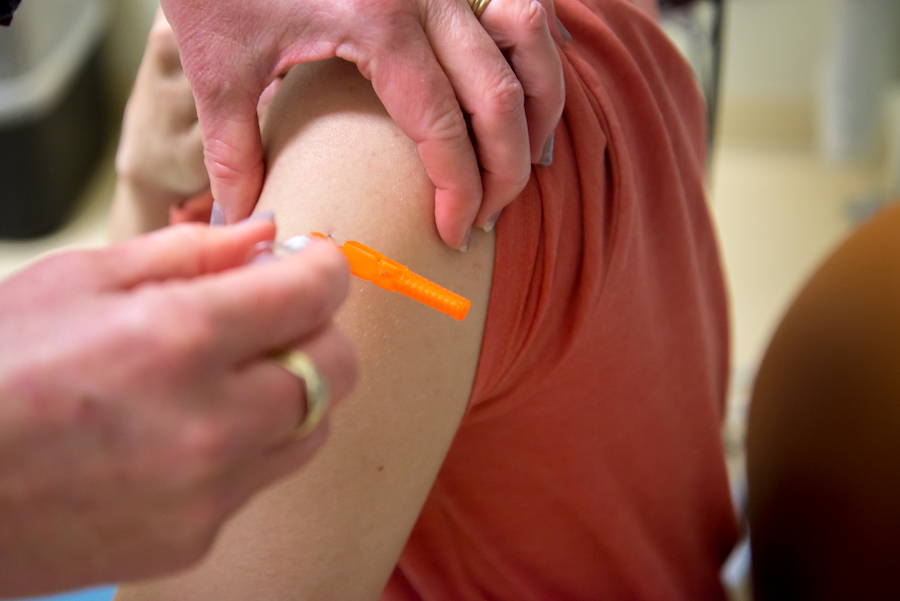
Every winter, healthcare providers and vulnerable populations are encouraged to receive a yearly vaccine for the flu, a disease caused by an influenza virus. The flu is highly contagious, spread through the air in droplets from sneezes and coughs or by direct contact with infected people. Previous pandemics have killed millions of people globally. With proper investigation and prediction modeling, a mix of flu strains are created annually to help inoculate millions of people worldwide from the worst effects.

Dr. Dean Blumberg is the chief of pediatric infectious diseases at the UC Davis Children’s Hospital. Blumberg is involved in childhood vaccination policies as well as research on the effectiveness of vaccine treatments.

“Every year, the CDC and WHO use data from currently circulating influenza strains to try to predict which ones need to be in the seasonal vaccines,” Blumberg said in an email interview. “This decision generally is made in April for the influenza vaccine that becomes available in the Fall in the US. Sometimes the strains included in the vaccine are a good match, like last season. But sometimes the predictions are off, and then there is less protection from the vaccine.”

One of the reasons annual vaccines are necessary for influenza is the quick rate of mutation of the viral surface proteins. Researchers believe this high mutation rate helps the virus move between host species, enabling it to infect birds, pigs and other organisms. A universal flu vaccine being tested by Oxford researchers would protect against all types of the flu virus by stimulating an immune response to some of the particles within the viral core, which stays relatively unchanged, rather than the shifting surface proteins.

One anonymous nurse reached for comment said that people should try to receive their flu vaccine before the Thanksgiving holidays. Large gatherings indoors during cold weather is a prime opportunity for a flu infection to ravage a community. Flu vaccines are available at the Student Health and Wellness Center at the UC Davis campus as well as at pharmacies around town such as CVS and Rite Aid.

The populations most vulnerable to infection are children and the elderly.

“In small children, the immune system is immature and developing, and this leads to increased deaths in children less than 6 months of age,” Blumberg said. “On the other end of the spectrum, the immune system gets weaker in older adults. So although adults >65 years of age account for only 15% of population in the US, this group accounts for more than 90% of the deaths due to influenza.”

Certain people are concerned vaccines may be unsafe, especially to children. A Facebook group called Californians for Vaccine Choice argues against mandatory vaccinations for children on the basis of parental rights over their children. One popular comment from October said people can “get poisoned by the ingredients of the Influenza vaccine.”

An anonymous nurse reached for comment said she has never seen a “vaccine injury” in 20 years of healthcare service.

According to Blumberg, allergic reactions occur in less than one in a million doses.

“All recommended influenza vaccines are non-live vaccines, so they cannot cause infections,” Blumberg said. “There is no scientific evidence that vaccines cause neurodevelopmental disorders. All vaccine ingredients have been carefully studied by the FDA and CDC.”

The Centers for Disease Control considers the development of vaccines to be one of the greatest achievements of public health. Vaccines help prevent disease development and transmission, and are far cheaper than medical treatments and the loss of productivity associated with being sick, making them a cost-effective public health intervention for people worldwide. New developments could advance a universal flu vaccine and take away the need for prediction in medicine.


Written By: George Ugartemendia — science@theaggie.org

Winter Traditions

JOHNNY LAI [(CC BY 2.0)] / FLICKR
How students spend breaks with family

Early winter is a time to reflect on the (almost) 12 months of 2017 and to self-analyze, as a new year will soon be within our celebratory, firework-accompanied reach. Sometimes this means confronting the fact that you called your mom maybe once a month or didn’t take the time to catch up with a family member while visiting home. College, with all it entails, means some aspects of life will be sacrificed to make room for others. Unfortunately for families back in hometowns, this usually means they are up on the chopping block.

Combining this state of regret with feelings of extra kindness, love and altruism often felt around this time of year can conjure up the need to engage in cozy, humbling traditions with your loved ones. If you are searching for a reminder of the family time you have to look forward to after finals or even some inspiration for your own lineage, reading about the following student traditions may help.

Bailey McCarthy, a second-year animal science major, has several annual traditions.

“My family and I attend Christmas Eve mass,” McCarthy said. “I bake cookies with my sisters, nieces and nephews so that the kids have something to put out with their letters for Santa. On New Year’s my family and some extended family get together to have the Annual New Year Games.”

These games are inspired by the show “Minute to Win It” and require splitting up her large family into teams.

“The prizes also depend on the age groups, but they could be like gift cards, alcohol and of course bragging rights,” McCarthy said.

As the years have passed, McCarthy has developed a bond with the festivities and what they do to her family.

“I enjoy all these traditions because they bring the family closer together. I will probably pass on all these traditions because it would create great holiday memories for my family.” McCarthy said.

Gabriel Escudero, a fourth-year neurobiology, physiology and behavior major, has a simpler but just as endearing tradition established with his family.

“[…] for Christmas usually my family is the one that holds kinda like this dinner with extended family so cousins come in from the next town over and sometimes different states,” Escudero said. “[It] almost rivals Thanksgiving sometimes. Then we stay up till midnight and open gifts with everybody.”

This holiday tradition stems from his roots in the Philippines.

“I know that that’s how they do it in the Philippines, […] my family emigrated from there, right, so I’m the first generation to be born in the United States,” Escudero said. “So they celebrate Christmas Eve and go to mass and then have Christmas day at midnight in celebration, so that is why they kind of brought it over here.”

For Escudero, the most meaningful part of what they do is catching up with family members he doesn’t see as much.

“It is nice to see all the family that comes over, especially if they are coming from other states and I don’t see them too often,” Escudero said. “Christmas has always been like a family kind of like get-together so it’s always good to see everybody have fun and exchange presents.”

Escudero highlighted the importance of reconnection once more, encouraging enacting traditions with your own friends and family, if not already in place.

“[…] in my experience traditions bring people that you don’t see very often together for a night of fun and catching up and stuff like that,” Escudero said. “I’m sure for other people, having that opportunity to catch up with people that they might have not seen in such a long time but [that] they are close with — I think that’s good, especially during like the holiday season. I would, I guess, recommend it, even if it’s just with a small group of people you know.”

Madison Friend, a second-year animal biology major, takes part in an ornament gift exchange and Black Friday shopping as part of her family traditions.

“My whole family celebrates on Christmas Eve, and we meet at someone’s house with ornaments that we picked out and wrapped,” Friend said. “For Black Friday shopping, every year before I was even born, we have gone to South Coast Plaza to walk around with all of our cousins and friends and anyone who wants to join. After shopping all day, we go back to my cousins house and play games.”

The Black Friday shopping tradition was started by her grandma in order for the family to have some fun after celebrating Thanksgiving. However, the ornament exchange idea began as a way to make their gift giving a little more meaningful.

“For the ornament gift exchange, we started when all of the cousins got older because the only thing we were giving to each other was gift cards, and it wasn’t as exciting as when we were kids,” Friend said. “This is now much more entertaining and fun, and we plan with our siblings how to steal the good ornaments.”

Friend enjoys these traditions mostly because she gets to be around her family and enjoy the memories they create from being together.

“I love being with my family. We get to catch up, hang out and share lots of laughs,” Friend said. “There are new jokes made every year that we never forget.”
She expressed a similar sentiment to McCarthy’s on how traditions have impacted her family.

“It builds connections and brings you closer to your family,” Friend said. “It gives everyone something to look forward to each year that you can add new twists to or keep just how it is. I think it is a special thing to see pass down the families.”


Written by: Cecilia Morales — arts@theaggie.org

Council to hire police oversight consultant

0
JEREMY DANG / AGGIE

City of Davis hikes up security

The Davis City Council is set to hire police oversight consultants Barbara Attard and Kathryn Olson in order to finish implementing police oversight changes. The new city manager, Mike Webb, will be authorized to execute the contract. Both Attard and Olson have experience in the field of police oversight.

“Police oversight issues have been in the national, state and local news over the past few years,” said Assistant City Manager Kelly Stachowicz. “The city council discussed police oversight in Davis at a meeting in July. At that meeting, they passed a motion to develop a plan to look at police oversight in Davis. Last month, the council approved the hiring of a consultant team to work on the effort over the next several months.”

According to a staff report and Mayor Robb Davis’ concept paper, the city manager’s office is set to appoint police oversight consultants to review the current system, historical documents and recommendations from the Human Relations Commission. In addition, they will be expected to participate in up to five public or sponsored forums as content experts for vulnerable groups who may not be willing to come to public forums. Davis-based facilitators could provide structure for community dialogue at the meeting, but the consultant would contribute accurate technical information input. Forums would be used to solicit community input on the goals, guiding principles and key desired processes for oversight. They would use their own experience, public input from forums, input from the Davis Police Department and review of extant systems to recommend one to three options that would seem to fit in Davis given size, policing history and community needs.

“The ultimate end [goal] is to create a police accountability system that increases transparency, builds trust, and fosters policing practices and policies that create public safety for the entire community,” said Mayor Robb Davis in his concept paper. “This accountability must involve both the police as an agency and the behavior of individual officers.”

Attard has previously worked with UC Davis on recommendations for its police department. She is currently working with Accountability Associates, based in San Francisco. She previously served as the San Jose independent police auditor and has held police review positions both in Berkeley and San Francisco. Olson, who is a UC Davis alumna, held positions as the director of the Office of Police Accountability in Seattle and with the Equal Employment Opportunity Commission in Seattle and Los Angeles. She has a long professional history working in the police oversight field, and is a practicing attorney in addition to being a current principal at Change Integration Consulting, which focuses on police accountability issues.

“This was a long time coming,” said Georgia Wills, a Davis resident since 2004. “Since the last oversight official, things have gone downhill. We need someone experienced to make the situation better and fix what has been broken since [the previous official] left.”

The Davis Police Department did not respond to a request for comment.


Written by: Prachita Chawla — city@theaggie.org


Last week in Senate

HANNAH LEE / AGGIE

Senate resolution recognizing “It’s Okay to be White” fliers as hate crime passes 11-1

On Thursday, Nov. 30 at 6:09 p.m., the ASUCD Senate meeting was called to order by Vice President Adilla Jamaludin. Senators Michael Gofman and Matthew Yamaguchi were absent. Internal Affairs Commissioner Jacob Ganz was also absent.

The meeting began with the Bike Barn’s quarterly report. The Bike Barn’s business manager, Lizzie Hall, a third-year design major, and its inventory manager, Vanessa Leedy, a third-year civil engineering major, spoke about recent developments.

Hall and Leedy said they are optimistic that the Bike Barn will see more profits this year, compared to the the $17 profit the unit made last year. So far this year, the Bike Barn has already provided students with 2,336 tire tube repairs and 3,915 other repairs.

Next, Aiden Ramey, a second-year electrical engineering major, spoke during public comments about his efforts to spearhead and design a city flag for Davis. Davis currently does not have a city flag and Ramey is hoping to encourage citizen involvement through a poll posted online at votedavisflag.com.

Following Ramey’s presentation, third-year electrical and computer engineering major Stacey Wong delivered the Xperimental College’s quarterly report. Wong is the director of the Xperimental College. Along with the addition of a new banner in front of the unit’s space near the South Silo, the Xperimental College is planning to refurbish the dance room in the coming year. The Xperimental College has also added new meditation and breathing classes for students.

ASUCD President Josh Dalavai spoke about how the UC Davis Athletics Department is looking to add a new women’s Division I athletics team. Due to UC Davis’ female-to-male student ratio becoming increasingly disproportionate this year, UC Davis must add one more women’s team to ensure equal opportunity for students and to abide by Title IX and NCAA requirements.

Students can expect a new women’s athletic team at the beginning of the 2018-19 school year. All current club sport teams and intramural sports teams at Davis are being considered. Furthermore, because this new team is required under Title IX, funding for the additional team will not be financed by students because it is the campus’ responsibility to fund.

Next, the Club Finance Council presented to the Senate. The CFC works with Pepsi to provide grants “to help pay for educational programs, guest speakers, conferences, performances, cultural shows, publications and other events that enrich campus life,” according to its website.

The Senate then moved on to Elections Committee confirmations. Rodney Tompkins, a second-year neurobiology, physiology and behavior major, was confirmed as vice chair of the Elections Committee. Tompkins, a former staff writer at The California Aggie and a former staffer for Senator Anastasia Ruttkay, spoke about utilizing The California Aggie to communicate more about what senators are currently doing for students on campus and what ASUCD Senate has the potential to do for students.

Justin Yap, a second-year biological sciences major, was also confirmed as a member of the Elections Committee. A current member of five other clubs and with three minors, Yap’s confirmation was widely confirmed by the Senate. Mahssa Rezaei, a second-year biological sciences major and a current a staffer for the executive office of ASUCD, was also confirmed as a member of the committee.

All three candidates touched on the current bias that has labeled the ASUCD Senate as a “political science majors club” and said they hope to begin working to combat that notion.

Naeema Kaleem, a fourth-year sociology major and the Elections Committee chair, delivered the Elections Committee’s quarterly report. In light of the uncontested Fall Election, Kaleem said she is looking forward to rebranding during Winter Quarter.

“If senators do their job and properly advertise and recruit folks, it truly will take two minutes to go online and read those platforms and vote,” Kaleem said.

Kaleem said the Elections Committee expects a much higher voter turnout next quarter.

“Each senator will reach out to three communities they represent or they ran to represent,” Kaleem said.

Next, the Mental Health Initiative gave its quarterly report. Events coming up include Mental Health Awareness Month as well as the Mental Health Conference. Students can attend the latter event in January where they can hear professionals as well as student panelists speak. Workshops will be available for students as well.

Nine new Mental Health committee members were confirmed.

The Senate took a 10-minute break at 8:44 p.m. After the break, students from the Whole Earth Festival gave their quarterly report.

Lauren Cabantac, a third-year psychology major, is the new unit director for Housing Advising for Undergraduate Students. Cabantac delivered the quarterly report to the Senate.

The Senate then discussed ASUCD Senate Resolution #2. The resolution was authored by Ethnic and Cultural Affairs Commissioner Julienne Correa and co-authored by more than 24 students.

SR #2 “recognizes the ‘It’s Ok To Be White’ posters as a hate crime, committed against students of color and [calls for] more transparency between administration, UC Davis Police Department, and ASUCD when hate crimes or hate incidents occur on campus.”

Senators hope to build on the resolution to systematically deal with hate crimes when they occur on campus. The resolution was passed by the Senate 11-1 — Senator Yamaguchi voted no. Following the report, the Senate then discussed newly-introduced resolutions.

The Senate brought up the previously-passed ASUCD Senate Bill #16 that was presented to the Senate floor on Nov. 16. SB #16 amends ASUCD Bylaw Section 616 to “strike out the requirement of cutting the number of stipend positions within the budget by 12.5 percent while maintaining the 12.5 percent increase to stipends,” according to the Senate minutes.

The Senate addressed new legislation. Senate Bill #17 will require “senators to report their adopted units on all events that occur at Senate,” according to the Senate agenda.

The meeting adjourned around 11:30 p.m.


Written by: Ally Russell — campus@theaggie.org

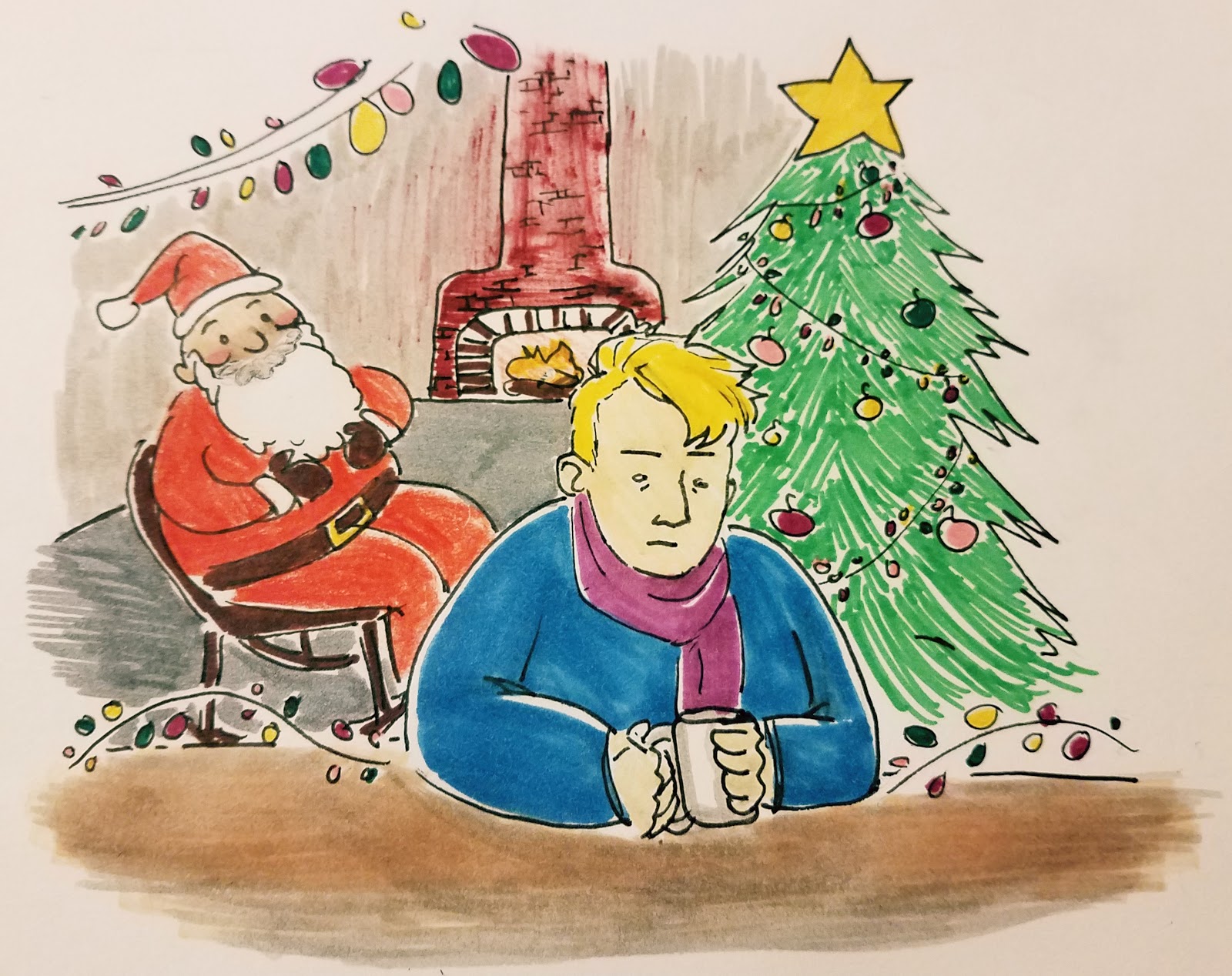
Cartoon: When everything wants you to be merry but it’s finals week

ELLIOT WHITE / AGGIE


By: Elliot White — opinion@theaggie.org


Disclaimer: The views and opinions expressed by individual cartoonists belong to the cartoonists alone and do not necessarily indicate the views and opinions held by The California Aggie.