55.4 F
Davis

Davis, California

Monday, December 22, 2025
Home Blog Page 604

Midsummer’s Update on Aggie Adventures

SRIYA MARAM / COURTESY

UC Davis students’ summer activities, internships, classes, lifestyles

A college summer is too long and too short all at once; too long to not catch a whiff of boredom now and then, and too short to take another midterm during summer classes. Nevertheless, summer is halfway over and Aggies have found different things to fill up their plates. From meeting up with high-school friends to career-oriented internships, they are making their own adventures.

Manasi Arora, a third-year neurobiology, physiology and behavior major, chose to stay in Davis for Summer Session I.

“I’m taking NPB 101 [systemic physiology], and so far it’s been pretty interesting,” Arora said. “It’s about the physiology of body systems, so it’s really integrative and honestly different from all of the lower-division classes I’ve taken.”

Arora was actually inspired to take this particular class over summer because of the professors teaching it.

“Dr. Liets and Dr. Bautista are teaching it and I’ve [heard] great things about them, so I wanted to take it with them,” Arora said. “I’m also [taking an online] cultural anthropology class at Ohlone, so I’m doing that on the side.”

Although Arora found the summer heat and the rigor of her classes challenging, she has been able to cope with both. She also spends a lot of her time working on her project at Hunter Lab — a lab that focuses on meiosis research.

The rest of summer, Arora has planned to shadow a breast cancer surgeon at Kaiser, bringing her closer to understanding what it means to become a physician and all the little things they must do on a daily basis.

“I shadowed her last summer too,” Arora said. “Her profession is extremely noble and there’s a lot of exposure that I’m getting. It’s such a cool experience being able to [watch] a physician in her daily life —there’s so much to learn and so much to ask about.”

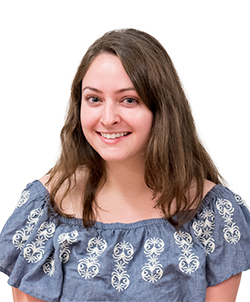
On the other hand, Sriya Maram, a third-year biotechnology major, took a leap from the small, quaint town of Davis and dove into San Francisco’s city life.

Maram found a job as a compliance intern at Stripe, a platform for running internet businesses.

“So compliance is making sure people use our products safely [and] follow regulations,” Maram said. “Its pretty cool […] it’s a mix of detective work but also a lot of operational flows, and I’m also doing a lot of research into different payment methods.”

Although she lives in the Bay Area, Maram decided to live in the city to fully experience life there.

“[It’s a] really cool experience,” Maram said. “It’s kind of a small girl, big city sort of thing. Its definitely different from commuting from home. Living in the city, the people, there’s always something to do on the weekends. There is so much diversity as well — a lot of different types of environments, food festivals and music.”

In addition to the colorful vibes of the city, Maram enjoyed the people aspect of her job and stepping into the adult world.

“Another thing I really liked was getting close to the other interns and seeing a lot of young people around the city,” Maram said. “I think the biggest part was living here by myself; it was a good introduction to the adult world without being too scary.”

Savita Sastry, a second-year biological sciences major, is pursuing both her passions toward scientific research and dance at the same time this summer.

Sastry is currently interning at the Molecular Medicine Research Institute (MMRI)  The summer of her junior year in high school, she participated as a high school student, and this year she has returned as an undergrad junior mentor to guide past versions of herself.

“I wanted to come back this summer and apply as a junior mentor, and I was chosen for that,” Sastry said. “So I got to experience this program as a student and now as a junior mentor.

The experience is just so different. On one hand, when I was a student, a lot of things were taken care of for me and I could just ask questions and have them answered by my mentors. But as a junior mentor, you’re exposed to so many different people and you have to interact in a more professional environment. You have to now be the one who does research on questions and be ready when anybody has a question.”

Sastry, however, found something to learn in the challenge and ambiguity of her new position.

“In the beginning it was a little rough and definitely really challenging,” Sastry said. “But I think it’s really cool that I get the opportunity to not only work in a lab, but be in a position where I’m uncomfortable and I’m not always gonna have the answers. Through those experiences I kind of adjust the way I’m teaching students or adjust the way I’m approaching problems in order to help them design their experiment and help them think like scientists.”

Sastry has also returned to practicing Kuchipudi this summer, a classical Indian dance form she has trained in for many years. She has been rehearsing with a group of other Kuchipudi dancers from different dance schools, each bringing their own twist and flavors to the art form. Sastry described this grouping of different styles as a platform for learning where the different dancers can teach and learn from one another.

“I’m getting the chance to learn and teach at the same time,” Sastry said. “[I’m] learning from others the way they do things and they’re probably doing the same for me. It’s like these two different learning environments (the lab and dance), at the same time. I think that’s the biggest takeaway I got from both things.”


Written by: Sahiti Vemula — features@theaggie.org

Local governments must step up and fix the housing crisis they helped create

GPS [(CC BY-SA 2.0)] / FLICKR (changes made)
High housing prices and a shortage of houses threaten California’s future

In light of a dismaying history of voting down legislation vital to mitigating California’s housing crisis, state officials announced that they will finally prioritize finding solutions to the soaring housing and rent prices, increased homelessness and severe undersupply of houses afflicting counties across the state.
It’s disheartening, though not entirely surprising, that California’s politicians have stalled so long on tackling the affordability problems that have clearly been escalating over the past several years. The state’s median house cost clocks in at $500,000 — two times the national median cost. Due to a shortage of homes, California also accounts for 22 percent of people living without permanent housing in the United States, despite accounting for a mere 12 percent of the nation’s overall population. And about one-third of those who can afford to rent housing in California spend more than 50 percent of their income on simply keeping a roof over their heads.

Most of the blame falls on local governments, which — due to a lack of effective enforcement — have consistently failed to follow affordable housing quotas established by the state. Stringent zoning laws, environmental regulations and outdated procedural laws have made it easy for cities and counties to discourage developers and create barriers to home construction. Community members — wanting to keep their housing prices high and championing “not-in-my-backyard” attitudes, as evident in Davis — have maintained a strong influence on elected officials, especially since homeowners are more likely to vote in elections and donate to campaigns.

Governor Jerry Brown has continually attempted to revise some of the most obstructive measures, such as the California Environmental Quality Act, in order to streamline development and bypass some of the towering roadblocks. But environmentalists, elected officials and homeowners have just as fervently shot these proposals down. One of their main complaints is that such bills would take power away from cities — even though they would really just eliminate cities’ ability to sidestep the affordable housing guidelines that they have promised but failed to honor.

The inability to reverse the housing crisis will undoubtedly jeopardize the prosperity of the state. California champions some of the most robust companies in the nation — from the tech industry in the Bay Area to the entertainment industry in Los Angeles to agriculture in the Central Valley. But housing prices in many of the metropolitan areas where these companies’ headquarters are stationed, such as Los Angeles and San Francisco, have skyrocketed as much as 75 percent in the last five years alone. If cities with thriving industries fail to decrease their housing prices, how are recent graduates and other young adults supposed to afford living where they want to work?

Out of the 130 housing measures proposed this year, the Senate has passed three bills, two of which — SB-2 and SB-3 — would increase funding for affordable housing. But with the state needing to subsidize a staggering $250 billion to fully combat the housing crisis, setting aside money for development cannot be the only step.

Far more crucial to solving the housing catastrophe are bills like SB-35, which would permit development projects to be streamlined through any city council or board of supervisors that have failed to meet the state’s quota for affordable housing. This would cut back on the time and money necessary for building houses as well as prevent community members from thwarting much-needed and legally-mandated neighborhood development.

But lawmakers have already provided reason to be cynical about the prospect of constructive reform. It’s a good sign that they’re focused on housing above all other issues when they reconvene this month. It’s not a good sign that they also just passed a bill that exempts the affluent Marin County — where a considerable amount of big-money campaign donors live — from adhering to affordable housing laws. If we hope to see a future in which California’s housing market is healthy, lawmakers must get serious about generating efficient change for all of their constituents — and not just appeasing those who will secure their reelections.


Written by: Taryn DeOilers — tldeoilers@ucdavis.edu

Disclaimer: The views and opinions expressed by individual columnists belong to the columnists alone and do not necessarily indicate the views and opinions held by The California Aggie.

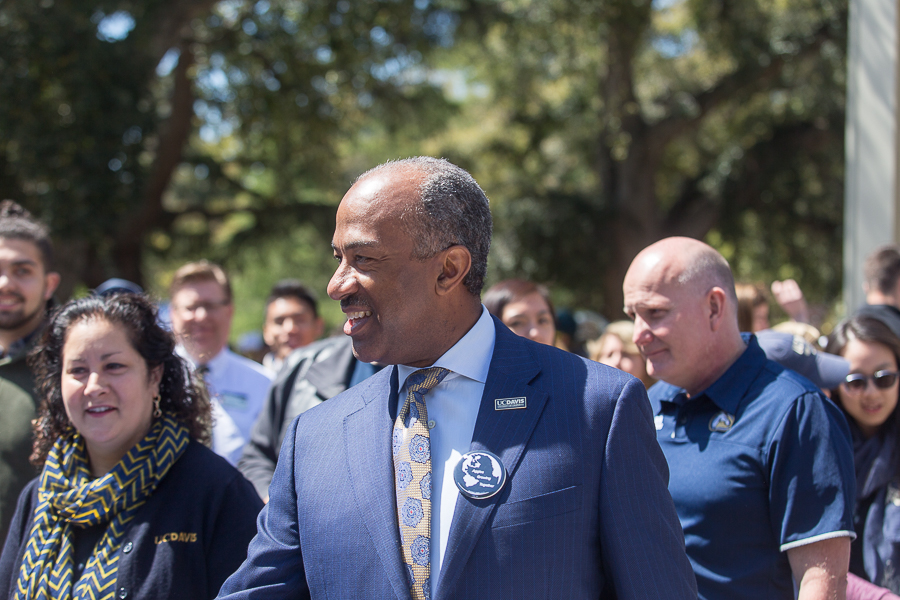
Chancellor May –– UC Davis officially has its seventh chancellor

JAY GELVEZON / AGGIE FILE

May discusses plans for coming year, controversial positions on external boards related to defense industry, achievements at Georgia Tech, hopes for university

Today, August 1, marks Gary May’s first day as the seventh chancellor of UC Davis. Several separate meet-and-greets with UC Davis students, faculty and staff members as well as members of the media have been planned at the North Lawn of Mrak Hall and the Welcome Center in Davis and at the UC Davis Health Education Building in Sacramento.

May, who has spent almost three decades at Georgia Tech as both a student and  faculty member, moved to Davis on July 24 with his wife, LeShelle. Upon his departure from Georgia Tech, leaving his position as Dean of the College of Engineering, May was honored with over a dozen goodbye parties. May said he is committed to creating the same kinds of close relationships he has fostered at Georgia Tech at UC Davis, though he acknowledges it will take time.

“Both LeShelle, my wife, and I, from a very early point in time, will be trying to meet as many faculty, staff, students, alumni, Davis community [and] Sacramento community members as we can,” May said. “[I am] just trying to be as open and accessible as I possibly can –– I don’t plan to turn down any requests for meetings. I have to listen and learn about the place. I know what I’ve read, but it’s always different hearing it from the people who are there, experiencing the university.”

May outlined several long-term and short-terms plans for the coming year, from fostering business ties between Sacramento and UC Davis to earning the university more recognition on a national scale as well as immediate action to fill open positions on his team.

“What I’d like to do is have the campus start thinking about strategic planning and […] where we want to be in the next five to ten years,” May said. “We’re already a top public university, but I think we can aim higher, I think we can raise the level of visibility for the campus.  We just need to be a little bit better about telling our story and bragging about ourselves to the rest of the state, the country and the world.”

May was visited by Sacramento Mayor Darrell Steinberg in Atlanta about a month ago to discuss plans to maximize the university’s presence in California’s capital.

“We’ve had really good success here in Atlanta, with Georgia Tech partnering with the city and the business community to put innovation centers very close to the campus,” May said. “Sacramento is 11 miles away, […but] if we can overcome those transportation issues, we can build a really strong partnership with the city of Sacramento. What I’m thinking about and dreaming about is […] a place for business entrepreneurship and innovation –– something that becomes a win-win for our campus and for the city of Sacramento.”

Addressing university-related issues he will face in the coming year, May said plans are currently being formulated to help alleviate the consequences of a growing student body –– consequences including higher rents in the community and larger class sizes.

Furthermore, one especially relevant issue at UC Davis and many college campuses nationwide is the handling of hateful speech on campus.

“We have to have, at our universities, the ability for people to express popular and unpopular points of view,” May said. “We can’t inhibit that. Now at the same time, our primary function is to educate the students at the university and we can’t have a place […] where anyone feels so inhibited that they can’t perform academically. You can talk about whatever you’d like to talk about, you can give speeches, you can have rallies, but if you’re promoting an […] environment that inhibits the learning of other students, that’s where we have to draw the line. I’m a big believer in free speech, but I also think that students should feel like they have a safe environment to work and study in.”

ASUCD President Josh Dalavai said he is hopeful and excited for the coming year with May as chancellor.

“I’m excited about fresh perspective,” Dalavai said. “I think that he’s definitely bringing a lot of new ideas to the table. I hope that he sees students as an important stakeholder on campus, which it definitely seems like so far [is] the case.”

After May’s selection as chancellor, both Dalavai and ASUCD Vice President Adilla Jamaludin met with the Mays. The meeting took place before The Sacramento Bee ran an article announcing Gary May’s positions on the boards of Leidos, a technology and defense company, and Charles Stark Draper Laboratory, a defense, technology and medicine lab –– and the near $300,000 he earns from the positions.

“I was slightly disappointed in [regards to] the board involvement, especially with the nature of what it was,” Dalavai said. “I understand that it was Georgia Tech and that his involvement on those military external boards was correlated to the academic missions of the university and career employment and internship employment opportunities for students. That being said, it was still something that was somewhat concerning.”

Following the publication of the article, May requested to meet with both The Aggie and the students who planned to –– and later did –– protest at the Pack the Patio event to discuss his board positions. Students at the event called May a “war profiteer.”

“I think that’s a really unfair characterization,” May said. “My great-uncle was a Tuskegee Airman, my sister works at Boeing in the defense part of the company in St. Louis and many family members have had military service –– I think that’s honorable.  I don’t find that to be objectionable in the least, and I know that there will be people that will disagree with that position, but I hope there’s room for various points of view at UC Davis and [that] we can agree to disagree.”

May also added that Leidos does not build or deploy weapons. Leidos is involved in such areas of defense as “airborne intelligence” and simulation technology used in the U.S. Army. Additionally, May said he feels the salary he earns sitting on these boards is not related to his professional role as chancellor.

“I don’t really think […] the money I receive from boards should be a concern from the Davis community, unless somehow that was taking away from my performance as chancellor,” May said. “I’ve been on this board for two years now, […and in] my last performance review as dean, the provost said this is my best year. Clearly, board service does not detract from, or at least has not detracted from, my performance in my day job.”

May is open to discussing his board positions; he said transparency is a personal priority of his.

“Transparency is my style,” May said. “I try to explain my decision-making process […] and give the rationale very openly. Not everyone will agree with the decisions I make, that’s unrealistic, but I think at least people will understand my thought process and rationale and won’t feel like anything was done under the table.”

During the chancellor-search process, some students were frustrated with their lack of involvement; ASUCD passed a resolution calling for greater transparency in the process. As dean at Georgia Tech, May said he met with an undergraduate and graduate student advisory council monthly to discuss student issues; May said he is planning to involve student voices in a major way as chancellor.

“We’ll be sure to make sure that students are represented on search committees for high-level leadership positions,” May said. “I also have two student [representatives who are] basically my liaisons to the rest of the student body; I’ll meet with them regularly. I’m a very big believer that students should be involved in all aspects of student life.”

Additionally, on his personal Facebook account, May has begun to accept all UC Davis students –– his friends list totals over 3,200. As a result, May said people can have access to him “in a different format than they might otherwise have.”

May also remained involved and actively engaged with students at Georgia Tech through the Summer Undergraduate Research in Engineering/Science (SURE) and Facilitating Academic Careers in Engineering and Science (FACES) programs he created. For his efforts with these programs, May was awarded a Presidential Award for Excellence in Science, Mathematics and Engineering Mentoring from former President Barack Obama.

“SURE […is a] ten-week, undergraduate research experience, targeted at underrepresented minority students, but open to all students,” May said. “The ultimate goal is to get those students into graduate schools. Over the life of this program, more than 500 students have participated, about 75 percent –– based on our last longitudinal study –– have gone to graduate school.”

May, who attended Georgia Tech as an undergraduate student, said he was the only black student in “many of his classes.” The first black dean of the College of Engineering at Georgia Tech, May is also UC Davis’ first chancellor of color.

“I think it’ll be a visible symbol that UC Davis praises diversity,” May said. “But I stress to people –– I’m not the dean of the black students, I’m not going to be the chancellor of the black students. I’m going to be the chancellor of the university. My responsibilities will be broader than that, but they will also have to pay attention to that very important role I’ll have as an advocate and a champion for diversity.”

Having met both members of the faculty and staff population as well as the student population, May said he feels UC Davis is “a very impressive place.” One of the main differences, he said, between Georgia Tech and UC Davis is that student activism has a very minimal role at Georgia Tech. Dalavai said he hopes May will embrace the student activism of UC Davis.

“It’s a large part of the culture here and I think a crucial part of the culture,” Dalavai said. “Oftentimes when the ‘proper’ channels fail to establish accountability, it’s student activism that carries that burden.”

Having experienced student activism firsthand during his initial meeting with the general student body, May said he hopes his board involvement does not “become a distraction” and that the UC Davis community will judge him based upon his “performance as chancellor.”

“I’m very flattered that I have the opportunity to be in leadership here,” May said. “It’s really going to be an exceptional opportunity not just for me, but I think for the university. We hope to make Davis one of the […] handful of universities that people think about when they think about the nation’s great public research universities. I’m looking forward to joining the community of Davis and becoming an Aggie.”


Written by: Hannah Holzer — campus@theaggie.org

A reflection on July’s Art After Dark: Honey

NICKI PADAR / AGGIE FILE

Kicking off this month with art, live music, honey tasting, drinks

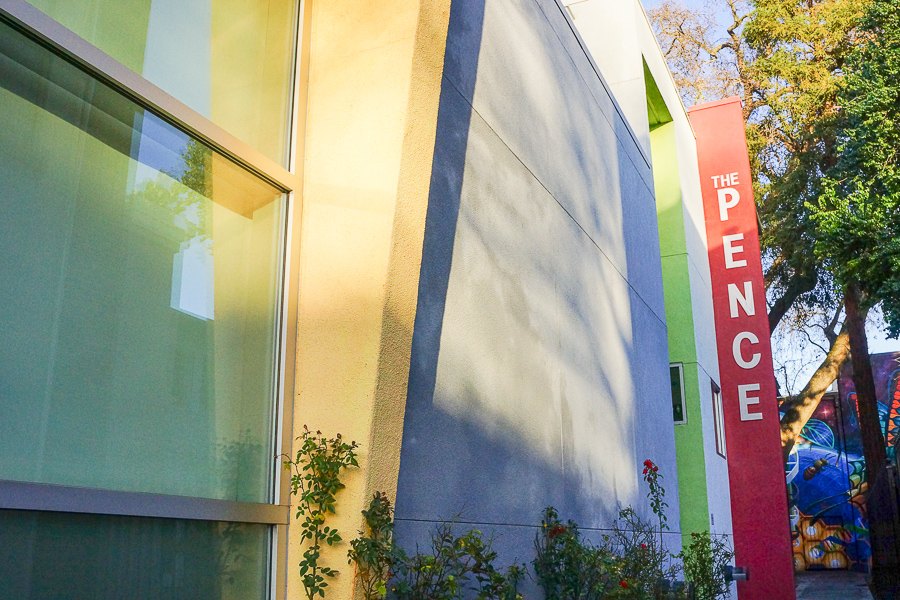
Summer in Davis is undoubtedly my least favorite time of year, solely due to its intolerable heat; it would be a miracle if I ever left my room. Although I might personally be reluctant to embrace the scorching sun of mid-July, Davis always puts its best foot forward, hosting myriad summer events for the locals. In an effort to create a positive spin on the excruciating heat, the Pence Gallery’s monthly Art After Dark series took on the theme of “honey.” With honey tasting from a local honey vendor, live music by Big Sticky Mess, a visit from Explorit Science Center and honey-themed cocktails, the event made July a little bit sweeter.

“We do have a lot of warmth and heat in our quilt show, so we came up with honey; it went with the vein of the artwork and also was something we could use to have the community together by bringing our local honey vendor and the band Big Sticky Mess, which is our little honey pun,” said Stephanie Kocsik, the special events and digital marketing coordinator at the Pence Gallery.

Local band Big Sticky Mess set a euphoric atmosphere with their fresh sounds and quick humor in between songs and, most importantly, united members of the Davis community with their live music. The event was meticulously arranged to fit its theme, with a minibar serving an array of cocktails called the redheaded entomologist and the bee sting and even showcased some bee-related artwork in addition to its quilt exhibit.

Each month, Pence Gallery creates a theme for Art After Dark, inspired by its rotating artwork. This month, Pence joined the Studio Art Quilt Associates for the biennial quilt exhibit, presenting a collection of eclectic textile art submissions, each one painstakingly stitched by its artist.

This month’s theme of “honey” and its connection to the quilt exhibit may seem subtle, but the connection is clever. The idea was to create a theme in tandem with the summer art quilts, and the concept of melty, golden honey was a surprisingly perfect match.

“The theme of honey is just something that, while we were spitting ideas to each other, the art director and myself got to the word ‘honey’ and thought, ‘It’s hot, it’s summer, it’s Davis, and we can be local,’ so we just ran with it,” Kocsik said. “We got a preview catalog of all the quilts that will be here as well, and we saw that there was a huge summer theme around them and a warm, cultural vein running through everything with all the deconstructed dress and shirts. There are people in the area that are really good with textiles and fiber art, so they put their work to show that it’s more that the quilt your grandma made you; it can be fine art and something incredibly difficult to produce.”

The gallery invited Explorit Science Center to merge art and science together — an unlikely but harmonious match. This partnership revealed the beauty in science, while also raising awareness for the protection of bees.

“We’ve been collaborating with Explorit this whole time, and it’s always great when we can give them almost a pure science to bank off of because we have a lot of families and a lot of kids that come in,” Kosik said. “We really love that they can do something hands-on for the people. We’re also both kind of underappreciated. I mean, we’re not on E Street or a nightclub or anything, and neither is Explorit, so it’s great to just get in here by way of working together.”

The best part about the event was that everything was local and quintessentially Davis. While triple-digit temperatures may be a hindrance to have fun in the sun, you can always count on events like Art After Dark to get you out of the comfort of your cool, air-conditioned apartment.

Written by: Becky Lee — arts@theaggie.org

Magma reservoirs more similar to snow cone than vat of boiling lava

KARI COOPER / COURTESY

New tools allow for accurate analyses of subsurface systems

Kari Cooper, a professor in the Earth and Planetary Sciences Department at UC Davis, is researching what happens underneath a volcano through indirect examinations.

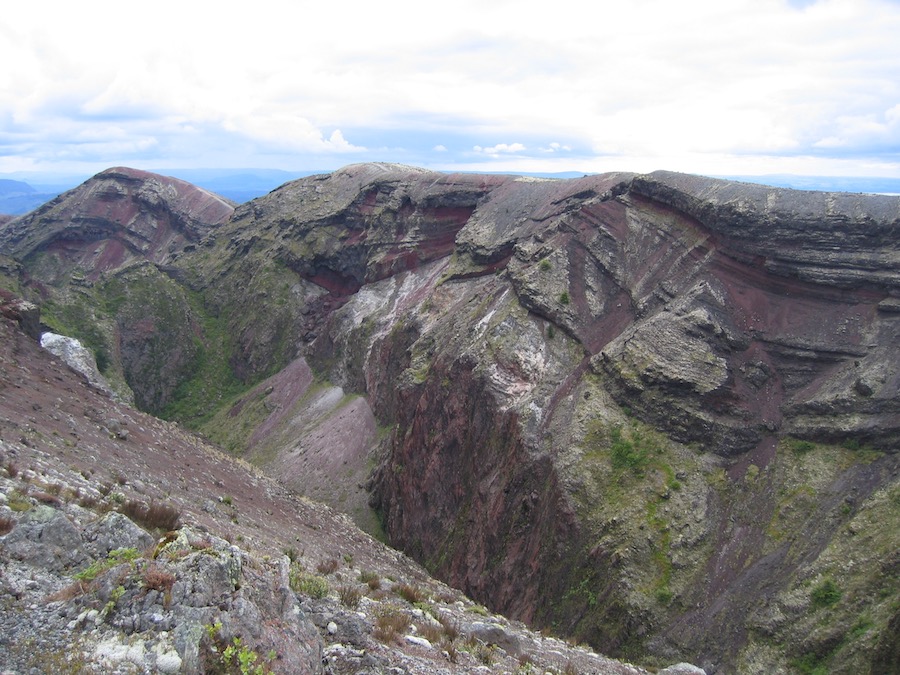
Cooper’s research group studied post-eruption volcanoes in New Zealand, the most recent of which was about 200 years old, which is considered relatively young. This type of analyses combined two different sets of data which hadn’t been put together with this volcanic crystal before.

“These crystals are called zircon,” Cooper said. “They’re one of the primary ways that we can determine the age of a magma. The crystals just happen to have the right chemical composition that we can date them using radiometric data. For that reason, they’re an important archive of what’s going on. This is something that we just did in the last couple of years that’s culminated in this publication [released June 15] — being able to do this in this particular type of crystal — not the dating itself, as that’s been around a long time, but connecting that to the temperature information. This combination of age information and temperature information within volcanic crystals that particular combination started with our work in 2014. It’s been in recent years that we’ve been able to connect these two pieces of information about the subsystem.”

Other crystals had been used in previous research, but Cooper’s group is the first to be able to closely examine zircon crystals specifically. Most laboratories do not have the necessary equipment to synthesize and analyze such tiny materials. Adam Kent, a professor in the College of Earth, Ocean, and Atmospheric Sciences at Oregon State University and a co-author of the paper, published in Science, stated that there are only a few people capable of doing these analyses.

“Especially with what [Cooper] does, there’s only a handful of people in the world who are set up to do that and know how to do it,” Kent said. “So, we’ve probably had [this research] mostly to ourselves. The zircon technique, again, you need a specialized piece of equipment, like a five million dollar thing called an ion probe.”

Through a complex series of actions and with specialized equipment, the researchers can obtain a profile of the chemical variation derived from different parts of the zircon crystals. What is even more impressive is that the zircons are each 100 micrometers long, which is about the width of a single human hair.

“We decided to look at zircon because it is a common ‘accessory’ mineral,” said Allison Rubin, the lead author and a graduate student of Cooper’s. “It’s not present in very large abundances, but it does have a tendency to ‘suck up’ these elements that don’t go into any other crystals. So we can use them to date them and trace where they come from — like if they come from the mantle or the crust of the earth. Basically, zircons are unique in that they can be used in ways most other minerals can’t, to preserve the information about the melt in which they were formed.”

Magma reservoirs are completely different than the popular Hollywood view of a boiling hot vat of lava underneath a volcano. One of the analogies of volcanic magma is that it’s like a snow cone — mostly solid, with some liquid running through it.

“The emerging view of magma is actually that it’s not a liquid like water, it’s more complicated — it’s a mixture of solids and liquids,” Kent said. “It contains a lot of crystals. If you have a lot of crystals, more than about 50 percent, the magma can’t go inward. Basically, [it] stays as a solid rock. As you get more liquid, if you get more than about half as liquid, you can actually make it flow.”

If the liquid-solid percentage exceeds a certain point, an eruption may occur.

“You can do a couple different things to trigger an eruption,” Rubin said. “You can increase the heat in the system. For example, you can have a hotter body of magma come up from underneath and increase the temperature in the system, generate a lot of melt and cause an eruption that way. You can decrease the pressure, so that magma rises up through the crust. There is a thermodynamic point that will cause it to rise and it will start to erupt. Essentially, if you end up with a body of melt that is saturated, which we call volatiles, which are dissolved liquids and gases, it’s like shaking a bottle of soda. The volatiles in the magma can trigger an eruption that way.”

One of the study’s more surprising developments was finding proof that magma was relatively cold, something that other researchers had theorized but had never really found solid evidence for.

“This is the first time we’ve been able to actually put numbers on this,” Rubin said. “For example, people have previously said, ‘we think magma chambers or reservoirs have been spending long periods of time at low temperatures and short periods of time at high temperatures’, and this is the first direct evidence we’ve seen that is happening, and the first numbers we’ve been able to put on it. We can say, ‘Okay likely only a couple percent of its lifetime was spent at high temperatures and over 95 or 96% of its time, it’s spent at low temperatures.’”

Not only does this research create new tools for future work, but there are also practical and real-world applications.

“We are, in theory, capable of forecasting volcanic eruptions at a similar level that we can forecast weather, but we need a lot more information,” Cooper said. “We need an idea of what’s going on below the surface in order to interpret all of these monitoring signals in order to understand what they mean in terms of what’s happening below the surface. What my work does is provide more information about how we think about what happens below the surface and how that connects to the monitoring of hazards.”

Cooper also stated that, at any time, there are anywhere from 10 to 20 volcanic eruptions happening in the world.

“As we discovered in the Iceland eruption in 2010, that disrupted air traffic over most of Europe for weeks and that was a very small eruption,” Cooper said. “You don’t have to live near a volcano for volcanic eruptions to disrupt you. This is not an uncommon phenomenon globally. The chances are that sometime in your lifetime, you will be affected indirectly or directly by a volcanic eruption.”

So far, Cooper has received support and compliments from some of her fellow researchers, but she expects that there will be groups that that will come up with rebuttals in the next few years.

“I think that one of the important things in this paper is that it’s going to stimulate a lot of discussion,” Cooper said. “There are going to be a lot of people who agree with parts of it, disagree with other parts of it, or disagree with it all. It’ll be part of the overall scientific conversation, so I’m curious to see how people are reacting to it.”


Written by: Jack Carrillo Concordia — science@theaggie.org

Humor: Sean Spicer and Katehi to star in buddy-cop comedy “Resigned (kinda)”

GAGE SKIDMORE [(CC BY-SA 2.0)] / FLICKR (left), AARON JUAREZ / AGGIE FILE (right)
Two people pushed out of their jobs politely resign ON THEIR OWN TERMS

This summer’s ragtag extravaganza will soon be found in theaters near you, starring America’s sweetheart and Davis’ sweetheart together for the first time. Sean Spicer and Linda Katehi will be playing two cops in Michael Bay’s forthcoming film, Resigned (kinda).

The plot has everything. You like the good cop/bad cop dynamic commonly featured in cinema? Well, you’re going to fall in love with Katehi and Spicer’s rendition of the bad cop/bad cop dynamic. Learn to chuckle again as Spicer sweats through telling a man his “Miranda Cosgrove” rights (someone forgot to study again!) while classic Linda checks the scene for any clues (or even a spare $420,000).

Spicer proves himself to be the master of disguise, solving crimes by dressing up — even as the Easter Bunny! Katehi proves to be the stealthiest cop in the game, hiding in the CoHo behind a newspaper with two holes cut in it for her to see through, just so she can be on the lookout for anything fishy.

The two cops end up taking on a big case all on their own: finding the mean, ugly robber who took all the money bags from the local bank. After they notice that the robber set off a smoke bomb on the scene so no one would catch him, Spicer retorts, “Hitler wasn’t even this bad!” Classic Spicer, not knowing the history about Hitler or anything at all. Katehi quickly slaps Spicer’s shoulder, and then he looks into the camera and says, “Whoops!” Classic comedy.

The movie ends the way you think it would: The whole police force is crowded around our two lovable goofs, screaming at them that they should leave and that they aren’t fit for this line of work. Just then, Katehi and Spicey throw on their sickest pairs of aviator sunglasses and declare, “You can’t get rid of us if we get rid of ourselves.” They then walk away from the exploding police station.

Critics claim this movie is going to tank when it hits the big screen, but Spicer assures us that it’ll certainly have more attendees than Obama’s inauguration, even though those numbers don’t seem to add up at all.

Written by: Olivia Luchini — ocluchini@ucdavis.edu

(This article is humor and/or satire, and its content is purely fictional. The story and the names of “sources” are fictionalized.)

Guest: How my role as The Aggie’s copy chief has influenced my perspective of UC Davis

ALEXA FONTANILLA / AGGIE

A year in reflection: What I’ve learned from editing each and every Aggie article

When I tell people that I’m the copy chief at The California Aggie I often get blank stares or looks of confusion. This is probably related to the fact that people literally think I make paper copies or they simply don’t know what copy is. Those who have exposure to journalism, on the other hand, tend to view copy editing as a necessary task that they would rather hand off to someone else. Personally, however, I think my job is underrated.

Each week, whether I like it or not, I read and edit every article produced by The Aggie before its publication. Admittedly, this does sound monotonous — even I have moments when my job feels repetitive (the next time I have to edit an article about Linda Katehi I might break my computer). That being said, my role as copy chief has given me the opportunity to be a fly on the wall for everything that happens on campus and within the community. Thanks to the weekly editing process and my uncomfortably good memory, I have essentially turned into a walking almanac on all things Davis. After nearly two years at the copy desk, I thought it’d be a good time to share some of the discoveries I’ve made from reading through countless Aggie articles.


  1. No community is exempt from discrimination and violence, but we’re pretty lucky

The Davis community has the reputation of being an extremely welcoming and safe place to live. Unfortunately, college towns also bring instances of crime and negativity that are unavoidable, as was shown by a number of events this year. Most notable was the series of hate crimes directed toward the Davis Islamic Center, one in January and another in June. Both crimes involved vandalism and directly targeted Muslim practices. UC Davis was also faced with a few safety concerns, one involving a horror movie-esque clown lingering in West Village with a knife and another involving two armed men approaching a fraternity house in Parkway Circle. Continually, events relating to Milo Yiannopoulos’ campus appearance and recent reporting on sexual violence have exemplified the many controversies that exist within Davis.

As shocking and hurtful as each of these incidents were, the resilience and passion shown by the people of Davis are true testaments to why the community earned its welcoming reputation in the first place. Alongside each act of violence were signs of solidarity and support. Religious groups gathered together at a Statement of Love event to show togetherness with the Islamic Center, students rallied against rape culture and the UC Davis Police implemented a safety walk to ensure that campus is well-lit at night. Although it’s impossible to expect a community to be free of crime, hate and violence, it’s the ability of our people to come together in support of each other that makes us unique — I look forward to seeing students’ future progress in creating a respectful and safe university environment.


  1. There’s no stereotypical UC Davis student

Journalism is nothing without good interviews, and Aggie staff writers interact with countless students, staff and community members each week. As the copy chief, it’s my job to look over each interviewee’s information, such as major, job title and year in school. Over time, I’ve noticed that Davis students are especially diverse when it comes to what they’re involved in on campus — no two students have the same combination of majors, minors, sports, jobs and other activities. It never fails to surprise me when I see a student who, for example, is a biomedical engineering and theater and dance double major with a minor in women’s and gender studies who also works at the CoHo, interns at The Dairy and codes in his or her free time (I know you’re out there).

I think this is typical for two reasons: UC Davis students love to expose themselves to different activities and groups of people, and the university provides opportunities in a wide range of disciplines. Unlike other schools, people’s hobbies don’t always match up with what they are studying or their future plans, but what’s more important is that students are open to fully embracing what they love to do. I’m no stranger to this. As an Aggie staff member, people automatically assume that I’m an English major, but in truth I love math and data analytics and I’m studying managerial economics. By witnessing what my peers are passionate about within Aggie articles, I’ve learned to express myself and make the things I love to do a priority.


  1. Davis isn’t boring — just make sure you keep an open mind

When I was a high schooler in San Diego, all I knew about Davis was that there are a lot of vet students and even more cows. Even as a first-year student, I still thought that Davis was somewhat boring compared to universities located in big cities. Since then, I’ve discovered that Davis is actually incredibly entertaining, as long as you’re willing to keep an open mind and embrace your weird side every once in awhile. Thanks to features, campus and arts articles published by The Aggie, I’ve learned about quite a few of Davis’ hidden treasures. One example of Davis’ quirky entertainment is the physics cats, a group of stray cats that live behind the Physics Building in miniature homes constructed by students. Another personal favorite are the Arboretum’s river otters that swim in Putah Creek — admittedly, I didn’t believe they were real until I saw them for myself. If animals aren’t your thing, the Mondavi Center also offers countless concerts, guest speakers and other events throughout the year. I also love to people-watch at the Farmers Market, hike around Lake Berryessa, stroll by the domes and attend campus-sponsored events at the Jan Shrem and Maria Manetti Shrem Museum, as well as the Quad.


I’m so grateful that working as copy chief has helped me navigate the ins and outs of UC Davis and I look forward to continuing to get a behind-the-scenes look at the many exciting, noteworthy and comical events that take place in the future.

Now that you know what copy is, please remember that if you ever find a grammatical mistake in The Aggie, it’s probably my fault, but it’s one in the hundreds of articles I read every quarter — nobody’s perfect.

Written by: Olivia Rockeman — copy@theaggie.org


Disclaimer: The views and opinions expressed by individual columnists belong to the columnists alone and do not necessarily indicate the views and opinions held by The California Aggie.

Humor: Student forgets sunscreen, learns true meaning of UV: Ultraviolent Rays

Don’t forget the sunblock. Ever.

A sunny day at the beach, not a cloud in the sky — yet Ashley Fairskyn had no idea of the hidden menace. The lurking predator. But it was far too late before she realized that this monstrosity had already sunk its teeth into her flesh.

“That was its name,” said Fairskyn, as her eyes trailed off into nowhere. “UV… Rays.” She hesitated as the name rolled off her tongue.

“Everything happened so fast,” she continued. “Before I could realize it, I had already sustained lifelong skin damage.”

Fairskyn had finally learned the true meaning of the scientific term UV rays. You thought it was Ultraviolet Rays — that’s because you’re dumb. The true meaning of UV Rays is a term much more fitting: Ultraviolent Rays.

You see, long ago when the universe was still very hot from the Big Bang, there lived a bundle of bouncing photons called “Violent.” Violent was very happy to be living all on their lonesome and was satisfied that, among the many other photons and particles of matter in the universe, they were just as meaningful and happy as the rest. But suddenly a creature, which called itself “human,” came along and decided they were very important and smart. And you can imagine how that’d make a bundle of photons feel. I mean, it’s just kind of rude.

So Violent decided that they needed to go.

“These humans have gotten to be completely annoying,” Violent said. “They’re self-important, petty and, most importantly, they never ever invite me to brunch. And they even have the audacity to assume that a bundle of photons doesn’t have a history of its own — that kind of just discounts my life story. Again, I’m not mad. I just think it’s a little impolite.”

So finally Violent became their final form: Ultraviolent Rays.

“I’d like to think I’m a little bit of a villain even though I’m really just fighting for the right of photons like me to be viewed as sentient beings,” Ultraviolent Rays said. “The whole villainous name is just to have a little fun. In the end I’m just an activist like anyone else.”

Next time, Ashley, bring the sunblock.

Written by: Aaron Levins — adlevins@ucdavis.com


(This article is humor and/or satire, and its content is purely fictional. The story and the names of “sources” are fictionalized.)

Yolo County Libraries showcase new selections

DIANA LI / AGGIE

Library introduces shelves for self-published local authors

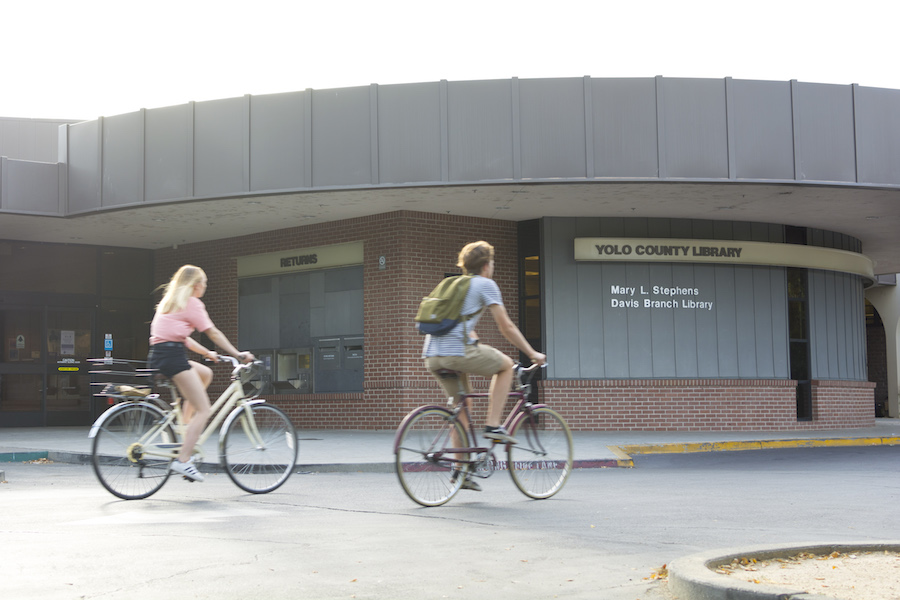
The Yolo County Library has a brand new program in place to support local, self-published works by authors in the area. The libraries are introducing a shelf into each library that will house books from writers in the community who have written and independently published their own books.

“We want to honor these local authors and provide access to these materials. Libraries always get offers from people who want to donate books to us,” said Scott Love, the manager of West Yolo Regional and the Mary L. Stephens branch. “There’s been a change in the industry so that now it’s easier for an individual to self-publish a book. So, for that reason, we had a boom in the number of people who hoped to add their works to our collection.”

The library has already received several books from local, self-published authors, and hopes to place them on its shelves in the coming months after a review. They plan to keep these books on their shelves for one year, after which they will re-evaluate each book and decide whether or not to switch it out with another local author’s submission. Each Yolo County branch will have a shelf devoted to these local works, aside from the South Davis Montgomery branch at Marguerite Montgomery Elementary School, due to a lack of shelf space.

Love also stated that, depending on how successful this book program is, the library may later include other local self-published works of art on these shelves, such as student films or independent music. Writing and publishing a book used to be a nearly impossible task, especially as an independent writer without the backing of a publishing company. But 21st-century technology has made the materials and process much more inexpensive and accessible to writers who want their voices to be heard, and the Yolo County Library’s involvement in helping these writers distribute their work models what the future of independent artistry could become.

“Since we’ve announced it, I’ve seen already a minimum of a half-dozen people come in and bring us their books,” said Lana Harman, a Youth Services librarian in Yolo County. “At this time it’s just books, […] but it could be expanded to DVDs and CDs.”

For information on submitting your own work for consideration, contact Lana Harman or visit the Yolo County Library’s website for more information. Be sure to check out the Local Author’s shelf on your next visit to Davis’ Mary L. Stephens Library on F and 14th Street.

Written by: Ahash Francis — city@theaggie.org

UC Davis Children’s Hospital receives high marks in national ranking

CHRISTIE NEO / AGGIE

U.S. News & World Report ranked hospital among best for five pediatric specialties

The UC Davis Children’s Hospital was nationally ranked in five categories in the 2017-18 Best Children’s Hospitals rankings by the U.S. News & World Report. The hospital received rankings in neonatology, in which it placed 16th; nephrology, in which it placed 23rd; diabetes and endocrinology, in which it placed 41st; orthopedics, in which it placed 18th and urology, in which it placed 26th, according to a press release. The hospital received its rankings for orthopedics and urology alongside Shriners Hospital for Children of Northern California –– a long-time partner in specialized treatment and care.

“We are thrilled to be recognized nationally in the U.S. News‘ Children’s Hospital rankings,” said Ann Madden Rice, the chief executive officer of the UC Davis Medical Center and its Children’s Hospital, in the press release. “Our physicians, nurses and our health care teams deserve this honor for the excellent care provided for children in the Sacramento region and beyond. It is our privilege to deliver world-class pediatric specialty care to the children in the 33-county area that we serve.”

In comparison to the 2016-17 ranking, the hospital moved up in the rankings for neonatology, nephrology, urology and orthopedics.

Like the UC Davis Medical Center, the Children’s Hospital provides ample opportunities for UC Davis student involvement.

“UC Davis medical students are actively involved in our Children’s Hospital,” said Dr. Kevin Coulter, the chair of the Department of Pediatrics and the medical director at UC Davis Children’s Hospital, via email. “Under the supervision of our pediatricians in the Department of Pediatrics, they are able to closely observe and participate in the care of infants and children admitted to our hospital.”

Written by: Jayashri Padmanabhan — campus@theaggie.org

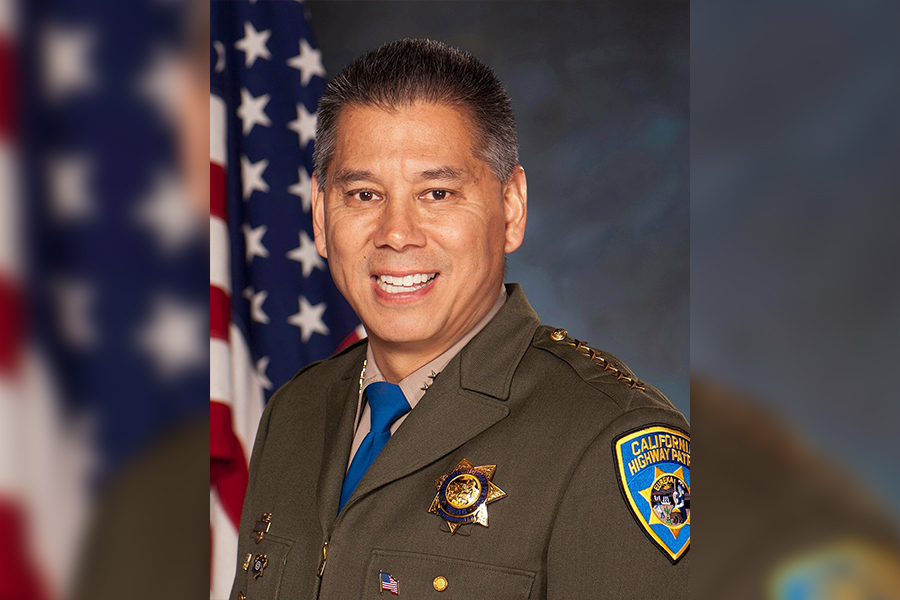
Joseph A. Farrow named new UC Davis chief of police

CALIFORNIA HIGHWAY PATROL / COURTESY

Farrow has worked with California Highway Patrol for 37 years, held every ranking

Joseph A. Farrow was named the new UC Davis chief of police after a joint decision was made by Interim Chancellor Ralph Hexter and incoming Chancellor Gary May, according to a press release. After Chief of Police Matt Carmichael stepped down from the position in August of 2016, Lt. Jennifer Garcia served as interim chief of police for the university. Farrow will assume the position before the start of the new school year, around late August.

Farrow has held every ranking at the California Highway Patrol (CHP) over the course of his 37-year career. He was appointed by former Governor Arnold Schwarzenegger in 2008 to the position of CHP commissioner — the first Japanese-American to hold that title — overseeing a staff of 11,000 employees and a $2.3 billion budget. In the position of UC Davis chief of police, Farrow will oversee 80 full-time staff members, in addition to 50 student staff members.

Farrow holds a bachelor’s degree from Sacramento State in criminal science and a master’s degree from San Diego State University in executive leadership.

According to the press release, Farrow is “a graduate of the FBI’s National Academy and National Executive Institute” as well as an appointee to the California Racial and Identity Profiling Advisory Board by former California Attorney General Kamala Harris and California’s designated representative for the National Consortium for Justice Information and Statistics, appointed by Governor Jerry Brown. He is also a member of both the University of Southern California State Communities Institute as well as the California Peace Officers’ Association.

“Joe Farrow led the [CHP] with great strength & wisdom,” Governor Jerry Brown tweeted on July 18, the day Farrow was announced as the new chief of police. “He served the state with integrity & worked tirelessly to help keep people safe.”

Farrow also attended one of three public forums as part of his interview for the position in May of this year. According to an article published by The Aggie, “Farrow emphasized his commitment to freedom of speech” at the forum, “stating that the police should be watchful and close by but still give people space, taking action only when necessary.”

“[The] policing world is the one occupation I can think of where [at] any moment in time any action by any member of the police department can impact somebody or some community’s life,” Farrow said at the forum. “I take the responsibility of policing very seriously.”


Written by: Hannah Holzer — campus@theaggie.org

Tackling tech education in California

CHRISTIE NEO / AGGIE

With more job opportunities in tech, computer science education is expected to evolve

To say that today’s technology industry is growing would be an understatement. From shared Facebook videos about Amazon’s new cashier-less grocery store,  to endless Apple iPhone updates, evidence of the booming technology and computer science industry is everywhere, especially in California. With new tech erupting out of the Silicon Valley, California has experienced an increase in the demand for computer science graduates.

According to Code.org, a nonprofit organization that aims to improve K-12 computer science education, there are currently 68,352 job openings in the computer science field in California, but only 4,029 computer science 2015 graduates to meet this need. The difference between the number of available job opportunities and jobs actually filled is significant, especially when considering that the average salary for a computing occupation in California is over $100,000, which is almost double the state average.

The insufficient computer technologists in the industry results from computer science education inequality at both the high school and collegiate level. In California, there is limited access to computer science education for resource-restricted high school students. In addition, many California universities experience difficulty in the retention of students in computer science majors.

Beyond preparing students for potential careers in the tech industry, computer science education is a necessity for all high school and college students, regardless of their professional goals. As technological advancements in all types of occupations continue to develop, it will be increasingly important for prospective employees to know how to operate and manage various computer software.

Nina Amenta, the chair of the UC Davis Computer Science Department, believes in the importance of computer science education for all students.

“I tell my GE CS students that whatever field you work in, if you are the person in the office that knows how to wrangle the data and make the convincing presentation, you’re going to find a lot more opportunities,” Amenta said in an email interview. “And coming from a top-tier school like Davis, even if you are not doing programming yourself, you’re likely to eventually end up in a position where you have to make decisions involving technology and data, and the more you know the better off you’ll be.”

In addition to the professional expectations, some computer science experts argue that knowledge of computers and technology is relevant in day-to-day life. Christopher Nitta, a computer science professor at UC Davis, shared his insight on how young adults view today’s technology and computer software. Nitta observed that although students may be well connected to their phone apps and other gadgets, many students do not know how their gadgets actually work.

“The students today are knowledgeable about technology, but don’t seem to have a good understanding of how things work behind the scenes at all,” Nitta said.

There is a deviation between students’ awareness and access to technology and the deeper understanding of computer software, computer engineering and the internet. This knowledge gap becomes more problematic when issues like cyberspace privacy come into play.

If California aims to bridge this knowledge gap, changes in computer science education will have to begin at the high school level. Lieutenant Governor Gavin Newsom is currently pushing to implement former president Obama’s computer science education initiative, Computer Science For All. Newsom has lobbied for the establishment of two California bills, AB 1539 and AB 2329, that require the formation of a computer science education advisory panel and subsequent creation of K-12 computer science education standards by July of 2019.

In a recent press release statement, Newsom expressed his hopes for how the education initiative and new changes in the state budget will eventually help California students fill the excess of computing jobs that are currently available.

However, improving computer science education is more complicated than constructing standards for K-12 curriculum. Code.org reports that of the 10,244 high school students who took the AP Computer Science exam in 2016, only 27 percent were female; only 1,487 students were Hispanic or Latino; only 146 students were Black; only 7 students were Native American or Alaska Native; only 17 students were Native Hawaiian or Pacific Islander. These statistics exemplify how certain gender, racial minority and socioeconomically disadvantaged groups are significantly underrepresented in computer science education.

Thus, Newsom believes that Computer Science For All should include outreach to underrepresented groups in order to ensure “that students of all backgrounds will be exposed to computer science education, and are equipped with the skills needed for the jobs of today and tomorrow.”

Nitta supports the standardization of high school level computer science education and targeted outreach for resource-limited and underrepresented groups. Nitta also stated that the key to expanding computer science education is to support the underrepresented students who may feel inadequate or discouraged in a sometimes daunting field of study.

“I think some of our best students are women who leave the [computer science] major because they think are not doing well,” Nitta said. “The advice I always give to the incoming female students is, ‘don’t let that perception [of not doing well] get in your way if graduating in this major is what you want.’”


Written by: Eliana Sisneros — city@theaggie.org

UC Davis’ first-ever study abroad trip to Nepal quickly filled

CHRISTIE NEO / AGGIE

2017-18 intersession program, “Nepal — Community, Technology, and Sustainability,” will promote international collaboration

Between Fall and Winter Quarter of the 2017-18 school year, 15 UC Davis students will visit the Himalayan regions of Nepal for the first time in the university’s history.

The program, “Nepal — Community, Technology, and Sustainability,” is comprised of a four-unit fall seminar and two units of directed group study in Nepal from December 18 to January 4. The program filled the 15 available spots on the first day of enrollment.

“Alongside visiting diverse cultural sites in the vibrant cities of Kathmandu and Pokhara and nearby villages, participants will […] gain an appreciation of the complex geographic, historical, cultural, religious, political, and environmental dimensions of Nepal,” states the course’s website.

Seminar abroad programs are intersessions, aided by a state department grant of $40,000. The Nepal journey will be the test run for the program, offered in between quarters and not requiring additional tuition. These factors are viewed as a way to bolster enrollment studying abroad among low-income students, transfer students and students with heavy course loads, maximizing the winter break for those who cannot afford to take a quarter abroad.

UC Davis faculty members Nancy Erbstein, Jonathan London and Debbie Niemeier developed the pilot program and will head the course as instructors. Erbstein is an assistant researcher in human ecology, London is an associate professor in human ecology and Niemeier is a professor in the Department of Civil and Environmental Engineering.

According to the website, UC Davis students will work in conjunction with students in Nepal on various research projects. Erbstein emphasized, via an email interview, the mutually beneficial nature of this collaborative research approach, fostering an environment with shared work and shared progress.

“We’re so pleased to add an opportunity to learn about Nepal with Nepali students to UCD Study Abroad offerings,” Erbstein said. “This program involves UCD students taking a fall seminar in parallel to a program being run with Nepali students in Kathmandu. We’ll all come together in Nepal over our winter break, where everyone will spend time working on applied research projects together.”

The projects, according to Erbstein, will utilize “emerging technologies” and be focused on “community development, health, agriculture and education.”

“We also have the pleasure of teaching and learning across cultures and disciplines,” Erbstein said. “From UCD, our team includes me, with a background in education and community youth development, a rural sociologist and a civil engineer. Our two Nepali instructors are trained in anthropology and sustainable development. We’ll also connect with a range of Nepali scholars, policy-makers and young civic leaders.”

One of the 15 UC Davis students who was able to sign up before the course filled is Briana Vargas, a second-year linguistics, Spanish and Chicana/Chicano studies triple major. Vargas became interested in the course due to the connections and collaborations with the Nepalese people.

“I was kinda browsing the [UCD Study Abroad] website, and then I saw there were seminars,” Vargas said. “Once I saw Nepal, and I read about it, I saw that it was a lot of community service. I’ve done work with my community back at home and here at Davis — I like working with people — but so far it’s just been people I already knew. I thought going abroad would be completely different, and it was really about trying [to] work with a different community.”

Erbstein said that she values the importance of a global education and wants to provide the same opportunity for UCD and Nepali students.

“I studied in Nepal as an undergraduate, and that experience was pivotal in my professional and personal life,” Erbstein said. “I’m looking forward to bringing UCD students to this fascinating country, and hope to bring Nepali students here as well in the future.”


Written by: Aaron Liss — campus@theaggie.org

University reverses decision to charge student organizations room reservation fees

IAN JONES / AGGIE FILE

ASUCD resolution, petition submitted to administrators

On June 27, the Center for Student Involvement (CSI) released an email announcing the reversal of the university’s decision to implement room reservation fees for student organizations for the 2017-18 school year.

“The ‘free allotment’ of reservations (4 hours per week of meeting reservations in general assignment spaces and three special events per quarter in general assignment spaces) will continue during the next academic year,” the email from CSI stated.

This followed an email sent out by CSI on May 16 announcing that Conference and Events Services (CES) would begin “charging reservation fees for all reservation requests.” Student backlash manifested in the forms of a petition and a piece of emergency legislation from ASUCD.

Incoming fourth-year human development and sociology double major Emma Sadlowski created the Petition Against Reservation Fees for UC Davis Registered Student Organizations. The petition received over 1,000 signatures from students, with signatures from over 230 different student organizations.

“The university should be providing safe areas and allocating […] spaces for students to collaborate and to meet,” Sadlowski said. “That’s a really important part of the university experience. It was really amazing to see all of the support we received from different student organizations and seeing the numbers grow every day was really amazing.”

Sadlowski met with ASUCD Senator Marcos Rodriguez to discuss how best to gather student support for the petition. Rodriguez wrote a piece of emergency legislation, voted on at the last Senate meeting of the year. The resolution passed unanimously.

“The idea was that the petition would give traction to the resolution that I wrote in Senate,” Rodriguez said. “The resolution itself [is] pretty basic, we’re just highlighting how much the university likes to market the amount of different organizations and clubs they have to offer here on campus and how the fee would impact these organizations, such as their ability to fundraise, their ability to host these social events and networking.”

The petition and the resolution were sent together to Interim Chancellor Ralph Hexter, Vice Chancellor of Student Affairs Adela de la Torre, Senior Associate Vice Chancellor for Finance and Resource Management Kelly Ratliff and Associate Vice Chancellor for Student Affairs Milton Lang. ASUCD Senator Michael Gofman, who co-authored and reviewed Rodriguez’s resolution, said he felt the decision to reverse the implementation of room fees is a direct cause of the petition and resolution.

With regard to the initial decision by the university to begin charging student organizations room fees, Gofman said he felt the announcement was made so late in the year and so close to the beginning of summer purposefully.

“I’m guessing what the administration wanted is for [students to] not notice it, not respond to it and then […] we wouldn’t be able to unite the campus against it and they could get away with it,” Gofman said. “Luckily, we were able to write it up quickly, within a week of it being proposed, and we were able to stop it.”

In 2012, ASUCD passed a similar resolution after CES announced they would begin charging reservation fees.

Sadlowski said she is unsure as to why the decision was made to begin charging organizations fees in the first place, as no clear reason was ever specified in the emails sent out by CSI. In the resolution, Rodriguez said there was a call for more transparency and communication with student groups like ASUCD.

“This is the second time students have come together against such a policy change,” Rodriguez said. “I’m certain the administration sees that this is something that students are always going to care deeply about.”

CES was unavailable for comment.

Written by: Hannah Holzer — campus@theaggie.org

Humor: Manhunt underway for roommate who used effing oven in this heat

JORDAN KNOWLES / AGGIE

Tension rises as apartment reaches a sweltering 87 degrees

Residents of West Village were startled today as they witnessed 22-year-old Rachel Weissman Cordon, of apartment 21B, search for the roommate responsible for using the oven for over 45 minutes at approximately 3 p.m.

“I will kill whoever made it hot as heck in here. Literally,” Cordon said. “If it’s Michelle, we’re fine — she’s my homegirl. But God help Theresa or Sarah if they’re responsible. I’ll kick their bums right off their bodies. I will crush their bones hecka bad. I’ll cut out their gosh dang eyes.”

Cordon told The Aggie that her roommates had agreed not to use the A/C to cut down on electricity costs because each of them had already sold their excess organs to pay the West Village deposit.

“We hadn’t specifically agreed not to use the oven, but I thought that was just because we were being polite,” Cordon said. “When I got home from my O-chem lab, it was 87 degrees in the apartment. If we open the doors and windows in the morning and shut them around 7:30 and keep the blinds closed, it should only be around 80 degrees tops. If I find out someone was making a fudging pot pie, I will disembowel them.”

“I think it was Danielle,” said Jennifer Chen, one of the roommates. “She has such a boner for Digiorno’s. I moved it to the back of the freezer to make room for my macaroons and she refused to Venmo me for internet that month.”

When asked how she planned to combat the use of the oven in the future, Cordon explained that she had been taking methasterone methyltrienolone and mibolerone steroids to bulk up in case she needed to “BREAK SOMEONE’S FLIPPING SPINE IN HALF.”  

Worried about the potential damage of the drugs to her liver, Cordon asked The Aggie if liver damage would affect its black market price, as she intended to stay in West Village for the rest of the summer.


Written by: Parker Nevin — phnevin@udavis.edu

(This article is humor and/or satire, and its content is purely fictional. The story and the names of “sources” are fictionalized.)